
This blog post may contain affiliate links. As an Amazon Associate I earn from qualifying purchases.
Most american campers underestimate how many factors influence tent comfort beyond price and size. Whether you are setting up for your first trip in Canada or planning nights under the stars across Europe, small details can transform your entire outdoor experience. Nearly half of beginners report discomfort due to poor ventilation or cramped space, not just weather issues. By cutting through common myths, you will discover how to choose features that truly boost happiness and rest inside your tent.
Key Takeaways
| Point | Details |
|---|---|
| Understanding Tent Livability | Tent livability encompasses comfort, design, environmental factors, and personal needs, going beyond just size or price. |
| Essential Elements of Comfort | Key components like ventilation, interior layout, and material quality significantly influence overall tent comfort and usability. |
| Tent Types and Their Livability | Different tent designs, such as dome, cabin, tunnel, and backpacking tents, offer unique livability features suitable for various camping scenarios. |
| Proactive Site Management | Effective campsite selection and preparation help prevent common issues such as water seepage and poor ventilation, ensuring a more enjoyable experience. |

- Panoramic PVC Skylight + Optional Privacy Cover: A spacious PVC skylight stretches across one side of the roof, offering a clear view of the sky and surroundings, whether you’re watching passing clouds or stargazing at night. When privacy is needed, simply snap on the included interior curtain to create a calm, enclosed retreat in seconds.
- Durable 420D Oxford Fabric: Made from high-density 420D Oxford with PU3000mm waterproofing and UPF30+ protection, this inflatable tent shields you from rain, sun, and changing weather. Tough yet breathable for comfort in any season.
- Reinforced TPU Air Beams with Protective Cover: Built with durable TPU air beams for long-lasting support, this air tent offers enhanced stability without the hassle of traditional poles. Each beam is fully wrapped in tough Oxford fabric for added protection against wear and punctures. In case of damage, the zippered design allows for quick and easy replacement—ensuring your adventures never miss a beat.
- Hot Tent with Stove Jack: Designed for cold-weather camping, this tent features a built-in stove jack for safe use of a wood-burning stove. Stay warm and cook comfortably with proper ventilation and smoke control.
- All-Around Mesh for Ventilation & Comfort: Dual doors and mesh windows provide 360° airflow while keeping bugs out. High-density mesh allows fresh air and light in, creating a bright, breathable, and private interior for relaxing or sleeping.
- Panoramic PVC Skylight + Optional Privacy Cover: A spacious PVC skylight stretches across one side of the roof, offering a clear view of the sky and surroundings, whether you’re watching passing clouds or stargazing at night. When privacy is needed, simply snap on the included interior curtain to create a calm, enclosed retreat in seconds.
- Durable 420D Oxford Fabric: Made from high-density 420D Oxford with PU3000mm waterproofing and UPF30+ protection, this inflatable tent shields you from rain, sun, and changing weather. Tough yet breathable for comfort in any season.
- Hot Tent with Stove Jack: Designed for cold-weather camping, this tent features a built-in stove jack for safe use of a wood-burning stove. Stay warm and cook comfortably with proper ventilation and smoke control.
- All-Around Mesh for Ventilation & Comfort: Dual doors and mesh windows provide 360° airflow while keeping bugs out. High-density mesh allows fresh air and light in, creating a bright, breathable, and private interior for relaxing or sleeping.
- 5-Minute Quick Setup – No Poles Needed: Skip the hassle of poles—this blow up tent uses built-in PVC air beams and dual valves for fast, stable setup. Just attach the high-pressure pump and inflate; it’s ready in 5 minutes for stress-free outdoor fun.

- Roomy 8 People Family Tent: Spacious tunnel design family outdoor tent for 8 people, with a size 20′ (14’+6′) x 9′ x 80″(H), it is enough for 2 full air mattresses or 8 sleeping bags. An 80-inch height is enough for you to stand up while walking in the tent.
- Breathable Mesh Windows: Stay cool with 4 oversized mesh windows,2 doors with mesh ceiling! Cross-ventilation keeps condensation at bay while letting you enjoy panoramic views. Watch sunrise through the extended front mesh – your morning coffee just got a scenic upgrade.
- Quality Material: The 1500mm polyurethane hydrostatic-rated coating is high-tech and waterproof. Simultaneously using 8 steel leg poles, exhibiting better resistance to pressure and higher bending performance, maintains the stability of the tent structure.
- Easy Set-Up for 1 to 2 People: This 8-person tent comes with clear installation instructions and can be easily installed by 2 people in 15 minutes through color coding. The carry bag is 11.5 x 11.5 x 25.5 inches. The camping tent weighs 30 lb, Ideal for family car camping or camping site.
- After-Sale Service: UNP camping tent offers unconditional 1-year quality assurance. If you have any questions about the tents, we’ll give you a satisfactory solution in 12 hrs.

- This is NOT a automatic pop up tent that need to be built by hand, suitable for customers who are good at hands-on ability, folding support rod, small package volume, easy to carry and storage for self-drive travel, BUT please install carefully according to the installation drawings and instrucitons, be sure to fix the stakes & wind ropes step by step, it will be more stable than automatic tent.Please DO NOT choose this tent if you want to build quickly in 60S.
- Large space:Inside dimension14.1ft length*10ft width*6.58ft height, fit 4 full air mattresses(6.7ft*5ft/200cm*150cm),can accommodate 8~12 person,3 doors with mesh,3 Windows with mesh,divided into two rooms by separation curtain.
- Unique design:3 doors 3 Windows with mesh,divided into two rooms by separation curtain.and more comfortable.There are 2 rooms with 8 top corner hooks and a middle hook.
- Materials: Oxford Polyester,mesh,Tent floor material PE coated polyester. Accessories:2pcs buckles,2 pcs Repair Patches.
- KTT Camping tent not only focus on the quality, but also pay attention to its practicality. We add 2 poles for the door curtain, it can immediately become an awning tent, family members can take a rest inside, also can play outside under the awning. Although it raises the cost, it brings you pleasure.

- 【Inflatable Tent House】Usable Area:157.48 inch**118.11 inch*82.68 inch,Spacious Interior For optimal use, We recommend it as a Space for 8 Peole to 10 people Leisure Activities. Accommodates a Space for Queen Size Bed and Sofa or two double beds with one single bed, 10 people’s Sleep Bag. It provides plenty of room for sleeping, relaxing, and storing your gear, making it perfect for camping trips and festivals.
- 【Blow Up Tents for Camping – INFLATES IN MINUTES】Tired of fumbling with tent poles?Just plug in the pump and inflatable home rise in 5 minutes! Simply deflate, fold, and pack it away.Our 6-inch (15cm) thickened high-density TPU air beams replace the usual 3.15-inch (8cm) air beam frames. With upgraded materials and performance, the overall structure offers enhanced support and stability in windy or rainy conditions, providing you with a safer environment for camping.
- 【Inflatable tents for camping adult】Our Inflatable Hot Tent with Stove Jack, In summer camping, The stove can be used for cooking, enabling barbecues and coffee – brewing, enhancing the camping experience. It also offers warmth when needed, ensuring comfort in varying temperatures, especially in mountainous or plateau areas like Utah/Wyoming/New Mexico/Colorado/Montana with significant temperature differences.
- 【Tested for 48 HOURS Without Leakage】This Glamping Tent is made of high-density 420D Oxford fabric, waterproof and UV resistant, the waterproof index is PU3000mm. Distributed sun and rain guards provide stability and make your trip more comfortable. As for the 6-inch (15cm) thickened high-density TPU air beams, which is better than PVC, ensuring that Your Inflatable Camping Tent can withstand heavy wind and rain.
- 【SENLEETO Return Policy】 Please review the product description and specifications before purchasing to avoid unnecessary returns. Return Procedure: If you decide to return a product, it must be sent to our service center. A technician will inspect the product for original packaging, signs of use, and damage. Based on this assessment, we will determine the return eligibility.
Last update on 2026-04-11 / Affiliate links / Images from Amazon Product Advertising API
Tent Livability Defined and Common Misconceptions
Tent livability is more than just a simple measurement of comfort—it represents the comprehensive experience of creating a functional, comfortable living space within a temporary outdoor shelter. When exploring tent livability, campers must recognize it as a complex interaction between physical design, environmental conditions, and personal needs. Interdisciplinary research on urban environments suggests that livability is dynamic and context-dependent, a principle equally applicable to tent camping.
Common misconceptions about tent livability often revolve around oversimplified assumptions. Many campers believe livability is solely determined by tent size or price, but the reality is far more nuanced. Factors like interior layout, ventilation, material quality, weather resistance, and personal adaptation all play critical roles in creating a truly livable tent environment. Understanding these interconnected elements helps campers make more informed decisions about their temporary outdoor living spaces.
To truly assess tent livability, campers must look beyond surface-level features and consider holistic performance metrics. This includes evaluating interior space efficiency, moisture management, thermal regulation, and adaptability to different camping scenarios. A livable tent isn’t just about square footage—it’s about creating a comfortable, functional space that supports rest, relaxation, and protection from external elements. Some key considerations include headroom height, storage options, ease of setup, and capacity for personal customization.
Pro tip: Before purchasing a tent, spend time physically entering and exploring its interior space to get a genuine sense of its livability potential.
Essential Elements That Influence Tent Comfort
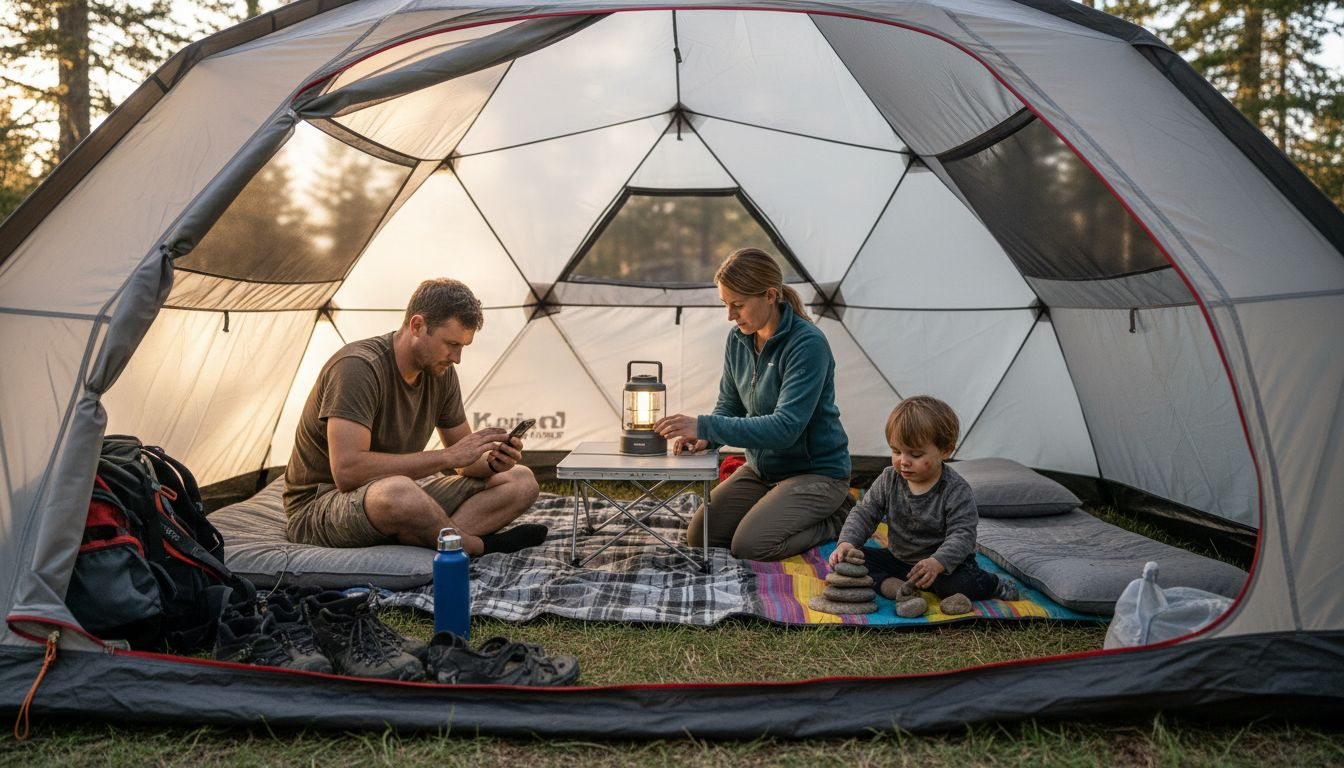
Tent comfort is a multifaceted experience that goes far beyond simple shelter, encompassing several critical physical and environmental factors. Campers seeking an optimal outdoor living experience must carefully consider how different elements interact to create a truly comfortable camping environment. When selecting a tent for maximum comfort, understanding these interconnected components becomes paramount.
The primary elements influencing tent comfort can be categorized into several key areas. Interior design plays a crucial role, with factors like floor space, ceiling height, and layout directly impacting user experience. Ventilation is equally critical, determining air circulation, temperature regulation, and moisture control. Material selection also significantly impacts comfort, with tent fabric weight, breathability, and weather resistance playing essential roles in creating a livable space. Additional comfort factors include insulation properties, noise reduction capabilities, and adaptability to different environmental conditions.

Specific physical components that contribute to tent comfort include strategic window placement, mesh panel design, door configuration, and internal storage solutions. Ergonomic considerations like ease of entry and exit, sleeping pad compatibility, and interior organization options can transform a basic shelter into a comfortable living space. Advanced tent designs now incorporate features like built-in ventilation channels, reinforced stress points, and innovative fabric technologies that enhance overall camping comfort and durability.

Pro tip: Always test your tent setup before a major camping trip to identify and address potential comfort limitations in advance.
Comparing Tent Types for Livability Features
Tent livability varies dramatically across different design types, with each style offering unique advantages for specific camping scenarios. Understanding the nuanced characteristics of tent designs reveals how architectural choices directly impact comfort, functionality, and overall camping experience. Campers must carefully evaluate their specific needs when selecting a tent type that maximizes livability potential.
Four primary tent designs emerge as top contenders for optimal livability. Dome tents excel in stability and wind resistance, featuring geodesic structures that distribute structural stress efficiently. Cabin tents provide maximum interior space with near-vertical walls, creating standing room and spacious living areas. Tunnel tents offer excellent volume-to-weight ratios, making them ideal for extended camping trips requiring substantial living space. Backpacking tents prioritize lightweight design and compact portability, sacrificing some livability features for mobility.
Critical livability factors differentiate these tent types beyond basic structural considerations. Interior height, ventilation system design, fabric durability, and weather resistance play pivotal roles in determining overall comfort. Cabin tents typically provide the most generous living spaces, with multiple rooms and near-home-like configurations. Dome tents balance compactness with structural integrity, while tunnel tents offer versatile configurations for diverse camping environments. Advanced tent technologies now incorporate features like enhanced air circulation channels, reinforced stress points, and innovative moisture-management fabrics to improve overall living conditions.
Here’s a concise comparison of how common tent types differ in key livability aspects:
| Tent Type | Interior Space | Weather Resistance | Portability |
|---|---|---|---|
| Dome | Moderate, balanced | High wind stability | Lightweight, compact |
| Cabin | Spacious, upright | Good rain protection | Bulky, less portable |
| Tunnel | Large, elongated | Strong multi-season | Easy to pack, lighter |
| Backpacking | Compact, efficient | Decent for all weather | Ultralight, portable |
Pro tip: Always match your tent type to your specific camping environment and duration to maximize comfort and functionality.
Real-World Experiences and Camp Setup Tips
Successful camping requires more than just owning quality gear—it demands strategic planning and practical knowledge about campsite preparation. Selecting the right tent location involves careful consideration of terrain, environmental conditions, and potential hazards, transforming an ordinary camping trip into a comfortable outdoor experience. Understanding these nuanced setup strategies can dramatically improve overall camping comfort and livability.
The foundation of an optimal campsite begins with ground selection and preparation. Terrain assessment is critical, prioritizing flat, dry ground that provides natural wind protection and minimizes potential flooding risks. Experienced campers recommend conducting a thorough site survey before pitching a tent, looking for subtle landscape features that could impact comfort. This includes checking for potential water drainage paths, identifying natural windbreaks like trees or rock formations, and ensuring the ground is free from sharp objects that could compromise tent floor integrity. Advanced campers often carry lightweight ground tarps to create an additional protective layer between the tent and potentially uneven or damp surfaces.
Tent setup goes beyond simple ground placement, encompassing sophisticated techniques for maximizing interior comfort and functionality. Proper tent orientation can significantly impact temperature regulation, with strategic positioning relative to sun exposure helping manage internal climate. Ventilation becomes crucial in preventing condensation and maintaining a comfortable living environment. Experienced campers develop sophisticated techniques like creating internal organization zones, using moisture-proof sleeping pads, and implementing smart storage solutions to maximize limited tent space. Modern camping approaches emphasize creating adaptable living spaces that can quickly transform based on changing weather conditions or personal needs.
Pro tip: Always pack a compact repair kit with multi-purpose items like duct tape, extra tent stakes, and seam sealant to handle unexpected tent maintenance challenges during your camping trip.
Common Pitfalls and How to Avoid Them
Tent camping presents numerous challenges that can transform an anticipated adventure into a frustrating experience. Understanding common camping problems helps campers proactively prevent potential disasters, ensuring a smoother and more enjoyable outdoor experience. Recognizing these pitfalls is the first step toward creating a resilient and comfortable camping strategy.
Water management represents one of the most critical challenges in tent camping. Waterproofing failures can quickly turn a pleasant trip into a miserable, soggy ordeal. Campers frequently underestimate the importance of thorough tent waterproofing, neglecting to apply protective treatments or check existing sealants. This oversight can lead to water seepage, compromised tent integrity, and uncomfortable sleeping conditions. Smart campers invest time in pre-trip waterproofing, carefully inspecting tent seams, applying waterproofing sprays, and carrying additional water-resistant materials like ground tarps and emergency rain covers.
Campsite selection and environmental awareness constitute another significant area where campers frequently make critical mistakes. Inexperienced outdoor enthusiasts often choose sites without carefully assessing terrain, proximity to wildlife, and potential environmental hazards. Common errors include setting up tents in low-lying areas prone to flooding, positioning near animal trails, or failing to consider wind direction and sun exposure. Successful campers develop a systematic approach to site evaluation, looking beyond immediate visual appeal to understand potential challenges. This involves checking ground levelness, identifying natural windbreaks, avoiding potential water drainage paths, and maintaining a respectful distance from wildlife habitats while adhering to Leave No Trace principles.
Use this quick reference to anticipate and solve common tent camping challenges:
| Challenge | Prevention Strategy | Resulting Benefit |
|---|---|---|
| Water Seepage | Pre-trip seam and fabric proofing | Dry sleeping environment |
| Poor Site Selection | Assess ground and drainage | Fewer flooding issues |
| Inadequate Ventilation | Position vents, allow airflow | Reduced condensation |
| Cluttered Interior | Create storage zones inside | More usable living space |
Pro tip: Create a pre-camping checklist that includes gear inspection, waterproofing treatment, and detailed campsite research to minimize unexpected challenges during your outdoor adventure.
Elevate Your Camping Comfort with Expert Tent Livability Solutions
Understanding the key factors that impact tent livability is essential for every camper striving to create a comfortable and functional outdoor space. Whether it is assessing interior space efficiency or mastering moisture management, many campers face challenges turning a tent into a true home away from home. If you seek to optimize ventilation, improve setup techniques, or select a tent that perfectly balances weather resistance and portability, you are in the right place.
Discover proven strategies and helpful gear recommendations from our extensive collection of Tent Tips and enhance your outdoor experience by exploring ideas that focus on maximizing your tent’s livability.

Take control of your camping adventures today. Visit Tent Explorer and dive into practical advice designed to make your tent a haven no matter where you camp. Don’t miss out on our insights into Outdoor Living and smart Tent Accessories that boost comfort and convenience. Start transforming your campsite now for the best rest and relaxation under the stars.
Frequently Asked Questions
What is tent livability and why is it important?
Tent livability refers to the overall comfort and functionality of a camping shelter. It encompasses factors like interior design, ventilation, material quality, and personal adaptability, which contribute to a pleasant camping experience.
How do I assess the livability of a tent before purchasing?
To assess tent livability, consider the interior space efficiency, moisture management, thermal regulation, and adaptability to different camping scenarios. It’s vital to physically enter and explore the tent to evaluate its features.
What key elements influence tent comfort while camping?
Key elements influencing tent comfort include interior design, ventilation, material selection, insulation properties, and ergonomic considerations like ease of entry, sleeping arrangement compatibility, and internal organization options.
How do different tent types compare in terms of livability?
Dome tents offer stability and wind resistance, cabin tents provide spaciousness, tunnel tents excel in volume-to-weight ratios, and backpacking tents prioritize portability. Each type has unique characteristics that significantly affect livability during camping trips.
Recommended
- Planning Your Campsite Living Area: Ultimate Guide For Comfort & Style
- 7 Essential Camping Comfort Hacks Every Camper Should Know
- Why Choose Tent Camping: Freedom, Nature, And Value
- 10 Best Tent For Full Time Living: Ultimate Comfort & Versatility Guide
- What Is a Luxury Campsite? Complete U.S. Guide