This blog post may contain affiliate links. As an Amazon Associate I earn from qualifying purchases.
Most beginner camping trips go wrong in one of three places: the gear bag, the campsite arrival, or the site itself — and every single one of those failures is preventable. The cost of arriving unprepared isn’t just discomfort. It’s a sleepless, freezing night on a cold ground, a tent pitched under a dead branch, or a wildlife encounter at 2 a.m. that sends you packing early. Your anxiety about this isn’t excessive — it’s accurate.
“A mistake I made once was going camping alone in the wilderness. The loneliness was so crippling that I eventually cancelled the whole trip.”
— First-time camper, via r/camping community
That kind of experience doesn’t happen because camping is hard. It happens because nobody handed the person a clear, numbered plan before they left. In this guide, you’ll learn 14 specific beginner camping mistakes — organized into three layers of preparation — so you can build what we call The Camping Confidence Stack before your first night out. We cover gear readiness first, then campsite logistics and etiquette, and finally the safety and environmental factors that catch most new campers completely off guard.
Beginner camping mistakes cluster into three layers — gear, logistics, and safety — forming The Camping Confidence Stack. Nail all three, and your first trip becomes an adventure, not a disaster.
- Do a shakedown trip first: Sleep in your gear at home to catch problems early
- Sleeping pad R-value matters more than bag warmth — ground steals heat fastest
- Follow the 3-3-3 rule: Max 300 miles/day, arrive by 3 p.m., stay 3+ nights
- Look up before pitching: Widowmakers (dead hanging branches) are a real hazard
- Bear boxes are non-negotiable — store all food and scented items, always

- Perfect camping gear
- For hiking, backpacking, and travelingDurable Material
- Keeping yourself, your camping equipment, and your personal items dry when you are camping is
- This lightweight 2-person dome tent with a large d-style door was designed for comfort, space,
- Get the most out of your tent during the year. The fiberglass poles and ventilation window allow
Last update on 2026-04-06 / Affiliate links / Images from Amazon Product Advertising API

- PLENTY OF ROOM. Comfortably fits most campers up to 5 FEET, 11 INCH tall. SEZE: 31.5 by 86.6 inches (W x D). Our sleeping bag can be used in 3 seasons with a design temperature of 50℉- 68℉(10℃-20℃). Recommended limit temperature: 41℉-77℉
- GOOD QUALITY WITH AFFORDABLE PRICE. The stitching and material feels neat and comfotable. Outer Cover Material: Polyester, Waterproof and Breathable Fabrics; Lining Material: Pongee; Fill-Material: hollow cotton. WARM AND SKIN-FRIENDLY
- A THOUGHT OUT DESIGN. Drawstring allows you to tighten hood and KEEP YOU HEAD NICE AND WARM. The idea of having a zipper at the foot to allow more warm or cool air to enter or exit the bag in different times of the season
- LIGHTWEIGHT AND COMPACT DESIGN. Pack Weight is 3.3lbs, the compressed packing size is 7.9''-14.2'' and would take up less space. Convenient to carry along for any outdoor adventures, class camping trip, the aquarium, summer camp, couch surfing, jam bags, office crashing, and as an em3rgency blanket for vehicles
- SERVE ITS PURPOSE FOR YOU AND YOUR KIDS. Wipes clean easily. This camping bags also have a weather-resistant and waterproof design to keep you warm,prevent you from any dampness
Last update on 2026-04-06 / Affiliate links / Images from Amazon Product Advertising API

- 【Extra Wide & 3" Thick Sleep Support】 The self inflating pad for camping is up to 78*27*8 inches, after inflating keeps you away from the uneven ground and hard rocks. The innovative egg-shaped air cells and built-in pillow are designed to relieve back and neck pressure, allowing you to freely adjust your body balance and comfort, whether on your back or your side, ensuring maximum comfort and warm for your sleep all night!
- 【30s Inflate & 1s Deflate】Save time and effort! The built-in pump takes 30-60 seconds to fully inflate the camping mat. No longer needs to be inflated by mouth or pump. Deflate in one second. The upgraded valve has two layers. No more air leaks!
- 【Ultralight & Easy to Carry】 The ultra-light self inflatable sleeping pad is weighed and sized only like a water bottle. Inbuilt pillow saves you the trouble of carrying an extra one. This air mattress can easily fit in your backpack, perfect for hiking, camping, backpacking, traveling, climbing, hiking and other outdoor activities.
- 【40D Nylon & TPU】 This camping sleeping pad is made of 40D nylon and TPU. It's resistant, hard-wearing, and easy to clean. The ergonomic design allows you to sleep comfortably even in rough outdoor environments. Our inflatable camping mattresses have been quality-inspected, so use them with confidence
- 【Get One More for Twin Bed】 Our camping pads are equipped with buttons on the side, you can easily connect another one to create a double bed, making a wider space for more comfort sleeping. Perfect for you to go camping with your families and friends. Also, it comes in different colors on each side, more fashionable than others.
Last update on 2026-04-06 / Affiliate links / Images from Amazon Product Advertising API
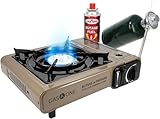
- Duel Fuel - Compatible With Both Butane (Fuel Not Included) And Propane Fuel (Fuel Not Included), Operates On A Single Butane Cartridge 8 Oz Or A Propane Cylinder 16.4 Oz , Propane Converter Regulator Included
- Automatic Piezo Electric Ignition - Piezo-Electric Ignition That Eliminates The Use For Lighter/Matches In Order To Ignite Flame, No Need For Lighters Or Matches With This Stove
- Easy To Use - Our Gs-3400P Is Easy To Use With Adjustable Heat Dial And Automatic Piezo-Electric Ignition
- Safety Features - Built In Pressure Sensor Cartridge Ejection System And Gas Flow Cut Off Mechanism (Butane), Will Eject Cartridge When Irregular Pressure Is Detected
Last update on 2026-04-06 / Affiliate links / Images from Amazon Product Advertising API

- Material: Plastic
- This lightweight, compact tank fits all standard portable propane appliances, tabletop grills and propane torches
- Country of Origin: USA
- Package Dimensions: 8" L x 8" W x 8" H
Last update on 2026-04-06 / Affiliate links / Images from Amazon Product Advertising API

- ESSENTIALS FOR EMERGENCY: Everything you need is in this first aid kit! Our kit includes over 150 professional-grade medical and safety supplies, all kinds of bandages, gloves, povidone-lodine prep pad, metal tweezers, tourniquet, etc. 100% latex free
- PORTABLE DESIGN: 6.4" x 4.9" x 2.7" compact size, 0.73 lbs lightweight, features a compact, travel-friendly design, Premium zippers and bonus carabiners increase convenience for outdoor activities. This small emergency kit can also be easily hung on your backpack
- SMART AREA CLASSIFICATION DESIGN: We've separated the whole emergency bag into small independent compartments, which is clear and concise, with each inner sleeve categorized for easy access, so that you can find the first aid item you need in case of emergency situation. The organized first-aid kit helps to ensure that your wounds are treated as soon as possible
- QUALITY AND DURABILITY: The surface is made of premium waterproof EVA material, and the hardness of the case has been enhanced to make it tougher and durable. The PU surface is smooth, waterproof, and easy to clean with Waterproof Laminate Bags You Protect Your Supplies (Do not soak)
- ALWAYS READY FOR ANY EMERGENCY: With its comprehensive variety of medical supplies, this first aid kit is a great ideal for families, offices, camping, hiking, boating, cars, sports, travel, road trips, the workplace, school. This mini medical kit is the ideal choice for anyone who wants to be prepared for any situation, whether it's at home or outside
Last update on 2026-04-06 / Affiliate links / Images from Amazon Product Advertising API
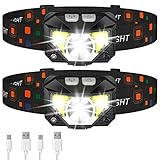
- Long Press Function and Motion Sensor: Unlike the old version, LHKNL headlamp has added a long press function. Just hold the key mode button for 3 seconds to turn off from any lighting mode—no need to cycle through all modes. It also added motion sensor mode, you can easily turn the lights ON or OFF by waving your hand, which is more convenient and avoids soiling the headlamp when your hands are dirty
- Super Bright and Rechargeable: The headlamp flashlight camping essentials uses class-leading LED chips that will provide 2X brighter high lumens, easily light up an entire tent and road. It has powerful rated 1500mAh built-in rechargeable battery, which can be able to charge and turn on the lights at the same time. No need to wait for full charge or replace the battery. And the battery indicator will help you master battery usage. Last for 4-10 hours when fully charged
- Ultra-light and Adjustable: The hand-free headlamp is only weight 1.87 OZ, comfortable and lightweight. The lamp head can be rotated 60° and tightly fixed to avoid shaking and sliding when running. The head flashlight uses comfortable elastic headband, which can easily adjust the length to perfectly fit your head size, perfect for adults and kids
- Waterproof and 8 Modes: The headlight has IPX4 waterproof rate. The high-quality shell is more sealed and leak-proof, which is suitable for rain or snow, indoors or outdoors. The led headlamp has 8 lighting modes to meet your various needs. In key light mode, you can switch the main strong beam, main weak beam, side strong beam, side weak beam, red beam, SOS red strobe. In motion sensor mode, you can switch the main strong beam and side strong beam
- Perfect Gift Choice: Are you still struggling with gift? LHKNL headlamp is your answer. Packaged in sets of two headlamps. This headlamp will be the perfect gift for your father, mother, husband, son, boyfriend on Christmas, Father's Day, Valentine's Day, Easter, Halloween, and Thanksgiving
Last update on 2026-04-06 / Affiliate links / Images from Amazon Product Advertising API
- Every ounce matters! The BV500 excels as a high volume, lightweight bear barrel for backpacking. The most spacious choice of bear canister for backpacking ultralight style, pack food for 7 plus days.
- Clear and easy to use: Easily find your breakfast. Transparent sides and a wide opening make it easy to find. Tool-free, with rounded corners and pack straps, it packs easily. Doubles as a camp stool!
- Tested and Approved: Grizzly (IGBC) and Black Bear (SIBBG) certified bear resistant container. Keep your food and scented items protected from raids by bears and other wildlife.
- The Gold Standard for Multi-Day Adventures, long distance and thru hikers. BV500 Journey allows you to pack a few hearty meals for a group, or maximize every ounce of calories.
- Approved Canister of Choice: BV500's have logged more miles than any other backpacking bear can. Approved by all National Parks and Forests with bear proof canister regulations, and many state parks.
Last update on 2026-04-06 / Affiliate links / Images from Amazon Product Advertising API

- High-Precision – Sportneer compass is engineered for superior accuracy, featuring a rear sight lens that magnifies the dial for precise and effortless readings. For optimal performance, keep the compass level to ensure the magnetic needle rotates freely and points accurately to magnetic north.
- Waterproof and Shockproof – Crafted with a durable metal base and cover, this compass is built to withstand years of rugged outdoor use. Its waterproof and shock-resistant construction ensures reliable performance in harsh weather and tough terrains.
- Perfect for Outdoor Adventures – This precision compass delivers reliable bearings and sighting for camping, hiking, hunting, and scouting. Its rugged navigation capabilities keep you on course in any terrain, making it an essential adventure companion.
- Easy Nighttime Visibility – After sufficient exposure to light, the north indicator and dial markings glow in the dark with a fluorescent coating, providing clear and reliable readings even in complete darkness. Ideal for night navigation or low-light conditions.
- Perfect Portable Gift for Explorers – This lightweight compass easily slips into any pocket or backpack, making it a must-have for outdoor adventures. With its simple navigation and handy lanyard, it's great for kids learning about the outdoors and perfect as a thoughtful gift for hikers, campers, and nature lovers of all ages.
Last update on 2026-04-06 / Affiliate links / Images from Amazon Product Advertising API

- WATERPROOF JACKET: Crafted from a waterproof nylon shell durable enough to withstand anything from drizzle to downpour at a moment's notice
- PACKABLE PROTECTION: With a sleek, packable design, this jacket folds into its own hand pocket for easy transport
- STOW-AWAY HOOD: This versatile jacket includes a stow-away hood, that unfolds from the collar—always available at a moment’s notice.
- HANDY FEATURES: Includes zippered hand pockets, elastic cuffs, and an adjustable hem that helps seal out the elements.
- BUILT TO LAST: Columbia’s attention to detail is what sets our apparel apart. Specifying only the highest quality materials, expert stitching, and craftsmanship. This is a long-lasting garment you will enjoy for seasons to come.
Last update on 2026-04-06 / Affiliate links / Images from Amazon Product Advertising API
Gear and Setup Mistakes That Ruin Your First Trip Before It Starts
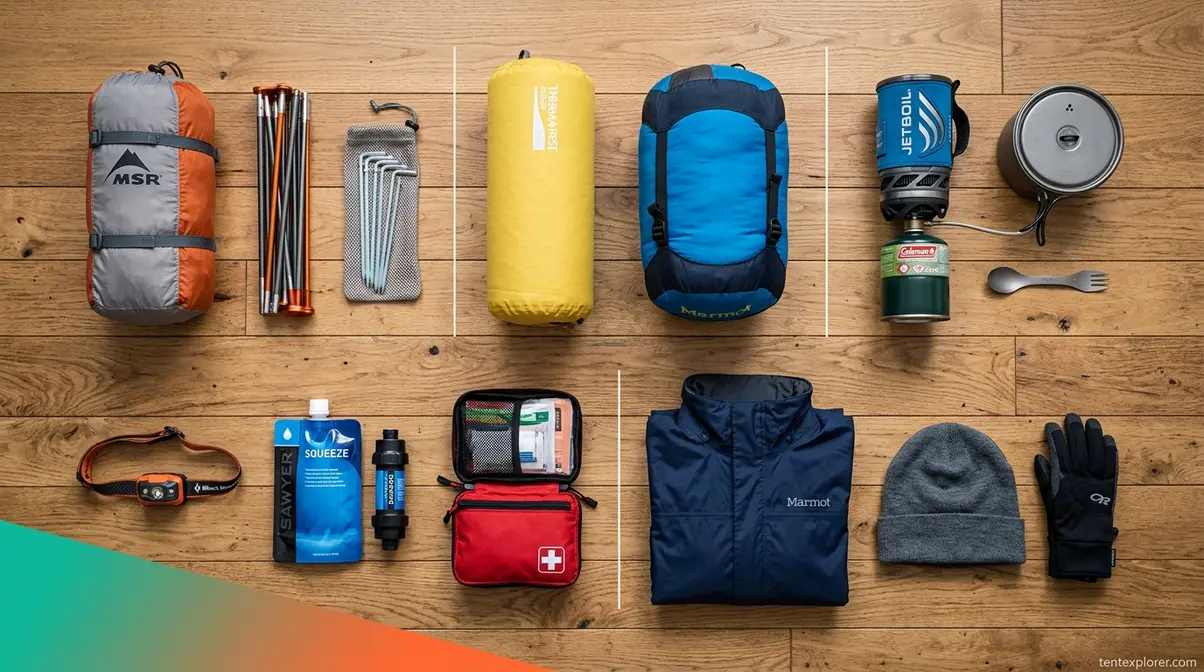
Picture this: you’ve driven three hours to the trailhead, the sun is dropping, and your tentmate pulls out the poles — only to find the rain fly is still in your garage. That single oversight wrecks the whole trip. This is Layer 1 of The Camping Confidence Stack — Gear Readiness — and it’s where most first-time camper mistakes begin. Our team evaluated the most common failure points reported across camping communities, and five gear mistakes appear again and again. Each one has a specific, actionable fix.
- The five gear mistakes beginners make most often:
- Skipping the shakedown trip at home
- Building a sleep system around the bag, not the pad
- Packing too much (or forgetting critical items)
- Leaving without a first aid kit
- Relying on a phone for navigation without backup
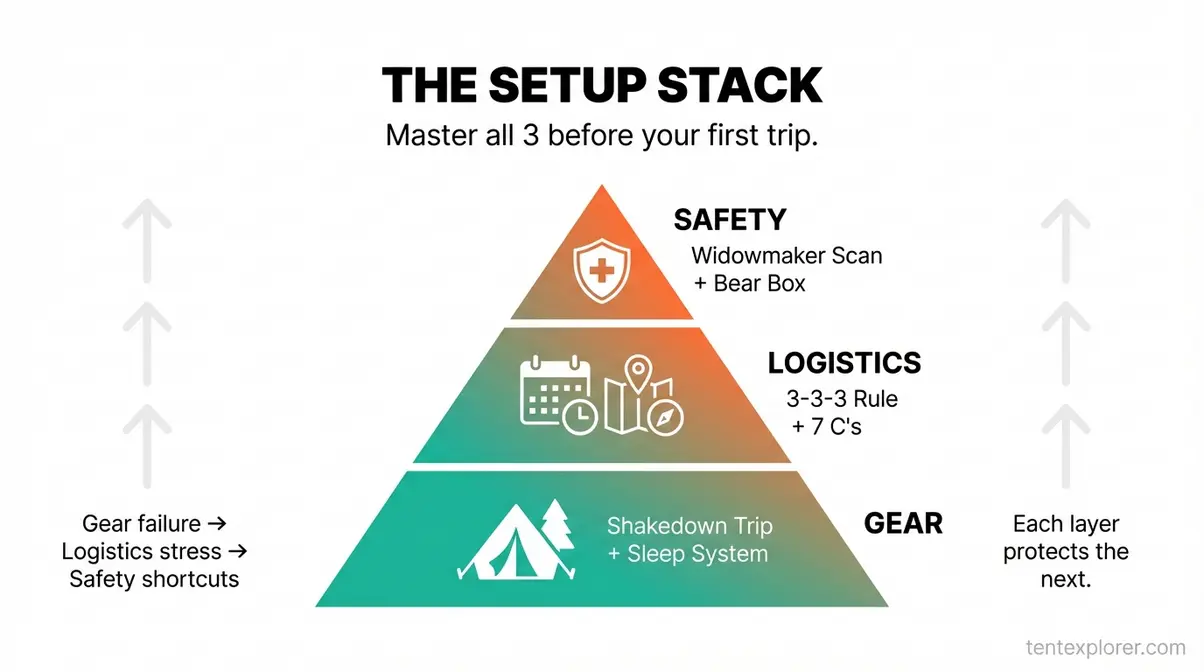
Caption: The Camping Confidence Stack — three interdependent preparation layers every first-time camper needs to complete before leaving home.
Mistake #1 — Skipping the Shakedown Trip
A shakedown trip is a short, local practice run — ideally 1-2 nights in your backyard or a nearby campsite — where you set up all your gear exactly as you would on the real trip. The Trek’s backpacker community consistently identifies this as the single most effective habit a beginner can build. Gear behaves differently in the field than it does in a store or your living room. A tent that seemed simple in a YouTube video takes 40 minutes in fading light. A camp stove that worked indoors won’t light at altitude.
How to run your shakedown trip (in order):
- Set up your tent in the backyard — check every pole, stake, and rain fly connection
- Sleep in your sleeping bag on your sleeping pad for one full night
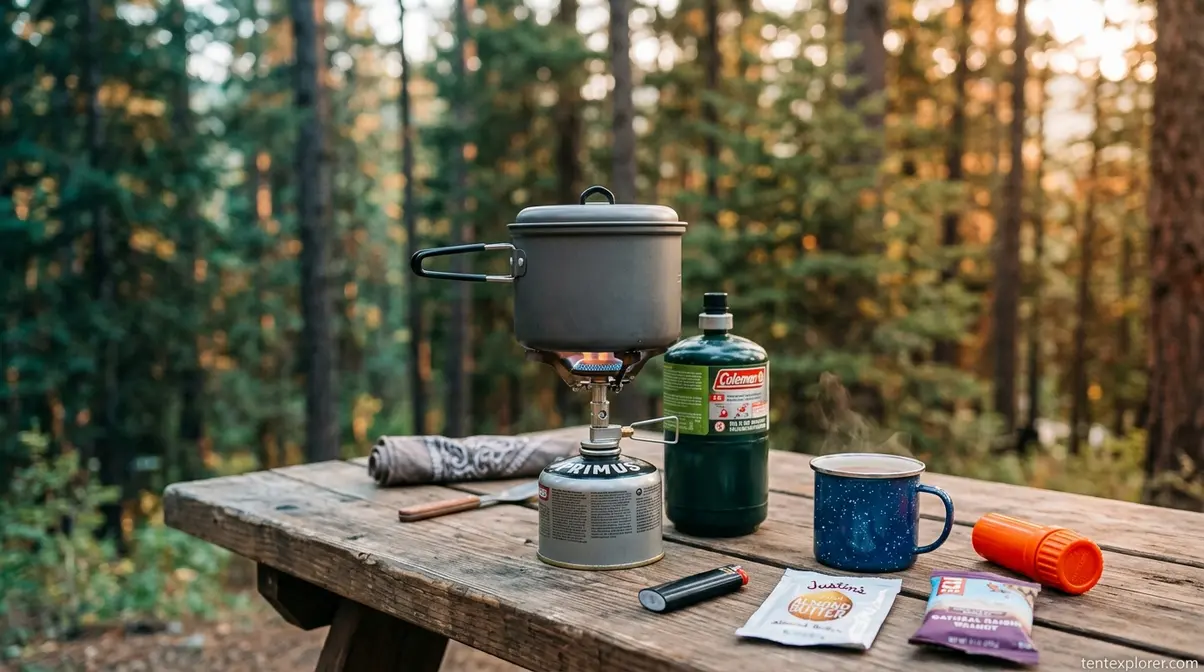
- Cook a meal with your camp stove using the fuel canister you’re bringing
- Test your headlamp, water filter, and any backup navigation device
- Pack and repack your bag — note what doesn’t fit and what you forgot
After the shakedown, make a list of every item you scrambled to find or wished you had. Fix that list before the real trip. For a full visual walkthrough of tent assembly, see our .
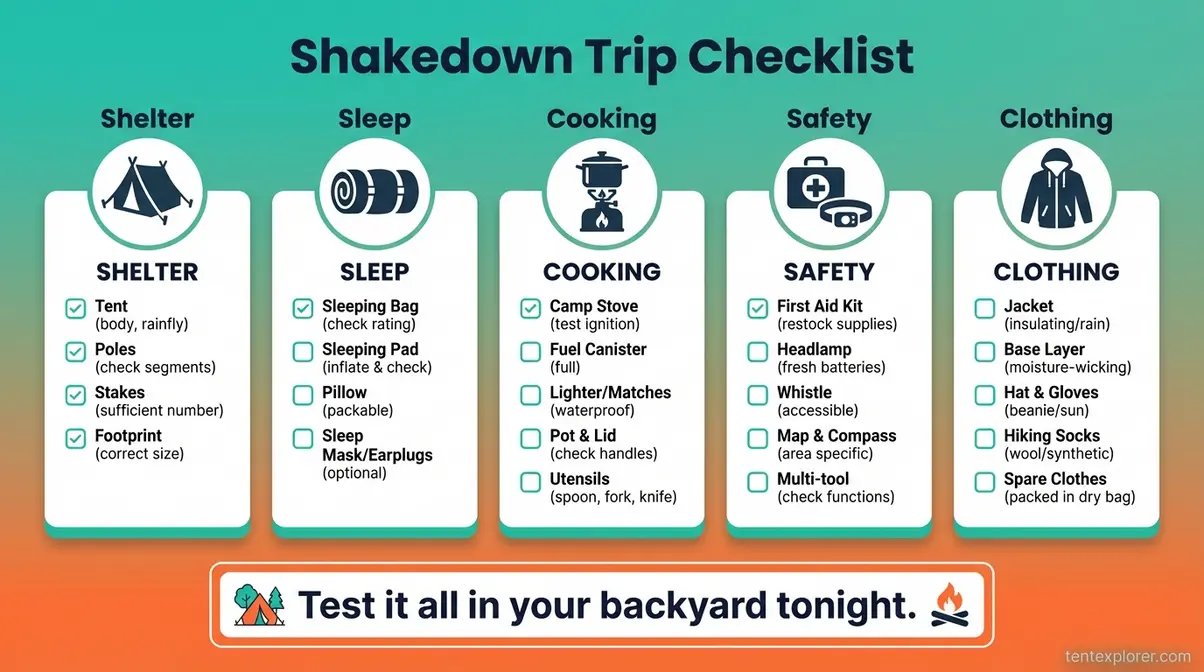
Caption: Run through this checklist the night before your shakedown trip — every missing item is better discovered at home than at the trailhead.
Mistake #2 — Building an Inadequate Sleep System
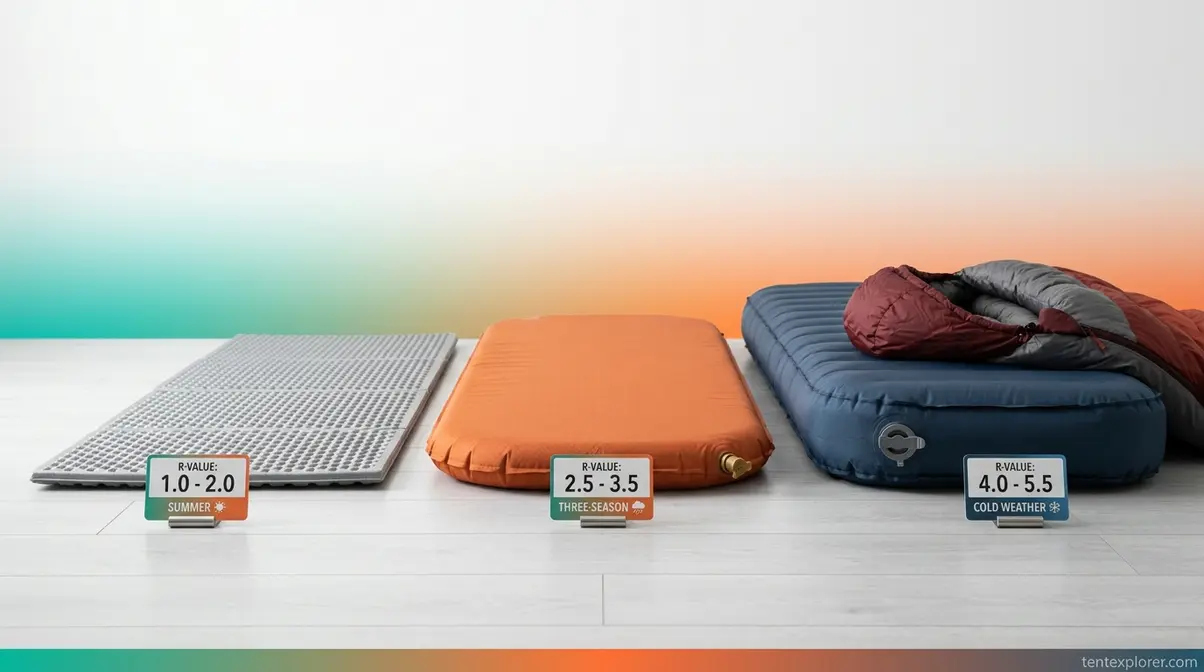
Here’s the insight that zero competitor articles mention: your sleeping pad matters more than your sleeping bag in most camping conditions. Ground contact removes heat up to 25 times faster than cold air does. A high-quality sleeping bag won’t save you if your pad lets the cold ground drain your warmth all night.
The technical measure here is R-value — the standardized measure of a sleeping pad’s thermal resistance, per ASTM F3340-22. Think of R-value like SPF for sunscreen: a higher number means more protection. A sleeping pad with an R-value below 2 provides insufficient insulation for temperatures below 50°F, regardless of your sleeping bag’s rating (ASTM F3340-22). A sleeping pad with an R-value below 2 is summer-only equipment.
Your sleep system — the combination of sleeping bag and sleeping pad working together — needs to be matched to the coldest temperature you expect. Use this as your quick reference:
| Condition | Recommended R-Value | Typical Temp Range |
|---|---|---|
| Summer / warm weather | R-1 to R-2 | Above 50°F |
| Three-season (spring/fall) | R-3 to R-4 | 32°F – 50°F |
| Cold weather / shoulder season | R-4 to R-5 | 20°F – 32°F |
| Winter camping | R-5.5+ | Below 20°F |
(Source: REI Expert Advice, 2026; Alpkit R-Value Guide, 2026)
Also note: temperatures drop 10–20°F overnight from the afternoon high. Check the overnight low, not the daytime forecast, when selecting your sleep system.
Mistake #3 — Overpacking (or Underpacking) Your Kit
Most beginner camping advice warns against overpacking. What it misses is that underpacking is equally dangerous. Carrying 50 lbs of gear you don’t need exhausts you before you reach the campsite. But forgetting your rain jacket, extra socks, or a headlamp creates real safety problems after dark.
The fix is a framework, not a longer list. Use the 10 Essentials as your base — navigation, sun protection, insulation, illumination, first aid, fire starting, repair tools, nutrition, hydration, and emergency shelter. From there, subtract anything you haven’t used on a previous trip and add anything that caused a problem. Your pack weight is a direct feedback loop. If it hurts to lift, something goes.
A practical rule: lay everything out on the floor before packing. If you can’t justify an item in one sentence, leave it. If you’re going to a designated campsite with a car nearby, you have more flexibility. If you’re hiking in, every ounce compounds over miles.
Mistake #4 — Forgetting the First Aid Kit
Competitors list “bring a first aid kit” without specifying what belongs in one. A basic kit for a 1-3 night car camping trip should include: adhesive bandages (multiple sizes), gauze pads, medical tape, antiseptic wipes, blister treatment (moleskin), tweezers for splinters or ticks, antihistamine tablets, pain reliever (ibuprofen or acetaminophen), and any personal prescription medications.
The most overlooked item? Blister treatment. New boots or extra hiking miles create blisters fast, and an untreated blister can cut a trip short. Carry moleskin and apply it at the first sign of hot spots — don’t wait until a blister forms. Keep your kit in a waterproof bag and know where it is without digging. In an emergency, seconds matter.
Mistake #5 — Relying Solely on Your Phone for Navigation
Cell service disappears in most camping areas. Relying solely on Google Maps or a phone GPS is a genuine safety mistake — not just an inconvenience. Batteries drain faster in cold temperatures, screens crack, and apps that require data won’t load offline.
The fix requires two steps:
- Download your trail maps offline before leaving cell range. AllTrails and Gaia GPS both offer offline map downloads — do this at home over Wi-Fi.
- Carry a physical backup. Many ranger stations offer free paper trail maps. Pick one up when you arrive, or print one before you go.
A basic compass and the knowledge to use it alongside a paper map is a skill worth 30 minutes of practice. Navigation failure in unfamiliar terrain isn’t a minor inconvenience — it becomes a search-and-rescue scenario.
Campsite Logistics and Etiquette Mistakes That Frustrate Fellow Campers
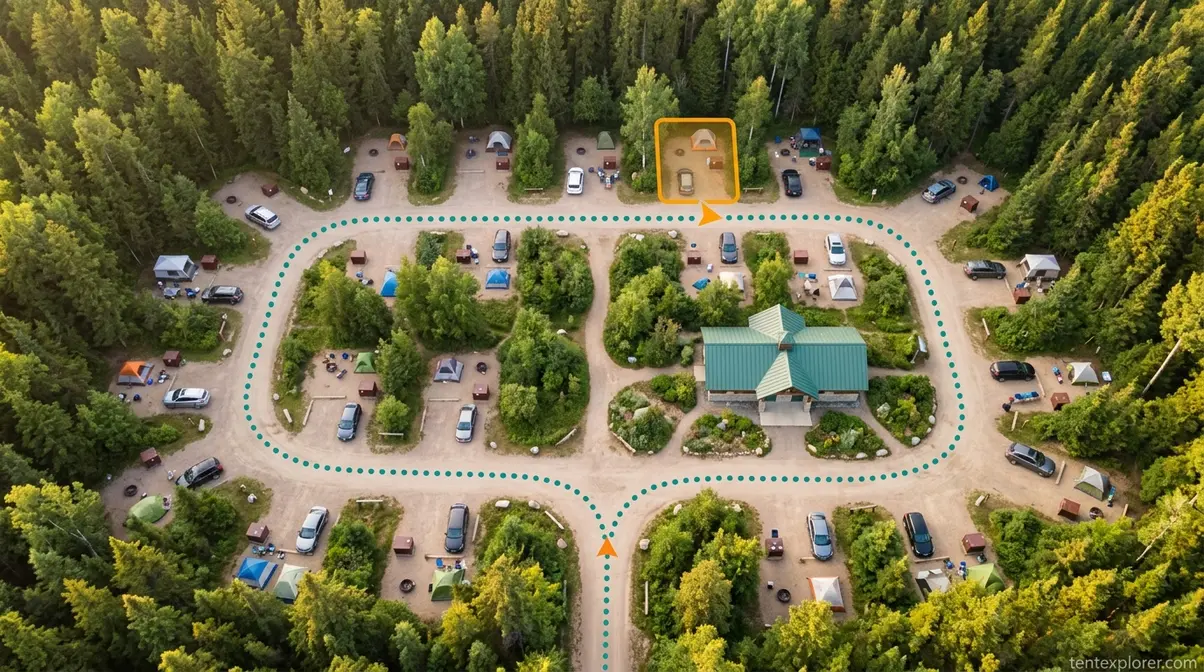
Gear readiness gets you to the campsite. Layer 2 of The Camping Confidence Stack — Logistical Clarity — determines what happens when you arrive. User consensus from first-timer accounts across Reddit’s r/camping community indicates that logistics failures (arriving late, ignoring campground rules, poor waste management) create more trip-ending frustration than gear problems. These four mistakes are the most preventable — and the most socially costly when you get them wrong.
Mistake #6 — Arriving at the Campsite After Dark
Arriving after dark is one of the most disruptive camping errors beginners make — and one of the easiest to prevent. Setting up a tent in daylight takes 15-20 minutes. Setting up the same tent by headlamp, in unfamiliar terrain, takes 45 minutes or more. You’ll disturb neighboring campers, miss hazards in your site, and start your trip already stressed.
The rule is simple: aim to arrive at least 2 hours before sunset. Check sunset times for your destination using a weather app before you leave. Build in extra time for traffic, fuel stops, and the inevitable “I forgot to pack the…” moment. If you’re traveling more than 3 hours, book a campsite for the night before to break the drive and arrive fresh.
Recreation.gov lets you check campground-specific quiet hours and arrival policies before you book — some sites have staffed gates that close at a set time.
Mistake #7 — Ignoring the 3-3-3, 2-2-2, and 4-4-4 Travel Frameworks
These three frameworks are among the most-searched camping questions — and zero competitor articles address them. Here’s the definitive breakdown.
The 3-3-3 Rule is the most widely used camping travel guideline: drive no more than 300 miles per day, arrive at your campground by 3 p.m., and stay for at least 3 nights at each site (KOA Camping Blog, 2024). It prevents driver fatigue, ensures setup time in daylight, and gives you enough time to actually explore before moving on.
The 2-2-2 Rule is a more conservative version for new campers, families, or anyone who prefers a gentler pace: 200 miles maximum, arrive by 2 p.m., stay 2 nights minimum. This is the framework our team recommends for your first trip — the extra buffer time reduces stress dramatically.
The 4-4-4 Rule is for experienced road-trippers covering long distances: 400 miles maximum, arrive by 4 p.m., stay 4 nights minimum. This works well for extended trips where you’re covering significant ground between destinations.
| Rule | Daily Distance | Arrival Time | Minimum Stay | Best For |
|---|---|---|---|---|
| 2-2-2 | 200 miles | By 2 p.m. | 2 nights | First-timers, families |
| 3-3-3 | 300 miles | By 3 p.m. | 3 nights | Most campers |
| 4-4-4 | 400 miles | By 4 p.m. | 4 nights | Long-distance trips |
(Source: KOA Camping Blog, 2024; RVshare, 2025)
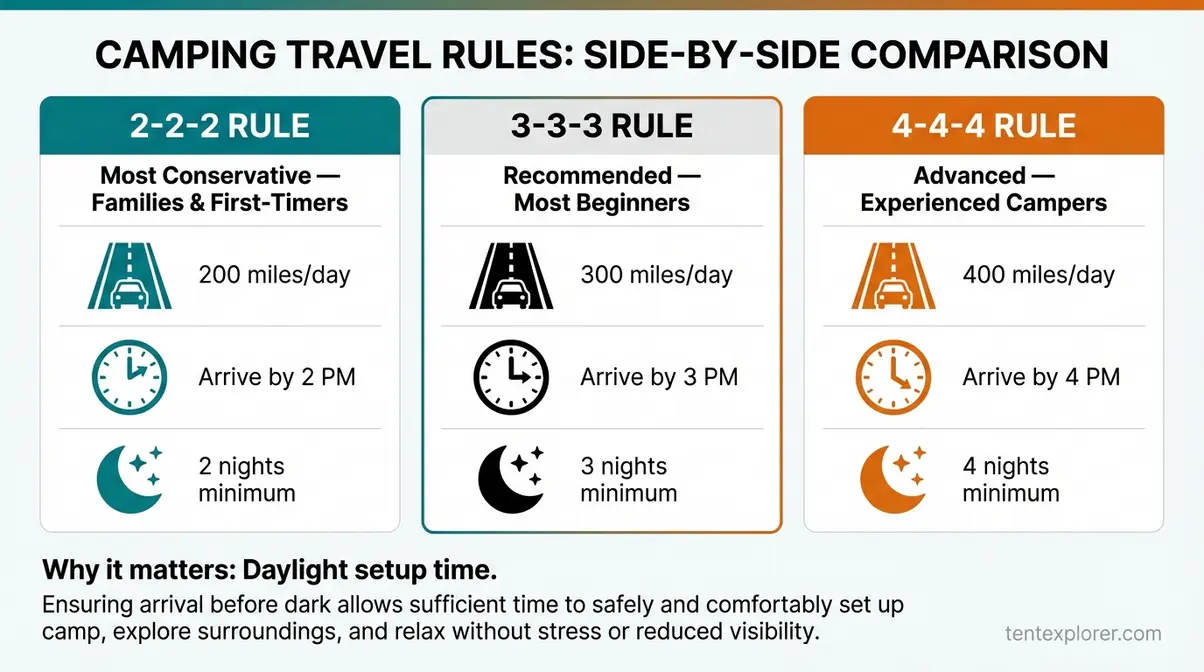
Caption: Choose your travel framework based on your experience level — the 2-2-2 rule is the right starting point for most first-time campers.
Mistake #8 — Violating the 7 C’s of Camping
The 7 C’s of camping are a widely recognized code of ethics for campground behavior — and another framework that no competitor article bothers to explain. Violating even one of these creates friction with fellow campers and can result in citations from campground staff.
The seven C’s are: Care (be considerate of fellow campers and practice campground manners), Caution (use equipment safely, especially fire and stoves), Courtesy (respect privacy, control children and pets, keep noise down), Cleanliness (pick up litter, leave your site better than you found it), Cooperation (follow posted regulations and work with other campers), Conservation (protect the natural environment and leave no trace), and Common Sense (apply good judgment in every situation) (RV Tip of the Day).
The most commonly violated C among beginners is Courtesy — specifically around noise. Many campgrounds enforce quiet hours from 10 p.m. to 6 a.m. Playing music after quiet hours, slamming car doors, or letting a dog bark unattended are reliable ways to make enemies of your neighbors. Check your campground’s specific rules on Recreation.gov before you arrive.
Mistake #9 — Mishandling Waste and Cathole Hygiene
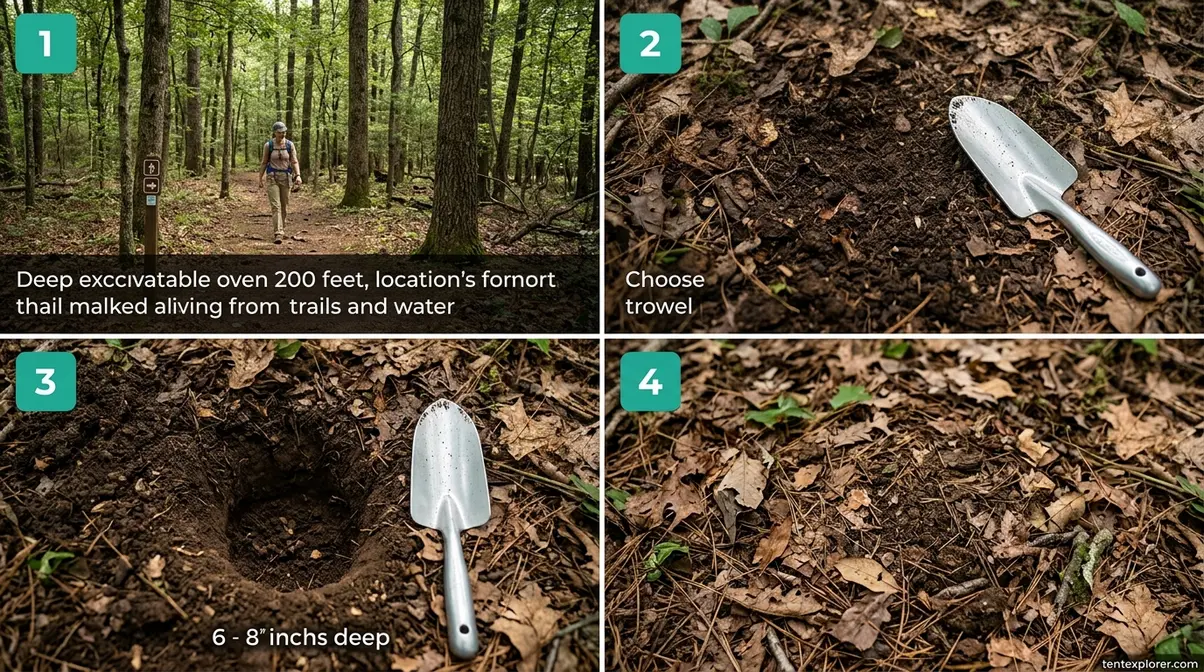
Designated campgrounds with toilet facilities are straightforward. The moment you venture into backcountry camping — or need to handle waste at a primitive site — cathole catastrophes become a real possibility.
A cathole is the Leave No Trace-approved method for burying human waste in the backcountry. The specifications aren’t optional: dig 6-8 inches deep and 4-6 inches wide, at least 200 feet (about 70 adult paces) from any water source, trail, or campsite (Leave No Trace, lnt.org). Carry a small garden trowel — it’s the right tool for the job.
Pack out all toilet paper or use natural materials (dry leaves, smooth stones) instead. Leaving toilet paper in or near a cathole is one of the most common violations of Leave No Trace principles, and it creates real sanitation problems for other visitors. The rule of thumb: if you pack it in, pack it out.
For hand sanitation, carry biodegradable soap and use it at least 200 feet from any water source. This applies to dishwashing too — even “biodegradable” soap harms aquatic ecosystems when used directly in or near streams.
Safety, Weather, and Environmental Mistakes That Put You at Risk
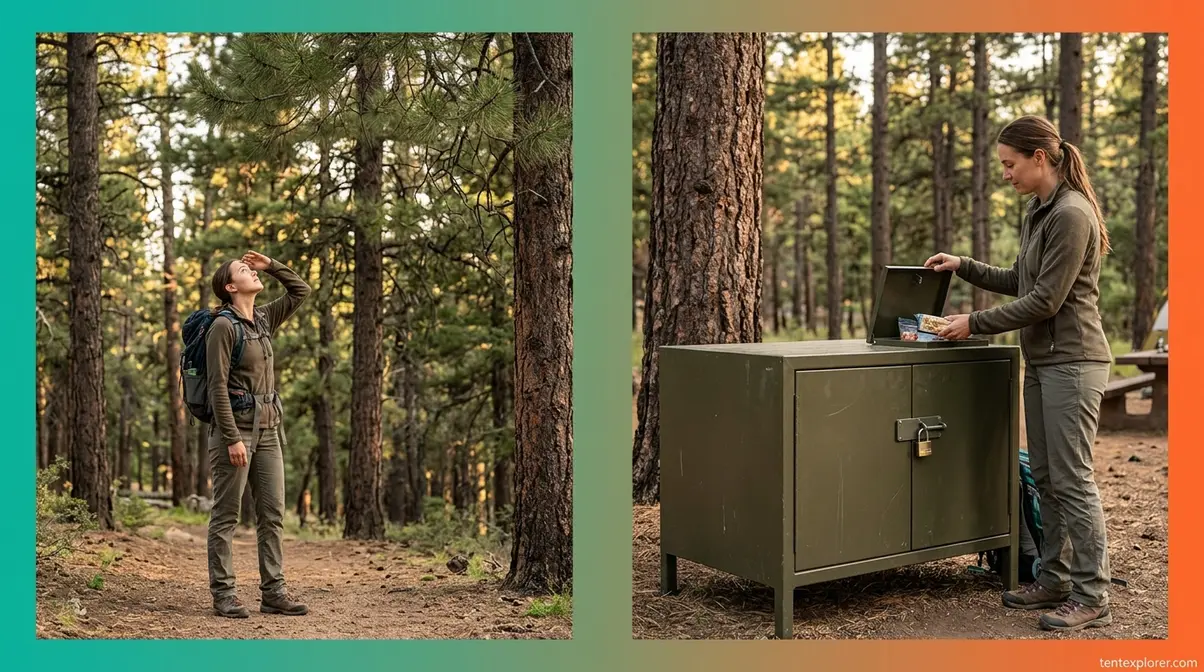
Layer 3 of The Camping Confidence Stack — Environmental Awareness — is where first-time camper mistakes stop being inconvenient and start being dangerous. Our team evaluated these five mistakes against the most common safety incidents reported in camping communities and cross-referenced them with National Park Service guidance. Each one involves a specific hazard that beginners consistently underestimate.
⚠️ Safety Disclaimer: The guidance in this section covers fire safety, wildlife interactions, and weather exposure. This information is educational and does not replace local campground regulations, park-specific rules, or professional wilderness training. Always verify current fire bans, wildlife activity alerts, and weather forecasts through Recreation.gov and your specific park’s ranger station before every trip. Conditions change rapidly. When in doubt, ask a ranger.
Mistake #10 — Pitching Your Tent Under Widowmakers
Widowmakers — broken or dead branches hanging overhead — are one of the most underreported hazards in camping. The term originated in forestry: these branches can fall without warning, even on calm days, and a falling limb doesn’t need to be large to cause serious injury to someone sleeping underneath.
Before you stake a single tent peg, look up. Scan the canopy directly above your intended site. Warning signs include: branches that are visibly broken or hanging at an angle, loose or peeling bark, fungal growth (mushrooms or shelf fungi) on the trunk, woodpecker holes indicating hollow wood, and dead branches with no buds or leaves (GearJunkie).
Caption: Always scan the canopy before pitching — a widowmaker can fall without wind or warning.
The fix is simple: if you see any of these signs, move your tent. Choose an open area or a spot where the branches overhead are clearly alive and attached. Avoid camping on windy nights directly beneath any tall tree if possible. A conservative rule: stay at least 1.5 times the height of any dead tree away from your sleeping area (per forestry safety guidance).
Mistake #11 — Improper Food Storage and Wildlife Encounters
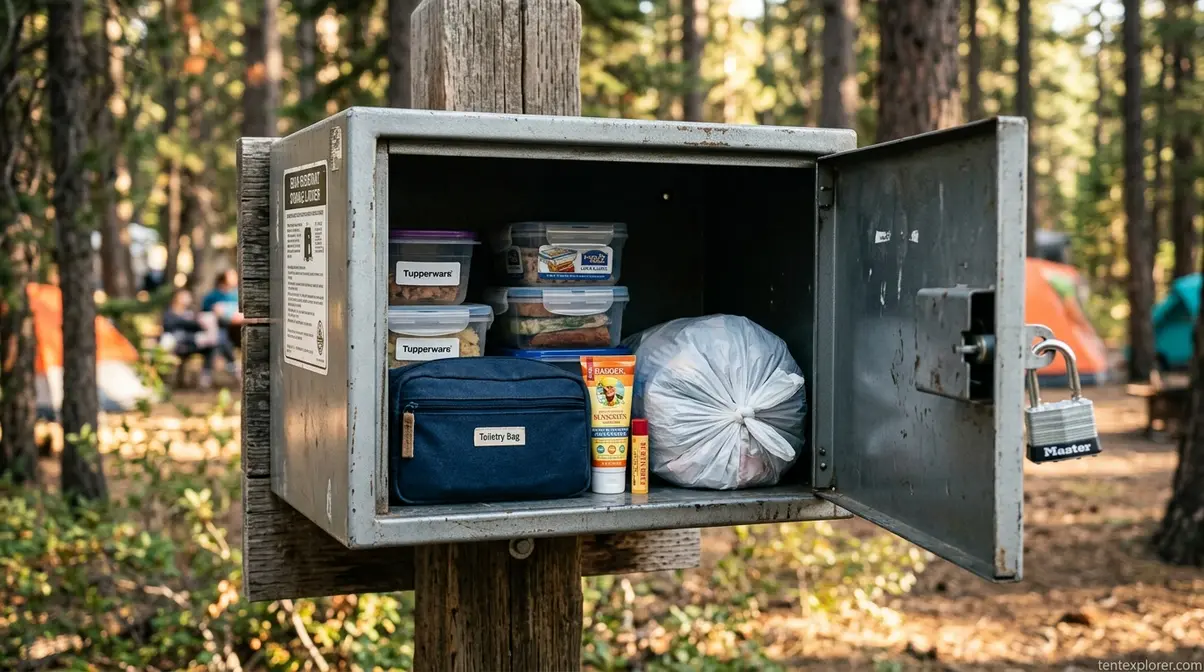
Attracting a bear, raccoon, or other wildlife to your campsite isn’t just frightening — it’s a safety incident that can result in property damage, injury, and the animal being destroyed by wildlife management. The cause is almost always preventable: food or scented items left accessible.
The National Park Service protocol for food storage (NPS, 2026) is clear: all food, drinks, trash, and scented items (toiletries, sunscreen, lip balm) must be stored in an approved bear-resistant container or bear box at all times when not in active use. In many national parks and wilderness areas, bear canisters are legally required for overnight camping.
Practical rules to follow:
- Use bear boxes at designated campgrounds — they’re provided specifically for this purpose
- Never store food in your tent — not even a granola bar wrapper
- Place bear canisters 25-50 feet from your sleeping area, not near cliffs or water sources (NPS, Yosemite)
- Cook and eat away from your tent — at least 200 feet if possible
- Pack out all trash — scent lingers even in empty packaging
Raccoons and smaller wildlife are equally persistent and can destroy gear while searching for food. Treat any scented item as potential attractant. Check your specific park’s requirements on Recreation.gov — rules vary significantly by location.
Mistake #12 — Relying Solely on a Campfire for Warmth and Cooking
A campfire is one of the most satisfying parts of camping. It’s also one of the least reliable. Wet wood won’t light. Fire bans — increasingly common across the western U.S. during dry seasons — make campfires illegal entirely. And a campfire provides almost no usable warmth inside a tent.
The fix is a dedicated camp stove. A basic canister stove (the kind that screws onto green propane bottles) costs $30-50 and boils water in minutes regardless of weather. It’s reliable, portable, and legal everywhere a campfire isn’t. Carry it as your primary cooking method, not your backup.
For warmth, the campfire is supplemental — your sleep system (properly rated sleeping bag + sleeping pad) is your actual warmth source. A campfire that goes out at midnight provides no protection from a temperature drop to 35°F.
Before building any campfire, verify that fires are permitted at your specific site. Check Recreation.gov or call the ranger station directly. Violating a fire ban carries significant fines and creates genuine wildfire risk. When fires are allowed, use established fire rings only, never leave a fire unattended, and drown it completely with water — not dirt — before sleeping or leaving the site.
Mistake #13 — Ignoring the Weather Forecast
Camping beginners check the weather once, see “partly cloudy, 68°F,” and pack accordingly. Then they’re caught in a 40°F rainstorm at 2 a.m. Two dynamics catch new campers off guard.
First, temperatures drop significantly overnight — often 15-25°F from the daytime high. A pleasant 68°F afternoon can become a 43°F night. Always check the overnight low, not just the daytime forecast, and pack insulation for at least 10°F colder than the overnight low predicts.
Second, mountain and forested areas experience localized weather that general forecasts miss. Use a dedicated outdoor weather app rather than a standard phone weather app. Weather.gov (National Weather Service) provides point forecasts for specific coordinates — enter your campsite’s location for the most accurate prediction. Mountain Forecast and Windy are also reliable for elevation-specific data.
Check the forecast the morning you leave, not two days before. Conditions change. If severe thunderstorms are forecast, reschedule — no campsite is worth a lightning exposure risk.
Mistake #14 — Neglecting Basic Fire Safety Protocols
Fire safety is the final — and most consequential — element of Layer 3. The most common beginner fire mistake isn’t starting a fire carelessly; it’s not fully extinguishing it. A fire that appears dead can reignite hours later.
- The correct extinguishing process:
- Allow the fire to burn down to ash before you plan to sleep or leave
- Pour water slowly and thoroughly over all embers — not just the center
- Stir the ashes with a stick and pour more water
- Touch the ashes with the back of your hand — if you feel any heat, repeat
- The standard test: the ashes should be cool to the touch before you walk away
Never use dirt or sand to smother a fire — it insulates the coals and allows them to stay hot underneath. Water is the only reliable extinguishing method. Keep a full water container at your fire site throughout the evening.
Additional protocols: keep fires small and contained to the fire ring, never burn trash or food packaging (the toxic smoke and residue attracts wildlife), and never collect firewood from the forest floor in national parks — it’s often prohibited and disrupts the ecosystem. Purchase firewood locally or from the campground host. Transporting firewood across state lines can spread invasive insects and is illegal in many regions.
Limitations: When Camping Gets More Complicated
Common Pitfalls That Persist Even After Reading This Guide
Reading about beginner camping mistakes and eliminating them in practice are two different things. User consensus from first-timer accounts across camping communities indicates that a few problems persist even for well-prepared beginners.
Sleep quality is the most commonly underestimated challenge. Even with a properly rated sleep system, many beginners sleep poorly their first few nights outdoors — unfamiliar sounds, temperature fluctuations, and an uneven ground surface all contribute. This improves with experience. Expect your first night to be rough, and don’t judge your entire camping interest on it.
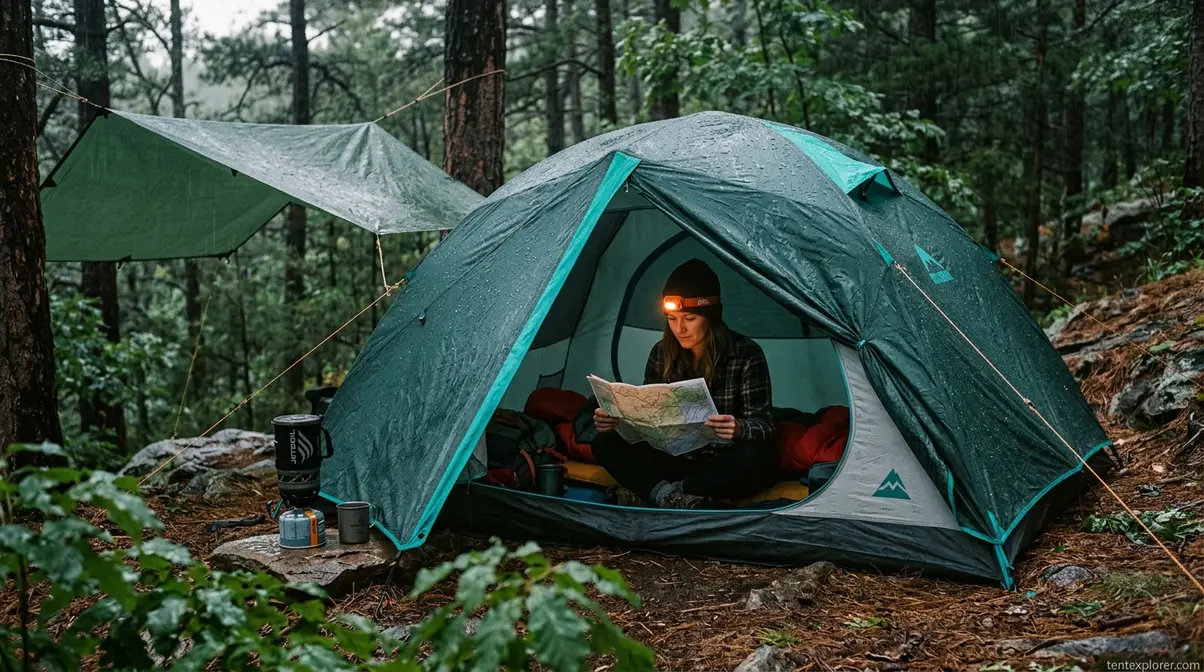
Weather changes faster than forecasts predict. Even with the best preparation, a surprise storm will catch you eventually. Carry a lightweight rain jacket and a tarp as backup shelter regardless of the forecast — these two items have rescued more camping trips than any other gear.
Campsite neighbors are unpredictable. You can follow every etiquette rule and still end up next to a group that doesn’t. Designated campgrounds vary enormously in culture. Reading recent reviews on Recreation.gov before booking helps you identify family-friendly, quiet sites versus party-adjacent ones.
When to Choose a Guided Trip or Glamping Instead
This guide is built for campers who want to develop real outdoor competency. However, there are legitimate scenarios where a guided trip or glamping is the smarter choice — and recognizing them is part of honest preparation.
Choose a guided trip if: you’re camping in genuinely remote backcountry, you have a medical condition that requires immediate access to care, or you’re bringing children under 10 on their first overnight. A certified guide adds safety infrastructure that self-guided camping cannot replicate.
Choose glamping if: your primary goal is the outdoor experience rather than the camping skills, or if one member of your group has mobility limitations that make ground-level sleeping or primitive facilities difficult. There’s no shame in a comfortable starting point — many committed campers started in a glamping tent.
The goal of The Camping Confidence Stack isn’t to make camping harder than it needs to be. It’s to eliminate the specific, preventable failures that turn an eager first-timer into someone who never tries again.
Frequently Asked Questions
What is the 3-3-3 rule for camping?
The 3-3-3 rule recommends driving no more than 300 miles per day, arriving at your campsite by 3 p.m., and staying for at least 3 nights. Originally developed for RV travel, it applies equally well to tent camping road trips. The arrival time limit ensures you set up in daylight, reducing both setup errors and safety risks. Staying 3+ nights gives you time to actually settle in and explore rather than constantly breaking camp. For your first trip, the more conservative 2-2-2 rule is an even better starting point (KOA Camping Blog, 2024).
What are the 7 C’s of camping?
The 7 C’s of camping are Care, Caution, Courtesy, Cleanliness, Cooperation, Conservation, and Common Sense — a widely recognized code of ethics for campground behavior. Care means being considerate of fellow campers. Caution covers safe equipment use. Courtesy includes respecting quiet hours and keeping pets leashed. Cleanliness means leaving your site better than you found it. Cooperation means following posted regulations. Conservation means protecting the natural environment. Common Sense means applying good judgment throughout (RV Tip of the Day). Violating any of these — especially Courtesy — is the fastest way to create conflict with campground neighbors.
What is the 4-4-4 rule for camping?
The 4-4-4 rule means driving no more than 400 miles per day, arriving by 4 p.m., and staying at least 4 nights per site. It’s the most relaxed of the three travel frameworks, designed for experienced campers covering long distances on extended trips. The 4-night minimum encourages genuine exploration of each location rather than rushing to the next destination. Most beginners should start with the 2-2-2 or 3-3-3 rule before adopting the 4-4-4 framework — the longer daily distances require more driving stamina and campsite planning (RVshare, 2025).
What is the 2-2-2 rule for camping?
The 2-2-2 rule — drive no more than 200 miles, arrive by 2 p.m., stay at least 2 nights — is the most beginner-friendly travel framework. The early arrival time is its biggest advantage: you have maximum daylight for setup, site exploration, and correcting any gear problems before dark. The 200-mile limit reduces driver fatigue significantly, which matters when you’re also managing gear, kids, or an unfamiliar route. For a first camping trip, this framework eliminates one of the most common logistical mistakes — arriving after dark — almost entirely (KOA Camping Blog, 2024).
How deep should a cathole be for camping?
A Leave No Trace-compliant cathole should be 6-8 inches deep and 4-6 inches wide, dug at least 200 feet (approximately 70 adult paces) from any water source, trail, or campsite (Leave No Trace, lnt.org). A small garden trowel is the right tool — the blade length is roughly the correct depth guide. After use, cover and disguise the hole with the original soil. Pack out all toilet paper rather than burying it. This standard applies in most backcountry environments; some desert ecosystems have different requirements, so check local regulations.
What R-value sleeping pad do I need for camping?
For three-season camping (spring through fall), choose a sleeping pad with an R-value of at least 3-4. Summer camping above 50°F can work with R-1 to R-2, but anything below 50°F overnight requires R-3 or higher. Winter camping demands R-5.5 or above (REI Expert Advice, 2026). R-values are standardized under ASTM F3340-22, so you can compare pads from different brands directly. Remember: the sleeping pad’s R-value is more important than your sleeping bag’s temperature rating in cold conditions, because ground contact removes heat up to 25 times faster than cold air.
What should I look for when selecting a campsite to avoid hazards?
Scan the canopy above your tent site for widowmakers — dead or broken branches that can fall without warning. Look for loose bark, fungal growth, woodpecker holes, or visibly hanging branches as warning signs. Beyond overhead hazards, avoid pitching in low-lying areas that collect water during rain, and stay at least 200 feet from water sources for waste and washing. Check for ant mounds, wasp nests, and uneven ground that will make sleeping uncomfortable. Arrive before dark so you can actually see these hazards — night arrival makes site assessment nearly impossible.
What food storage rules do I need to follow while camping?
All food, trash, and scented items must be stored in a bear-resistant container or bear box when not in active use — this is legally required in many national parks (National Park Service, 2026). Never store food in your tent, even sealed packaging. Place bear canisters 25-50 feet from your sleeping area. Cook and eat at least 200 feet from your tent when possible. Scented items include toiletries, sunscreen, lip balm, and empty food wrappers — not just the food itself. Check your specific campground’s rules on Recreation.gov before you arrive, as requirements vary by location and season.
The Confidence to Actually Go
For first-time campers, the 14 beginner camping mistakes in this guide cluster into three layers — gear readiness, logistical clarity, and environmental awareness — forming The Camping Confidence Stack. Address all three before you leave, and the most common trip-ending failures become non-issues. The research is clear: the campers who have terrible first experiences are almost always missing preparation in one specific layer, not all three. Identify your weakest layer and fix it first.
The Camping Confidence Stack isn’t about perfection — it’s about removing the preventable failures so that what remains is the actual experience of being outdoors. The cold night, the unexpected rain shower, the neighbor’s dog at midnight — those are camping. The missing tent pole, the empty phone battery, the improperly stored food — those are preparation failures that this guide exists to eliminate.
Your next step is concrete: plan a shakedown trip this weekend. Set up your tent in the backyard. Sleep in your sleep system for one night. Cook one meal on your stove. Run through the checklist. You’ll discover two or three things that need fixing — and fixing them at home is infinitely better than discovering them at the trailhead. Check Recreation.gov for a beginner-friendly campsite within two hours of home, book two nights using the 2-2-2 rule, and go. The confidence comes from doing it, not from reading about it.