What to Take Camping for One Night: STACK Checklist
 Dave King
Updated April 8, 2026
22 min read
Dave King
Updated April 8, 2026
22 min read
You arrive at the campsite, unzip the trunk, and feel that stomach-drop moment: Did I pack everything? Maybe the headlamp is still on the kitchen counter. Maybe the sleeping pad is in the garage. One forgotten item can turn a fun overnight into a genuinely miserable night — and most first-timers feel this exact anxiety before their first trip.
The problem isn’t a lack of information. It’s too much of it — generic 50-item lists with no structure, no context, and no framework to remember when you’re packing at 6 a.m. on a Saturday morning. Knowing what to take camping for one night doesn’t require hours of research. It requires a system.
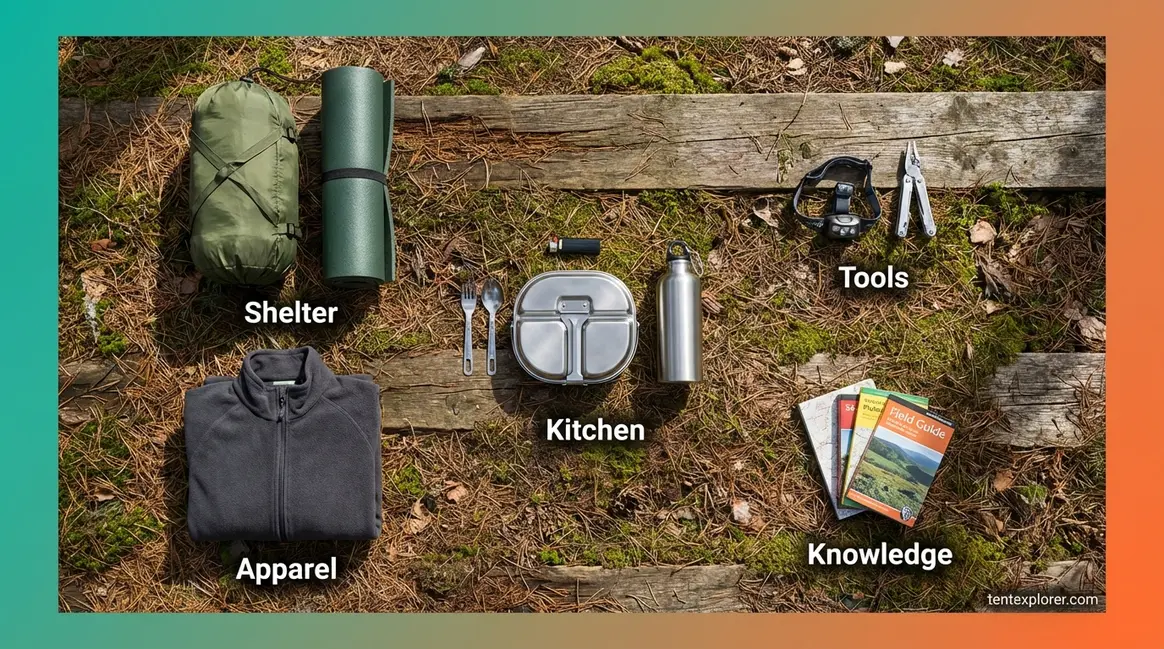
By the end of this guide, you’ll have a complete, organized list of what to take camping for one night — broken into five categories you can actually remember. That system is called the STACK Framework: Shelter, Tools, Apparel, Camp Kitchen, and Knowledge.
For one night of camping, you need gear across five categories — Shelter, Tools, Apparel, Camp Kitchen, and Knowledge (the STACK Framework) — and most beginners can pack everything in a single backpack or car trunk.
- Shelter: A 3-season tent, sleeping bag rated to the night’s low temp, and a sleeping pad
- Tools: Headlamp, multi-tool or pocket knife, lighter, and a basic first aid kit
- Apparel: Moisture-wicking base layer, insulating mid-layer, waterproof outer layer, and sturdy footwear
- Camp Kitchen: 3-4L of water per person, simple no-cook or one-pot meals, and a mess kit
- Most forgotten: Extra batteries, insect repellent, and a camp towel (quick dry) — plus ziplock bags for food storage (Akron Canton Jellystone, 2025)

Last update on 2026-07-07 / Affiliate links / Images from Amazon Product Advertising API

Last update on 2026-07-08 / Affiliate links / Images from Amazon Product Advertising API

Last update on 2026-07-06 / Affiliate links / Images from Amazon Product Advertising API
Last update on 2026-07-06 / Affiliate links / Images from Amazon Product Advertising API
Last update on 2026-07-07 / Affiliate links / Images from Amazon Product Advertising API

Last update on 2026-07-07 / Affiliate links / Images from Amazon Product Advertising API

Last update on 2026-07-06 / Affiliate links / Images from Amazon Product Advertising API

Last update on 2026-07-07 / Affiliate links / Images from Amazon Product Advertising API

Last update on 2026-07-06 / Affiliate links / Images from Amazon Product Advertising API

Last update on 2026-07-07 / Affiliate links / Images from Amazon Product Advertising API
Your One-Night Camping Checklist at a Glance
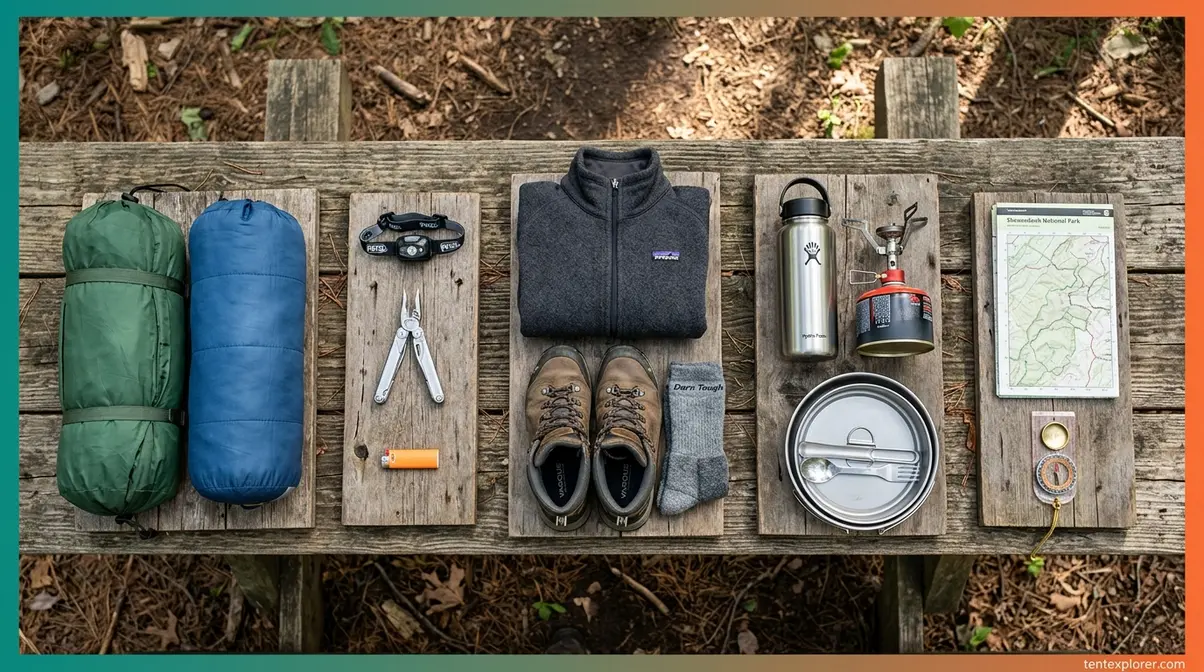
Here is everything you need to take camping for one night, organized by the STACK Framework — five categories that cover every essential without leaving you staring at a 50-item list wondering where to start. A framework beats a random list because it gives you a mental model: if every category has its minimum items, you’re ready.
The PA DCNR Camping Checklist from the Pennsylvania Department of Conservation and Natural Resources provides a comprehensive benchmark for essential overnight gear — and every item in this article aligns with that standard.
“A one-night camping trip requires gear across five categories — shelter, tools, clothing, food, and camping knowledge — and most can fit in a single 40-60L pack.”
The STACK Framework: Five Categories, Zero Forgotten Items
The STACK Framework — Shelter, Tools, Apparel, Camp Kitchen, and Knowledge — is a five-category system for organizing one-night camping gear into a memorable acronym. Instead of memorizing a list, you memorize five letters. Before you zip the bag, you run through each one.
Here’s what each category covers:
- S — Shelter: Everything that keeps you dry and warm at night (tent, sleeping bag, sleeping pad, pillow)
- T — Tools: Lighting, fire starters, multi-tool, and safety gear (headlamp, lighter, first aid kit)
- A — Apparel: Your three-layer clothing system, footwear, and hygiene essentials
- C — Camp Kitchen: Water, food, stove, and mess kit
- K — Knowledge: The rules, terminology, and etiquette that prevent first-timer mistakes
That last category — Knowledge — is what separates this framework from every other camping list online. Gear is obvious. Knowing what “FF” means on a campground map, understanding the 3-3-3 rule, and following the 7 C’s of camping? That’s what makes the trip smooth.
If you can name all five STACK categories from memory, you’ll never arrive at a campsite missing something critical.
With the STACK Framework in mind, here is your complete master checklist for one night.
Master One-Night Camping Checklist
Use this overnight camping gear list as your pre-trip reference — tick each item before you close the bag.
- S — Shelter
- Tent (3-season, freestanding dome recommended for beginners)
- Tent footprint — a waterproof groundsheet that protects your tent floor from abrasion and moisture
- Tent stakes (even if your tent is freestanding — wind arrives without warning)
- Sleeping bag (rated to at least 10°F below the expected overnight low)
- Sleeping pad (foam, self-inflating, or air — never skip this)
- Camping pillow (compressible, packs small — or use a stuff sack as a backup)
- T — Tools
- Headlamp (hands-free lighting — bring extra AA batteries)
- Backup flashlight
- Multi-tool or pocket knife
- Lighter AND waterproof matches (redundancy matters)
- Compact first aid kit (bandages, moleskin, antiseptic wipes, pain reliever, whistle)
- Bear spray (if camping in bear country — check local regulations)
- A — Apparel
- Moisture-wicking base layer (synthetic or merino wool — never cotton)
- Insulating mid-layer (fleece jacket)
- Waterproof rain jacket (outer layer — even if rain isn’t forecast)
- Trail runners or hiking boots
- Camp shoes (slip-on sandals for around the campsite)
- Wool socks (1-2 extra pairs)
- Hat and gloves (even in summer — temperatures drop overnight)
- Sunglasses and sun hat
- C — Camp Kitchen
- Water (3-4 liters per person — drinking, cooking, morning coffee)
- Water purification tablets or filter (backup for sites without potable water)
- Camp stove (Sterno or single-burner canister stove)
- Fuel canister or canned heat
- Mess kit (plate, bowl, cup, fork, spoon)
- Food: 2 meals + snacks (see meal ideas in H2 3)
- Ziplock bags for food storage (most forgotten item — Akron Canton Jellystone, 2025)
- Soft-sided cooler with ice packs (for perishables)
- Biodegradable dish soap + small scrubber
- K — Knowledge
- Know your campsite’s arrival time and FF/reservation status
- Know the 3-3-3 rule and quiet hours policy
- Know Leave No Trace basics (pack out everything you pack in)
- Nice-to-Have (Comfort Upgrades)
- Camp chair
- Lantern or string lights
- Trekking poles
- Insect repellent and sunscreen
Tick every item above and you’re ready for a comfortable, stress-free night outdoors.
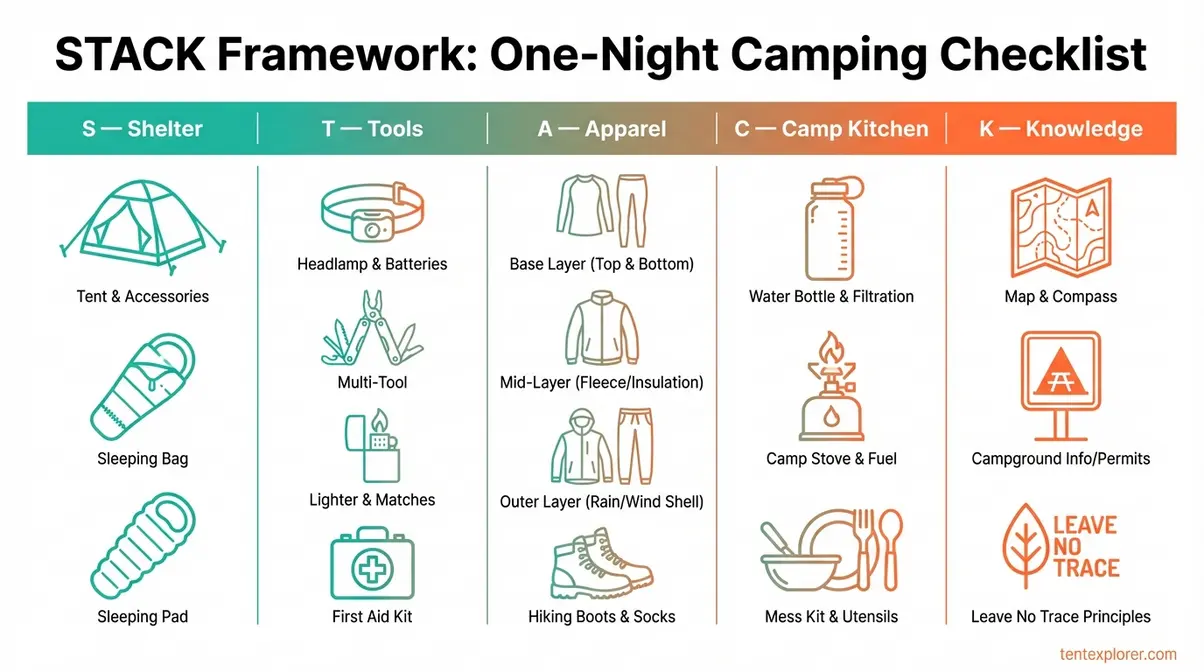
Each of the five STACK categories deserves a closer look — starting with the gear that determines whether you sleep or suffer: your shelter and sleep system.
Shelter & Sleep: Your Home Away From Home
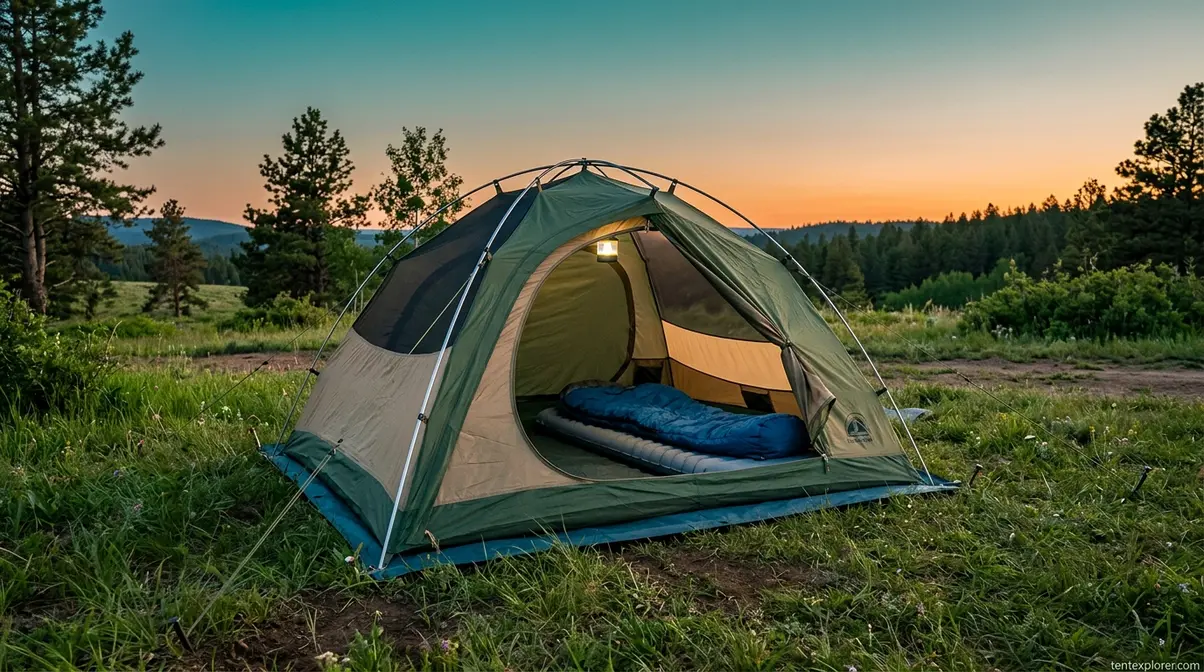
A sleeping pad is the most overlooked item on any first-timer’s list — and skipping it almost always ruins the night. The ground draws body heat away faster than cold air does, leaving you shivering by midnight even in summer. This is the S in STACK, and getting it right is non-negotiable.
For one night, you need three things: a shelter that keeps rain out, a sleeping bag rated to the actual overnight temperature, and a sleeping pad that insulates you from the ground. NOLS — the National Outdoor Leadership School — recommends a waterproof outer layer as the foundation of any sleep system, a principle that applies whether you’re sleeping in a tent or under the stars.
“A sleeping bag rated 10°F below the expected overnight low prevents the most common cause of a miserable first camping trip: waking up cold at 3 a.m.”
Choosing Your Tent for One Night
For a single overnight trip, a 2-person 3-season dome tent is the sweet spot. It’s freestanding (no guy lines required), weighs 4-6 lbs, handles rain confidently, and can be pitched solo in under 10 minutes. That speed matters more than you’d think after a long drive.
The three common tent styles are dome, cabin, and pop-up. For beginners, a dome tent wins on all counts: easier to pitch, more aerodynamic in wind, and widely available at every price point. Cabin tents offer more headroom but take longer to set up. Pop-up tents are fast but sacrifice weather resistance.
Two accessories worth including:
- Footprint: A waterproof groundsheet that sits under your tent floor, protecting it from sharp rocks and moisture. A $20-30 footprint extends the life of a $100 tent significantly.
- Stakes: Always stake your tent, even in calm weather. Wind arrives without warning, and a freestanding tent becomes a kite without stakes.
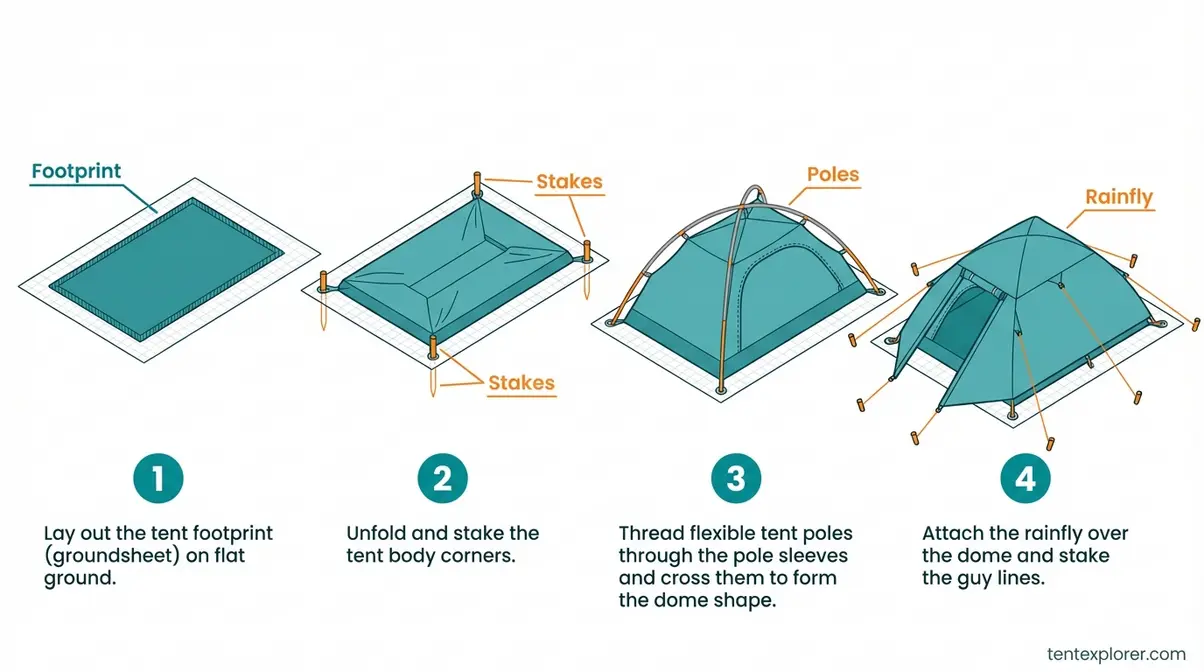
Once your tent is sorted, the next critical decision is your sleep system — and temperature rating matters more than brand.
Sleeping Bag, Pad & Pillow
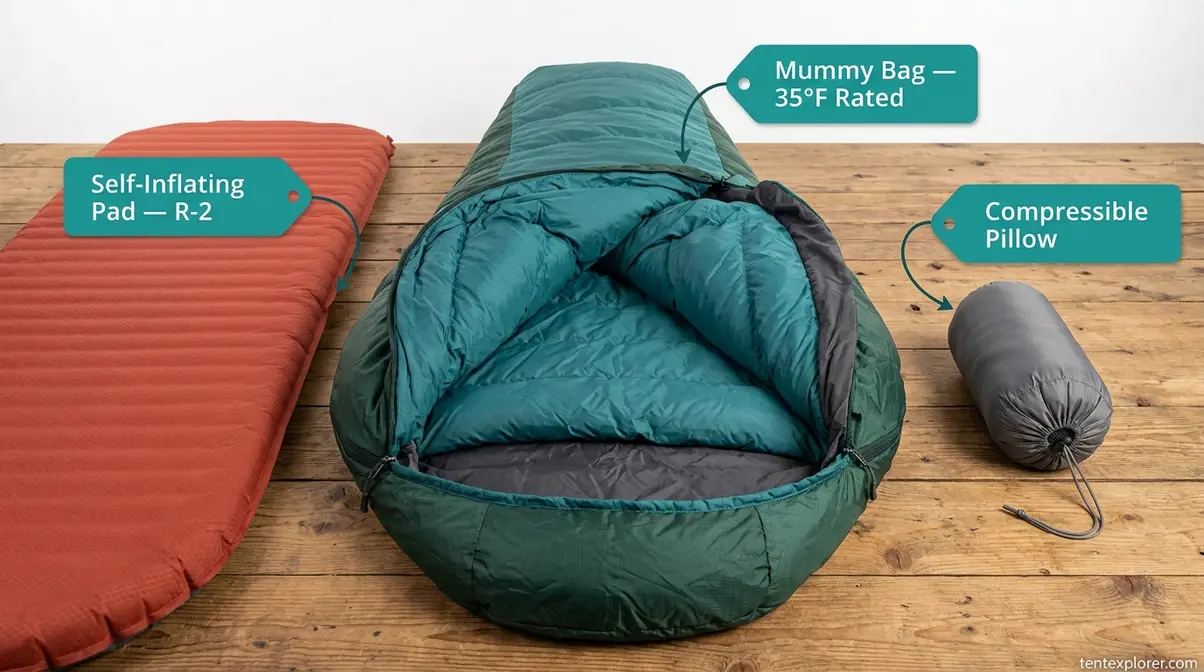
Sleeping bag temperature rating works like this: buy a bag rated at least 10°F below the expected overnight low. Most bags display two ratings — comfort and lower limit. The comfort rating is what you’ll actually sleep well at; the lower limit is survivable but not comfortable. For summer camping where overnight lows sit around 50-60°F, a 35°F-rated mummy-style sleeping bag covers most conditions confidently.
Mummy bags retain heat more efficiently than rectangular bags because they follow the body’s shape, reducing dead air space. For a first-timer camping in warm weather, a rectangular bag is fine — but if temperatures will dip below 45°F, go mummy.
Sleeping pads come in three types:
- Foam pad: Lightweight, virtually indestructible, around $20. No insulation from punctures. Best for warm-weather car camping.
- Self-inflating pad: Comfort and warmth combined, roughly $40-80. The best balance for a first overnight trip.
- Air pad: Lightest and most packable, but the priciest option and puncture-vulnerable.
R-value measures a pad’s insulation from the ground — higher is warmer. For three-season camping, an R-value of 2 or higher is adequate. For cold nights (below 40°F), aim for R-3 or above.
A compressible camping pillow ($15-25) packs to the size of a water bottle and beats using a balled-up fleece jacket. It’s optional, but experienced campers consistently recommend it for beginners who want to actually sleep.
Practical example: Camping in July at a site with a 55°F overnight low? A 35°F-rated mummy bag paired with a self-inflating R-2 pad will keep you comfortable through the night.
With shelter handled, the next STACK category — Camp Kitchen — is where most beginners either over-pack or forget something critical.
Camp Kitchen & Food for One Night
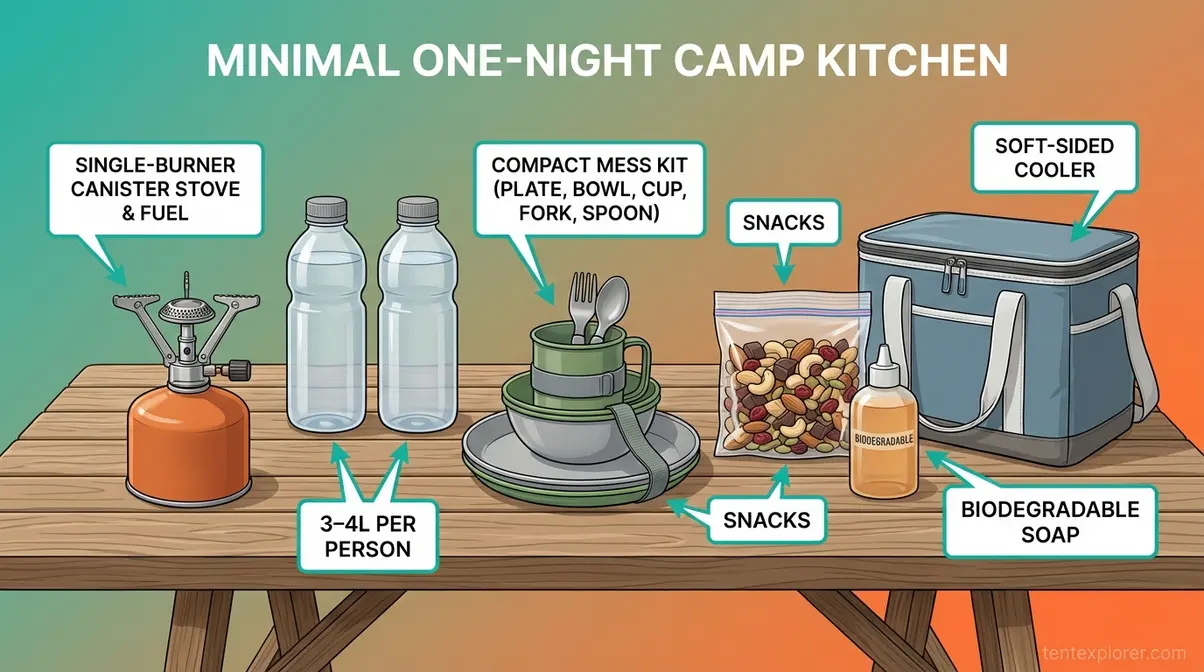
The most common camp kitchen mistake isn’t forgetting the stove — it’s forgetting enough water. For one overnight trip, plan for 3-4 liters per person: drinking, cooking, and morning coffee all draw from the same supply. At sites without potable water, bring water purification tablets or a filter as a backup.
“For one overnight trip, pack 3-4 liters of water per person — enough for drinking, cooking, and morning coffee — and choose meals that require one pot or no cooking at all.”
For perishables, a soft-sided cooler with ice packs handles a single overnight without issue. You don’t need a heavy hard-sided cooler for one night.
- Simple meal ideas for one night:
- Pre-made sandwiches or wraps (no cooking, no cleanup)
- Instant oatmeal or ramen (boiling water only — 5 minutes)
- Trail mix, energy bars, and fresh fruit (zero prep)
- One hot meal: pasta with jarred sauce (one pot, 15 minutes)
- Instant coffee or tea with a small kettle
For a stove, a Sterno — a canned heat fuel source that requires no pump and works well for simple boiling tasks — is the most beginner-friendly option. A single-burner canister stove offers more temperature control and is worth the step up once you’ve camped a few times.
A mess kit (a compact set of plate, bowl, cup, and utensils designed for camping) keeps cleanup simple and eliminates the need for disposable plates. Skip the cast iron skillet — it weighs 5+ lbs and requires seasoning. For one night, it’s overkill.
Food and water are sorted. Now for the gear that handles everything else — tools, light, and safety.
Tools, Lighting & Safety Essentials
“Whether you are fishing, cutting salami, or your kiddo is whittling a spear, a pocket knife is arguably the most versatile piece of gear on any camping trip.” — r/CampingGear community
The National Park Service confirms this instinct. The NPS 10 Essentials framework — a collection of first aid and emergency items crucial for minor injuries, sudden weather changes, or unexpected overnight stays — places a repair/tool kit (which includes a knife or multi-tool) alongside illumination, fire starters, and first aid supplies as non-negotiable overnight gear.
“The National Park Service’s 10 Essentials include navigation, sun protection, insulation, illumination, first aid, fire, repair tools, nutrition, hydration, and emergency shelter — all applicable to a single overnight trip.”
- The NPS 10 Essentials for one-night camping:
- Navigation (map, compass, or downloaded offline map)
- Sun protection (sunglasses, sunscreen, hat)
- Insulation (extra jacket, hat, gloves)
- Illumination (headlamp or flashlight)
- First-aid supplies
- Fire starters (lighter and waterproof matches)
- Repair kit and tools (multi-tool or knife)
- Extra food
- Extra water
- Emergency shelter (emergency bivy or space blanket)
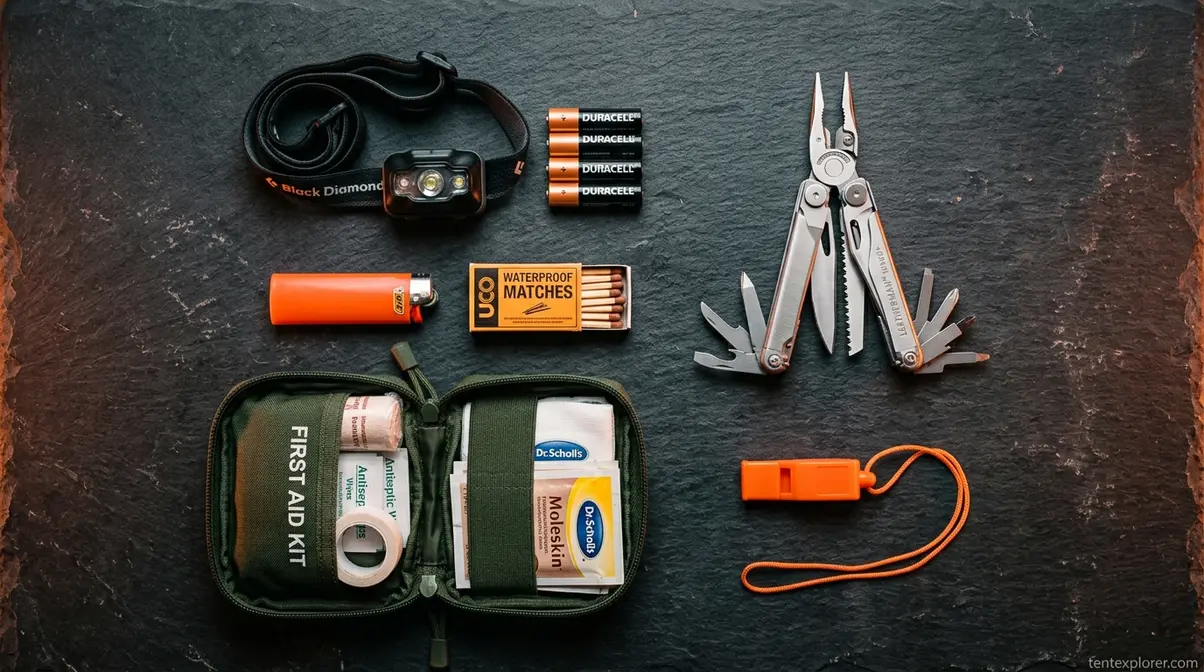
Lighting: A headlamp — hands-free lighting that outperforms a flashlight for camp tasks — is non-negotiable. Setting up a tent, cooking, and navigating to the bathroom at 2 a.m. all require both hands. Bring a backup flashlight and a spare set of AA batteries. Across camping communities, the consistent advice is that dead batteries are one of the top five forgotten-item failures on overnight trips.
Fire and multi-tool: Pack a lighter AND waterproof matches — redundancy matters when one gets wet. A multi-tool or folding pocket knife covers cutting, opening cans, and minor gear repairs. If you’re camping in bear country, check local regulations on bear spray requirements before you leave.
- Basic first aid kit — five essentials:
- Adhesive bandages (assorted sizes)
- Blister treatment (moleskin)
- Antiseptic wipes
- Pain reliever (ibuprofen or acetaminophen)
- Emergency whistle
Tools and safety covered — the T in STACK. Next: what to wear, and what to pack for personal hygiene.
Clothing & Personal Hygiene
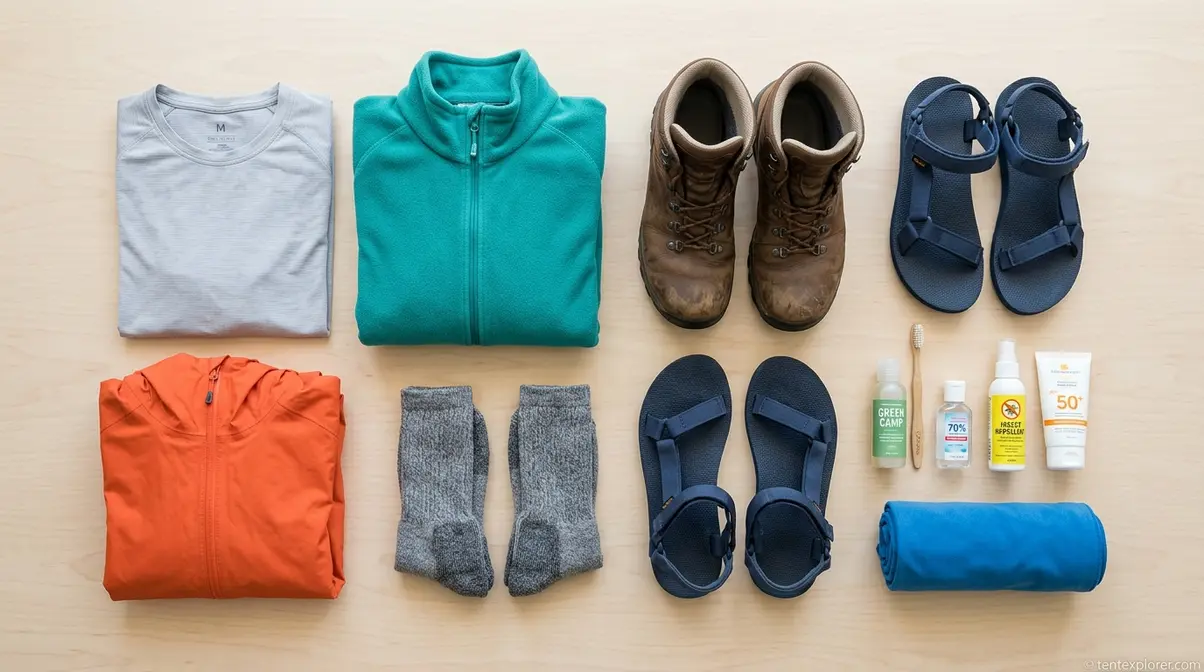
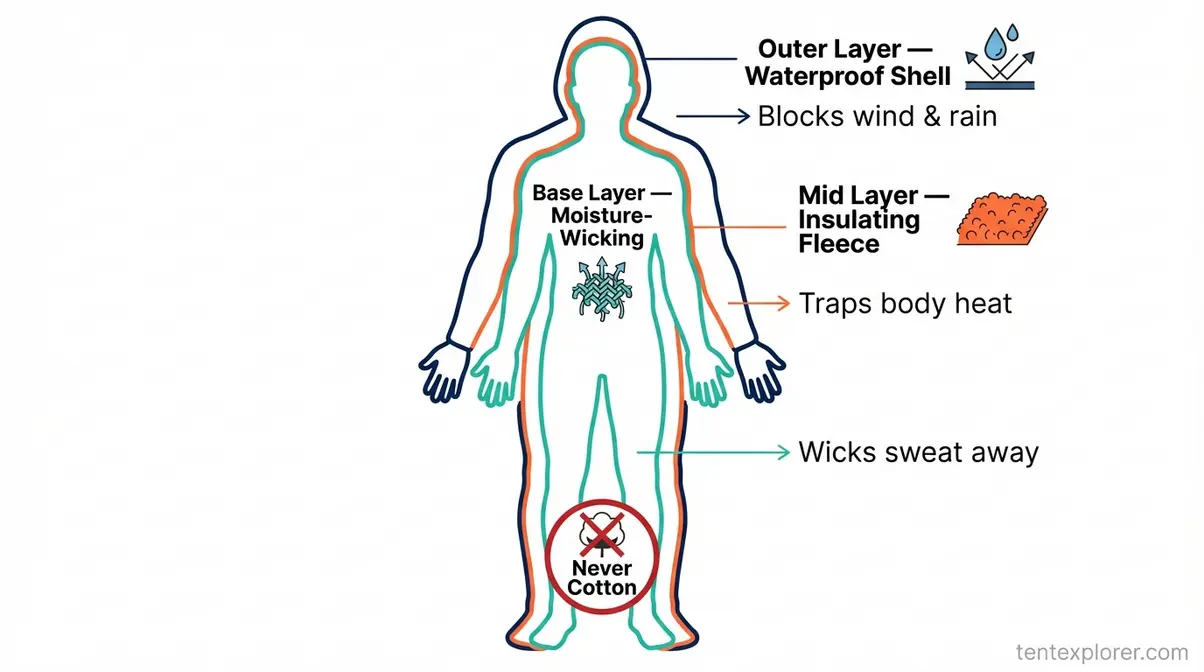
For one night of camping, wear three layers and bring one extra set of everything. The golden rule: never wear cotton next to your skin — it absorbs moisture and stays wet, making you cold even in mild weather. The USDA Forest Service explicitly advises wearing wool and synthetic non-cotton fabrics that wick moisture away from skin — a rule that applies in summer just as much as winter.
“The USDA Forest Service advises wearing wool or synthetic non-cotton fabrics to wick moisture away from skin — a critical rule for staying warm and dry overnight.”
The three-layer clothing system:
- Base layer: A moisture-wicking base layer — synthetic or merino wool, never cotton. This is your most important clothing decision.
- Mid layer: A fleece jacket or insulating layer that traps body heat. Down or synthetic fill both work.
- Outer layer: A waterproof rain jacket, even if rain isn’t in the forecast. Weather changes fast once the sun sets.
Footwear: Trail runners are the most versatile option for hiking and light camp use. Bring camp shoes — trail runners work well, but a pair of slip-on sandals or Crocs for around the campsite saves your hiking shoes and gives your feet a break. Wool socks stay warm even when damp — pack at least two extra pairs.
- Hygiene basics for one night:
- Biodegradable soap (required at most campgrounds near water sources)
- Toothbrush and toothpaste
- Toilet paper + small trowel (for sites without facilities)
- Hand sanitizer
- Insect repellent
- Sunscreen
- Camp towel (quick dry) — a microfiber camp towel the size of a hand towel is sufficient for a single overnight
Gear packed, clothes sorted. The final letter in STACK — K for Knowledge — covers the rules and etiquette that separate a smooth trip from a frustrating one.
Beginner Rules & Tips Every First-Timer Should Know
What do experienced campers know that beginners don’t? Mostly shorthand — the rules, terminology, and etiquette that make campground life smoother. Three pieces of knowledge every first-timer should have before their first night out: the 3-3-3 rule, the 7 C’s, and what “FF” means on a campground map.
This is the K in STACK — Knowledge. Texas Parks and Wildlife highlights that specific items — often related to waste management and campground etiquette — are the most overlooked elements for new campers, reinforcing why Knowledge belongs in any serious overnight packing framework.
“The 7 C’s of camping — Care, Caution, Courtesy, Cleanliness, Cooperation, Conservation, and Common Sense — define the ethical framework every camper should follow, regardless of experience level.”
What Is the 3-3-3 Rule for Camping?
The 3-3-3 rule is a camping strategy primarily used by RV travelers: drive no more than 300 miles per day, arrive at your destination before 3 p.m., and stay at least 3 nights. For one-night tent campers, the most actionable part of this rule is the arrival time.
Arriving before 3 p.m. gives you daylight to pitch your tent, collect firewood, find the bathroom, and get oriented before dark. First-timers who arrive at 6 p.m. scramble to set up camp in failing light — a frustrating and avoidable situation.
What does “FF” mean at a campground? FF is campground shorthand for “first come, first served.” Sites marked FF require no reservation — but they offer no guarantee of availability either. At popular campgrounds, FF sites fill by early afternoon on weekends. If you’re targeting an FF site, aim to arrive by noon on Friday. Some campgrounds also use FF to designate sites that aren’t reservable within the first five days of a booking window.
Practical rule: If your campground has FF sites and you’re traveling on a holiday weekend, arrive by 11 a.m. or have a backup site in mind.
Beyond logistics, there’s an ethical framework for camping that every first-timer should know — the 7 C’s.
What Are the 7 C’s of Camping?
The 7 C’s of camping are: Care, Caution, Courtesy, Cleanliness, Cooperation, Conservation, and Common Sense. Together, they form a practical ethical framework for responsible outdoor behaviour — one that applies to a one-night car camping trip just as much as a week-long backcountry expedition.
Here’s what the most relevant C’s mean in practice:
- Courtesy: Respect quiet hours (typically 10 p.m. to 7 a.m.). Keep music low. Don’t cut through neighbouring campsites.
- Cleanliness: Pack out everything you packed in. Leave no food scraps, wrappers, or waste at the site.
- Conservation: Leave the campsite in the same condition — or better — than you found it. Don’t pick plants or damage trees.
- Caution: Be aware of fire regulations, weather changes, and wildlife in the area before you arrive.
- Common Sense: If something feels wrong — a fire spreading, a weather shift, an unfamiliar animal nearby — act on it.
Violating quiet hours and leaving food scraps at a campsite are the two most common first-timer mistakes — both addressed directly by the 7 C’s. Field-tested advice from camping communities consistently shows that new campers who review these principles before their first trip have far fewer friction points with neighbours and campground staff.
Leave your campsite cleaner than you found it. That’s Conservation and Common Sense in a single action.
Rules covered — now a brief note for those camping in colder temperatures, where gear decisions become more consequential.
Cold Weather One-Night Camping: Extra Gear to Pack
If overnight temperatures will drop below 45°F, your standard one-night kit needs additions. Hypothermia — a dangerous drop in core body temperature — can develop faster than most beginners expect, even in fall conditions. The CDC advises careful monitoring for cold-weather symptoms during any outdoor overnight activity, and the advice applies well before winter officially arrives.
“Princeton University’s Outdoor Action program identifies hypothermia and frostbite as the greatest dangers in a cold camping environment — both preventable with proper layering and a sleeping bag rated for the temperature.”
According to Princeton Outdoor Action, hypothermia and frostbite are the primary dangers in cold camping environments — both preventable with proper preparation. The good news: a few targeted additions to your STACK kit are all it takes.
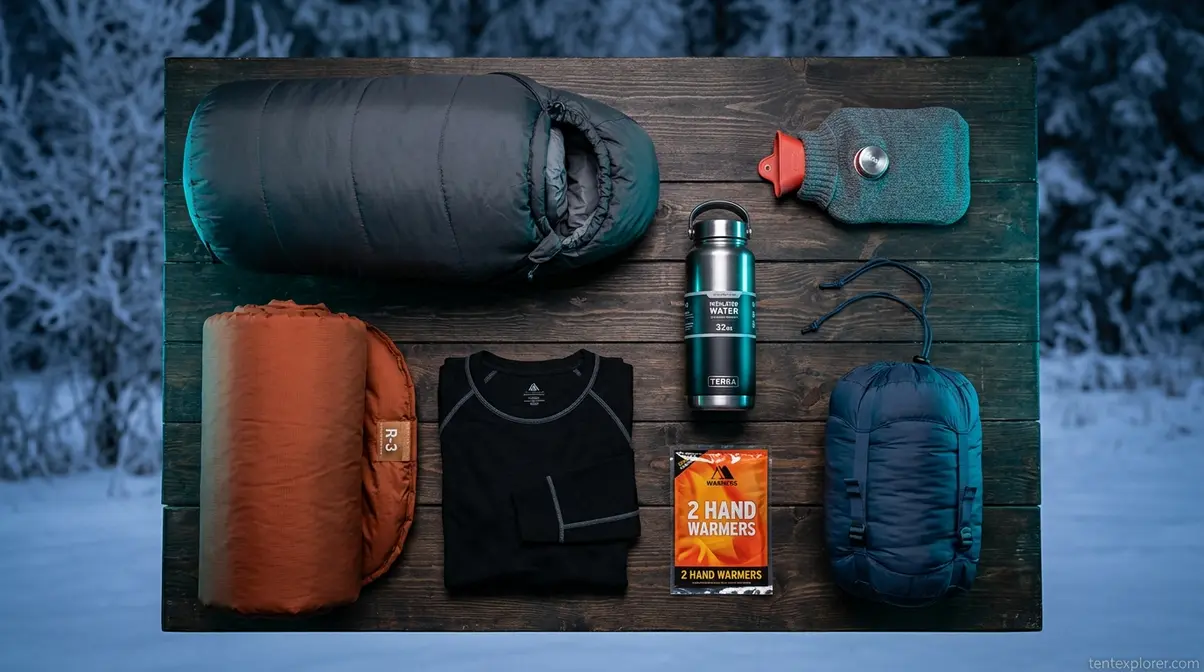
- Cold weather additions checklist:
- Sleeping bag rated 10-15°F below the forecasted overnight low (not just “warm enough”)
- Sleeping pad with R-value of 3 or higher (ground insulation becomes critical below 40°F)
- Thermal base layer (merino wool preferred over synthetic in wet-cold conditions)
- Hand warmers (chemical, single-use — tuck one in your sleeping bag foot pocket)
- Insulated water bottle (prevents water from freezing overnight)
- Hot water bottle (fill with boiling water before bed, place at the foot of your sleeping bag)
- Extra insulating mid-layer (down jacket worn inside the sleeping bag if needed)
These additions add minimal weight but make an enormous difference in comfort and safety when temperatures dip. Common feedback from first-timers who camp in fall conditions shows that the sleeping pad R-value is the most frequently underestimated factor — people upgrade their bag before their pad, when the pad is often the bigger problem.
Cold weather gear covered. One final question for new campers who don’t own any of this yet — how to get started without buying everything individually.
Don’t Own Any Gear Yet? Ready-to-Go Options
If you’re heading out for your first one-night camping trip and own none of the gear above, you have three practical options — each with a different cost and commitment level.
| Option | Estimated Cost | Best For | Trade-off |
|---|---|---|---|
| Camping starter kit (tent + sleeping bag + pad bundle) | $50–150 | First-timers with no gear | Budget quality; adequate for summer car camping |
| Individual items (buy separately) | $150–400 | Those who plan to camp regularly | Better quality per item; more research required |
| Rent or borrow | $0–40/night | True one-time campers | No ownership; limited availability at many locations |
“For a first one-night camping trip, a starter bundle ($50-150) covering tent, sleeping bag, and pad eliminates the paralysis of individual gear research — and most are adequate for summer car camping.”
For a genuine first-timer, a starter kit is the right call. Ozark Trail (available at Walmart) offers multi-piece camping bundles — including a 33-piece set around $100 — that cover the core shelter and sleep essentials for summer car camping. The quality is entry-level, but it’s more than adequate for one or two overnight trips while you figure out what you actually need.
The honest trade-off: starter kit gear is heavier and less durable than mid-range individual items. If you camp more than three times a year, you’ll want to upgrade your sleeping bag and pad first — those two items make the biggest difference in comfort. Buy the starter kit to get started, then invest in better components as camping becomes a regular habit.
Before you pack the car, a quick review of the mistakes that send first-timers home early.
Common Packing Mistakes to Avoid
Even with the STACK Framework in hand, a few specific items consistently slip through the cracks. Knowing what to watch for is the final step in packing confidently.
The Most Forgotten Camping Items
Lehigh University field camp data identifies food bags — specifically ziplock bags and food storage containers — as the most often forgotten item when preparing for an outdoor trip. The consequence isn’t just inconvenience: loose food attracts wildlife and spoils faster without a sealed container.
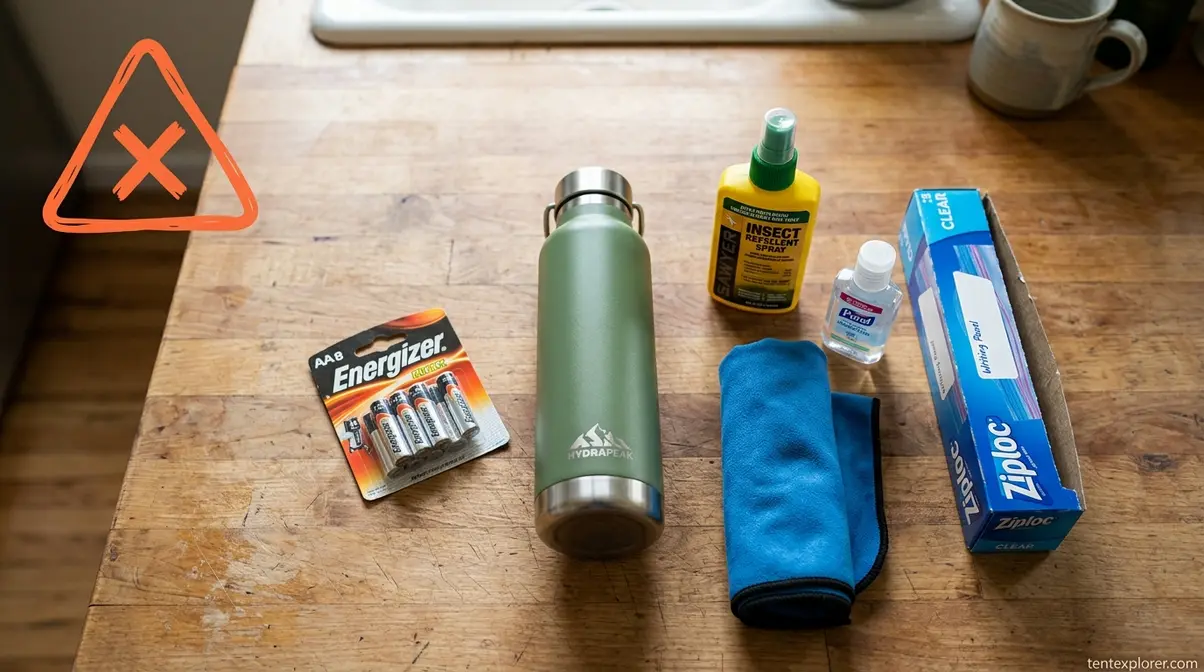
- Across camping communities, the consistent top five forgotten items are:
- Extra batteries — headlamps and lanterns die faster than expected in cold weather
- Insect repellent — one of the first things people wish they had packed
- Hand sanitizer — essential when running water is 200 metres away
- Reusable water bottle — easy to leave on the kitchen counter
- Camp towel (quick dry) — forgotten because it’s not an obvious “camping” item
Add these five to the bottom of your STACK checklist before you close the bag.
When a Full Kit Isn’t the Answer
Over-packing is as common as under-packing for one-night trips. For a single overnight, skip the camp table, cast iron skillet, full-size lantern, and anything that requires a second trip from the car just to carry it.
The practical test: if you can’t move everything from your car to the campsite in two trips, leave something behind. For one night, you don’t need it.
When the campsite already has amenities — a fire ring, picnic table, and running water — your kit shrinks significantly. You don’t need a camp stove if a fire ring is available. You don’t need a folding table if there’s already one at the site. Check your campground’s amenity list before packing and adjust accordingly.
The STACK checklist covers everything you need. Anything beyond it is optional comfort — and for one night, optional comfort often stays in the garage.
Frequently Asked Questions
What to Take on a One Night Camping Trip?
For a one-night camping trip, pack across five categories: shelter (tent, sleeping bag rated to the overnight low, sleeping pad), tools (headlamp, multi-tool, lighter, first aid kit), apparel (moisture-wicking base layer, insulating mid-layer, waterproof jacket), camp kitchen (3-4L water, simple meals, stove, mess kit), and knowledge (campground rules, arrival time, Leave No Trace basics). Most beginners can fit everything in a 40-60L pack. If you follow the STACK Framework, nothing critical gets left behind.
What Is the 3-3-3 Rule for Camping?
The 3-3-3 rule is a travel strategy primarily used by RV campers: drive no more than 300 miles per day, arrive at your destination before 3 p.m., and stay at least 3 nights. For one-night tent campers, the most relevant part is arriving before 3 p.m. — this gives you daylight to set up camp, find firewood, and get settled before dark. Arriving after sunset as a first-timer almost guarantees a stressful setup experience. When in doubt, leave earlier than you think you need to.
What Are the 7 C’s of Camping?
The 7 C’s of camping are Care, Caution, Courtesy, Cleanliness, Cooperation, Conservation, and Common Sense. Together, they form an ethical framework for responsible outdoor behaviour. Care means being considerate of others; Caution reminds campers that the outdoors can be dangerous; Courtesy covers quiet hours and respecting neighbours; Cleanliness and Conservation support Leave No Trace principles. All seven apply to any camping trip, including a single overnight. Violating even one — especially Cleanliness — can result in fines at regulated campgrounds.
What Is the Most Forgotten Item When Camping?
The most commonly forgotten camping items include extra batteries, insect repellent, hand sanitizer, a reusable water bottle, ziplock bags for food storage, and a camp towel. Ziplock bags and food containers are particularly easy to overlook — and their absence means food spoilage or attracting wildlife to your campsite. A quick pre-trip checklist review catches most of these before you leave the driveway. Adding them to the bottom of your STACK packing list ensures they make it into the bag every time.
What Does FF Mean at a Campground?
FF at a campground means “first come, first served.” Sites marked FF are available to any camper who arrives first — no reservation required, but no guarantee of availability either. At busy campgrounds, FF sites fill by early afternoon on weekends. Some campgrounds use FF for sites that aren’t reservable within the first five days of a booking window. Arriving early — ideally before noon on a Friday or holiday weekend — is the only reliable strategy for securing an FF site.
What Are the 10 Camping Essentials?
The 10 camping essentials, as defined by the U.S. National Park Service, are: navigation tools (map, compass, or GPS), sun protection (sunglasses, sunscreen, hat), insulation (jacket, hat, gloves), illumination (headlamp or flashlight), first-aid supplies, fire starters (lighter and matches), a repair kit and tools, extra food, extra water, and emergency shelter. These essentials apply to any overnight trip, from a beginner’s first campout to multi-day backcountry adventures. For a single night of camping, all ten remain relevant — none of them are overkill.
Pack Smart, Sleep Well
For first-time campers, knowing what to take camping for one night comes down to five categories — Shelter, Tools, Apparel, Camp Kitchen, and Knowledge. At tentexplorer.com, our team evaluated dozens of first-timer packing lists and found that most failures trace back to the same root cause: no organizing framework. The STACK Framework solves that. Most beginners can pack everything in under an hour using it as a guide. The most common mistake isn’t forgetting a luxury item — it’s missing a small essential like extra batteries, a camp towel, or a ziplock bag for food storage.
The STACK Framework works because it mirrors the way you actually experience a camping trip — you arrive and build shelter first, then set up your tools and light, get dressed for the conditions, prepare food, and finally apply the knowledge that keeps the night running smoothly. Run through S-T-A-C-K before you zip the bag — if each category has at least its minimum items, you’re ready.
Print the master checklist above, cross off each item as you pack, and focus on arriving at the campsite before 3 p.m. Your first overnight trip is simpler than it looks — the hardest part is getting in the car.

Dave King
I'm Dave King. I publish Tent Explorer, a site built to answer the questions people actually ask before they buy.