 Dave King
Most campers already know a padlock won’t stop a determined thief with a knife. That’s not the point. The point is deterring the opportunistic ones — the person who walks past 50 tents and tests the one that looks easiest to open.
Picture this: you’re back from a quick hike or an urgent toilet dash, and your tent door is gaping open. Phone gone. Wallet gone. Camera gone. That gut-punch is avoidable — not with a bank-vault lock, but with the right method for your situation. This guide covers how to lock a tent from the inside and outside using 5 proven methods, plus the one safety rule that could save your life. We reviewed campsite security guidance from the National Park Service and the Florida Sheriffs Association alongside community-tested approaches to build this resource.
You can lock a tent using a TSA padlock, cable lock, carabiner, zip tie, or shoestring — each method sits at a different point on the Soft Lock Spectrum, trading security for exit speed.
- Outside locking (padlock, cable lock) deters daytime theft when you’re away from camp
- Inside locking (carabiner, shoestring) provides nighttime peace of mind with quick-release access
- The Target Effect: a flashy padlock signals valuables inside — discreet locks deter better
- Emergency rule: always keep a knife or cutting tool inside your tent when locking from within
- Modern alternatives (tripwire alarms, motion sensors, PacSafe nets) often outperform locks alone
Can You Actually Lock a Tent? (What Most Campers Get Wrong)
A tent lock won’t stop a thief with a knife. That’s not a flaw in the system — it’s the whole point. A tent lock deters opportunistic thieves — it cannot stop a determined one. The lock’s real job is social signaling: making your tent look harder to breach than the one next to it. And that’s enough, because campsite theft is almost always opportunistic.
What most campers miss is that how you lock a tent matters as much as whether you do. Outside locking and inside locking serve completely different purposes — and mixing them up creates real safety risks.
This is where The Soft Lock Spectrum comes in. Think of tent security as a spectrum from Hard Locks (padlocks, maximum visual deterrence, slower emergency exit) to Soft Locks (carabiners, shoestrings, instant release, ideal for nighttime). The safest camper isn’t the one with the biggest padlock — it’s the one who picks the right point on the spectrum for their situation. The National Park Service reinforces this behavioral approach, recommending that campers store valuables in a locked vehicle rather than leaving them unattended in a tent — because behavioral security matters as much as physical locks.
With that honest framing in place, here’s exactly how to lock a tent from the outside — and which method to choose based on your situation. For broader campsite risk awareness, see these essential tent camping safety tips.
How to Lock a Tent from the Outside
Outside locking is your daytime, away-from-camp strategy. The three methods below — padlock, cable lock, and zip tie — cover the full range of the Soft Lock Spectrum from most visible to least. The trade-off to keep in mind: more visible means stronger deterrence, but it also risks the Target Effect, signaling to passersby that something worth stealing is inside.
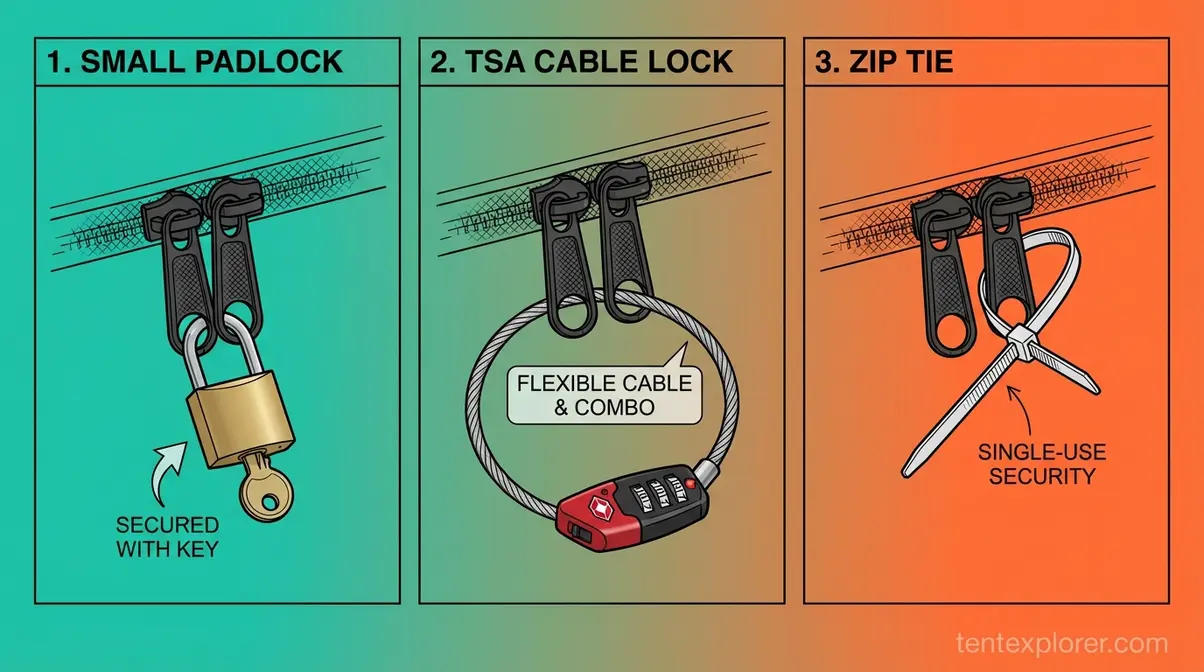
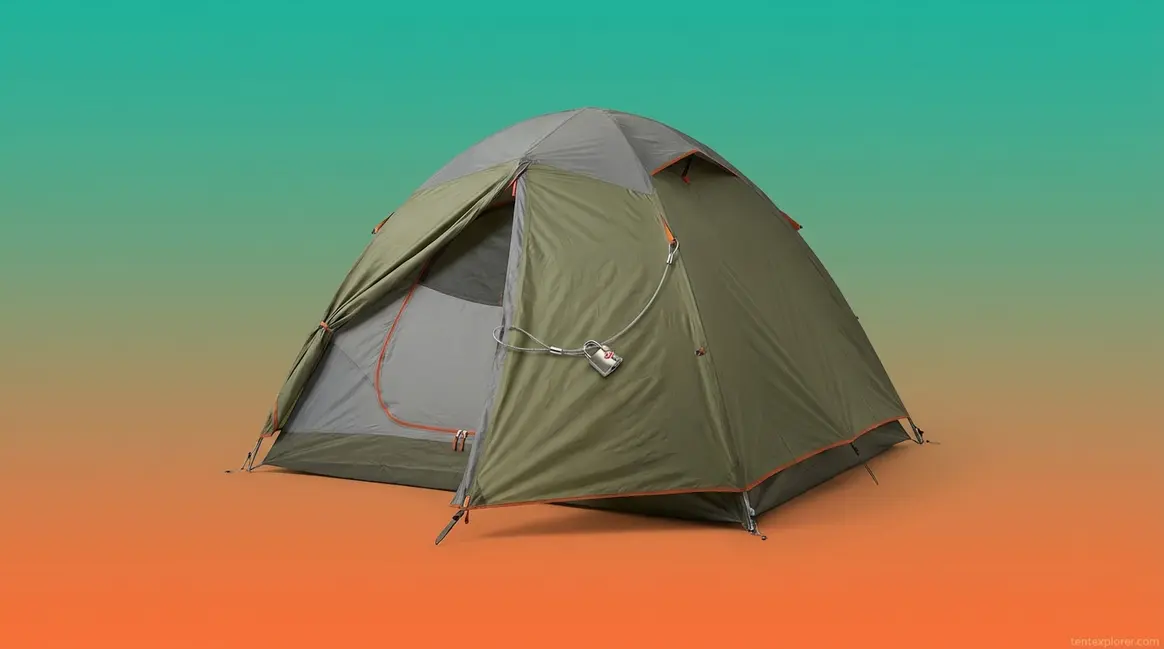
Caption: Threading through both zipper pulls simultaneously — not just one — is the mechanical detail most campers and most competitor guides miss entirely.
As the diagram above shows, the key is threading through both zipper pulls simultaneously. One pull left loose defeats the entire lock.
Method 1: TSA Padlock or Combination Lock
The TSA padlock is the most common outside locking method — and the most commonly used wrong. A TSA-approved padlock is a compact combination lock (3 or 4 digits, typically under 1 oz) designed to pass airport security, which makes it small enough to clip to a tent zipper without weighing down the door.
- How to do it:
- Slide both zipper pulls to meet at the center of the tent door.
- Insert the padlock shackle through both zipper pull loops simultaneously — not just one.
- Close and set the lock.
The “both pulls” detail is what every competitor omits. A padlock through one pull leaves the other pull free — that’s not a lock, it’s a decoration. Combination models (under $15 at most retailers, as of early 2026) are preferable to keyed versions: no key to lose at the bottom of a pack. On the Soft Lock Spectrum, this sits at the Hard Lock end — maximum visual deterrence, slowest emergency exit. As the Master Lock camping security guide notes, securing zipper pulls together with a small padlock is a reliable deterrent against opportunistic theft.
One caveat: a shiny padlock is a signal. It says “there’s something worth locking in here.” That’s the Target Effect — and it’s worth considering before you clip on anything flashy.
“Threading a TSA cable lock through both zipper pulls — not just one — is the difference between a deterrent and a decoration.”
For tents with multiple zipper sliders — or when you want a less visible option — a cable lock offers more flexibility.
Method 2: TSA Cable Lock Through Zipper Pulls
A cable lock solves the problem padlocks struggle with: tents with multiple zipper pulls spread far across a wide door panel. Thread the cable through all zipper pull loops on the door (not just two), then loop back and lock the cable ends together. Even when pulls are spaced 18 inches apart, a 1-meter cable handles it easily.
- How to do it:
- Thread the cable through every zipper pull loop on the door, working left to right.
- Loop the cable back to the lock mechanism and secure it.
Cable locks have a thinner visual profile than padlocks — slightly better for avoiding the Target Effect while still providing outside deterrence. A TSA-approved 4-digit cable lock (roughly 1m length, under $15) is compact enough to pocket between uses. On the Soft Lock Spectrum, this is a Medium Lock — good balance of deterrence and discretion.
If you need something even faster and cheaper — or you’ve forgotten your lock — a zip tie works as a reliable soft lock for short absences.
Method 3: Zip Tie as a Soft Lock
A heavy-duty zip tie is a legitimate soft lock, not a desperate measure. Loop it through both zipper pull loops and cinch it tight. It’s a one-time-use solution, so pack a small pair of scissors or a knife to remove it — and bring 5 to 10 spares, since they weigh almost nothing and have dozens of camp uses.
The zip tie’s real advantage is what it doesn’t do: it creates zero Target Effect. It looks like a broken zipper, not a security system. No passerby reads “valuables inside” from a zip tie. On the Soft Lock Spectrum, this sits firmly at the Soft Lock end — zero visual deterrence, which in this case is precisely the point.
Best for: quick absences (a bathroom run, fetching water, grabbing food from the car). Not for overnight security.
The three methods above work when you’re away from your tent. At night — when you’re sleeping inside — the strategy shifts entirely.
How to Lock a Tent from the Inside
To lock a tent from the inside, thread a carabiner, twist-tie, or shoestring through the interior zipper pull loops. The critical constraint: every inside-locking method must allow for instant release. In a fire, carbon monoxide emergency, or any scenario requiring a fast exit, seconds are not a luxury — they’re a requirement.
⚠️ Safety First: Locking a tent from the inside while occupied carries real risk. In a fire or emergency, a slow exit can be life-threatening. Always use a quick-release method (carabiner, shoestring) — never a padlock — when sleeping inside a locked tent. Keep a knife or multi-tool within arm’s reach at all times. Montana State University’s tent safety and risk management guidelines highlight the necessity of proper emergency exit planning during outdoor events — the same principle applies to any occupied tent.
“When locking a tent from the inside, emergency exit speed is more important than lock strength — always use a quick-release method.”
All inside-locking methods sit at the Soft Lock end of the Soft Lock Spectrum. This is intentional: fast exit beats maximum security when you’re sleeping inside.
Caption: Inside locking (left) prioritizes emergency exit speed; outside locking (right) prioritizes visible deterrence — these are two distinct strategies, not interchangeable.
Method 4: Carabiner or Quick-Release Clip
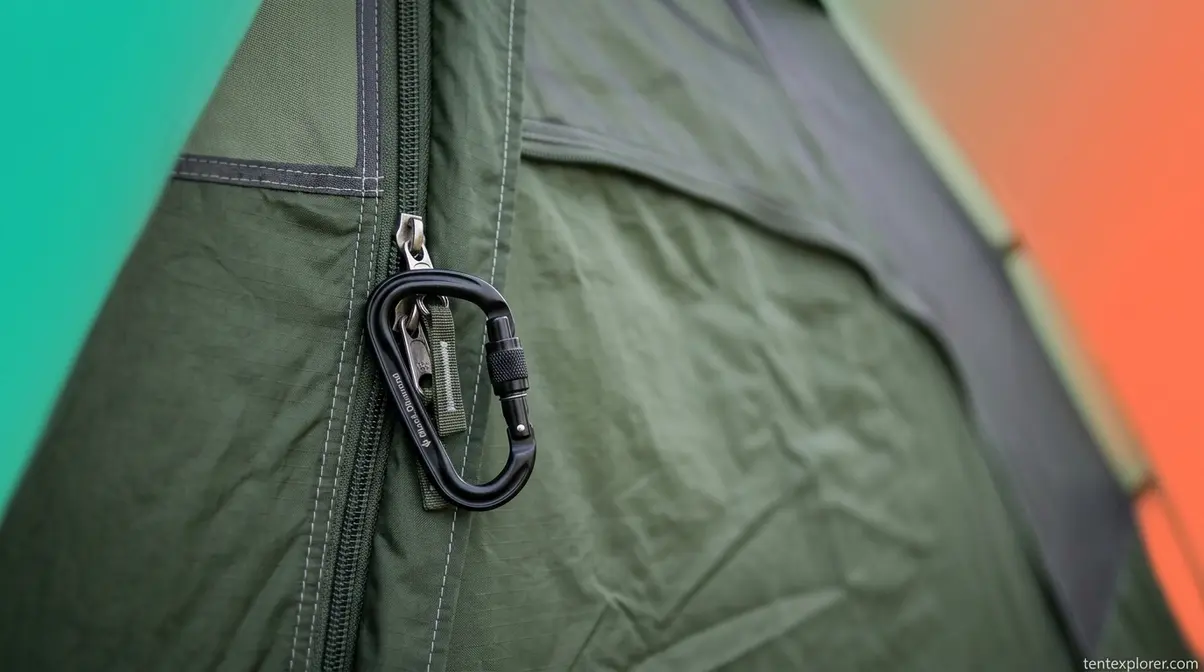
To lock a tent from the inside, a carabiner is the recommended method — fast, reusable, and requires zero tools to operate in the dark.
- How to do it:
- Gather both interior zipper pulls together at the center of the door.
- Clip a small carabiner through both pull loops.
- Close the gate.
To exit: squeeze the gate and unclip in under 2 seconds. A small non-locking carabiner (unrated for climbing, rated for security use) costs under $5 at any outdoor or hardware store. Orient the gate so it opens toward you — easier to release half-asleep in a dark tent. As Outdoor World Direct confirms, a carabiner through interior zipper pulls provides genuine peace of mind while maintaining a fast emergency exit.
This is the softest, fastest lock on the entire Soft Lock Spectrum — and for nighttime use, that’s exactly what you want. It also pairs naturally with staying warm through the night, since a properly secured door also keeps cold drafts out.
If you don’t have a carabiner, a shoestring or piece of paracord works just as well — and it’s the method that camping communities have quietly relied on for years.
Method 5: Shoestring, Paracord, or Twist-Tie
Loop a shoestring or a short length of paracord — the lightweight nylon cord used in outdoor survival kits — through both interior zipper pull loops, then tie a simple bow knot. Not a dead knot. A bow knot releases with a single pull, which matters when you’re disoriented at 3am. Twist-ties from bread bags also work for a single night.
This is where community wisdom earns its place:
“One thing we do is tie 2 or 3 empty cans onto a bit of string and then onto the inside zips at night.” — Camper community tip, r/camping
That variation adds a makeshift lock with an audible alarm layer. Any movement of the zipper jingles the cans, waking light sleepers before an intruder gets the door fully open. Zero cost, immediate setup, and the kind of resourceful thinking that no hardware store can sell you.
On the Soft Lock Spectrum, this is the Softest Lock available: instant release, zero cost, zero pack weight. Both methods above keep you safe inside. But there’s one rule that overrides all of them — and skipping it could cost you more than your gear.
⚠️ Emergency Exit Safety: The Rule You Cannot Skip
Always keep a sharp knife, multi-tool, or scissors within arm’s reach when sleeping in a locked tent. If the quick-release fails — in darkness, in a panic, or because a zipper mechanism jams — you need to cut through the fabric, not fight the zipper.
Never use a padlock on the inside of a tent while occupied. A combination padlock requires 15 to 30 seconds to open under stress. In a fire or carbon monoxide emergency, that delay is dangerous. The Florida Sheriffs Association advises campers to prioritize emergency exit planning when camping with families — this applies to any occupied, secured tent.
The fabric-cutting escape is not a last resort — it is the last resort, and knowing it’s available actually reduces anxiety. Tent fabric cuts with a standard pocket knife in under 3 seconds. Keep the knife clipped to the inside tent pocket, or attached directly to the zipper pull itself, so it’s reachable in the dark without searching.
Inside locking solves the nighttime problem. Festival camping introduces a completely different set of challenges — starting with the paradox of the flashy padlock.
How to Lock a Tent at a Festival
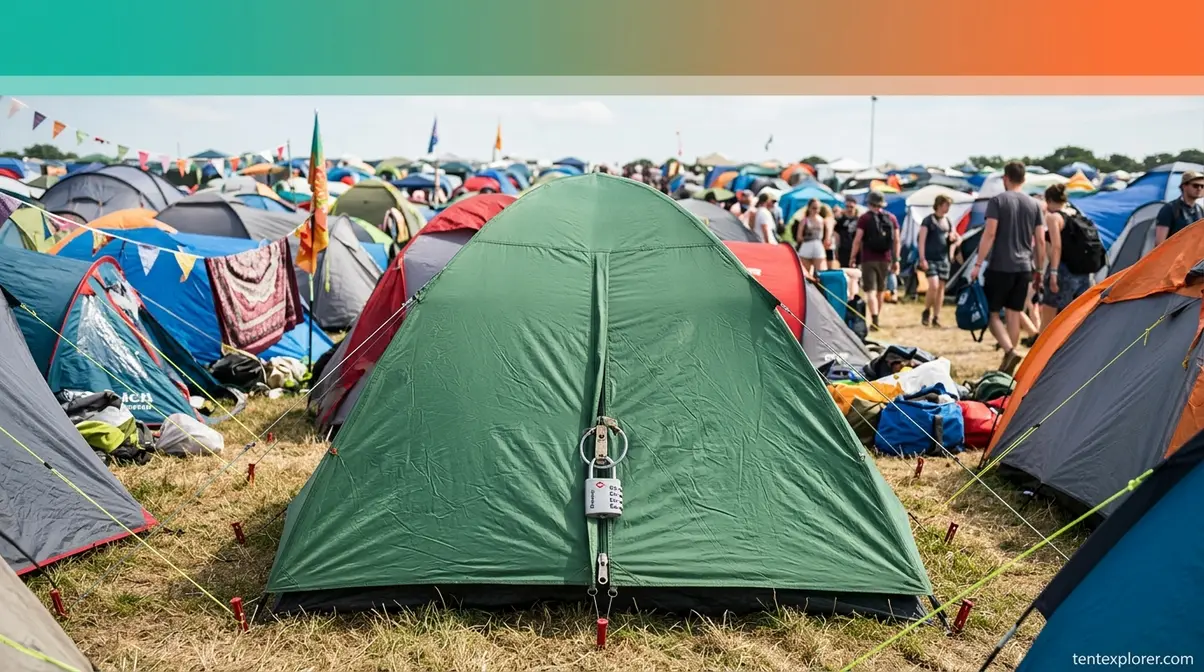
Festival camping is a different security game entirely. High foot traffic, strangers sleeping three feet from your door, and a crowd where everyone assumes someone else is watching — it creates the conditions where opportunistic thieves thrive. The solution isn’t a bigger padlock. In fact, it might be no padlock at all.
Caption: Five festival security strategies that work together — soft lock, valuables management, neighbor relationships, pitch location, and arrival protocol.
The Target Effect: Why Flashy Locks Backfire
The Target Effect is straightforward: a visually prominent padlock on a tent door signals to passersby that valuable items are inside, attracting exactly the opportunistic thieves you’re trying to deter. At a festival, where hundreds of strangers walk past your tent every hour, that signal reaches a much larger audience than at a remote campsite.
Festival Angels, a UK-based festival welfare organization, explicitly advises against putting padlocks on tents for this reason. The better approach: a discreet cable lock or zip tie provides deterrence without broadcasting “valuables here.” At a festival, the best lock is the one that looks like it might just be a broken zipper pull — not a bank vault. On the Soft Lock Spectrum, the optimal festival position is deliberately toward the Soft Lock end: discreet, quick-release, and unremarkable to a passing crowd.
So if a flashy padlock is off the table at a festival, what actually works?
Festival-Smart Security Strategies
To secure a tent from theft at a festival, layer behavioral strategies with a discreet physical lock. These five approaches, used together, reduce your risk profile significantly:
- Use a discreet soft lock — a zip tie or slim cable lock on the zipper, not a shiny padlock. Deterrence without advertising.
- Keep your most valuable items on your person — phone, wallet, and car keys go in a money belt or a secure inner jacket pocket, not your tent. No lock replaces this step.
- Introduce yourself to campsite neighbors — community awareness is one of the most effective theft deterrents available. Campers who know their neighbors are far more likely to notice and flag suspicious activity. Frame it as practical, not paranoid.
- Choose your pitch location strategically — visible, well-trafficked areas near campsite paths deter theft better than isolated spots. Thieves prefer privacy; you don’t. See choosing the best pitch location for setup guidance.
- Check in with campsite staff on arrival — the NPS campsite arrival guidance recommends talking to a ranger or campsite manager to understand current security alerts before you unpack.
Locks and behavioral strategies cover the human threat. For a more comprehensive security setup — especially at remote campsites — modern alternatives to padlocks offer a significant upgrade.
Beyond Locks: 5 Alternatives That Actually Deter Thieves

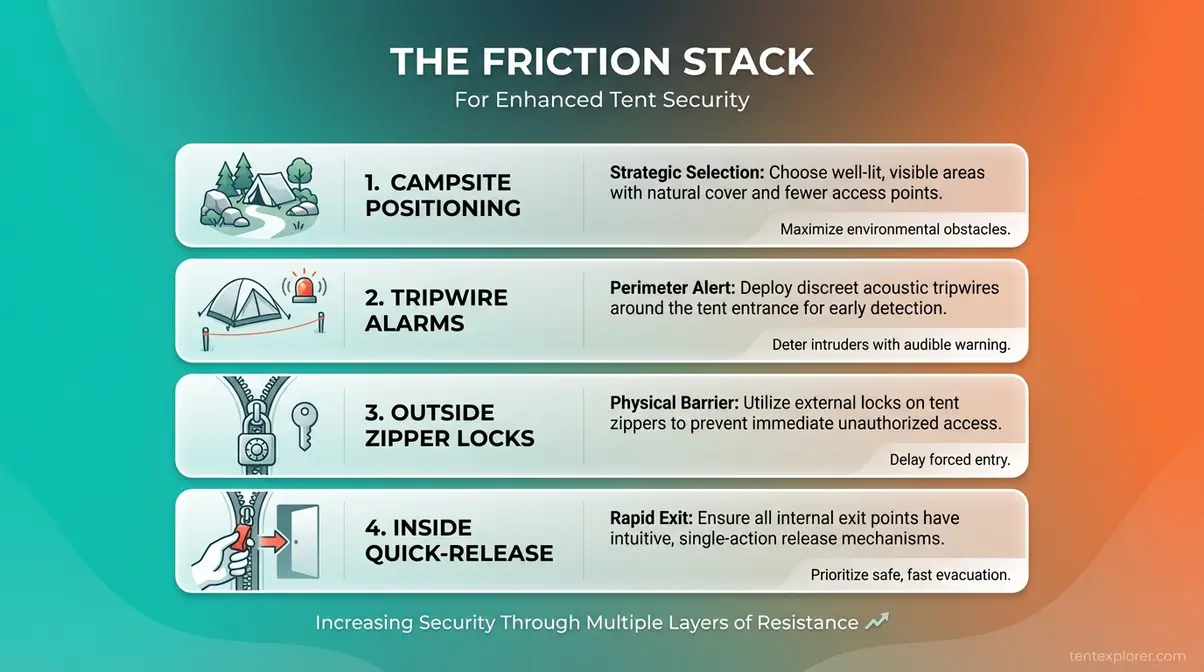
The most effective tent security setup doesn’t rely on a lock at all — it uses a lock plus detection and behavioral layers. These five alternatives (tripwire alarms, motion sensors, PacSafe nets, campsite positioning, and storage strategy) complement the Soft Lock Spectrum methods rather than replacing them.
Caption: Cost, setup time, and deterrence level compared across five tent security alternatives — from the zero-cost string-can method to PacSafe anti-theft nets.
The chart above compares each alternative by cost, setup time, and deterrence level. Here’s how each works in practice.
Tripwire Alarms and the String-Can Method

To keep your tent from being stolen, audible detection adds a layer that no zipper lock can provide: it wakes you up while an attempt is in progress. Two approaches cover the full cost range.
A tripwire alarm — a small battery-powered device available for $10 to $20 — attaches to the tent’s guy lines or door frame and triggers a 100+ dB alarm when the wire is disturbed. Thread the wire through the zipper pulls from the outside as a secondary detection layer, so any attempt to open the door triggers the alert before the tent is breached.
The string-can method costs nothing. Tie two or three empty cans onto a piece of string, then loop the string through the inside zipper pulls. Any movement of the zipper jingles the cans — enough to wake a light sleeper before an intruder gets the door open. Both methods address the same detection gap: a lock prevents entry, but a noise alarm tells you someone is attempting entry. For additional structural anchoring of alarms on guy lines, see securing your tent structure against external interference.
“Combining a soft lock with a motion-sensor alarm addresses both physical deterrence and audible detection — two layers that no single padlock can provide.”
For a more passive deterrent that works while you sleep, motion-sensor devices remove the need for physical trip wires entirely.
Motion-Sensor Lights and Portable Alarms
A portable motion-sensor alarm (PIR sensor, battery-powered, under $30) placed near the tent entrance detects movement within 10 to 15 feet and triggers an audible alert. Look for weatherproof models rated for outdoor use — a device that fails in light rain is useless at a campsite.
Motion-sensor solar lights (stake-mounted near the tent entrance) serve a dual purpose: they illuminate anyone approaching at night and act as a visual deterrent in their own right. Thieves prefer darkness — even a modest pool of light around your pitch raises the perceived risk of being seen.
One practical limitation: motion sensors trigger on animals too. Raccoons, deer, and curious campsite dogs will set off any PIR sensor not tuned carefully. Adjust the sensitivity settings on your device to minimize false alarms, particularly at campsites with wildlife activity.
For high-theft environments — music festivals, busy campgrounds — a PacSafe security net, from PacSafe, an anti-theft gear brand specializing in lockable travel bags and security nets, adds a physical barrier that’s far harder to defeat than a zipper lock alone.
Campsite Positioning and Storage Strategy
Two zero-cost behavioral alternatives often outperform hardware when it comes to securing a tent from theft.
Campsite positioning: Pitch your tent in a visible, well-trafficked area near the campsite path. Thieves target isolated tents, not tents with neighbors watching. This aligns with broader optimizing your campsite ground setup principles — your pitch choice affects more than just comfort.
Storage strategy: Store your highest-value items — phone, wallet, camera, car keys — in your vehicle’s locked boot, not in the tent. If you have no vehicle, use a lockbox or dry bag locked to a fixed object (tree, vehicle rack) with a cable lock. The Florida Sheriffs Association advises never leaving electronics or cash visible through tent mesh or partially open doors. A practical rule: if it costs more than $50 and fits in a pocket, it should not be in your tent.
Even the best security setup has limits — and knowing those limits is the final piece of the Soft Lock Spectrum.
What Tent Locks Can’t Do: Limitations and Common Pitfalls
Common Pitfalls When Locking a Tent
Across camping communities and field-tested approaches, three mistakes come up consistently — and each one quietly defeats the lock you’ve carefully applied:
- Locking only one zipper pull — leaves the other pull fully accessible. A thief doesn’t need to defeat your lock; they just use the free pull. Always thread through both simultaneously.
- Using a padlock inside while sleeping — requires a key or a memorized combination under panic conditions. In a genuine emergency, this delay is dangerous. Use a quick-release method only when inside.
- Relying on a lock alone — a determined thief with a knife bypasses any zipper lock in seconds. A lock deters; it doesn’t prevent. Layer with behavioral strategies (positioning, storage, alarms) for real protection.
As Pitchup.com’s tent security guide notes, physical locks deter opportunistic thieves, but campsite positioning and community awareness function as primary security strategies — not backup plans. For security-conscious pitch placement, see proper tent pitching for security-conscious placement.
Knowing when a lock won’t help is just as important as knowing how to apply one.
When a Lock Won’t Save Your Gear
Two scenarios where no zipper lock changes the outcome — and where behavioral alternatives matter most:
Scenario 1 — The determined thief: A knife defeats any tent zipper lock in under 5 seconds. In high-theft environments (urban campsites, large music festivals), store valuables off-site regardless of your lock setup. The lock deters; it doesn’t protect against someone who has already decided to breach your tent.
Scenario 2 — Animal intrusion: Bears, raccoons, and curious campsite dogs are not deterred by zipper locks. Use bear canisters and hang food per campsite regulations. No physical tent lock addresses the animal threat — this requires food storage discipline, not hardware. For broader campsite safety strategies covering both human and animal risks, that resource covers the full picture.
Frequently Asked Questions
Is there a way to lock up a tent?
Yes — you can lock a tent by threading a TSA padlock, cable lock, carabiner, or zip tie through both zipper pull loops simultaneously. While no lock stops a determined thief with a knife, a lock is a highly effective deterrent against opportunistic intruders — the most common type of campsite theft. A small combination padlock or carabiner costs under $15 and fits in any pocket. For nighttime use, always choose a quick-release method (carabiner or shoestring) rather than a keyed padlock.
Do people lock their tents at festivals?
Yes, many festival campers lock their tents — but the type of lock matters more than whether you use one. A visible padlock can create a Target Effect, signaling to opportunistic thieves that valuable items are stored inside. Festival welfare organizations like Festival Angels recommend discreet soft locks (zip ties, cable locks) over prominent padlocks. Your most valuable items — phone, wallet, keys — should stay on your person or in a locked vehicle, not in the tent.
How do you keep your tent from being stolen?
To prevent tent theft, combine physical deterrents with smart campsite behavior — neither alone is sufficient. Pitch your tent in a visible, well-trafficked area, introduce yourself to neighboring campers, and use a soft lock on your zipper pulls. Motion-sensor alarms near the tent entrance add an audible detection layer for under $30. Never leave electronics, cash, or car keys inside an unattended tent — store them in a locked vehicle whenever possible.
How do you lock a tent from the inside?
To lock a tent from the inside, clip a carabiner or loop a shoestring through both interior zipper pull loops — this is the safest inside-locking method available. Unlike an outside padlock, a carabiner releases in under 2 seconds, which is critical for emergency exits in a fire or any fast-exit scenario. Never use a keyed padlock when sleeping inside — in an emergency, a key becomes a liability. Keep a knife or multi-tool within arm’s reach whenever you lock your tent from the inside.
Is it safe to lock a tent at night?
Locking a tent at night is safe if — and only if — you use a quick-release method like a carabiner or shoestring. The risk comes from using a padlock or hard lock inside while sleeping, which can delay emergency exits in a fire. A carabiner releases in under 2 seconds; a combination padlock can take 15 to 30 seconds under stress. Always keep a knife accessible to cut through tent fabric if the zipper mechanism fails entirely.
Tent Security Starts With the Right Point on the Spectrum
For campers concerned about theft, knowing how to lock a tent effectively comes down to understanding the Soft Lock Spectrum: use hard locks (TSA padlocks, cable locks) when you’re away from camp, and soft locks (carabiners, shoestrings) when you’re sleeping inside. Layer these with motion-sensor alarms and smart campsite positioning for a setup that addresses both opportunistic theft and emergency exit safety.
The Soft Lock Spectrum reframes the whole question. The safest camper isn’t the one with the biggest padlock — it’s the one who picks the right point on the spectrum for their situation. Whether that’s the anxiety of an urgent toilet dash or the 2am sound of a zipper moving on your tent door, the framework gives you a clear answer: match the lock to the moment, keep an exit available, and layer your defenses.
Start with the method that fits your next trip — carabiner for nighttime, cable lock for daytime absences — then build outward. For a broader campsite security framework, the complete tent camping safety guide covers everything from site selection to wildlife protocols in one place.

Dave King
I'm Dave King. I publish Tent Explorer, a site built to answer the questions people actually ask before they buy.