

This blog post may contain affiliate links. As an Amazon Associate I earn from qualifying purchases.
More than half of American campers admit they have misconceptions about camping cots and overlook their potential for a better night’s sleep. Misunderstanding what a camping cot offers often leads to discomfort or poor preparation during outdoor adventures. Unpacking what a camping cot really is, exploring popular myths, and shedding light on innovative features will help any American camper choose solutions that improve comfort and enjoyment on their next trip.
Key Takeaways
| Point | Details |
|---|---|
| Camping Cot Versatility | Modern camping cots cater to recreational outdoor enthusiasts, not just military or emergency situations. They provide comfort and convenience for various camping styles. |
| Types of Camping Cots | Camping cots come in several types, including standard, ultralight, convertible, and luxury models, catering to specific outdoor sleeping preferences. |
| Comfort Features | Key comfort features such as frame construction, fabric quality, and adjustable heights significantly influence the sleeper’s experience and overall satisfaction. |
| Benefits vs. Drawbacks | While camping cots offer elevated sleeping surfaces and protection from ground moisture, they also come with drawbacks like higher weight and bulkier storage requirements, making careful selection essential. |
Camping Cot Defined and Common Misconceptions
A camping cot is a lightweight, portable sleeping surface designed for outdoor adventures, offering an elevated alternative to traditional ground sleeping arrangements. Merriam-Webster defines a camp cot as a “light portable folding cot,” which perfectly captures its core functionality for campers seeking comfort and convenience.

Contrary to popular belief, camping cots are not just for military personnel or emergency situations. While Wikipedia notes their historical use in military camps and disaster relief, modern camping cots have evolved into versatile sleeping solutions for recreational outdoor enthusiasts. They provide significant advantages over traditional sleeping bags and ground mats, including improved insulation, protection from uneven terrain, and enhanced comfort.
Common misconceptions about camping cots often revolve around their perceived complexity and weight. Many campers assume these portable beds are heavy, difficult to set up, or exclusively suited for car camping. In reality, contemporary camping cots are designed with lightweight materials, compact folding mechanisms, and user-friendly assembly processes that make them suitable for backpackers, car campers, and outdoor adventurers across different skill levels. Choosing the right cot for tent camping requires understanding these nuanced design features and your specific camping needs.
Key characteristics that distinguish modern camping cots include:
- Lightweight aluminum or steel frame construction
- Durable, water-resistant fabric surfaces
- Compact folding designs for easy transportation
- Height options ranging from low-profile to elevated models
- Weight capacity variations to accommodate different body types
Understanding these attributes helps campers make informed decisions about incorporating a camping cot into their outdoor sleeping arrangements, transforming their camping experience from basic ground sleeping to a more comfortable and supportive rest.
Main Types of Camping Cots Explained
Camping cots come in several distinct varieties, each designed to meet specific outdoor sleeping needs and preferences. Sports Surge categorizes camping cots into four primary types: standard rectangular cots, backpacking or ultralight cots, chair-to-cot convertibles, and luxury or glamping cots. Understanding these categories helps campers select the most appropriate sleeping solution for their adventure style.
The standard rectangular cot represents the traditional camping sleeping platform, typically featuring a robust metal frame and durable fabric surface. These cots are ideal for car camping, base camps, and situations where weight and portability are less critical. They often provide maximum weight capacity and stability, making them perfect for campers who prioritize comfort and don’t need to carry their sleeping surface long distances.
Backpacking and ultralight cots offer a dramatically different approach, targeting minimalist adventurers and hikers who must carefully manage gear weight. These specialized cots utilize advanced lightweight materials like aluminum frames and thin yet strong fabric, enabling quick setup and minimal pack volume. Comparing tent camping options reveals how these compact sleeping solutions revolutionize backcountry camping experiences.
Two additional categories round out the camping cot landscape:
- Chair-to-cot convertibles: Innovative designs that transition between seating and sleeping configurations
- Luxury or glamping cots: Premium models featuring extra padding, wider sleeping surfaces, and enhanced comfort features
Choosing the right camping cot depends on multiple factors including intended use, transportation method, body weight, camping environment, and personal comfort preferences. Each type offers unique advantages, ensuring campers can find a sleeping solution perfectly matched to their outdoor adventure requirements.
Key Features That Impact Comfort
Camping cot comfort is a nuanced combination of design elements that directly influence sleeping quality during outdoor adventures. Key performance factors from equipment experts reveal critical characteristics like weight, extended size, folded size, and weight capacity as fundamental determinants of overall sleeping comfort and usability.
The frame construction plays a pivotal role in comfort and stability. Aluminum frames offer lightweight durability, while steel frames provide maximum weight support. The frame’s design impacts not just weight capacity but also the cot’s ability to distribute body weight evenly, preventing uncomfortable pressure points that can disrupt sleep. Crossbar placement, leg angle, and material tension all contribute to creating a smooth, supportive sleeping surface that mimics a traditional bed’s comfort level.
Fabric selection represents another crucial comfort component. High-quality camping cots utilize ripstop nylon, polyester, or specialized breathable materials that balance durability with comfort. Selecting comfortable camping chairs shares similar principles of material selection, emphasizing the importance of fabric that provides support while allowing air circulation to prevent moisture buildup and temperature discomfort.
Critical comfort features include:
- Optimal fabric tension to prevent sagging
- Padded edge designs that reduce pressure on body contact points
- Adjustable leg height for uneven terrain compensation
- Integrated side storage pockets for convenience
- Noise-reducing fabric and frame connections
Ultimately, individual comfort depends on personal preferences, body type, and specific camping conditions. Campers should test different cot models, considering their unique sleeping requirements and the environmental challenges they’ll encounter during their outdoor experiences.
Benefits and Drawbacks of Using Camping Cots
Camping cots offer a complex sleeping solution with distinct advantages and limitations for outdoor enthusiasts. Equipment experts highlight variations in weight and portability that significantly impact their practicality across different camping scenarios, making careful selection crucial for campers’ comfort and convenience.
The primary benefits of camping cots include elevated sleeping positions that protect against ground moisture, insects, and uneven terrain. By creating a barrier between the sleeper and the ground, cots provide superior insulation and temperature regulation compared to traditional sleeping bags or ground mats. This elevation also reduces the risk of cold ground transfer, making them particularly valuable in chilly or damp camping environments. Comparing alternative sleeping options reveals the unique advantages of cot-based sleeping systems.
However, camping cots are not without drawbacks. Their primary limitations include increased weight, bulky storage requirements, and potential complexity in setup. Backpackers and minimalist campers might find traditional cots too heavy and space-consuming for their needs. Most camping cots weigh between 10 to 20 pounds and require significant pack volume, which can be challenging for hikers or those with limited transportation space.
Key benefits and drawbacks include:
Benefits:
- Elevated sleeping surface
- Protection from ground moisture
- Enhanced air circulation
- Improved temperature regulation
- Reduced contact with insects
Drawbacks:
- Higher weight compared to sleeping pads
- Bulky storage requirements
- More complex setup process
- Higher cost than ground sleeping alternatives
- Limited suitability for backpacking
Ultimately, the decision to use a camping cot depends on individual camping style, physical requirements, transportation methods, and personal comfort preferences. Campers should carefully evaluate their specific needs and camping environments before investing in a camping cot.
Comparison: Camping Cots vs Sleeping Pads
Outdoor sleeping solutions present campers with two primary options: camping cots and sleeping pads, each offering unique advantages for different camping styles. Portable gear experts highlight critical differences that help adventurers choose the most suitable sleeping system for their specific outdoor needs.
Camping cots excel in providing elevated, stable sleeping platforms that keep users off the ground, offering superior comfort and protection from moisture, insects, and uneven terrain. Their robust frame and sturdy design make them ideal for car camping and base camp scenarios where weight is not a critical concern. In contrast, sleeping pads prioritize lightweight portability, making them the preferred choice for backpackers and minimalist campers who must carefully manage gear weight and pack volume.
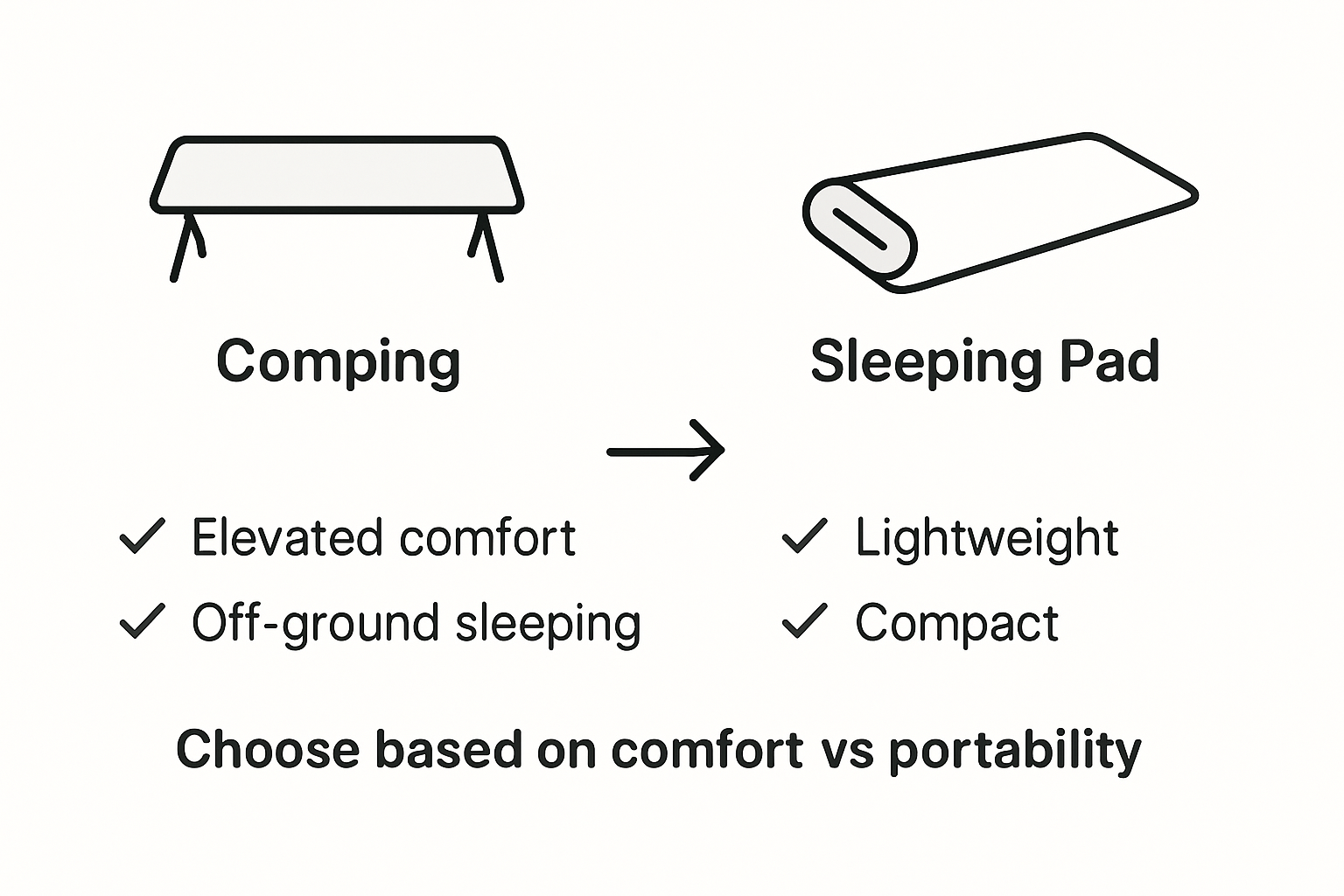
The thermal performance of each sleeping system varies significantly. Exploring camping mattress warming techniques reveals that sleeping pads often feature advanced insulation materials designed to minimize heat loss, while camping cots create natural air circulation underneath the sleeping surface. This air gap can be both an advantage and disadvantage, depending on temperature conditions and specific camping environments.
Key comparison points include:
Camping Cots Advantages:
- Elevated sleeping surface
- Superior stability
- Protection from ground moisture
- Better for heavier individuals
- Easier to get in and out of
Sleeping Pads Advantages:
- Extremely lightweight
- Compact and easy to pack
- More versatile
- Lower cost
- Better insulation in cold conditions
Ultimately, the choice between a camping cot and a sleeping pad depends on individual camping style, physical requirements, destination terrain, and personal comfort preferences. Experienced campers often recommend having both options available for different types of outdoor adventures.
Elevate Your Camping Comfort with Expert Guidance
Struggling to find the perfect balance between lightweight gear and restful sleep while camping is a common challenge for many outdoor enthusiasts. As highlighted in “What Is Camping Cot and Why Comfort Matters,” understanding how a camping cot can transform your sleeping experience by offering elevation, insulation, and stability is key to camping success. If comfort and practicality are your top priorities, tackling the complexities around cot types, frame construction, and fabric choices becomes essential.
Discover how to maximize your outdoor comfort and elevate your campsite setup by exploring Tent Accessories – Tent Explorer for gear recommendations and Outdoor Living – Tent Explorer for tips on creating a cozy campsite retreat.

Ready to upgrade your camping experience with trusted advice on selecting the right cot and complementary accessories? Visit Tent Explorer now to access expert reviews, practical setup tips, and inspiring guides designed to help you camp with confidence and comfort every trip. Don’t wait to transform your nights under the stars into true rest and relaxation.
Frequently Asked Questions
What is a camping cot and how does it differ from a sleeping pad?
A camping cot is a lightweight, portable sleeping surface designed for outdoor use, offering an elevated sleeping arrangement compared to sleeping pads, which are typically placed directly on the ground. Camping cots provide better insulation and stability, making them a comfortable option for car camping and base camps.
What are the main benefits of using a camping cot?
Camping cots offer several key benefits, including an elevated sleeping surface to protect against ground moisture, improved air circulation for temperature regulation, and enhanced comfort compared to sleeping bags or ground mats. They also reducecontact with insects and uneven terrain.
How do I choose the right camping cot for my needs?
When choosing a camping cot, consider its intended use, weight capacity, frame construction, and ease of setup. Evaluate factors like transportation method, terrain, and personal comfort preferences to select the most suitable cot type for your outdoor adventure.
Can camping cots be used for backpacking?
While traditional camping cots tend to be heavier and bulkier, there are ultralight options specifically designed for backpacking. These cots prioritize lightweight materials and compact folding designs, making them suitable for hikers and minimalist campers who need to manage gear weight effectively.