
This blog post may contain affiliate links. As an Amazon Associate I earn from qualifying purchases.
📋 Table of Contents
- Key Takeaways
- Defining a Freestanding Tent and Its Core Function
- Key Features and Setup Explained
- Different Types of Freestanding Tents
- Freestanding Versus Non-Freestanding Tents
- Practical Benefits and Common Pitfalls
- Discover the Freedom of Freestanding Tents with Tent Explorer
- Frequently Asked Questions
- Recommended
Choosing the right shelter can transform any camping trip from stressful into relaxing, especially for those new to pitching tents in unfamiliar places. With so many options available, identifying a tent that sets up quickly and stands firm on rocky or sandy sites matters more than ever. This guide reveals how a freestanding tent offers unmatched setup flexibility and structural stability, helping you enjoy smoother adventures whether you’re exploring Canadian forests, American deserts, or European campsites.
- Lightweight & Big Space: 7’L x 5′ x 45″H. Spacious room for 2 adults.Standard size fits 1 full air mattress.And this 2 Person tent weighs just 4.8lb,it’s very easy to carry.This tent perfect for outdoor camping, hiking,climbing,a kid’s indoor or backyard play tent, fishing, or shelter at the beach in all weather.
- Windproof & Rainproof: The camping tent is made of stronger tear-resistant polyester.It come with a removable rainfly and two zippers designed for keeping the rain outside the tent. The ropes of tent and piles ensure safety and stability.
- Comfortable Design: Skylight net and larger mesh window designed enhances breathability and comfortable. Interior storage pocket designed to keep your contents neat and organized, great ventilation and convenient for enjoying outdoor views and your free time.
- Easy To Set Up: The tents for camping that can be quickly assembled within 3 minutes and easily assembled by one person according to the procedures and instructions sewn inside the bag.
- What You Will Get: Please contact us if you have any issues.We promise you will get a satisfactory answer within 24h.

- 2 PERSON TENT – This lightweight two-person small tent has enough space for you and a friend. This tent for camping is ideal for hiking, fishing, weekend music festivals, or as a beach tent, making it the perfect addition to your camping essentials.
- CONVENIENT FEATURES – The tent for beach features fiberglass poles, a removable rain fly to protect against unexpected weather, a ventilation window to encourage comfortable airflow, and an interior storage pocket to keep your camping supplies organized.
- DUAL-LAYER DOOR – The combination of the inner screen layer and the outer zippered fabric layer of the easy-up tent door provides plenty of air as well as privacy. Simply secure the doors with sewn-in ties to let the breeze in and keep mosquitos out.
- EASY SETUP – Setup and tear down of this 2 person pop up tent are quick and easy. When you are finished with your trip, simply place the tent components back into the included carrying bag for easy storage with your other camping accessories.
- PRODUCT DETAILS – Materials: 190T Polyester and Fiberglass. Dimensions: (L) 77″ x (W) 57″ x (H) 40″; Pole Diameter: 3mm; Carrying Bag: (L) 23″ x (W) 4″. Weight: 2.75lbs. Capacity: 2 People. Color: Blue and Gray.

- TENTS FOR CAMPING 2 PERSON: With two D-Shaped doors and two vestibules to accommodate up to two people. Weight: 5.5lb(2.5kg). Interior floor dimensions: 88.6×53.1in(225x135cm), interior height: 43.3in(110cm).
- PROFESSIONAL WATERPROOF & WINDPROOF: By a professional water testing, waterproof index up to 3000mm; Welded floor design elevates the bottom of the backpacking tent to protect you from wet grounds; full-coverage rainfly for added protection against rain.
- EASY SETUP:Easy Install in 3 mins. It takes only a few simple steps to set up a perfect tent. It comes with 7001 series aluminum poles and eflective guyline for wind-resistance. Smooth & sturdy #8 zippers never stuck.
- VENTILATION & LIGHTWEIGHT:A large mesh window with 2 ceiling vents in the upper portion of the tent provide airflow to prevent condensation buildup; Micro-mesh fabric enhances breathability and comfort, get away from the city lights, and you are able to gaze at the milky way.
- NO RISK PURCHASE: Making you a happy customer is our main goal. If you have any questions, please contact us and we will get back to you within 24 hours and provide the perfect solution.

- Spacious Space For Family: Camping tent with the size of 14ft*8ft*6ft are designed for 8 person with a spacious Interior, big cabin tent for camping fit 8 sleeping bags or 3 queen air mattresses, it is a good family tent for outdoor camping or traveling.
- 3 Rooms Tent with Curtain: Family tent with 2 divided curtain divide into 3 rooms, which can ensure privacy during family camping. The separated curtain can be used as projector screen will provide you a happy family time and beautiful memory.
- Excellent Ventilation Design: Large camping tent desinged with quality mesh for top roof, door and windows. Breathable design of large area of mesh allow more airflow in and out, besides, you will enjoy the panoramic view from tent window and take pleasure in watching starry sky when you lying in tent with your families.
- Waterproof & Durable Materials: This Large family tents for camping are made of high-quality and durable polyester with coating PU2000mm waterproof, which keep the tent interior dry and comfortable. Door and window are used high stantard zipper to ensure close & open smoothly. 11.5mm&9.5mm strong fiberglass poles keep whole tent stable.
- Easy Setup & Portable: This easy up instant tent with only 5 tent poles will take 2 person 10 mins to set up without any skills and also easy to disassembled, included carry bag with two handles will help you store this large tent easily and without taking much space, this big tents for outdoor camping is camping essentials for family camping&hiking, music fesitival, parties.

- Easy Set Up – Y frame tent with simple structure. One person first using this tent is able to set up the tent quickly. The installation instructions sewn inside of the stuff sack.
- 2 Person Backpacking Tent – The Naturehike Mongar forest green tent weights only 5.3lbs for the whole set,including groundsheet(FREE); packing size: 19.7*φ5.9in, Packs down small with included carrying sack so you can carry it easily on backpacking trips.
- Waterproof Backpacking Tent: Tent Fly: 210T polyester, waterproof 3000mm , Inner tent: B3 mesh, Bottom tent: 210T polyester, waterproof 3000mm; Poles: 7001 Aluminium alloy ,Tough and durable. High density B3 mesh provides good breathability and keeps insects from biting.
- Big Large 2 Person Tent : Tent Dimension: 82.7 x 53.2 x 41.3inch, More than 30 square feet area for sleeping, Perfect 2 person tent for hiking, backpacking and camping . Good stability, anti-UV,Anti-wind, anti- rainstorm.
- 2 Person Tent with Large Vestibules : With 2 doors for easy access and 2 vestibules provides gear storage space;vestibule can be affixed to fully closed or partially open for ventilation and sun shade.
Last update on 2026-06-03 / Affiliate links / Images from Amazon Product Advertising API
Key Takeaways
| Point | Details |
|---|---|
| Freestanding Tents Offer Versatility | They can be set up on various terrains without relying on ground stakes. |
| Quick and Easy Setup | Designed for rapid assembly, making them ideal for campers who need to set up quickly. |
| Different Types Cater to Specific Needs | Fully and semi-freestanding tents provide options for different camping preferences and environments. |
| Consider Weight and Complexity | While they offer many advantages, freestanding tents tend to be heavier and may have more complex setups than non-freestanding options. |
Defining a Freestanding Tent and Its Core Function
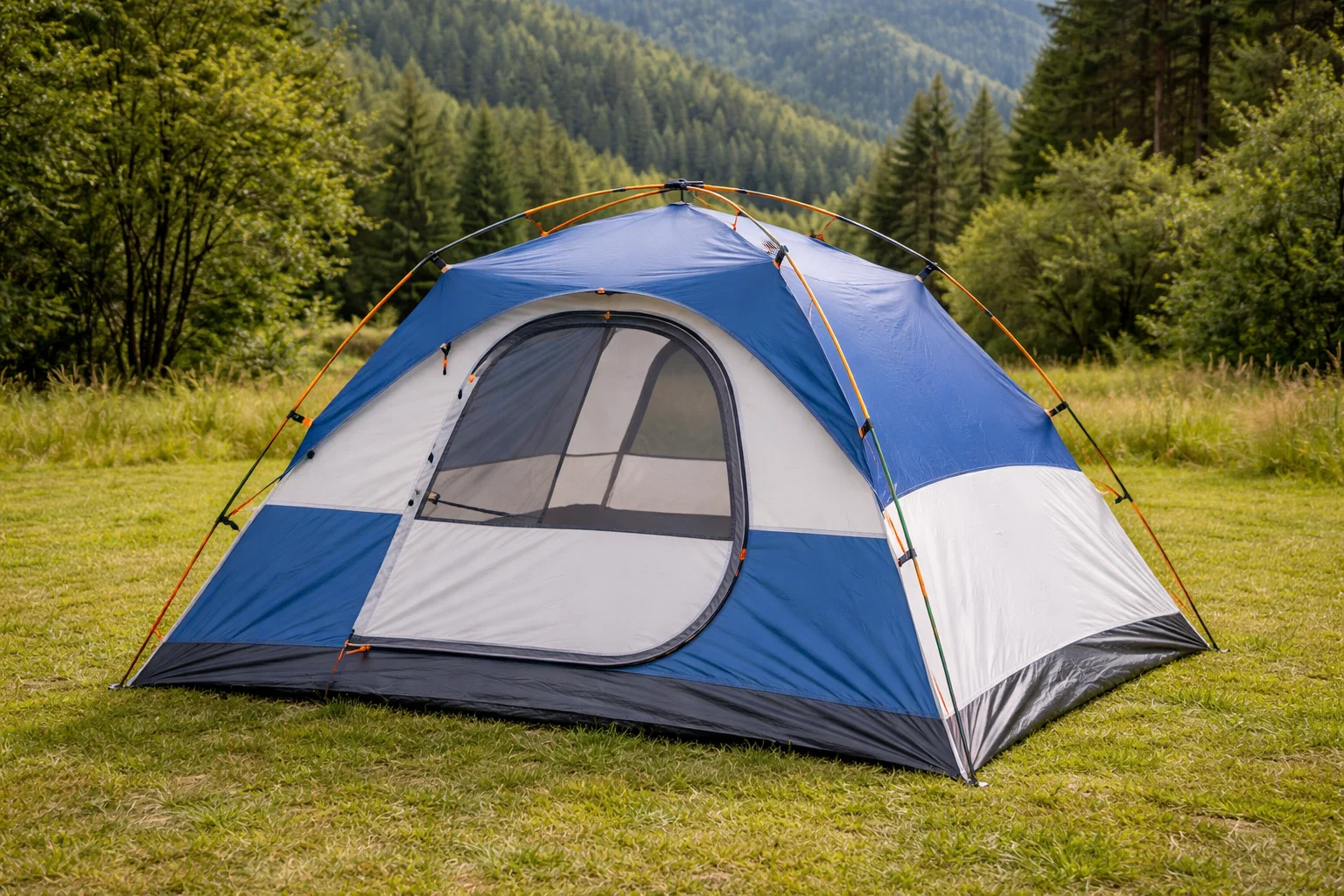
A freestanding tent is a versatile camping shelter designed to support itself without requiring ground stakes for structural integrity. Unlike traditional tents that rely on external anchoring, these innovative shelters use integrated pole systems to create a rigid, self-supporting structure that can be pitched on multiple surfaces.
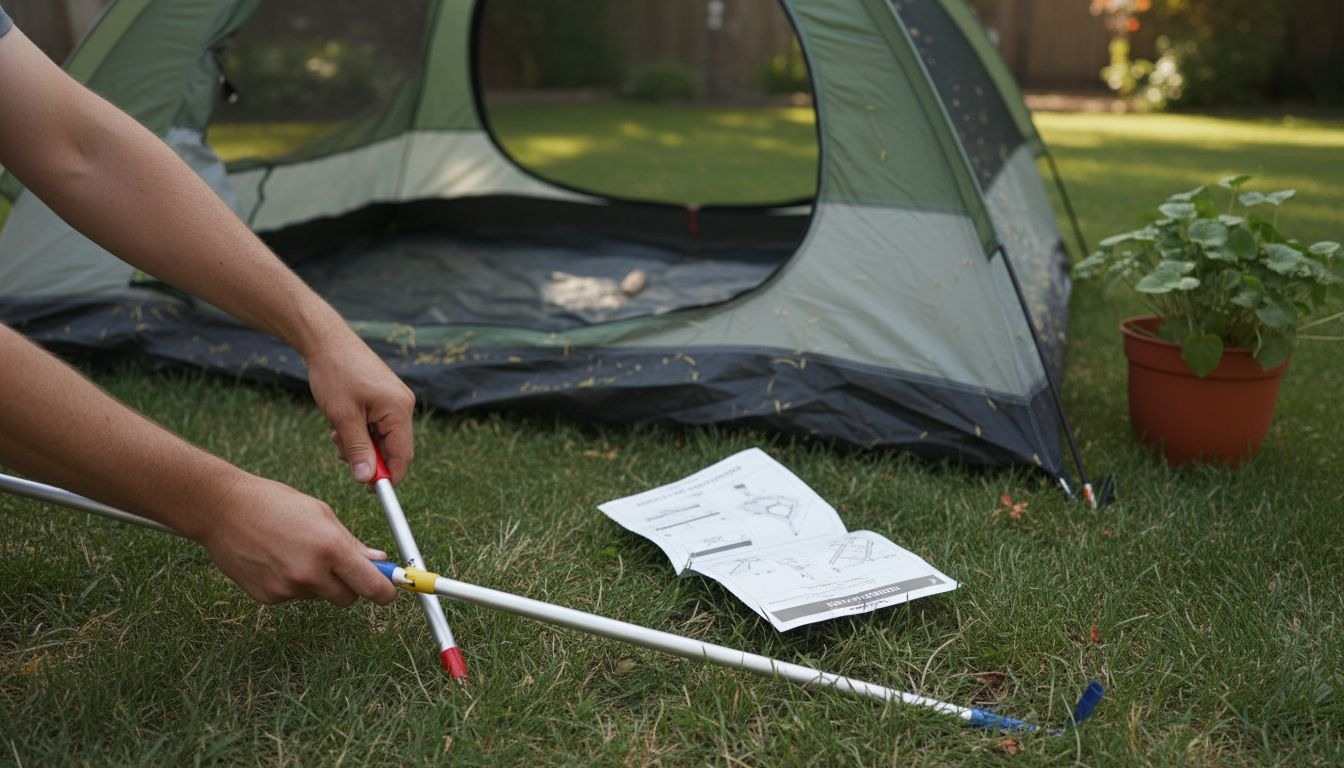
The core function of a freestanding tent revolves around its unique pole configuration, which enables campers to establish a stable shelter quickly and easily. These tents utilize specialized pole designs that create a comprehensive framework, allowing the tent to maintain its shape independently. This engineering marvel means you can set up camp on challenging terrains like rocky ground, wooden platforms, or even sandy beaches without worrying about ground stake limitations.
Key characteristics of freestanding tents include:
- Rapid setup process
- Flexibility in campsite selection
- Enhanced structural stability
- Ability to adjust tent position after initial placement
- Compatibility with diverse terrain types
Pole architecture plays a critical role in transforming these tents from fabric bundles into reliable outdoor shelters. Most freestanding tents employ aluminum or carbon fiber poles that connect through hub systems or Y-shaped configurations, creating a robust three-dimensional framework. This design ensures the tent maintains its shape and provides protection against wind, rain, and other environmental challenges.
Pro tip: Test your tent’s setup in your backyard before embarking on a camping trip to familiarize yourself with its pole configuration and ensure you can assemble it quickly in various conditions.
Key Features and Setup Explained
Freestanding tents represent a sophisticated camping solution with multiple distinctive features that set them apart from traditional tent designs. Tent setup involves specialized pole configurations that enable quick and adaptable shelter creation across various terrains and environmental conditions.
The primary setup styles for freestanding tents typically include:
- Double-wall tents: Featuring an inner tent and separate rainfly
- Rainfly-first tents: Allowing faster setup in wet conditions
- Single-wall tents: Streamlined design with minimal components
Pole mechanics are crucial in transforming these tents from compact packages into robust shelters. Most freestanding tents utilize aluminum or carbon fiber poles that connect through intricate hub systems or Y-shaped configurations. These advanced pole designs create a three-dimensional framework that provides structural integrity and weather resistance.
Setup complexity varies depending on the tent’s design, but most follow a standard procedure. Campers typically start by laying out the tent body, inserting flexible poles into designated sleeves or clips, and then raising the structure to create the desired shape. While freestanding tents do not absolutely require ground stakes, securing them with stakes is recommended for enhanced stability during windy or challenging weather conditions.
Proper pole insertion and tension are critical for maintaining your tent’s structural integrity and preventing potential damage during outdoor use.
Pro tip: Practice your tent’s setup at home before your camping trip to familiarize yourself with its unique pole configuration and ensure smooth assembly in the field.
Different Types of Freestanding Tents
Freestanding tents represent a diverse category of camping shelters with multiple design variations tailored to different outdoor experiences. Tent configurations range from fully to semi-freestanding designs, each offering unique benefits for campers with varying needs and environmental conditions.
The primary types of freestanding tents include:
- Fully Freestanding Tents: Complete structural support without ground stakes
- Semi-Freestanding Tents: Require partial staking for full shape maintenance
- Single-Wall Freestanding Tents: Lightweight designs with minimal components
- Double-Wall Freestanding Tents: Featuring inner tent and separate rainfly
Pole hub technologies play a critical role in differentiating these tent types. Advanced designs incorporate various hub mechanisms such as swivel, intersection, and aluminum configurations that dramatically impact the tent’s stability, flexibility, and overall performance. These intricate engineering details determine how effectively a tent can maintain its shape across different terrains and weather conditions.
The distinction between fully and semi-freestanding tents centers on pole geometry and stake dependency. Fully freestanding tents utilize comprehensive pole systems that create a complete tripod-like frame, allowing setup on virtually any surface. Semi-freestanding tents, while largely self-supporting, require minimal staking to achieve their intended shape and maximize structural integrity.
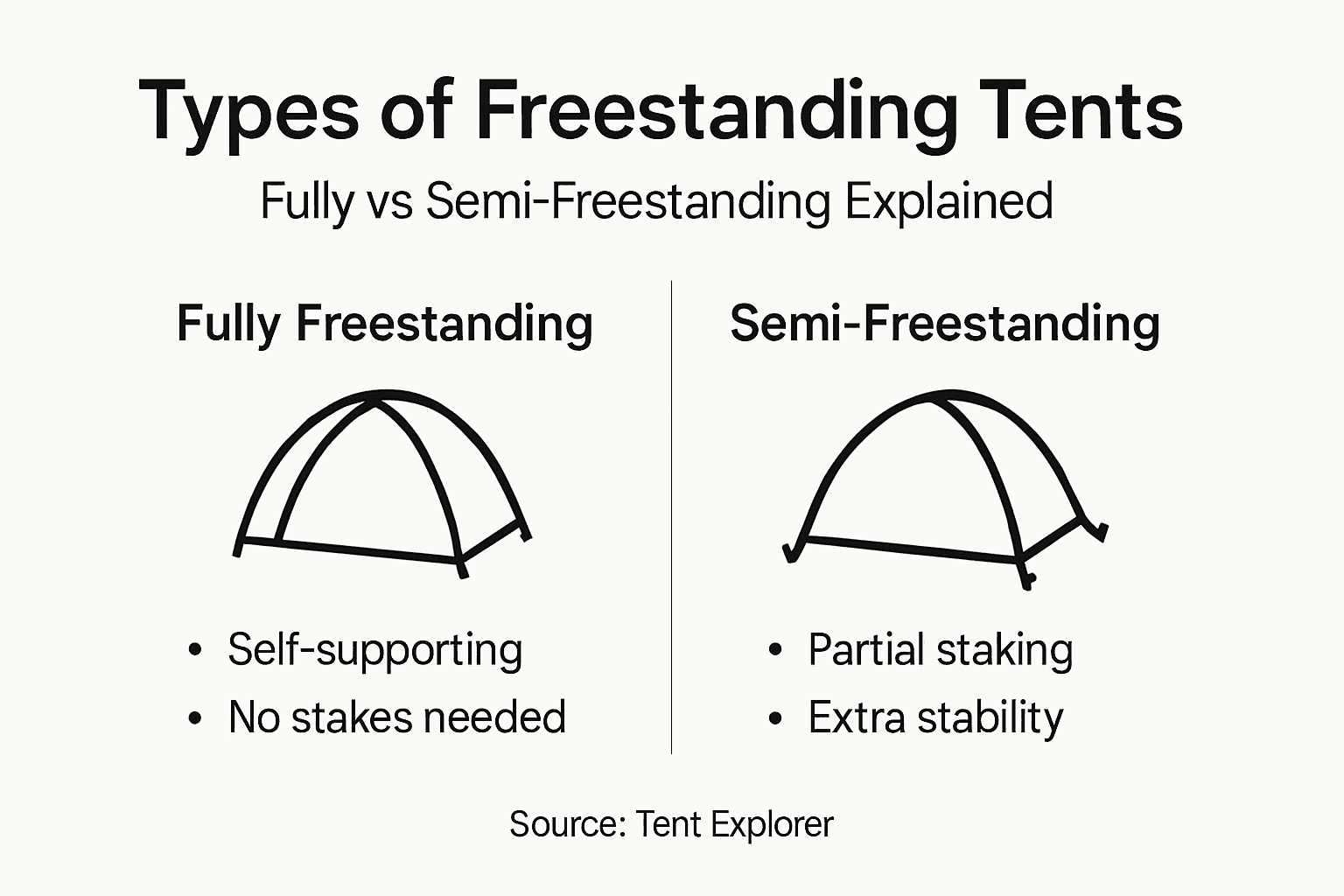
Here is a concise comparison of freestanding tent types and their best use cases:
| Tent Type | Pole System Example | Best Terrain | Ideal User |
|---|---|---|---|
| Fully Freestanding | Full tripod framework | Rocky, wooden, sand | Car camper |
| Semi-Freestanding | Partial support, staked | Soft ground | Backpacker |
| Single-Wall Freestanding | Basic pole structure | Dry climates | Ultralight hiker |
| Double-Wall Freestanding | Complex hub system | Wet, windy areas | All-weather camper |
Understanding the nuanced differences between tent types can significantly improve your camping comfort and preparedness for various outdoor environments.
Pro tip: Evaluate your specific camping conditions and terrain before selecting a freestanding tent to ensure you choose a design that matches your outdoor adventure requirements.
Freestanding Versus Non-Freestanding Tents
Understanding the fundamental differences between freestanding and non-freestanding tents is crucial for campers seeking the most suitable shelter for their outdoor adventures. Tent design fundamentally impacts camping flexibility and determines how effectively you can set up camp in various environmental conditions.
Key differences between freestanding and non-freestanding tents include:
- Structural Support: Freestanding tents maintain shape without ground stakes
- Setup Complexity: Freestanding tents typically require less precise ground preparation
- Weight Considerations: Non-freestanding tents are often lighter
- Terrain Adaptability: Freestanding tents offer greater setup versatility
Structural mechanics distinguish these two tent categories significantly. Freestanding tents utilize comprehensive pole systems that create a self-supporting structure, allowing campers to pitch their shelter on surfaces like rock platforms, wooden decks, or compact ground where traditional stake placement might be challenging. Non-freestanding tents, by contrast, rely entirely on ground stakes and tension lines to maintain their shape, requiring more precise site selection and ground conditions.
The choice between freestanding and non-freestanding designs depends on multiple factors, including camping environment, weight constraints, and personal preference. Backpackers might prefer non-freestanding tents for their minimal weight, while car campers or those exploring varied terrains often gravitate toward the flexibility of freestanding models.
Selecting the right tent type can dramatically improve your outdoor comfort and adaptability across different camping scenarios.
Pro tip: Test different tent types in controlled environments before your actual camping trip to understand their unique setup requirements and performance characteristics.
Practical Benefits and Common Pitfalls
Freestanding tents offer a range of practical advantages that make them increasingly popular among outdoor enthusiasts. Tent design flexibility provides significant camping advantages by allowing campers to adapt to diverse and challenging environments with greater ease.
Primary practical benefits of freestanding tents include:
- Quick Setup: Minimal ground preparation required
- Terrain Versatility: Can be pitched on multiple surface types
- Easy Repositioning: Simple to move after initial setup
- Internal Space: Often provide more headroom and living area
- Weather Resistance: Enhanced structural integrity during wind
Performance considerations reveal both strengths and potential limitations. While freestanding tents excel in adaptability, they typically weigh more than their non-freestanding counterparts due to complex pole systems and additional fabric required to maintain structural integrity. Backpackers and ultralight campers might find the extra weight a significant drawback, particularly during long-distance treks where every ounce matters.
Common pitfalls associated with freestanding tents demand careful consideration. The intricate pole mechanisms, while providing exceptional stability, can be more challenging to repair in the field compared to simpler tent designs. Additionally, the increased complexity means potentially higher manufacturing costs and more potential points of mechanical failure. Campers must weigh these trade-offs against the significant benefits of enhanced setup flexibility and comfort.
This summary shows key advantages and challenges of freestanding tents in practical scenarios:
| Benefit | Real Impact | Common Challenge | Mitigation Approach |
|---|---|---|---|
| Fast setup | Saves camp time | Complex poles | Practice assembly at home |
| Terrain versatility | More camp options | Heavier weight | Choose lighter materials |
| Easy repositioning | Adjust tent easily | Repairs can be tricky | Carry spare pole sections |
| Weather protection | Shelter from storms | Cost is often higher | Shop sales and discounts |
Understanding both the advantages and limitations of freestanding tents enables smarter gear selection and more enjoyable outdoor experiences.
Pro tip: Invest time in learning your specific tent’s pole configuration and practice setup techniques to minimize potential challenges during actual camping trips.
Discover the Freedom of Freestanding Tents with Tent Explorer
Choosing the right tent takes more than just picking a shelter. This article highlights how freestanding tents solve common camping challenges like tricky terrain and lengthy setup times by offering quick, stable, and flexible solutions. If you have ever struggled with staking your tent on rocky or uneven ground or wished for a shelter you can easily reposition, understanding freestanding designs is essential. Key terms like “pole hub technology” and “semi-freestanding” play a big role in helping you decide which tent matches your outdoor adventures.
Tap into expert guidance and practical tips with our extensive resources at Tent Explorer. From mastering setup tricks to choosing gear that fits your style, our Tent Accessories – Tent Explorer helps you enhance your camping experience for more comfort and ease. Worried about repairs or maintenance on complex tent systems? Check out our Tent Troubleshooting And Maintenance – Tent Explorer section for proven solutions.
Ready to transform how you camp with freestanding tents? Explore our trusted advice and gear suggestions now. Visit Tent Explorer and take your camping confidence to the next level today.
Frequently Asked Questions
What is a freestanding tent?
A freestanding tent is a camping shelter that can maintain its structure without the need for ground stakes. It uses integrated pole systems to create a supportive framework, allowing for quick and easy setup on various surfaces.
What are the advantages of using a freestanding tent?
Freestanding tents offer several benefits, including rapid setup, flexibility in campsite selection, enhanced stability, and the ability to reposition the tent after initial placement. They also provide good weather resistance, making them suitable for various outdoor conditions.
How do I set up a freestanding tent?
To set up a freestanding tent, lay out the tent body, insert the poles into designated sleeves or clips, and raise the structure to create the desired shape. While ground stakes aren’t strictly necessary, it’s recommended to secure the tent with stakes for added stability in windy conditions.
What is the difference between a fully freestanding and semi-freestanding tent?
A fully freestanding tent has a complete structural support system that does not require any ground stakes, making it suitable for any surface. In contrast, a semi-freestanding tent maintains most of its shape without stakes but may require partial staking for maximum stability.