
This blog post may contain affiliate links. As an Amazon Associate I earn from qualifying purchases.
Waking up on rocky ground or battling condensation in your tent can turn an exciting camping trip into a restless night. Even experienced campers report trouble sleeping outdoors, with up to one in three leaving the campsite early due to discomfort. Choosing the right location and making practical changes can help anyone—from American families to international adventurers—enjoy a cozy, worry-free night under the stars. You will find real-world strategies to transform your tent camping setup and improve camp comfort for better rest and overall satisfaction.
Quick Summary to Improve Camp Comfort
| Key Insight | Explanation |
|---|---|
| 1. Choose a Flat, Well-Drained Spot | A level campsite with natural drainage prevents water pooling and enhances sleeping comfort. |
| 2. Organize Shelter for Comfort | Proper shelter setup involves staking the tent securely and adding protective layers against moisture. |
| 3. Designate Functional Outdoor Areas | Create specific zones for cooking, eating, and relaxing to improve the efficiency of your campsite. |
| 4. Pack Essential Comfort Gear | Upgrade to quality sleeping pads and bags that provide insulation and comfort tailored to conditions. |
| 5. Regularly Assess and Adjust Comfort | Continuously evaluate your campsite setup to make real-time modifications based on environmental conditions. |

- 【Sturdy and Durable】:Camphill camping chair set is built with a heavy-duty powder coated steel frame. The sofa supports 500 lbs. (250 lbs each side) and measures 35”H, 37.4”L, 19.3”D (open). The chair supports 300 lbs. and measures 35”H, 19”L, 19”D (open).Oversized camping chair set is designed to provide ample space for relaxation.
- 【Portable & Easy Fold Up】: This camp chair for adults can be easily folded into a bundle and placed in the carry bag in just a few seconds, making it highly portable and compact.With a folded size of 36.2″x 6.1″,the set is lightweight and easy to transport. It can be folded into a compact size, making it easy to store in your car trunk or backpack.
- 【Comfortable & Quality】:The padded materials and high-back design, while the ergonomic back and full back structure and large cushioned seating area provide you with better support and a softer feeling for comfort.The sturdy frame provides excellent stability, while the durable fabric can withstand wear and tear from the elements.
- 【Carry bag & Coolers】This camp chair comes with two sets of specially designed thermos cup holders to accommodate both large sports water bottles and smaller cans and glass bottles,and the back features a mesh pocket to increase storage space,including carry bags for easy to store and protable.
- 【Camping Loveseat】: This unique camping collection features a sofa and 2 chairs that are made with durable Catonic & Oxford fabric.Its comfortable design and convenient features make it ideal for family outings and group gatherings.Perfect for sports games, BBQ, Lawn Parties, Concerts, Beach, Park or Camp Site.

- VERSATILE LOUNGING: Whether you are just relaxing or need an extra space for a house guest, this chair is the perfect 2-in-1 home or camping solution
- COMFORT: The cozy, velvety material provides a comfortable seating surface with the convenient built-in cup-holders to keep your favorite beverages nearby; pull out the cushion into a queen size bed for quick and comfortable sleeping solution
- CONVENIENT: Create a comfy space for a guest or an extra place to lounge for the evening; inflate and deflate in just minutes with the extra wide openings on the 2-in-1 valve, make this a quick and easy set-up
- MODERN TOUCH: With all the great features and benefits of this pull-out sofa, the charcoal gray color adds a modern touch and will be a great addition to your existing living space
- SAFETY, QUALITY, and VALUE: Intex designs, builds, and tests all its products to the highest standards with safety as the first order of business; our affordable and innovative products are built to last

- 【Portable Design】Lightweight outdoor folding chair weighs 15.43 lbs. Sweetcripy beach chair can be fully assembled and folded into a zero-gravity recliner, easy to take with you on the go, whether you’re heading to the beach, camping, lawn, pool and more.
- 【Comfortable Design】Fits your waist curve and gives you a comfortable feeling. The durable metal frame can hold up to 330lbs. This zero-gravity chair is the first choice for those who want to rest or take a nap on camping, beach, poolside or lawn.
- 【High Quality Fabric】Sweetcripy camping chairs adopt abrasion-resistant fabric, which is specifically designed for outdoor use. This makes this beach chair highly breathable and easy to clean.
- 【Lockable Function】lt can be adjusted to any angle between 0 and 160 degrees. Work with replaceable elastic cords to glide smoothly to an ergonomic zero-gravity position that instantly adapts to your body. The outdoor chairs surely provides a super cosy rest place.
- 【Applicable Places】This lounge chair is suitable for poolside, lawn,garden, patio, backyard, camping, beach and so on. Allowing you to enjoy comfortable tanning chair anywhere.

- 【Heavy Duty Lawn Chair】: Superior strength high tensile steel frame, 22mm tube combination construction.
- 【Oversized Folding Chair】: Widened design, more comfortable for your legs. Open Size 57.5”W X 23”D X 38”H.
- 【Frame for Extra Support】: 6 Cross bracing hubs on front ,sides and back for extra reinforcement.
- 【Top Weighing Capability】: Enhanced weight rating due to front vertical stabilising legs.
- 【Fully Filled Fabric】: Durable fully padded 4- layer 600D ripstop polyester fabric with sponge cushion offers supportive comfot for hours of seating.

- 【UPGRADED! Remote Control】 Our advanced remote control marries ease with innovation for next-gen solar string lights:3 Brightness Mode: Soft/Bright/Super Bright, 3 Light Mode: Breathing/Flashing/Constant, 4 Timing Control: 2/4/6/8 Hrs.One remote, endless charm—no extra timers and dimmer required,Elevate your outdoor oasis effortlessly.
- 【Solar & USB Charging Option】 The solar lights outdoor blend nature’s energy with modern versatility. Rain or shine, stay illuminated with dual charging options: Solar Ready – 8 hours of sunlight keeps the magic glowing all night long. USB Fast Charge – Full juice in just 4 hours, Ideal for quick pick-me-ups.High-capacity energy panel can be used for up to 20+Hrs when fully charged.
- 【All-Weather Durability & Shatterproof】Built to brave the outdoors, our solar lights shrug off clouds, dampness, gusts, fog, rain, snow, and temperature swings. Ideal for year-round glow in patios, gardens, and campsites, they set a vibrant, welcoming scene. Crafted with unbreakable PET Plastic and fortified against drops, they’re featherweight, secure, and stand tough against tumbles.
- 【Unleash Your Lights, Go Solar!】Break away from sockets and unleash your creativity with our solar string lights for outside. Effortlessly craft your dream ambiance, matching the glow and brilliance of plug-in lights, minus the cords. Best of all, they harness the sun’s power for zero-energy bills and sustainable shimmer, making every glow a nod to Earth’s green future. Let’s light up responsibly!
- 【addlon Promise】There outdoor solar lights feature 15 sockets and 16 shatterproof edison bulbs (1 spare).Addlon stands behind its products with 3-year product support guarantee. You can trust in the quality of the string lights and rely on excellent customer service. If you encounter any issues with your purchase, our team is always ready to assist you
Last update on 2026-04-15 / Affiliate links / Images from Amazon Product Advertising API
Step 1: Assess Your Campsite Location
Choosing the right campsite is crucial for a comfortable outdoor experience. Your location determines everything from sleeping comfort to safety and overall enjoyment of your camping trip.
Begin by surveying the terrain carefully. Look for a spot that offers level ground with natural drainage to prevent water pooling around your tent during unexpected rain. Avoid low areas or depressions where water might collect. Seek out slightly elevated ground with a gentle slope that allows rainwater to flow away from your campsite.
Consider your surrounding environment strategically. Scan for potential wind breaks like large rocks or tree clusters that can shield your campsite from strong gusts. Check the ground for signs of previous wildlife activity and steer clear of animal trails. Proximity to water sources is important, but maintain a safe distance of at least 200 feet to minimize environmental impact and reduce encounters with wildlife.
Observe the landscape for natural protection and comfort. Look for areas with partial tree cover that provide shade during hot days while allowing some sunlight to warm your campsite. Avoid setting up directly under dead branches or trees that might pose falling hazards.
Here’s a concise overview of campsite selection factors and their impact on comfort:
| Selection Factor | Impact on Comfort | Safety Considerations | Environmental Benefit |
|---|---|---|---|
| Level ground | Reduces sleep disturbance | Prevents slips and falls | Minimizes erosion risk |
| Natural windbreak | Blocks strong winds | Protects tents from damage | Reduces campsite footprint |
| Tree cover (partial) | Provides shade and warmth | Avoids falling branch hazards | Preserves natural habitat |
| Distance from water | Reduces wildlife interaction | Prevents flooding and contamination | Protects local water sources |
Pro tip: Always carry a small compact compass and topographical map to help you assess campsite terrain more accurately and identify potential risk zones before setting up camp.
Step 2: Organize Your Shelter and Sleeping Setup
Creating a comfortable campsite starts with establishing a well-organized shelter and sleeping area that protects you from the elements while ensuring maximum relaxation. Your goal is to design a functional space that meets both practical and comfort needs.
Begin by selecting an appropriate shelter solution adapted to your environment. If using a tent, choose a location that provides protection from wind and potential moisture. Ensure your tent is properly staked and the rainfly is securely attached to prevent water intrusion. Lay a ground tarp underneath to create an additional barrier against dampness and improve insulation.
Next, focus on your sleeping setup. Arrange your sleeping bags or pads on a flat surface, ideally slightly elevated to avoid ground moisture. Consider using sleeping pads not just for comfort but also for critical insulation from cold ground. Pack additional layers like blankets or thermal sleeping bag liners to adjust for temperature changes during the night. Organize your sleeping area to maximize available space, keeping essential items like flashlights, water bottles, and extra clothing within easy reach.
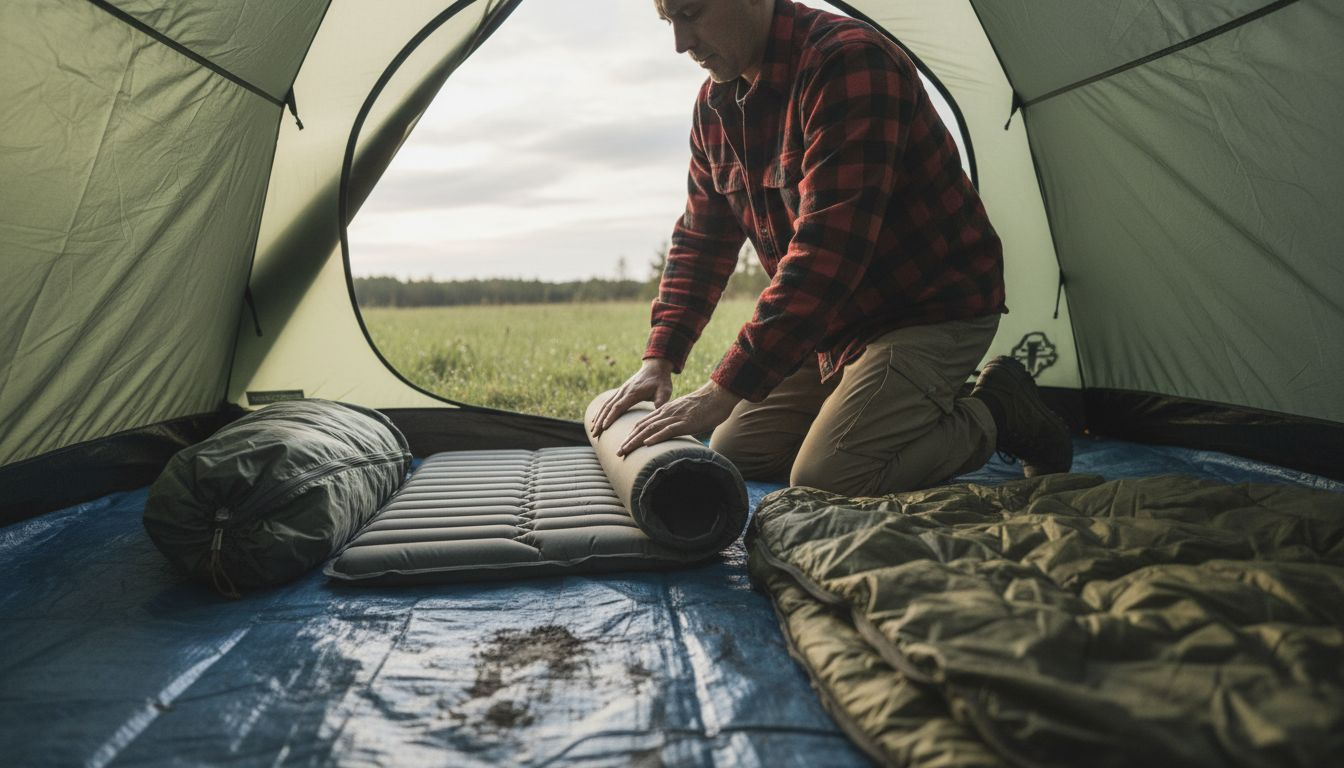
Make sure your shelter provides enough ventilation to prevent condensation while maintaining warmth. Position your sleeping arrangements to take advantage of natural windbreaks and minimize exposure to potential drafts. If camping in an area with variable weather, practice setting up your shelter quickly to adapt to changing conditions.
Pro tip: Always do a practice setup of your tent and sleeping arrangement in your backyard before your camping trip to identify and resolve any potential comfort or setup issues.
Step 3: Optimize Outdoor Living Spaces
Transforming your campsite into a comfortable and functional outdoor living area requires strategic planning and thoughtful organization. Your goal is to create a welcoming environment that supports relaxation, socializing, and practical daily activities.
Start by creating a well designed outdoor space that promotes social interaction. Designate specific zones for different activities such as cooking, eating, relaxing, and storing gear. Position your camp chairs in a circular or conversational arrangement to encourage interaction. Place a portable camping table centrally for meal preparation and dining. Consider using a lightweight tarp or canopy to create shade and provide protection from unexpected weather changes.
Pay attention to your campsite’s layout and functionality. Organize your cooking area away from your sleeping space to minimize food odors and potential wildlife attraction. Keep your cooking and eating areas close together for convenience. Use storage containers or hanging organizers to keep cooking utensils, food supplies, and other essential items easily accessible. Create a dedicated area for wet or dirty gear to keep your living space clean and organized.
Ensure your outdoor living space remains comfortable throughout different times of the day. Consider the sun’s movement and position your seating and activity areas to take advantage of natural shade or warmth. Bring lightweight, packable items like compact chairs, small tables, and versatile ground coverings that can help you quickly adapt your space to changing conditions or group needs.
Pro tip: Pack multipurpose items like lightweight tarps and paracord that can quickly transform your campsite into a more comfortable and adaptable outdoor living area.
Step 4: Upgrade Essential Comfort Gear
Transforming an ordinary camping trip into an exceptional outdoor experience starts with selecting and upgrading the right gear that enhances your comfort and preparedness. Your goal is to thoughtfully curate equipment that provides both functionality and convenience in the wilderness.
Begin by assembling a comprehensive camping first aid kit tailored to your specific needs. Include essential medical supplies such as adhesive bandages, antiseptic wipes, pain relievers, personal medications, and emergency treatment items. Consider the length of your trip, number of people, and potential environmental challenges when customizing your kit. Pack these items in a waterproof, compact container that is easily accessible but protected from moisture and rough handling.
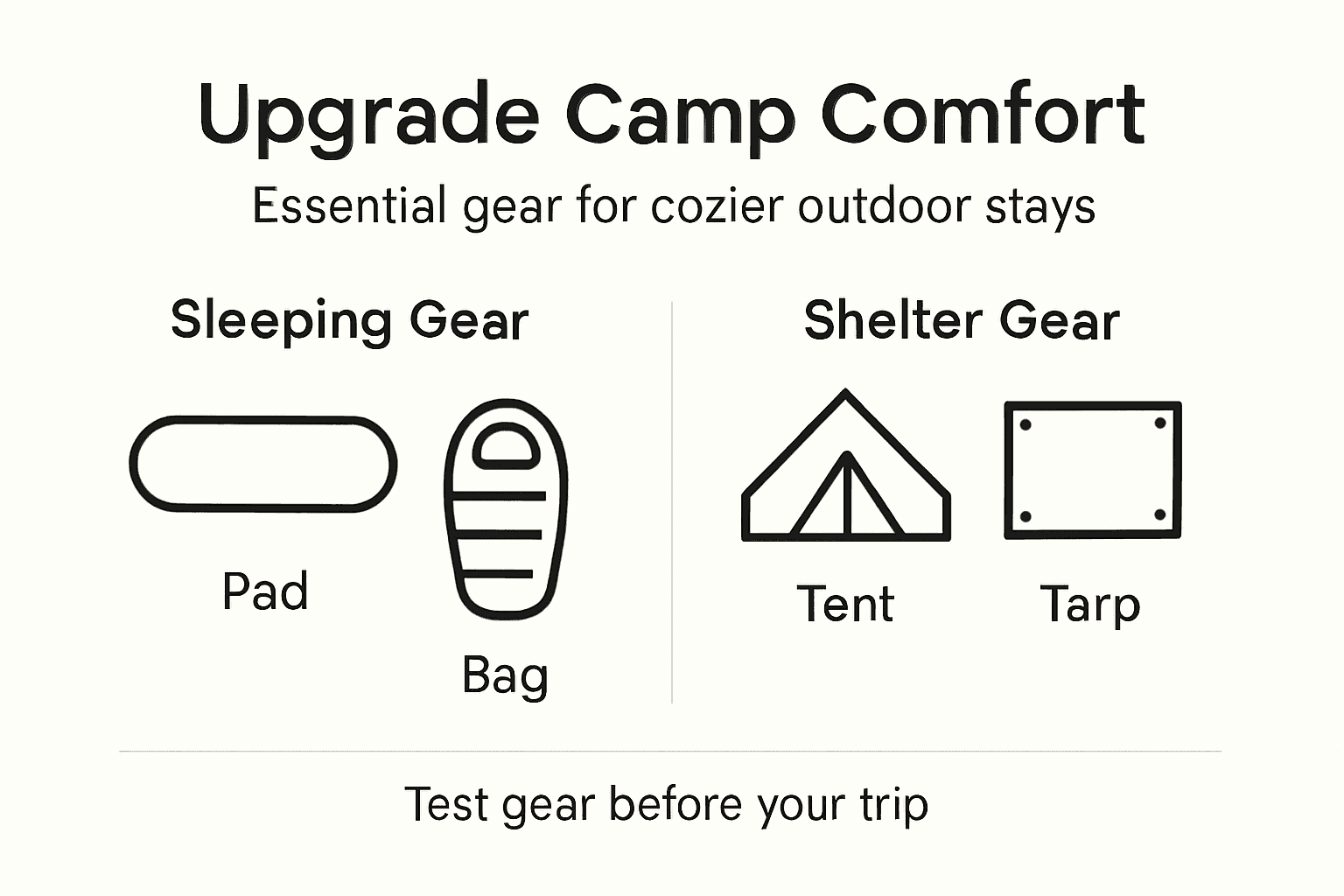
Focus on upgrading your core camping comfort systems. Select sleeping bags rated for the expected temperature range, with additional lightweight thermal layers for unexpected cold snaps. Invest in high quality sleeping pads that provide insulation from ground temperature and offer cushioning for better rest. Choose moisture wicking clothing layers that can be easily adjusted to changing weather conditions. Consider compact, multifunctional gear that reduces overall weight while maximizing utility such as lightweight camping chairs that convert or packable cooking systems.
Prioritize gear that offers protection and adaptability. Select a tent with good ventilation, waterproof ratings, and enough interior space for comfortable movement. Bring lightweight rain gear, extra socks, and quick drying materials that help you stay comfortable in variable weather conditions. Pack compact emergency blankets, portable water filtration systems, and versatile tools that can serve multiple purposes in different situations.
Compare comfort gear upgrades based on utility, protection, and adaptability:
| Gear Type | Utility Enhancement | Protection Features | Adaptability Value |
|---|---|---|---|
| Sleeping pad | Insulates from cold ground | Adds cushioning | Easily packable |
| Rain jacket | Shields from rain and wind | Waterproof material | Suits erratic weather |
| Compact water filter | Convenient clean water access | Removes bacteria | Works in various sources |
| Multipurpose tarp | Flexible shelter, ground cover | Resists moisture | Used for shelter or shade |
Pro tip: Test and familiarize yourself with all new gear before your camping trip to ensure proper functionality and identify any potential issues in a controlled environment.
Step 5: Verify and Fine-Tune Camp Comfort
Ensuring maximum comfort during your camping trip requires a systematic approach to monitoring and adjusting your outdoor living environment. Your goal is to proactively identify and resolve any potential discomfort issues before they become significant problems.
Begin by conducting a comprehensive camp comfort assessment and verification. Walk through your campsite and systematically evaluate each aspect of your setup. Check your tent for proper staking, rainfly tension, and interior organization. Test sleeping pad placement and ensure your sleeping bags provide adequate warmth. Examine your cooking and living areas for functionality and ease of movement. Look for potential issues like uneven ground, exposure to wind, or moisture accumulation that could compromise your comfort.
Pay close attention to environmental factors and be prepared to make real time adjustments. Monitor temperature changes throughout the day and night, and have additional layers or cooling strategies ready. Assess wind conditions and be prepared to reposition tarps or adjust your tent setup for better protection. Check your gear for signs of wear or potential failure points that might impact your comfort. Listen to feedback from your camping companions and be willing to make collaborative improvements to the campsite layout and setup.
Remain flexible and solution oriented in your approach to camp comfort. Keep essential adjustment tools like extra stakes, guy lines, and repair kits within easy reach. Create a quick response plan for potential comfort disruptions such as unexpected rain, temperature drops, or wind shifts. Regularly rotate and adjust your sleeping and living spaces to prevent prolonged exposure to uncomfortable conditions.
Pro tip: Conduct a brief comfort assessment every few hours during your camping trip, making small proactive adjustments to maintain an optimal outdoor living environment.
Elevate Your Camp Comfort with Expert Tips and Gear from Tent Explorer
Struggling with making your campsite truly cozy and practical is a common challenge for many tent camping enthusiasts. This article highlights crucial steps like selecting the right location, organizing your shelter, and upgrading essential comfort gear to avoid discomfort caused by uneven ground, unpredictable weather, or poor gear choices. Achieving that perfect blend of protection, warmth, and convenience can transform your outdoor experience into something truly memorable.
At Tent Explorer, we understand your goals to create a welcoming and adaptable outdoor living environment. Explore our Outdoor Living – Tent Explorer category for in-depth guidance on comfort-enhancing setups and layouts. Need reliable gear to support your trip? Check out our Tent Accessories – Tent Explorer selection designed to boost shelter functionality and protection.
Ready to make your next campout your coziest yet Discover practical advice, honest reviews, and inspiring ideas by visiting Tent Explorer today Take the next step toward a more comfortable and enjoyable camping adventure now.
Frequently Asked Questions
How can I choose the right campsite for comfort?
Selecting the right campsite involves finding level ground with good drainage and avoiding low areas that could collect water. Look for natural windbreaks and ensure the site is at least 200 feet away from water sources to minimize wildlife interactions.
What are the essentials for a comfortable sleeping setup?
A comfortable sleeping setup includes a well-placed sleeping pad on a flat surface and sufficient insulation, like thermal layers. Use a ground tarp for added protection against moisture and organize your sleeping space to keep essential items easily accessible.
How can I design an effective outdoor living space at my campsite?
Create designated zones for cooking, eating, and relaxing to enhance functionality. Arrange seating in a circle for social interaction and utilize lightweight canopies for shade to adapt to changing weather conditions.
What type of gear upgrades enhance camping comfort?
Upgrading your gear, such as using high-quality sleeping pads and moisture-wicking clothing, significantly boosts comfort. Pack versatile items like compact camping chairs and multipurpose tarps to adapt your setup easily to different activities or weather.
How do I ensure my campsite remains comfortable throughout my trip?
Regularly assess your campsite for comfort issues by checking your tent setup, environmental conditions, and overall functionality. Make adjustments as needed, such as relocating items to avoid drafts or repositioning tarps for better shelter.
What is a quick method to evaluate camp comfort during my trip?
Conduct a comfort assessment every few hours by looking for signs of discomfort and making small adjustments. Keep essential tools readily available to respond quickly to any changes, ensuring a cozy and enjoyable camp environment.