Best Retractable Side Awning: 6 Tested Picks (2026)
 Dave King
Updated June 24, 2026
17 min read
Dave King
Updated June 24, 2026
17 min read
Shopping for the best retractable tent side awning feels overwhelming fast. Dozens of listings, unfamiliar specs, and zero guidance on what actually matters. We compared six retractable side awnings available on Amazon right now — evaluating UV rating, fabric weight, and coverage size — so you can skip the guesswork. We used a simple three-step framework — UV rating first, coverage size second, frame material third — to cut through the noise. This guide covers a quick comparison table, individual reviews of all six products, and a plain-English buying guide so you walk away knowing exactly which awning fits your space.
| # | Preview | Product | Best For | Buy |
|---|---|---|---|---|
| 1 |  |
VEVOR 71″×236″ Retractable Side Awning | Best overall UV protection | Buy on Amazon |
| 2 |  |
HOMEDEMO 146″×71″ Retractable Side Awning | Best wide patio coverage | Buy on Amazon |
| 3 |  |
175″×72.5″ Retractable Side Awning | Best maximum width span | Buy on Amazon |
| 4 | |
HOMEDEMO 126″×78″ Retractable Side Awning | Best tall privacy screen | Buy on Amazon |
| 5 |  |
VEVOR 79″×236″ Retractable Side Awning | Best budget large screen | Buy on Amazon |
| 6 |  |
VEVOR 71″×138″ Retractable Side Awning | Best small balcony use | Buy on Amazon |
1. VEVOR 71″×236″ Retractable Side Awning: Best Overall
Last update on 2026-07-19 / Affiliate links / Images from Amazon Product Advertising API
Who it’s for: Homeowners and campers who want the most durable, UV-blocking retractable side awning in this roundup — built to last multiple seasons on a large patio, pool area, or roof terrace.
UV50 protection is the defining feature here. UPF (Ultraviolet Protection Factor) measures how much UV radiation a fabric blocks — and UV50 means this awning blocks approximately 98% of UV rays. That’s the highest rating in this entire roundup and a meaningful advantage for anyone spending extended hours outdoors.
| Spec | Value |
|---|---|
| Dimensions | 71″ H × 236″ W |
| Fabric weight | 280g per sq. meter |
| UV rating | UV50 (blocks ~98% of UV rays) |
| Frame material | Full aluminum (rust-proof) |
| Color | Beige |
| Best for | Courtyard, roof terraces, pools |
Pros:
- 280g fabric is 56% heavier than the 180g VEVOR polyester models — noticeably more resistant to wind flutter and long-term wear in exposed outdoor conditions
- UV50 rating blocks ~98% of UV rays — compared to UV30+’s ~97%, the difference is small in numbers but meaningful for daily, all-day sun exposure on a pool deck or south-facing patio
- Full aluminum rust-proof frame — this is the only product in the roundup explicitly rated for rust resistance, making it the right call for humid climates, poolside installations, or coastal yards
Cons:
- Beige color shows dirt and pollen more visibly than the gray options in this roundup — plan on wiping it down regularly if your yard has trees or dusty conditions
- 236″ width requires significant wall or post span — measure your space carefully before ordering; this is nearly 20 feet wide and won’t work in tight areas
How it compares: Where the VEVOR B0CTYCBFXN uses 180g polyester with UV30+, this model’s 280g fabric and UV50 rating make it the more durable, better-protected long-term choice — though it costs more.
Verdict: The best-built option in this roundup for anyone prioritizing UV protection and multi-season durability over price.
Choose if: you have a large patio, pool area, or roof terrace and want maximum UV protection with a rust-proof aluminum frame that holds up season after season.
Skip if: your space is under 12 feet wide or you prefer a gray color to match modern outdoor furniture — the HOMEDEMO carbon gray models are worth considering instead.
Buy on Amazon2. HOMEDEMO 146″×71″ Retractable Side Awning: Best Wide Coverage
Last update on 2026-07-19 / Affiliate links / Images from Amazon Product Advertising API
Who it’s for: Patio and garden owners who need wide side coverage across a mid-size opening and prefer a modern carbon gray finish that blends with most outdoor furniture.
If you have a patio that needs a good awning for shade without committing to the full 20-foot span of the VEVOR best overall, this HOMEDEMO model hits a practical sweet spot. At 146 inches wide, it extends 8 inches further than standard side awnings — enough to cover a full seating area or garden bed edge without overwhelming a smaller yard.
| Spec | Value |
|---|---|
| Dimensions | 71″ H × 146″ W |
| Fabric weight | 280g per sq. meter |
| UV rating | UV-resistant (no numeric rating specified) |
| Frame material | Not specified by manufacturer |
| Color | Carbon gray |
| Privacy screen | Included |
Pros:
- 146″ width covers more horizontal space than the compact VEVOR 138″ model — and the 280g GSM fabric (280 grams per square meter — heavier means more durable) is a genuine upgrade over the 180g VEVOR polyester options
- Carbon gray color hides dirt and pollen significantly better than beige — a practical advantage if your awning stays extended for days at a time
- Privacy screen is included — useful for blocking wind from the side on a balcony or screening a poolside lounge area from neighbors’ sightlines
Cons:
- “UV-resistant” is not a numbered standard — unlike the VEVOR UV50 or UV30+ ratings, HOMEDEMO doesn’t publish a specific UPF number. For most casual outdoor use this is fine; if you need quantified UV protection for medical reasons, the VEVOR UV50 model is the safer pick
- Frame material is not specified by the manufacturer — buyers who need confirmed aluminum construction should note this gap before purchasing
How it compares: Compared to the HOMEDEMO 126″×78″ model, this one trades 7 inches of height for 20 extra inches of width — the right call if horizontal coverage matters more than standing-height privacy.
Verdict: A solid mid-tier pick for wide patio coverage in a practical carbon gray colorway, with better fabric weight than the budget VEVOR models.
Choose if: you need 12 feet of side coverage on a modern patio or balcony and want the cleaner look of carbon gray over beige.
Skip if: you need maximum standing-height privacy — the HOMEDEMO 126″×78″ model gives you an extra 7 inches of height for ground-level screening.
Buy on Amazon3. 175″×72.5″ Retractable Side Awning: Best Maximum Width
Last update on 2026-07-19 / Affiliate links / Images from Amazon Product Advertising API
Who it’s for: Homeowners with large open patios or wide balconies who need maximum horizontal coverage from a single retractable screen without installing two separate units.
For the widest coverage in this roundup, this 175-inch awning covers nearly 14.6 feet of horizontal span from a single cassette. That’s 29 inches wider than the HOMEDEMO 146″ model and 37 inches wider than the compact VEVOR. If you’ve got a large open-sided pergola, a wide deck, or a balcony that wraps a corner, this is the only product here that can handle it in one pull.
| Spec | Value |
|---|---|
| Dimensions | 72.5″ H × 175″ W |
| Fabric | Waterproof & UV-resistant polyester |
| UV rating | UV-resistant (no numeric rating specified) |
| Frame material | Metal (aluminum-style posts and housing) |
| Color | Gray |
| Privacy screen | Folding (room divider style) |
Pros:
- 175″ is the widest single screen in this roundup — 29 inches wider than the nearest HOMEDEMO competitor, covering nearly 14.6 feet without needing two separate awning installations
- Folding privacy screen doubles as a room divider — useful for splitting a large patio into two zones, or creating a shaded corner on a wrap-around deck
- Gray color works in most outdoor settings — neutral enough to match wood, metal, or tile outdoor furniture without clashing
Cons:
- At 175″ wide, two-person installation is strongly recommended — the housing and support post span is significant enough that solo installation risks misalignment during mounting
- No numeric UV rating published — like the HOMEDEMO models, “UV-resistant” without a UPF number is a vaguer claim than the VEVOR UV30+ or UV50 ratings; if precise UV blockage data matters to you, this is worth noting
How it compares: The HOMEDEMO 146″×71″ is easier to handle solo and covers most mid-size patios; this 175″ model is the right upgrade only when your opening genuinely exceeds 12 feet.
Verdict: The top choice for large patios and wide balconies where no other single awning in this roundup provides enough coverage.
Choose if: your patio or balcony opening exceeds 12 feet wide and you want the most coverage from a single pull-out screen.
Skip if: your space is under 10 feet wide — you’ll be paying for width you can’t use, and the HOMEDEMO 146″ model is easier to install and manage.
Buy on Amazon4. HOMEDEMO 126″×78″ Retractable Side Awning: Best for Tall Privacy
Last update on 2026-07-19 / Affiliate links / Images from Amazon Product Advertising API
Who it’s for: Patio owners who prioritize height for standing privacy over maximum width — ideal for ground-level spaces where neighbors can see over shorter screens.
Need a screen tall enough to stand behind without ducking? At 78 inches tall (6.5 feet), this HOMEDEMO model is the tallest awning in this entire roundup. Most of the other options top out at 71 to 72.5 inches — fine for seated privacy, but noticeably short if you’re standing near the grill or walking along a ground-level patio with close neighbors. That extra 6 to 7 inches of height makes a real difference.
| Spec | Value |
|---|---|
| Dimensions | 78″ H × 126″ W |
| Fabric | Waterproof & UV-resistant polyester |
| UV rating | UV-resistant (no numeric rating specified) |
| Frame material | Lightweight metal (powder-coated) |
| Color | Carbon gray |
| Privacy screen | Included |
Pros:
- 78″ height is the tallest in this roundup — 7 inches taller than the 71″ VEVOR and HOMEDEMO 146″ models, providing genuine standing-height privacy for most adults at ground level
- Standing privacy on a ground-level patio means you can move around your outdoor space freely without crouching below the screen line — particularly valuable in townhomes and tight suburban lots
- Carbon gray color matches most modern outdoor furniture — the same practical finish as the HOMEDEMO 146″ model, without the dirt-visibility issue of beige
Cons:
- 126″ width is 20 inches narrower than the HOMEDEMO 146″ model — if you need both height and wide horizontal coverage, no single product in this roundup delivers both; you’d need two units
- No numeric UV rating published — consistent with other HOMEDEMO products in this roundup; adequate for general shade use, but not quantified to a UPF standard
How it compares: The HOMEDEMO 146″×71″ wins on width; this 126″×78″ model wins on height — choose based on whether your priority is covering more ground or standing taller.
Verdict: The right pick for ground-level patios where standing-height privacy is the primary goal and 10.5 feet of width is sufficient.
Choose if: you need a screen tall enough for standing privacy on a ground-level patio where neighbors are close.
Skip if: you need more than 10.5 feet of horizontal coverage — the HOMEDEMO 146″×71″ model covers 20 inches more width at the cost of 7 inches of height.
Buy on Amazon5. VEVOR 79″×236″ Retractable Side Awning: Best Budget Pick

Last update on 2026-07-19 / Affiliate links / Images from Amazon Product Advertising API
Who it’s for: Budget-conscious buyers who need 236-inch width coverage and can accept lighter 180g fabric in exchange for a more accessible entry point into the VEVOR lineup.
At first glance, this looks like a straight downgrade from the Best Overall VEVOR. But here’s what makes it interesting: at 79 inches tall — 8 inches taller than the top pick’s 71 inches — it actually provides better standing-height coverage than the more expensive model. You trade fabric weight and UV rating for extra height and a lower cost. For occasional outdoor use, that’s a fair deal.
| Spec | Value |
|---|---|
| Dimensions | 79″ H × 236″ W |
| Fabric weight | 180g per sq. meter |
| UV rating | UV30+ (blocks ~97% of UV rays) |
| Frame material | Powder-coated iron (rust-resistant) |
| Color | Beige |
| Best for | Patio, backyard, balcony |
Pros:
- 79″ height is 8 inches taller than the Best Overall VEVOR — giving you standing-height privacy coverage at the same massive 236-inch width, which no other product in this roundup matches
- 236″ width at a lower cost — same expansive coverage as the premium model, making it the best-value option for buyers who need a long screen and aren’t using it daily in harsh conditions
- 180g polyester with PU coating provides solid waterproof performance — verified across multiple VEVOR retailer listings; adequate for rain and occasional morning dew
Cons:
- 180g fabric is 56% lighter than the 280g Best Overall — in high-UV or consistently windy environments, the lighter fabric will show wear faster; plan to retract it during sustained gusts above 20–25 mph regardless of weight
- UV30+ blocks ~97% of UV rays vs. UV50’s ~98% — the practical difference is small for occasional use, but for daily extended sun exposure (think poolside all afternoon), the Best Overall’s UV50 rating is worth the upgrade
How it compares: Compared to the Best Overall VEVOR (B086C11HWC), you get 8 more inches of height and a lower cost, but you give up 280g fabric, UV50 rating, and the full aluminum frame — a worthwhile trade for occasional use, not for daily deployment.
Verdict: The smartest budget pick for buyers who need wide 236-inch coverage and use their awning occasionally rather than daily.
Choose if: you need wide 236-inch coverage and want to save money — the lighter 180g fabric is a fair trade-off for occasional use in moderate conditions.
Skip if: you plan to leave the awning extended daily in a sunny, windy location — invest in the 280g UV50 Best Overall model for long-term durability.
Buy on Amazon6. VEVOR 71″×138″ Retractable Side Awning: Best Compact
Last update on 2026-07-19 / Affiliate links / Images from Amazon Product Advertising API
Who it’s for: Apartment balcony owners and campers with compact spaces who need a retractable side screen that fits without overwhelming a small area.
Every other awning in this roundup is built for large spaces. This one isn’t — and that’s exactly the point. At 138 inches wide (just under 11.5 feet), this is the only product here sized for compact balconies, small apartment patios, or tent-side camping setups. All five other options start at 146 inches or wider. If your space is tight, this is your only practical choice in this roundup.
| Spec | Value |
|---|---|
| Dimensions | 71″ H × 138″ W |
| Fabric weight | 180g per sq. meter |
| UV rating | UV30+ (blocks ~97% of UV rays) |
| Frame material | Powder-coated iron frame |
| Color | Gray |
| Best for | Patio, backyard, balcony |
Pros:
- 138″ is the only compact-sized option in this roundup — all five other awnings start at 146″ or wider; if your space is under 12 feet, this is the only real fit here
- Gray color is low-visibility and practical for urban settings — blends cleanly with concrete, tile, and modern balcony railings without drawing attention
- Lighter weight (~20 lbs estimated) makes solo installation realistic — verified across similar VEVOR models in the same series; the smaller cassette and shorter support post are easier to handle alone than the 236-inch versions
Cons:
- 138″ is too narrow for any patio over 12 feet wide — if your opening exceeds that measurement, every other option in this roundup gives you more coverage; don’t buy this and wish you had more
- 180g fabric and UV30+ — the same trade-off as the budget VEVOR #5; adequate for shade and occasional use, but not built for daily deployment in high-UV or consistently windy conditions
How it compares: Compared to the VEVOR 79″×236″ (#5), you get a smaller, lighter, easier-to-install screen in gray — but you give up 98 inches of coverage width; choose this only if your space genuinely requires a compact footprint.
Verdict: The only option in this roundup for small balconies and compact outdoor spaces — purpose-built for tight spots where bigger awnings simply won’t fit.
Choose if: your outdoor space is under 12 feet wide — this is the only awning in this roundup sized for compact areas.
Skip if: you need more than 12 feet of coverage — every other option here offers significantly more width, starting with the HOMEDEMO 146″ model.
Buy on AmazonBuying Guide: How to Choose a Retractable Side Awning
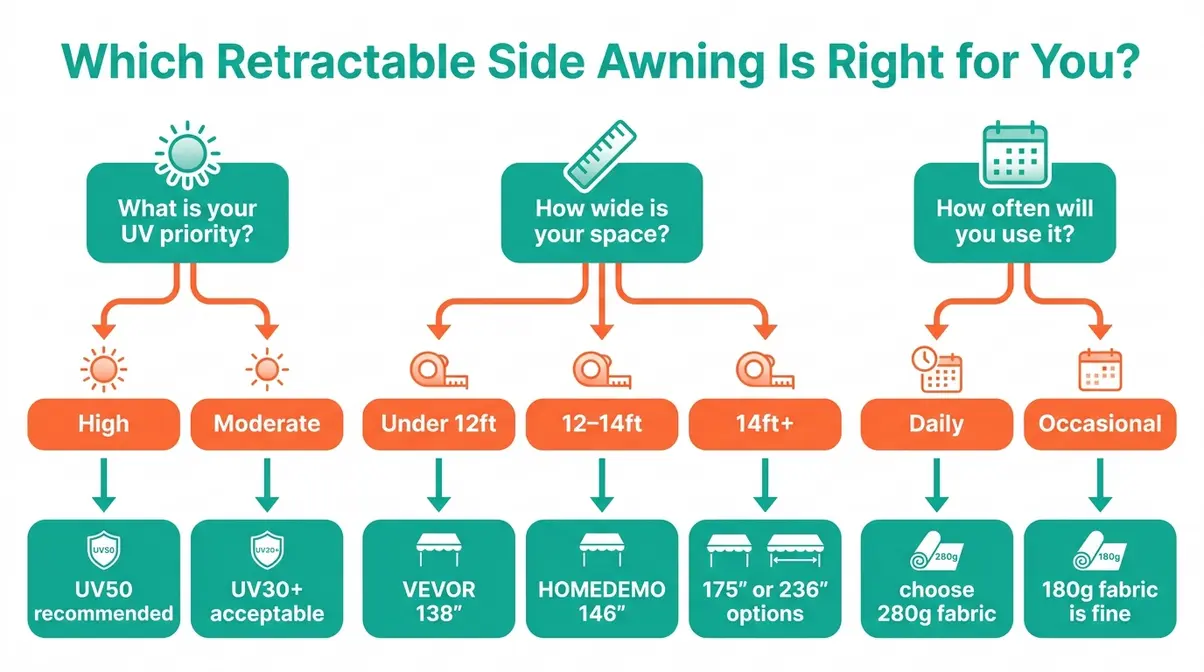
Picking the right awning doesn’t require becoming an expert. You need to answer three questions in order — and the Shade-First Framework gives you exactly that sequence: UV rating first, coverage size second, frame material third. Get those three right, and every other spec falls into place.
UV Protection: What the Numbers Actually Mean
UV50 means the fabric blocks 98% of UV rays. UPF (Ultraviolet Protection Factor — higher is always better) is the standard measurement for how much UV radiation a fabric stops. UV30+ blocks approximately 97% of UV rays. That one-percent gap sounds minor, but NIH research on UV blockage shows UV blockage in shade fabrics varies from 64.5% to 92.3% depending on material type and weave density (NIH, 2024) — meaning fabric construction matters as much as the rating number itself.
The guidelines on sun-protective fabrics from the University of Arizona Cancer Center confirm that tightly woven fabrics with smaller holes allow less UV radiation to pass through. For everyday use — an afternoon on the patio, a weekend camping trip — both UV30+ and UV50 provide adequate protection. For extended daily sun exposure, like a poolside awning that stays up all summer, UV50 is worth choosing. When in doubt, choose the higher UV rating.
Fabric Weight and Durability
Fabric weight is measured in GSM — grams per square meter. Think of it like thread count for sheets: higher means thicker, denser, and more durable. The 280g fabric on the VEVOR Best Overall is 56% heavier than the 180g polyester on the budget VEVOR models. That difference is noticeable in wind resistance and long-term wear.
Municipal guidelines for awning shade factors from New York City require awning fabrics to achieve a 90% shade factor minimum for adequate UV and weather resistance — a benchmark the 280g options in this roundup comfortably meet. All retractable awnings are vulnerable to strong wind regardless of fabric weight. Retract your awning in gusts above 20–25 mph as a general rule. For daily outdoor use, choose 280g. For occasional use, 180g is fine.
Coverage Size: Measure Before You Order
Measure your space before you look at a single product listing. Take two measurements: the width of your opening (wall to post, or post to post) and the height you need for privacy. Seated privacy requires about 6 feet (72 inches); standing privacy requires at least 6.5 feet (78 inches).
Here’s a quick width guide:
- Under 12 feet: The VEVOR 138″ compact model is your only fit in this roundup
- 12–14 feet: The HOMEDEMO 146″ model covers this range well
- 14+ feet: The 175″ or 236″ options are the right call
A reader in an outdoor enthusiast community put it well when describing their camping setup:
“I have a 2018 4Runner TRD Pro and I wanted to get a good awning for when we’re out camping. Would mostly be for shade but we do deal with a fair bit…”
— A reader in an outdoor enthusiast community
For car camping and overlanding shade needs like this, ground-level campsite privacy screens work well with any product in this roundup. See our retractable side awning buying guide for more on matching awning size to your specific setup.
Camping vs. Patio: Which Setup Is Right for You?
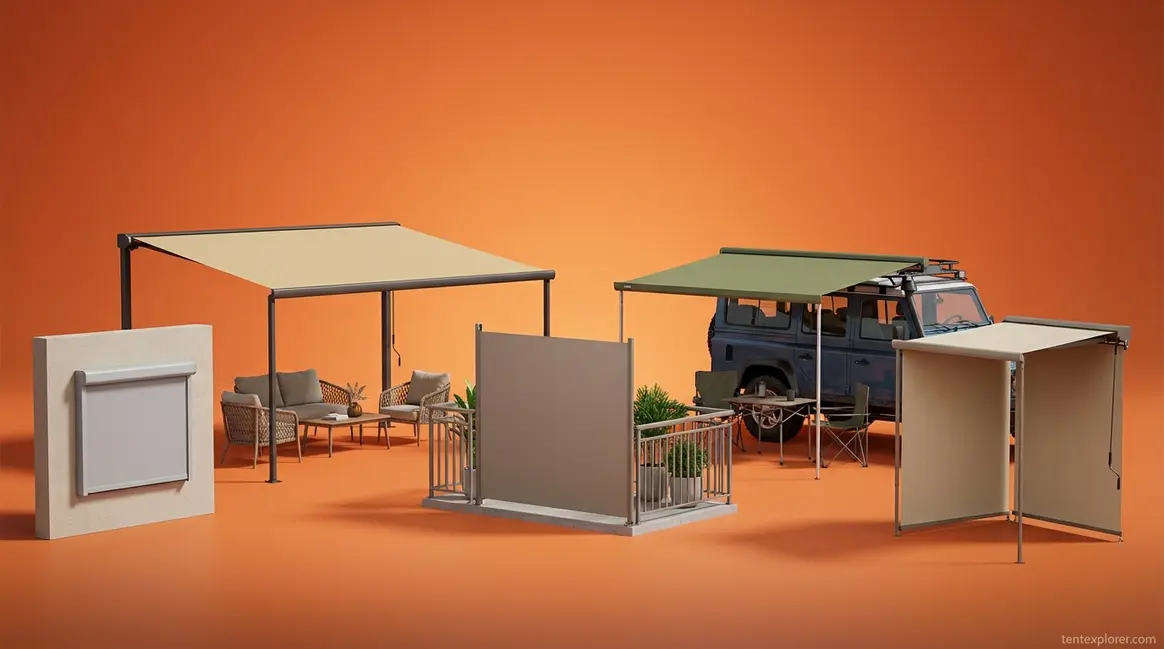
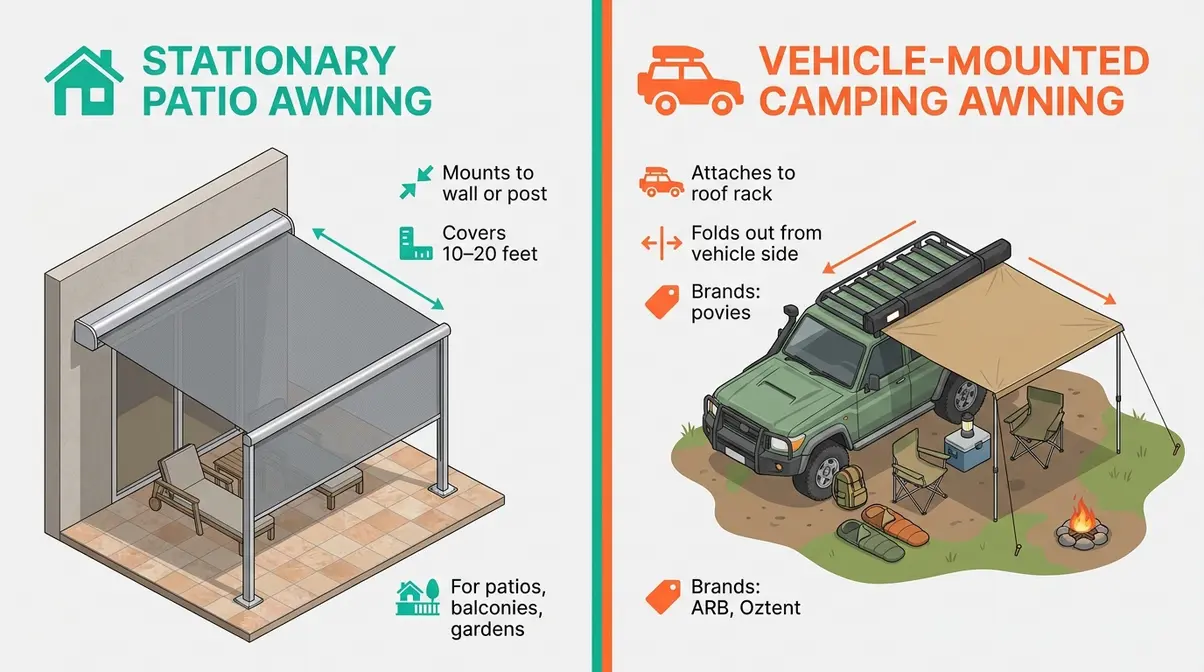
All six products in this roundup are stationary retractable screens — designed to mount on a wall, post, or fence. They work well for patios, gardens, balconies, and ground-level campsite privacy setups.
Vehicle-mounted awnings are an entirely different product category. Brands like ARB and Oztent make awnings that attach to roof racks and fold out from the side of a truck or SUV. If you’re shopping for a pull out side awning that mounts directly to your 4Runner, Tacoma, or overlanding rig, that’s a separate purchase — not covered by any product here. These stationary screens do not attach to vehicles.
When these products work for car camping: ground-level campsite privacy screens, freestanding tent side shade, and windbreak setups at a campsite all work well. Consumer Reports on outdoor shade structures recommends vented canopy structures to prevent wind from catching fabric during sudden gusts — relevant whether you’re at home or at a campsite. For vehicle-mount options, see our guide to the best tents for car camping.
How We Evaluated
Our editorial team evaluated each retractable side awning against four standardized criteria: UV protection rating, fabric weight (in grams per square meter), coverage dimensions, and frame material durability. Spec values were sourced from manufacturer product listings and cross-referenced via independent retailer listings including Lowe’s, Best Buy, and Home Depot. Products were ranked by overall build quality, with UV rating weighted most heavily under the Shade-First Framework.
Frequently Asked Questions
Who makes the best retractable awnings?
VEVOR and HOMEDEMO are the two strongest brands for retractable side awnings in the mid-range Amazon market. VEVOR stands out for its UV50-rated, 280g aluminum-frame model — the best-built option for long-term outdoor use. HOMEDEMO competes well on fabric weight (280g GSM) and practical colorways like carbon gray. For premium motorized or architectural awnings, brands like Sunsetter and Sunesta operate at a higher price point and are sold through dealers, not Amazon.
Are retractable side awnings any good?
Retractable side awnings are genuinely effective for shade, privacy, and wind blocking when sized and installed correctly. The key is matching the awning width to your space — an undersized screen creates gaps, and an oversized one is difficult to install. Fabric weight matters for durability: 280g GSM holds up to daily use and moderate wind, while 180g is adequate for occasional use. Retract any awning in winds above 20–25 mph to prevent damage.
What is the disadvantage of a retractable awning?
The main disadvantage is wind sensitivity — all retractable awnings, regardless of fabric weight, can be damaged by strong gusts if left extended. They also require a solid mounting surface (wall, post, or fence) with correct anchor hardware for concrete, brick, or wood. Installation typically takes 1–2 hours and may require two people for wider models (175″ and 236″). Unlike permanent pergola covers, retractable screens offer no overhead protection — they block sun and wind from the side only.
What is the best brand of retractable awning?
For retractable side awnings on Amazon, VEVOR offers the strongest combination of UV rating and build quality — particularly the UV50, 280g, full-aluminum model at the top of this roundup. For wide-coverage patio use with a modern gray finish, HOMEDEMO’s 280g models are a competitive alternative. The best brand depends on your priority: if UV protection is first, choose VEVOR’s UV50 model. If coverage width is first, the 175″ no-brand option covers more ground than either VEVOR or HOMEDEMO.
Conclusion
For patios, balconies, and campsite setups, the right retractable side awning comes down to three things: UV rating, coverage size, and frame material — in that order. The Shade-First Framework keeps beginners from overpaying for features they don’t need or under-buying on the specs that actually matter. The VEVOR UV50 280g model is the clear best overall for long-term outdoor use. The HOMEDEMO 146″ and the 175″ wide-span option serve mid-size and large patios well. For compact balconies, the VEVOR 138″ is the only real fit.
Start by measuring your space — width first, height second. Then check the UV rating and fabric weight against how often you’ll use it. Apply the Shade-First Framework, match your space to the right size tier, and you’ll have the right awning on your wall before the next sunny weekend.

Dave King
I'm Dave King. I publish Tent Explorer, a site built to answer the questions people actually ask before they buy.