

This blog post may contain affiliate links. As an Amazon Associate I earn from qualifying purchases.
Sticky summer nights in the wilderness can quickly become uncomfortable if your tent turns into a stuffy haven for insects. Picking the right tent mesh is more than just a comfort issue, it directly affects ventilation and bug protection whether you camp in the forests of Canada or the deserts of Australia. Choosing the best mesh ensures cool airflow, manages moisture, and blocks unwanted pests, making every night outdoors more restful.

- 𝗕𝘂𝗴-𝗣𝗿𝗼𝗼𝗳 & 𝗩𝗲𝗻𝘁𝗶𝗹𝗮𝘁𝗲𝗱: The EAST OAK portable pop-up screen teent features a 4-sided B3 fine mesh design for 360° perfect ventilation to protect you from mosquitoes, bugs and anything the outdoors can throw at you. The tent body is made of high-quality Oxford fabric with anti-UV silver coating to achieve all-day UPF 50+ UV protection. Perfec for picnics, camping, and the beach
- 𝗣𝗼𝗽-𝘂𝗽 𝗳𝗼𝗿 𝗘𝗮𝘀𝘆 𝗦𝗲𝘁 𝘂𝗽 𝗮𝗻𝗱 𝗦𝘁𝗼𝗿𝗮𝗴𝗲: Suitable for 4-6 people, EAST OAK portable screen house features a convenient pop-up design that allows for easy installation by a single person in under one minute. The tent is designed to be easily folded and has a convenient carrying bag. Packed away in its included carry case, its dimensions measure a coimpact 30.7×3.9×30.7 inches
- 𝗥𝗼𝗼𝗺𝘆 𝗦𝗽𝗮𝗰𝗲 & 𝗨𝗽𝗴𝗿𝗮𝗱𝗲𝗱 𝗗𝗲𝘀𝗶𝗴𝗻: The top structure is supported by heavy-duty fiberglass, which prevents water from accumulating and delivers more space. The zipper can be used on both sides, and its connection with the tent is upgraded with doulble stitching, making it less likely to tear. The door curtain can befixed to the side for easy access
- 𝗦𝘂𝗽𝗲𝗿 𝗦𝘁𝘂𝗿𝗱𝘆 𝗶𝗻 𝗔𝗹𝗹 𝗖𝗼𝗻𝗱𝗶𝘁𝗶𝗼𝗻𝘀: You don’t need to worry about the stability of our screen house. Its main structure is reinforced steel, which is stronger and more stable than comparable brands, ensurirng use in all weather conditions. It also comes with guylines, sandbags and stakes for easy tie down on windy days. NOTE: It is not recommended to use this product when the wind force reaches over 24 mph
- 𝗘𝗻𝗷𝗼𝘆 𝗬𝗼𝘂𝗿 𝗢𝘂𝘁𝗱𝗼𝗼𝗿 𝗟𝗶𝗳𝗲: Creating a more comfortable and mosquito-free outdoor space is easy with our EAST OAK screen house. It has a hook on the top to hang a lamp, and a light strip can be wrapped around the edge to increase the brightness for use on the darkest nights. Day to night, this is an absolute must-have for the patio, camping, picnics, parties, backyard, deck, and even kids’ parties! NOTE: Pendant lights need to be purchased separately

- 🦟Note: This product is just a mosquito net,No Gazebo and no frame to hold the net
- 🦟Size: suitable for 10x10ft pavilion and pop-up tent, enjoying a beautiful summer night
- 🦟Installation: small tie downs is set on the top, which is very simple to install. It can be tied together and completed by one person. Don’t worry.
- 🦟Mesh: The mesh is small and made of 100% polyester. It can be installed at the periphery of the main frame or tied to the inner ring.The mosquito net is suitable for tents with a main body smaller than 10×10. Reusable
- 🦟Double doors: 2 doors are set to enter and exit, which will not affect the entrance and exit of a family when they are together. The zipper controls the setting of the door switch, which can be easily opened and closed inside and outside.
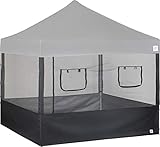
- Includes: 1 mesh sidewall w/truss clips with 2 roll up serving windows; 1 mid-zip mesh sidewall w/truss clips; 2 mesh sidewalls w/truss clips
- Attaches to straight leg shelters/canopies, sold separately. Shelter/canopy frame and top NOT included
- Compatible with straight leg shelters/canopies: Pyramid, Vantage, ES100S, Eclipse) sold separately. Shelter/canopy frame and top NOT included
- Tie hooks and clasp attachments for E-Z set up
- Meets CPAI-84 fire resistant requirements

- Suit For: This mosquito net is ideally designed for 10×10 common straight-leg tents, Instant Canopies, Gazebos, Pergolas foldable pavilions and iron art tents. Net only! The frame and canopy top not included! It is highly recommended to confirm the dimensions before purchase. Dimensions: 9.85 ft (L) x 9.85 ft (W) x 6.5 ft (H).
- Mosquito Net With Zipper Design: The mosquito net covers four sides. The ultra-fine mesh of the gazebo screen keeps out even the tiny ‘visitors’, while you can comfortably enjoy inside, and the zippered entrance allows you easy access and out.
- Super Lightweight: Constructed with high-density, soft, elastic and breathable mesh, it has good air circulation and is cool to sleep inside. Keep insects away from you, enjoy your outdoor journey. This patio mosquito net is perfect for small business, outdoor events, patio leisure, backyards, camping and much more!
- Easy Installation: The mosquito net is easy to install without any tools. The cotton straps and hooks fixed at the top can be securely attached to the canopy tent. When not in use, the netting can be folded into a compact size for convenient storage.
- Multi-functional Use: Our ultra-fine mesh mosquito net can be used on outdoor gazebos and tents, as well as in indoor rooms, and can also serve as an insect proof net for plant racks. The appropriate size allows it to perfectly match your usage needs.

- MAXIMUM INTERIOR SPACE. Designed to be paired with the Onewind Camping Shelter, this two-person insect shelter can easily be pitched on its own. Also designed to seamlessly integrate with your camping cot, it provides reliable protection against bugs, ensuring a restful night’s sleep outdoors.
- 360 DEGREE PROTECTION. Sleep comfortably and bite-free with this mosquito net. It features a super dense-yet-breathable mesh to keep insects out while the sides are tucked in for extra protection. It has a double sided zippered entrance measuring 120cm* 80cm (47″*31.5″) that allows easy access and out. Please note that this Product has no bottom.
- BREATHABLE. Made from tightly woven polyester mesh that provides good airflow. The buget for camping features 1600 holes per square inch so you can rest easy in your hammock without those little buggers getting in the way. This well-ventilated design lets the breeze blow through so heat can escape while protecting you from bugs and tiny critters.
- EASY TO INSTALL AND ADJUST. Onewind Shelter Bugnet can be easily built even with stones and branches. The quick setup and takedown maximizes bug protection plus it includes reinforced tie outs on every corner for added stability. It has an asymmetric shape that can easily hung from a rafter in a lean-to, or underneath a wide variety of single wall tent, tarp or poncho.
- LIGHTWEIGHT AND COMPACT. This sleep system is designed to be the lightest, fully enclosed bug protection that can be used. It weighs 0.35kg, 0.76LBS and packs down small to Φ47″*7″/Φ12cm*18cm its maching stuff sack so you can take it with you when backpacking, camping, hiking or embarking on any outdoor adventure.
Last update on 2026-02-19 / Affiliate links / Images from Amazon Product Advertising API
Key Takeaways
| Point | Details |
|---|---|
| Tent Mesh Functions | Tent mesh provides ventilation while blocking insects, ensuring a comfortable camping experience. |
| Material Selection | Choose between nylon, polyester, and silnylon based on strength, weather resistance, and camping conditions. |
| Airflow Management | Effective mesh design promotes airflow and moisture control to prevent condensation inside the tent. |
| Maintenance Essentials | Regularly clean and inspect your tent mesh for damage to ensure longevity and performance. |
What Is Tent Mesh and Why It Matters
Tent mesh is a crucial fabric component designed to provide ventilation and protection during outdoor camping experiences. Portable shelters rely on mesh panels to create a comfortable and functional outdoor environment that balances airflow with insect prevention.
At its core, tent mesh serves two primary functions: allowing air circulation and blocking tiny insects from entering the camping space. Unlike solid tent walls, mesh panels are strategically constructed with fine, tightly woven synthetic or nylon threads that create microscopic openings. These openings are small enough to prevent mosquitoes, gnats, and other insects from penetrating while simultaneously permitting air to move freely through the tent’s interior.
The design of tent mesh is sophisticated yet simple. Modern camping tents incorporate mesh in windows, doors, and ceiling panels to maximize ventilation. High performance tent designs demonstrate how critical mesh is for creating a livable shelter that adapts to changing environmental conditions. By allowing air to circulate, mesh helps regulate internal temperature, reduce condensation, and prevent the stuffy, uncomfortable atmosphere that can plague poorly ventilated shelters.
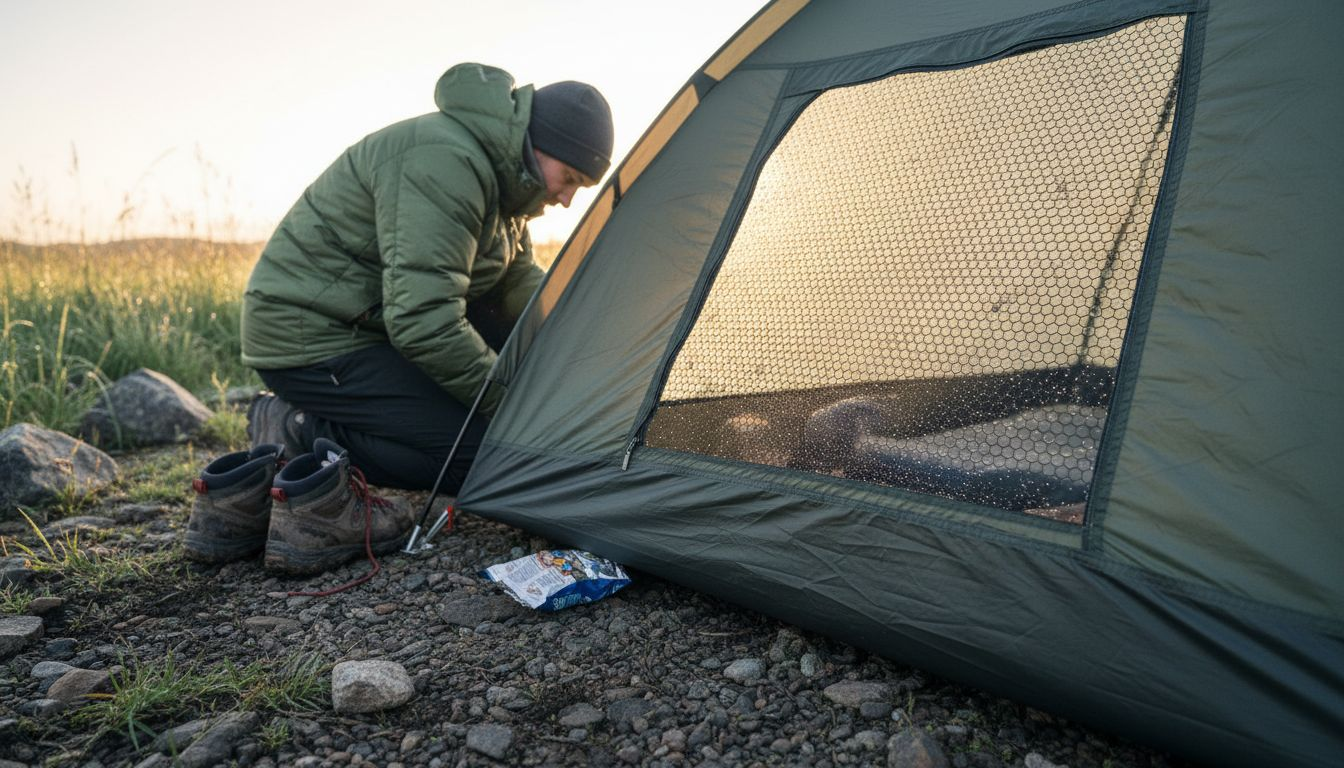
Pro tip: When selecting a tent, check the mesh density and quality by holding it up to light to ensure tight, uniform weaving that will effectively block insects while maintaining optimal airflow.
Common Types of Tent Mesh Materials
Tent mesh materials play a critical role in determining the performance and functionality of camping shelters. Common tent mesh materials include nylon, polyester, and specialized synthetic fabrics that offer unique characteristics for outdoor protection and comfort.
Nylon Mesh stands out as a premier choice among campers. Known for its exceptional strength, nylon ripstop mesh provides remarkable tear resistance and durability. The fabric’s tight weave creates microscopic barriers that effectively block insects while allowing air to circulate. Specialized tent fabric technologies have further enhanced nylon mesh by adding coatings like silicone (creating silnylon) to improve water resistance and overall performance.
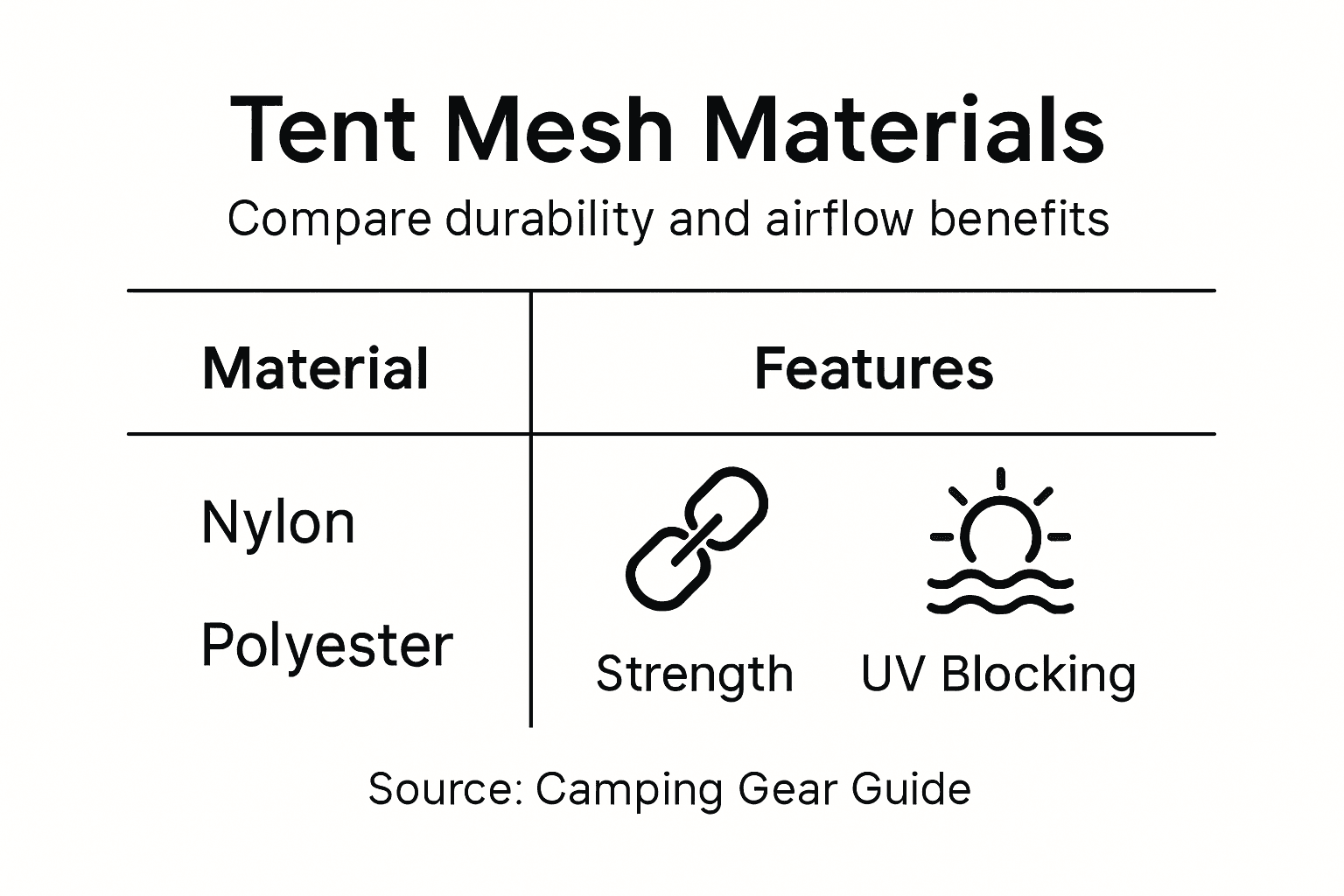
Polyester mesh represents another popular option for tent construction. This material excels in UV resistance and maintains structural integrity even under prolonged sun exposure. Some polyester meshes feature polyurethane coatings that add water-repellent properties and additional protection against environmental elements. The fabric’s inherent characteristics make it particularly suitable for camping environments that experience varied weather conditions.
Pro tip: When evaluating tent mesh materials, gently stretch the fabric and inspect its weave density to ensure optimal bug protection and breathability.
Here’s a quick comparison of common tent mesh materials and their ideal uses:
| Mesh Material | Strength & Durability | Weather Resistance | Best Use Case |
|---|---|---|---|
| Nylon Ripstop | Very high tear resistance | Moderate, can be coated | All-purpose or rugged camping |
| Polyester | Good overall durability | Excellent UV resistance | Hot, sunny environments |
| Silnylon | Lightweight, strong | Water repellent, light | Backpacking trips |
| Canvas Mesh | Extremely durable, heavy | Low moisture resistance | Stationary/base camps |
How Tent Mesh Controls Airflow and Moisture
Moisture control through tent mesh is a sophisticated process that balances air circulation, temperature regulation, and humidity management. The intricate design of tent mesh panels creates a dynamic barrier that allows air to move while preventing moisture accumulation and insect intrusion.
Airflow Dynamics are critical to understanding how tent mesh functions. The microscopic openings in mesh fabric create a controlled environment where air can freely circulate, preventing stagnant conditions that lead to condensation. By enabling consistent air movement, mesh helps regulate internal temperature and humidity levels. Building science principles of moisture flow demonstrate that strategic ventilation is key to maintaining a comfortable and dry camping environment.
The moisture management process involves several sophisticated mechanisms. Mesh panels act as a breathable membrane, allowing water vapor to escape while blocking liquid water droplets. This unique property prevents internal condensation by facilitating continuous air exchange between the tent’s interior and exterior. During temperature variations, especially between day and night, the mesh helps equalize moisture levels and prevent water droplet formation on interior surfaces.
Pro tip: Position your tent with mesh panels facing prevailing winds to maximize natural ventilation and enhance moisture control during your camping trip.
Preventing Bugs and Outdoor Pests
Preventing pest intrusion through mesh screening is a sophisticated defense strategy for campers seeking comfortable outdoor experiences. Tent mesh serves as a critical barrier against insects, creating a protective shield that allows campers to enjoy nature without constant harassment from flying and crawling pests.
Mesh Design and Protection play crucial roles in bug defense. Fine mesh with strategically sized openings blocks insects of various sizes while maintaining optimal airflow. Effective screening techniques recommend using mesh with holes smaller than 1/4 inch, which successfully prevents mosquitoes, gnats, no-see-ums, and other tiny insects from penetrating the tent’s interior. The mesh’s tight weave creates a microscopic force field that keeps bugs outside while allowing campers to enjoy unobstructed views and ventilation.
Different camping environments require tailored bug prevention strategies. Mesh panels positioned near ground level should have extra durability to prevent insects crawling through, while overhead mesh can be slightly more open to maximize air circulation. Understanding local insect populations helps campers choose the most appropriate mesh density and material for their specific camping location. Regional variations in bug size and behavior demand nuanced approaches to mesh design and placement.
Pro tip: Before your camping trip, inspect your tent mesh for any tears or loose threads that could create entry points for insects, and repair them promptly to maintain optimal bug protection.
Choosing the Right Tent Mesh for Camping
Tent mesh selection strategies vary depending on specific camping requirements, with each material offering unique advantages for different outdoor environments. Understanding the nuanced characteristics of mesh fabrics helps campers make informed decisions that balance protection, comfort, and performance.
Mesh Material Considerations involve evaluating multiple critical factors. Nylon ripstop mesh emerges as an excellent all-purpose option, providing exceptional tear resistance while maintaining lightweight properties. Polyester mesh offers superior UV resistance, making it ideal for extended sun exposure during summer camping trips. Lightweight silnylon meshes represent an optimal choice for backpackers seeking minimal weight without compromising structural integrity, while heavier canvas meshes deliver maximum durability for stationary camping scenarios.
Camping terrain and anticipated weather conditions significantly influence mesh selection. High-altitude mountaineering requires mesh with exceptional wind resistance and thermal regulation, whereas tropical environments demand meshes with superior breathability and insect protection. Regional bug populations, anticipated temperature fluctuations, and planned activities should guide your mesh material choice. Some advanced mesh designs incorporate specialized coatings that enhance water repellency, UV protection, and overall fabric performance.
Pro tip: Always test your tent mesh’s durability and breathability before extended trips by setting it up in your backyard and monitoring its performance under different environmental conditions.
Care, Durability, and Common Mistakes
Tent mesh maintenance strategies are critical for preserving the longevity and performance of camping gear. Understanding how to properly care for your tent mesh can significantly extend its useful life and maintain its protective capabilities against insects and environmental challenges.
Cleaning and Storage represent the most fundamental aspects of mesh preservation. After each camping trip, thoroughly clean mesh panels with mild soap and water, removing dirt, debris, and potential salt deposits that can degrade fabric fibers. Always ensure the mesh is completely dry before storage to prevent mold and mildew growth. Tent fabric durability depends on careful maintenance and proactive care, which means avoiding prolonged direct sunlight exposure and storing the tent in a cool, dry environment.
Common mistakes can dramatically reduce mesh effectiveness and lifespan. Campers often neglect small tears, which can quickly expand into significant damage compromising the mesh’s structural integrity. Excessive folding creates permanent creases that weaken fabric strength, while improper storage in compressed spaces can cause permanent deformation. Sharp objects, rough handling, and exposure to extreme temperatures can also accelerate mesh deterioration. Regular inspection for wear, prompt repair of minor damages, and gentle handling are essential practices for maintaining mesh performance.
The table below summarizes key care tips and common mistakes for tent mesh maintenance:
| Maintenance Tip | Importance | Common Mistake to Avoid |
|---|---|---|
| Gentle cleaning | Prevents fabric breakdown | Using harsh chemicals |
| Dry before storage | Avoids mold and mildew | Packing mesh when damp |
| Repair small damage | Extends mesh lifespan | Ignoring minor tears |
| Avoid sharp objects | Preserves mesh integrity | Storing with gear that pokes |
| Store uncompressed | Maintains fabric structure | Compressing for long periods |
Pro tip: Invest in a small repair kit specifically designed for mesh fabrics and learn basic patching techniques to address minor tears immediately during your camping trips.
Maximize Your Tent Mesh Benefits with Expert Guidance
Ensuring proper ventilation while blocking pesky bugs is a challenge every camper faces. This article highlights how high-quality tent mesh controls airflow, moisture, and insect intrusion to create a comfortable shelter. If you want to avoid stuffy tents and itchy nights, understanding mesh materials like nylon ripstop and silnylon is essential for your next outdoor adventure.

Discover detailed advice on choosing the perfect mesh and maintaining your tent’s protection in our Buying A Tent – Tent Explorer and Tent Troubleshooting And Maintenance – Tent Explorer sections. Take the next step now to improve your camping comfort and safeguard your shelter by visiting Tent Explorer for expert tips and trusted recommendations.
Frequently Asked Questions
What is tent mesh and what are its primary functions?
Tent mesh is a fabric component used in camping tents that allows airflow while preventing insects from entering. Its primary functions are to provide ventilation, regulate internal temperature, and block bugs like mosquitoes and gnats.
How does tent mesh help with moisture control during camping?
Tent mesh facilitates moisture control by allowing water vapor to escape while preventing liquid water from entering. This helps regulate humidity levels and prevents condensation inside the tent, creating a more comfortable camping environment.
What materials are commonly used for tent mesh and what are their benefits?
Common materials for tent mesh include nylon, polyester, and silnylon. Nylon mesh is strong and durable, polyester offers excellent UV resistance, and silnylon is lightweight and water-repellent, making them suitable for different camping scenarios.
How can I maintain my tent mesh to ensure its longevity?
To maintain tent mesh, clean it gently with mild soap after each use and ensure it is completely dry before storage to prevent mold. Regularly inspect for tears, prompt repairs, and avoid sharp objects to preserve its integrity.