

This blog post may contain affiliate links. As an Amazon Associate I earn from qualifying purchases.
Anyone who has camped in the United States, Canada, or Europe knows the frustration of waking up to a damp, uncomfortable tent floor. Keeping your shelter dry and protected matters for both your gear’s lifespan and your comfort. A camping footprint does more than just shield your tent, it is a critical layer for ground protection and comfort that supports responsible camping based on Leave No Trace principles. Discover how the right footprint can transform your outdoor experience and safeguard your investment.
Key Takeaways
| Point | Details |
|---|---|
| Importance of Camping Footprints | Camping footprints are essential for protecting tents from moisture and ground damage, not just optional accessories. |
| Material Selection Matters | Choose footprint materials based on your camping style, with considerations for weight, durability, and environmental impact. |
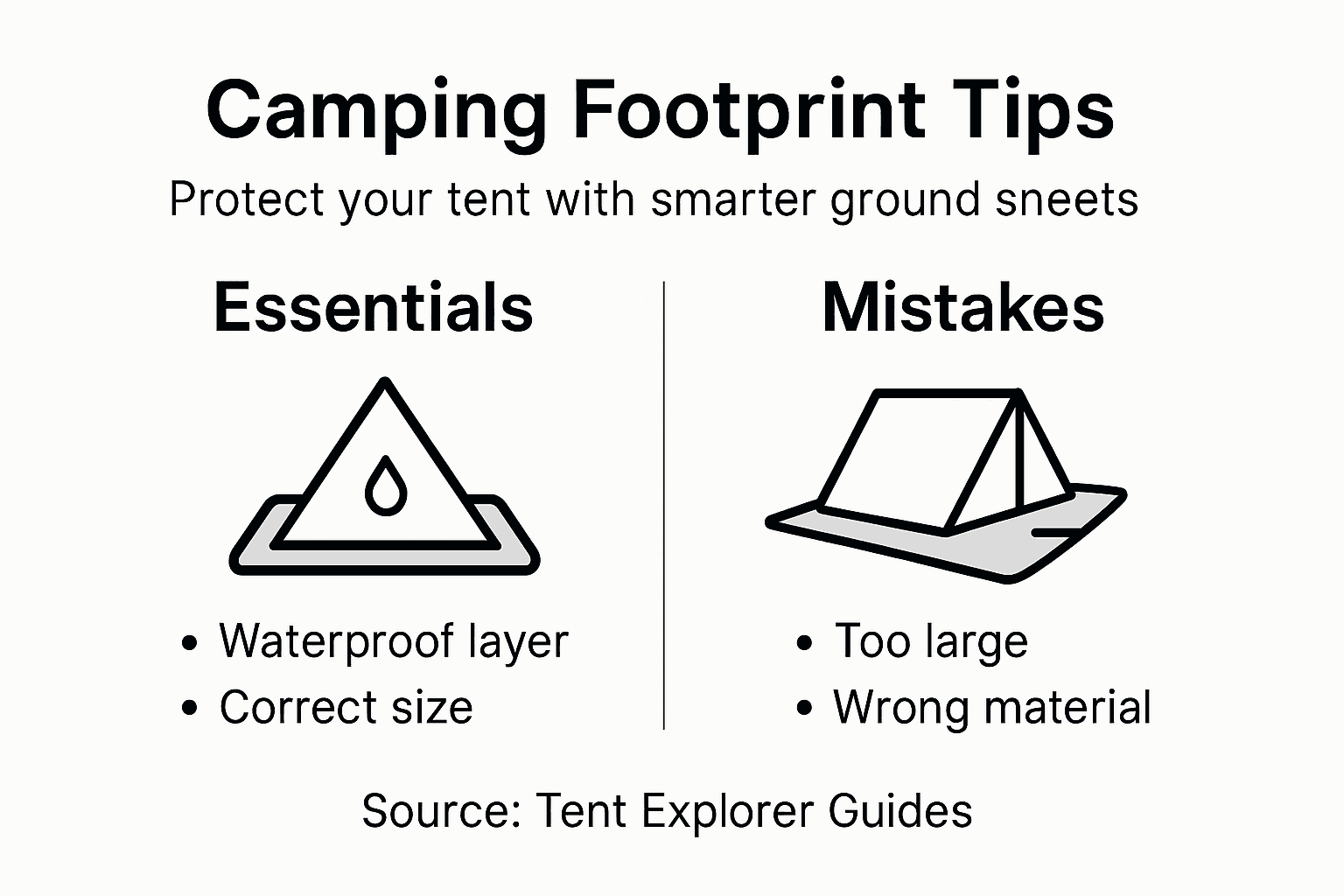
| Size Appropriately | Always select a footprint slightly smaller than your tent to prevent water pooling during rain. |
| Avoid Common Mistakes | Ensure proper footprint placement and maintenance to extend tent life and enhance camping comfort. |
Camping Footprint Basics and Common Myths
A camping footprint is a protective ground covering designed specifically to shield your tent’s bottom from moisture, sharp objects, and terrain irregularities. Unlike general ground tarps, these specialized accessories provide targeted protection for your tent’s most vulnerable area.
Campers often misunderstand camping footprints, believing they’re optional luxuries. However, Leave No Trace principles demonstrate their critical role in responsible outdoor recreation. These protective layers serve multiple essential functions:
- Prevent ground moisture from penetrating tent fabric
- Protect tent floor from punctures and abrasions
- Create an additional insulation barrier between tent and ground
- Extend overall tent lifespan by reducing wear and tear
Contrary to popular misconceptions, camping footprints aren’t just extra weight in your backpack. They represent a strategic investment in gear preservation. Ultralight backpackers and weekend warriors alike can benefit from understanding their true purpose.
A high-quality footprint can potentially double your tent’s usable lifespan by reducing direct ground contact and potential damage.
While some campers create DIY alternatives using tarps or groundsheets, professionally designed footprints offer precise fitting and optimal protection. Material composition matters – look for lightweight, water-resistant fabrics that match your specific tent model.
Pro tip: Always trim your footprint slightly smaller than your tent’s base to prevent water pooling during rainstorms.
Popular Types and Material Differences
Camping footprints come in various materials, each offering unique performance characteristics and environmental considerations. Construction material assessments reveal significant variations in durability, weight, and ecological impact among different footprint types.
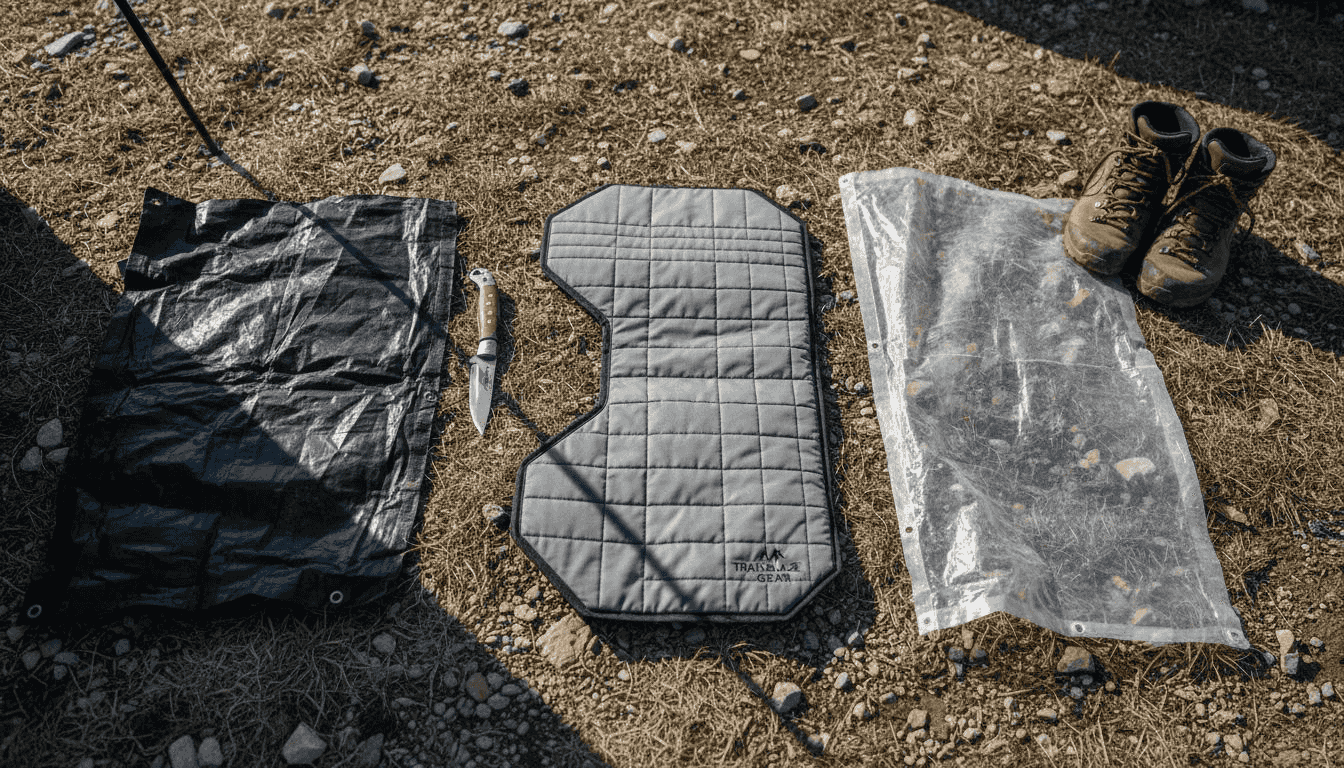
The primary materials used in camping footprints include:
- Polyethylene (PE): Lightweight, affordable, and water-resistant
- Silnylon: Ultra-lightweight synthetic fabric with excellent water repellency
- Ripstop Nylon: Durable material with reinforced weave to prevent tearing
- Dyneema Composite Fabric: Extremely lightweight and strong, but more expensive
- Recycled Polyester: Environmentally conscious option with reduced carbon footprint
Synthetic materials dominate the market, but environmentally conscious campers are increasingly exploring more sustainable alternatives. Footprint data analysis demonstrates that material selection significantly impacts both performance and environmental sustainability.
Ultralight backpackers typically prioritize weight, while car campers might focus more on durability and cost-effectiveness.
The choice between materials involves balancing several key factors: weight, durability, water resistance, packability, and environmental impact. Synthetic materials like polyethylene and silnylon remain popular due to their lightweight nature and affordable pricing, while high-end options like Dyneema offer premium performance for serious outdoor enthusiasts.
Pro tip: Select a footprint material that matches your specific camping style, considering factors like terrain, expected weather conditions, and frequency of use.
Here’s a quick comparison of popular camping footprint materials and their suitability for different camping styles:
| Material | Weight Suitability | Durability | Best Use Case |
|---|---|---|---|
| Polyethylene (PE) | Moderate to lightweight | Good | Car camping, budget trips |
| Silnylon | Very lightweight | Fair | Ultralight backpacking |
| Ripstop Nylon | Lightweight | High | Rocky terrain, frequent use |
| Dyneema Composite Fabric | Ultra lightweight | Exceptional | Thru-hiking, premium setups |
| Recycled Polyester | Moderate | Good | Eco-conscious camping |
How a Footprint Protects Your Tent
Tent footprints are the unsung heroes of campsite protection, serving as a critical barrier between your tent and the unpredictable ground beneath. Proper tent protection techniques demonstrate how these simple accessories can dramatically extend your tent’s lifespan and improve camping comfort.
A camping footprint provides comprehensive protection through several key mechanisms:
- Prevents direct abrasion against rocky or uneven terrain
- Blocks moisture from seeping through tent floor
- Creates an additional insulation layer against cold ground
- Reduces wear and tear on tent’s bottom fabric
- Helps maintain tent floor’s waterproof integrity
The physical barrier a footprint creates is more than just a simple ground cover. Tent textile research reveals that these protective layers significantly mitigate potential damage from sharp objects, roots, small rocks, and persistent ground moisture that can compromise tent structural integrity.
A high-quality footprint can potentially save you hundreds of dollars in tent replacement costs by preventing premature wear and damage.
Different camping environments demand different levels of protection. Desert campsites with rocky terrain require more robust footprints, while forest floor camping might need less aggressive protection. Understanding your specific camping environment helps you select the most appropriate footprint for maximum tent preservation.
Pro tip: Inspect your footprint regularly for signs of wear and replace it before it develops holes that could compromise your tent’s protection.
The following table summarizes how camping footprints protect tents in various terrains:
| Terrain Type | Protection Priority | Recommended Footprint Attribute |
|---|---|---|
| Rocky/Desert | High abrasion resistance | Reinforced or thick material |
| Forest Floor | Moderate insulation | Water-resistant, lighter material |
| Wet/Marshy | Strong moisture barrier | High waterproof rating |
| Grass/Meadow | Minimal, comfort focus | Lightweight, easy to pack |
Choosing, Sizing, and DIY Footprints
Selecting the right camping footprint requires careful consideration of your specific tent model and camping environment. Tent design principles/01%3A_Area_and_Surface_Area/08%3A_Lets_Put_it_to_Work/8.01%3A_Designing_a_Tent) emphasize the critical importance of precise measurements and proper fit.
When choosing a footprint, consider these essential factors:
- Exact tent floor dimensions
- Material durability
- Weight and packability
- Terrain compatibility
- Weather resistance
- Compatibility with your specific tent model
DIY footprint creation offers budget-conscious campers a flexible alternative to commercial options. Custom footprint design techniques allow outdoor enthusiasts to create perfectly tailored ground protection using readily available materials like lightweight nylon or polyester.
Professional campers recommend choosing a footprint that’s 1-2 inches smaller than your tent’s floor to prevent water accumulation during rainy conditions.
The most effective footprints are those precisely matched to your tent’s dimensions. Ultralight backpackers might opt for minimalist designs using lightweight synthetic materials, while car campers could choose more robust options with additional ground protection features.
Pro tip: Measure your tent’s exact floor dimensions before purchasing or creating a footprint, and always test the fit before your camping trip.
Cost, Value, and Typical Alternatives
Understanding the economic considerations of camping footprints involves more than just comparing price tags. Carbon footprint assessments reveal that long-term value trumps initial cost when selecting camping gear protection.
Campers have several alternatives to traditional commercial footprints:
- Lightweight tarps
- Recycled ground cloths
- Custom-cut polyethylene sheets
- Repurposed industrial materials
- DIY silnylon solutions
The true value of a footprint extends beyond its purchase price. Resource efficiency strategies demonstrate that investing in a high-quality footprint can significantly reduce long-term equipment replacement expenses and environmental impact.
Cheaper alternatives might save money upfront, but professional campers know that quality protection prevents costly tent repairs and premature replacements.
Cost considerations should balance durability, weight, packability, and environmental sustainability. Ultralight backpackers might prefer minimalist solutions, while car campers could invest in more robust protection that withstands repeated use across varied terrains.
Pro tip: Calculate your footprint’s cost per camping trip by dividing its price by the estimated number of uses to determine true long-term value.
Mistakes to Avoid and User Tips
Camping footprint mistakes can significantly compromise your outdoor experience and gear protection. Leave No Trace principles highlight critical errors campers frequently make when setting up ground protection.
Common mistakes to avoid include:
- Selecting a footprint larger than your tent floor
- Failing to clean and dry the footprint after use
- Placing the footprint with wrinkles or uneven surface
- Ignoring terrain characteristics before setup
- Overlooking potential water accumulation zones
- Using a damaged or worn-out footprint
Tent pitching best practices emphasize the importance of meticulous preparation and strategic placement. Experienced campers understand that proper footprint management goes beyond simple ground coverage.
Small oversights in footprint selection and placement can lead to significant tent damage and uncomfortable camping experiences.
The most successful campers develop a systematic approach to footprint use, carefully inspecting their gear, understanding terrain challenges, and anticipating potential environmental interactions. Detailed preparation prevents most common camping ground protection errors.
Pro tip: Always pack a small repair kit with waterproof tape and extra cordage to address unexpected footprint damage during your camping trip.
Protect Your Tent and Upgrade Your Camping Experience Today
The challenge of choosing the right camping footprint is real. You want to protect your tent from moisture, abrasions, and wear while keeping weight and packability in check. Understanding key concepts like proper footprint sizing, material durability, and terrain compatibility can save you money and frustration. If you aim to extend your tent’s life and enhance your comfort, having the right footprint plays a critical role.
Discover practical solutions and expert advice that align with what you learned about camping footprints by exploring our detailed guides in Tent Accessories – Tent Explorer and smart setup tips in Tent Tips – Tent Explorer.

Start protecting your investment now by visiting Tent Explorer for trusted reviews, easy-to-understand advice, and inspiration tailored for passionate campers just like you. Don’t wait until your tent shows wear or leaks. Learn how to choose or craft the perfect footprint for your adventures and camp smarter every trip.
Frequently Asked Questions
What is a camping footprint?
A camping footprint is a protective layer designed to shield your tent from ground moisture, sharp objects, and rough terrain, enhancing overall tent longevity and performance.
Why do I need a camping footprint?
Camping footprints prevent moisture from seeping into your tent, protect the tent floor from abrasions, add insulation from cold ground, and can significantly extend your tent’s lifespan by minimizing wear and tear.
How do I choose the right size camping footprint for my tent?
You should select a footprint that matches your tent’s dimensions and consider making it 1-2 inches smaller than the tent’s floor to prevent water pooling during rain.
What materials are best for camping footprints?
Common materials include polyethylene for affordability and lightweight options, silnylon for ultralight backpacking, and ripstop nylon for durability. The best choice depends on your camping style, expected terrain, and environmental considerations.