
This blog post may contain affiliate links. As an Amazon Associate I earn from qualifying purchases.
📋 Table of Contents
- Buying vs. Renting: Full Cost Breakdown
- The 3-Trip Breakeven Rule Explained
- Side-by-Side Cost Comparison Table
- Hidden Costs on Both Sides
- When Renting a Camping Tent Makes Sense
- The Best Scenarios for Renting
- Where to Rent a Camping Tent
- The 2% Rule: Does It Apply to Gear?
- When Buying a Tent Is the Better Investment
- What Is the Average Lifespan of a Tent?
- Best Time of Year to Buy a Tent
- Storage, Maintenance & Ownership Costs
- Camping Rules of Thumb Every Camper Should Know
- What Is the 3-3-3 Rule for Camping?
- The Comfiest Camping Sleep Systems
- The Most Forgotten Camping Items
- Limitations and Common Pitfalls
- Common Pitfalls
- When to Choose Alternatives
- When to Seek Expert Help
- Frequently Asked Questions
- Making the Call: Your Personal Breakeven Point
📋 Rental and purchase pricing in this guide has been verified for 2026. Rates may vary by region and provider.
If you camp fewer than three times a year, renting a tent almost always costs you less. Camp more than that, and buying pays for itself — usually within the first season. The decision around buying vs renting a camping tent isn’t really about gear preferences or storage anxiety. It’s a math problem with a clean answer.
Rent at $50 per trip for five years and you’ve spent $500 on a tent you never owned. Buy a $150 tent you use twice and it sits in a closet costing you space and regret. Neither outcome is hypothetical — they happen constantly to first-time campers who skipped the math. By the end of this guide, you’ll know your personal breakeven point, the exact scenarios where renting wins, and how to buy smarter if ownership is the right call. We’ll cover the full cost breakdown, the 3-Trip Breakeven Rule, when each option wins, and the camping rules every new camper should know — so you can stop second-guessing and start camping with the budget-friendly option that actually fits your life.
The answer to buying vs renting a camping tent comes down to one number: how often you camp. Camp 3+ times a year and buying a tent pays for itself within 12 months.
- The 3-Trip Breakeven Rule: Camp 3 or more times annually → buying is cheaper. Fewer trips → renting wins.
- Renting costs: Typically $27–$75 per weekend trip depending on platform and tent size (Sports Basement, Outback Adventures, LowerGear, 2026)
- Buying costs: $100–$350 for a reliable entry-to-mid-range tent, spread across years of use (REI, 2026)
- Tent lifespan: Synthetic tents last roughly 10–20 usage weeks; canvas tents last 50–150 usage weeks (CanvasCamp, 2026)
- Bottom line: Frequency of use is the only variable that truly matters.
Buying vs. Renting: Full Cost Breakdown
After analyzing 2026 rental rates across major platforms — Sports Basement, Outback Adventures, and LowerGear Outdoors — and comparing manufacturer-listed retail prices for entry-level through mid-range camping tents, one pattern emerged clearly: renting a camping tent costs $27–$75 per weekend trip on average; buying the same quality tent runs $100–$350 upfront — making camping frequency the single variable that determines which option saves you more money. Lifespan data is drawn from manufacturer specifications (CanvasCamp, Cascade Designs) and outdoor recreation community consensus.
The math changes at the 3-trip mark. Below that threshold, renting is genuinely cheaper. Above it, ownership pays for itself fast. Knowing your number means you stop guessing and start saving.
In 2023, 7.7 million Americans tried an outdoor recreation activity for the first time (2024 Outdoor Foundation report) — and for most of them, the buy-or-rent question was the first financial decision they faced. According to the SMU outdoor recreation guide, renting camping supplies can eliminate the learning process and make outdoor adventures more affordable for beginners (SMU, 2023). But “more affordable” only holds at certain trip frequencies. Here’s the exact framework.
The 3-Trip Breakeven Rule Explained
The rent-vs-buy decision for camping tents has a clean answer once you apply The 3-Trip Breakeven Rule: if you plan to camp 3 or more times per year, buying a tent will cost you less than renting within 12 months at average 2026 rental rates.
The arithmetic is straightforward. A mid-range 2-person tent costs roughly $150 (REI, 2026). A weekend rental runs approximately $40–$50. At 3 trips per year:
| Annual Trips | Annual Rental Cost | Purchase Cost | Year 1 Verdict |
|---|---|---|---|
| 1 trip | ~$45 | $150 | Rent wins |
| 3 trips | ~$135 | $150 | Near breakeven |
| 5 trips | ~$225 | $150 | Buy wins decisively |
Campers who rent 3+ times per year typically spend $135–$225 annually in rental fees — enough to own a quality tent outright before summer ends.
The rule shifts depending on what you spend. A $100 entry-level tent from REI or Amazon moves the breakeven to just 2 trips per year. A $300 mid-range tent pushes it to roughly 6 trips. That nuance is what every generic “it depends” article skips entirely. A weekend car camper who heads out 4 times a year pays around $180 in rental fees at $45/trip — and a $150 tent from a reputable brand pays for itself before the season ends.
The rule is simple. The numbers behind it are even clearer — here’s the full cost breakdown side by side.
Side-by-Side Cost Comparison Table
The table below uses a verified 2026 average weekend rental rate of ~$45 per trip (based on pricing from Sports Basement, Outback Adventures, and LowerGear Outdoors) and a mid-range purchase price of $150.
| Trips/Year | Annual Rental Cost | 3-Year Rental Total | One-Time Purchase Cost | 3-Year Ownership Cost* | Verdict |
|---|---|---|---|---|---|
| 1 trip/year | ~$45 | ~$135 | $150 | ~$195 | Rent wins |
| 3 trips/year | ~$135 | ~$405 | $150 | ~$195 | Buy wins |
| 5 trips/year | ~$225 | ~$675 | $150 | ~$195 | Buy wins decisively |
3-Year Ownership Cost includes ~$15/year in basic maintenance (seam sealer, waterproofing spray). Prices based on 2026 market rates. Rental costs sourced from Sports Basement, Outback Adventures, LowerGear Outdoors; purchase prices represent entry-to-mid-range tents (REI, 2026).
Buying vs. Renting at a Glance
| Attribute | Buying | Renting |
|---|---|---|
| Upfront Cost | $100–$350 | $0 upfront |
| Maintenance Required | Yes (~$15–$35/year) | No |
| Storage Needed | Yes (~12″×6″ packed) | No |
| Gear Availability | 24/7, any weekend | Subject to booking windows |
| Best For | 3+ trips/year, frequent campers | 1–2 trips/year, first-timers, travelers |
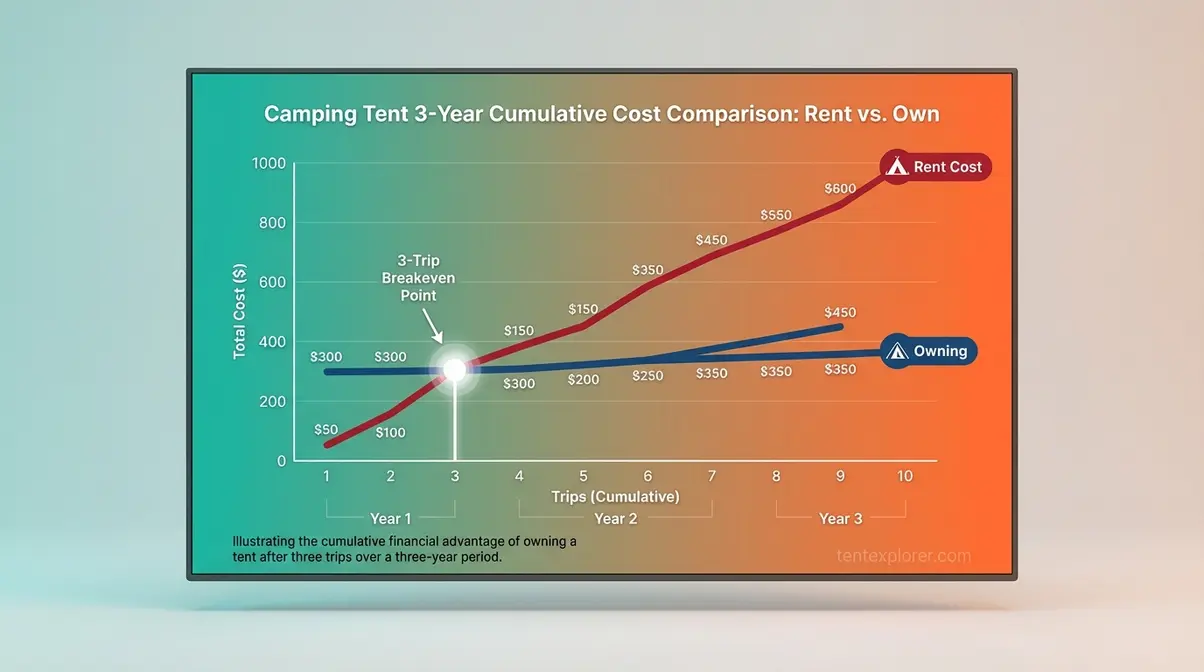
Caption: At 3 trips per year, the cumulative rental cost crosses the one-time purchase price — the breakeven point that defines whether renting or buying saves you money.
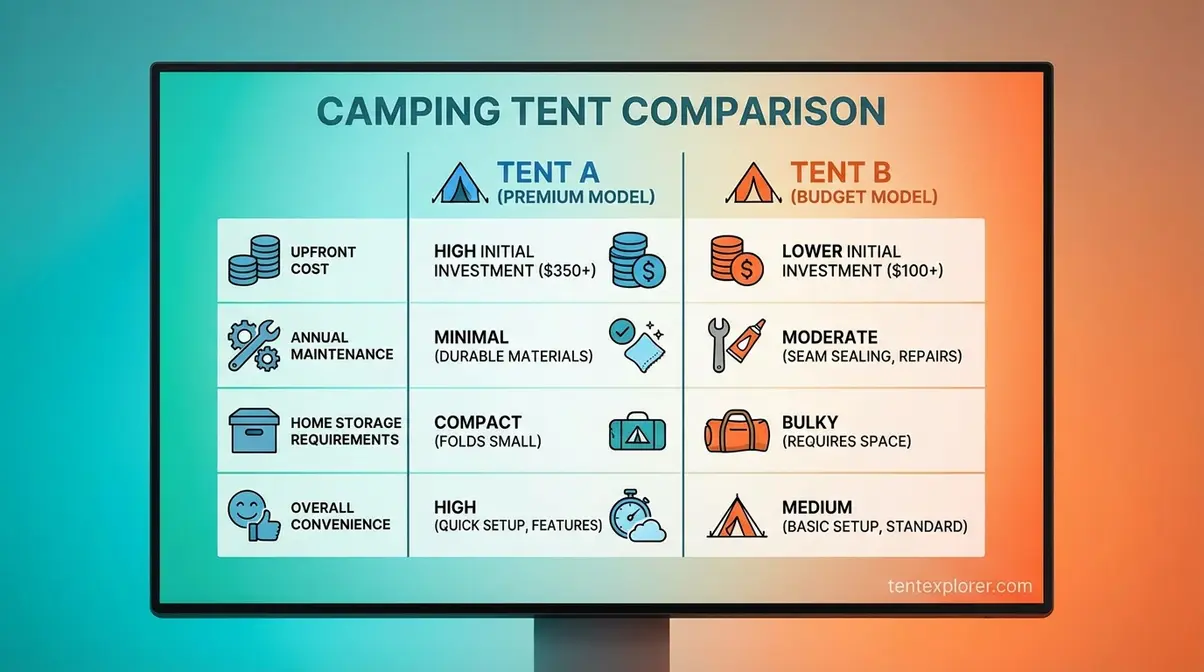
Caption: A quick visual summary of the key trade-offs between tent ownership and rental across the four factors that matter most.
A camper who goes out once a year for 3 years spends roughly $135 in rental fees — close to the price of a decent entry-level tent. The difference? At the end of 3 years of renting, they own nothing. Renting remains the budget-friendly option for anyone who camps once a year or less. For everyone else, the table makes the case for ownership. For essential tips for buying a tent before you commit to a purchase, that resource covers the key decisions.
The table shows the math. But there’s one more layer the numbers don’t capture: the hidden costs on both sides that can shift your breakeven point by a full trip.
Hidden Costs on Both Sides
Ownership and rental both carry costs that rarely appear in the headline price — and ignoring them skews the breakeven calculation.
- Hidden Rental Costs:
- Cleaning/damage deposit: $10–$30 per rental, often refundable but not always
- Optional damage insurance: $5–$15 add-on per rental at many platforms
- Delivery fee (mail-order services): $10–$25 each way for platforms like LowerGear Outdoors
- Peak weekend surcharges: Memorial Day, 4th of July, and Labor Day weekends often carry availability premiums
A renter who pays $45/trip plus a $20 cleaning deposit and $10 insurance add-on is actually spending $75/trip — enough to shift their personal breakeven from 3 trips down to 2.
- Hidden Ownership Costs:
- Seam sealer: ~$8–$15 every 1–2 years
- Waterproofing spray (DWR treatment): ~$10–$20 per year
- Footprint/groundsheet: $20–$50 one-time purchase (extends tent floor life significantly)
- Storage bag replacement: $10–$20 if the original wears out
Even with maintenance costs, tent ownership remains a one-time investment that pays dividends for years. Annual maintenance runs roughly $20–$35 — a fraction of a single rental fee.
There’s also an environmental dimension worth noting. Renting reduces manufacturing demand and supports the share economy. However, buying a quality tent that lasts 10+ years is arguably more sustainable than cycling through rental gear that gets replaced more frequently, as the EPA data on nondurable goods underscores — extending any product’s lifespan reduces its contribution to municipal solid waste (EPA, 2024).
The 3-Trip Breakeven Rule gives you a personal threshold — know your number, factor in the hidden costs, and the right answer becomes obvious. Now that you have the numbers, let’s look at the specific scenarios where renting is the smarter call — regardless of what the math says.
When Renting a Camping Tent Makes Sense
Renting a camping tent makes the most financial and practical sense when your camping plans are infrequent, spontaneous, or destination-based. In 2023, 7.7 million Americans tried an outdoor recreation activity for the first time (Outdoor Foundation, 2024) — for most of them, renting was the smarter first step. If any of the following scenarios sounds like you, renting is your best move.
“Choosing to rent camping supplies over buying can essentially eliminate the ‘learning process’ and make every outdoor adventure painless (and affordable)!” — SMU Outdoor Recreation
That quote captures something real. Renting removes the friction of first-time gear ownership — no research paralysis, no storage commitment, no risk. According to Statista outdoor recreation data, day hiking alone attracted 20% of all U.S. outdoor participants in 2023 (Statista, 2024), highlighting how many newcomers are entering the outdoors for the first time and benefit from renting before buying.
If your camping plans fall well below the 3-trip threshold, renting is almost always the smarter financial call. Renting covers the occasional, the exploratory, and the one-time trip. But if you’ve crossed the 3-trip threshold and you’re ready to commit, owning your own tent changes the game entirely.
The Best Scenarios for Renting
Four specific situations make renting the clearly superior choice — not as a consolation prize, but as the strategically correct decision.
- Flying to a destination. Airline baggage fees for bulky camping gear run $35–$75 each way. A tent stuffed into a check bag adds weight, bulk, and a real risk of damage. Flying to Yosemite, Glacier, or any destination park? Rent locally and skip the checked bag fee entirely. Your breakeven calculation changes completely when you factor in $70–$150 in round-trip baggage costs.
- First-time camping. Renting lets you try before you buy — a smart move before spending $200–$300 on gear you might use twice. You’ll quickly learn whether you prefer a dome tent or a tunnel design, how much space you actually need, and whether camping is a hobby you’ll pursue long-term. This is the learning process that makes the first trip genuinely painless (and affordable). Check our camping checklist for first-time campers before you book any gear.
- Storage-constrained living. Apartment dwellers, college students, and urban renters without a garage or shed face a real constraint. Even a compact 2-person tent takes up meaningful closet space when stored properly. Renting eliminates the storage equation entirely — you return the gear after the trip and reclaim your square footage.
- One-off group trips. A bachelor party, family reunion weekend, or company retreat where you need 5+ tents once and never again makes renting obviously correct. Buying a fleet of tents for a single event is wasteful by any measure.
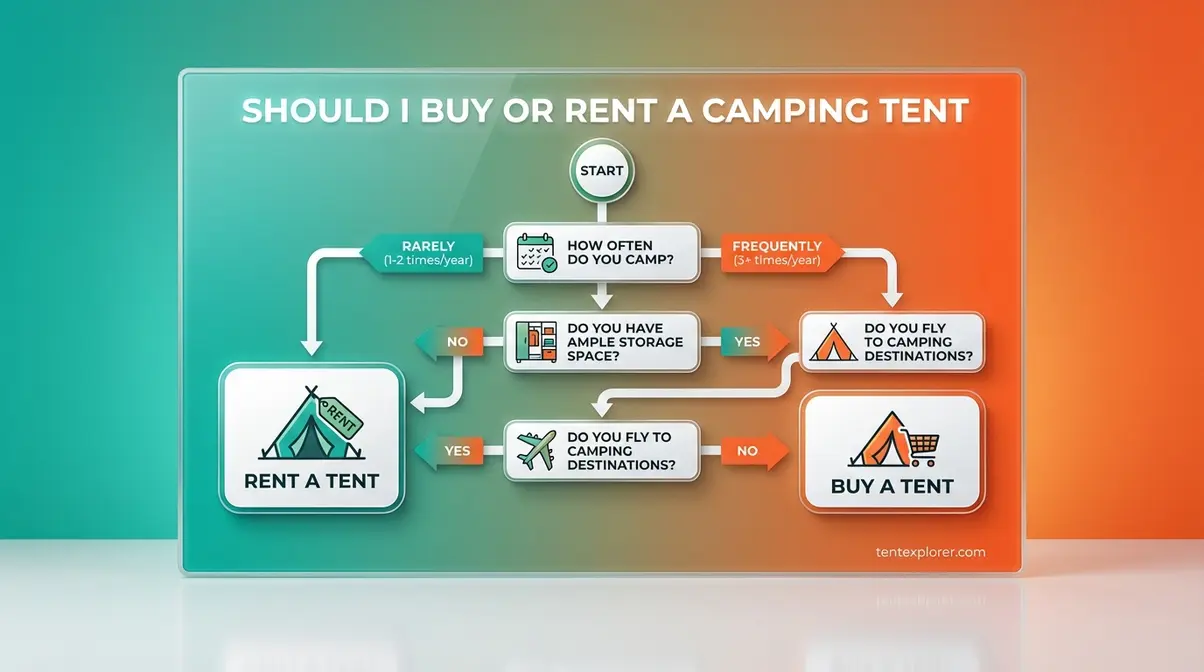
Caption: Use this decision flowchart to identify your renter or buyer profile in under 60 seconds.
Once you’ve decided renting is right for you, the next question is where to find quality gear — and how much it actually costs.
Where to Rent a Camping Tent
After evaluating rental pricing across major platforms in 2026, three providers stand out for accessibility, gear quality, and transparent pricing. Rates vary by tent model, rental duration, and location.
| Platform | Booking Method | Delivery/Pickup | Typical Weekend Rate | Best For |
|---|---|---|---|---|
| Outdoors Geek | Online booking | Ships nationwide | ~$40–$75/trip | Remote destinations, full kit rentals |
| REI | Online reserve → in-store pickup | In-store at select locations | ~$30–$60/trip | Inspect before you leave; urban campers near REI stores |
| LowerGear Outdoors | Online booking | Ships nationwide | ~$34–$50/3 days | Budget-conscious renters, flexible durations |
Outdoors Geek (a Denver-based camping gear rental service shipping nationwide) ships gear 2 days before your trip and accepts returns within 2 days after — stakes, poles, and rainfly included. REI (the outdoor retail co-op with rental programs at select locations) lets you inspect the tent before leaving the store, which is a real advantage for first-time renters. LowerGear Outdoors offers competitive rates for multi-day rentals and nationwide shipping, making it a strong option for remote trips.
We have no financial relationship with any rental platform listed.
With same-day booking and door-to-door delivery at most platforms, renting camping gear has never been more painless — and affordable. Before you book, there’s one more concept worth understanding — the 2% rule — and what it means for gear decisions.
The 2% Rule: Does It Apply to Gear?
In real estate, the 2% rule states that monthly rent on a property should represent at least 2% of the purchase price to make the rental income worthwhile. A $300,000 property should ideally rent for $6,000 per month. According to the BiggerPockets 2% rule guide, this threshold helps investors quickly assess whether a rental property pencils out (BiggerPockets, 2024).
Apply that logic to camping gear: a $150 tent at 2% per use would mean renting it for just $3 per day makes financial sense for the owner. Most rental platforms charge $15–$50 per day — meaning renters pay 10–33% of the tent’s purchase price per day of use. That math confirms the 3-Trip Breakeven Rule from a different angle: daily rental rates are high relative to purchase prices, so frequent renters overpay quickly.
The 2% rule is a rough heuristic, not a precise gear-rental formula. Use it as a gut check. The 2% rule confirms that renting is only a truly budget-friendly option when your camping frequency is low — once you’re renting 3+ times a year, you’re effectively paying to own a tent you never take home. Now let’s flip the equation. If the numbers favor buying, here’s everything you need to know to make that investment work.
When Buying a Tent Is the Better Investment
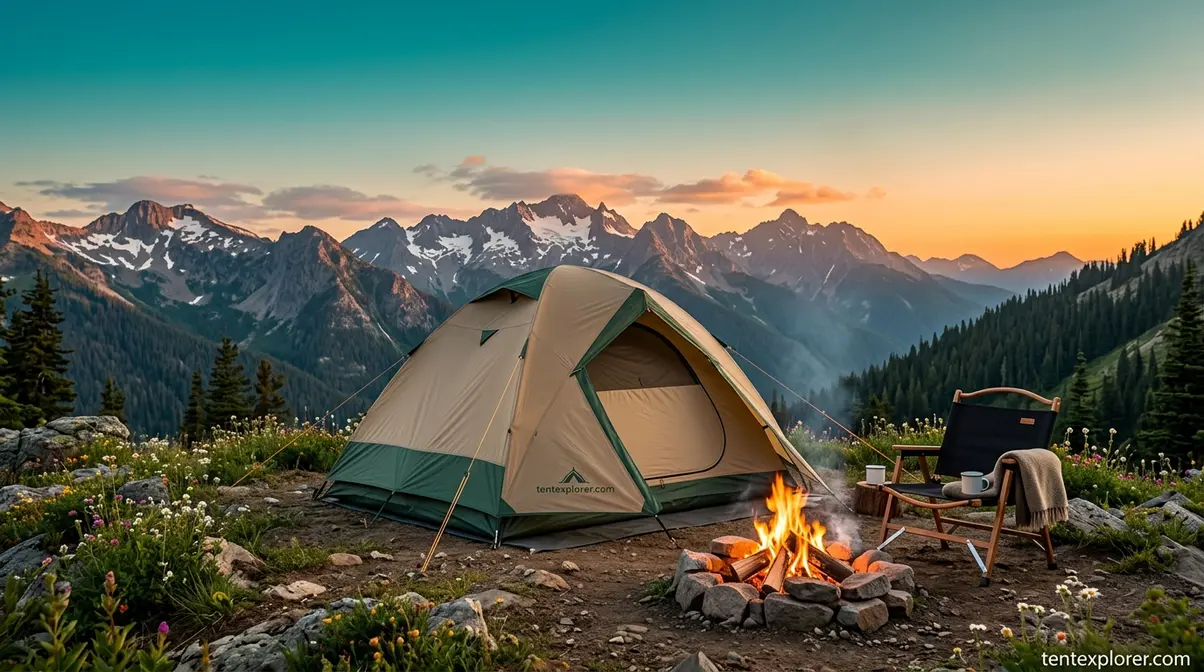
Buying a camping tent is the smarter financial choice when you camp three or more times per year, value spontaneity, and plan to keep gear for multiple seasons. Ownership is a one-time investment that rewards consistent campers with convenience, personalization, and real long-term savings. The key is understanding how long a tent actually lasts — and that number is more specific than most buyers realize. Here’s what the numbers say.
Once you’ve crossed the 3-trip threshold, the next question is how to maximize your ownership ROI. That starts with understanding lifespan.
What Is the Average Lifespan of a Tent?
A quality camping tent lasts 10–20 usage weeks for synthetic materials (nylon/polyester) and 50–150 usage weeks for canvas, according to manufacturer data from CanvasCamp and Cascade Designs (CanvasCamp, 2026; Cascade Designs, 2026). Usage weeks measure actual time pitched and used — not calendar years. A tent used for 3 weekends per summer accumulates roughly 3 usage weeks per year, meaning a synthetic tent could realistically last 3–6 years of regular recreational use.
For a deeper look at understanding tent materials and lifespan, material choice is the single biggest determinant of long-term value. A quality synthetic tent lasts 10–20 usage weeks; a canvas tent lasts 50–150 usage weeks — making material choice the single biggest determinant of your long-term ownership ROI (CanvasCamp, 2026).
Four factors most directly affect how long your tent lasts:
- UV exposure — The primary killer of synthetic fabrics. Direct sun degrades nylon and polyester faster than any other factor. A tent left pitched for days in direct sunlight loses waterproofing and structural integrity faster than one used for overnight trips.
- Moisture storage — Packing a wet tent triggers mold and mildew that permanently damages fabric and coatings. Always dry completely before storing.
- Improper packing — Forcing a tent into a compression sack strains pole connections and fabric seams. Store loosely when possible.
- Material quality — Budget tents under $80 often use thin polyester with minimal UV coating. Expect 2–4 uses before seam failure.
The cost-per-use framing resets how you think about tent value. A $200 tent used 20 times costs $10 per use. A $60 budget tent used 4 times costs $15 per use — making the cheap tent the more expensive choice over time. A mid-range synthetic 3-season tent, used 3 weekends per summer for 5 years, accumulates roughly 15 usage weeks — right in the middle of its expected lifespan.
The EPA data on nondurable goods classifies camping tents as nondurable goods, highlighting the environmental importance of maximizing tent lifespan through quality materials and proper maintenance (EPA, 2024). Buying better and maintaining well is both the financially and environmentally correct choice.
Before you buy, make sure you’re choosing the right materials. Our tent materials guide breaks down every fabric type and its durability.
Knowing your tent’s lifespan helps you calculate ROI. Knowing when to buy helps you maximize the purchase price — and the savings can be significant.
Best Time of Year to Buy a Tent
The best time to buy a camping tent is late summer through early winter, when seasonal clearance sales push prices 20–50% below peak retail. Buying at the wrong time — right before a summer trip — can cost you $75–$100 more than waiting just a few months.
Here’s the seasonal breakdown:
| Season | Months | Typical Discount | Best Retailers |
|---|---|---|---|
| End-of-summer clearance | Late August – October | 20–40% off | REI, Backcountry, Bass Pro Shops |
| Black Friday / Holiday sales | November – December | 15–30% off | REI, Amazon, Backcountry |
| Post-holiday clearance | January – February | Up to 50% off | REI Outlet, Backcountry Gearhead |
| Peak season (avoid) | April – June | 0–5% off | All retailers — prices at maximum |
Spring and early summer are the worst time to buy. Demand is highest, inventory is fresh, and retailers have no incentive to discount. Avoid buying right before a camping trip when comparison shopping time is limited.
A practical pro tip: sign up for REI’s Co-op member sale (typically held in May) and Backcountry’s end-of-season sale alerts. For Amazon listings, price tracking tools like CamelCamelCamel can flag when a specific tent model hits a historical low. A $250 tent bought at full price in June could drop to $150–$175 by September — that $75–$100 savings nearly covers one year’s rental fees. See our essential tips for buying a tent for a full purchasing checklist.
Buying at the right time saves money upfront. But the full cost of ownership goes beyond the purchase price — storage and maintenance add up, too.
Storage, Maintenance & Ownership Costs
Storage space is the most common objection to tent ownership — and it’s more manageable than most people assume. A packed 2-person 3-season tent fits into a stuff sack roughly 12″×6″ in diameter — comparable to a large water bottle or thick paperback book. A 4-season or family cabin tent is 2–3× larger, but still fits under a bed, on a closet shelf, or in a storage bin. Apartment dwellers: this is solvable.
Basic maintenance schedule (annual time investment: under 30 minutes):
- Always dry completely before storing — never pack a wet tent
- Reapply seam sealer every 1–2 years (~$8–$15 per application)
- Re-waterproof with spray-on DWR treatment once per season (~$12–$20)
- Store loosely in a breathable cotton bag rather than compressed in the stuff sack
- Inspect pole connections and zipper pulls after each trip; replace before failure
Total annual maintenance cost: approximately $20–$35. That’s less than one rental fee at most platforms.
There’s also a convenience advantage that’s hard to quantify financially. Owned gear is available 24/7 — no booking windows, no holiday surcharges, no “out of stock” on peak Memorial Day weekend. A spontaneous Friday-night decision to camp is only possible when you own the gear. That spontaneity value is real, even if it doesn’t show up in a spreadsheet.
You’ve now got a complete picture of the financial and logistical realities of both options. Before we wrap up with the FAQs, here are a few universal camping rules that apply whether you rent or buy.
Camping Rules of Thumb Every Camper Should Know
Whether you rent or buy, a few universal camping rules will make every trip more enjoyable — and help you avoid the most common first-timer mistakes. Here are three practical frameworks every camper should know before heading out.
What Is the 3-3-3 Rule for Camping?
The 3-3-3 rule is a travel framework that recommends driving no more than 300 miles per day, arriving at your campsite before 3 PM, and staying for at least 3 nights. Originally popularized for RV travel, it applies equally well to tent camping — particularly the 3 PM arrival guideline. According to KOA’s 3-3-3 rule guide, the framework keeps road trips manageable and camping trips genuinely restorative (KOA, 2024).
For tent campers specifically, the 3 PM arrival rule matters more than it does for RV travelers. Setting up a tent in fading daylight is frustrating at best, and genuinely difficult with unfamiliar rental gear. Arriving by 3 PM gives you 3–4 hours of daylight for setup, firewood gathering, and getting oriented before dark. The 3-night minimum is equally important: the first night is always the hardest — unfamiliar sounds, uneven ground, adjusting to sleeping outdoors. Nights 2 and 3 are when camping actually becomes enjoyable.
The 3-3-3 rule is especially valuable for new campers renting gear for the first time. Unfamiliar equipment — a borrowed dome tent with a non-obvious pole system — takes noticeably longer to set up. Build in the time buffer and your first trip becomes a success story rather than a cautionary one.
The 3-3-3 rule handles your trip logistics. But once you’re at camp, the quality of your sleep determines whether you come back for a second trip — or swear off camping forever.
The Comfiest Camping Sleep Systems
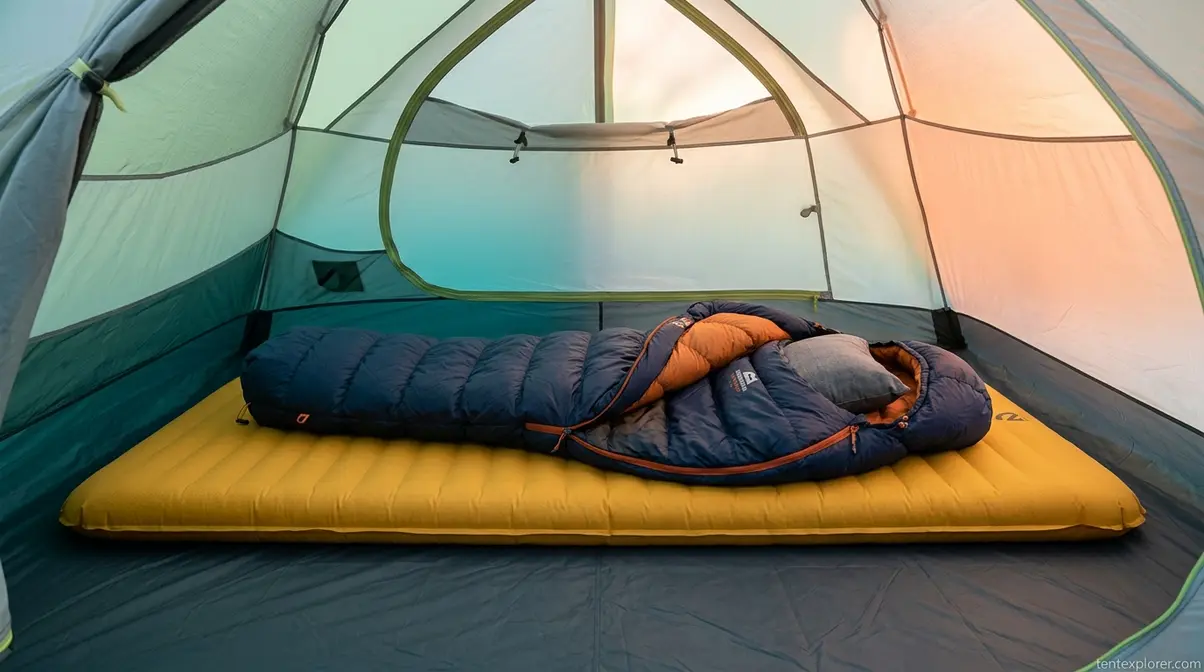
The comfiest thing to sleep on when camping is a high-quality inflatable sleeping pad with an R-value of 3 or higher — specifically, options like the Therm-a-Rest NeoAir XLite NXT or the NEMO Tensor All-Season Insulated, both top-rated by OutdoorGearLab and CleverHiker in 2026 independent testing.
The ground is your enemy when camping. Cold, hard, and uneven — without insulation between you and the earth, even the best sleeping bag leaves you cold and sore. A sleeping pad serves two functions: cushioning and thermal insulation. The R-value rating measures insulation; anything below R-2 is inadequate for three-season camping.
Three tiers worth knowing:
- Budget option ($30–$60): Closed-cell foam pads (like the Therm-a-Rest Z Lite Sol) — durable, lightweight, zero puncture risk. Less comfortable but reliable.
- Mid-range ($80–$150): Self-inflating pads — better cushioning than foam, reasonable packability. Good for car camping.
- Premium ($160–$250): Inflatable pads (Therm-a-Rest NeoAir XLite NXT at ~$200, NEMO Tensor All-Season at ~$220) — closest to sleeping on a mattress, lightest packed weight, highest comfort ceiling.
For a full breakdown of the best camping sleep systems, see our guide to the best mattresses for tent camping.
The sleeping pad is the single most impactful upgrade a new camper can make — more so than the tent itself. Most rental platforms include a basic pad, but upgrading your own is worth every dollar if you plan to camp more than twice a year.
The Most Forgotten Camping Items
The single most forgotten item when camping is a fire starter — matches, a lighter, or a spark tool — according to consistent feedback across camping communities and gear review sources (aZengear, 2026; Four Wheel Campers, 2026). People pack the tent, sleeping bag, and food, then arrive at camp with no way to start a fire.
The top five most forgotten items, based on community consensus across camping forums and survey data:
- Fire starter (matches, lighter, or spark tool) — always pack two methods
- Headlamp and extra batteries — phone flashlights die; a headlamp doesn’t
- Insect repellent — mosquitoes make or break a trip
- Trash bags — leave-no-trace camping requires them; most campgrounds don’t provide them
- Towel — a quick-dry microfiber towel packs small and earns its weight every morning
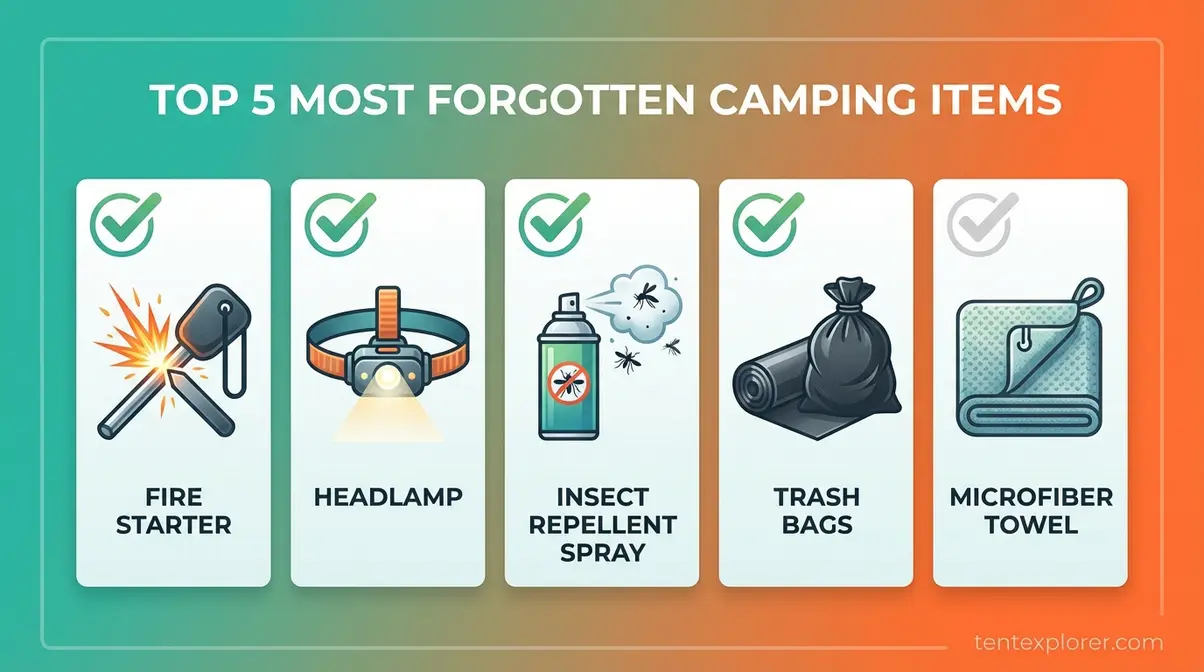
Caption: Print or screenshot this checklist before every trip — these five items are the most common sources of campsite regret.
A practical rule: pack your fire starter in the same pocket as your car keys. You’ll check for your keys before every trip; you’ll never forget fire again. The same logic applies to headlamps — keep them in the tent bag itself so they’re always co-located with the gear.
Limitations and Common Pitfalls
Common Pitfalls
Buying too cheap too fast. The most common buying mistake is purchasing a $50–$80 tent to “test the waters.” Budget tents under this threshold often use thin polyester floors, inadequate pole systems, and minimal weatherproofing. After 2–3 uses, seams leak and poles bend. You end up buying a second, better tent anyway — having spent more total than if you’d started at the $120–$150 range. If you’re buying, spend at least $100–$120 for a tent that will actually last.
Ignoring the rental add-on fees. Many renters calculate their cost as the base rental rate and nothing else. A $45 weekend rental becomes $75–$80 once you add cleaning deposits, optional damage insurance, and shipping. Always request the full itemized cost before booking, and recalculate your personal breakeven with the real number.
Buying at peak season. Purchasing a tent in April or May — right before a first camping trip — means paying full retail. The same tent often costs 25–40% less in September or January. Unless you have a trip booked for next weekend, wait for the clearance window.
Storing a tent wet. Packing a damp tent is the fastest path to mold, mildew, and permanent fabric damage. Even one wet storage session can destroy the waterproof coating. Always pitch the tent in your backyard or drape it over a chair to dry completely before it goes back in the bag.
When to Choose Alternatives
When you camp internationally or in extreme conditions: Standard rental platforms and mid-range purchase tents aren’t designed for mountaineering, high-altitude camping, or international expeditions. In these cases, specialized 4-season tents (typically $400–$800+) or guided expedition services that include gear are the appropriate choice — not a $150 3-season dome.
When group size exceeds 4 people regularly: Family camping with 5+ people often requires a cabin-style tent ($250–$450) that’s impractical to rent at most platforms. If this is your use case, buying a quality family tent outright makes strong financial sense even at 1–2 trips per year, because the rental equivalent simply doesn’t exist at most platforms.
When you genuinely can’t commit to storage: If you live in a micro-studio with zero storage options and no outdoor space, renting indefinitely may be the pragmatic answer — even above the 3-trip breakeven threshold. The 3-Trip Breakeven Rule is a financial framework, not a mandate. Practical constraints matter.
When to Seek Expert Help
For most recreational campers, this decision requires no outside consultation. However, if you’re outfitting a youth program, planning a multi-week expedition, or purchasing gear for a commercial operation, consult an outdoor industry specialist or contact an organization like Outdoors Geek directly for bulk rental pricing or fleet recommendations.
Frequently Asked Questions
Is it cheaper to rent a tent than buy one?
Renting is cheaper than buying when you camp fewer than 3 times per year. At an average rental rate of $40–$50 per weekend trip (Sports Basement, LowerGear, 2026), a single annual trip costs $40–$50 total versus $100–$350 to purchase. However, at 3+ trips per year, cumulative rental costs exceed a mid-range purchase price within 12 months. The 3-Trip Breakeven Rule is the clearest framework: below 3 annual trips, rent; at 3 or above, buy.
Is it better to buy or rent a tent?
Buying is better for campers who go out 3 or more times per year; renting is better for everyone else. Ownership delivers long-term savings, 24/7 availability, and no booking friction. Renting eliminates upfront cost, storage requirements, and maintenance — making it ideal for first-timers, travelers flying to destinations, and anyone still deciding if camping is a lasting hobby. The right answer depends entirely on your camping frequency, not your gear preferences.
What is the average lifespan of a tent?
A quality camping tent lasts 10–20 usage weeks for synthetic (nylon/polyester) models and 50–150 usage weeks for canvas, according to manufacturer data from CanvasCamp and Cascade Designs (2026). Usage weeks measure actual pitched time, not calendar years. A synthetic 3-season tent used 3 weekends per summer lasts roughly 3–6 years. UV exposure and wet storage are the two factors that most dramatically shorten tent lifespan — address both and your tent will outlast the estimate.
What is the 2% rule for rentals?
The 2% rule is a real estate concept stating that monthly rent should represent at least 2% of a property’s purchase price (BiggerPockets, 2024). Applied to camping gear: a $150 tent at 2% per use would cost just $3/day to rent profitably. Since most platforms charge $15–$50/day, renters pay 10–33% of the tent’s value per use — confirming that frequent renting is expensive relative to ownership. The rule is a rough heuristic, not a precise formula, but it reinforces the 3-Trip Breakeven Rule from a different angle.
What is the 3-3-3 rule for camping?
The 3-3-3 rule means driving no more than 300 miles per day, arriving at camp before 3 PM, and staying at least 3 nights (KOA, 2024). Originally an RV travel framework, it applies directly to tent camping — especially the 3 PM arrival rule, which ensures you have daylight for tent setup. The 3-night minimum is equally valuable: the first night is always the hardest adjustment, and the real enjoyment of camping starts on night two.
Making the Call: Your Personal Breakeven Point
For most campers, the buying vs renting a camping tent decision resolves cleanly once you apply the 3-Trip Breakeven Rule. Camp fewer than 3 times per year and renting at $40–$75 per trip keeps your costs below the $100–$350 purchase threshold. Camp 3 or more times annually and a mid-range tent pays for itself before the season ends — with 3-year ownership costs running roughly $195 versus $405 or more in cumulative rental fees (based on verified 2026 platform pricing).
The 3-Trip Breakeven Rule reframes this from a lifestyle preference into a financial decision with a clear answer. It doesn’t tell you which option is more fun or which tent is more comfortable. It tells you which option costs less given your actual camping behavior — and that’s the number that matters.
Your next step is simple: count how many camping trips you realistically plan in the next 12 months. If the answer is 3 or more, browse budget-friendly tent options before committing to another rental fee. If the answer is 1 or 2, book through Outdoors Geek, REI, or LowerGear Outdoors and enjoy the trip without the overhead. Either way, you now have the math — stop second-guessing and start camping.