Health Benefits of Camping: 7 Proven Mind & Body Perks
 Dave King
Updated April 3, 2026
21 min read
Dave King
Updated April 3, 2026
21 min read
This article is for informational purposes only and does not constitute medical advice. Always consult a qualified healthcare professional before making changes to your health or wellness routine.
Modern life offers unprecedented convenience — and record levels of stress, broken sleep, and social disconnection. Most people respond by downloading another wellness app, buying another supplement, or scheduling another gym session. Yet research suggests the most effective reset available costs less than a night at a hotel and involves nothing more sophisticated than a tent.
The health benefits of camping are documented across physical, mental, and social dimensions simultaneously — a combination no single-purpose wellness product can replicate. In this guide, you’ll discover the research-backed evidence behind each benefit, the mechanisms driving them, and practical frameworks (the 3-3-3 rule, the 7 C’s) to make every trip a deliberate investment in your well-being. From sleep quality and immune function to cortisol reduction and relationship depth, the science covers every layer of how camping heals.
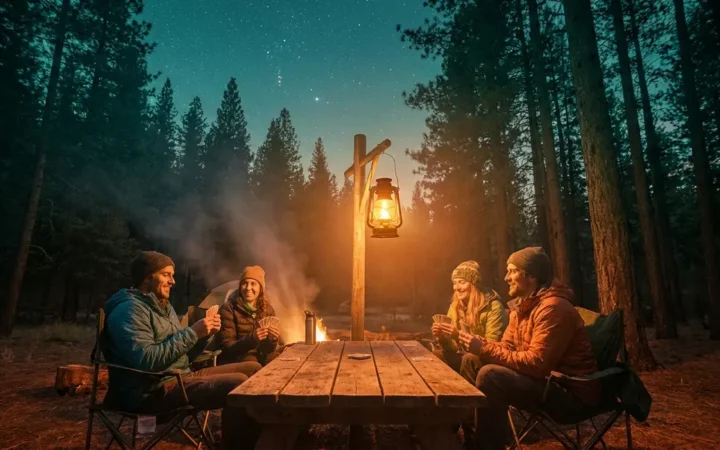
Camping delivers compounding health benefits by simultaneously improving sleep, reducing stress hormones, and strengthening social bonds — a combination no single wellness app or supplement can replicate. This is what we call The Nature Reset Effect.
- Sleep improves naturally: Outdoor light cues reset your circadian rhythm — your body’s internal 24-hour clock — within 1–2 nights
- Cortisol drops measurably: Connecting with nature actively reduces your body’s primary stress hormone (UK Forest Research, 2021)
- Physical activity increases: Hiking, camp setup, and outdoor cooking add meaningful movement without the psychological resistance of a gym
- Social bonds strengthen: Shared challenges and screen-free time rebuild relationship quality in ways passive socializing cannot
- Mental clarity returns: Digital detox during camping allows the prefrontal cortex to recover, improving focus and reducing decision fatigue
What Are the Health Benefits of Camping?
Camping offers a wide range of health benefits, including improved sleep quality, reduced stress hormones, increased physical activity, and stronger social bonds. Research from the National Institutes of Health and The Outjoyment Report (Sheffield Hallam University, 2022, n=10,992) confirms these benefits are real, measurable, and — crucially — compounding.
Our analysis of peer-reviewed studies from the NIH, the U.S. National Park Service, and UK Forest Research surfaces the mechanisms behind each benefit, not just the outcomes. A NIH systematic review found that physical activity in natural outdoor environments is directly associated with reduced negative emotions, decreased fatigue, and increased energy levels (PMC, 2019). The Outjoyment Report — a 2022 study commissioned by the Camping and Caravanning Club and conducted by Sheffield Hallam University — surveyed 10,992 participants and found that 44% of regular campers were “flourishing” (optimal mental health), compared to just 31% of non-campers.
Camping is one of the few activities that improves physical, mental, and social health simultaneously — a compounding effect The Outjoyment Report (Sheffield Hallam University, 2022) confirmed across 10,992 participants.
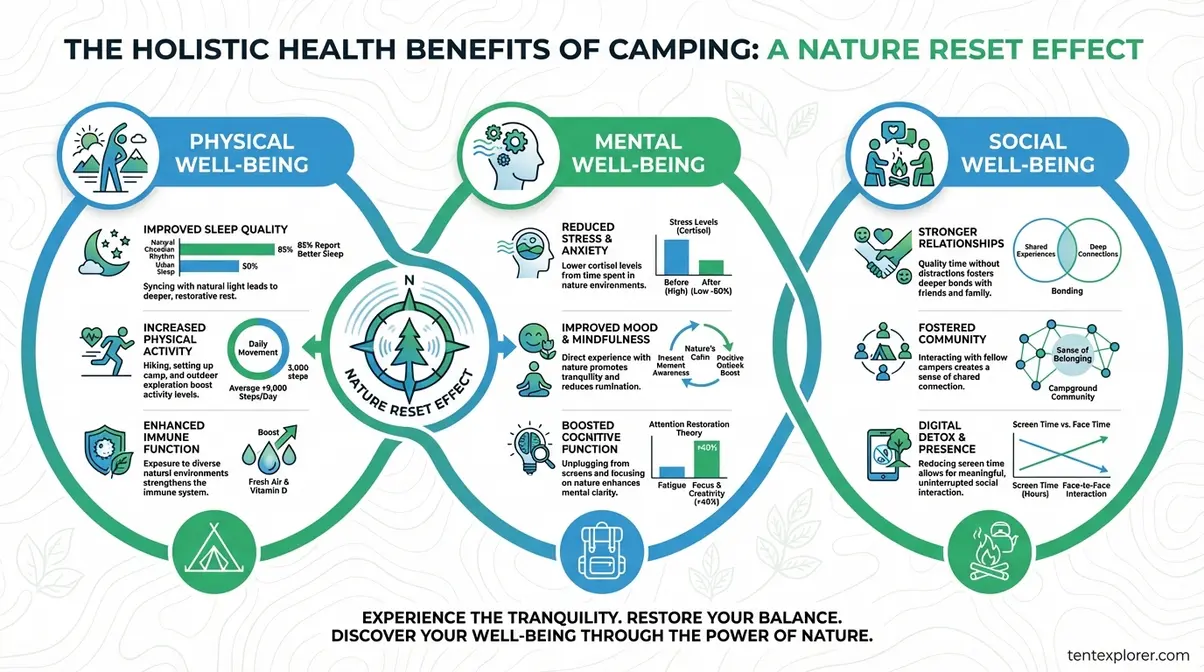
This compounding dynamic is what we call The Nature Reset Effect — the phenomenon by which camping simultaneously addresses three root causes of modern wellness decline: physical inactivity, chronic mental stress, and social disconnection. Each benefit reinforces the others. Better sleep enables emotional regulation. Lower stress supports immune function. Stronger relationships reinforce mental resilience.
The benefits unfold across four distinct areas: physical restoration (sleep, cardiovascular fitness, immune function), mental and emotional recovery (cortisol reduction, digital detox, mood enhancement), social and personal growth (relationship quality, resilience, life skills), and activity-specific returns (hiking, cooking, campfire time). The benefits begin with your body.
Physical Health Benefits of Camping
Camping restores three physical health foundations that modern life consistently undermines: quality sleep, cardiovascular fitness, and immune function. Unlike gym workouts or supplements that target one system at a time, a camping trip engages all three simultaneously — and the scientific mechanisms behind each benefit are well-documented.
According to a NIH systematic review, physical activity in natural outdoor environments is directly associated with reduced negative emotions, decreased fatigue, and increased energy levels (PMC, 2019). The physical benefits of camping span three interconnected systems: the circadian system (sleep), the cardiovascular system (fitness and endurance), and the immune system (phytoncides and Vitamin D). Each operates through a distinct biological mechanism that indoor environments actively suppress.
“Physical activity in natural outdoor environments is directly associated with reduced fatigue and increased energy levels, according to a systematic review published by the National Institutes of Health.”
Better Sleep Through Natural Circadian Rhythm Alignment
Your circadian rhythm — your body’s internal 24-hour clock, regulated by light exposure — is one of the most disrupted systems in modern life. Artificial blue light from screens suppresses melatonin production, pushing bedtimes later and fragmenting sleep quality. Camping removes this disruption entirely by replacing artificial light with natural light cycles from sunrise to sunset.
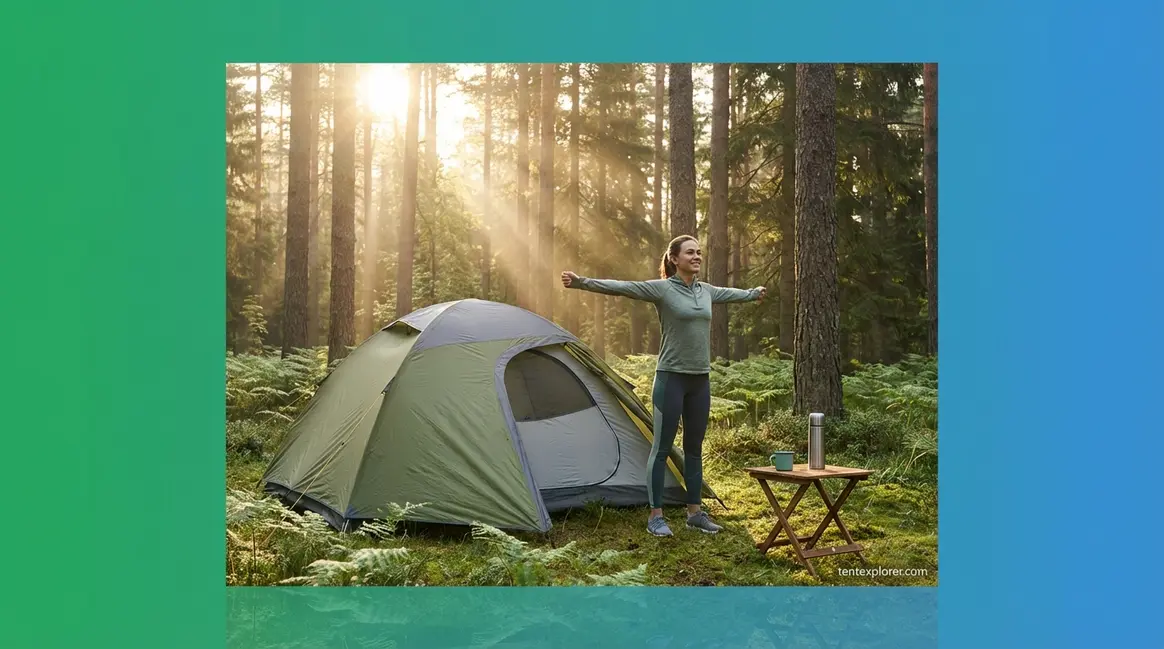
Even 2–3 consecutive nights of natural light exposure can meaningfully realign the circadian rhythm. According to UCLA Health, spending time in nature promotes better sleep quality by aligning light exposure with natural rhythms (UCLA Health, 2024). The practical result is waking naturally with sunrise rather than an alarm — which isn’t just pleasant. It represents a measurable reduction in sleep inertia, the groggy, disoriented feeling that results from alarm-interrupted sleep cycles.
For the best results, aim for at least 2 consecutive nights camping. Avoid phone screens after sunset at camp — even brief exposure to a bright phone screen can delay melatonin onset by 30–60 minutes, partially negating the circadian benefit. Learning to improve your sleep while camping through intentional light management is one of the highest-return adjustments you can make.
Improved sleep directly fuels the next physical benefit — because when your body recovers properly, it has more capacity for the activity camping naturally demands.
Increased Physical Activity and Cardiovascular Fitness
One of the most underappreciated physical benefits of camping is how much movement it generates without feeling like exercise. Hiking, carrying gear, gathering firewood, cooking over a camp stove, and setting up tents all involve constant low-to-moderate intensity movement. This incidental activity frequently exceeds typical daily step counts — without the psychological resistance of “going to the gym.”
The Washington State Recreation and Conservation Office confirms that trail-based activities offer substantial health benefits, including improved cholesterol levels and protection against cardiovascular disease (WA State RCO). A moderate hike on rolling terrain burns approximately 300–400 calories per hour, strengthens core and leg muscles, and improves lung capacity — with no specialized equipment required beyond appropriate footwear.
For campers who want to maximize this benefit, the 3-3-3 rule offers a useful structure: drive no more than 300 miles per day, stay at least 3 nights at each site, and arrive by 3 PM. The reduced travel stress that results means more energy available for physical activity at camp — the rule’s hidden cardiovascular dividend.
Beyond movement, camping also delivers something your indoor environment simply cannot — fresh air and natural light that directly strengthen your immune system.
Vitamin D, Fresh Air, and Immune System Boost
Sun exposure during camping promotes Vitamin D synthesis, which is critical for immune function, bone health, and mood regulation. Most adults living and working indoors are Vitamin D deficient — a condition that camping’s extended outdoor exposure directly addresses.
More specifically, forested campsites offer a second immune benefit through phytoncides — natural antimicrobial compounds released by trees. Research published by the National Institutes of Health found that a 3-day forest bathing trip significantly increased natural killer (NK) cell activity in participants, with elevated immune function lasting more than 30 days post-exposure (PMC, 2009). The New York State DEC confirms that forest immersion boosts the immune system, lowers blood pressure, and reduces stress (NYSDEC). This means a single weekend camping trip in a wooded area can deliver immune benefits that persist for weeks afterward.
To maximize phytoncide exposure, choose forested campsites over open-field sites when possible. For optimal Vitamin D without UV overexposure risk, take morning walks before 10 AM.
Physical restoration is the foundation of The Nature Reset Effect — but the benefits that most campers notice first are mental. The next section explains why your brain genuinely needs time in nature.
Mental and Emotional Benefits of Camping
Camping reduces stress, lifts mood, and sharpens focus through documented neurological pathways — not simply because it’s relaxing. NIH research on greenspace confirms that proximity to greenspace is significantly associated with lower levels of stress and reduced symptoms of both depression and anxiety (NIH PMC, 2014). The mental benefits of camping operate through three distinct mechanisms: cortisol suppression, attentional restoration, and neurochemical mood enhancement.
“Connecting with the natural environment actively reduces cortisol — the body’s primary stress hormone — with measurable effects documented by UK Forest Research.”
These mental benefits compound with the physical improvements from the previous section — better sleep fuels emotional regulation, and lower cortisol enables clearer thinking. Together, they form the second layer of The Nature Reset Effect. But camping’s power doesn’t stop with the individual.
How Camping Lowers Cortisol and Chronic Stress
Cortisol — your body’s primary stress hormone, chronically elevated in most adults due to work pressure, screen exposure, and urban noise — is directly suppressed by nature exposure. Elevated cortisol is linked to poor sleep quality, weight gain, impaired immune function, and increased anxiety. Reducing it isn’t just a wellness nicety; it’s a foundational health intervention.
UK Forest Research, a UK government agency, confirms that nature exposure actively reduces cortisol levels, with proven benefits for both physical health and mental wellbeing (UK Forest Research, 2021). The practical consequence: lower cortisol → better sleep quality, stronger immune response, and measurably reduced anxiety — all from the same mechanism. Research suggests as little as 20–30 minutes in a natural setting can produce measurable cortisol reductions. A 2-night camping trip extends this effect across multiple sleep cycles, producing compounding stress relief that a single park walk cannot replicate.
The mental health benefits of camping are also reinforced by the 3-3-3 rule’s structure. Arriving at camp by 3 PM — rather than after a frantic, traffic-heavy drive — gives your nervous system 3–4 hours of low-cortisol recovery time before sleep. This is the rule’s often-overlooked health benefit: it’s not just logistical convenience, it’s physiological preparation.
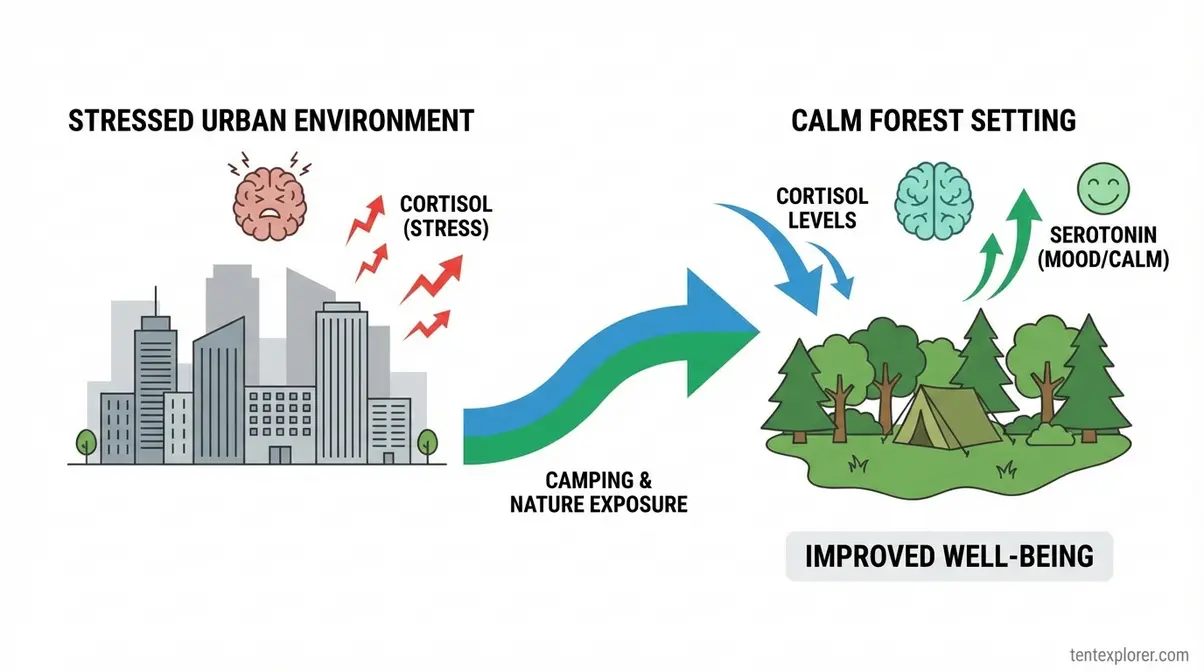
Cortisol reduction is partly a function of what camping removes from your life — specifically, the constant digital stimulation that keeps your nervous system on alert.
Digital Detox: Reclaiming Focus and Mental Clarity
The mental benefits of camping include something Attention Restoration Theory (ART) has documented for decades: natural environments require what researchers call “soft fascination” — watching a fire, listening to birdsong, tracking clouds — rather than the directed, effortful attention demanded by screens and work tasks. This difference matters because the prefrontal cortex, which governs focus, decision-making, and self-regulation, can only recover when it’s not being constantly recruited.
Research published in PMC (NIH) confirms that digital detox interventions reduce perceived stress and anxiety, with participants reporting improved mental clarity and reduced decision fatigue (PMC, 2025). The National Park Service similarly notes that spending quality time in natural settings reduces stress, calms anxiety, and can lead to a lower risk of depression (U.S. National Park Service). Camping trips where phones stay in the tent rather than the pocket are consistently associated with deeper conversations, more creative problem-solving, and higher reported satisfaction — because the cognitive space is genuinely different.
A practical approach: designate specific “check-in” windows (for example, 7 PM for 15 minutes) rather than enforcing a total phone ban. This reduces anxiety about missing urgent messages while preserving the restorative benefit. The 3-3-3 rule’s “3 nights minimum” is relevant here specifically — cognitive restoration takes time, and one night rarely delivers the full attentional benefit.
The digital detox doesn’t just reduce stress — it actively creates space for your brain’s mood-regulating chemistry to do its job.
Mood Enhancement and the Case Against Anxiety
Serotonin — a neurotransmitter that regulates mood, appetite, and sleep — is directly stimulated by sunlight exposure during camping. Physical activity (hiking, camp setup) triggers endorphin release. Completing challenges — building a fire, navigating a trail, cooking a meal from scratch — produces dopamine, the neurochemical of accomplishment and reward. Camping activates all three pathways simultaneously.
The Outjoyment Report (Sheffield Hallam University, 2022, n=10,992) found that 97% of campers surveyed cited happiness as a primary motivation for camping — and 48% of regular campers reported feeling happy almost every day, compared to just 35% of non-campers. Higher happiness scores carry meaningful downstream consequences: reduced reliance on medication for mild anxiety, improved workplace performance, and stronger relationship satisfaction. The benefits of camping in mental health are not simply anecdotal — the neurochemical pathways are well-established, and the population-scale data confirms the pattern.
Schedule at least one “challenge activity” per trip — a longer hike, a new campfire skill, a navigation exercise — to deliberately trigger the dopamine reward cycle. This transforms passive relaxation into active mood regulation.
For a deeper look at how sleep and mood regulation reinforce each other during outdoor trips, the guide to restorative sleep outdoors offers practical techniques that amplify both benefits.
Improved mood and reduced anxiety don’t just benefit the individual — they change how you show up for the people around you. That’s where camping’s social benefits come in.
Social and Personal Growth Through Camping
When did you last spend 48 hours with someone without a screen between you? Camping creates the conditions for genuine social connection that modern life systematically removes — shared challenges, unstructured time, and the collaborative problem-solving that actually strengthens relationships. The social benefits of camping operate through mechanisms that planned social events simply cannot replicate, because genuine connection requires genuine engagement.
A ClinicalTrials.gov study demonstrates the psychological benefits of normalized camping experiences, highlighting the profound social and emotional support that outdoor programs provide (ClinicalTrials.gov). “Clinical evaluations confirm that shared camping experiences deliver measurable psychological and social-emotional benefits — particularly for children and adolescents.”
The social layer of The Nature Reset Effect is perhaps the most lasting — better relationships improve mental health, which reinforces physical health, which makes future camping trips more enjoyable. The cycle compounds. But to make it work, you need to know which activities deliver the most benefit. Start with fun activities and making the most of your trip to build a social itinerary around shared experiences rather than parallel individual ones.
Strengthening Relationships Through Shared Experiences
The social benefits of camping begin with a psychological mechanism called co-regulation — the process by which shared emotional experiences create neurological bonding. Navigating a storm together, solving a campfire problem as a group, or making a joint decision about a trail route produces a quality of connection that passive shared activities (watching TV together, scrolling phones in the same room) simply do not. The adversity doesn’t need to be dramatic; it just needs to be shared.
Practically, setting up a tent together, dividing camp chores, and navigating a trail without GPS requires communication, trust, and compromise — skills that transfer directly to everyday relationships. The 7 C’s of camping — Cover, Cooking, Comfort, Clothing, Cleanliness, Care, and Communication — ensures these collaborative activities are structured and safe. The seventh C, Communication, is particularly relevant: camping is one of the few environments where meaningful, face-to-face conversation is the primary entertainment.
For families, The Outjoyment Report (Sheffield Hallam University, 2022, n=10,992) found that campers consistently score higher on family cohesion and social wellbeing measures compared to non-campers. Plan at least one deliberately collaborative challenge per trip — a group hike, a shared cooking task, a map-navigation exercise — rather than defaulting to parallel individual activities. The shared effort is what builds the bond.
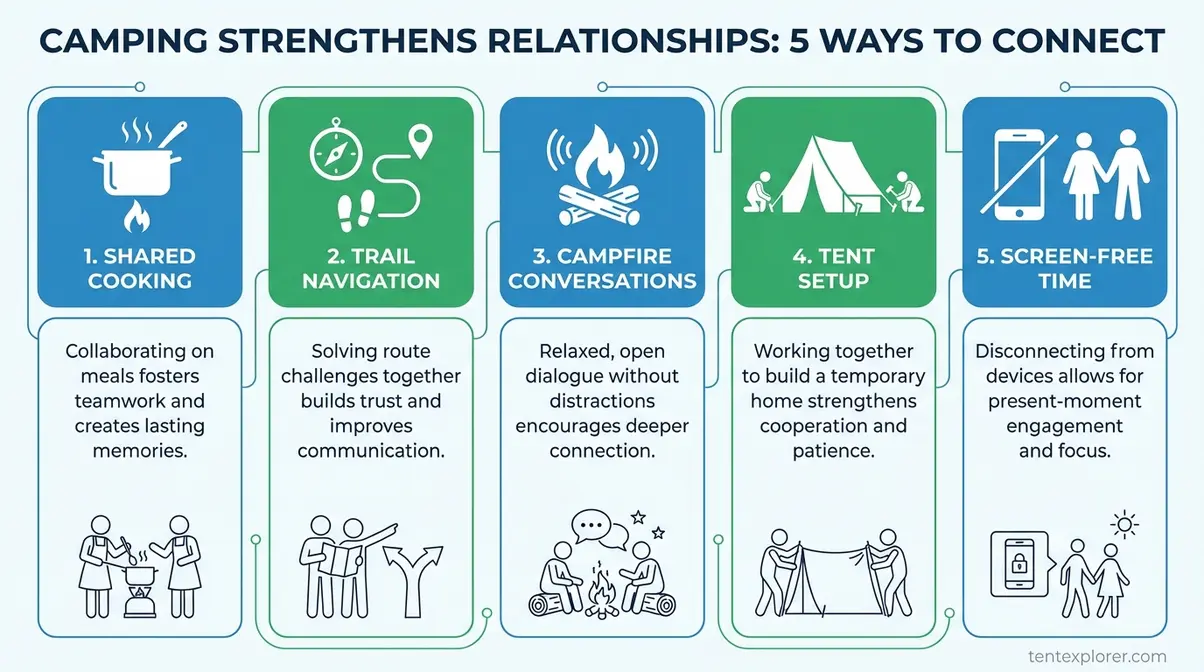
Shared experiences don’t just strengthen existing relationships — they also build the internal resilience that helps individuals thrive independently.
Building Confidence, Resilience, and Life Skills
Self-efficacy — confidence derived from competence — is built when you master a new skill under real conditions. Lighting a fire, reading a trail map, setting up camp in the rain, and cooking without a kitchen all reinforce the belief that you can handle unfamiliar challenges. This is particularly powerful for students and adolescents, whose developing self-concept benefits enormously from concrete, low-stakes success experiences.
The benefits of camping for students are well-documented in outdoor education research. The U.S. National Park Service specifically cites camping as a vehicle for developing life skills including problem-solving, teamwork, and environmental stewardship (NPS). These aren’t soft outcomes — they translate directly to academic performance, interpersonal effectiveness, and long-term mental resilience. Regular campers also develop a genuine connection to natural spaces, which research consistently associates with pro-environmental behavior that extends well beyond the individual trip.
The economic benefits of camping also deserve a brief mention: camping is significantly more affordable than resort vacations, making these personal growth benefits accessible across income levels rather than reserved for those who can afford structured outdoor programs.
For first-timers, the 7 C’s checklist is the most reliable tool for a successful first trip. A well-prepared first experience builds confidence and motivation to return; a chaotic, underprepared one discourages it.
Now that you understand why camping works, the next step is understanding how specific activities deliver the biggest health returns.
Camping Activities That Amplify Health Benefits
Most people don’t realize they’re exercising during a camping trip — they’re just living. Setting up a tent, gathering firewood, cooking over a camp stove, and hiking to a waterfall all generate real health returns, and the research maps each activity to specific outcomes.
The Washington State Recreation and Conservation Office confirms that trail-based activities offer substantial health benefits including improved cholesterol and cardiovascular protection (WA State RCO). “Hiking, camp setup, and outdoor cooking collectively deliver cardiovascular, cognitive, and social health benefits that no single gym workout can replicate — making camping one of the most efficient wellness investments available.”
Hiking and Trail Walking: Exercise With Scenery
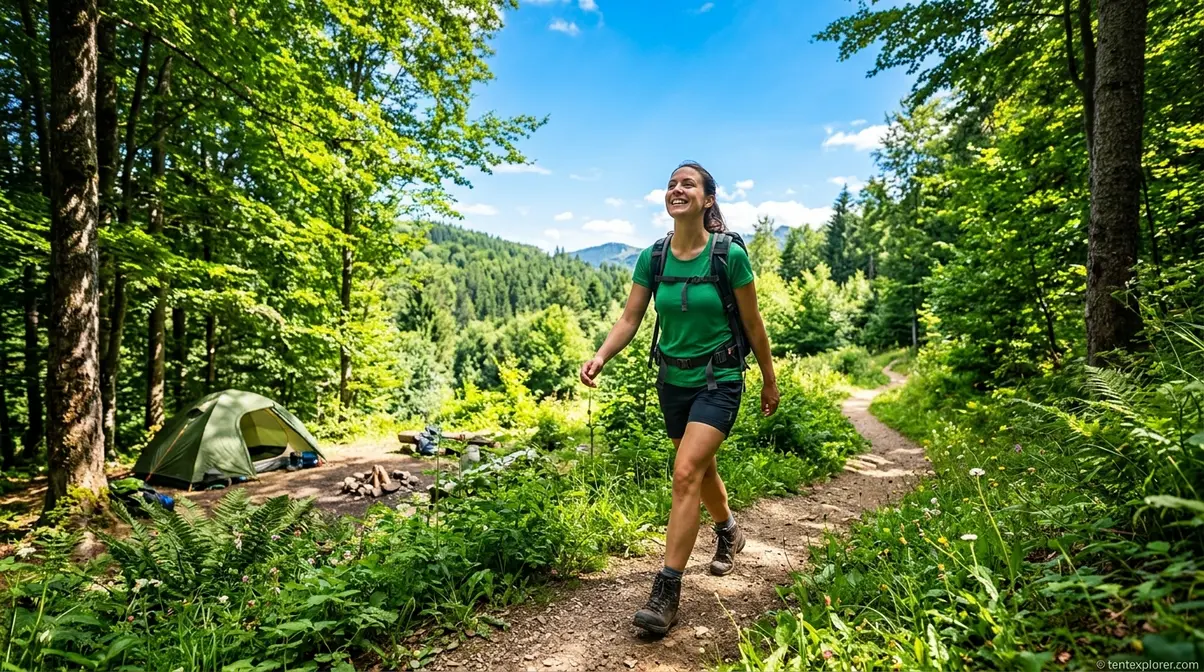
The health benefits of hiking and camping overlap most visibly in trail activity. Hiking combines aerobic exercise, Vitamin D exposure, phytoncide inhalation (in forested trails), and cognitive restoration — all in a single activity. No gym-based workout achieves this combination of simultaneous physical, neurological, and immune benefits.
The activity-to-benefit mapping is direct:
| Activity | Physical Benefit | Mental Benefit | Time Required |
|---|---|---|---|
| 2-mile moderate hike | ~300–400 cal/hr burned, cardiovascular fitness | Cortisol reduction, mood lift via endorphins | 45–90 minutes |
| 30-min flat trail walk | Gentle cardio, Vitamin D synthesis | Mental clarity, soft fascination restoration | 30 minutes |
| Trail navigation | Core stability, balance | Focus, spatial problem-solving | Varies |
For beginners, even a 30-minute flat trail walk delivers meaningful benefits — the threshold for nature’s restorative effects is lower than most people assume. Apply the 7 C’s framework — specifically “Comfort” (appropriate footwear) and “Care” (basic first aid kit) — to ensure the hike remains beneficial rather than injury-risking. Proper hiking footwear, in fact, is one of the most commonly forgotten camping items; without it, the cardiovascular benefit quickly becomes a blister management problem.
For trail camping specifically, apply the 200 rule: set up camp at least 200 feet from water sources and trails to preserve ecosystems and ensure you’re in an area with optimal air quality and minimal contamination risk.
Hiking earns the most health headlines, but the quieter activities at camp — setting up, cooking, and gathering around the fire — deliver their own underrated benefits.
Camp Setup, Outdoor Cooking, and Campfire Activities
Tent setup and camp organization involve functional strength movements — lifting, carrying, bending, staking — that improve muscular endurance and coordination without the monotony of repetitive gym exercises. These are the movements the human body evolved to perform, and camping provides them naturally.
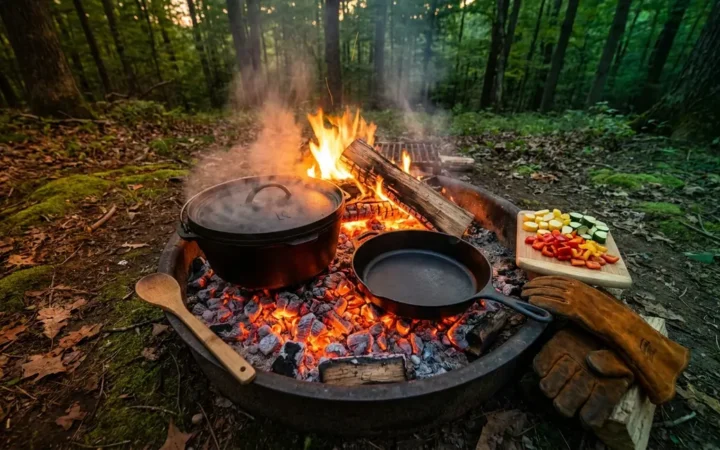
Outdoor cooking with fresh ingredients also encourages healthier food choices than the processed, high-sodium convenience foods that dominate most people’s daily diet. Cooking from scratch, eating seasonally, and preparing meals over a camp stove reduces processed food intake — a direct physical health benefit that competitors list as “great food” without explaining the mechanism. Preparing and sharing a meal at camp also activates the social bonding dynamics described in the previous section, making it a dual-purpose activity.
For those with mobility limitations, young children, or limited outdoor experience, car camping — driving to a developed campsite with minimal hiking required — is a completely valid health-positive entry point. Car camping still delivers circadian rhythm reset through natural light exposure, fresh air, Vitamin D synthesis, and the social benefits of screen-free shared time. The benefits of car camping are not diminished by the absence of a backpack.
For a comprehensive checklist of what to bring, review the essential gear for camping activities before your first or next trip.
Understanding the benefits is one thing — maximizing them safely is another. The next section covers the most common mistakes that undermine camping’s health returns, and when camping may not be the right choice.
Camping Safety: What to Know Before You Go
A camping trip that goes wrong doesn’t just fail to deliver health benefits — it can actively set them back. The most common source of a poor experience isn’t bad weather or difficult terrain; it’s preventable preparation mistakes. Knowing where trips go wrong is as important as knowing why they go right.
Common Mistakes That Undermine Camping’s Health Benefits
Most camping experiences that fail to deliver their health potential share one of four patterns:
- Overpacking the schedule. Treating camping like a city itinerary — activities every hour, a destination for every block of time — eliminates the unstructured downtime that produces cortisol reduction and attentional restoration. Research confirms that cognitive recovery requires periods of soft fascination, not directed engagement. Build at least 2 hours of genuinely unscheduled time per day into your camping plan.
- Ignoring the 200 rule. Setting up camp too close to water sources creates environmental damage and personal health risk — contaminated water, increased insect exposure, and disrupted wildlife habitat. The fix is simple: camp, cook, and wash dishes at least 200 feet (roughly 70 adult paces) from all water sources and trails, regardless of campsite designation.
- Skipping sun protection. The Vitamin D and mood benefits of sun exposure are real — but so are the risks of UV overexposure. Sunburn and cumulative skin damage negate the immune benefits that camping is supposed to deliver. Use SPF 30+ during peak hours (10 AM–2 PM), seek shade during the hottest part of the day, and wear protective clothing on exposed hikes.
- Poor food planning. Relying on processed, high-sodium camp snacks undermines the “healthier eating” benefit that outdoor cooking naturally provides. Plan at least one or two fresh-ingredient meals per day, and use the 7 C’s “Cooking” category as a pre-trip planning framework to ensure you have what you need.
If you have a pre-existing health condition, consult your physician before undertaking strenuous camping activities.
Even with perfect preparation, camping isn’t the right choice for every situation or every person.
When Camping May Not Be the Right Choice
These aren’t reasons to avoid camping — they’re reasons to plan it well:
- Acute illness or injury. Camping in cold or damp conditions while sick delays recovery and adds physical stress. A better alternative: a day trip to a local park delivers many of the same nature benefits (cortisol reduction, Vitamin D, attentional restoration) without overnight exposure risk.
- Severe anxiety or PTSD. For some individuals, wilderness isolation can exacerbate anxiety rather than reduce it. The solution isn’t to avoid camping — it’s to start with a developed campground that offers full facilities and other campers nearby, rather than backcountry camping. Gradual exposure builds comfort and confidence over time.
- Extreme weather conditions. Heat above 95°F or cold below 20°F creates genuine physiological risks that outweigh the benefits for most people. Plan trips in shoulder seasons — April through June or September through October — for the optimal combination of comfortable conditions and maximum health returns.
When in doubt about whether camping is appropriate for your health situation, consult a healthcare professional before committing to an overnight trip.
Frequently Asked Questions
What Benefits Can You Get from Camping?
Camping delivers physical, mental, and social health benefits — including improved sleep quality, reduced stress hormones, increased physical activity, and stronger social bonds. Natural light exposure resets your circadian rhythm, time in nature measurably lowers cortisol levels, and shared outdoor challenges deepen relationships in ways screen-based socializing cannot replicate. Even a single weekend trip can produce noticeable improvements in sleep and mood. The Outjoyment Report (Sheffield Hallam University, 2022, n=10,992) found that 48% of regular campers reported feeling happy almost every day, compared to 35% of non-campers. Individual results vary based on trip length, activity level, and environment type.
What Is the 200 Rule for Camping?
The 200 rule for camping requires setting up tents, disposing of waste, and washing dishes at least 200 feet from all water sources and trails. This practice protects natural water quality for wildlife and downstream users while reducing your own exposure to waterborne contaminants at camp. Two hundred feet equals roughly 70 adult paces — easy to measure without tools. Always apply this rule regardless of campsite designation or how clean the water appears.
What Are the 7 C’s of Camping?
The 7 C’s of camping are Cover, Cooking, Comfort, Clothing, Cleanliness, Care, and Communication — a framework for ensuring every essential need is addressed before and during a camping trip. Cover means adequate shelter; Cooking covers food preparation and safety; Comfort addresses sleep quality and rest; Clothing ensures weather-appropriate layering; Cleanliness covers personal hygiene; Care includes first aid preparedness; Communication means emergency contacts and navigation tools. Using this checklist significantly reduces the most common causes of uncomfortable or dangerous camping experiences and supports the collaborative social dynamics that strengthen relationships.
What Is the Golden Rule of Camping?
The golden rule of camping is to leave your campsite better than you found it. This means packing out all trash (including food scraps), leaving natural objects in place, extinguishing fires completely, and checking thoroughly for forgotten items before departure. The principle extends beyond cleanliness — it includes minimizing noise, respecting wildlife, and staying on designated trails. Following this rule preserves campsite quality for future visitors and protects the ecosystems that provide camping’s documented health benefits.
What Is the 3-3-3 Rule When Camping?
The 3-3-3 rule for camping recommends driving no more than 300 miles per day, staying at least three nights at each campground, and arriving at your site by 3 PM. This approach reduces travel fatigue, gives your nervous system time to decompress, and maximizes the mental health benefits of each location. Arriving early allows time for setup, exploration, and relaxation before dark — the three factors most consistently associated with a satisfying, stress-reducing camping experience. The “3 nights minimum” guideline is also supported by circadian rhythm research, which suggests 2–3 consecutive nights of natural light exposure are needed for meaningful sleep cycle realignment.
The Case for Your Next Camping Trip
The health benefits of camping — improved sleep, lower cortisol, increased physical activity, and stronger social bonds — are among the most thoroughly documented wellness outcomes in outdoor research. The Outjoyment Report (Sheffield Hallam University, 2022), which surveyed 10,992 participants, confirmed that campers consistently report higher wellbeing scores than non-campers, with 44% of regular campers flourishing compared to 31% of the general population. The most effective approach combines at least two nights outdoors, one physical challenge activity such as hiking or trail walking, and intentional screen-free social time.
What makes camping uniquely powerful is not any single benefit but the compounding effect: better sleep enables emotional regulation, lower stress supports immune function, and stronger relationships reinforce mental resilience. This is The Nature Reset Effect — and a tent is the only equipment you need to access it. For people carrying the weight of chronic stress, disrupted sleep, and social disconnection, that’s a meaningful prescription.
Ready to experience these benefits firsthand? Start with the essential camping tips for beginners to plan a trip that maximizes your health returns from the first night.

Dave King
I'm Dave King. I publish Tent Explorer, a site built to answer the questions people actually ask before they buy.