
This blog post may contain affiliate links. As an Amazon Associate I earn from qualifying purchases.
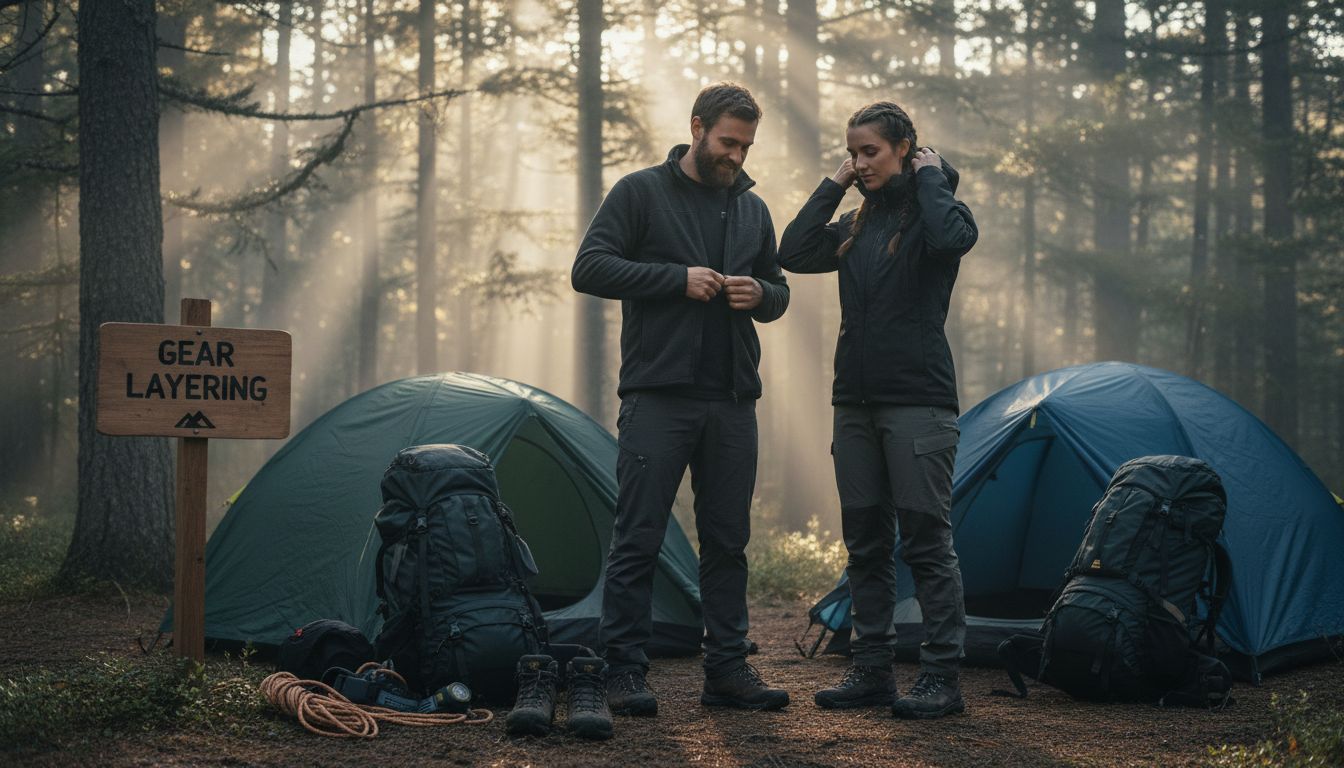
More than half of american campers say unpredictable weather is their top concern when heading outdoors. Staying comfortable and safe starts with choosing the right clothing systems for your surroundings. Understanding strategic gear layering helps outdoor enthusiasts regulate temperature, manage moisture, and handle whatever nature throws their way. Whether you’re planning for summer hikes or bracing for winter chill, mastering layers pays off in comfort and peace of mind.
Key Takeaways
| Point | Details |
|---|---|
| Layering Essentials | A three-layer system (base, mid, shell) is crucial for temperature regulation, moisture management, and protection against environmental factors during camping. |
| Specific Systems | Different layering systems (Lightweight, Expedition Weight, Modular) are tailored to meet varying environmental and activity demands. |
| Common Mistakes | Avoid using cotton, manage layers actively, and prioritize a quality shell layer to enhance safety and comfort. |
| Proper Gear Selection | Choose materials that wick moisture effectively and provide adequate insulation to maintain comfort across changing weather conditions. |
Defining Camping Gear Layering Essentials
Camping gear layering is a strategic approach to clothing and equipment management that ensures comfort, protection, and adaptability in outdoor environments. At its core, layering clothing systems involve creating a versatile ensemble of apparel designed to regulate body temperature and shield you from changing weather conditions.
The fundamental layering system consists of three critical components: base layers, mid layers, and shell layers. Base layers serve as the first line of defense, directly touching your skin and responsible for moisture management. These typically include lightweight, moisture-wicking materials like synthetic fabrics or merino wool that draw sweat away from your body, keeping you dry and preventing potential hypothermia. Mid layers provide essential insulation, trapping warm air close to your body and creating a thermal barrier against cold temperatures. Common mid layer materials include fleece, down, or synthetic insulation that offer warmth without excessive weight.
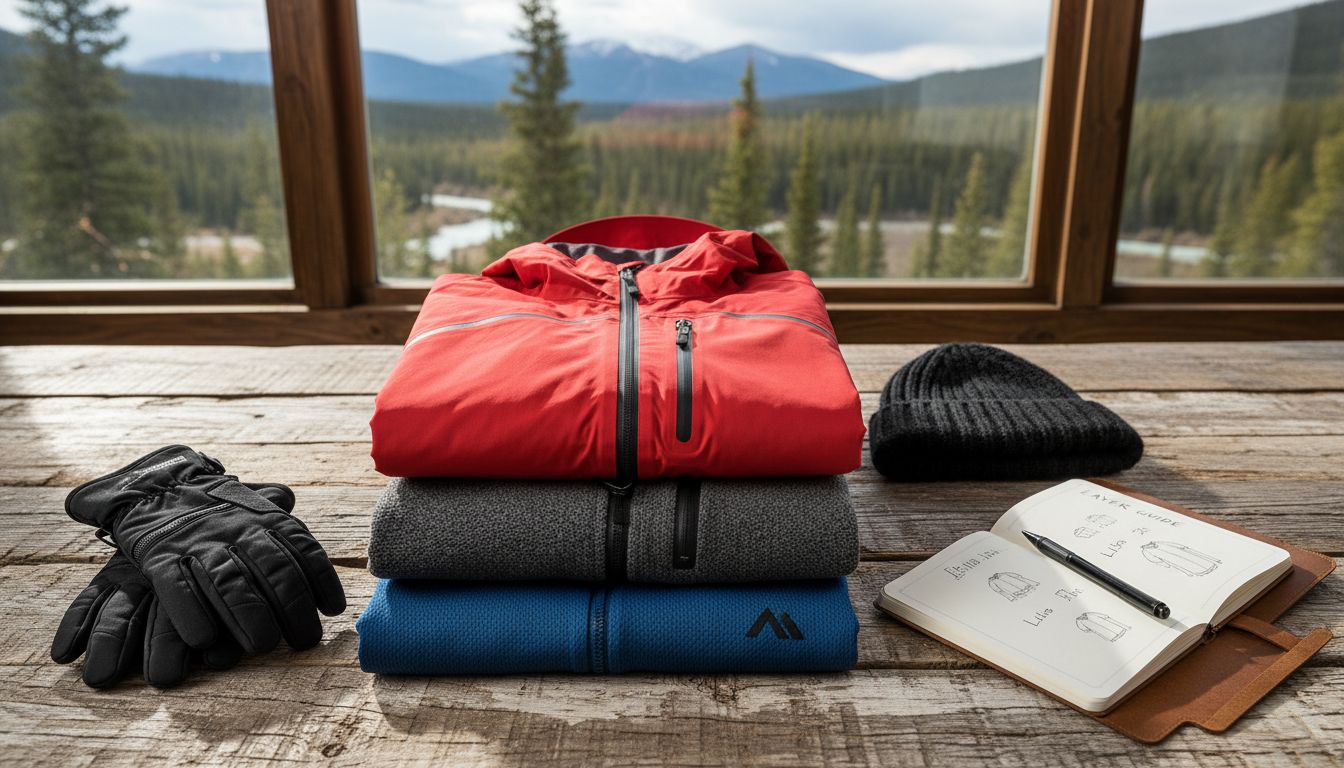
The outermost shell layer acts as a protective shield against wind, rain, and external elements. According to guidelines from outdoor experts, shell layers should be waterproof, breathable, and designed to block harsh environmental conditions while allowing moisture vapor to escape. By understanding and implementing a strategic layering approach, campers can effectively manage their body temperature, stay comfortable in diverse environments, and significantly enhance their outdoor safety and performance. Proper camping gear maintenance ensures these layers continue performing optimally trip after trip.
Key considerations for effective gear layering include selecting materials that complement each other, understanding your specific environmental conditions, and choosing versatile pieces that can be easily added or removed as temperatures fluctuate. Remember that the goal is creating a flexible system that adapts to your body’s changing needs during outdoor adventures.
Major Types of Layering Systems Explained
Layering systems are not one-size-fits-all solutions, but rather specialized approaches designed to meet specific outdoor conditions and activities. Hunting and outdoor enthusiasts recognize that different environments demand unique layering strategies tailored to temperature, moisture, and physical exertion levels.
Three primary layering systems dominate outdoor gear management: Lightweight Performance Systems, Expedition Weight Systems, and Versatile Modular Systems. Lightweight performance systems prioritize minimalism and mobility, utilizing thin, moisture-wicking base layers combined with ultra-lightweight insulating materials perfect for high-intensity activities like trail running or summer hiking. Expedition weight systems, in contrast, focus on maximum thermal protection, employing thick, robust materials designed to retain heat in extreme cold environments. These systems often feature multiple dense mid layers and heavily insulated outer shells capable of withstanding alpine or arctic conditions.
Versatile modular systems represent the most adaptable approach, allowing campers to mix and match layers based on real-time environmental changes. These systems typically include interchangeable pieces that can be quickly added or removed, enabling rapid temperature regulation. Core layering concepts emphasize creating a cohesive wardrobe where each piece functions seamlessly with others, ensuring optimal performance across diverse outdoor scenarios. Key considerations include fabric weight, moisture management, and thermal efficiency when selecting individual components.
Successful layer selection requires understanding your specific outdoor context. Factors like anticipated temperature range, physical activity level, potential weather variations, and personal comfort preferences all play crucial roles in determining the most appropriate layering system for your adventure.
How Layering Enhances Comfort and Safety
Winter camping safety fundamentally depends on understanding how clothing layers work together to protect the human body from extreme environmental conditions. Layering is not just about adding clothing, but creating a sophisticated system that manages moisture, regulates body temperature, and provides critical protection against potentially dangerous weather fluctuations.
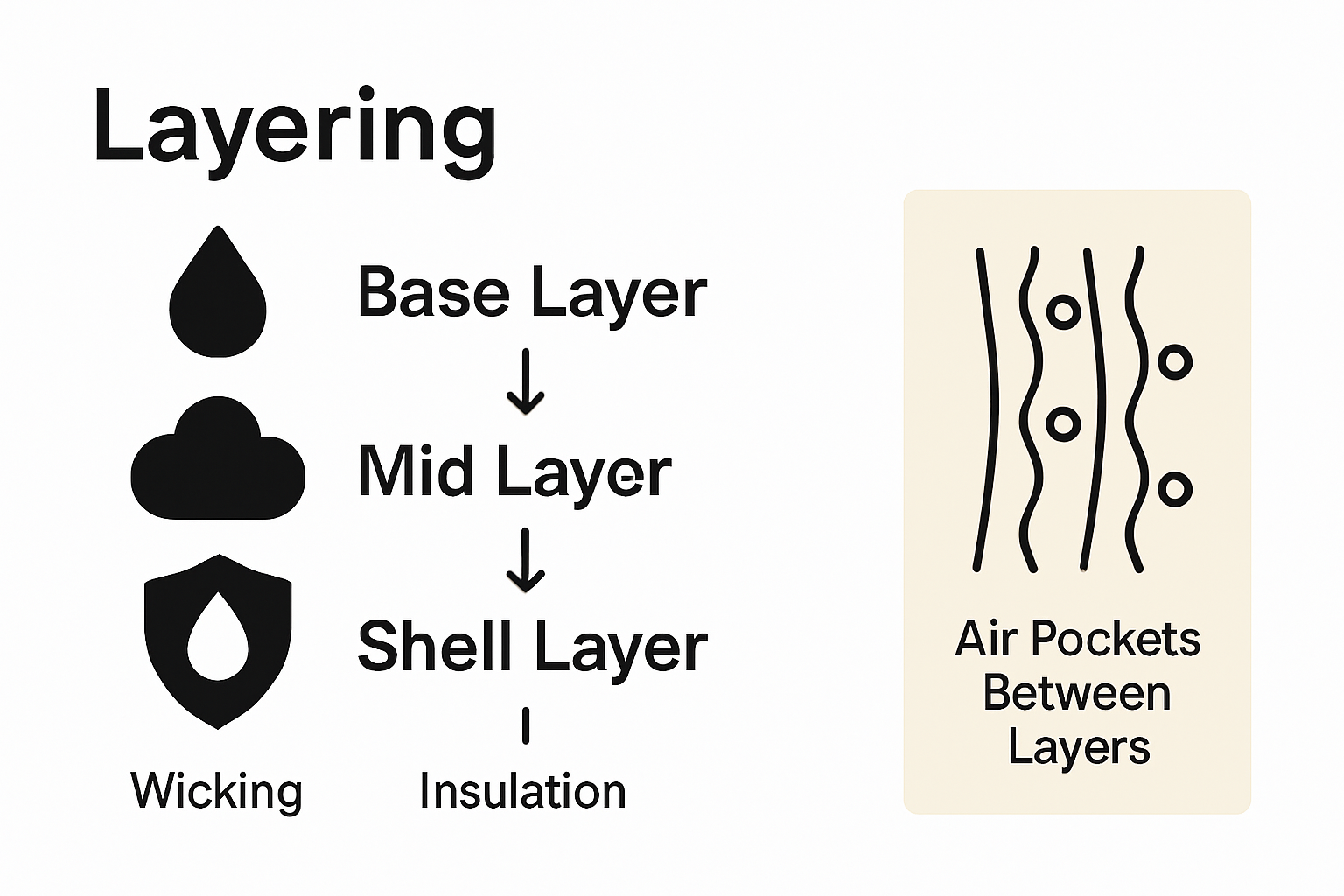
Thermal Regulation is the primary mechanism through which layering enhances safety. By creating multiple air pockets between different garment layers, campers can trap warmth more effectively than a single thick garment. The base layer wicks moisture away from the skin, the mid layer provides insulation, and the outer shell blocks wind and precipitation. Backcountry hikers recognize that this strategic approach prevents two primary risks: hypothermia from sustained moisture and overheating during high-intensity activities.
The psychological benefit of layering should not be underestimated. Knowing you can quickly adapt to changing conditions provides campers with a sense of control and confidence. By carrying versatile clothing pieces that can be added or removed, outdoor enthusiasts can extend their comfort range significantly. For instance, a lightweight fleece that can be easily packed or a waterproof shell that compresses into a small bag allows rapid response to unexpected weather shifts.
Ultimately, effective layering transforms clothing from a passive protection system into an active survival tool. The ability to fine-tune your body’s microclimate means you can maintain optimal core temperature, prevent excessive sweating, and reduce the risk of cold-related injuries. Smart layering is about understanding your body’s needs and the environmental challenges you might encounter during your outdoor adventures.
Common Mistakes When Layering Camping Gear
Winter camping preparedness requires understanding the nuanced approach to clothing layering. Many outdoor enthusiasts unknowingly compromise their comfort and safety by making critical errors in gear selection and management that can transform a potentially enjoyable adventure into a challenging survival scenario.
Material Selection Mistakes represent the most fundamental layering error. Wild camping experts consistently warn against using cotton materials, which become dangerous when wet by absorbing and retaining moisture next to the skin. Cotton dramatically increases the risk of hypothermia by preventing efficient heat regulation and preventing quick drying. Instead, campers should prioritize moisture-wicking synthetic fabrics or merino wool that efficiently move sweat away from the body and dry rapidly.
Another significant mistake involves improper layer management. Outdoor safety guides highlight the dangers of overdressing, which paradoxically can lead to excessive sweating and subsequent rapid cooling. Successful layering demands continuous adjustment based on activity level and environmental conditions. Campers should develop the skill of adding or removing layers proactively, maintaining an optimal body temperature without triggering excessive perspiration.
The final critical error is neglecting the shell layer’s importance. Many campers underestimate the need for a reliable waterproof and windproof outer layer, leaving themselves vulnerable to sudden weather changes. A high-quality shell layer acts as your primary defense against environmental extremes, protecting the carefully constructed insulation beneath. Smart outdoor enthusiasts understand that their layering system is only as effective as its weakest component, making thoughtful gear selection and strategic layer management essential for a safe and comfortable camping experience.
Choosing the Right Layers for Your Trip
Selecting appropriate layers requires understanding the unique demands of your specific outdoor adventure. Seasonal hiking strategies emphasize the critical importance of adapting your clothing system to anticipated environmental conditions, activity intensity, and potential weather variations.
Base Layer Considerations form the foundation of effective temperature management. Synthetic materials or merino wool work best for wicking moisture and maintaining body temperature, with weight selection depending on expected temperatures. Lightweight base layers suit high-intensity activities and warmer conditions, while midweight or heavyweight options provide additional warmth for cooler environments. Summer backpacking recommendations suggest choosing breathable, quick-drying fabrics that prevent moisture buildup and potential chafing during extended outdoor activities.
Mid layers serve as your primary insulation strategy, trapping warm air and providing essential thermal protection. Fleece jackets, lightweight down sweaters, or synthetic insulation pieces offer versatility across different temperature ranges. The key is selecting pieces that can be easily added or removed, allowing rapid adaptation to changing environmental conditions. Opt for compressible materials that pack efficiently, maximizing your ability to adjust without carrying excessive weight.
The outer shell layer represents your final defense against wind, rain, and temperature fluctuations. Waterproof and breathable materials provide the most comprehensive protection, with options ranging from lightweight windbreakers to heavy-duty mountaineering shells. Your selection should balance protection, weight, and packability, considering the specific challenges of your planned outdoor adventure. Smart layering is about creating a flexible system that can be quickly modified to maintain optimal comfort and safety in unpredictable outdoor environments.
Enhance Your Camping Comfort with Expert Layering Tips and Gear
Camping gear layering is key to staying comfortable and safe on every adventure. If you struggle with choosing the right layers or managing moisture and temperature changes, you are not alone. This strategic approach to base layers, mid layers, and shell layers can transform your outdoor experience by preventing hypothermia, overheating, and discomfort. At Tent Explorer, we understand these challenges and provide solutions that help you build an adaptable layering system tailored to your needs.

Explore our Outdoor Living – Tent Explorer category to discover practical advice on layering techniques and gear setup that enhance your camping lifestyle. Ready to upgrade your tent setup along with your clothing layers for a full camping solution Visit Tent Explorer and check out our Buying A Tent – Tent Explorer and Tent Accessories – Tent Explorer guides today. Take control of your comfort and safety by learning how to choose and maintain the right layers now.
Frequently Asked Questions
What are the three main layers of camping gear?
The three main layers of camping gear are the base layer, mid layer, and shell layer. The base layer wicks moisture off your skin, the mid layer provides insulation, and the shell layer protects against wind and rain.
Why is choosing the right base layer important for camping?
Choosing the right base layer is crucial because it directly impacts moisture management and thermal regulation. Materials like synthetic fabrics or merino wool wick sweat away from your skin, helping to keep you dry and warm.
How do I prevent overheating while camping with layered clothing?
To prevent overheating while camping, practice proper layer management by adding or removing layers based on your activity level and environmental conditions. Avoid overdressing to minimize excessive sweating.
What materials should I avoid when selecting camping layers?
You should avoid cotton materials when selecting camping layers, as they retain moisture and increase the risk of hypothermia. Instead, prioritize moisture-wicking synthetic fabrics or merino wool for effective temperature regulation.
Recommended
- What To Wear When Camping: A Seasonal Guide – Tent Explorer
- How To Keep Your Mattress Warm When Camping – Tent Explorer
- Essential Tent Camping Gear Checklist – Tent Explorer
- First Time Camping? Here’s Exactly What To Take For One Night Outdoors – Tent Explorer
- The Perfect Pan for Camping: Carbon Steel vs Cast Iron? – Brass & Steel
- Best Softshell Jackets for Men | Comfort, Durability & Style – The Regimental Store Ltd