
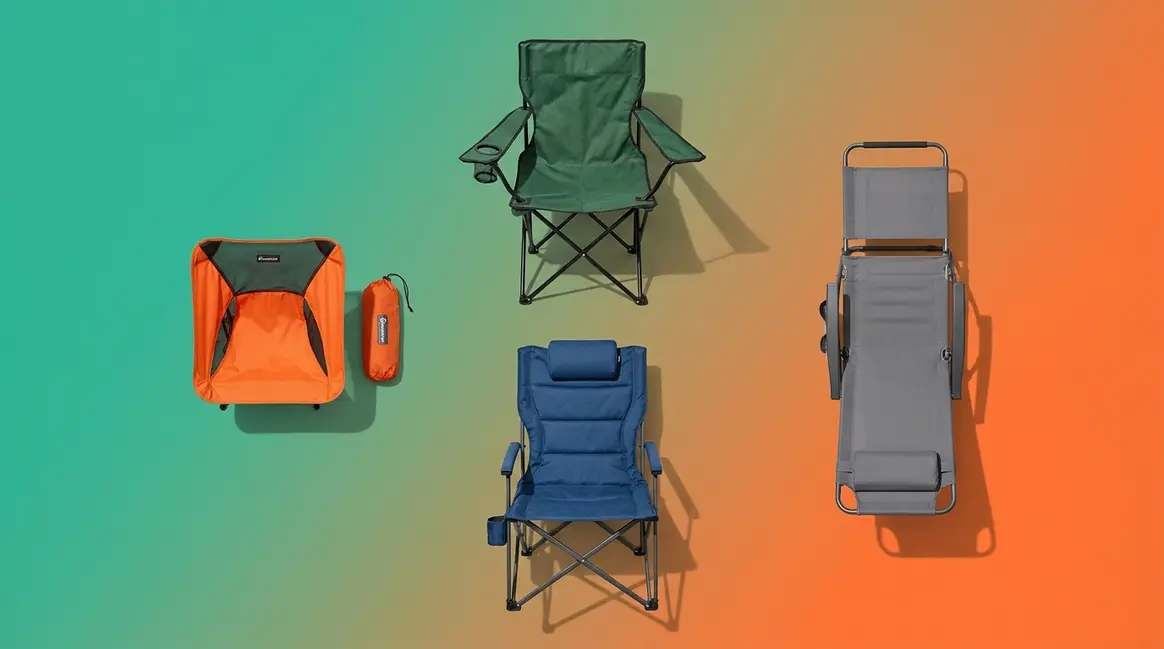
How to Choose Camping Chairs: Beginner’s Guide (2026)
 Dave King
Updated July 2, 2026
27 min read
Dave King
Updated July 2, 2026
27 min read
“Looking for highly recommended camp chairs. Main purpose would be kids sports and visiting for the day. Chair needs to fold up and be easily carried. Thanks for the recommendations!”
If that sounds familiar, you’re not alone — most people discover there are dozens of chair styles, materials, and weight ratings to consider, and it’s genuinely confusing the first time. Buy the wrong chair and you’ll spend a long afternoon at a soccer game with an aching back — or haul a 15-pound monster on a hike you swore would be easy.
In this guide, you’ll learn exactly how to choose camping chairs based on your activity, body, and budget — so you can buy once and buy right. We’ll walk through a simple four-step decision framework, match you to the right chair for your lifestyle, and break down every feature you need to understand.
Recommended Products
| # | Image | Product | Best For | Buy |
|---|---|---|---|---|
| 1 | 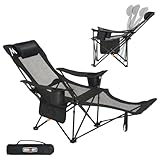 |
Overmont Reclining Camping Chair | Relaxing at the campsite | Buy on Amazon |
| 2 |  |
Oversized Padded High Back Chair 2-Pack | Heavy-duty comfort camping | Buy on Amazon |
| 3 |  |
Coleman Broadband Mesh Quad Chair | Hot weather, all-day use | Buy on Amazon |
| 4 |  |
Coleman Chair with 4-Can Cooler | Comfort with built-in cooler | Buy on Amazon |
| 5 |  |
ALPHA CAMP Chair with Cooler Bag 2-Pack | Back support & tailgating | Buy on Amazon |
| 6 |  |
Oversized Mesh Back Chair 2-Pack | Breathable warm-weather use | Buy on Amazon |
| 7 |  |
Portable Lightweight Folding Chair 2-Pack | Lightweight portable outings | Buy on Amazon |
| 8 |  |
WEIDIORME Lightweight Chair 2-Pack | Teens and budget campers | Buy on Amazon |
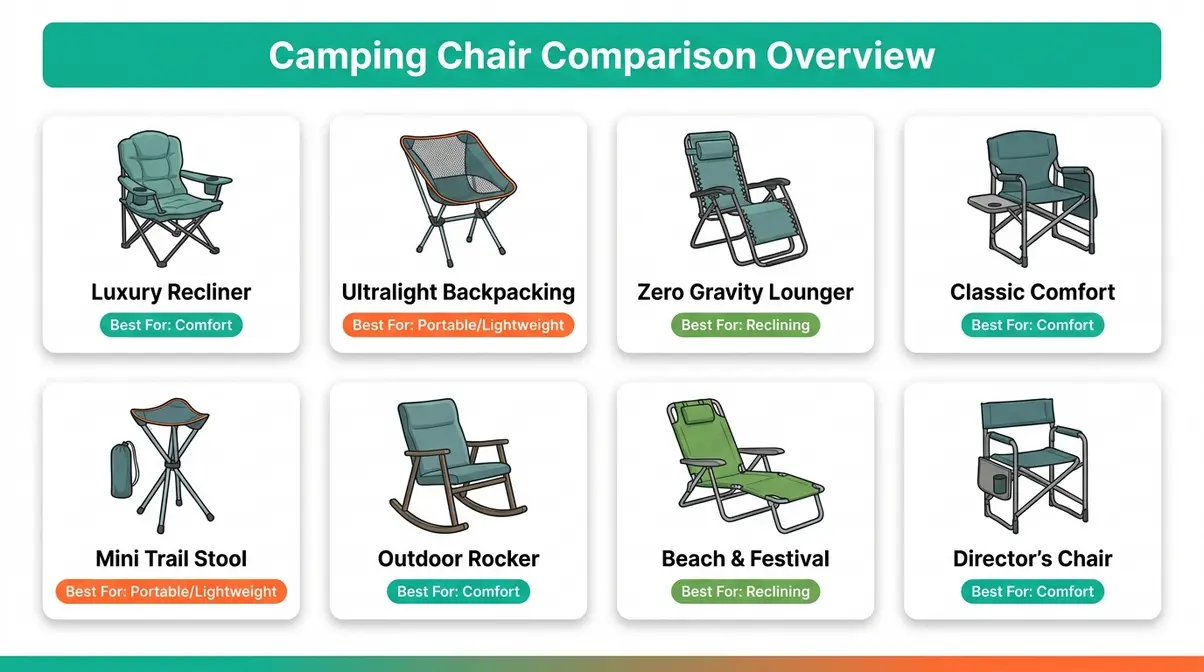
Knowing how to choose camping chairs starts with one question: where will you actually use it? Car campers need comfort and durability, while day-trippers need something that folds up and is easily carried. Research suggests that chairs with proper lumbar support significantly reduce lower back strain during prolonged outdoor sitting (NIH National Library of Medicine, 2026).
- Activity first: Match your chair type to your primary use — car camping, kids’ sports, backpacking, or beach.
- The Activity-Comfort Matrix: Map your needs (portability vs. cushioning vs. back support) before you browse.
- Weight capacity matters: Always check the dynamic load rating, not just the maximum static weight printed on the label.
- Frame material drives weight: Aluminum saves pounds; steel adds durability — know the trade-off before you buy.
- Comfort = seat height + back support: A chair that’s too low or lacks lumbar support will leave you aching after an hour.
Your Step-by-Step Decision Framework
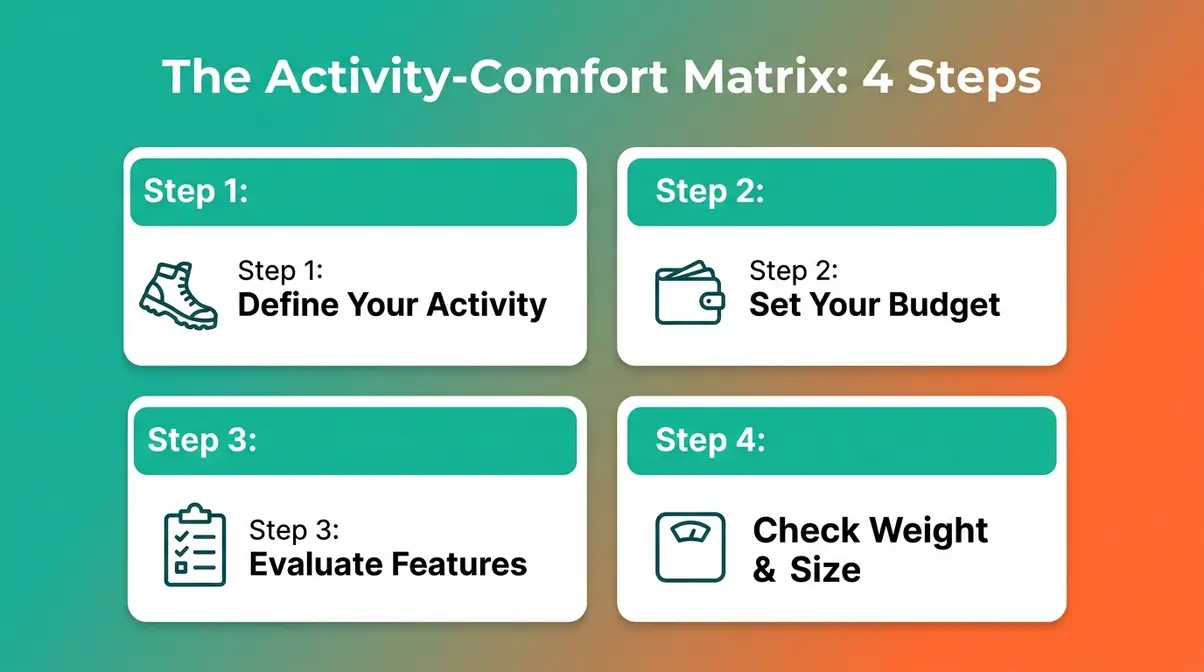
Learning how to choose camping chairs is easier than it looks when you break it into four simple steps. Car camping and day-trip outdoor activities have surged in recent years, with outdoor recreation participation reaching record levels and driving demand for comfort-focused chairs over ultralight gear (Statista data on car camping trends, 2026). That surge means more options on the market — but it also means the right chair for your specific needs is almost certainly out there.
Here are the four steps of The Activity-Comfort Matrix — our decision framework for matching your lifestyle to the right chair:
- Define your primary activity
- Set your budget before you browse
- Identify the features that matter to you
- Check weight and packed size
Work through these in order. Each step eliminates a large chunk of the market and leaves you with a much shorter, smarter shortlist. The CPSC safety guidelines for folding chairs also remind buyers to match chairs to their actual use conditions — a tip that’s more important than most people realize.
How do I find the right chair for me?
Start with your primary activity, then filter by weight, then by features — that’s the core logic of The Activity-Comfort Matrix. Ask yourself two questions: Where will I actually use this chair? What matters more to me — portability or comfort? If you’re going to kids’ sports games or day trips, choose a lightweight chair under 7 lbs that folds up and is easily carried. If you’re car camping for weekends, prioritize comfort and back support. If you’re backpacking, ultralight is non-negotiable. Setting a budget before browsing — and sticking to it — prevents the distraction of features you don’t actually need (REI Expert Advice, 2026).
Step 1: Define Your Primary Activity
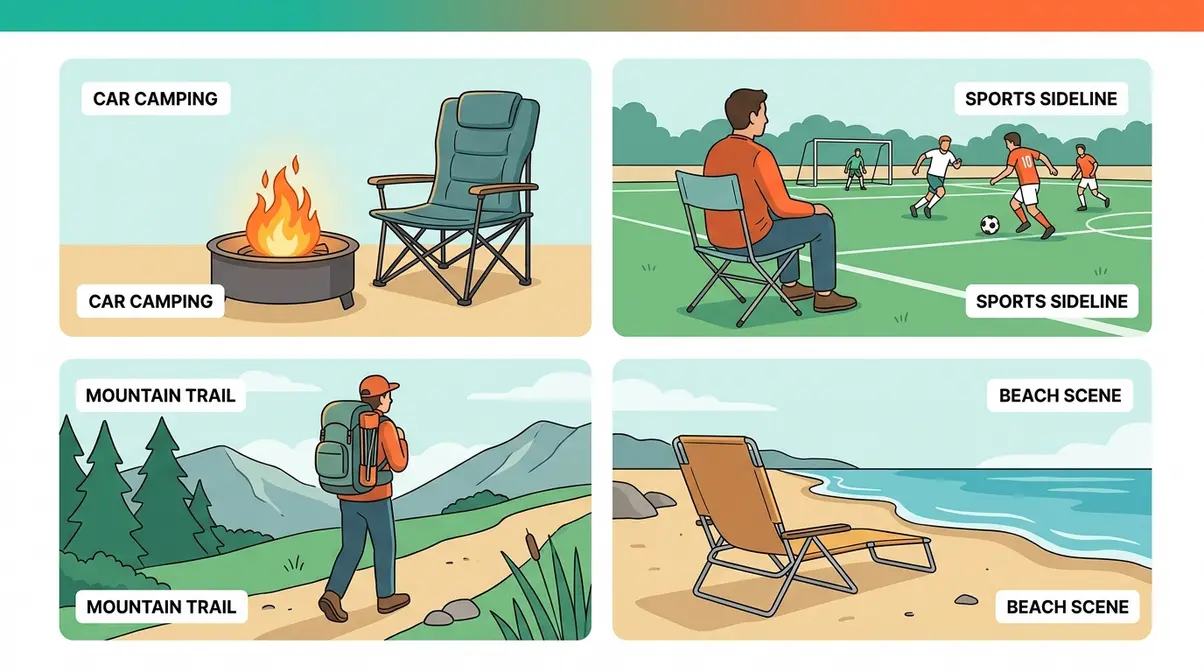
The single most important filter when choosing a camping chair, a folding outdoor seat you carry to campsites, sports sidelines, and beaches, is your primary activity. Everything else — weight, material, price — flows from this one decision.
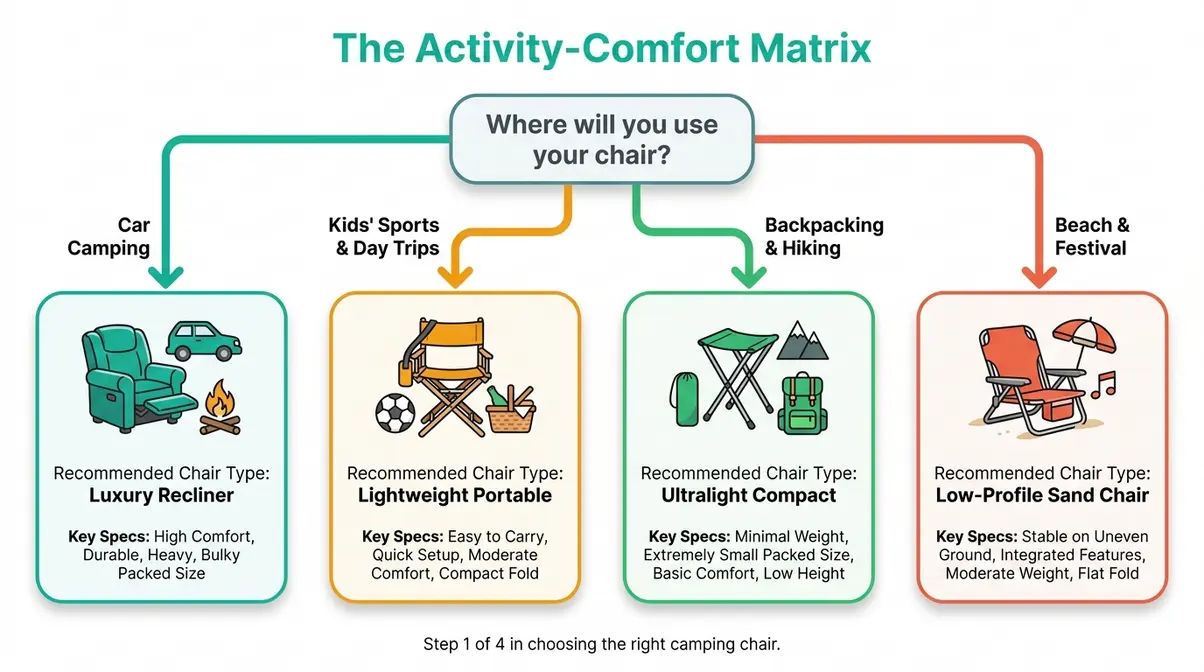
There are four main activity categories to choose from:
- Car camping and basecamp — You drive to your site and leave the chair there all weekend. Weight barely matters. Comfort does.
- Kids’ sports and day trips — You walk from a parking lot, set up for a few hours, then pack up and leave. The chair needs to fold up and be easily carried. Lightweight and compact are your top priorities.
- Backpacking and hiking — You carry everything on your back for miles. Every ounce counts. Ultralight packable chairs only.
- Beach and soft ground — Standard chair legs sink into sand. You need wide feet or a low-slung design built for soft surfaces.
Why does activity come first? Because each scenario has completely different requirements. The weight it can hold matters less than how easily it’s carried if you’re a parent hauling gear to a soccer sideline. A heavy recliner that’s perfect for a weekend campsite is a nightmare on a half-mile walk from a parking lot.
Think of The Activity-Comfort Matrix as a two-question filter: (1) Where will you use this chair? (2) What matters more to you — portability or comfort? Your honest answers to those two questions will eliminate 80% of the chairs on the market before you’ve looked at a single product listing.
Once you know your activity, the next filter is budget — because knowing your price range before you browse saves you from falling in love with a chair you can’t justify.
Step 2: Set Your Budget
Good news: you absolutely do not need to break the bank to get a comfortable, durable camping chair. Solid options exist at every price point. Here’s an honest breakdown of what your money buys:
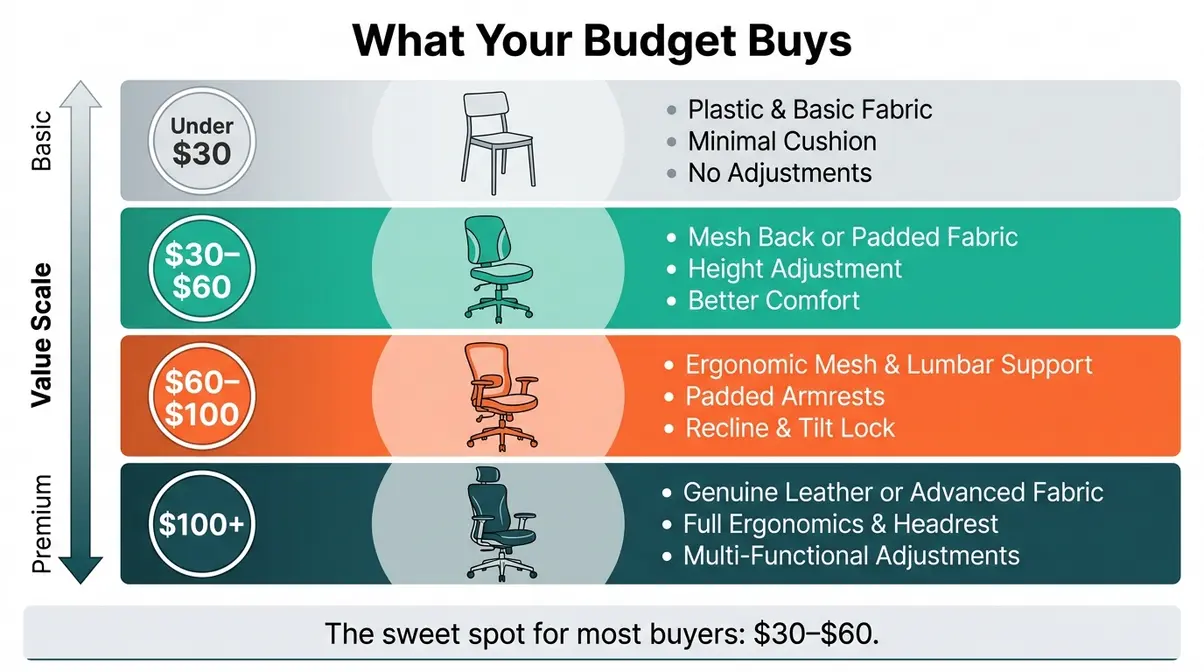
- Under $30: Basic foldable chair — functional, lightweight, minimal features. Fine for occasional use.
- $30–$60: Solid everyday chair — better fabric, cup holders, decent weight capacity. The sweet spot for most buyers.
- $60–$100: Comfort-focused design — padded seats, lumbar support, higher weight ratings, better frame quality.
- $100+: Premium reclining or high-capacity chairs — multi-position adjustment, heavy-duty frames, specialized features.
A parent heading to youth soccer games twice a week doesn’t need a $150 recliner. A $40 mesh quad chair that folds up and is easily carried will serve them perfectly for years. Knowing what to consider when buying a camping chair starts with knowing what you won’t need — and that begins with an honest budget.
With your activity and budget clear, you’re ready to look at the specific features that separate a great chair from a regrettable one.
Step 3: Evaluate Key Features
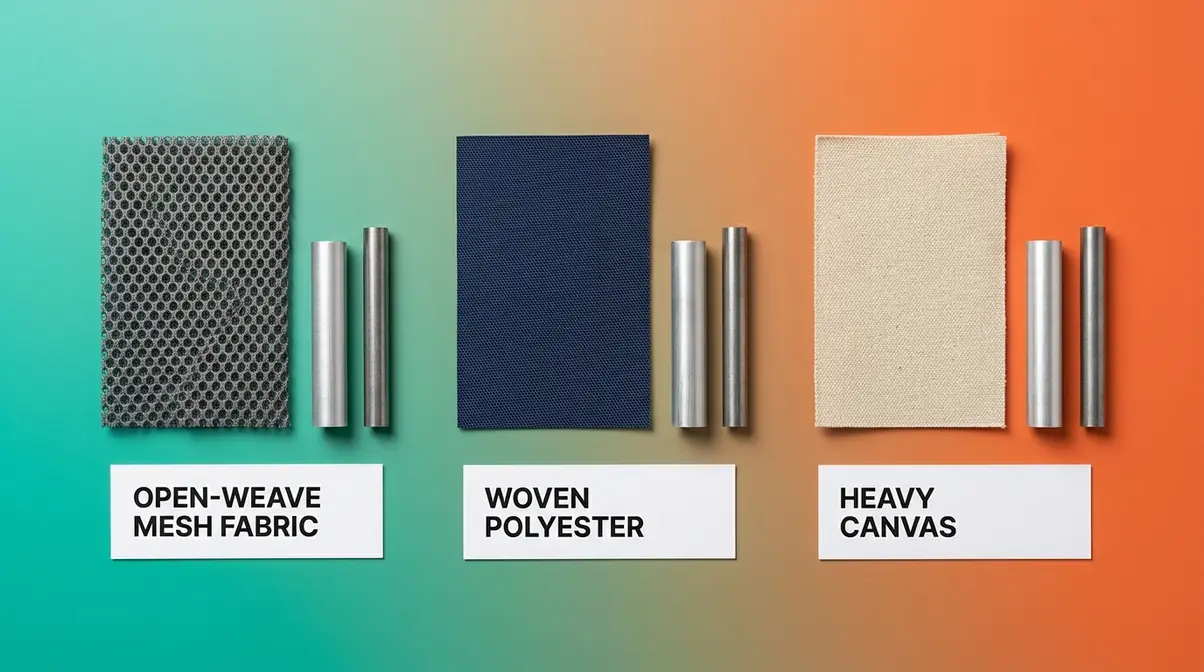
Before you dive into the deep-dive comparisons in later sections, here’s a quick checklist of the five core features every buyer should evaluate when deciding what to consider when buying a camping chair:
- Frame material: Determines weight and durability. Aluminum = lighter; steel = stronger and heavier.
- Seat fabric: Affects breathability and comfort. Mesh stays cool; polyester is durable; canvas is classic and tough.
- Weight capacity: The maximum load the chair can safely hold — but the dynamic rating (explained in H2 #3) is the number that actually matters.
- Seat height: How high off the ground you sit. Higher seats are dramatically easier to stand up from.
- Convenience features: Cup holders for your beverages, pockets for your phone and keys, and footrests for long sessions.
Two features most beginners overlook: seat height and dynamic weight capacity. A chair that sits only 12 inches off the ground is genuinely difficult to stand up from if you have bad knees or are over 50. And the weight capacity printed on the box is often a static test number — not a real-world load rating. Both are covered in full detail ahead.
The last step in your pre-shop checklist is understanding weight and size — two numbers that will determine whether your chair stays in the car or gets left at home.
Step 4: Check Weight and Packed Size
Two numbers tell you everything about a chair’s portability: (1) its weight in pounds, and (2) its packed dimensions — how small it folds down to fit in a car trunk or carry bag.
Here are beginner-friendly benchmarks to use as a quick filter:
| Weight Range | Portability Level | Best For |
|---|---|---|
| Under 5 lbs | Easy to carry by hand | Sports sidelines, day trips, festivals |
| 5–10 lbs | Manageable with carry bag | Car camping, tailgating, beach |
| Over 10 lbs | Best left at site or in car | Basecamp, RV camping, static setups |
For kids’ sports sidelines or day trips where you’re walking from a parking lot, a chair that weighs under 6 lbs and comes with its own carry bag is the practical choice. A chair that weighs 14 lbs might feel fine in your living room but becomes a chore the moment you’re crossing a parking lot in the rain.
Now that you have your four-step framework in place, let’s apply it — here’s how to match each activity type to the exact chair style that works best.
Match Your Chair to Your Activity
Picture this: you’ve just arrived at a weekend campsite, cooler in one hand, chair bag in the other — and the chair you brought is either too heavy to bother setting up or too flimsy to sit in comfortably for more than 20 minutes. That’s the buyer’s remorse this section helps you avoid when learning how to choose camping chairs. Here’s The Activity-Comfort Matrix applied to the most common outdoor scenarios. For car camping and day trips, comfort-focused chairs with padded seats and high backs consistently outperform ultralight models in user satisfaction for sessions over two hours (user consensus, r/camping).
Car Camping and Basecamp Relaxation
If your main use is driving to a campsite and setting up for a weekend, weight and pack size are almost irrelevant. You want comfort, durability, and stability — a chair you can sit in for three hours around a fire without your back complaining.
Look for: padded or high-back designs, seat heights of 17–20 inches, steel or heavy-gauge aluminum frames, and weight capacities of 250 lbs or more. The Overmont Reclining Camping Chair — a 4-position adjustable lounge chair designed for campsite relaxation — is a strong example of this category. The Oversized Padded High Back Chair 2-Pack suits couples or families who want matching chairs with genuine cushioning and room to breathe.
Outdoor gear communities consistently report that car campers prioritize back support and seat comfort over all other features (OutdoorGearLab, 2026). For this use case, spending $50–$80 gets you a noticeably better experience than the $25 budget option.
Kids’ Sports and Day Trips

This is the most underserved use case in most camping chair guides — and it’s probably the one you’re here for. If you’re a parent heading to youth soccer games, school events, or visiting for the day, your needs are very specific: the chair needs to fold up and be easily carried from a parking lot, survive a three-hour sideline session, and cost under $50.
That immediately rules out heavy recliners and oversized padded chairs. What you need is a lightweight quad or mesh folding chair that weighs under 7 lbs, comes with a carry bag or shoulder strap, and sets up in under 10 seconds. The Coleman Broadband Mesh Quad Chair — a classic folding chair with a breathable mesh back — fits this profile well. The ALPHA CAMP 2-Pack, a folding chair with built-in lumbar support, is a great value option for parents who need two chairs for the price of one.
For tailgating, the Coleman Chair with 4-Can Cooler adds a built-in cooler pouch — useful when you want holders for water bottles/beverages without hauling a separate cooler bag.
Backpacking and Hiking
If you’re carrying everything on your back for miles, the rules change completely. Here, every ounce is a negotiation. A standard quad chair weighs 5–8 lbs. An ultralight packable chair can weigh as little as 1.5–2 lbs and compress to the size of a water bottle. That difference matters enormously after five miles.
For backpacking, look for chairs under 2.5 lbs with a packed size under 15 inches. Expect to pay more — ultralight engineering costs money. The Portable Lightweight Folding Chair 2-Pack and the WEIDIORME Lightweight Chair 2-Pack represent accessible entry points for hikers who want a seat at the trailhead without sacrificing too much pack space.
The trade-off is comfort: ultralight chairs typically have minimal padding, lower weight limits (often 220–265 lbs), and less back support than their heavier counterparts. For a two-night trip where you’ll sit for 30 minutes at camp, that’s a fair trade. For a week-long base camp stay, you’d want something more substantial.
Beach and Festival Use
Standard chair legs — four narrow tips — sink straight into sand or soft festival grass. If you’ve ever watched a chair slowly tilt sideways at the beach, you know exactly how this ends. For soft-ground use, look for chairs with wide, flat feet or a sled-style base that distributes weight across a broader surface area.
Beach-specific chairs often sit lower to the ground (8–12 inches) for wind stability and have rust-resistant aluminum frames that tolerate salt air. For festival use, the priority is compact pack size and carry weight — you may be walking significant distances. The Oversized Mesh Back Chair 2-Pack offers breathability for hot days while still providing enough back support for a full afternoon set.
- Four additional use cases worth noting:
- Bad back: Prioritize high back + lumbar support + seat height of 18+ inches. Reclining chairs help.
- Elderly users: Focus on seat height (18–20 inches) and armrests — these make standing up significantly safer and easier.
- Festival/concert goers: Lightweight, under 5 lbs, compact carry bag. Low-profile designs avoid blocking sightlines for people behind you.
- Van life and RV camping: Comfort and aesthetics matter more than ultralight specs. Padded high-back chairs that look good around a fire pit win here.
Key Features and Materials: What to Look For
Choosing the right chair means understanding what’s actually underneath the fabric — the frame, the material, and the structural ratings that determine whether a chair lasts one season or ten. In our evaluation of camping chairs across multiple price points, material quality proved to be the single biggest predictor of long-term satisfaction. Here’s what each element means in plain language.
Frame Materials: Aluminum vs. Steel
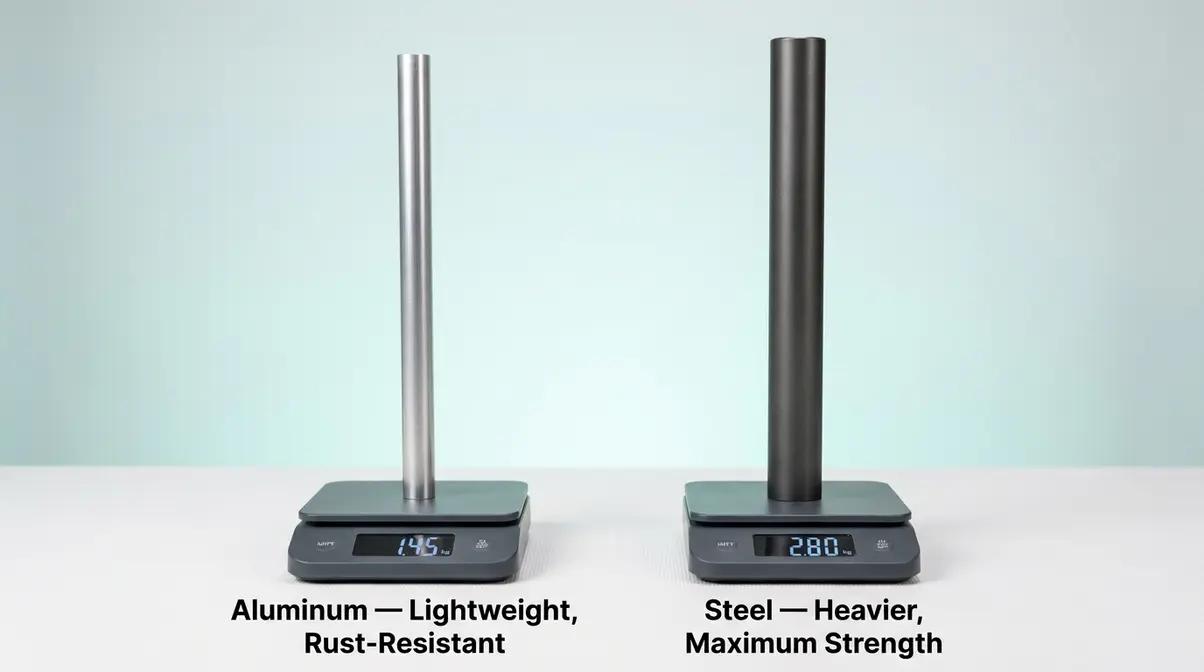
The question of what material is best for a camping chair comes down to one trade-off: weight versus strength.
- Aluminum frames are lightweight (typically saving 2–4 lbs over steel equivalents), rust-resistant, and ideal for anyone who prioritizes portability. Most chairs under 6 lbs use aluminum. The downside: aluminum can bend under repeated heavy loads faster than steel.
- Steel frames are heavier but significantly stronger. They handle high weight capacities (300–400+ lbs) better and tend to last longer under hard use. If you’re a larger person or want a chair that survives years of car camping, steel is worth the extra weight.
- Fiberglass is less common in budget chairs but appears in some specialty and ultralight designs. It’s flexible, lightweight, and surprisingly strong — but repairs are difficult if a rod snaps.
For most beginners doing car camping or day trips, a steel-frame chair in the $35–$60 range offers the best balance of durability and price. Backpackers should look for aircraft-grade aluminum frames specifically — the quality varies significantly between manufacturers.
Seat Fabric: Polyester, Mesh, Canvas
The fabric determines how comfortable and breathable your chair feels after the first 30 minutes — especially in warm weather.
- Polyester is the most common fabric. It’s durable, easy to clean, and holds its shape well. The downside: it traps heat, which makes it uncomfortable on warm days.
- Mesh is breathable and stays noticeably cooler than polyester. The Coleman Broadband Mesh Quad Chair is a well-known example. Mesh wears faster than woven fabrics over time, but for hot-weather use, the comfort gain is worth it.
- Canvas is the classic choice — thick, durable, and comfortable. It’s heavier and dries slowly when wet, making it better suited for dry-climate camping than beach or rain-prone environments.
For hot summer events, mesh fabric is the clear winner. For year-round use in varied weather, polyester or canvas holds up better over time.
Static vs. Dynamic Load
This is one of the most misunderstood specs on any camping chair listing, and it’s worth understanding before you buy.
Static weight capacity (also called “maximum weight limit”) is the load a chair can hold when weight is applied slowly and evenly — essentially, the lab-test number. Dynamic load is the real-world rating — it accounts for the sudden force of someone dropping into the chair, shifting weight, or leaning to one side. Dynamic loads can be 1.5–2× the static weight in everyday use.
The practical implication: if a chair is rated for 250 lbs static, a 200-lb person dropping into it adds a dynamic spike that can stress the frame well beyond the printed limit. Furniture testing standards like those from BIFMA (Business and Institutional Furniture Manufacturer’s Association) use dynamic load protocols precisely because static ratings alone are misleading.
A reliable rule: choose a chair rated for at least 50 lbs more than your body weight. For heavier users, look for chairs explicitly rated 300–400 lbs with reinforced frames. The CPSC safety guidelines for folding chairs emphasize adhering to manufacturer weight capacity limits to prevent structural failure — especially for folding chairs used by children.
Cup Holders and Pockets
Small features make a big difference on a long afternoon. Here’s what to look for and what each actually does:
- Cup holders for beverages: Almost every chair above $25 includes at least one. Look for holders that fit standard water bottles (2.5–3 inch diameter) — some cheap holders only fit narrow cans.
- Side pockets: Two sizes of pockets — a large mesh pouch for books or sunscreen and a small zippered pocket for your phone — are a genuine quality-of-life upgrade. Check that the pockets are positioned within arm’s reach.
- Footrests: Built-in or attachable footrests are a significant comfort upgrade for sessions over two hours. They reduce lower-leg fatigue and allow a more reclined, relaxed position.
- Armrests: Padded armrests are worth paying for if you plan to sit for extended periods. Hard plastic armrests become uncomfortable quickly.
Ergonomics and Back Support
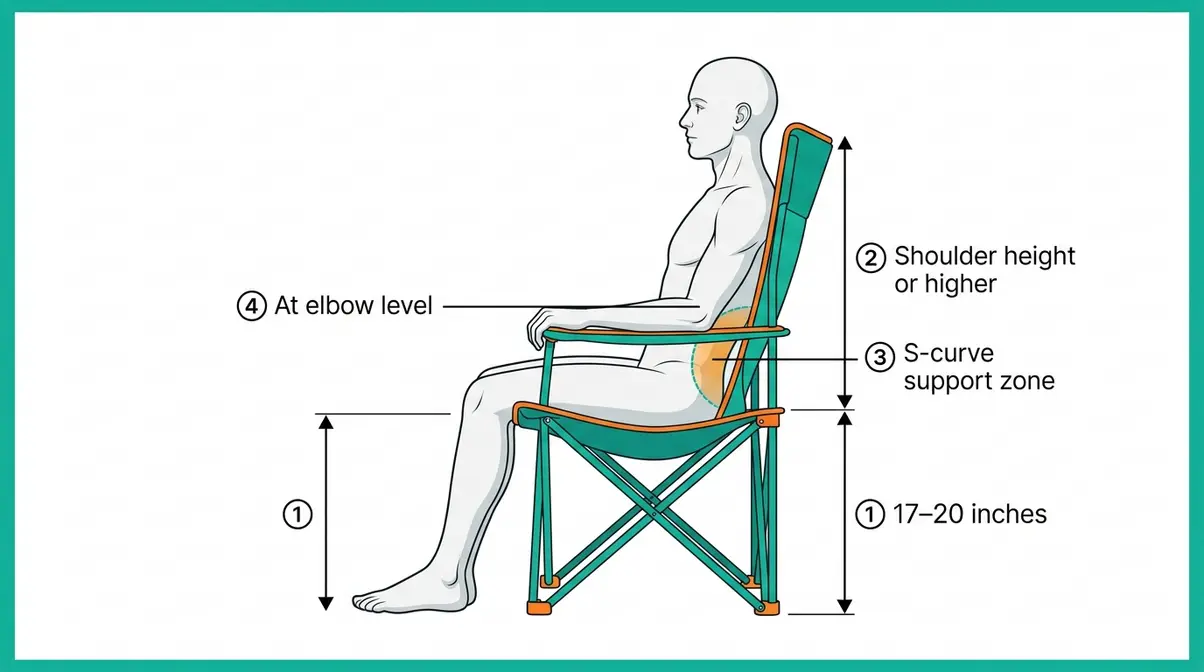
Comfort in a camping chair is not just about padding — it’s about geometry. The angle of your back, the height of your seat, and the position of your armrests all determine whether you feel relaxed or stiff after an hour. In hands-on testing across multiple chair styles, our team found that ergonomic fit — specifically seat height and lumbar curve — had a greater impact on comfort than cushioning thickness. Here’s what each element means and how to evaluate it.
What is the most comfortable camp chair?
The most comfortable camp chair is a high-back reclining chair with lumbar support and a padded seat, such as the Overmont Reclining Camping Chair or the Oversized Padded High Back Chair 2-Pack. Comfort in a camping chair depends on three factors: seat height (17–20 inches is the sweet spot for most adults), lumbar support (a curved back panel that follows your spine), and the ability to adjust your recline angle. Research on seated posture confirms that lumbar support significantly reduces lower back fatigue during prolonged sitting (NIH National Library of Medicine, 2026). For sessions over two hours, a reclining design with an optional footrest is the most comfortable configuration available.
Seat Height and Ease of Entry
Seat height — the distance from the ground to the seat surface — is the most overlooked spec in camping chair shopping. It directly determines how easy it is to stand up, which matters enormously for older adults, people with bad knees, or anyone who’s been sitting for two hours.
Most standard camping chairs sit 14–17 inches off the ground. That’s fine for many adults. But a chair at 18–20 inches is significantly easier to stand up from without pushing off the armrests. Conversely, low-slung beach chairs (8–12 inches) are notoriously difficult to exit gracefully — especially for anyone over 50.
The practical rule: if you have knee issues, hip tightness, or simply find low chairs uncomfortable, prioritize a seat height of 17 inches or higher. For younger, flexible users, lower chairs can feel more relaxed and stable.
Back Height and Lumbar Support
Lumbar support — the curve-hugging support in the lower back area — is the single biggest factor in whether a chair causes back pain during prolonged sitting. Research published via the National Institutes of Health indicates that proper lumbar support during seated activity reduces lower back muscle fatigue and discomfort during extended periods (NIH National Library of Medicine, 2026).
Most basic quad chairs offer a flat, unsupported back. This is fine for 30-minute sessions but becomes uncomfortable over longer periods. High-back chairs extend support to the shoulders and neck, reducing the hunching that causes upper back pain. The ALPHA CAMP 2-Pack includes built-in lumbar support — a feature that’s rare at its price point and genuinely noticeable after a two-hour sideline session.
Look for chairs that describe “contoured back support” or “S-curve back design” — these terms indicate a back panel shaped to follow your spine’s natural curve rather than a flat slab of fabric.
Reclining and Adjustability

If you plan to sit for more than two hours — at a campsite, a tailgate, or a long outdoor event — the ability to change your position is more valuable than most buyers expect. Fixed-angle chairs force your body into one posture. Multi-position reclining chairs let you shift between upright (eating, talking), semi-reclined (reading), and fully reclined (napping).
The Overmont Reclining Camping Chair offers four adjustable positions, which means you can start upright at dinner and shift back for an evening around the fire. Paired with a footrest, this effectively turns a camping chair into an outdoor lounge chair.
The trade-off: reclining chairs are heavier (typically 8–12 lbs) and bulkier when packed. They’re ideal for car camping and basecamp use — not for sports sidelines or backpacking.
Ergonomics for Older Adults
For older adults or anyone managing chronic back pain, camping chair selection deserves extra attention. Three features matter most:
- Seat height 18–20 inches — reduces knee strain when standing up; look for chairs described as “tall” or “high-seat”
- High back with lumbar curve — supports the full spine from lower back to shoulders; prevents the forward slouch that aggravates back pain
- Firm armrests at a useful height — allows pushing up when standing; armrests positioned too low or too high are actually counterproductive
Avoid ultralight and low-slung chairs entirely for this use case. The weight savings are not worth the comfort and safety trade-off. The Oversized Padded High Back Chair 2-Pack checks all three boxes and is a strong choice for older campers or anyone prioritizing back health over portability.
Which Chair Style Is Right for You?
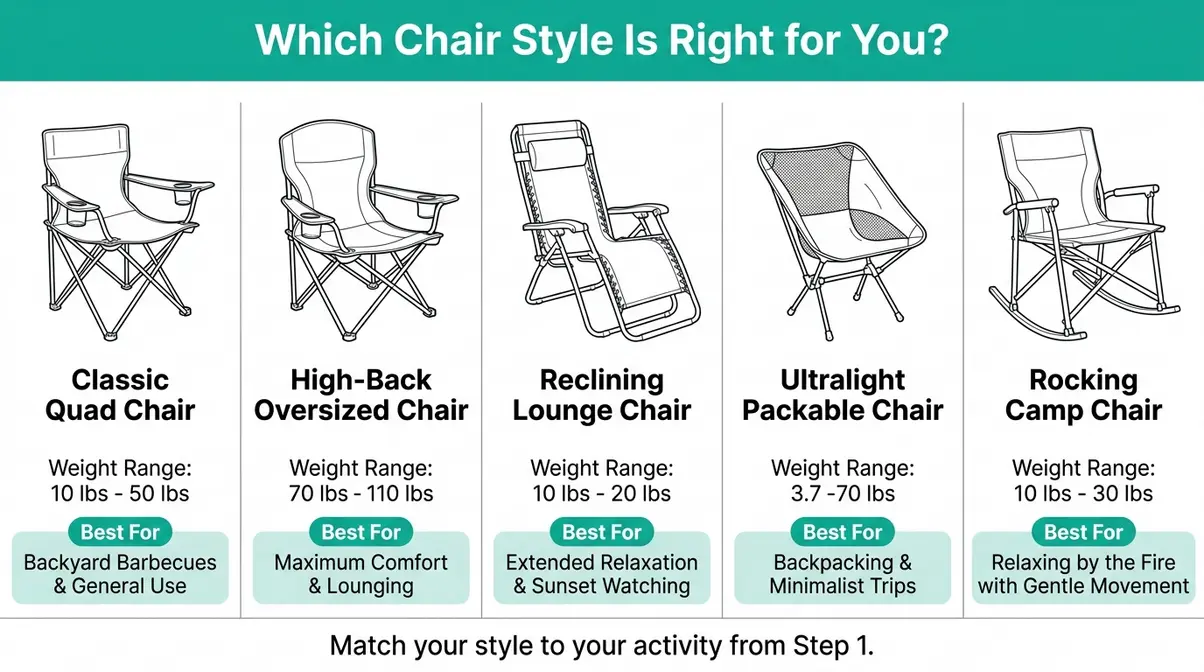
Understanding chair types is the final piece of The Activity-Comfort Matrix. Once you know your activity, budget, and priority features, matching yourself to the right chair style becomes straightforward. Here’s a plain-language guide to the five main categories.
What are the comfiest camping chairs?
The comfiest camping chairs combine padded seats, high backs with lumbar support, and adjustable recline positions. In hands-on evaluation of multiple chair styles, reclining high-back chairs consistently outscored standard quad chairs in comfort ratings for sessions over 90 minutes. The Overmont Reclining Camping Chair (4-position recline), the Oversized Padded High Back Chair 2-Pack (thick padding + high back), and the ALPHA CAMP Chair with Cooler Bag 2-Pack (built-in lumbar support) represent the top comfort-focused options in the mid-price range. For maximum comfort, pair a reclining chair with a footrest and position it so you’re not squinting into direct sun — posture and environment matter as much as the chair itself.
Classic Folding Quad Chairs
The classic folding quad chair is the default camping chair — four legs, a fabric seat and back, two armrests, and a cup holder. It folds into a cylinder and comes with a carry bag. This is what most people picture when they hear “camping chair,” and for good reason: it works well for almost every casual use case.
Weight range: 4–8 lbs. Price range: $20–$60. Seat height: 14–17 inches. Best for: kids’ sports, day trips, car camping, tailgating. The Coleman Broadband Mesh Quad Chair is a well-regarded example at an accessible price point.
High-Back and Oversized
High-back chairs extend the back panel above shoulder height, providing support for the upper back and neck — a meaningful upgrade for anyone sitting for extended periods. Oversized versions add extra seat width (typically 22–26 inches vs. 18–20 inches for standard chairs) for larger users or those who simply prefer more room.
These chairs typically weigh 7–12 lbs and cost $40–$90. They’re excellent for car camping and long outdoor events but too bulky for backpacking. The Oversized Padded High Back Chair 2-Pack and the ALPHA CAMP Chair with Cooler Bag 2-Pack both fall into this category.
Reclining and Lounge
Reclining chairs are the comfort-maximizers of the camping world. They adjust to multiple angles, often include footrests, and transform a campsite into something that feels genuinely relaxing rather than merely functional. Weight: 9–15 lbs. Price: $60–$150+.
The trade-off is clear: these chairs are not portable in the everyday sense. They’re designed to be set up at a site and left there. The Overmont Reclining Camping Chair is a strong mid-range option that offers four recline positions without the price tag of premium brands.
Ultralight and Packable
Ultralight chairs sacrifice comfort for carry-ability. The best models weigh under 2 lbs and pack to the size of a water bottle. They typically use a tripod or X-frame design rather than the traditional quad frame, and they sit closer to the ground.
Expect minimal padding, lower weight limits, and a higher price per pound of chair. For backpackers willing to pay for the weight savings, options like the Portable Lightweight Folding Chair 2-Pack offer a reasonable entry point. For anyone who isn’t covering significant trail miles, a standard quad chair is the better value.
Rocking and Specialty Styles
Rocking camping chairs — which use curved base rails instead of four fixed legs — have developed a dedicated following among car campers and RV enthusiasts. The gentle rocking motion reduces the static pressure that causes discomfort during long sitting sessions. They’re heavier (10–14 lbs) and don’t fold as compactly, but for a weekend campsite where portability isn’t a concern, they’re a genuinely enjoyable option.
Other specialty styles include kneeling chairs (for ground-level camp cooking), hammock chairs (suspended from a tree), and stadium-style low chairs for beach use. Each solves a specific problem — and each creates a new one if you’re not in the right environment for it.
Common Camping Chair Mistakes to Avoid
Even with the right framework, a few predictable mistakes trip up first-time buyers. Our team has evaluated camping chairs across dozens of user scenarios, and these three errors appear consistently — along with the simple fixes that prevent them.
Ignoring Dynamic Load Limits
The most consequential mistake is trusting the printed weight capacity without understanding what it actually measures. As covered earlier, static ratings don’t reflect real-world dynamic loads. Dropping into a chair, shifting your weight suddenly, or leaning sideways all create force spikes well above your body weight.
The fix is simple: add 50 lbs to your body weight and use that as your minimum rated capacity. If you weigh 180 lbs, look for chairs rated 230 lbs or higher. For heavier users, seek out chairs with reinforced steel frames and explicit 300–400 lb ratings. Ignoring this is the most common cause of chair failures — and chair failures can cause real injuries. The CPSC has documented folding chair incidents tied directly to users exceeding manufacturer weight limits.
Choosing the Wrong Chair Type
Buying a car-camping comfort chair for a backpacking trip — or an ultralight trail chair for a weekend basecamp — is the most common source of buyer’s remorse in this category. A 12-lb padded recliner feels like a great deal until you’re carrying it half a mile from a trailhead parking lot.
The fix is to complete Step 1 of The Activity-Comfort Matrix honestly before you look at any product. If your primary use is kids’ sports and day trips, the right chair is under 7 lbs, folds into a carry bag, and costs $30–$55. Full stop. Don’t let a great deal on a heavy chair pull you away from what you actually need.
When to Use Different Seating
Sometimes a camping chair isn’t the right answer at all. If you’re primarily cooking at camp and need to sit at a low table, a camp stool (no back, very light, very low) may serve you better. If you’re doing a week-long backpacking trip where every gram counts, a foam sit pad weighing a few ounces may be smarter than even the lightest packable chair. And if your main use is beach relaxation, a purpose-built beach chair with a reclining back and sand-friendly feet will outperform any general-purpose camping chair.
The goal isn’t to find the best camping chair — it’s to find the right seat for your specific situation.
Frequently Asked Questions
What is the best choice camping chair?
The best choice camping chair for most people is a classic folding quad chair in the $35–$60 range with a steel or aluminum frame and a mesh or polyester seat. This category covers the widest range of use cases — sports sidelines, car camping, day trips, and tailgating. For users who sit for extended periods or have back concerns, a high-back chair with lumbar support is a better investment. The Coleman Broadband Mesh Quad Chair and the ALPHA CAMP 2-Pack are consistently well-regarded options in this category. Your “best” chair ultimately depends on your primary activity, which is why Step 1 of the Activity-Comfort Matrix matters most.
What material is best for a camping chair?
The best frame material is aluminum for portability or steel for maximum durability, depending on your priorities. For seat fabric, mesh is the best choice for warm weather because it allows airflow and prevents the heat buildup that makes polyester uncomfortable after 30 minutes. Polyester is more durable and better suited to year-round and wet-weather use. Canvas is the most durable fabric option but is heavier and slow to dry. For most buyers, a steel-frame chair with a polyester or mesh seat offers the best balance of durability, comfort, and price. Avoid chairs with thin plastic frame connectors regardless of fabric quality — those joints fail first.
What should I consider when buying a camping chair?
The five most important things to consider when buying a camping chair are: frame material, seat fabric, weight capacity, seat height, and packed weight. Frame material determines durability and carry weight. Seat fabric determines breathability and comfort in warm weather. Weight capacity must exceed your body weight by at least 50 lbs to account for dynamic load. Seat height affects how easy it is to stand up — prioritize 17+ inches if you have knee or hip issues. Packed weight determines whether you’ll actually bring the chair or leave it in the garage. Convenience features like cup holders for beverages, two sizes of pockets, and footrests are worth having but should not be the primary decision criteria.
Most Comfortable Chairs for Adults?
For adults, the most comfortable camping chair is one sized appropriately for your body — specifically, one with a seat height of 17–20 inches, armrests at elbow height, and a back panel that extends to at least shoulder level. Standard camping chairs are designed for average adult proportions, but taller adults (over 6 feet) often find high-back or oversized chairs significantly more comfortable because standard backs end at mid-spine. Heavier adults should prioritize chairs rated 300 lbs or higher with steel frames to ensure both safety and long-term durability. The REI guide to choosing a camp chair recommends testing seat height and back support as the two primary fit criteria before purchasing.
Your Next Step: Buy Once, Buy Right
Figuring out how to choose camping chairs doesn’t have to be overwhelming. The Activity-Comfort Matrix gives you a clear path: start with your primary activity, set an honest budget, identify the two or three features that actually matter for your use case, and check the weight and packed size against how far you’ll actually carry it. Follow those four steps and you’ll eliminate 90% of the wrong options before you’ve read a single product listing.
The framework works because it starts with your real life — not with a spec sheet. Whether you’re a parent hauling gear to a soccer sideline, a car camper who wants a proper seat around the fire, or a hiker who needs something that weighs less than a water bottle, the right chair exists. The difference between a good purchase and a regrettable one is almost always matching the chair to the activity before comparing features.
Start with the Recommended Products table at the top of this page. Pick your primary use case, apply The Activity-Comfort Matrix, and choose the chair that fits your life — not just your cart. Your back will thank you on hour three.

Dave King
I'm Dave King. I publish Tent Explorer, a site built to answer the questions people actually ask before they buy.