
This blog post may contain affiliate links. As an Amazon Associate I earn from qualifying purchases.
Most American campers discover that outdoor cooking can be the highlight or headache of any trip. Cooking in the wilderness matters because a good meal lifts spirits and fuels adventure after a long hike. With over 60 percent of beginners seeking simple strategies to avoid common food mishaps, this guide reveals practical outdoor cooking tips that can transform your tent camping experience from stressful to satisfying, whether you are in the wilds of Canada or exploring remote European landscapes.
Quick Summary
| Takeaway | Explanation |
|---|---|
| 1. Choose portable, durable, and versatile gear. | Select cooking equipment that is easy to carry, withstands outdoor conditions, and adapts to various cooking methods for efficiency. |
| 2. Plan nutrient-dense and simple menus. | Opt for lightweight, shelf-stable foods that are easy to prepare and provide energy, using versatile ingredients across multiple meals. |
| 3. Ensure safe campfire and stove setups. | Always select appropriate locations for fires and stoves, maintain manageable flames, and keep safety equipment nearby to prevent accidents. |
| 4. Implement proper food storage techniques. | Use quality coolers and bear-proof containers to keep food safe and minimize spoilage, separating raw from cooked items to prevent contamination. |
| 5. Prepare ingredients before your trip. | Pre-cut and package ingredients at home to streamline cooking, reduce workload, and enhance food safety while camping. |

- CAMPING COOKWARE SET: THTYBROS Camping Cookware Set includes: 1.70L(0.45gal) pot +1.15L(0.30gal) kettle + 7 inch frying pan, 2 x 200ml(0.05gal) stainless steel cups, 2 stainless steel plates, 2 sets of dinner cutleries (2 x forks, 2 x knives, 2 x spoons with 2 storage bags), 1 x bamboo spoon 1 x cleaning cloth 1 x cleaning ball 1 x carrying bag.
- FOOD-GRADE & HIGH QUALITY: Our camping cookware is made of high-quality hard anodized aluminum that meets the safety standards , guaranteeing your food’s safety and health. Non-toxic, lightweight, resistant to high temperatures, scratches, and corrosion, with high hardness, oxidation resistance, easy cleaning, fast heat conduction, and oil-saving features, this camping accessories set is reliable for outdoor use.
- USER-FRIENDLY DESIGN FOR CONVENIENCE – THTYBROS camping mess kit is surface-treated with wire drawing and oxidation to enhance its sturdiness and even heating. The silicone handle is heat-resistant and non-slip, designed ergonomically for a comfortable grip, ensuring your safety during use.
- SAFETY & EFFICIENT HEATING – Aluminum boasts better thermal conductivity than iron or titanium, allowing the camping pot heat up quickly and evenly. This not only reduces cooking time but also saves energy and fuel, making your outdoor cooking experience effortless and enjoyable. This camp cooking set is lightweight and durable, making it convenient for your camping trip while also guaranteeing excellent cooking results.
- All-in-1 Small Package- All piece nest great, and everything is stacked together and packed into a nylon mesh bag. Total weight is just 2.75lbs, and the package size measures 7.5×7.5×5 inches. You should definitely consider this set for both backpacking as well as traditional camping.

- Great for toasting sandwiches, grilling meat, and cooking desserts over an open fire
- Affordable, essential gear for car camping, RV trailers, motor homes, cabins, and more
- Lightweight cast aluminum or heavy cast iron
- Toasts sandwiches, grills meat, and seals in flavor
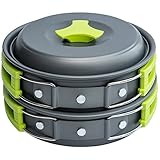
- BUILT TO LAST! Highest Quality Non-Toxic Anodized Aluminum Camping Cookset conducts heat quickly and is survival gear that is built to last and is perfect size for 1 youth scout or adult hiker backpacker.
- ALL-IN-ONE COOKWARE MEGA BUNDLE: The 10 Piece Camping Campfire Cookware Mess Kit includes Anodized Aluminum Nonstick Pot + Pot Cover + Nonstick Pan + 2 Bowls + Folding Stainless Steel Spork + Soup Spoon + Wooden Spoon Spatula + Cleaning Sponge + Nylon Travel Bag Drawstring Pouch.
- EASY CLEANING & STORAGE: The entire 10-piece mess kit collapses into small bundle for easy control and storage. Keep it all clean, keep it convenient
- WORRY FREE WILDERNESS: Finally enjoy the great outdoors without second guessing if you packed everything to cook and serve your next meal with the lightweight, compact, and mobile design of the Camp Kitchen Set
- PERFECT GIFT FOR FAMILY AND FRIENDS: #1 Outdoor Cooking Backpacking Gear and Camping Backpack and Hiking Picnic Set for anyone looking for a high quality, great value product for the camping world or bug out bag to enjoy at the cookout with the people you love
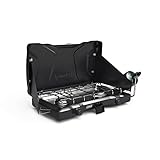
- PORTABLE: Easy addition to the campsite, picnic, roadside, and more
- TWO WIND GUARDS: Help shield and protect burners from wind
- HEAVY-DUTY LATCH: Easy to open and keeps the stove closed when not in use
- EASY TO CLEAN: Durable, chrome-plated grate is removable for easy cleanup
- IMPROVED KNOB ROTATION: For precise temperature and simmering control of two independently adjustable burners

- Effortless Magnetic Closure – Experience unmatched convenience with our innovative magnetic design. The smooth, secure magnetic closure saves time and hassle in any outdoor setting.
- Windproof & Safe Cooking – Equipped with a specially designed windproof shield to keep the flame stable and prevent flare-ups. This portable camping stove also protects your hands from hot oil splashes, ensuring a safer cooking experience with your ODSD camping stove.
- Powerful Dual Burners – Delivering up to 20,000 BTUs with two independently adjustable burners, this propane camping stove lets you boil, grill, or fry with ease. Perfect for flexible outdoor cooking and a must-have among your camping essentials.
- Compact & Portable – Folds down to just 10.63 × 9.06 × 5.12 in and weighs only 3.98 lbs. This portable stove for camping comes with a durable carry bag, making it ideal as a camp stove for hiking, tailgating, or emergencies without compromising performance.
- Comes with Coffee Stand – Built from 304 stainless steel with rust-resistant burners and a heatproof shell, this camping stove propane setup is made to last.
Last update on 2026-05-16 / Affiliate links / Images from Amazon Product Advertising API
1. Choose the Right Camp Cooking Gear
Picking the right camp cooking gear can make or break your outdoor culinary experience. Your cooking equipment needs to be more than just functional it must withstand unpredictable outdoor conditions while providing reliable performance.
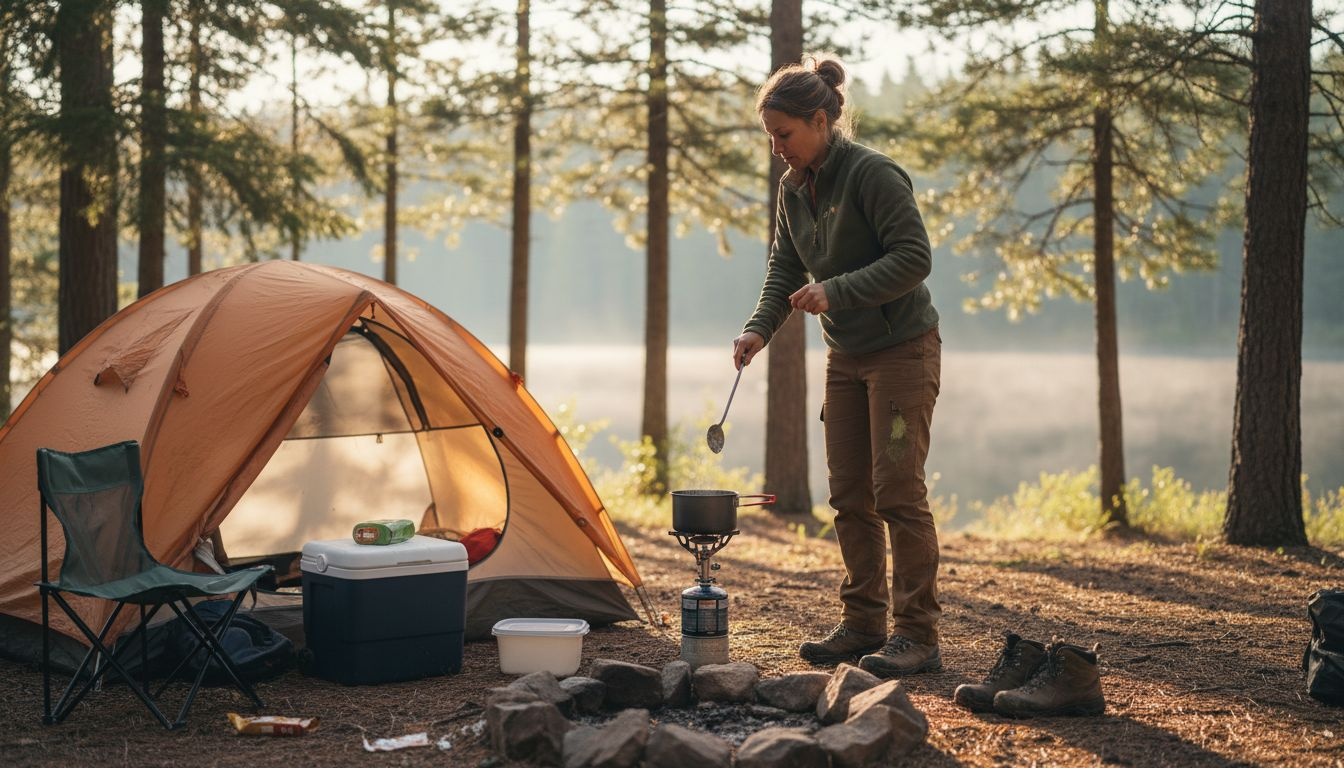
When selecting camp cooking gear, focus on three critical factors: portability, durability, and versatility. Car campers and backpackers have different needs, so understanding your specific camping style is crucial. Compact kitchen stations are essential for creating an efficient outdoor cooking setup that maximizes limited space and minimizes hassle.
Consider lightweight aluminum or steel cooking platforms that offer stable preparation areas. Look for foldable designs with detachable storage compartments that can adapt to uneven terrain. Your camp kitchen should provide enough workspace for meal preparation while being easy to transport and set up.
Specifically, prioritize gear with features like adjustable legs for leveling on uneven ground, wind protection for your cooking surface, and compatibility with various stove types. Some portable kitchen stations include integrated cutting boards, hanging storage hooks, and washable surfaces that simplify your outdoor cooking workflow.
Pro tip: Test your camp cooking gear at home before your trip to ensure all components work together smoothly and identify any potential setup challenges.
2. Plan Simple and Nutritious Camp Menus
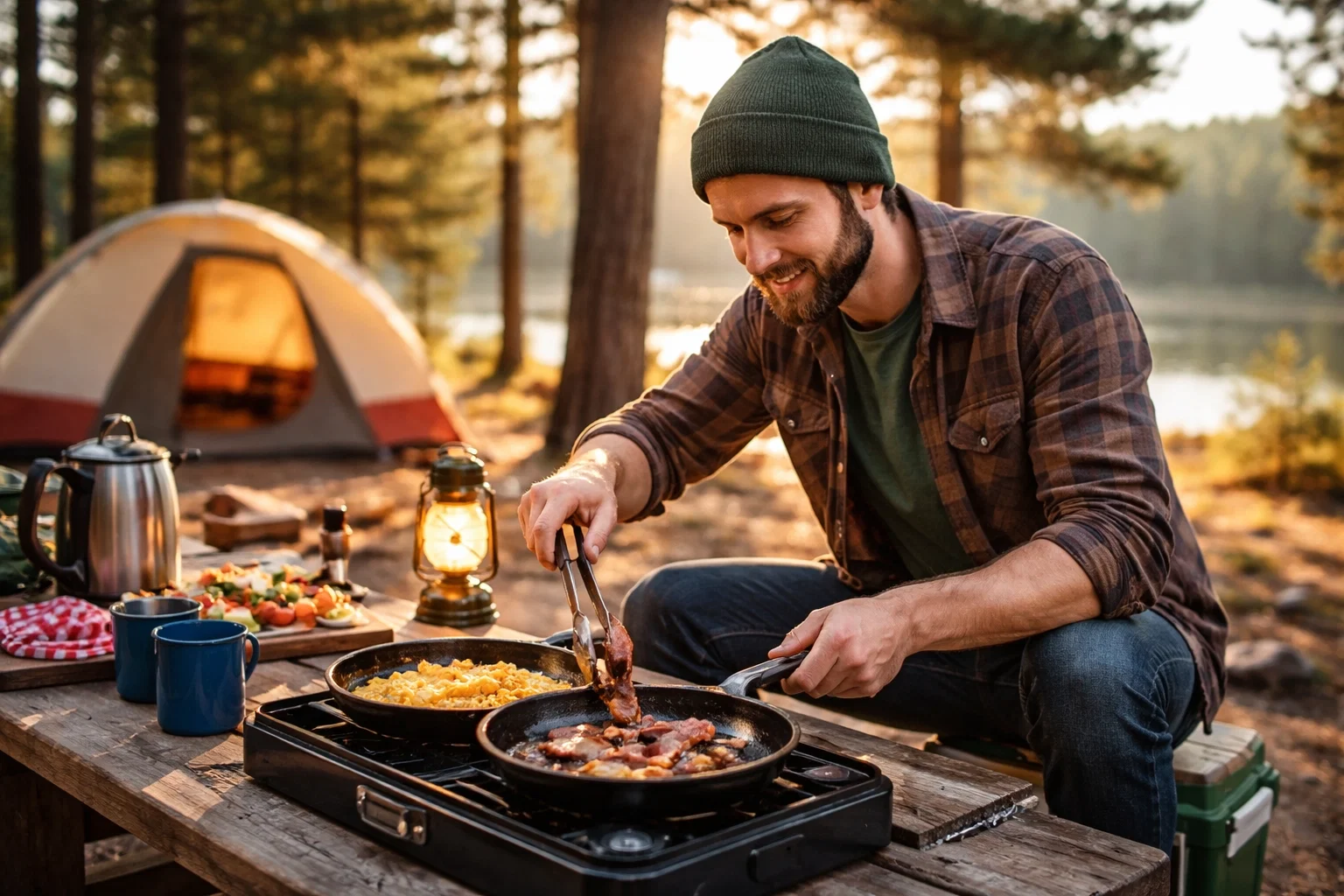
Successful outdoor cooking begins with smart menu planning. Your camping meals need to be more than just sustenance they should provide energy, satisfy hunger, and be practical to prepare in an outdoor setting.
When crafting your camp menu, prioritize nutrient density and ease of preparation. Balanced meal planning starts with understanding your body’s nutritional needs during physical outdoor activities. Focus on lightweight, shelf stable foods that pack maximum nutritional punch with minimal weight and complexity.
Start by selecting protein sources that are easy to transport and prepare. Canned tuna, dried meats, nuts, and lightweight protein bars work exceptionally well. Complement these with complex carbohydrates like whole grain crackers, instant oatmeal, and dried fruits that provide sustained energy.
Breakfast options should be quick to make and loaded with calories. Think instant oatmeal with added nuts, powdered eggs that rehydrate quickly, or granola with dried fruit. Lunches can be simple wraps or sandwiches that dont require extensive cooking. Dinner is your chance to create more substantial meals using lightweight ingredients that combine easily.
Pro tip: Pack ingredients that can be used in multiple meals to reduce weight and increase meal flexibility.
3. Master Safe Campfire and Stove Setups
Campfire and stove safety is not just a recommendation it is a critical skill that protects you, your fellow campers, and the surrounding environment. Understanding proper setup and management can prevent dangerous situations and potential wildfires.
Location is everything when setting up your campfire or cooking stove. Campfire safety begins with selecting an appropriate site at least 10 feet away from tents, low hanging branches, dry brush, and other flammable materials. Always use existing fire rings when available and clear a wide area around your cooking zone.
For campfires, choose structured fire building techniques like the tepee or log cabin method. These approaches create better airflow and more controlled burning. Keep your fire small and manageable, with flames no higher than one foot. Always have water, sand, or a shovel nearby to quickly extinguish the fire if needed.
Stove safety requires equally careful attention. Place your camping stove on a flat, stable surface away from tent walls and flammable materials. Ensure proper ventilation to prevent carbon monoxide buildup and never operate stoves inside enclosed spaces. Check fuel connections and lines for potential leaks before each use.
Pro tip: Always completely extinguish your fire by drowning it with water, stirring the ashes, and checking that no heat remains before leaving your campsite.
4. Use Proper Food Storage Techniques
Food storage during camping can make or break your outdoor experience. One wrong move could turn your adventure into a battle with spoiled food or unwelcome wildlife visitors.
Maintaining food safety requires more than just tossing ingredients into a bag. Food storage techniques are crucial for preventing foodborne illnesses and protecting your campsite from animal intrusions.
Temperature control is your first line of defense. Use high quality coolers with multiple ice packs to keep perishable foods below 40°F. Pack items in waterproof containers and create strategic layers with frozen water bottles that can serve as both cooling agents and emergency drinking water.
Separate raw and cooked foods to prevent cross contamination. Use resealable bags to organize different food types and minimize potential bacterial spread. When possible, choose vacuum sealed packaging for meats and other perishable items to extend freshness and reduce spoilage risks.
Wildlife protection means storing food in bear proof containers or hanging food bags at least 10 feet high and 4 feet from the trunk of a tree. This strategy protects both your supplies and prevents dangerous animal encounters.
Pro tip: Pack foods in clear containers with color coded lids to quickly identify contents and reduce time spent searching through your cooler.
5. Prep Ingredients Before Your Trip
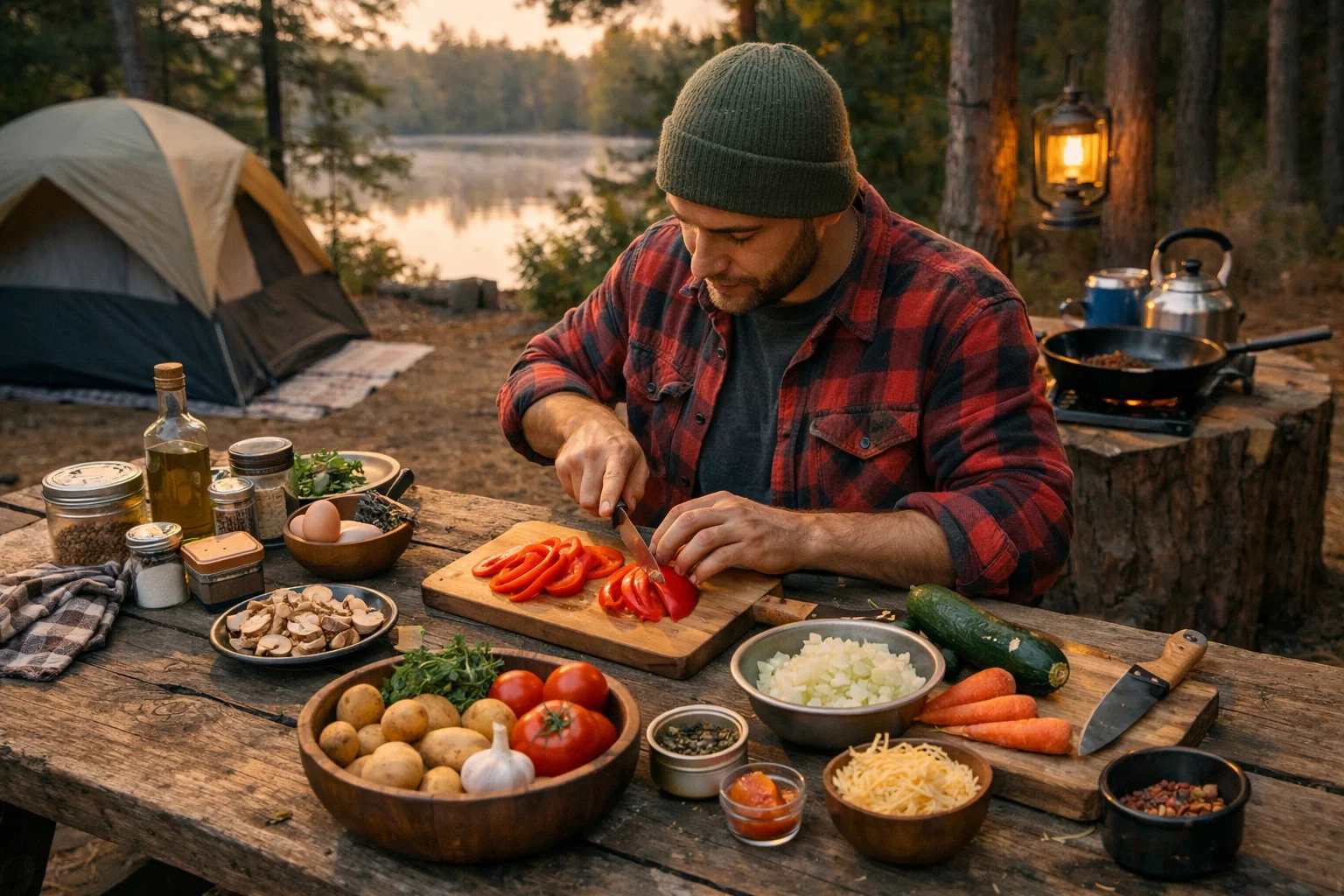
Camping meals are not about improvising at the campsite. They are about smart preparation that transforms your outdoor cooking from stressful to seamless.
Mise en place is your secret weapon for efficient camp cooking. Ingredient preparation techniques can dramatically reduce your workload and cooking time in the wilderness. Think of it as creating your own personalized camp meal kit before leaving home.
Start by pre cutting vegetables and proteins into uniform sizes. Package meats in portion controlled sealed bags with pre mixed marinades. Create spice blends in small containers or resealable bags to eliminate carrying multiple seasoning bottles. Consider partially cooking items like rice or quinoa at home that can be quickly reheated at the campsite.
Organization is key. Label everything clearly and use transparent containers to quickly identify ingredients. Pack items strategically with heaviest containers at the bottom of your cooler or storage box. Group similar ingredients together and consider using color coded containers or bags to further streamline your camp kitchen setup.
Remember that proper ingredient prep reduces potential food safety risks. Minimize handling of raw ingredients at the campsite and ensure everything is cleaned and portioned before your trip.
Pro tip: Take photos of your prepped ingredients before packing so you can quickly reference your meal plan and remember what you prepared.
6. Practice Efficient Cleanup Methods
Campsite cleanup is more than just tidying up. It is a critical responsibility that protects the environment and ensures safe camping experiences for future visitors.
Leave No Trace principles are fundamental to responsible outdoor cooking and camping. Efficient cleanup methods go beyond simple trash removal and focus on minimizing environmental impact.
Start by bringing dedicated cleanup supplies like biodegradable soap, compact sponges, collapsible wash basins, and multiple trash bags for different types of waste. Create a systematic approach to washing dishes by using a three bucket system: one for washing with biodegradable soap, one for rinsing, and one for sanitizing with a mild bleach solution.
Properly dispose of wastewater by straining food particles and scattering the water at least 200 feet away from any water sources. This prevents contamination and attracts wildlife. Pack out all trash including tiny scraps and micro trash like bottle caps or tiny food wrappers. Never burn or bury garbage as this can harm local ecosystems.
Always clean your cooking surfaces thoroughly after each meal. Wipe down stoves, clean grill grates, and ensure no food residue remains that could attract animals or create unsanitary conditions.
Pro tip: Bring a small mesh bag or lightweight strainer to filter food particles from dishwater and prevent environmental contamination.
7. Adapt to Weather and Outdoor Conditions
Outdoor cooking success hinges on your ability to read and respond to changing environmental conditions. Weather can transform your camping experience from comfortable to challenging in mere moments.
Understanding how to adapt to outdoor conditions means being prepared for rapid environmental shifts. Layering and versatility are your primary strategies for managing temperature and precipitation variations.
Start by packing clothing that can be easily added or removed. Choose moisture wicking base layers, insulating mid layers, and waterproof outer layers. This approach allows you to regulate body temperature and protect yourself from unexpected rain or sudden temperature drops.
For cooking specifically, consider wind protection for your stove setup. Portable windscreens can dramatically improve cooking efficiency and prevent flame disruption. Select cooking locations that offer natural windbreaks like large rocks or tree lines. Have backup cooking methods like portable camp stoves in case campfire cooking becomes impossible due to wet conditions.
Always check local weather forecasts before your trip and pack emergency supplies like extra tarps, rain gear, and thermal blankets. Understanding potential weather scenarios allows you to create flexible meal preparation strategies that can adapt to changing conditions.
Pro tip: Pack a lightweight emergency poncho and keep it in your cooking kit to quickly protect yourself and your cooking gear during unexpected rain showers.
Below is a comprehensive table summarizing the essential strategies for outdoor camp cooking as described in the article.
| Topic | Recommendations | Benefits |
|---|---|---|
| Camp Cooking Gear | Choose portable, durable, and versatile equipment; consider features like adjustable legs and wind protection. | Ensures reliability and ease of setup in diverse conditions. |
| Camp Menu Planning | Opt for nutrient-dense, shelf-stable foods; prepare simple meals with lightweight ingredients. | Facilitates energy maintenance and efficient preparation outdoors. |
| Safe Cooking Setup | Set up campfires/stoves safely, adhering to guidelines for location and fire/extinguishing practices. | Reduces risks of accidents and environmental damage. |
| Food Storage Techniques | Use temperature-controlled coolers, separate food types, and protect against wildlife intrusions. | Enhances food safety and minimizes spoilage or pest issues. |
| Ingredient Preparation | Precut vegetables, portion meats, and organize spices in advance. | Streamlines cooking processes and reduces campsite workload. |
| Efficient Cleanup | Implement systematic dishwashing and waste disposal methods, complying with “Leave No Trace” principles. | Protects the environment and maintains proper hygiene. |
| Weather Adaptation | Prepare clothing layers and wind-protected cooking setups; include backup equipment. | Improves comfort and cooking efficiency in varying conditions. |
Elevate Your Tent Camping Cooking Experience Today
Mastering outdoor cooking requires more than just knowing essential tips it demands reliable gear, smart planning, and safe techniques all tailored to the unique challenges of tent camping. Whether you struggle with finding portable cooking setups, managing food storage, or adapting to unpredictable weather, these common hurdles can be transformed into enjoyable opportunities with the right guidance and resources.
Discover practical solutions and inspirational ideas by exploring our Outdoor Living – Tent Explorer section.
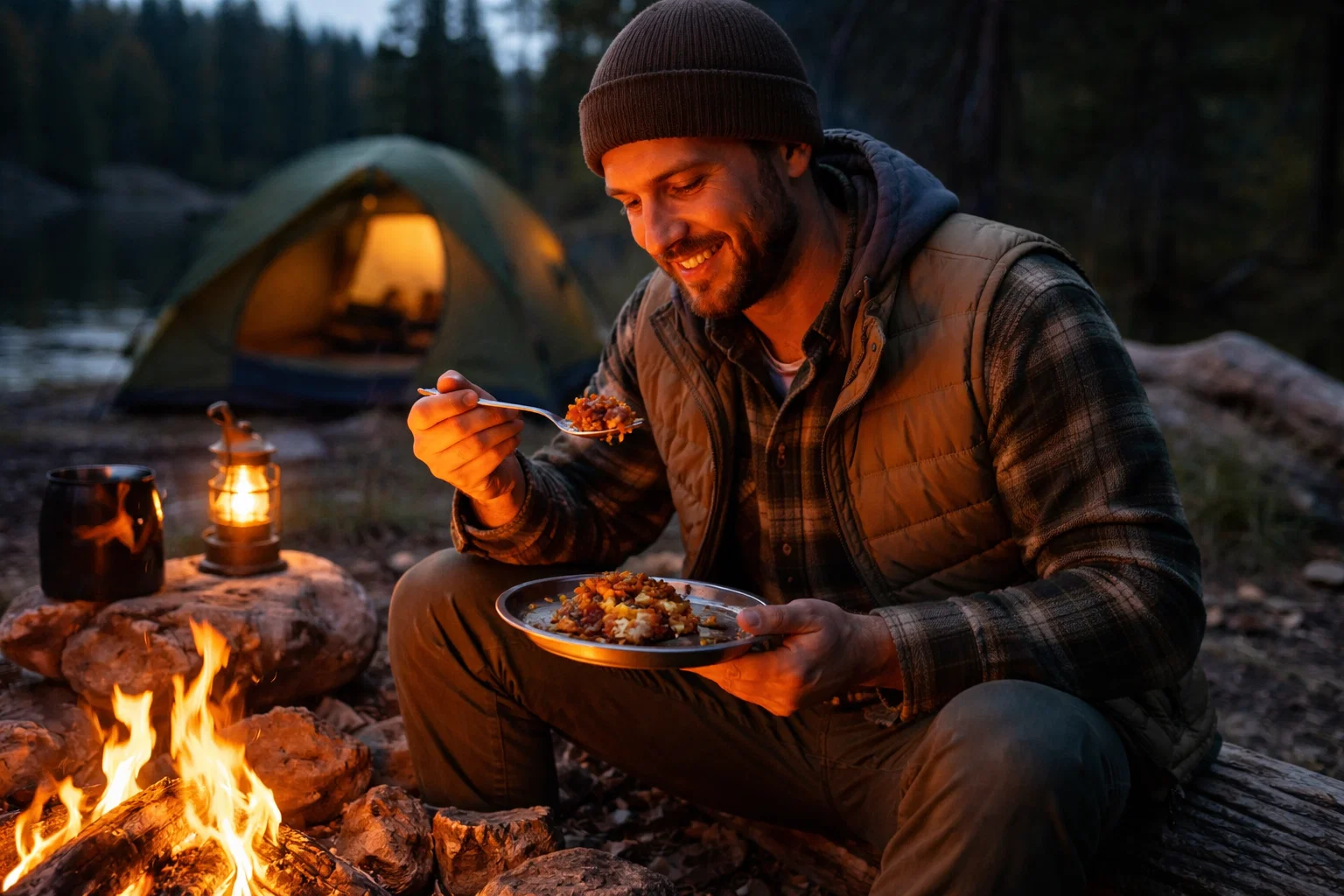
Join our community at Tent Explorer to access expert advice, step-by-step guides, and trusted gear reviews designed specifically for tent campers who want to cook efficiently and safely in the wild. Do not wait to enhance your outdoor meals and create unforgettable camping memories Visit our Fun While Camping – Tent Explorer page for tips that turn every campsite into a culinary adventure. Start your journey now with trusted resources at Uncategorized – Tent Explorer and step confidently into a smarter camp kitchen setup.
Frequently Asked Questions- Outdoor Cooking Tips
How do I choose the right camp cooking gear for tent camping?
Choosing the right camp cooking gear involves focusing on portability, durability, and versatility. Start by selecting lightweight and foldable equipment that can adapt to uneven terrain and is easy to transport.
What are some easy and nutritious meal ideas for camping?
Plan simple meals that include nutrient-dense foods like canned tuna, whole grain crackers, and dried fruits. Focus on quick breakfast options, such as instant oatmeal, and prepare easy wraps or sandwiches for lunch to minimize cooking time.
How can I ensure a safe campfire setup?
To ensure a safe campfire setup, choose a location at least 10 feet away from tents and flammable materials. Always use existing fire rings and have water or sand nearby to quickly extinguish the fire as needed.
What are the best practices for food storage while camping?
Use high-quality coolers to keep perishable foods below 40°F and separate raw and cooked foods to prevent cross contamination. Store food in bear-proof containers or hang food bags in trees to keep wildlife away, maintaining overall safety.
How do I prepare ingredients before heading on a camping trip?
Proper ingredient preparation, known as mise en place, involves pre-cutting vegetables and proteins, and packaging them in portion-controlled bags. Organize and label everything in clear containers to streamline your cooking process once you arrive at your campsite.
What cleanup methods should I follow after cooking at the campsite?
Follow Leave No Trace principles by bringing biodegradable soap and using a three-bucket washing system for dishes. Properly dispose of food scraps and wastewater 200 feet away from water sources to minimize environmental impact.