
This blog post may contain affiliate links. As an Amazon Associate I earn from qualifying purchases.
More than 60 percent of American campers report that uncomfortable tent floors are a leading cause of rough nights outdoors. The need for reliable shelter goes beyond basic protection, shaping overall comfort and satisfaction on every trip. For anyone planning multi-day adventures, discovering smart tent floor designs can make a dramatic difference. This guide reveals how modern floor technologies help both first-time and seasoned campers enjoy better sleep and long-lasting durability, whatever the terrain.
Key Takeaways
| Point | Details |
|---|---|
| Tent Floor Importance | Tent floors are essential for comfort, offering protection against moisture, temperature changes, and rough terrain. |
| Material Selection | Choosing the right material impacts weight, durability, and insulation, tailored to specific camping environments. |
| Environmental Considerations | Evaluate terrain and weather conditions to avoid rapid material deterioration and ensure performance. |
| Avoid Common Mistakes | Neglecting waterproofing and proper ground preparation can lead to moisture issues and damage to the tent floor. |

- Exceptional Size for Superior Comfort: boasting a grand diameter of about 150 inches/ 12.5 ft when fully opened, our tent footprint mat tarp offers extensive coverage, this incredible size ensures you experience maximum comfort and convenience during your travels or camping, suitable for pop up screen tents, camping gazebos, and more
- Waterproof Material: skillfully crafted using waterproof PE material, our tent mat offers the ultimate protection from water leakage, this quality material acts as an effective barrier, preventing any unwanted things from wandering into your tent, giving you peace of mind during camping or other outdoor adventures
- User Friendly Installation Process: our tent floor mat has been designed with simplicity in mind, to set it up, simply position the mat inside the tent, identify its front, and secure it using the accompanying equipment, this easy installation process saves you time, letting you focus on enjoying your outdoor activities
- Effortless Cleanup Post Use: cleaning up after an adventurous outing doesn’t have to be a daunting task, our tent mat ensures a hassle free cleanup process as it only requires a quick rinse with water to maintain its pristine condition, thus, ensuring you spend less time on cleanup and more time enjoying nature
- Versatile Use for Improved Convenience: with its practical design, our tent mat tarp isn’t just for tent footprint but also can be tied up to serve as a shade or a rain awning, this multifunctional usability enhances its value manifold, making it an indispensable companion for your outdoor activities, extend your adventure possibilities with our tent mat tarp

- A MUST FOR TENT: An extra tent tarp doesn’t just give you extra waterproofing, it is used as ground cloths under tents to prevent wear and tear. There’s no question that an insulated tent footprint is a great idea to help protect your investment, definitely, the choice to extend your tent’s life
- HEAVY DUTY: A tough groudsheet that can be easily overlooked but it makes all the difference when setting up the campsite. It is made out of ripstop 190T Poly with superior waterproof coating and designed to not only be lightweight but also be waterproof and powerful
- LIGHT&COMPACT: Size 87″ x 59″, weighing a mere 9.8 oz, it isn’t going to add a lot of weight to your pack. Impressed compact and able to fold into the drawstring storage bag, just the size of a cellphone
- MULTIFUNCTIONAL: This multi-purpose tarp could work for your specific needs. While the main focus most of the time will be working as a tent footprint you can also use this for a sunshade, beach picnic setup, hammock rain fly, or even as a general tarp shelter
- This footprint fits to Clostnature 2 person tent. Clostnature is an innovative brand that continuously works to improve your outdoor and sports experience. Every product you purchase has one-year guarantee for material and workmanship defects. If you have any questions, please don’t hesitate to contact our customer support team

- Cozy, Private Sleep Space: This play tent creates a private hideout for toddlers, offering a cozy and secure sleep space. Whether used on a twin bed or as a floor bed for small babies, the canopy bed design promotes restful sleep. Ideal for any child’s bedroom, this bed tent turns bedtime into a dream experience, perfect for boys and girls
- Safe, Comfortable & Durable: Made from high-quality polyester and durable fiberglass poles, this kids tent offers a safe, comfy space for both sleep and play. Perfect for indoor and outdoor use, it provides a big space for toddlers to play and relax. Whether as a playhouse, fort, or sleep space, this castle tent supports growing independence
- Easy Set-Up, Portable & Foldable: With no tools required, this bed tent is easy to set up and foldable for easy storage. Use it as an outdoor teepee, a kids play fort, or a bedroom hideout. Whether for playtime, bedtime, or sleepovers, the twin-size bed tent is portable and perfect for any space, from classrooms to school parties
- Magical Decor & Star Lights: Transform the space with a fairy princess tent or castle tent, featuring star lights and colorful decors. These magical touches create a dreamy atmosphere for bedtime and playtime. Perfect for birthday parties or as a nook for reading, this kids bed tent sparks creativity and imagination
- Versatile & Fun for Every Occasion: Whether for sleepovers, outdoor adventures, or a cozy corner for reading, this twin bunk bed tent is perfect for all ages. It doubles as a floor bed tent for toddlers, a kids play house, or a canopy bed for your twin bed. Ideal for playtime or sleep, it provides endless fun and comfort for boys and girls

- 10′ x 12′ CANVAS WALL TENT FLOOR – Complete your Guide Gear 10′ x 12′ Canvas Wall Tent with this wall tent floor.
- HEAVY-DUTY PVC CONSTRUCTION – This durable tent floor is made to handle the elements of bad weather with a heavy-duty 100% PVC construction.
- WATER-RESISTANT FLOORING – Water-resistant wall tent floor that will keep all your gear dry. It will keep you protected from the ground.
- EASY TO SET UP – This canvas wall tent floor is easy to set up. Place it between the legs of your frame and the sod cloth of the walls.
- MADE FOR RUGGED CAMPING – This outdoor tent floor is made for rugged camping. Weight: 19 lbs.

- Twin Floor Bed – 76.3x 38.5×47.2 inch. Features 2 doors and 2 windows for easy access and excellent airflow, ensuring your child never feels stuffy while playing or sleeping inside. (Does not include mattress)
- Storage & Ventilation: The tent bed features two handy storage pockets to keep small toys or essentials organized, plus a specially designed breathable pocket on the opposite side to securely hold a mini fan for extra airflow during warm days
- Easy Setup: Kids will love how this toddler crib tent assembles in minues—just connect two fiber – glass poles and fasten the hooks for instant fun. When playtime ends, the sleepover bed canopy easily storage, ready for their next camping adventure
- Versatile Use:Perfect as a bed tent for twin mattresses or as a floor kids camping tent, creating a fun camping-themed space that encourages kids’ independence
- Multi-Functional Kids’ Space:This cubby bed tent is Perfect for naps, indoor camping, or reading time. An ideal transitional space for toddlers moving from crib to big-kid bed, providing comfort and security during this important milestone
Last update on 2026-03-09 / Affiliate links / Images from Amazon Product Advertising API
Tent Floor Design Defined and Demystified
A tent floor represents the foundational barrier between campers and the ground, serving a critical role in outdoor shelter comfort and protection. Unlike basic ground coverings, modern tent floors are sophisticated engineered surfaces designed to shield occupants from moisture, temperature variations, and terrain irregularities. Tent floor designs create a controlled microenvironment that determines camping experience quality.
Tent floor construction typically involves multiple performance layers strategically integrated to address different environmental challenges. These layers often include a waterproof base material, an insulating middle section, and a durable top surface resistant to punctures and abrasion. Emergency relief tent specifications demonstrate how critical floor design can be, with robust ground sheets engineered to withstand varying climate conditions while providing complete protection against ground moisture and potential insect intrusion.
The primary functions of a well-designed tent floor include moisture prevention, thermal insulation, and physical protection. Advanced floor designs incorporate materials like polyethylene, silnylon, or reinforced synthetic fabrics that offer superior water resistance, lightweight performance, and puncture resilience. Each material brings unique characteristics that impact overall tent floor effectiveness.
Pro Tip: Always inspect your tent floor for potential wear or microscopic punctures before each camping trip to ensure optimal protection against ground moisture and potential leaks.
Comparing Common Tent Floor Materials
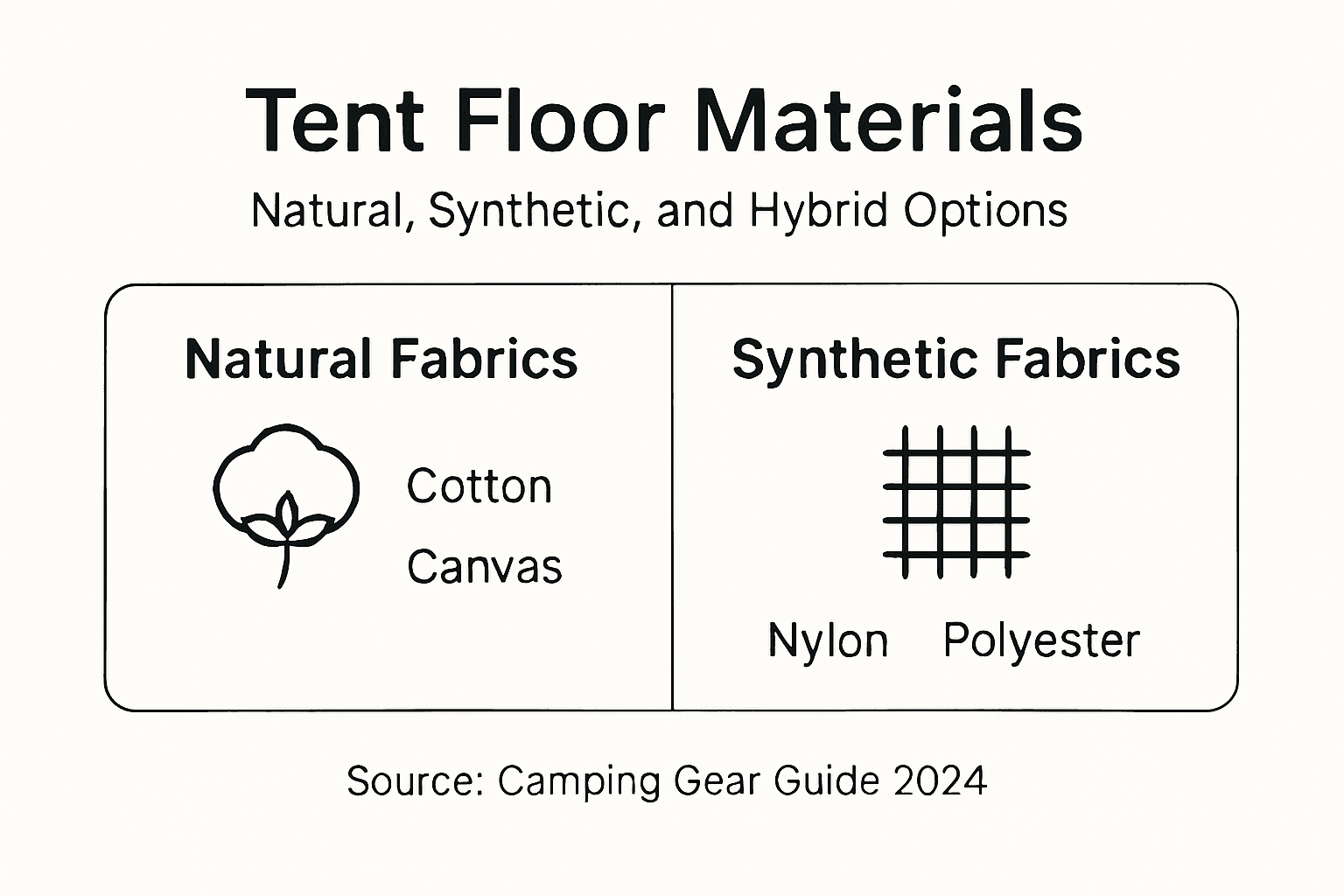
Tent floor materials represent a critical choice for campers, with each option presenting unique performance characteristics. Synthetic fabric technologies have revolutionized tent floor design, offering lightweight and robust solutions that dramatically improve outdoor shelter experiences. Polyester, nylon, and specialized coated materials now dominate the market, replacing traditional cotton and canvas options.
Modern tent floor materials can be categorized into three primary groups: natural fabrics, synthetic fabrics, and hybrid compositions. Cotton floors provide excellent breathability but struggle with moisture retention and weight. Synthetic materials like polyester and nylon offer superior water resistance, durability, and significantly reduced weight. Polyurethane-coated nylon represents a pinnacle of tent floor engineering, combining lightweight construction with exceptional waterproofing and puncture resistance.
The selection of tent floor material involves carefully balancing multiple performance factors. Weight considerations are paramount for backpackers, while car campers might prioritize durability and comfort. Nylon ripstop fabrics offer an excellent compromise, providing tear resistance and lightweight performance. Polyethylene remains a budget-friendly option, though it sacrifices breathability and long-term comfort for initial cost savings.
Pro Tip: When selecting a tent floor material, prioritize your specific camping environment and personal priorities by considering weight, water resistance, durability, and expected terrain conditions.
Here’s how common tent floor materials compare across key performance attributes:
| Material Type | Water Resistance | Durability | Weight | Comfort |
|---|---|---|---|---|
| Cotton/Canvas | Moderate, absorbs water | Prone to abrasion | Heavy | High breathability |
| Polyester | High, repels water | Good tear resistance | Lightweight | Moderate insulation |
| Nylon Ripstop | Excellent, often coated | Strong, prevents tearing | Ultralight | Smooth feel |
| Polyethylene | Excellent, fully waterproof | Stiff, less flexible | Heavier | Limited comfort |
| Polyurethane-Coated Nylon | Superior waterproofing | Very puncture resistant | Lightweight | Good support |
Insulation, Waterproofing, and Drainage Functions
Tent floor design involves a complex interplay of three critical environmental protection functions: insulation, waterproofing, and drainage. Sustainable drainage techniques demonstrate how strategic floor engineering can protect campers from ground moisture and temperature challenges. These interconnected systems work together to create a comfortable and safe camping environment by managing environmental interactions at ground level.
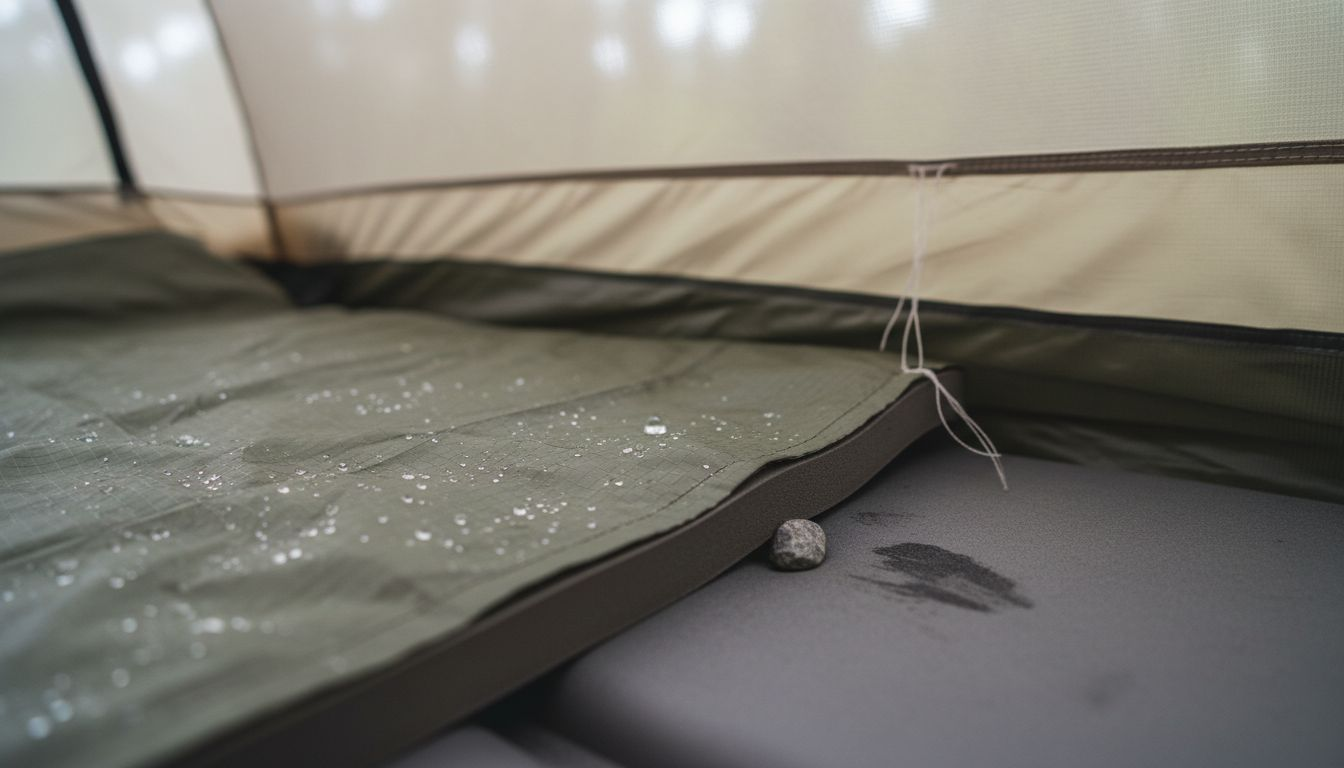
Insulation represents the first line of defense against ground-based temperature loss. Specialized floor materials and additional layers like foam pads help prevent heat transfer from the camper’s body to the cold ground. Waterproofing technologies use advanced membrane treatments and sealed seams to block moisture penetration, ensuring that ground dampness and rainwater cannot compromise the tent’s interior. Advanced synthetic materials now incorporate multilayered constructions that simultaneously provide thermal barriers and water resistance.
Drainage emerges as a crucial yet often overlooked aspect of tent floor design. Effective drainage systems prevent water accumulation by incorporating slight ground pitch, permeable material layers, and strategically designed floor contours that channel moisture away from the tent’s interior. Campers can enhance drainage by selecting tent sites with natural slopes, using groundsheets with built-in drainage channels, and maintaining proper tent floor tension to prevent water pooling.
Pro Tip: Always carry a lightweight, waterproof ground tarp to provide an additional moisture barrier and improve your tent floor’s overall drainage and insulation performance.
The following summarizes critical tent floor functions and their impact on your camping experience:
| Function | What It Does | Impact on Camping |
|---|---|---|
| Insulation | Blocks ground heat loss | Keeps campers warm and comfortable |
| Waterproofing | Prevents moisture entry | Keeps gear and sleepers dry |
| Drainage | Channels water away | Reduces risk of floor pooling |
| Durability | Withstands abrasion and punctures | Ensures long-term equipment reliability |
Influence on Comfort, Durability, and Weight
Tent floor design represents a critical balance between three interconnected performance attributes: comfort, durability, and weight. Tent material selection dramatically influences a camper’s overall outdoor experience by determining how well the floor performs across these key dimensions. Understanding these complex interactions helps outdoor enthusiasts make informed gear choices that match their specific camping requirements.
Comfort emerges from strategic material choices that minimize ground temperature transfer and provide a smooth, supportive surface. High-performance tent floors incorporate advanced insulating layers and smooth synthetic fabrics that reduce heat loss while creating a pleasant sleeping environment. Durability becomes equally important, with modern tent floor designs using reinforced synthetic materials that resist punctures, abrasion, and extended wear from rough terrain. Ultralight backpacking tents prioritize minimal weight, whereas car camping floor designs emphasize robust construction and long-term resilience.
Weight considerations represent a critical trade-off in tent floor engineering. Lightweight synthetic fabrics offer portability and ease of transport, while heavier materials provide superior protection and longevity. Campers must evaluate their specific needs, balancing the desire for minimal pack weight against requirements for ground protection and comfort. Innovative material technologies continue to push the boundaries, developing floors that offer exceptional performance with increasingly reduced weight penalties.
Pro Tip: Select tent floor materials that align with your primary camping style, considering the specific balance between weight, durability, and comfort that matches your typical outdoor environments.
Mistakes to Avoid When Choosing Tent Floors
Selecting an appropriate tent floor requires careful consideration and awareness of potential pitfalls that can compromise camping comfort and equipment longevity. Tent floor selection mistakes can dramatically impact the overall outdoor experience, leading to moisture problems, equipment damage, and unnecessary discomfort during camping trips. Understanding these critical errors helps campers make more informed decisions about their tent floor investments.
One of the most significant mistakes is neglecting proper waterproofing and ground preparation. Failing to use an appropriately sized groundsheet or footprint leaves tent floors vulnerable to punctures, moisture penetration, and premature wear. Campers often underestimate the importance of clearing the campsite of rocks, sticks, and debris before setting up their tent, which can cause immediate damage to floor materials. Additionally, selecting floors that are too heavy or inappropriate for specific camping environments can unnecessarily burden travelers and reduce overall mobility.
Environmental compatibility represents another crucial consideration often overlooked by campers. Choosing tent floor materials without carefully evaluating expected terrain and weather conditions can lead to rapid deterioration and performance failures. Some campers mistakenly select floors based solely on price or aesthetic appeal, ignoring critical performance characteristics like water resistance, durability, and insulation properties. Professional outdoor enthusiasts recommend matching floor materials precisely to anticipated camping environments, whether dealing with rocky mountain terrain, wet forest floors, or dry desert landscapes.
Pro Tip: Always inspect your tent floor before and after each camping trip, checking for microscopic punctures, wear patterns, and potential weakness areas to prevent unexpected failures during future outdoor adventures.
Enhance Your Camping Comfort with Expert Tent Floor Solutions
Are you ready to eliminate the common challenges of moisture, insulation loss, and floor damage that can ruin your camping experience? Discover thoughtful tent floor designs and protective accessories that create the perfect barrier between you and the ground. At Tent Explorer, we understand how critical waterproofing, insulation, and durability are for your outdoor comfort. Our guides on Tent Accessories and Tent Troubleshooting And Maintenance offer practical tips and products to help you protect your tent floor and extend its life.

Don’t let a worn or unsuitable tent floor compromise your next adventure. Visit Tent Explorer now to explore expert advice and gear recommendations that will transform your campsite into a cozy and secure retreat. Take control of your outdoor experience today with insights tailored for every camper.
Frequently Asked Questions
What is the purpose of a tent floor?
A tent floor serves as the foundational barrier between campers and the ground, providing protection against moisture, temperature variations, and uneven terrain to enhance overall camping comfort.
What materials are commonly used for tent floors?
Common materials for tent floors include cotton, polyester, nylon, polyethylene, and polyurethane-coated nylon, each offering varying degrees of water resistance, durability, and weight.
How can I improve the insulation and waterproofing of my tent floor?
You can improve insulation by using additional layers like foam pads and enhance waterproofing by selecting high-quality materials, sealing seams, and using a ground tarp for extra moisture protection.
What mistakes should I avoid when selecting a tent floor?
Avoid neglecting proper waterproofing, failing to prepare the ground beneath your tent, and selecting materials that do not match your expected camping environment in terms of durability and performance.