 David King
“Hi All, completely new. I used to camp a lot with my family. I seen your group and got very curious. Might be a stupid question but, what is car camping? Is it legal? How do you camp in your car? ☺️”
That question gets asked thousands of times every spring and summer — and the honest answer is: it depends on who you ask. Half the internet says car camping means pitching a tent beside your car at a campground. The other half means converting your SUV into a rolling bedroom. No wonder you’re confused.
By the end of this guide, you’ll know exactly what car camping is, which style suits your situation, what gear you need, and where you’re legally allowed to do it. We cover the two definitions, a gear checklist, the legality rules, the best vehicles, and even how car camping works at Coachella.
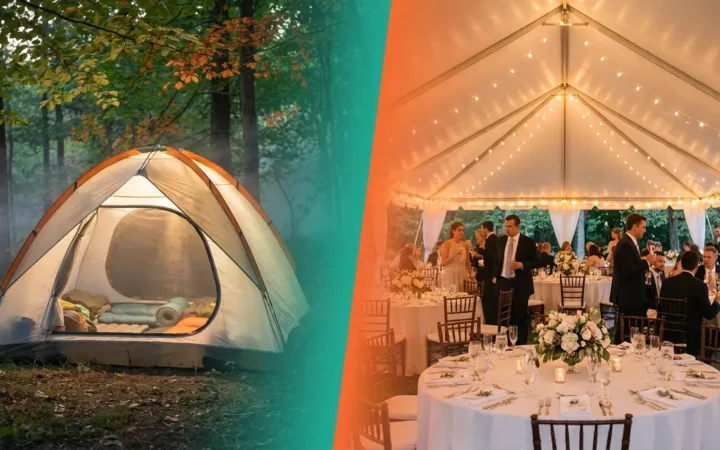
What is car camping? It means driving your vehicle to a campsite — the Two-Era Framework explains why definitions vary: Classic Era campers pitch a tent beside the car; Modern Era campers sleep inside the vehicle.
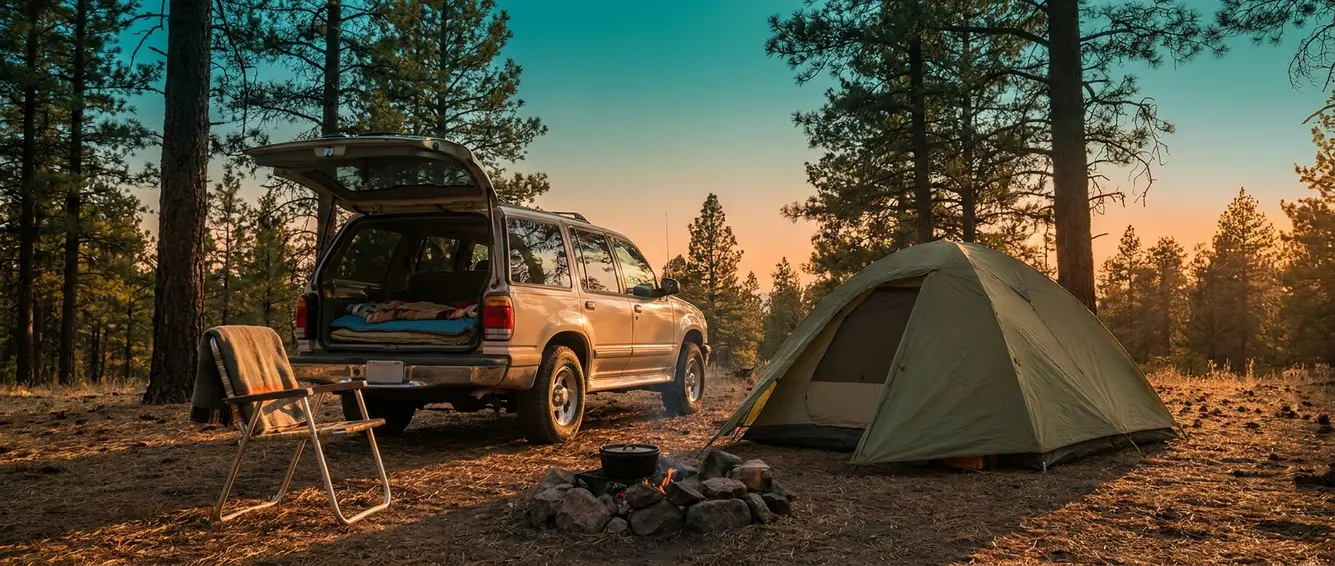
- Classic car camping: Drive to a campground, pitch a tent next to your car — the original definition used by the National Park Service
- Modern car camping: Sleep inside your SUV, van, or truck bed with a sleep platform — the style popularized by TikTok and vanlife culture
- Legal in the US: Permitted in National Parks, National Forests, and BLM land (14-day stay limit applies on dispersed sites)
- Best for beginners: No specialized skills required — start with a tent and a campground reservation
Tent Explorer participates in the Amazon Services LLC Associates Program, an affiliate advertising program designed to provide a means for sites to earn advertising fees by advertising and linking to Amazon.com. Clicking our links costs you nothing extra, and it never influences our editorial recommendations — we only suggest gear we’d genuinely use ourselves.
Recommended Camping Chairs
| # | Image | Product | Best For | Buy |
|---|---|---|---|---|
| 1 |  |
Naturehike Ultralight Camping Chair | Ultralight backpack campers | Buy on Amazon |
| 2 |  |
WildCall High Back Folding Chair | Comfort-focused car campers | Buy on Amazon |
| 3 |  |
Coleman Chair with 4-Can Cooler | Classic car camping setup | Buy on Amazon |
| 4 |  |
Coleman Cooler Chair with Carry Bag | Budget car camping value | Buy on Amazon |
| 5 | 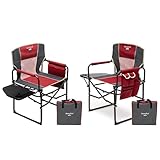 |
SUNNYFEEL Directors Chair 2-Pack | Groups and family camping | Buy on Amazon |
| 6 |  |
ALPHA CAMP 2-Pack Quad Chair | Heavy duty daily use | Buy on Amazon |
| 7 |  |
Oversized 400 LBS Steel Frame Chair | Extra large adults | Buy on Amazon |
| 8 |  |
2-Pack Portable Folding Lawn Chair | Budget-friendly pairs | Buy on Amazon |
| 9 |  |
Romswi Oversized 500 LBS Chair 2-Pack | Max weight capacity | Buy on Amazon |
| 10 |  |
Oversized XL Padded Camp Chair | XL padded single seat | Buy on Amazon |
What Is Car Camping? Defining the Basics
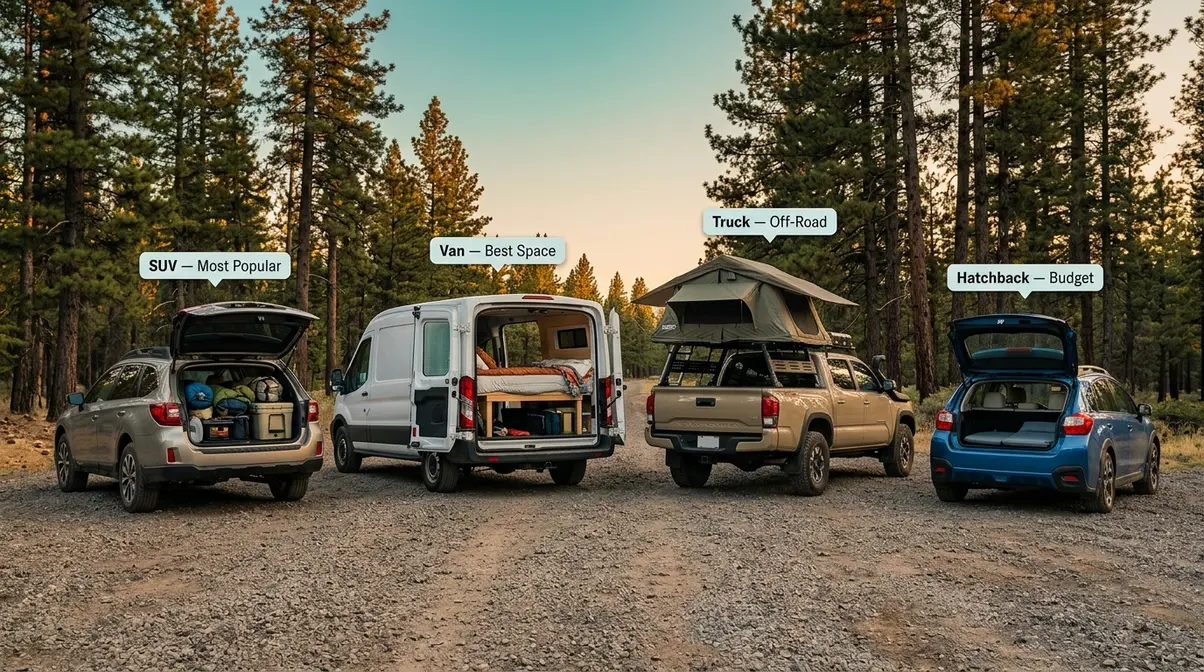
Car camping is a style of outdoor recreation where you drive your vehicle directly to a campsite — no hiking required, no weight limits on your gear. In 2026, outdoor recreation participation reached a record 181.1 million Americans (58.6% of the population), with camping among the top five activities and each major gateway activity gaining an average of 2.1 million new participants (Outdoor Industry Association, 2026 Participation Trends Report). For most of those new campers, car camping is exactly where the journey starts.
Car camping is sometimes called frontcountry camping — frontcountry being the National Park Service’s official term for drive-up campsite camping in the developed, road-accessible areas of parks and forests, typically with amenities like fire rings, picnic tables, and restrooms. It’s also called drive-in camping, another common synonym. What this means for you: if you can park your car at or near where you sleep, you’re car camping.
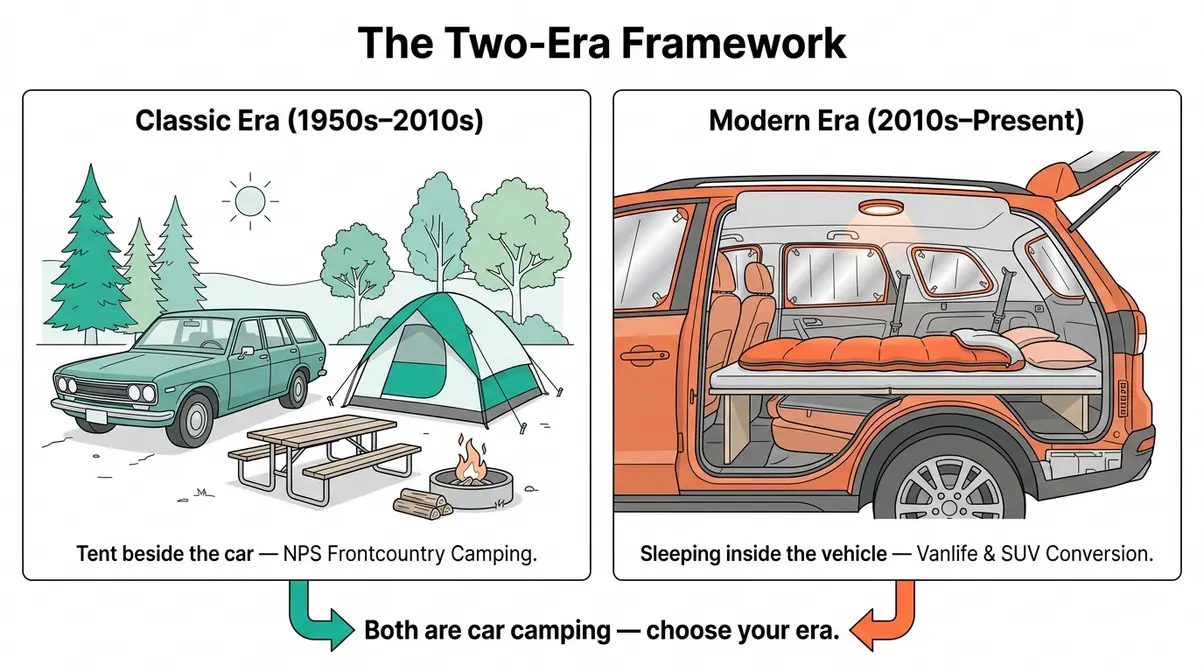
The Classic Era vs. The Modern Era
Here’s why the internet can’t agree on what car camping means — and why both sides are actually right.
The Classic Era (1950s–2010s) is the original definition: drive to an established campground, park your vehicle at a designated site, and pitch a tent right beside it. This is what your parents and grandparents mean by “car camping.” It’s also what the National Park Service means when it describes frontcountry camping as drive-up sites with established amenities. Car camping is sometimes called frontcountry camping for exactly this reason.
The Modern Era (2010s–present) is the newer definition: sleeping inside your vehicle — in a converted SUV, a van with a sleep platform, or a truck bed. This is the “comfy car camping setup” and “no build” style you see all over TikTok and Instagram. Vanlife culture and affordable SUV conversion kits drove this shift starting around 2015. According to community discussions on Reddit and Facebook groups, the definition has genuinely shifted — many newer campers now associate “car camping” primarily with sleeping in the vehicle itself.
When someone in a Reddit thread says “car camping is just tent camping with your car nearby” and someone else replies “no, it means sleeping in your SUV” — both are right. They’re describing different eras of the same activity. That’s the Two-Era Framework, and it’s the single most useful thing to understand before you plan your first trip.
Differences from Backpacking & RVing
Think of outdoor camping as a spectrum. Car camping sits comfortably in the middle:
- Backpacking — you hike to a remote site carrying all gear on your back. Weight limits force minimalism. No car access at the campsite. High skill and fitness threshold.
- Car camping — you drive a regular vehicle to your site. Flexible gear load. Drive-up access. Low barrier to entry. You sleep in a tent beside the car (Classic Era) or inside the vehicle (Modern Era).
- RVing — you live in a motorhome or towable trailer with a dedicated living space. Requires a specialized vehicle and often hookup fees at campgrounds.
- Overlanding — overlanding is a vehicle-based style of travel focused on remote, off-road routes, often spanning multiple days in wilderness areas. It’s a more extreme evolution of car camping that requires specialized gear and off-road driving skills.
Car camping is the most accessible entry point on that spectrum. That’s not a marketing claim — it’s simply what the numbers show.
Why Millions Choose Car Camping
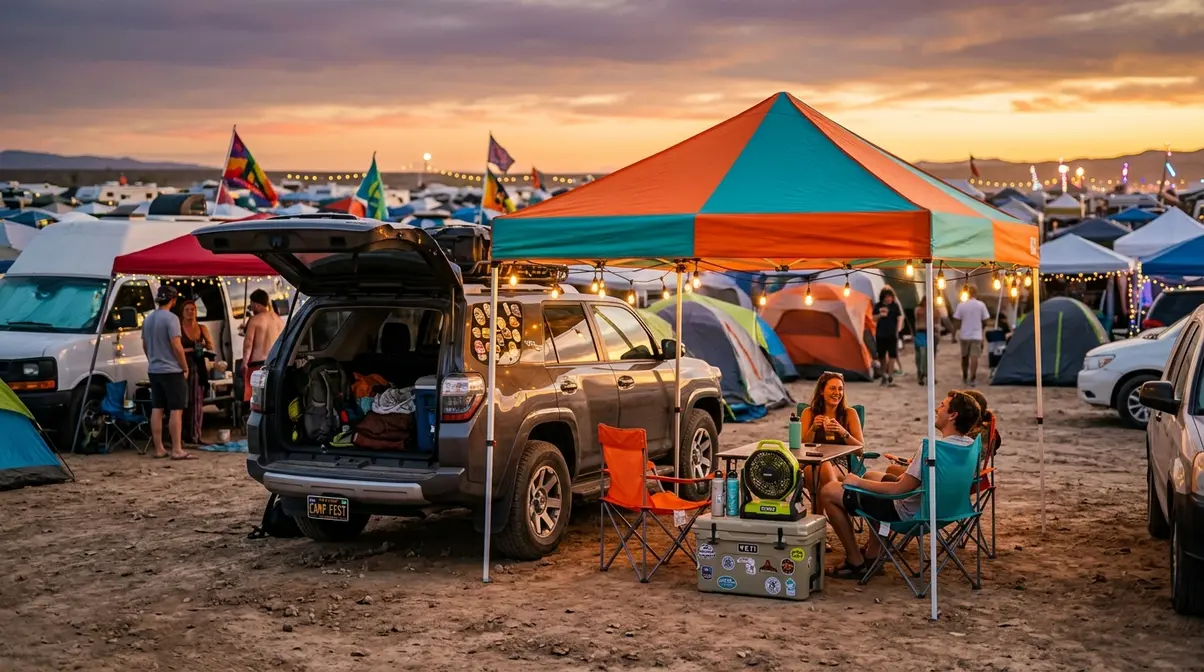
What’s the actual appeal? Car camping — sometimes called drive-in camping — removes almost every barrier that keeps people from going outside. When people ask what is car camping, they are often surprised by how accessible it is.
You can bring gear you’d never carry on your back: a full-size cooler, a folding table, a comfortable camping chair, an air mattress, a portable shower. This is what people mean by “car glamping” — the glamorous end of car camping where comfort rivals a hotel room. You don’t need navigation training, an ultralight gear budget, or any particular fitness level.
Car camping is the most accessible form of outdoor recreation — 181.1 million Americans participated in outdoor activities in 2026, with camping among the top five activities and gateway activities like camping each adding over 2 million new participants (Outdoor Industry Association, 2026 Participation Trends Report). That growth is driven by exactly the kind of spontaneous car camping that requires almost no preparation.
A family of four can pack everything they need in an SUV the night before and be at a campground two hours later — no months of planning required. That flexibility is the whole point. Now that you know the two styles, let’s compare car camping directly against traditional tent camping to help you decide which fits your first trip.
Does It Mean Sleeping in Your Car?
Car camping can mean sleeping in your car — but it doesn’t have to. The Two-Era Framework explains both definitions: the Classic Era definition means driving to a campground and sleeping in a tent beside your vehicle, while the Modern Era definition means sleeping inside the vehicle itself. Both are correct, and both are widely practiced. Your choice depends on your vehicle, your gear budget, and your personal preference. For most beginners, starting with a tent at an established campground is the lower-stress entry point.
Car Camping vs. Traditional Tent Camping
Car camping and traditional tent camping are closely related — so close that beginners often use the terms interchangeably. However, there are real differences in gear requirements, comfort, and cost that are worth understanding before you buy anything.
The Two-Era Framework is useful here: the Classic Era of car camping (tent beside the car) is almost identical to traditional tent camping, with the key difference being that you have a vehicle parked nearby. The Modern Era — sleeping inside the vehicle — has more in common with overlanding or vanlife than with traditional tent camping.
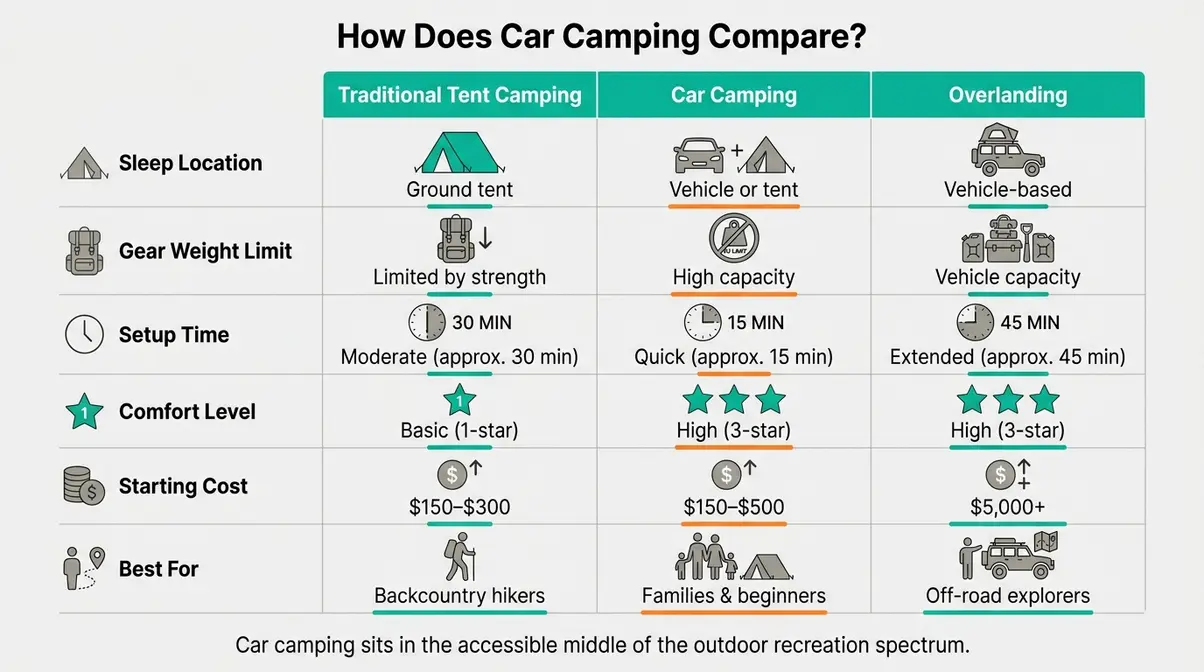
Gear, Comfort, and Cost Comparison
| Factor | Traditional Tent Camping | Classic Car Camping | Modern Car Camping |
|---|---|---|---|
| Sleep location | Tent at campsite | Tent beside car | Inside vehicle |
| Gear weight limit | Strict (backpack) | None — car carries it | None — car carries it |
| Setup time | 20–40 min | 20–40 min | 5–15 min |
| Comfort level | Basic | Comfortable | High (with setup) |
| Gear cost to start | $150–$300 | $150–$300 | $50–$500+ (platform) |
| Campsite reservation | Required at most sites | Required at most sites | Required or dispersed |
| Best for | Backcountry access | Families, beginners | Solo travelers, van life |
The biggest practical difference: car camping lets you bring more. If you’re debating between a backpacking tent vs camping tent, remember that car camping allows for heavier, more spacious options. Understanding the different types of tent camping can help clarify your choice. A traditional tent camper at a drive-up site and a Classic Era car camper are often doing exactly the same thing. The Modern Era camper skips the tent setup entirely, trading that time for the convenience of a pre-made sleep setup in the vehicle. Check out our guide on what is tent camping if you want a deeper comparison.
Is It Warmer Than Tent Camping?
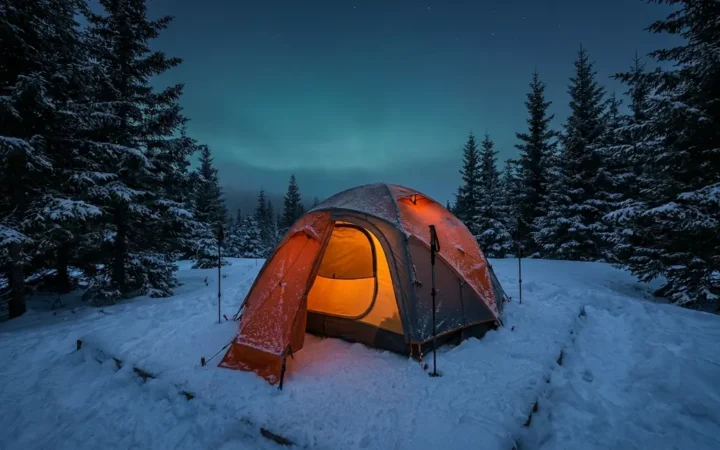
Generally, yes — sleeping inside a vehicle is warmer than sleeping in a tent, particularly in cold or wet conditions. A car’s metal and glass body retains heat better than tent fabric, and you’re protected from wind entirely. In temperatures below 40°F (4°C), this can be a meaningful comfort advantage.
That said, condensation (moisture buildup on interior surfaces from your breath) is the main challenge of sleeping in a vehicle. It can make the interior feel cold and damp by morning. The fix is ventilation: crack two windows slightly on opposite sides to create airflow without letting in cold air. For Classic Era car campers sleeping in a tent, a quality sleeping bag rated for the overnight low temperature is the most important gear investment you can make. Neither style is inherently “better” — your choice depends on your vehicle, your budget, and how cold it gets where you’re camping. Comfort and convenience are the headline benefits — but how you get that comfort differs between the two approaches.
Essential Gear for Your First Car Camping Trip
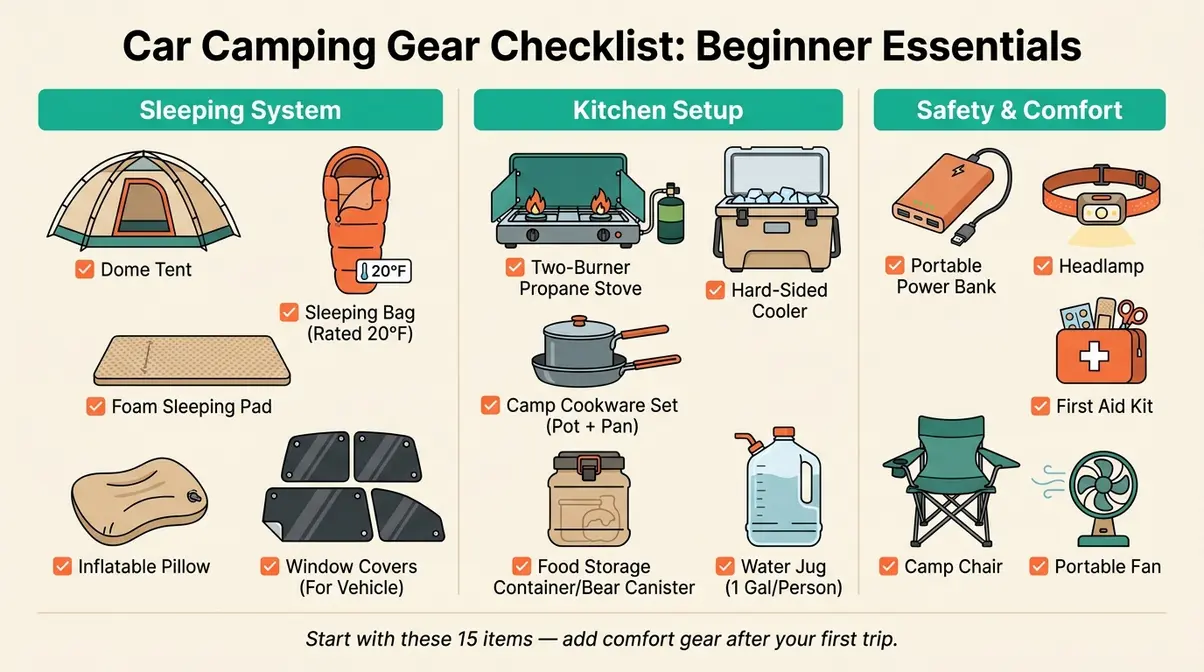
Your first car camping trip doesn’t require a massive gear investment. Our team at Tent Explorer evaluated the most common beginner setups across camping communities — and the consistent feedback is that most first-timers over-buy. Start with the essentials, then add comfort items after your first trip tells you what you actually need. While this covers the basics, you might also want to review a more comprehensive essential tent camping gear checklist.
Sleeping Pads, Bags, and Chairs
Your sleeping system is the most important investment you’ll make. A bad night’s sleep ruins a camping trip faster than anything else. Finding the best mattress for tent camping is crucial for a good night’s sleep.
- For Classic Era car camping (tent beside the car):
- Tent — a 2-person or 3-person tent with a rainfly (the waterproof outer layer). Look for a best tent for car camping that sets up in under 15 minutes.
- Sleeping pad — an insulating layer between you and the ground. Foam pads start around $20; inflatable pads offer more comfort at $40–$100.
- Sleeping bag — rated at least 10°F below the expected overnight low. A 20°F bag handles most three-season camping.
- For Modern Era car camping (sleeping inside the vehicle):
- Sleeping pad or air mattress — cut to fit your cargo area, or use a purpose-built car mattress for your model.
- Sleeping bag or comforter — same temperature rating rules apply.
- Window covers — for privacy and blackout sleeping.
Camping chairs deserve a mention in any sleeping-system discussion because your campsite comfort depends on them almost as much as your sleep setup. Whether you’re sitting around the fire or relaxing outside your vehicle, a quality folding chair makes a real difference — the options in the recommended products table above cover every budget and body type.
Kitchen Stoves, Coolers, and Storage
One of the biggest advantages of car camping is that you can bring a real kitchen. Here’s what to take car camping for cooking:
- Camp stove — a two-burner propane stove is the standard choice. It handles most camp cooking and costs $40–$80.
- Cooler — a quality hard-sided cooler keeps food cold for 3–5 days. Soft-sided coolers work for day trips.
- Cookware set — a basic camp cookware set (pot, pan, utensils) costs $25–$50 and covers most meals.
- Food storage containers — bear canisters (hard plastic containers for food) are required in some National Parks and recommended everywhere else to prevent wildlife encounters.
- Water supply — bring at least 1 gallon per person per day, plus extra for cooking and washing.
Plan meals before you go. Simple two-ingredient breakfasts (eggs and toast, oatmeal, granola) reduce morning stress significantly. Foil packet dinners — wrap vegetables and protein in aluminum foil and place on a camp grate over the fire — require almost no cleanup.
Ventilation and Privacy Hacks
This is the section most beginner guides skip — and it’s where Modern Era car campers run into the most trouble. Across camping communities, the consistent feedback is that condensation and privacy are the two biggest overnight frustrations for first-time vehicle campers.
Essential ventilation hacks for airflow:
- Crack two windows on opposite sides of the vehicle to create cross-ventilation without significant heat loss.
- Use a mesh window screen — cut cheap mesh fabric 2–3 inches wider than the window opening and attach with magnets or clips. Keeps bugs out while allowing airflow.
- Hang moisture-absorbing packets (silica gel or DampRid) inside the vehicle to reduce interior humidity overnight.
- Dry wet clothes before sleeping — wet gear dramatically increases condensation. Hang it outside or in a dry bag.
Advanced privacy and condensation control tips:
- Crack the sunroof if your vehicle has one — even 1 cm of opening reduces interior moisture buildup significantly.
- Use a windshield sun shade on the inside of the front windshield for privacy and insulation.
- Hang curtains or use a tarp behind the front seats to separate the sleeping area and retain heat.
- Wipe down interior surfaces with a microfiber cloth in the morning to prevent mold and mildew on multi-night trips.
These hacks apply whether you’re doing a no-build setup in a sedan or a fully built out platform in a van. The physics of condensation are the same regardless of vehicle type.
Car Camping Safety and Legality in the US
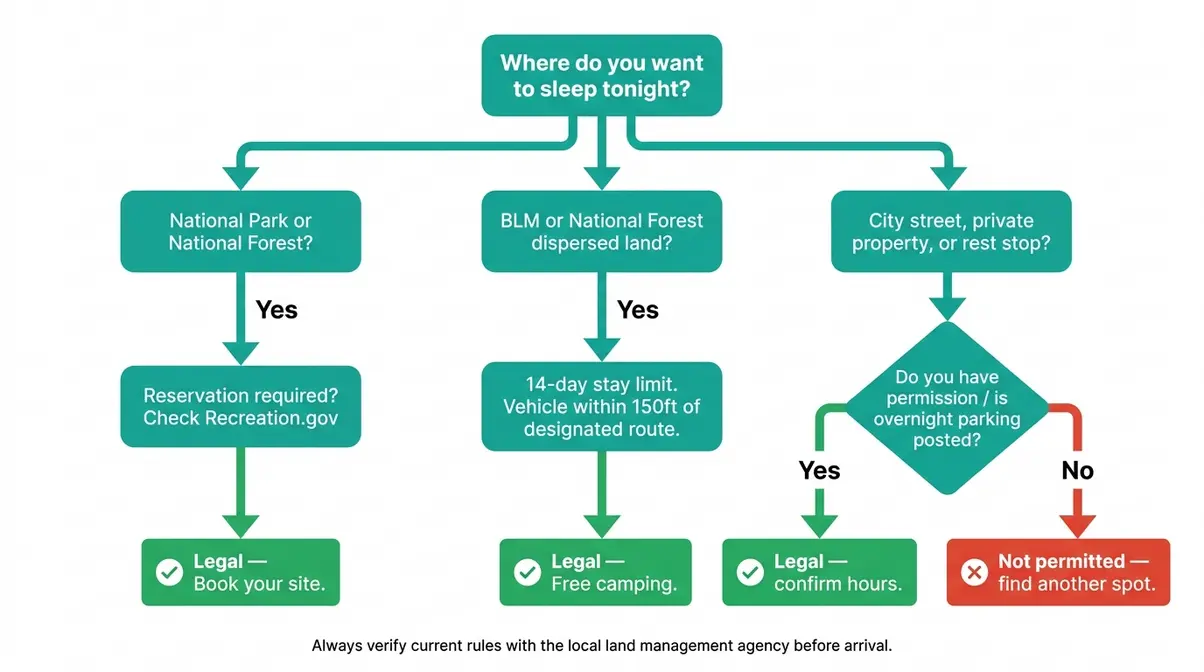
Is car camping legal in the US? Yes — but the rules vary significantly depending on where you park. This section gives you a clear framework so you never have to guess. These align closely with general tent camping safety tips, but with added vehicle considerations.
Is car camping legal in the US?
Yes, car camping is legal throughout the US on designated campgrounds, National Forest land, and BLM land. National Parks require a campground reservation and fee. On National Forest and BLM dispersed land, car camping is free but subject to a 14-day stay limit. Rules vary by location, so always check the specific land management agency’s website before your trip. Sleeping in your vehicle on most city streets and private property without permission is generally not permitted.
Where to Legally Park Overnight
Here’s how the five main land types break down for car camping legality:
| Land Type | Car Camping Allowed? | Key Rule | Cost |
|---|---|---|---|
| National Parks | Yes (designated sites) | Reservation required at most campgrounds | $15–$35/night |
| National Forests | Yes (dispersed or developed) | 14-day stay limit within 30-day period; vehicle must stay within 150 ft of designated route | Free (dispersed) |
| BLM Land | Yes (dispersed) | 14-day limit in any 28-day period; must move 25+ miles after limit | Free |
| Rest Stops | Varies by state | Most allow 8–10 hours maximum; not for multi-night stays | Free |
| Private Land | Yes, with permission | Written or verbal permission from landowner required | Varies |
Dispersed camping — camping outside of established campgrounds, on open public land — is one of the best-kept secrets in American outdoor recreation. The Bureau of Land Management confirms that dispersed camping is generally limited to 14 days within any 28-day period, after which you must move at least 25 miles from your original area. The U.S. Forest Service’s Intermountain Region dispersed camping rules specify that motorized vehicles for dispersed camping may only be parked within 150 feet of a designated route to limit resource damage.
What this means for you: On BLM and National Forest land, you can camp for free — but you must follow the stay limits, keep your vehicle near established roads, and leave no trace. Always check the specific field office or forest website before your trip, since local rules can vary.
National Parks are different. Dispersed camping is not permitted inside most National Parks. You need a campground reservation, and the National Park Service defines this as frontcountry camping — the Classic Era definition exactly.
The 3-3-3 Rule for Safe Travel
The 3-3-3 Rule is a travel planning guideline used widely in the RV and car camping community. It keeps travel days manageable and prevents the burnout that ruins multi-day trips. The rule has three components:
- 300 miles — drive no more than 300 miles on any single travel day
- 3 PM — arrive at your campsite by 3:00 PM to set up in daylight and avoid stressful after-dark arrivals
- 3 nights — stay at each location for at least 3 nights before moving on
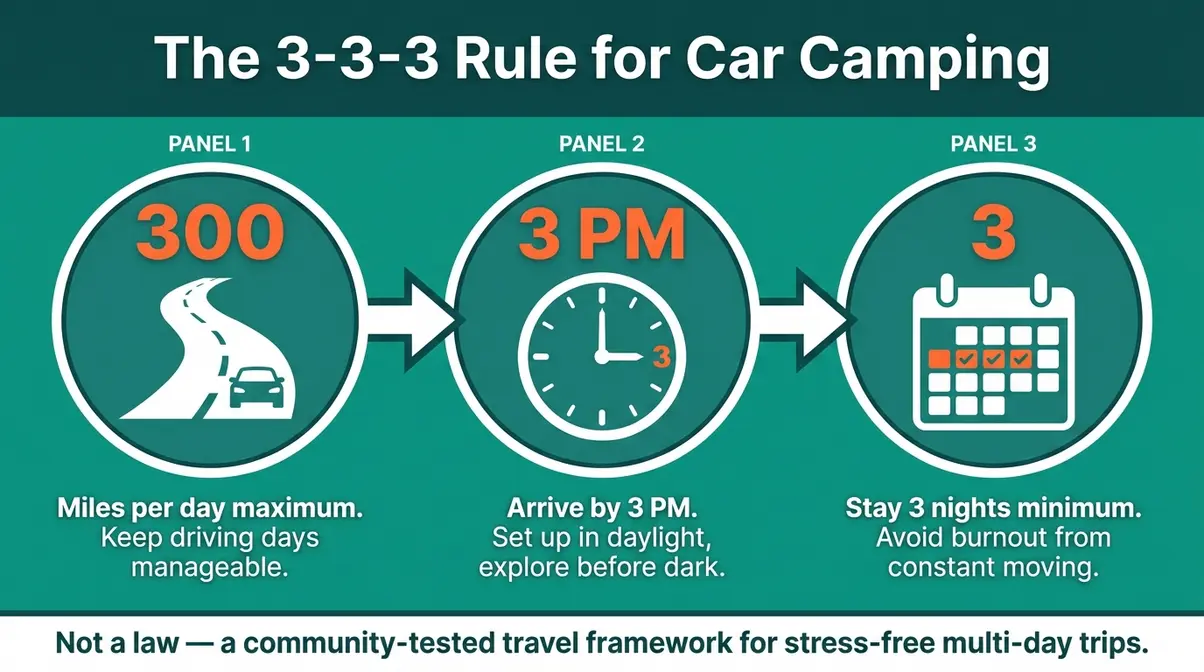
Why does the 3 PM arrival matter so much? Setting up camp in the dark is genuinely stressful — you can’t see what you’re doing, neighbors are trying to sleep, and small problems become big ones. Arriving by mid-afternoon gives you time to choose the best spot, set up your shelter, and enjoy the first evening without rushing. For beginners especially, this rule removes a huge amount of anxiety from trip planning.
The 3-3-3 Rule is not a legal requirement — it’s a community-tested guideline that experienced campers consistently recommend. Apply it on any multi-day car camping trip and your first experience will be dramatically smoother.
Personal Safety Tips for Campers
Safety concerns are normal for first-time car campers. Here are the most important practices, based on consistent guidance from the camping community:
- Never sleep with the engine running — carbon monoxide (an odorless, colorless gas from your exhaust) can build to dangerous levels inside a closed vehicle in minutes. This is the single most important safety rule for Modern Era car campers.
- Tell someone your itinerary — share your planned route, campsite location, and expected return date with a friend or family member before you leave.
- Keep your phone charged — a portable power bank rated at 10,000+ mAh gives you two or more full phone charges for emergencies.
- Lock your doors — at established campgrounds and especially at dispersed sites. This is basic habit, not paranoia.
- Store food properly — never leave food in your vehicle overnight in bear country. Use a bear canister or the campground’s provided food storage boxes.
- Trust your instincts — if a campsite or parking area feels unsafe, move. There is always another spot.
Choosing the Best Vehicle for Car Camping
Not every vehicle is equally suited for car camping — but almost any vehicle can work for a first trip. The Two-Era Framework applies here too: Classic Era camping just needs a vehicle large enough to carry your tent and gear; Modern Era camping requires enough interior space to sleep.
SUV, Van, Truck, or Sedan?
| Vehicle Type | Cargo Space | Sleep Suitability | Off-Road Capability | Best For |
|---|---|---|---|---|
| SUV (mid-size) | High | Excellent | Moderate | Modern Era camping, families |
| Van (full-size) | Very High | Best-in-class | Low | Vanlife, fully built out platform |
| Truck (with bed) | High | Good (with tent) | High | Overlanding, rooftop tent setups |
| Sedan | Low | Possible (seats folded) | None | No-build, spontaneous car camping |
| Hatchback/Crossover | Moderate | Good | Low–Moderate | Budget Modern Era camping |
SUVs are the most popular choice for car camping in 2026, and for good reason. A mid-size SUV like a Subaru Outback, Toyota RAV4, or Honda CR-V offers enough cargo space for all your Classic Era gear, and enough flat floor area (with rear seats folded) to sleep two people in the Modern Era style. This is what most people picture when they search for “adventure car” setups online.
Vans are the gold standard for Modern Era camping. A Ford Transit or Ram ProMaster gives you standing room, full-length sleeping space, and enough volume to build a full kitchen. The trade-off is cost — a used cargo van suitable for conversion starts at $15,000–$25,000.
Trucks excel for Classic Era camping with a rooftop tent (a tent that mounts on a rack above your vehicle’s roof) or a bed tent. They also handle rough roads better than any other option, making them ideal if your camping spots involve unpaved forest roads. If you plan to tackle rougher terrain, pairing your truck with the best ground tent for overlanding creates an unbeatable setup.
Sedans can absolutely work for a first trip. A “primitive car camping” or “no build” setup — a sleeping pad in the folded-back seat area, a sleeping bag, and a small cooler — costs almost nothing extra and gets you outside immediately. Don’t let an imperfect vehicle stop your first trip.
Key Vehicle Features to Look For
If you’re buying or evaluating a vehicle specifically for car camping, prioritize these features:
- Flat load floor when seats fold — the most important feature for Modern Era sleeping. Many SUVs and hatchbacks have a slight step between the trunk floor and the folded seat; add a foam pad to level it.
- Cargo volume — at minimum, 40+ cubic feet with seats folded for a comfortable sleep setup.
- Roof rack compatibility — opens up options for a rooftop tent, cargo box, or kayak transport.
- All-wheel drive (AWD) — not essential for paved campgrounds, but very useful for forest roads and early-season sites.
- Dark window tint — helps with privacy and sleep quality in Modern Era setups.
You don’t need to fully build out a platform or invest in a conversion to enjoy car camping. Many experienced campers use a simple no-build setup for years before deciding whether a more permanent installation is worth it.
Car Camping at Festivals: The Coachella Experience
Car camping at music festivals is its own category — and Coachella is the most searched example. If you’re planning a festival trip, the rules and setup are different from wilderness camping.
How Car Camping Works at Coachella
Car camping at Coachella means you purchase a car camping pass in addition to your general admission ticket. Your vehicle becomes your home base for the weekend — parked in a designated car camping lot adjacent to the festival grounds. You sleep in your vehicle or pitch a small tent in the designated area beside it. This is a hybrid of Classic Era and Modern Era styles: you have your car, you have a campsite, and the festival provides portable restrooms, water stations, and security.
- Key rules for Coachella car camping (2026):
- One car camping pass covers one vehicle and up to two tent spaces beside it
- Vehicles are checked for size — oversized vehicles (full-size vans, large trucks) may require an oversized vehicle pass
- No generators, no open fires, no glass bottles in the camping area
- Quiet hours are enforced; the camping area is separate from the main festival grounds
- Arrive as early as possible on the first day — the best spots (end-of-row, near restrooms) go fast
Car camping at Coachella is significantly cheaper than staying at a nearby hotel, and it eliminates the shuttle line stress entirely. You walk to the festival, walk back, and sleep in your own space.
Tips for Festival Car Camping
Festival car camping has unique challenges: heat (daytime temperatures in Indio, California regularly exceed 100°F/38°C during Coachella weekend), dust, and limited space. Here’s what experienced festival campers recommend:
- Bring a shade canopy — a 10×10 pop-up canopy beside your vehicle creates a shaded outdoor living space during the day. It’s the single biggest comfort upgrade at Coachella.
- Pre-freeze your cooler contents — block ice lasts longer than cubed ice. Freeze water bottles the night before and use them as ice packs.
- Pack a battery-powered fan — essential for sleeping in a hot vehicle. A small USB fan pointed at your face makes a 95°F night survivable.
- Use reflective window covers — they block sunlight and keep your vehicle 20–30°F cooler during the day.
- Bring more water than you think you need — at least 2 gallons per person per day in desert conditions.
- Earplugs for sleeping — festival lots are never truly quiet, even after quiet hours begin.
If you opt for the Classic Era style beside your car, bringing the best tent for festivals ensures you have proper ventilation and dust protection. The comfy car camping setup for a festival prioritizes heat management above everything else. Once you’ve solved the heat problem, the rest of the experience is genuinely fun.
Common Mistakes and Limitations
Car camping is forgiving — but first-timers make predictable mistakes. Here’s what to watch for before your first trip.
Common Pitfalls
1. Arriving after dark without a confirmed site. Campground maps are confusing in the dark, neighbors are asleep, and setting up a tent by headlamp is genuinely frustrating. Book your site in advance and follow the 3-3-3 Rule’s 3 PM arrival guideline.
2. Underestimating condensation in the vehicle. First-time Modern Era campers often wake up to soaking-wet sleeping bags and foggy windows. The fix is simple — crack two windows before sleep — but no one thinks of it until it happens once.
3. Forgetting a pillow. It sounds minor. It ruins sleep. Pillows are bulky but they’re worth the space.
4. Packing too much kitchen gear. A two-burner stove, one pot, one pan, and a cutting board handles 90% of camp cooking. Extra appliances just take up space.
5. Skipping the site reservation. Popular campgrounds at National Parks and National Forests book out weeks — sometimes months — in advance during summer. Check Recreation.gov and reserve early.
When to Choose Alternatives
Choose backpacking instead if your goal is reaching truly remote landscapes. Car camping keeps you within road range; backpacking opens up the backcountry. If you want to see places most people never reach, backpacking is worth the learning curve.
Choose an RV instead if you’re camping for more than two weeks and want a permanent bathroom, kitchen, and living space. The daily comfort of a Class B campervan outperforms any car camping setup for extended trips.
Choose a hotel instead if weather conditions are extreme. Car camping in a severe thunderstorm or a heat wave above 110°F without shade is genuinely miserable. There’s no shame in knowing your limits.
When to Seek Expert Help
If you’re planning dispersed camping on BLM or National Forest land for the first time, call the local ranger station before you go. Rangers are helpful, not intimidating — they can tell you current road conditions, fire restrictions, and whether your planned site is currently accessible. This 10-minute call prevents 90% of first-trip problems on public land.
Frequently Asked Questions
What is the meaning of car camping?
Car camping means driving your vehicle directly to a campsite — as opposed to backpacking, where you hike to a remote location with all your gear on your back. The term “car camping” distinguishes drive-up camping from backcountry camping. According to the National Park Service, this style is officially called frontcountry camping — the developed, road-accessible areas of parks and forests. In everyday use, it covers both tent-beside-car setups and sleeping-inside-vehicle setups.
What is the point of car camping?
The point of car camping is accessibility. You can bring gear you’d never carry on your back — a full cooler, a folding table, an air mattress, comfortable camping chairs. You don’t need navigation training, an ultralight gear budget, or any particular fitness level. In 2026, camping added over 2 million new participants as a gateway activity (Outdoor Industry Association, 2026). Most of those new participants started with car camping precisely because the barrier to entry is so low.
Where Can I Legally Sleep in My Car?
The most reliable legal options are National Forest dispersed sites, BLM land, and designated campgrounds. The Bureau of Land Management allows dispersed camping for up to 14 days within any 28-day period, after which you must move at least 25 miles away. National Forests typically impose a 14-day limit within a 30-day period. Rest stops allow short overnight stays in most states (usually 8–10 hours maximum). Apps like iOverlander, FreeRoam, and US Public Lands map legal free camping spots across the country.
What is the $3,000 rule for cars?
The “$3,000 rule” is not a standard camping regulation — it’s likely a reference to used car buying advice suggesting you avoid vehicles priced under $3,000 due to reliability concerns. It is not related to car camping rules or land use regulations. If you encountered this term in a camping context, it may have been confused with the 3-3-3 Rule, which is the actual travel guideline used by car campers and RVers.
What is the 3-3-3 rule when camping?
The 3-3-3 Rule is a travel planning guideline: drive no more than 300 miles per day, arrive at your campsite by 3:00 PM, and stay at least 3 nights at each location before moving on. It’s not a law — it’s a community-tested framework for reducing fatigue and stress on multi-day camping trips. Arriving by 3 PM means you set up in daylight, have time to explore before dark, and avoid the frustration of navigating an unfamiliar campground after sunset.
What is the 3-3-3 rule for camping?
The 3-3-3 Rule for camping covers three elements of trip pacing: 300 miles maximum per driving day, 3 PM arrival target, and a minimum 3-night stay at each campsite. For beginners especially, the 3 PM arrival is the most impactful part of the rule — it eliminates the most common first-trip stressor (arriving after dark). Apply all three components on your first multi-day trip and you’ll notice immediately how much calmer the experience feels compared to a rushed driving schedule.
Can you run your car overnight while camping?
No, you should never run your car overnight while sleeping inside. Leaving the engine running creates a severe risk of carbon monoxide poisoning, which can be fatal. If you need climate control, use battery-powered fans, proper ventilation, and appropriate sleeping bags instead of relying on your vehicle’s heater or air conditioning.
Do you need a 4×4 for car camping?
You do not need a 4×4 vehicle for most car camping. The vast majority of established campgrounds and even many dispersed camping sites on National Forest land are accessible with a standard 2WD sedan. All-wheel drive or 4×4 is only necessary if you plan to tackle rough, unpaved forest service roads or engage in overlanding.
Your First Car Camping Trip Starts Here
Car camping is the most accessible entry point into outdoor recreation — and now you have the full framework to plan your first trip confidently. The Two-Era Framework resolves the internet’s definitional debate: Classic Era campers pitch a tent beside the car; Modern Era campers sleep inside the vehicle. Both are valid, both are legal on the right land, and both can be done on a modest budget. In 2026, 181.1 million Americans participated in outdoor recreation, with camping gaining over 2 million new participants (Outdoor Industry Association, 2026). You’re joining a genuinely huge community of people who started exactly where you are now.
The Two-Era Framework isn’t just a way to define car camping — it’s a decision tool. Ask yourself: do I want the simplicity of a tent setup at an established campground (Classic Era), or the convenience of sleeping in my vehicle on dispersed public land (Modern Era)? Your answer shapes everything from your gear list to your campsite choice. Neither path requires months of preparation or expensive specialized equipment.
Your next step: pick a weekend in the next 30 days, book a site on Recreation.gov, and go. Bring a tent or just your sleeping pad, pack the camping chairs from the table above, follow the 3-3-3 Rule on your drive, and arrive by 3 PM. Your first night outside will answer more questions than any guide can — and it’ll almost certainly make you want to go back. If you were wondering exactly what is car camping, you now have the complete framework to plan your first trip confidently.

David King
Field gear tester at Tent Explorer.