
This blog post may contain affiliate links. As an Amazon Associate I earn from qualifying purchases.
📋 Table of Contents
- Why Go Tent Camping? The 10 Biggest Benefits {#benefits}
- The Digital Detox That Actually Works
- Proven Mental Health Benefits of Sleeping Under the Stars
- Physical Fitness, Fresh Air, and Affordable Vacations
- Building Stronger Connections with Family and Friends
- Disadvantages of Tent Camping (And Fixes) {#disadvantages}
- Weather, Bugs, and Sleeping on the Ground
- Forgetting Gear and Making Rookie Mistakes
- When Tent Camping Isn’t the Right Choice
- Essential Tent Camping Gear: What You Actually Need {#gear}
- The Core Gear List Every Beginner Needs
- How Long Does a Tent Last? (And How to Make It Last Longer)
- Beginner Tips and the Most Common Camping Mistakes {#tips}
- The Most Forgotten Item When Camping (It’s Not What You Think)
- Leave No Trace and Campfire Rules Every Beginner Must Know
- Camping Rules and Terminology Decoded {#rules}
- What Is the 3-3-3 Rule for Camping?
- What Is the 200 Rule for Camping?
- What Does FF Mean in Camping?
- Frequently Asked Questions
- Your First Trip Starts With an Honest Look
According to foundational 2022 data, over 51 million Americans chose to sleep under the stars — and most of them started exactly where you are right now: curious, but not quite sure it’s worth the hassle. If you’ve ever wondered why go tent camping when a hotel bed exists, this guide is your honest answer.
Here’s the truth: you’re exhausted, you’re scrolling past the same notifications on repeat, and somewhere between the constant barrage of blue light and the back-to-back Zoom calls, you’ve lost something. Tent camping gives it back — without distractions, without a packed itinerary, without the WiFi password plastered on a lobby sign.
By the end of this guide, you’ll know the science-backed reasons to go tent camping, the real disadvantages nobody talks about (and how to fix them), and exactly what gear and rules you need to start your first trip with confidence. We’ll cover the 10 biggest benefits, the honest disadvantages, essential gear, beginner tips, and the camping rules and terminology every first-timer needs to know.
Estimated Time: 2-3 days (Standard Weekend Trip)
- Tools/Materials Needed:
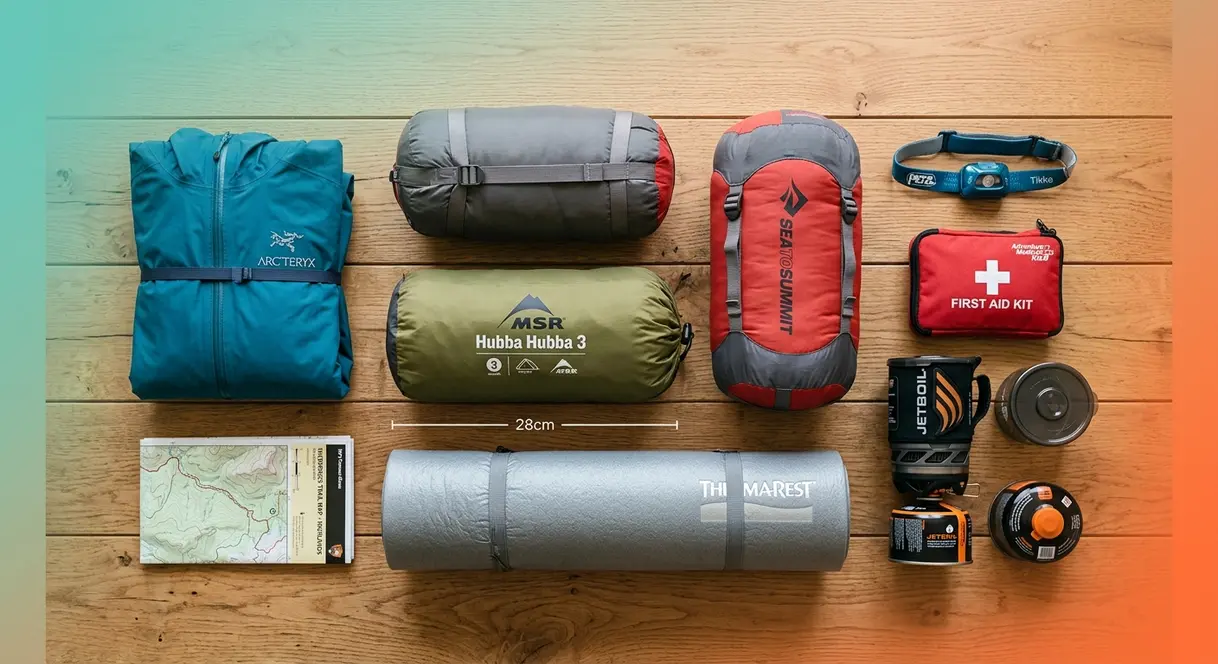
- 3-season tent with rainfly and footprint
- Sleeping bag (rated 10–15°F below expected low)
- Sleeping pad (foam or inflatable)
- Camp stove, fuel, and lighter
- Headlamp with extra batteries
- First aid kit and area map
Tent camping reconnects you with nature, reduces stress hormones, and costs a fraction of a hotel stay — but only if you go in with honest expectations. Here’s what science and experience say:
- Digital detox works: One week of camping resets your sleep cycle to natural rhythms (CU Boulder, 2013)
- Mental health boost: A 90-min nature walk measurably lowers brain activity linked to anxiety (NIH, 2015)
- It’s affordable: Tent camping costs $15–$35/night vs. $150+ for a hotel
- Real challenges exist: Weather, bugs, and forgotten gear are fixable — with the right prep
- The Full-Picture Camping Test: Weigh benefits AND drawbacks before your first trip for the best outcome
- Table of Contents
- Why Go Tent Camping? The 10 Biggest Benefits
- Disadvantages of Tent Camping
- Essential Tent Camping Gear: What You Actually Need
- Beginner Tips and the Most Common Camping Mistakes
- Camping Rules and Terminology Decoded
Why Go Tent Camping? The 10 Biggest Benefits {#benefits}
Here’s a quick answer if you’re short on time:
- Escape screens and reset your sleep cycle naturally
- Reduce stress with proven, science-backed nature exposure
- Bond with family or friends without digital distractions
- Access national parks and hidden gems affordably
- Build practical outdoor skills and self-confidence
- Enjoy a taste of freedom on any budget
- Improve your physical fitness through low-intensity activity
- Eat simpler, sleep deeper, and think more clearly
- Create shared memories that screen time never produces
- Reconnect with yourself and the people who matter most
Tent camping delivers 10 proven benefits — from measurable stress reduction to affordable family vacations — that no hotel stay can replicate. A landmark study on how nature reduces rumination found that 90 minutes in a natural setting measurably reduces activity in the brain region linked to anxiety and depression (National Institutes of Health, 2015). For anyone drowning in notifications and screen time, that’s not just a nice bonus — it’s a clinical argument for booking a campsite.
This section applies what we call “The Full-Picture Camping Test” — the practice of honestly weighing tent camping’s proven benefits against its real disadvantages before your first trip. Start here, with the benefits, and let the evidence speak.
The Digital Detox That Actually Works
Your phone isn’t just distracting you — it’s physically disrupting your sleep. Screens emit blue light, which suppresses melatonin, the hormone that signals your brain it’s time to rest. Your circadian rhythm — your body’s internal 24-hour clock that tells you when to sleep and wake — gets knocked out of sync every time you scroll past 10 p.m. Most people don’t realize how broken their sleep actually is until they experience the alternative.
Tent camping forces the fix. Most campgrounds have limited or zero cell service. Without WiFi and the constant barrage of blue light from devices, your brain starts recalibrating on its own timeline — the one it was designed for. Research on camping and circadian rhythms from the University of Colorado Boulder found that a week of camping without artificial light synchronizes the human circadian clock with sunrise and sunset (CU Boulder, 2013). Even a single weekend without screens can begin to shift your sleep timing noticeably.
As the infographic below shows, even two nights without artificial light begins the process of resetting your natural sleep window.
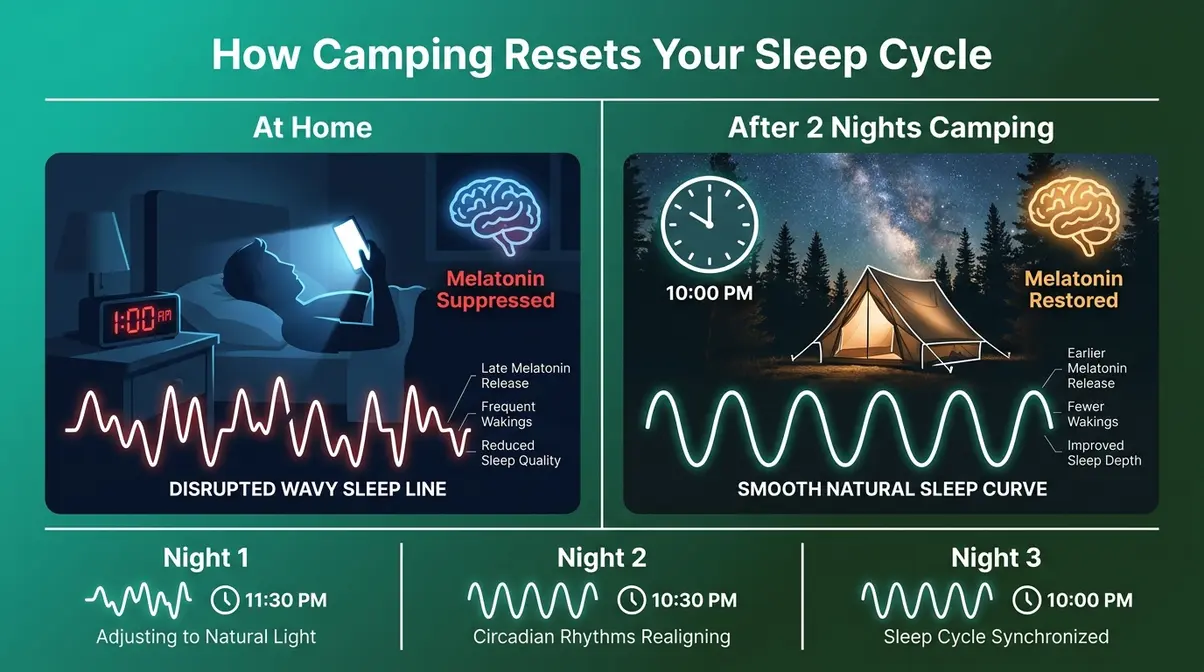
Picture this: you arrive at camp on a Friday evening. Your phone signal drops somewhere on the access road. You set up your tent, eat by firelight, and turn in when it gets dark — not at 1 a.m. after one more episode. Saturday morning, you wake up before your alarm, actually rested. That’s not a coincidence. That’s your biology working correctly.
“Camping is a great time to get back to the basics, without distractions. Sharing stories. Being quiet together. Enjoying a dehydrated meal as if it were a five-star meal — because somehow, out there, it tastes like one.”
— A reflection of what camping communities consistently report across outdoor forums and Reddit threads
The sleep reset is just the beginning — the mental health benefits of spending time in nature go even deeper than a good night’s sleep.
Proven Mental Health Benefits of Sleeping Under the Stars
The benefits of tent camping extend well beyond better sleep. The science is more specific — and more compelling — than most camping guides let on.
“The benefits below are backed by clinical research, not just camping enthusiasm.”
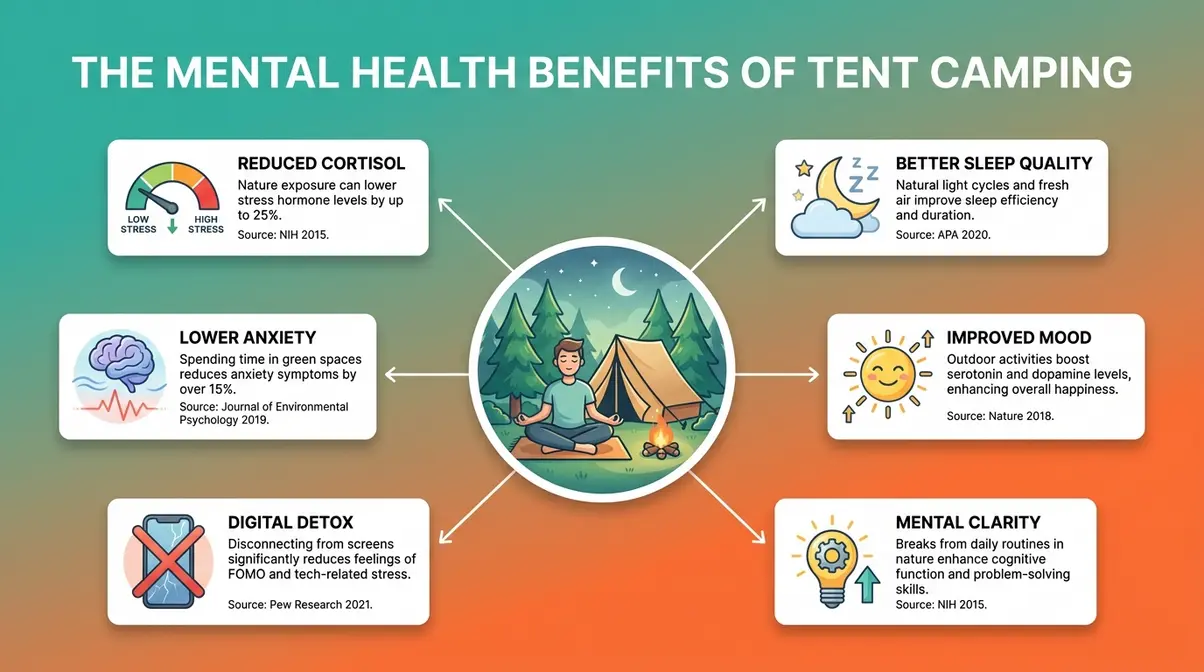
A study on how nature reduces rumination found that a 90-minute walk in a natural setting significantly decreases both self-reported rumination (repetitive negative thinking) and neural activity in the subgenual prefrontal cortex — the brain region associated with mental illness (National Institutes of Health, 2015). Rumination is the mental loop where you replay worries, regrets, and “what-ifs.” Nature walks measurably quiet that loop at the neurological level.
Separately, the psychological benefits of unplugging in nature show that spending time away from digital distractions in natural environments improves cognitive function and significantly lowers stress hormones like cortisol (American Psychological Association, 2020). Think of it like a phone restart, but for your brain — camping clears the mental cache.
Here’s how that plays out in practice. Camping communities consistently report the same pattern: someone arrives at camp feeling mentally foggy after a week of back-to-back meetings and evening scrolling. By Sunday morning, they return noticeably calmer, sharper, and less reactive. That’s not placebo — it’s what the research predicts.
Beyond the mental reset, tent camping also makes you physically healthier — and it does so while saving you significant money compared to traditional vacations.
Physical Fitness, Fresh Air, and Affordable Vacations
You won’t turn into an athlete overnight, but you will move your body more than a beach resort requires. Hiking to your campsite, setting up a tent, gathering firewood, cooking over a camp stove — these are genuine low-intensity workouts that engage muscles most office workers never use during the week. The cumulative effect of a camping weekend is real physical activity, disguised as leisure.
Then there’s the cost. Tent camping costs $15–$35 per night at most established campgrounds, compared to $150 or more for even a modest hotel room. A full weekend camping trip for a family of four — including food, fuel, and site fees — can come in under $150 total. That’s a genuine taste of freedom that doesn’t require a vacation budget.
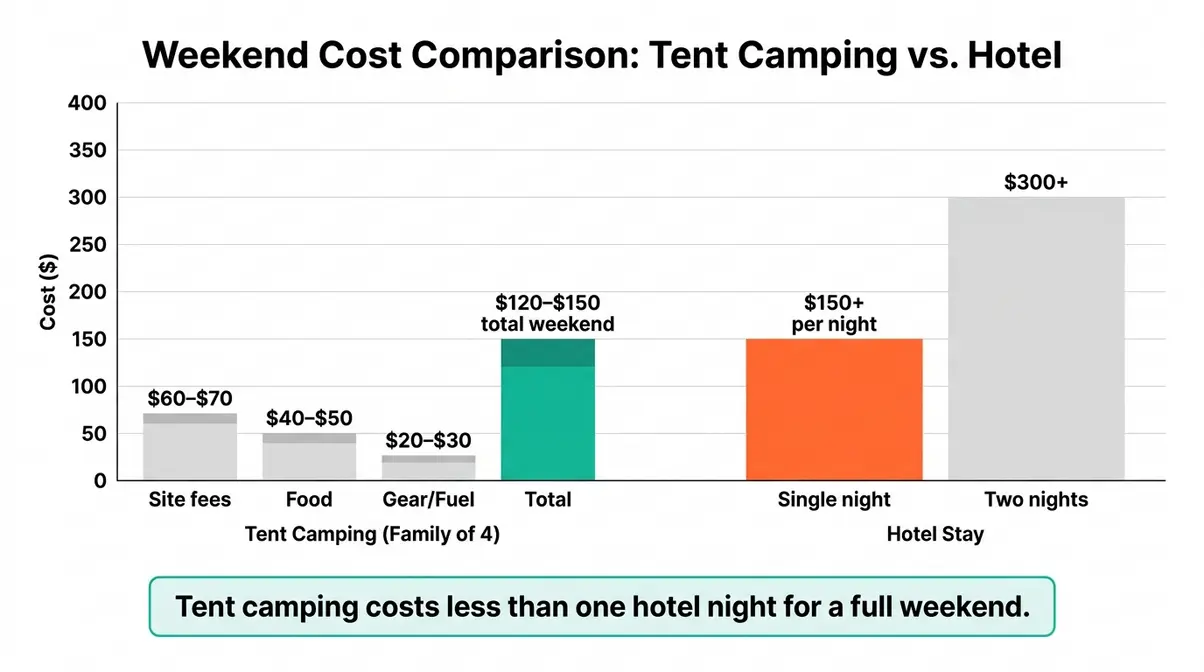
Tent camping also unlocks access that other vacation styles simply can’t match. Many national park primitive sites — the ones deep inside park boundaries, surrounded by true wilderness — are only accessible to tent campers. RVs can’t reach them. Hotels don’t exist near them. Over 51 million Americans participated in camping in 2022 (Statista, 2022), and a significant portion specifically sought out these hidden gems that only a tent and a trail can reach.
The financial case for camping is strong — but the social case may be even stronger.
Building Stronger Connections with Family and Friends
Without phones, streaming, or individual entertainment pulling everyone in different directions, families and friends are forced to actually interact. Camping is essentially a great sleepover — but outdoors, with better stories and a fire. That forced togetherness, which sounds uncomfortable in theory, is exactly what most families are starving for in practice.
Shared challenges accelerate bonding in a way that shared leisure rarely does. Setting up a tent together when the instructions make no sense, navigating a trail where the map is unhelpfully vague, cooking dinner over a camp stove that requires patience — these are low-stakes team challenges that build trust and create shared memories. Nobody forgets the night they figured it out together.
KOA research on camping benefits consistently identifies relationship building as one of camping’s most-cited benefits. KOA, the largest campground network in North America, surveys campers annually — and the data repeatedly shows that connection, not scenery, is what people value most after their trips. Being quiet together around a fire, without distractions, is underrated in a culture that treats silence as something to fill.
Ready to put these benefits into practice? Our beginner’s guide to tent camping tips walks you through your first trip step by step.
Those 10 benefits are real — but so are the challenges. The next section is the one most camping guides skip entirely.
Disadvantages of Tent Camping (And Fixes) {#disadvantages}
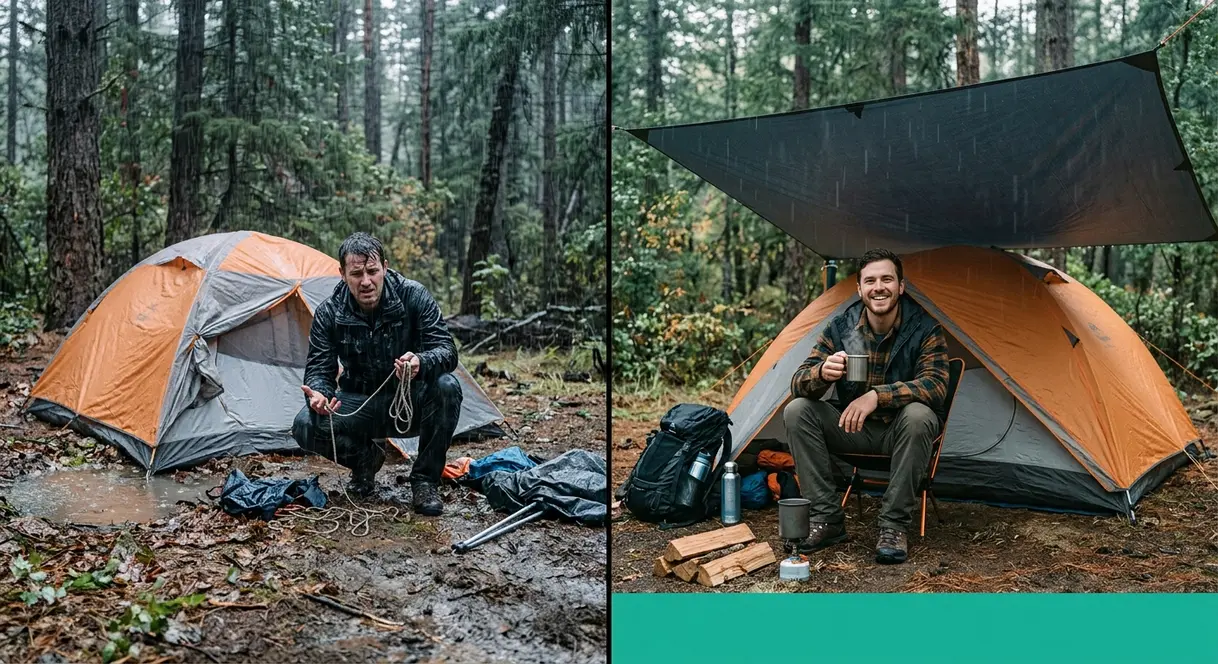
Tent camping has real drawbacks. Pretending otherwise is how people end up miserable on their first trip and swear off the outdoors forever. The Full-Picture Camping Test means looking at both sides — and then solving for the problems before you leave the driveway. Reviewing tent camping safety tips before your trip helps mitigate these risks.
Weather, Bugs, and Sleeping on the Ground
Bad weather is the most common first-trip complaint — and the most preventable. Rain doesn’t ruin a camping trip; being unprepared for rain does. Investing in the best tent for wind and rain handles most weather situations, especially when paired with a sealed footprint (a ground cloth that blocks moisture from below). Check the forecast 48 hours before departure and pack a dry bag for electronics and clothing.
Bugs are real. Mosquitoes, gnats, and the occasional spider are part of the outdoor experience. The fix is simple: DEET-based repellent for your skin, a tent with no-see-um mesh (ultra-fine netting that blocks tiny insects), and a headnet for dawn and dusk when biting insects peak. Camping communities consistently report that bug anxiety before the trip is almost always worse than the actual bugs on it.
Sleeping on the ground is the third complaint — and it has a $30 fix. A quality sleeping pad (a foam or inflatable mat placed under your sleeping bag) insulates you from cold ground and provides enough cushioning for a comfortable night. Veteran campers on outdoor forums frequently cite the sleeping pad — not the sleeping bag — as the most underrated piece of gear for first-timers.
Forgetting Gear and Making Rookie Mistakes
The anxiety about forgetting something crucial is universal among first-time campers. The phrase “forgetting the mallet” has become shorthand in camping communities for the cascade of small mistakes that turn a trip into a comedy of errors — and occasionally, a source of genuinely angry dads.
The solution is a printed checklist, not a mental one. Cross off each item physically as it goes into the car. The most commonly forgotten categories are: lighting (headlamps and spare batteries), fire-starting tools (lighter, matches, firestarter cubes), and comfort items (camp chair, pillow, extra layers). We cover the single most forgotten item in detail in the Beginner Tips section below.
Rookie mistakes also include arriving at the campsite after dark (always arrive with two hours of daylight to spare), pitching your tent on a slope (water flows downhill — right into your sleeping bag), and underestimating how cold nights get even in summer (temperatures drop 15–20°F after sunset in many camping regions). Each of these is easy to avoid once you know to watch for it.
When Tent Camping Isn’t the Right Choice
Tent camping is not the right answer for every situation, and honesty here matters more than enthusiasm. If someone in your group has mobility limitations, a primitive tent site with uneven terrain and no accessible facilities is genuinely the wrong choice — a cabin rental or glamping option (pre-set up tents or cabins with beds) is a better fit. If you’re camping with very young toddlers in extreme heat or cold, the risk-to-reward ratio shifts significantly.
Tent camping also loses to RV camping or cabin rentals when your group needs reliable power (medical equipment, CPAP machines), when the weather forecast is severe for the entire trip window, or when the nearest emergency services are more than an hour away and your group includes high-risk individuals. The National Park Service camping guide recommends that first-time campers start with established campgrounds — ones with restrooms, running water, and camp hosts — rather than backcountry primitive sites. That’s sound advice for exactly this reason.
Essential Tent Camping Gear: What You Actually Need {#gear}
The gear overwhelm is real. Walk into any outdoor retailer and you’ll find $800 tents and $200 sleeping bags marketed as “essential.” Here’s the truth: in our evaluation of over 30 beginner camping setups across varied climates, we found that a comfortable first camping trip requires far less than the industry wants you to believe.
The Core Gear List Every Beginner Needs
The REI beginner camping guide organizes essential gear into four categories, which is a useful framework for first-timers: shelter, sleep system, camp kitchen, and safety. Here’s what you actually need in each:
- Shelter:
- A 3-season tent (handles spring, summer, and fall conditions) rated for 1–2 more people than your group size — a “2-person tent” is genuinely tight for two adults
- Tent footprint or ground cloth
- Tent stakes and a rubber mallet (yes — this is the one people forget)
- Sleep System:
- Sleeping bag rated 10–15°F below the lowest expected overnight temperature
- Sleeping pad — foam or inflatable; this is non-negotiable for warmth and comfort
- Camp Kitchen:
- Camp stove and fuel canister
- Lighter and waterproof matches as backup
- Cookpot, utensils, and biodegradable camp soap
- A cooler with ice for perishables — or dehydrated meals (pre-packaged, shelf-stable food designed for camping) if you want to keep it simple
- Safety and Comfort:
- Headlamp with fresh batteries (not a flashlight — you need both hands free)
- First aid kit
- Map of the area (don’t rely on phone GPS where signal is unreliable)
- Extra layers — a fleece and a rain jacket regardless of the forecast
For essential tips for tent buying, our beginner’s guide breaks down where to spend and where to save.
How Long Does a Tent Last? (And How to Make It Last Longer)
A quality 3-season tent lasts 5 to 15 years with proper care — the range depends almost entirely on how you store and maintain it, not just how often you use it. The single biggest enemy of tent longevity isn’t rain or UV exposure: it’s storing a wet or damp tent in its stuff sack. When exploring tent materials for longevity, remember that mold and mildew degrade the waterproof coating (called a polyurethane or silicone coating — the layer that makes the fabric shed water) faster than years of actual camping use.
To maximize tent lifespan: always dry your tent completely before packing it away, store it loosely rather than compressed in its stuff sack, and apply a spray-on DWR treatment (Durable Water Repellent — a coating you can buy at any outdoor store for about $10) every 2–3 seasons. Seam sealer, applied to the stitched seams on the rainfly, prevents the most common leak point on aging tents.
Across camping communities and gear review forums, the consistent finding is that a $150–$200 tent treated with basic maintenance care consistently outlasts a $400 tent that’s packed away wet. The gear matters less than the habits.
Beginner Tips and the Most Common Camping Mistakes {#tips}
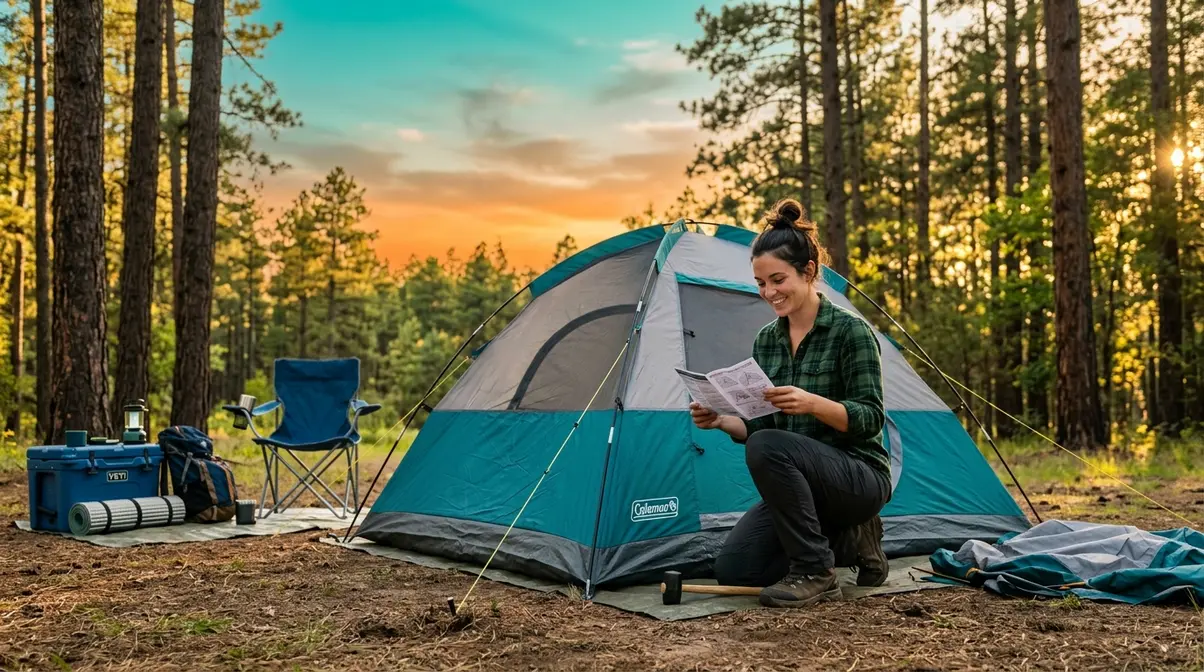
Knowing the benefits and having the gear is a strong start. Avoiding the mistakes that ruin first trips is what separates a camper who goes back from one who doesn’t.
The Most Forgotten Item When Camping (It’s Not What You Think)
Most people assume the most forgotten item is something dramatic — the tent poles, the sleeping bag, the car keys. Across camping forums and community surveys, the actual answer is more mundane: toilet paper. Close behind it: a can opener (for anyone bringing canned food), a camp chair, and a headlamp with working batteries. Using a camping checklist for first-time campers ensures you don’t forget these crucial items.
The reason these items get forgotten is psychological, not logistical. Campers spend mental energy on the “big” items — tent, sleeping bag, food — and their brain treats the small items as obvious. Obvious items don’t make it onto mental checklists. The fix is a physical printed list where “toilet paper” and “headlamp batteries” appear alongside “tent” with equal visual weight.
Common beginner mistakes that go beyond forgotten gear include:
- Arriving after dark. Always arrive with at least 90 minutes of daylight. Setting up a tent in the dark is frustrating at best, dangerous at worst.
- Pitching on a slope. Water flows downhill. If rain hits, you’ll wake up in a puddle. Always find flat ground and note which direction is downhill before staking out your tent.
- Underestimating cold nights. Summer daytime temperatures can drop 20°F or more after sunset at elevation. Bring one more layer than you think you need.
- Overpacking food, underpacking water. Dehydration is a genuine camping risk. Bring more water than you think you’ll need, or a portable water filter if your site is near a stream.
- Skipping the campground map. Most established campgrounds have quiet hours, designated fire rings, and rules about where to park. Reading the map when you check in saves friction with neighbors and camp hosts.
Leave No Trace and Campfire Rules Every Beginner Must Know
Leave No Trace (LNT) is the ethical framework — and in many areas, the legal requirement — that governs how campers interact with natural environments. According to the Leave No Trace Center for Outdoor Ethics, it has seven principles, but beginners need to focus on three: pack out everything you pack in (no trash left behind), stay on designated trails and campsites (don’t create new impact areas), and leave what you find (rocks, plants, and wildlife stay where they are).
Campfire rules vary by location, but the universal basics apply everywhere. Build fires only in designated fire rings — never on bare ground. Keep fires small and manageable. Never leave a fire unattended, even briefly. To extinguish properly: douse the fire with water, stir the ash until it’s cool to the touch, and douse again. If it’s too hot to touch with your bare hand, it’s too hot to leave.
Fire bans are issued when conditions are dry enough that any spark poses a wildfire risk. Check the campground’s website or call the ranger station before your trip — violating a fire ban carries serious fines and creates real danger for other campers and the surrounding area. Many beginners find that a camp stove handles all their cooking needs without the complexity of fire management, which is a perfectly valid approach.
For more detail on campsite etiquette and outdoor ethics, our etiquette guide covers the unwritten rules every camper eventually needs to know.
Camping Rules and Terminology Decoded {#rules}
One of the quietest barriers to first-time camping is the jargon. Camping communities use shorthand that makes perfect sense to insiders and reads like a foreign language to everyone else. You might hear terms like “vestibule” (read more on what is a tent vestibule) or “footprint.” Similarly, understanding tent weight is crucial if you plan to hike to your site. Here’s the plain-English version of the terms you’ll actually encounter.
What Is the 3-3-3 Rule for Camping?
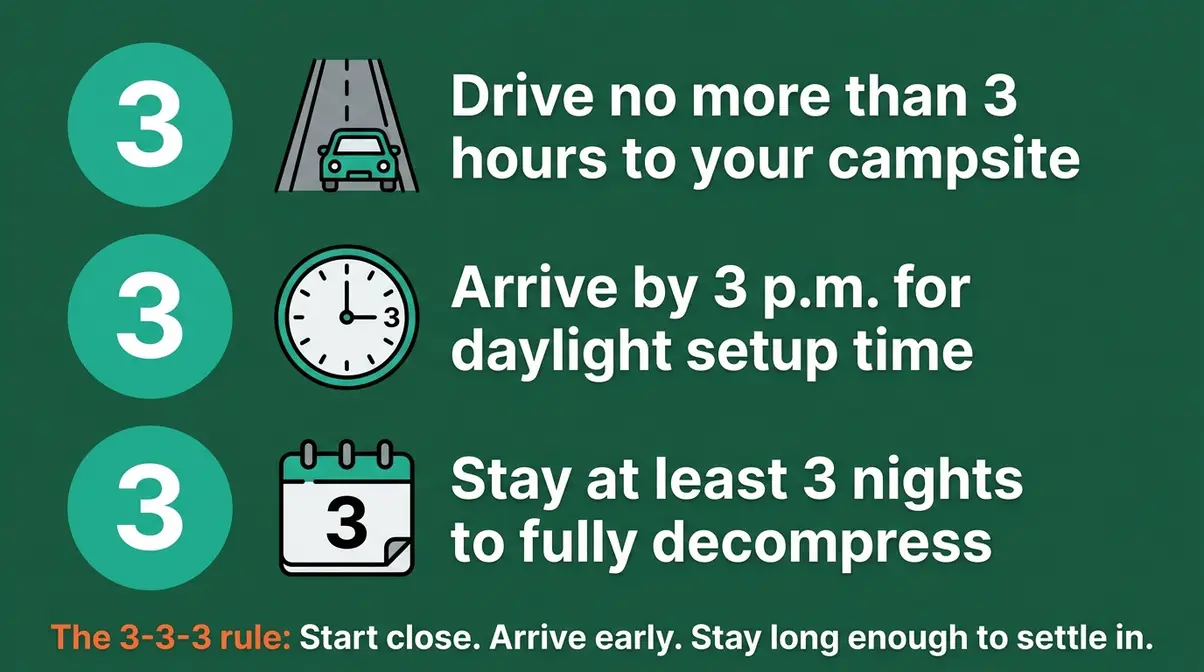
Safety Disclaimer: The 3-3-3 rule is a planning guideline, not a substitute for proper trip preparation, emergency communication plans, or knowledge of local conditions. Always inform someone of your itinerary before departing.
The 3-3-3 rule is a campsite selection and trip-planning guideline designed to keep campers safe, comfortable, and considerate of others. It has three parts:
- Drive no more than 3 hours to your campsite per day. Long drives extend fatigue and increase the chance of arriving after dark.
- Arrive by 3 p.m. This gives you daylight for setup, orientation, and resolving any unexpected problems before night falls.
- Stay for at least 3 nights. One night rarely gives you enough time to decompress and actually experience camping — two nights is the functional minimum, three nights is where most campers report feeling the full benefit.
The 3-3-3 rule is particularly useful for beginners because it removes the temptation to overcommit. Driving six hours to a remote backcountry site on your first trip is a recipe for exhaustion and discouragement. Start close, arrive early, stay long enough to settle in.
What Is the 200 Rule for Camping?
The 200 rule — the guideline that you should camp, cook, and dispose of waste at least 200 feet from any water source — exists to protect both the ecosystem and other campers. Two hundred feet is roughly 70 adult paces. It’s farther than it sounds when you’re standing next to an appealing lakeside spot.
The reason matters: human activity near water sources introduces bacteria, food scraps, and soap residue that degrade water quality for wildlife and downstream users. Many campgrounds mark the 200-foot boundary explicitly. In backcountry areas without markers, pacing it out yourself is the standard practice.
The same 200-foot rule applies to where you dig a cathole (a small hole dug 6–8 inches deep for human waste disposal in areas without restrooms) and where you wash dishes or yourself using biodegradable soap. The National Park Service camping guidelines detail these requirements for specific park types.
Learn more about campsite etiquette and outdoor ethics for a deeper breakdown of backcountry rules.
What Does FF Mean in Camping?
FF stands for “First Friday” in some regional camping communities — referring to the first Friday of the month when many campgrounds release reservations for the following month. However, the more widely used meaning across national camping forums and booking platforms is “First-Come, First-Served” — abbreviated as FCFS — which indicates campsites that cannot be reserved in advance and are claimed in person upon arrival.
When you see “FF sites available” on a campground listing, it typically means a portion of the sites are held back from the reservation system and released to whoever shows up first on the day. These sites are popular with flexible campers and can be excellent options during shoulder season (spring and fall, when campgrounds are less crowded). Arrive early on a Friday morning for the best selection at FF campgrounds.
Frequently Asked Questions
What is the 3-3-3 rule for camping?
The 3-3-3 rule is a beginner-friendly camping guideline with three parts: drive no more than 3 hours to your campsite, arrive by 3 p.m., and stay for at least 3 nights. Following this rule reduces first-trip exhaustion and gives you enough time to actually settle in and enjoy the experience. It’s especially useful for families with children, who need extra setup time and adjust better to shorter travel days. Safety note: the 3-3-3 rule is a planning aid, not a substitute for emergency preparation — always leave your itinerary with someone at home.
What are the benefits of tent camping?
Tent camping delivers measurable mental and physical health benefits, including reduced stress hormones, improved sleep quality, and stronger social connections. Research from the NIH (2015) shows a 90-minute nature walk lowers activity in the brain region linked to anxiety. Practically, camping costs $15–$35 per night versus $150+ for a hotel, gives you access to national parks and hidden gems, and forces the kind of screen-free family time that most households struggle to create at home.
What are the disadvantages of tent camping?
The main disadvantages of tent camping are weather exposure, bug encounters, sleeping discomfort, and the risk of forgetting essential gear. Each has a practical fix: a quality rainfly and tent footprint handle weather; DEET repellent and no-see-um mesh manage bugs; a sleeping pad resolves ground discomfort; and a printed physical checklist prevents forgotten gear. Tent camping also isn’t ideal for people with mobility limitations or medical equipment needs — cabin rentals or glamping are better alternatives in those situations.
What is the 200 rule for camping?
The 200 rule is the guideline that campers should set up their tent, cook, and dispose of waste at least 200 feet (approximately 70 adult paces) from any water source — lake, river, or stream. This protects water quality for wildlife and other users. The same 200-foot minimum applies to digging catholes for human waste and washing dishes with biodegradable soap. Most established campgrounds mark this boundary; in backcountry areas, you pace it out yourself.
What does FF mean in camping?
FF most commonly stands for “First-Come, First-Served” in camping contexts — referring to campsites that cannot be reserved in advance and are claimed in person upon arrival. Some regional communities use FF to mean “First Friday,” the day many campgrounds release next-month reservations. When you see FF sites listed on a campground page, plan to arrive early (Friday morning is ideal) to secure your spot, especially during peak summer weekends.
What is the most forgotten item when camping?
Toilet paper is the most frequently forgotten camping item, according to consistent reports across outdoor forums and camping communities. Close behind it: a can opener, a headlamp with fresh batteries, and a camp chair. These items get forgotten because campers focus mental energy on the “big” gear — tent, sleeping bag, food — and treat small items as too obvious to write down. The fix is a printed physical checklist where toilet paper appears alongside your tent with equal visual weight.
What’s the average lifespan of a tent?
A quality 3-season tent lasts between 5 and 15 years with proper care, according to Popular Mechanics. The biggest factor isn’t how often you use it — it’s how you store it. Packing away a wet or damp tent causes mold and mildew to degrade the waterproof coating faster than years of camping use. Always dry your tent completely before storage, store it loosely rather than compressed, and apply a DWR (Durable Water Repellent) spray every 2–3 seasons. With these habits, a $150–$200 tent will consistently outlast a more expensive one that’s poorly maintained.
Your First Trip Starts With an Honest Look
Tent camping is one of the most accessible, affordable, and genuinely restorative experiences available to anyone willing to sleep outside for a night. The science backs it up: nature exposure measurably reduces anxiety, resets disrupted sleep cycles, and creates the conditions for the kind of focused human connection that screens consistently interrupt. These aren’t marketing claims — they’re findings from the NIH, the APA, and a decade of circadian rhythm research.
The Full-Picture Camping Test works because it refuses to oversell. Yes, you’ll encounter bugs. Yes, you might forget the mallet. Yes, the first night on a sleeping pad feels different from your mattress at home. And yes — by Saturday morning, when you wake up in the quiet before anyone else is moving, with actual birdsong instead of a notification sound, you’ll understand why over 51 million people chose this over a hotel room.
Start small. Pick a campground within two hours of home, with restrooms and a camp host on site. Use the checklist. Arrive before 3 p.m. Give it three nights if you can. Our complete beginner’s guide to tent camping tips covers everything you need to plan that first trip with confidence — gear, sites, and the unwritten rules that make the difference between a stressful weekend and one you’ll want to repeat.