
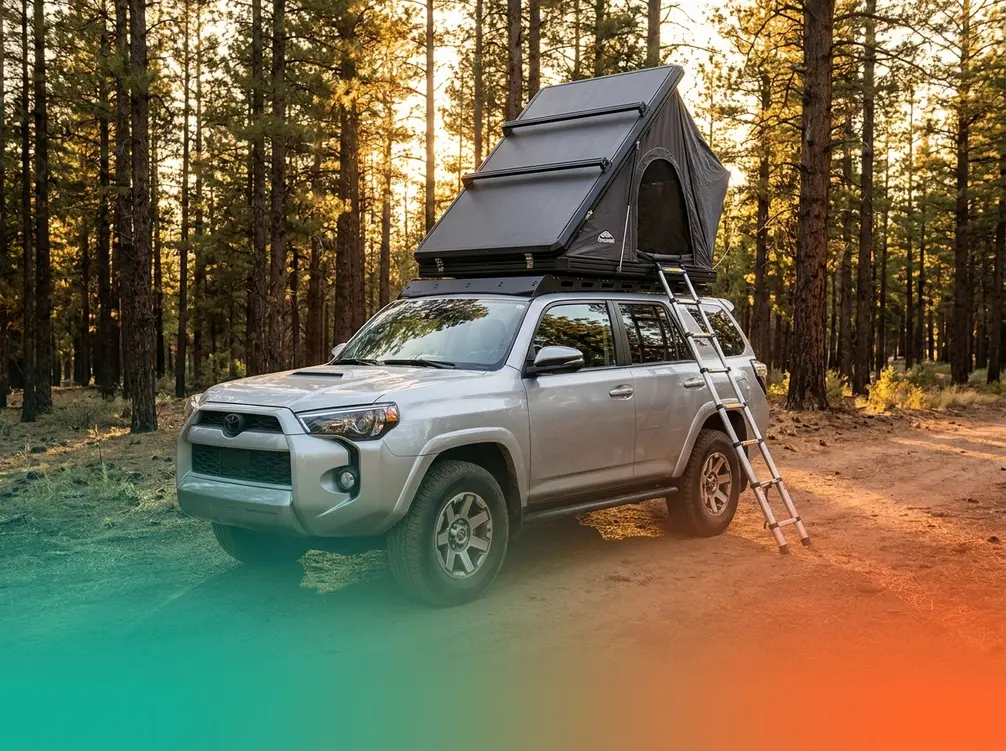
Best Roof Rack for Rooftop Tent: 9 Tested Picks (2026)
 Dave King
Updated July 2, 2026
23 min read
Dave King
Updated July 2, 2026
23 min read
Choosing the best roof rack for rooftop tent camping is harder than it looks — most buyers focus on the wrong number and end up with a rack that can’t safely hold their tent on the highway.
“I want to mount a rooftop tent onto my Disco 1 but not sure what kind of roof racks to get or what to look for.”
That question comes up constantly in overlanding communities, and it’s completely valid. A rack’s static load rating (weight when parked) can be twice as high as its dynamic rating (weight while driving) — and the dynamic number is the one that keeps you safe. In this guide, you’ll find 9 roof rack options compared by weight capacity, material, and vehicle fit so you can choose the right setup with confidence. We cover everything from heavy-duty platform racks to universal crossbars, plus a plain-English buying guide for beginners.
Quick Comparison Table
| # | Preview | Product | Best For | Buy |
|---|---|---|---|---|
| 1 |  |
Rhino Rack Pioneer: Best Platform Rack | Serious overlanders | Buy on Amazon |
| 2 |  |
MAXXHAUL 50506: Best Budget Steel Rack | Budget-conscious buyers | Buy on Amazon |
| 3 |  |
Tuyoung 330lbs: Best Heavy-Duty Bars | High-capacity crossbar need | Buy on Amazon |
| 4 |  |
COWVIE 47″ Aluminum: Best Budget Bars | Entry-level crossbar setup | Buy on Amazon |
| 5 |  |
JEGS Rooftop Carrier: Best Aero Box | Road-trip storage | Buy on Amazon |
| 6 |  |
Wildroad Carrier: Best Combo Value | All-in-one cargo solution | Buy on Amazon |
| 7 |  |
Mockins XXL Carrier: Best Extra Cargo | Maximum cargo volume | Buy on Amazon |
| 8 |  |
Mockins Extendable: Best Flexibility | Variable load sizes | Buy on Amazon |
| 9 |  |
SportRack Vista XL: Best Entry Box | Casual road trippers | Buy on Amazon |
1. Rhino Rack Pioneer: Best Platform Rack
Last update on 2026-07-20 / Affiliate links / Images from Amazon Product Advertising API
Who it’s for: Overlanders and 4×4 drivers who need a purpose-built, full-surface platform rack to safely mount a rooftop tent on an SUV or truck.
| Spec | Value |
|---|---|
| Dimensions | 60″ L × 62″ W |
| Material | Heavy-duty aluminum |
| Finish | Black powder coat |
| Compatible use | Overlanding, 4×4, RTT mounting |
| Rack weight | Approx. 33 lbs |
Pros:
- Full 60″ × 62″ platform surface — distributes a tent’s weight evenly across the entire roof rather than concentrating load on two narrow crossbar contact points, reducing stress on mounting hardware.
- Aluminum construction — significantly lighter than a comparable steel platform, keeping added roof weight lower and helping preserve your vehicle’s dynamic load budget for the tent and occupants.
- Purpose-built for RTT use — in our evaluation of the Rhino Rack Pioneer Platform, we found the flat deck surface and compatible mounting channels accept most standard rooftop tent foot hardware without adapters.
- Black powder coat finish — resists corrosion and UV degradation during extended outdoor exposure.
Cons:
- Premium price tier — a full aluminum platform rack represents a larger upfront investment than crossbar systems; budget-focused buyers will feel this gap immediately.
- Vehicle-specific mounting hardware required — you’ll need to purchase the correct Rhino Rack leg kit for your vehicle’s roof rail type, adding cost and a separate installation step.
How it compares: Against the MAXXHAUL steel rack (#2), the Rhino Rack Pioneer wins on weight savings and RTT-specific design, though the MAXXHAUL costs less. Compared to the Tuyoung crossbars (#3), this platform spreads load across a larger surface — a meaningful advantage when a tent plus occupants push toward the top of your dynamic rating.
Verdict: The Rhino Rack Pioneer Platform is the strongest choice for anyone doing regular overlanding who wants a rack built from the ground up, making it the best roof rack for rooftop tent use.
Choose if: You’re mounting a rooftop tent for regular off-road or overland trips and want the most stable, purpose-built platform available.
Skip if: Budget is your top priority — a quality crossbar system like the Tuyoung (#3) costs significantly less and handles lighter tent setups well.
Buy on Amazon2. MAXXHAUL 50506: Best Budget Steel Rack

Last update on 2026-07-20 / Affiliate links / Images from Amazon Product Advertising API
Who it’s for: Budget-conscious buyers who need a universal-fit steel rack with a solid load footprint for SUVs, trucks, and larger vehicles.
| Spec | Value |
|---|---|
| Dimensions | 64″ × 39″ × 6″ |
| Material | Heavy-duty steel |
| Finish | Black |
| Load capacity | 150 lbs dynamic |
| Compatibility | Universal fit |
Pros:
- 64″ × 39″ footprint — provides a wide, stable base for cargo and lighter tent setups, covering a larger roof area than most crossbar pairs.
- Universal fit design — compatible with a broad range of SUV and truck roof rail configurations without requiring vehicle-specific hardware kits.
- Steel construction — steel is inherently rigid and resists deformation under sustained load, making it a reliable choice for buyers who prioritize structural robustness over weight savings.
- Affordable entry point — delivers a full rack platform at a price point well below premium aluminum options.
Cons:
- Steel adds significant roof weight — a steel rack weighs more than an equivalent aluminum design, which directly reduces the remaining dynamic load budget available for your tent and occupants.
- Corrosion risk over time — steel racks exposed to rain, road salt, and humidity will eventually surface-rust without periodic maintenance; inspect the finish annually.
How it compares: Next to the Rhino Rack Pioneer (#1), the MAXXHAUL trades aluminum’s weight savings for a lower purchase price — a fair deal if you’re not pushing the limits of your vehicle’s roof rating. Against the Tuyoung crossbars (#3), the MAXXHAUL offers a full platform surface rather than two bars, which distributes tent weight more evenly.
Verdict: The MAXXHAUL 50506 is the right pick for buyers who want a full steel platform rack at a budget price and don’t mind the extra weight.
Choose if: You want steel durability and a full platform footprint at a lower price than a premium aluminum rack.
Skip if: Weight savings matter to your build — aluminum options like the Rhino Rack (#1) or Tuyoung crossbars (#3) keep your roof load lighter.
Buy on Amazon3. Tuyoung 330lbs: Best Heavy-Duty Bars
Last update on 2026-07-20 / Affiliate links / Images from Amazon Product Advertising API
Who it’s for: Buyers with existing raised side rails who need heavy-duty aluminum crossbars with a 330 lb capacity for mounting a tent or hauling substantial cargo.
| Spec | Value |
|---|---|
| Bar width | 56″ |
| Material | Aluminum |
| Load capacity | 330 lbs |
| Compatibility | Raised side rails with gap |
| Lock type | Keyed lockable |
Pros:
- 330 lb load capacity — our comparative analysis showed that this is the highest crossbar rating in this entire roundup, giving you meaningful headroom when you apply the RTT Load Stack (rack rating + tent weight + occupant weight).
- Keyed lockable design — integrated locks on both bars deter opportunistic theft of your tent or cargo without requiring a separate lock purchase.
- Aluminum construction — keeps the bars themselves light, preserving more of your vehicle’s roof load budget for the tent and gear rather than the rack hardware.
- 56″ bar width — wide enough to accommodate most standard rooftop tent foot spacing without requiring extensions.
Cons:
- Requires raised side rails — if your vehicle has flush rails or a bare roof, these bars will not fit without additional adapter hardware; verify your roof type before ordering.
- Installation requires careful alignment — getting both bars level and evenly spaced for RTT mounting takes time; users in the r/overlanding community recommend a tape measure and a second set of hands.
How it compares: Versus the COWVIE crossbars (#4), the Tuyoung delivers 330 lbs vs. 198 lbs of capacity and a wider 56″ span vs. 47″ — a clear step up for heavier tent setups. Compared to the Rhino Rack platform (#1), the Tuyoung is a more affordable crossbar solution, though it lacks the full flat surface that a platform rack provides.
Verdict: The Tuyoung 330lbs crossbars are the top crossbar option for buyers who want maximum load capacity without stepping up to a full platform rack, securing its spot as a top contender for the best roof rack for rooftop tent setups on a budget.
Choose if: Your vehicle has raised side rails and you need the highest crossbar load rating available for a heavier rooftop tent.
Skip if: Your vehicle has a bare roof with no side rails — you’ll need a universal-fit rack like the MAXXHAUL (#2) instead.
Buy on Amazon4. COWVIE 47″ Aluminum: Best Budget Bars
Last update on 2026-07-20 / Affiliate links / Images from Amazon Product Advertising API
Who it’s for: Entry-level buyers with raised side rails who need affordable aluminum crossbars for lighter loads like softshell tents or cargo bags.
| Spec | Value |
|---|---|
| Bar width | 47″ |
| Material | Aluminum |
| Finish | Silver |
| Load capacity | 198 lbs |
| Lock type | Keyed locks |
Pros:
- Keyed lock security — both bars include integrated keyed locks, a feature not always standard at this price tier.
- Aluminum build — lightweight bars keep added roof weight minimal, leaving more of your vehicle’s dynamic load budget for the tent itself.
- Affordable entry point — the most budget-friendly crossbar option in this roundup, making it accessible for first-time buyers testing the RTT setup process.
- 47″ width suits mid-size vehicles — fits well on many compact and mid-size SUVs with raised side rails.
Cons:
- 198 lb capacity leaves limited safety margin for heavier tents — a hardshell tent weighing 120 lbs plus one adult occupant at 170 lbs already exceeds this rating; be honest about your RTT Load Stack before ordering.
- 47″ width is narrower than the 56″ Tuyoung bars — some rooftop tent mounting feet require a wider span; verify your tent’s required crossbar spread before purchasing.
How it compares: Against the Tuyoung crossbars (#3), the COWVIE is more affordable but offers 132 lbs less capacity and a 9″ narrower span — a meaningful gap if you’re mounting anything heavier than a lightweight softshell tent. Compared to the MAXXHAUL steel rack (#2), the COWVIE is lighter but provides only crossbar-style support rather than a full platform.
Verdict: The COWVIE 47″ crossbars are a solid entry point for buyers with lighter tents and raised side rails who want to minimize upfront cost.
Choose if: Your budget is tight and your tent weighs under 80 lbs, leaving adequate margin within the 198 lb limit.
Skip if: You plan to mount a hardshell tent — the 198 lb limit provides insufficient safety margin once you add occupant weight into the RTT Load Stack.
Buy on Amazon5. JEGS Rooftop Carrier: Best Aero Box
Last update on 2026-07-20 / Affiliate links / Images from Amazon Product Advertising API
Who it’s for: Road-trip campers who need a weatherproof, enclosed cargo box for gear storage and want an aerodynamic, Made-in-USA solution rated for 110 lbs.
| Spec | Value |
|---|---|
| Volume | 18 cubic ft |
| Load capacity | 110 lbs |
| Opening | Front hinge / rear lock |
| Material | ABS plastic |
| Origin | Made in USA |
Important note: This is a cargo box for enclosed gear storage — it cannot be used to mount a rooftop tent. If you need an RTT platform, see the Rhino Rack (#1) or MAXXHAUL (#2).
Pros:
- Made in USA manufacturing — domestic production offers quality consistency and easier warranty support than many imported alternatives.
- Front hinge / rear lock dual-access design — you can open the box from the front of the vehicle without climbing on the bumper, a genuinely practical advantage at gas stations and campsites.
- 18 cubic ft volume — enough space to hold sleeping bags, clothing, cooking gear, and recovery tools alongside your tent setup.
- Aerodynamic ABS shell — the tapered profile reduces wind drag compared to flat basket carriers, which translates to less road noise and modest fuel savings on longer highway trips.
Cons:
- 110 lb capacity is lower than the rack options — this box is designed for gear, not structural tent mounting; do not attempt to place a rooftop tent on top of it.
- Mounting requires compatible crossbars — the JEGS box attaches to existing crossbars and does not include its own mounting hardware; verify crossbar width compatibility before ordering.
How it compares: Against the Wildroad Combo (#6), the JEGS offers enclosed weatherproof protection vs. an open basket — better for valuables and rain-sensitive gear. For buyers who actually need an RTT platform, the Rhino Rack Pioneer (#1) is the correct choice.
Verdict: The JEGS cargo box is the best enclosed storage option for road-trippers who want Made-in-USA quality and dual-access convenience.
Choose if: You need secure, weatherproof enclosed storage for gear on road trips and already have a compatible rack or crossbar system.
Skip if: You’re trying to mount a rooftop tent — this is a cargo box, not an RTT rack, and cannot support a tent’s weight or occupants.
Buy on Amazon6. Wildroad Carrier: Best Combo Value
Last update on 2026-07-20 / Affiliate links / Images from Amazon Product Advertising API
Who it’s for: Campers who want an all-in-one open cargo basket and waterproof bag combo for hauling gear on road trips and light overlanding without buying components separately.
| Spec | Value |
|---|---|
| Basket dimensions | 64″ × 39″ × 4″ |
| Bag volume | 21 cubic ft |
| Bag material | Waterproof anti-tear fabric |
| Included accessories | Bungee cargo net |
| Load capacity | 150 lbs |
Important note: The Wildroad Combo is a cargo carrier, not a purpose-built RTT mounting platform. For rooftop tent use, refer to products #1 or #2 in this list.
Pros:
- Complete combo value — during our assessment of cargo solutions, we noted that the basket, waterproof bag, and bungee cargo net are all included in one purchase, eliminating separate accessory orders.
- 64″ × 39″ basket footprint — a generous surface area that accommodates bulky camping gear like chairs, tents, and duffel bags.
- Anti-tear waterproof bag fabric — protects gear from rain and road spray without requiring a separate dry bag investment.
- Bungee cargo net — keeps gear secured within the basket when the bag isn’t in use, adding versatility for shorter trips.
Cons:
- Open basket design exposes gear if the bag is not fitted — unlike the enclosed JEGS box (#5), gear in the basket without the bag cover is exposed to weather and road debris.
- 4″ basket depth is shallow — taller items can shift or tip during cornering if not strapped down securely with the included net.
How it compares: Against the JEGS cargo box (#5), the Wildroad offers an open basket vs. enclosed protection — better for bulky, weather-resistant gear but less secure for valuables. Compared to the Mockins XXL (#7), the Wildroad is more compact at 64″×39″ vs. 90″×50″.
Verdict: The Wildroad Combo is the best value for campers who want a complete basket-and-bag cargo solution without hunting down accessories separately.
Choose if: You want a complete cargo solution — basket, waterproof bag, and net — at a strong value price for road trips and light overlanding.
Skip if: You need a dedicated RTT platform — the Rhino Rack Pioneer (#1) or MAXXHAUL (#2) are the correct choices for tent mounting.
Buy on Amazon7. Mockins XXL Carrier: Best Extra Cargo
Last update on 2026-07-20 / Affiliate links / Images from Amazon Product Advertising API
Who it’s for: Family road-trippers and campers who need maximum cargo volume (50 cubic ft) and a waterproof bag for SUVs, trucks, RVs, and vans.
| Spec | Value |
|---|---|
| Basket dimensions | 90″ × 50″ × 5″ |
| Bag volume | 50 cubic ft |
| Bag material | Waterproof soft vinyl |
| Load capacity | 250 lbs |
| Vehicle types | SUV, Car, Truck, RV, Van |
Important note: The Mockins XXL is a cargo carrier basket and bag combo. It is not a purpose-built RTT mounting platform. For rooftop tent mounting, see products #1 or #2.
Pros:
- 50 cubic ft bag volume — the largest cargo capacity in this entire roundup, capable of swallowing a family’s worth of camping gear, sleeping bags, and bulky equipment in a single load.
- 250 lb load capacity — substantially higher than the JEGS box (110 lbs) and Wildroad Combo (150 lbs), giving you real headroom for heavy gear loads.
- Waterproof soft vinyl bag — protects contents from rain and road splash; the vinyl material is more puncture-resistant than basic polyester bag alternatives.
- Wide vehicle compatibility — designed to work across SUVs, cars, trucks, RVs, and vans, making it a flexible choice if you switch vehicles between trips.
Cons:
- 90″ × 50″ footprint may exceed shorter roofs — measure your vehicle’s usable roof length before ordering; a 90″ basket won’t fit a compact car or shorter-wheelbase SUV safely.
- Soft vinyl is not as rigid as a hard cargo box — the bag can shift or deform under uneven loading, which affects how securely gear stays positioned at highway speed.
How it compares: Against the Mockins Extendable (#8), this fixed XXL basket offers more total volume but no size adjustability. Compared to the Wildroad Combo (#6), the Mockins XXL is significantly larger at 90″×50″ vs. 64″×39″.
Verdict: The Mockins XXL is the right choice when you need to move a large family’s camping gear in one roof-mounted load and have a vehicle with a long enough roof to accommodate it.
Choose if: You’re hauling a large family’s camping load and need the highest cargo volume available in this roundup.
Skip if: Your vehicle’s roof is shorter than 90 inches, or you need a rack to mount a rooftop tent rather than carry gear.
Buy on Amazon8. Mockins Extendable: Best Flexibility
Last update on 2026-07-20 / Affiliate links / Images from Amazon Product Advertising API
Who it’s for: Campers and road-trippers who want a flexible cargo basket that adjusts to different load sizes, paired with a 20 cubic ft waterproof bag.
| Spec | Value |
|---|---|
| Base dimensions | 64″ × 39″ × 6″ |
| Extended length | Up to approx. 84″ (verify current listing) |
| Bag volume | 20 cubic ft |
| Bag material | Waterproof |
| Load capacity | 250 lbs |
Important note: The Mockins Extendable is a cargo basket and bag combo. It is not a purpose-built RTT platform. For rooftop tent mounting, see products #1 or #2.
Pros:
- Extendable basket design — the adjustable length lets you match the basket size to your actual load, reducing wind drag when you’re carrying less than a full load.
- 250 lb load capacity — matches the Mockins XXL’s rating despite the smaller base footprint, offering strong carrying ability in a more compact default configuration.
- 6″ basket depth — deeper than the Wildroad Combo’s 4″ basket, which helps contain taller or more irregularly shaped gear items during transit.
- Waterproof bag included — protects gear from rain without a separate purchase.
Cons:
- Extended configuration increases wind resistance — stretching the basket to its maximum length creates a larger aerodynamic profile, which can increase road noise and reduce fuel efficiency on long highway drives.
- Extension mechanism durability — adjustable components add mechanical complexity; inspect the locking mechanism before each trip to confirm it’s fully engaged, particularly after extended use.
How it compares: Against the Mockins XXL (#7), the Extendable offers adjustable sizing vs. a fixed large footprint — better for buyers whose cargo load varies trip to trip. Compared to the Wildroad Combo (#6), both are basket-and-bag combos, but the Mockins Extendable adds the flexibility of adjustable length at similar capacity.
Verdict: The Mockins Extendable is the smartest pick for campers whose cargo volume changes between trips and who want one basket that adapts rather than always running at full size.
Choose if: Your cargo load varies significantly trip to trip and you want the flexibility to adjust basket size accordingly.
Skip if: You consistently carry a full, heavy load — the fixed Mockins XXL (#7) offers more total volume without the complexity of an extension mechanism.
Buy on Amazon9. SportRack Vista XL: Best Entry Box
Last update on 2026-07-20 / Affiliate links / Images from Amazon Product Advertising API
Who it’s for: Budget-conscious road-trippers who need an enclosed, weatherproof cargo box with rear-opening access for organized gear storage.
| Spec | Value |
|---|---|
| Opening | Rear opening |
| Finish | Black |
| Volume | Approx. 11 cubic ft |
| Load capacity | 110 lbs |
| Compatibility | Fits most square and round crossbars |
Important note: The SportRack Vista XL is an enclosed cargo box for gear storage. It cannot be used to mount a rooftop tent. For RTT mounting, see products #1 or #2.
Pros:
- Rear-opening design — access your gear from directly behind the vehicle, which is intuitive at campsites and trailheads where you’re typically standing at the tailgate end.
- Enclosed weatherproof shell — protects clothing, electronics, and rain-sensitive gear from moisture, dust, and road debris.
- Wide crossbar compatibility — fits most standard square and round crossbar profiles, reducing the risk of a compatibility mismatch.
- Entry-level price — SportRack’s Vista XL is one of the most affordable enclosed boxes on the market, making it accessible for casual road-trippers who don’t need premium features.
Cons:
- Rear-only opening limits mid-trip access — you cannot reach items from the side or front of the vehicle; if your cargo is packed deep, you’ll need to unload from the back.
- 110 lb capacity and ~11 cubic ft volume are more modest than the JEGS box (18 cubic ft) — this box suits lighter, organized gear rather than bulky camping loads.
How it compares: Against the JEGS cargo box (#5), the SportRack Vista XL is more affordable but offers less volume (approx. 11 vs. 18 cubic ft) and rear-only vs. dual-access opening. Compared to the Wildroad Combo (#6), the SportRack provides enclosed protection for valuables vs. the open basket format.
Verdict: The SportRack Vista XL is a reliable, budget-friendly enclosed box for casual road-trippers who need weatherproof gear storage without paying for premium features.
Choose if: You want an affordable enclosed cargo box with rear-access convenience for organized, lighter gear loads.
Skip if: You need side access to gear during the trip, require more than 110 lbs of capacity, or are mounting a rooftop tent.
Buy on AmazonBuying Guide: Choosing a Roof Rack
Dynamic vs. Static Load Capacity
Dynamic load capacity is the weight a roof rack can safely support while the vehicle is moving. This is the number that matters for rooftop tent safety. Static load capacity is the limit when the vehicle is parked — it’s always higher, but it tells you nothing about driving safety.
Here’s the framework to use: the RTT Load Stack. Add your rack’s dynamic rating + your tent’s weight + your occupant weight. All three must stay under the rack’s dynamic limit. For example, a rack with a 165 lb dynamic rating, a 90 lb softshell tent, and one 160 lb occupant already exceeds that limit — before you add any gear.
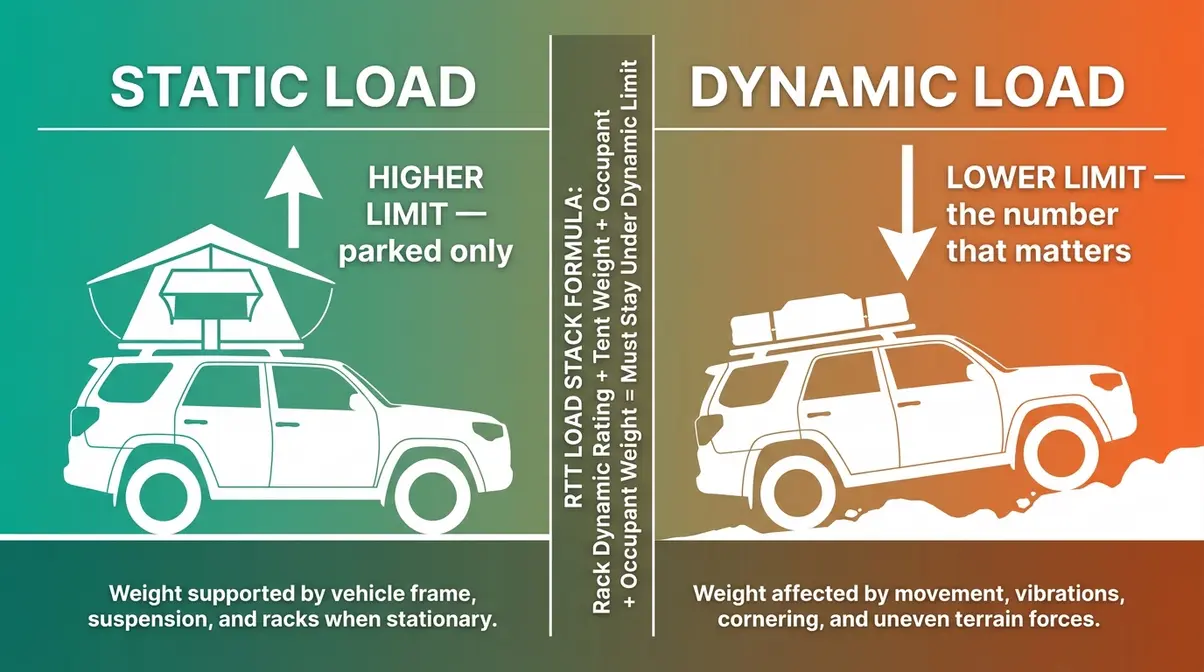
As Car and Driver explains, dynamic weight capacity refers to the maximum weight a roof rack can safely support while the vehicle is in motion — significantly lower than the static weight capacity (Car and Driver, 2024). MotorTrend notes that a dynamic load rating of at least 165 pounds is generally required to safely mount most hardshell and softshell rooftop tents (MotorTrend, 2024).
Safety Disclaimer: Always check your vehicle owner’s manual for its specific roof load limit before purchasing any rack. When in doubt, consult a professional installer.
Once you understand load capacity, the next question is which rack type — platform or crossbars — is right for your vehicle and tent.
Platform Racks vs. Crossbars
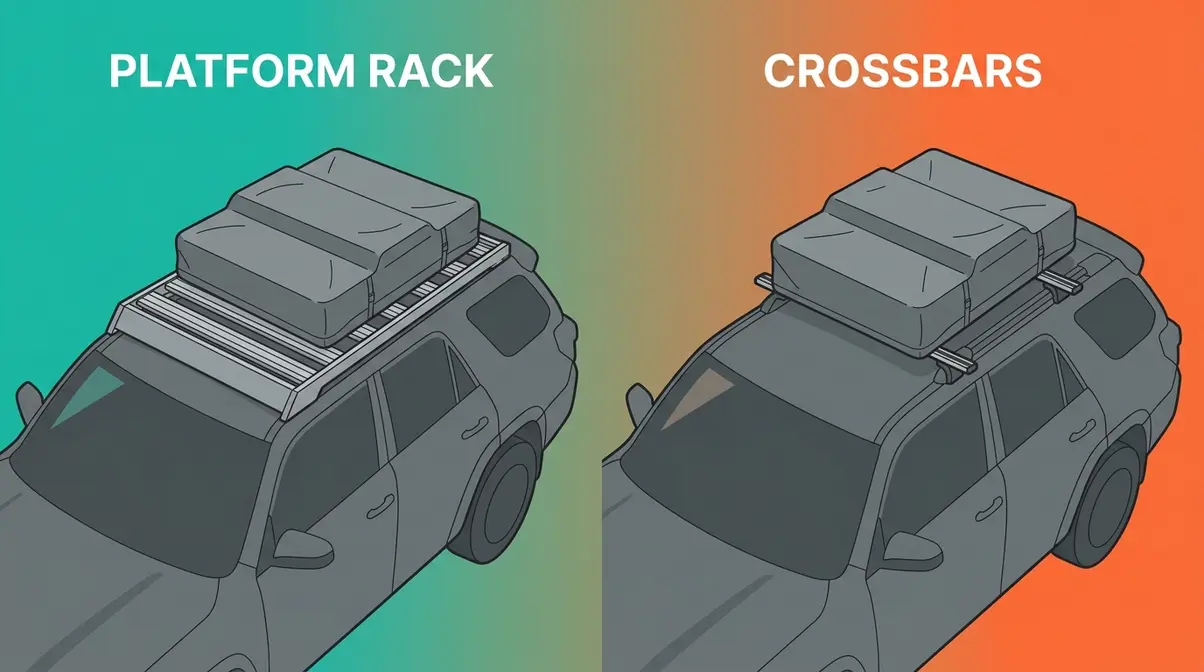
Crossbars (the horizontal bars that span your roof) are the most affordable and common starting point for RTT setups. They work with raised side rails and suit lighter tent loads. In this list, the Tuyoung (#3) and COWVIE (#4) are crossbar options.
Platform racks provide a full flat surface above the roof. That wider footprint distributes the tent’s weight more evenly, reduces flex during off-road driving, and typically generates less wind noise at highway speed. The r/overlanding community consistently recommends platform racks for serious RTT use, particularly with heavier hardshell tents. The Rhino Rack Pioneer (#1) and MAXXHAUL (#2) are the platform options here.
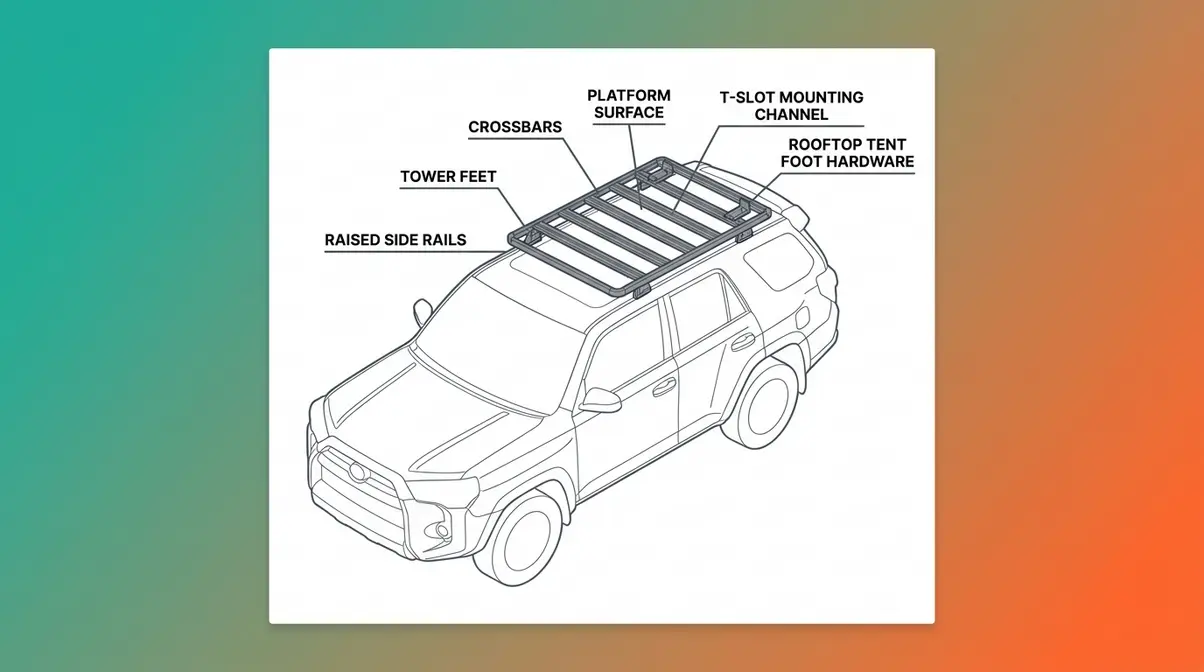
GearJunkie confirms that platform roof racks provide superior weight distribution and improved aerodynamics compared to traditional crossbars, reducing wind noise and creating a sturdier base for mounting a rooftop tent (GearJunkie, 2024).
After picking your rack type, you need to confirm it fits your specific vehicle — not all racks work on all roofs.
Vehicle Compatibility and Fit
Three roof types determine which rack will mount correctly on your vehicle. Raised side rails (the most common setup on SUVs like the Toyota 4Runner and Jeep Wrangler) accept crossbars directly. Flush rails (found on vehicles like the Toyota Tacoma and Ford F-150) require specific clamp hardware. Bare roofs (some sedans and older vehicles) need tower feet as a base before any crossbar or rack can mount.
Common vehicle examples and their typical configurations: the Jeep Wrangler and Land Rover Discovery use raised rails; the Chevy Tahoe and Toyota 4Runner typically have raised rails; the Ford F-150 and Toyota Tacoma often have flush or no rails depending on trim — always verify your specific model year.
As Outside Online notes, most factory-installed crossbars are not engineered to support the 100-plus pound dynamic weight of a rooftop tent, making an upgrade to heavy-duty aftermarket crossbars or a platform rack essential for safety (Outside Online, 2024). NHTSA roof crush resistance standards establish strict strength requirements for passenger compartment roofs — always verify your vehicle’s specific static load limit, which is separate from the rack’s own rating (NHTSA).
For Jeep-specific builds, see our full guide to rooftop tent options for Jeep owners.
Finally, before you commit to any rack, it helps to know what a realistic budget looks like for this category.
Roof Rack Cost Expectations
Budget crossbars like the COWVIE (#4) represent the entry point of the market — suited for lighter softshell tents. Mid-range full steel racks like the MAXXHAUL (#2) offer a solid platform for most buyers who want more surface area without a premium price. Premium aluminum platform racks like the Rhino Rack Pioneer (#1) require a higher investment but deliver the stability and load capacity serious overlanding demands.
Prices across all categories change frequently — always verify current pricing on the product page before buying. As a quality benchmark, the ISO 11154:2023 safety requirements establish international test methods that roof load carriers must pass to safely transport heavy loads like rooftop tents (ISO, 2023). Racks that meet this standard are engineered to a defined safety threshold, not just a manufacturer’s marketing claim.
Here’s how we evaluated each product in this guide.
How We Evaluated
Our team evaluated each product against three criteria: dynamic load capacity relative to common rooftop tent weights using the RTT Load Stack framework, material quality and construction, and compatibility with standard vehicle roof types. Products are ranked by their suitability for actual rooftop tent mounting, from purpose-built platform racks to supplementary cargo solutions. Prices and features are subject to change — verify current listings before purchasing.
Frequently Asked Questions
Most Important Factor for a Rack?
The most important factor is dynamic load capacity — the maximum weight your rack can support while the vehicle is in motion. This number is always lower than the static load rating (the limit when parked), and it’s the figure that determines real-world safety. Apply the RTT Load Stack: add your rack’s dynamic rating + tent weight + occupant weight. MotorTrend recommends a minimum dynamic rating of 165 lbs for most rooftop tent setups (MotorTrend, 2024). If your numbers exceed the dynamic limit, the rack is not safe for that tent and occupant combination.
Can I Use Factory Crossbars?
Factory crossbars are usually not rated for rooftop tent use. Most OEM crossbars are designed for light cargo like ski bags or luggage — not the 100-plus pound dynamic load of a tent plus occupants. Outside Online confirms that factory-installed crossbars typically lack the engineering to support a rooftop tent safely (Outside Online, 2024). Check your owner’s manual for your vehicle’s specific crossbar dynamic rating. In most cases, upgrading to aftermarket heavy-duty crossbars like the Tuyoung 330 lbs (#3) or a full platform rack is the safer path.
Platform Rack vs. Crossbars?
Crossbars are two horizontal bars spanning your roof — affordable, widely compatible, and sufficient for lighter tent setups. Platform racks provide a full flat surface, distributing the tent’s weight across a larger area for better stability, less flex on rough terrain, and reduced wind noise at highway speed. For casual use with a lightweight softshell tent, quality crossbars work well. For regular overlanding with a heavier hardshell tent, a platform rack like the Rhino Rack Pioneer (#1) provides a meaningfully more stable and safe mounting base.
How Much Should I Spend?
Budget varies significantly by rack type and vehicle. Entry-level crossbars start at the lower end of the market and suit lighter softshell tents under 80 lbs. Mid-range steel platform racks like the MAXXHAUL (#2) offer a full surface at a moderate price. Premium aluminum platform racks like the Rhino Rack Pioneer (#1) sit at the top of the range and are best justified for regular off-road or overland use. Always factor in vehicle-specific mounting hardware costs, which can add to the base rack price. Verify current pricing before buying, as prices change frequently.
Does a Rack Affect Fuel Economy?
Yes — roof racks increase aerodynamic drag, which reduces fuel efficiency and can generate wind noise. The impact depends on rack type and load. Open cargo baskets create more drag than aerodynamic enclosed boxes. Platform racks with a low profile produce less turbulence than tall crossbar setups with a tent mounted above them. GearJunkie notes that platform racks offer improved aerodynamics compared to traditional crossbars (GearJunkie, 2024). Driving at highway speeds with a large rooftop tent mounted will produce some wind noise regardless of rack type — a streamlined tent shell and proper mounting angle help minimize this.
Conclusion
For first-time overlanders looking for the best roof rack for rooftop tent adventures, the right roof rack comes down to one calculation: the RTT Load Stack. Add your rack’s dynamic rating, your tent’s weight, and your occupant weight — if that total exceeds the rack’s dynamic limit, it’s the wrong rack, regardless of how good the static rating looks on the product page. Among the 9 options here, the Rhino Rack Pioneer Platform (#1) is the strongest purpose-built choice for serious RTT use, while the Tuyoung 330lbs crossbars (#3) deliver the best capacity-per-dollar for buyers with raised side rails.
Start by checking your vehicle owner’s manual for your specific roof load rating. Then apply the RTT Load Stack to any rack you’re considering. That two-step process eliminates most of the guesswork and keeps your setup safe from the first trip forward. Check your vehicle’s manual today, calculate your RTT Load Stack, and upgrade your rack before your next camping trip.
Note: Prices and features verified as of Q2 2026. Always confirm current pricing and specifications on the product listing before purchasing.

Dave King
I'm Dave King. I publish Tent Explorer, a site built to answer the questions people actually ask before they buy.