 David King
You’ve packed the tent, the sleeping bags, and enough snacks for a small army. Then you pull into the campsite and realize the tent stakes are sitting on your kitchen table. Sound familiar? That moment of dread — standing in the dark, rummaging through a chaotic trunk — is something almost every first-time camper experiences. It doesn’t have to happen to you.
Knowing how to pack for a camping trip the right way is the difference between a stressful scramble and a relaxed first night under the stars. This guide walks you through five simple steps, from choosing what to bring to understanding campground rules, so you can leave home with total confidence. By the time you finish reading, you’ll have a complete packing system — organized by category — and a clear sense of your must haves, what to skip, and how to stay safe outdoors.
Recommended Products
| # | Image | Product | Best For | Buy |
|---|---|---|---|---|
| 1 |  |
BISINNA Flannel Sleeping Bag | Solo backpacking campers | Buy on Amazon |
| 2 |  |
Gonex 35L Waterproof Dry Backpack | Kayak & water campers | Buy on Amazon |
| 3 |  |
Gonex 90L Waterproof Duffel Bag | Multi-day adventure trips | Buy on Amazon |
| 4 |  |
Fmeida 65L Travel Duffel Bag | Car camping families | Buy on Amazon |
| 5 |  |
Frelaxy Ultralight Dry Bag Set | Keeping gear waterproof | Buy on Amazon |
| 6 |  |
Tactical 18L Camp Storage Bag | Camp kitchen organizers | Buy on Amazon |
| 7 |  |
120L Foldable Waterproof Duffel | Gear-heavy car campers | Buy on Amazon |
| 8 |  |
Cotton Flannel Queen Sleeping Bag | Cold-weather couples | Buy on Amazon |
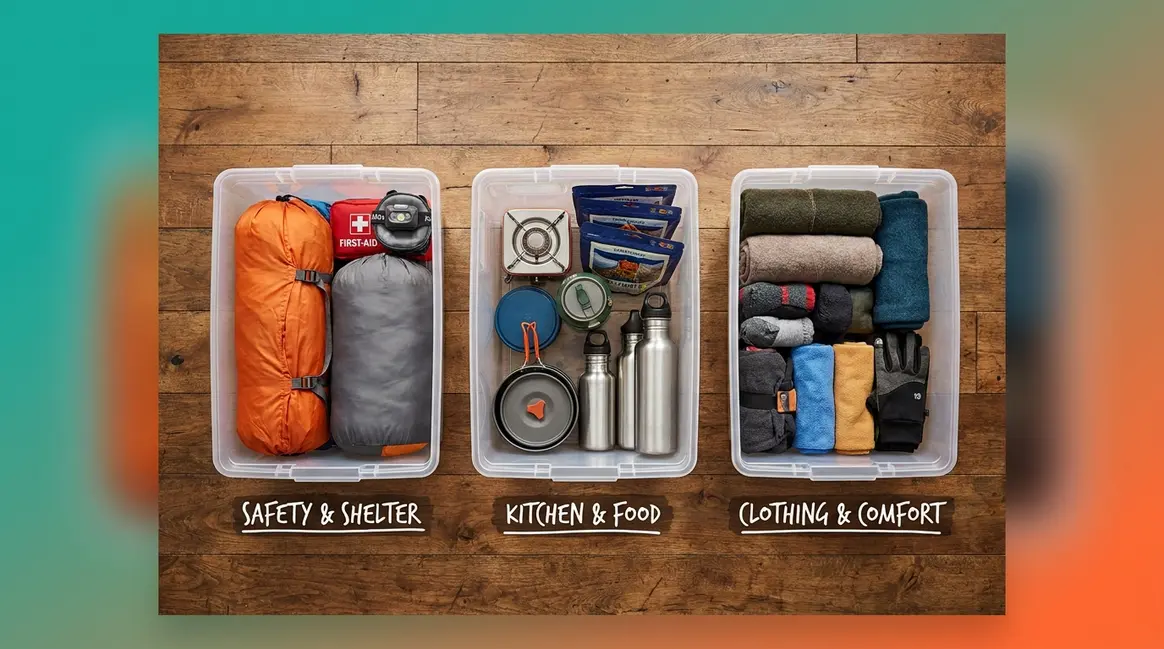
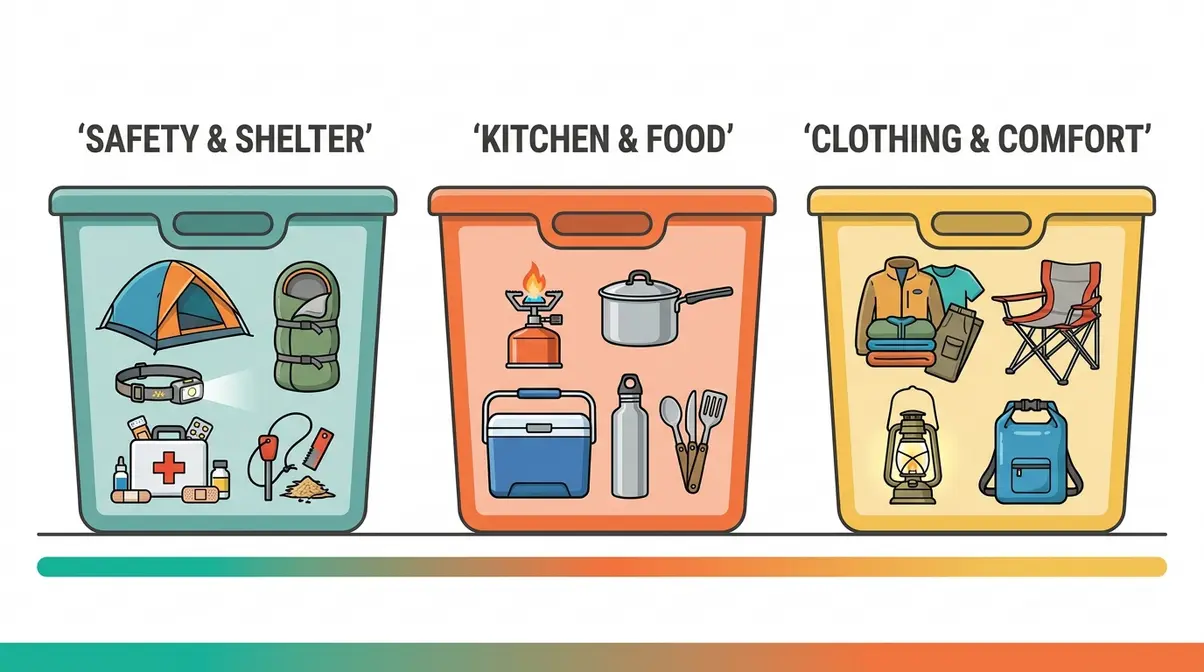
Learning how to pack for a camping trip doesn’t have to feel overwhelming. The Three-Bin Method — sorting all gear into Safety & Shelter, Kitchen & Food, and Clothing & Comfort — gives every beginner a calm, repeatable system to pack confidently in one evening.
- Start with trip details: Your camping style, group size, and weather forecast determine everything else on your list.
- Food safety is critical: According to the USDA, perishable foods enter the danger zone between 40°F and 140°F — a proper cooler setup is non-negotiable.
- Know the rules: The 3-3-3 rule, the 200 rule, and what “FF” means on a booking site are things every camper should understand before arrival.
Last update on 2026-06-22 / Affiliate links / Images from Amazon Product Advertising API

Last update on 2026-06-22 / Affiliate links / Images from Amazon Product Advertising API


Last update on 2026-06-22 / Affiliate links / Images from Amazon Product Advertising API
Last update on 2026-06-22 / Affiliate links / Images from Amazon Product Advertising API
Last update on 2026-06-22 / Affiliate links / Images from Amazon Product Advertising API

Last update on 2026-06-22 / Affiliate links / Images from Amazon Product Advertising API
Last update on 2026-06-22 / Affiliate links / Images from Amazon Product Advertising API

Last update on 2026-06-22 / Affiliate links / Images from Amazon Product Advertising API
Before You Pack: Know Your Trip Details
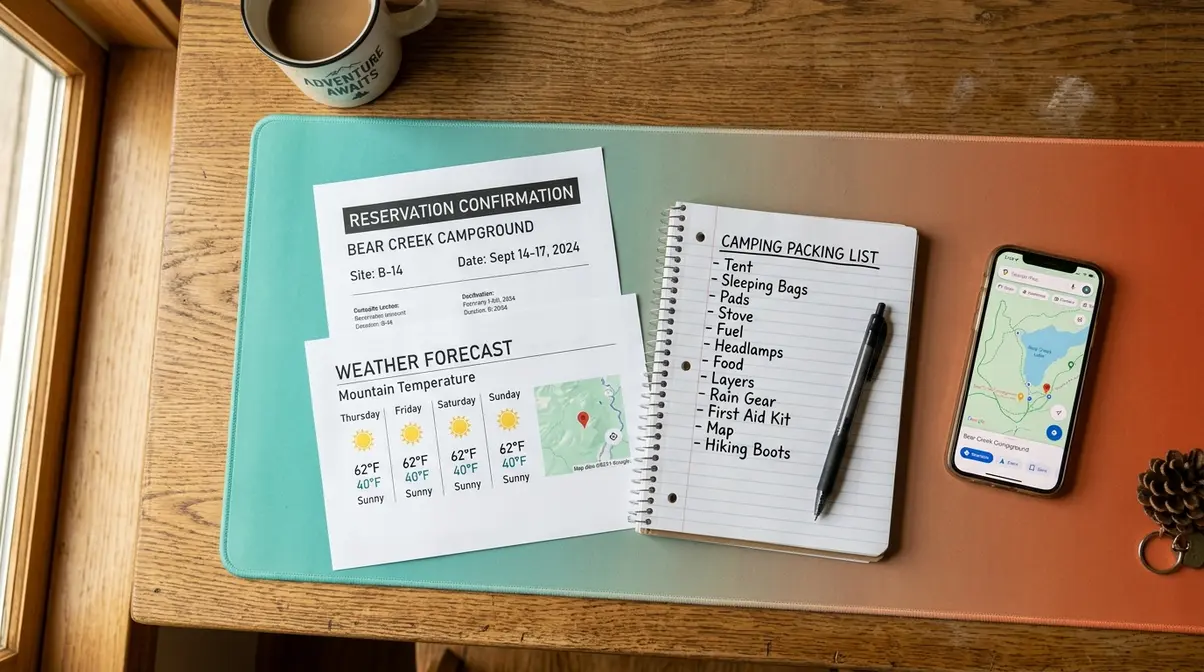
Before a single item goes into a bag, answer three quick questions. Your answers will shape every decision you make from here on. Skipping this step is the number-one reason beginners pack the wrong things.
What Type of Camping Are You Doing?
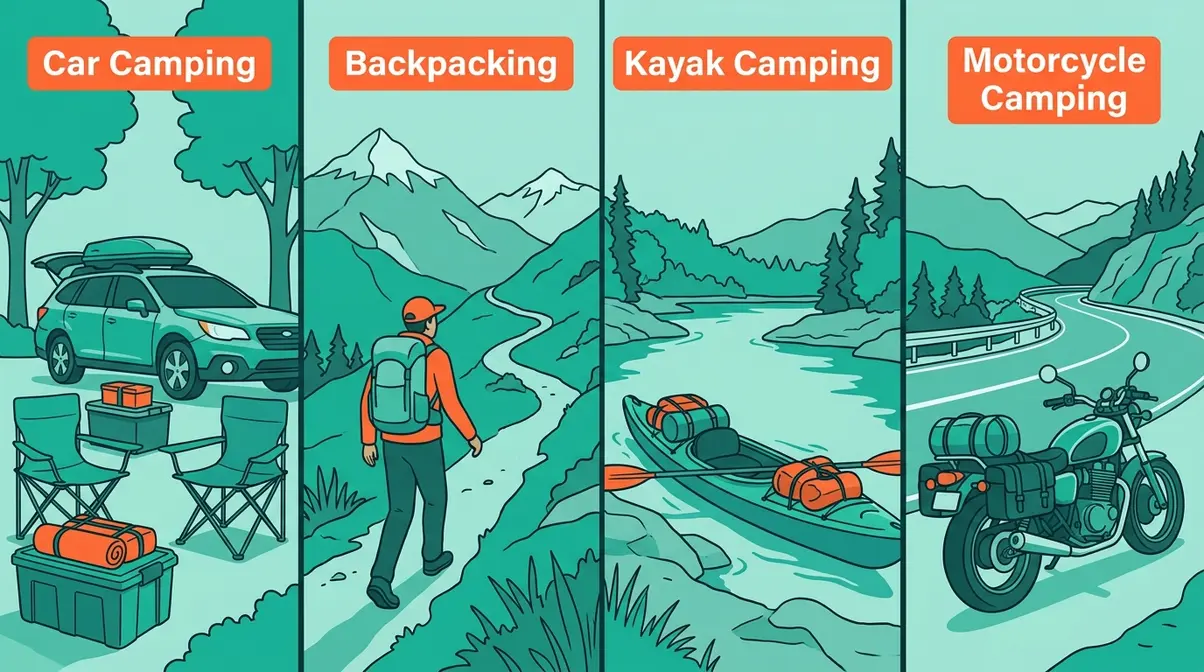
Car camping (driving to your site and sleeping near your vehicle) allows you to bring more gear with fewer weight restrictions. Backpacking demands ruthless weight discipline — every ounce is felt over miles of trail. Kayak camping adds a waterproofing requirement that changes your bag choices entirely. And motorcycle camping means packing into saddlebags or a tail bag with extreme space limits.
Knowing your style before you make a list prevents you from overpacking for a car trip or, worse, underpacking for a backcountry adventure. Most first-timers start with car camping — and that’s a great place to begin.
How Many People and for How Long?
Group size and trip length determine quantities more than anything else. A solo overnighter needs one pot, one plate, and two liters of water. A family of four on a three-day trip needs a full cooler, a larger tent, and triple the clothing. Write down your headcount and the number of nights before you open a single drawer. This single step makes packing up easier and prevents the “we brought six sleeping bags for two people” problem.
Check the Weather and Campsite Rules
Look up the forecast for your specific campsite location — not just the nearest city. Mountain temperatures can drop 20°F overnight even in summer. Then check the campground’s website for fire restrictions, quiet hours, pet policies, and whether reservations are required. Arriving with a propane fire pit at a campground that bans open flames is a frustrating (and potentially costly) mistake.
Preparation Requirements
- Before diving into the bins, gather these essentials to streamline your packing process:
- Estimated Time: 1-2 hours for initial packing and organization
- Tools & Materials Needed:
- Three large storage bins (plastic or heavy-duty fabric)
- A printed packing checklist
- Weather forecast data for your specific destination
- Campsite reservation details and printed rules
Step 1: Shelter, Sleep, and Clothing
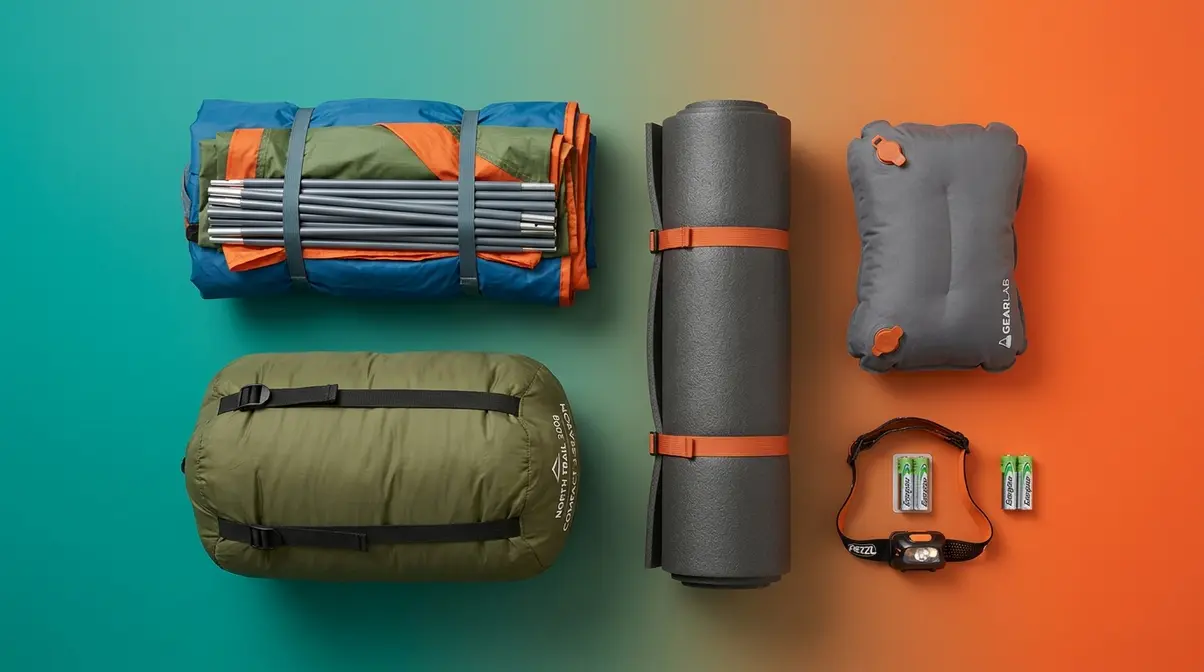
When figuring out how to pack for a camping trip, your shelter and sleep system are the most critical items in your entire pack. A bad night’s sleep ruins the whole trip, and being caught without proper shelter in unexpected rain is genuinely dangerous. Outdoor community consensus across camping forums consistently identifies this category as where beginners make their most costly mistakes.
Tent, Tarp, and Ground Cover Basics
Your tent is your home for the trip. Before you leave, set it up in your backyard once — even for five minutes. This confirms every pole, stake, and rain fly is present and accounted for. Tent stakes are the single most-forgotten item among first-time campers, so double-check them specifically.
Pack a ground cloth or footprint (a tarp cut to the size of your tent floor) to protect the tent bottom from moisture and abrasion. A small tarp rigged above your vestibule also creates covered outdoor space during rain. If you are unsure of what else to bring, consult a beginner camping checklist to ensure no hardware is left behind. Here’s your shelter checklist:
- Tent with all poles, stakes, and rain fly
- Ground cloth or footprint
- Small tarp (optional but highly recommended)
- Headlamp with fresh batteries — one per person
Sleeping Bags, Pads, and Pillows
A sleeping bag is rated by temperature — the number on the tag (like “30°F”) tells you the lowest temperature at which you’ll stay comfortable. For summer camping, a bag rated to 40°F or 50°F is usually sufficient. For three-season use, choose a 20°F bag. The BISINNA Flannel Sleeping Bag is a solid choice for solo campers wanting warmth and comfort without bulk, while the Cotton Flannel Queen Sleeping Bag works well for couples on cold-weather trips.
A sleeping pad is not optional — it insulates you from the cold ground far more effectively than a thick sleeping bag alone. Even a basic foam pad makes a significant difference. Finally, pack a compressible camp pillow or simply stuff a fleece jacket into a stuff sack (a lightweight drawstring bag for compressing soft items) for a free, packable alternative.
Clothing: The Layering System
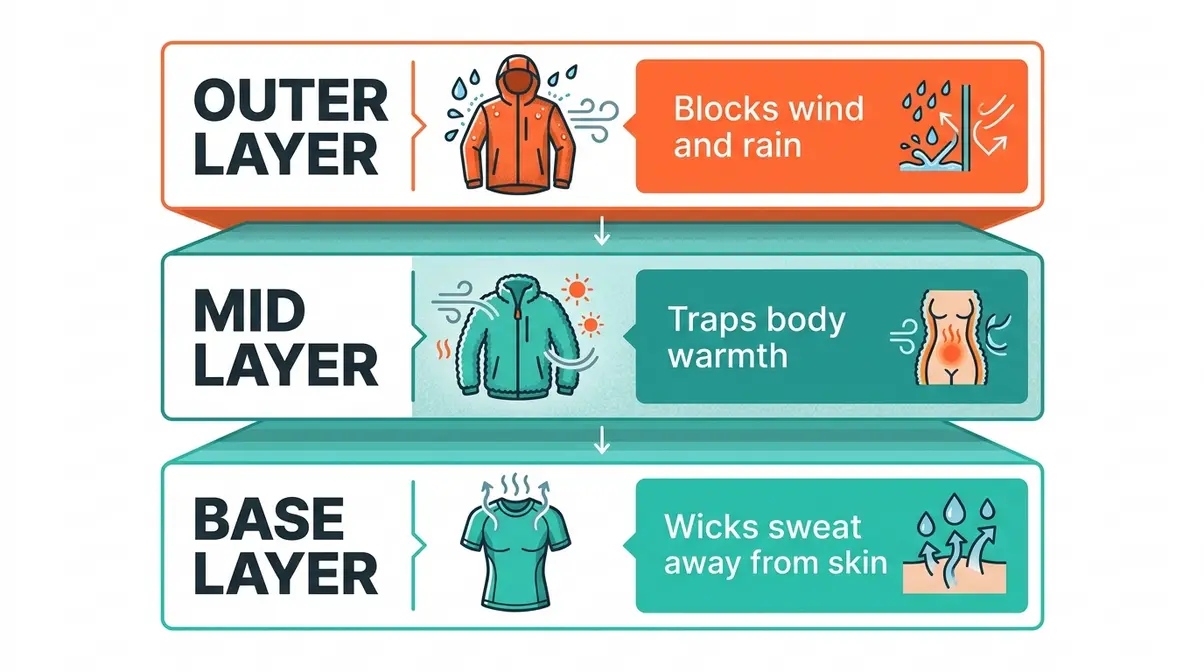
The layering system is the most practical clothing strategy for camping, and it works like this: you wear three layers that can be added or removed as conditions change.
| Layer | Purpose | Example Items |
|---|---|---|
| Base layer | Wicks sweat away from skin | Moisture-wicking t-shirt, thermal underwear |
| Mid layer | Traps warmth | Fleece jacket, down vest |
| Outer layer | Blocks wind and rain | Waterproof shell jacket, rain pants |
Pack at least one full set of layers per person, plus one extra base layer per day for kids. Always pack a rain jacket — even if the forecast looks clear. Weather changes fast outdoors, and being soaked through on a cold night is a genuine safety concern.
Hygiene, Sun, and Bug Protection
These items are frequently skipped by beginners and deeply regretted. Pack a small toiletry bag with: toothbrush and toothpaste, biodegradable soap (required near water sources by Leave No Trace guidelines), toilet paper in a zip-lock bag, hand sanitizer, and a small trowel for backcountry use. It also helps to invest in must-have camping accessories like quick-dry towels to save space.
For sun and bug protection: SPF 30+ sunscreen, lip balm with SPF, insect repellent (DEET-based works best in tick country), and a buff or sun hat. If you’re camping near standing water or in wooded areas, tuck your pants into your socks on hikes — it’s an easy tick-prevention habit that outdoor communities consistently recommend.
Step 2: Camp Kitchen and Food Safety
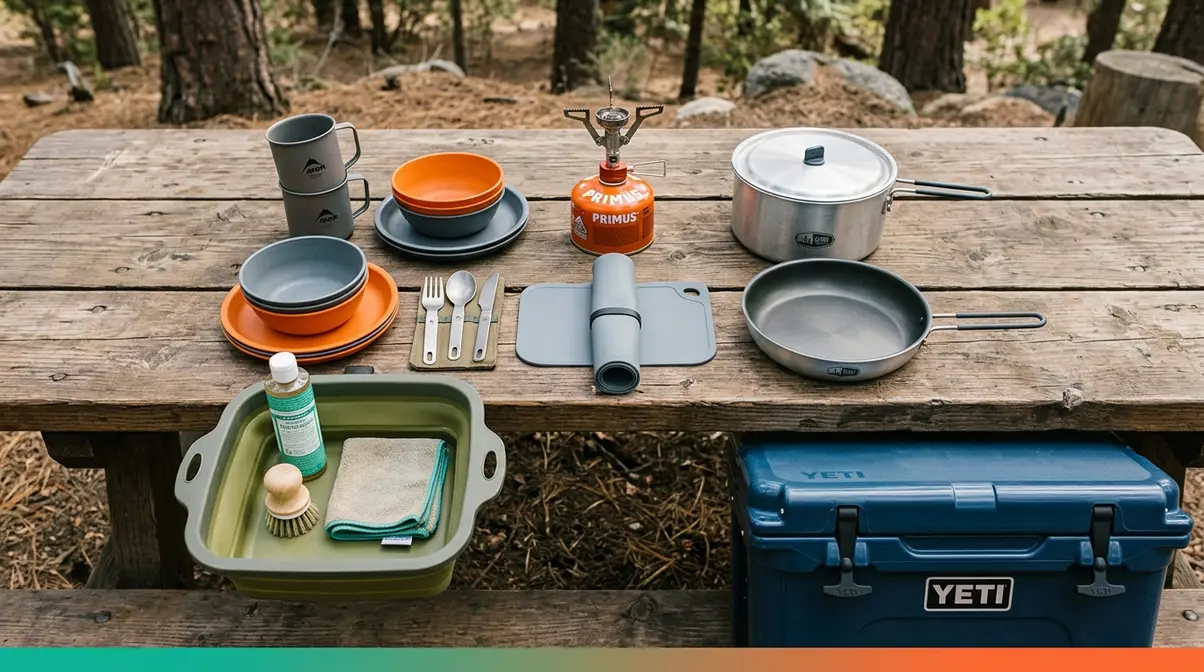
Mastering how to pack for a camping trip includes organizing your camp kitchen. A well-organized camp kitchen makes every meal easier and every morning more pleasant. This is also the category with the most real safety implications — improper food storage can make your whole group sick.
Essential Cookware and Kitchen Tools
Keep your kitchen kit lean. For most beginner car camping trips, you need:
- A camp stove and fuel canister (don’t forget the fuel — it’s the second most-forgotten item)
- One medium pot and one pan
- A camp mug and a bowl per person
- Utensils: knife, spatula, long-handled spoon
- A cutting board (a thin flexible one rolls up and takes almost no space)
- Biodegradable dish soap, a small scrub brush, and a wash basin
- A lighter and waterproof matches as a backup
The Tactical 18L Camp Storage Bag is designed specifically to keep kitchen tools organized and accessible — a huge help when you’re cooking in the dark or breaking camp in the rain. To further minimize the gear you need to carry, plan for one-pot campfire recipes to reduce cooking time and cleanup.
How to Pack a Cooler Properly
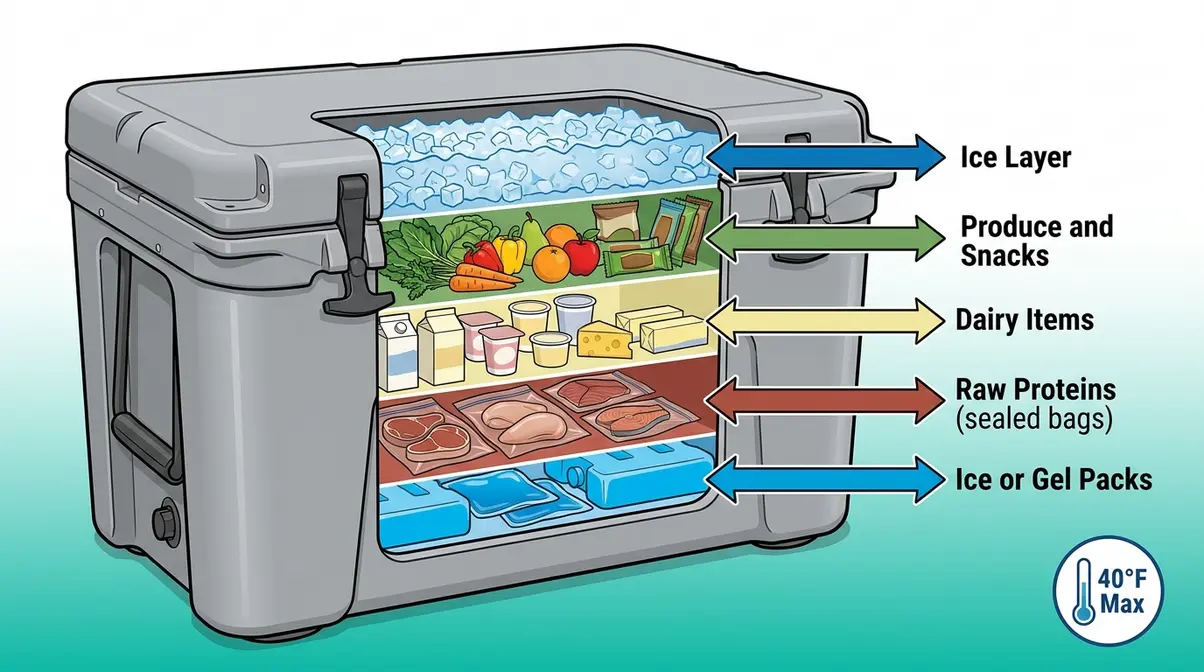
Cooler packing is a skill that pays off all weekend. According to the USDA, perishable foods enter the temperature danger zone between 40°F and 140°F, where bacteria multiply rapidly. Perishable food should not be left in this range for more than two hours — or just one hour if the air temperature exceeds 90°F (USDA Food Safety and Inspection Service).
Pack your cooler in reverse meal order: items you’ll use last go in first, at the bottom. Layer ice or frozen gel packs throughout — not just on top. Keep the cooler out of direct sunlight and open it as rarely as possible. A full cooler maintains safe temperatures far longer than a half-empty one.
Meal Planning and Food Safety Tips
Pre-trip meal planning is one of the best hints experienced campers share with beginners. A solid camping meal prep guide is an invaluable resource for this stage. Before you leave, pre-cook proteins where possible (pre-grilled chicken, hard-boiled eggs), pre-chop vegetables into zip-lock bags, and pre-measure spices into small containers. This reduces cooking time at the site and minimizes the amount of raw meat in your cooler.
For eggs, crack them into a leak-proof bottle before the trip — they travel far better than whole eggs in a carton. For fragile produce, pack it in a rigid container rather than a soft bag. Always store raw meat on the lowest cooler shelf in sealed bags to prevent cross-contamination with other foods.
Water: How Much Do You Need?
The general outdoor guideline is half a liter of water per person per hour of moderate activity, plus additional water for cooking and cleaning. For a weekend car camping trip with two adults doing light hiking, plan for at least four liters per person per day. Bring more than you think you need.
If your campsite has potable (safe to drink) tap water, you may be able to supplement. If not, bring a water filter or purification tablets as a backup. The Minnesota DNR’s camping guide recommends treating all backcountry water sources, even those that look crystal clear.
Step 3: Pack Smart & Leave Behind
Smart packing is not about bringing everything — it’s about bringing the right things, organized in a way that makes them easy to find. This is where the Three-Bin Method transforms your prep from chaos into calm. Reviewing tent camping tips for beginners can help you refine this list further.
The Three-Bin Method
The Three-Bin Method is a simple physical organization framework that sorts all camping gear into three labeled bins before a single item goes in the car. It works like this:
Bin 1 — Safety & Shelter: Tent, sleeping bags, sleeping pads, first-aid kit, headlamps, emergency whistle, fire starter, and any navigation tools. These are your “couldn’t go without” items — the ones you’d need if something went wrong.
Bin 2 — Kitchen & Food: Stove and fuel, cookware, utensils, food items, cooler, water bottles, and dish supplies. Everything that feeds you goes here. The Fmeida 65L Travel Duffel Bag works well for families loading this bin into a car, while the 120L Foldable Waterproof Duffel handles gear-heavy loads with ease.
Bin 3 — Clothing & Comfort: All clothing (packed in the Frelaxy Ultralight Dry Bag Set to keep things organized and dry), camp chairs, lantern, books, games, and anything that makes the trip enjoyable but isn’t survival-critical.
The beauty of this system is its repeatability. Once you’ve done it once, packing for your next trip takes half the time. Many experienced campers keep their bins partially pre-packed and ready to go between trips.
“We always bring a cheap rubber doormat to throw outside the tent — it helps keep all the dirt and junk out.”
— Camping community tip shared across outdoor forums
That doormat goes in Bin 3. So does the camp lantern, the deck of cards, and the small speaker. These comfort items matter — they’re what make a camping trip feel like a vacation rather than a survival exercise.
What Is the Most Forgotten Item?
Tent stakes are consistently the most forgotten item when camping, according to reports across outdoor forums and camping communities. They’re often left on the garage floor after a practice setup or forgotten entirely by first-timers who assume they’re already packed inside the tent bag.
Camp stove fuel is the second most-forgotten item. A dedicated gear checklist reviewed the night before departure eliminates both problems — a simple habit that experienced campers swear by.
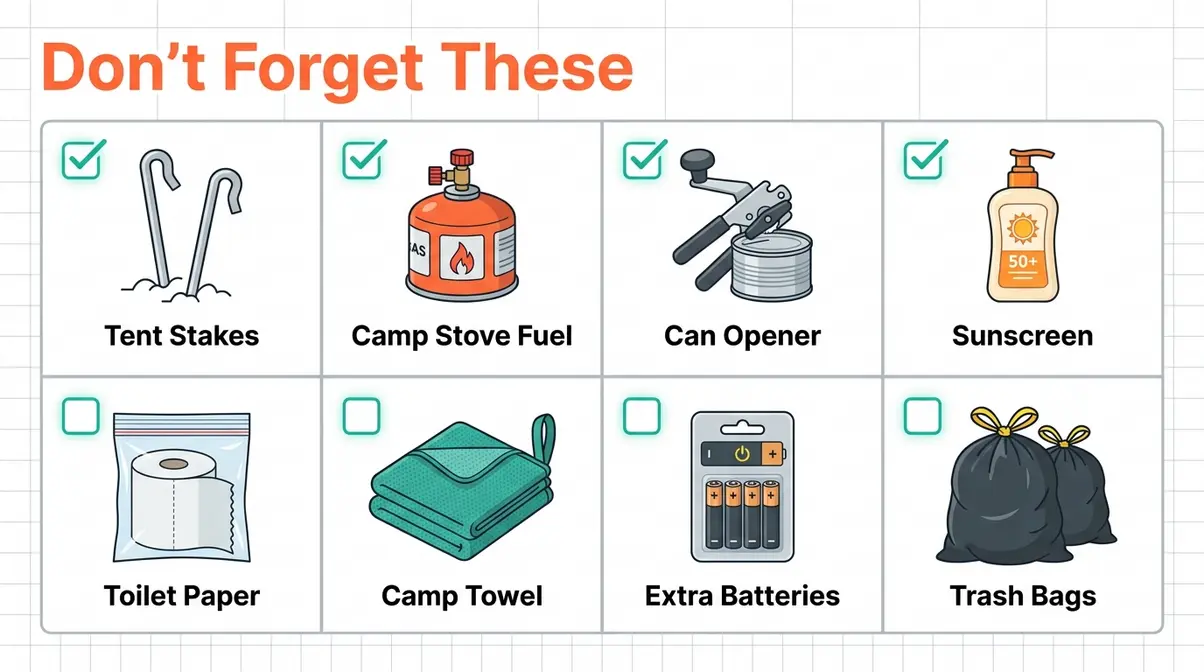
- Other common offenders include:
- Can opener — if any of your food comes in cans
- Sunscreen and bug spray — bought at the campground store for three times the price
- Toilet paper in a waterproof bag — critical for backcountry trips
- A camp towel — quick-dry microfiber towels compress to almost nothing
- Extra batteries or a portable charger — for headlamps, cameras, and phones
- Trash bags — at least two: one for garbage, one for wet clothing
What NOT to Bring Camping
Knowing what to leave behind is just as valuable as knowing what to pack. These items cause problems at the campsite and are better left at home:
- Perfumes, scented lotions, and strongly scented toiletries — these attract bears and other wildlife, especially in backcountry settings
- Glass bottles — prohibited at many campgrounds and dangerous when broken on trails
- Excessive electronics — charging anxiety ruins the “unplugged” experience; bring only what you truly need
- Valuables — jewelry, expensive cameras without cases, and anything you’d be devastated to lose or damage
- Too much clothing — the layering system means three versatile pieces outperform ten single-use items
- Raw, unwrapped meat — always pre-bag and seal proteins before packing them into the cooler
Step 4: Pack for Your Camping Style
The main necessities differ significantly depending on how you’re camping. Use this section as a filter after you’ve built your base list.
Car Camping: Pack More, Worry Less
Car camping is the most forgiving style for beginners. You’re not carrying anything on your back, so comfort items are fair game. Bring the full-size camp chairs, the cast iron skillet, the extra blanket, and the rubber doormat. Finding the best tent for car camping allows you to maximize comfort without worrying about weight. The Fmeida 65L Travel Duffel Bag and the 120L Foldable Waterproof Duffel are both excellent for loading into a trunk or SUV cargo area. Focus your prep energy on the Three-Bin Method and a solid cooler setup rather than weight savings.
Backpacking: Every Ounce Counts
Backpacking flips every packing priority. Your target base weight (gear without food and water) should be under 20 pounds for most beginners. Choose a lightweight sleeping bag like the BISINNA Flannel Sleeping Bag, swap your camp chairs for a small sit pad, and replace the cast iron skillet with a titanium pot. Use the Gonex 90L Waterproof Duffel Bag for base camp storage, and keep your day pack as lean as possible. Every item must justify its weight with a clear purpose.
Kayak and Canoe Camping Packing
Water camping adds one non-negotiable rule: everything must be waterproof or stored in a waterproof container. Assume your gear will get wet, because at some point it will. Choosing the best tent for kayak camping ensures your shelter fits easily into a dry bag. The Gonex 35L Waterproof Dry Backpack is purpose-built for paddling trips, keeping electronics, clothing, and food bone dry even in choppy water. The Frelaxy Ultralight Dry Bag Set lets you organize smaller items inside your main pack by category — a smart system for loading and unloading a kayak quickly.
Pack your heaviest items low and centered in the boat for stability. Keep your first-aid kit and emergency items in an easy-to-access dry bag at the top of your pack, not buried at the bottom.
Motorcycle Camping: Limited Space
Motorcycle camping demands the same discipline as backpacking, with the added challenge of awkward bag shapes. Use soft, compressible luggage that conforms to saddlebag dimensions. Pack your Three-Bin system into the smallest possible footprint: a compact sleeping bag, a one-person bivy or ultralight tent, and a single-burner stove. Prioritize rain gear — riding wet and then camping wet is a miserable combination that beginners underestimate.
Step 5: Know the Rules Before You Go
Understanding campground rules is not just about avoiding fines — it’s about being a respectful, safe camper who leaves the site better than they found it. This section demystifies the jargon that trips up beginners on booking sites and at the campsite gate.
The 3-3-3, 4-4-4, and 200 Rules
The 3-3-3 rule is an informal travel guideline popular in the RV and car camping community. It means: drive no more than 300 miles per travel day, arrive at your campsite by 3:00 PM, and stay a minimum of 3 nights at each location (KOA Camping Blog). This rule exists to reduce driver fatigue and give you time to set up camp in daylight. For beginners, it’s excellent advice — arriving after dark at an unfamiliar campsite is stressful and error-prone.
The 4-4-4 rule is an informal personal adaptation some campers use: roughly 4 hours of driving, arriving by 4 PM, and staying 4 nights. It’s not a standardized guideline like the 3-3-3 rule — think of it as a more relaxed version for slower travelers who prefer fewer moves.
The 200 rule comes directly from Leave No Trace principles, endorsed by the U.S. National Park Service. It requires that you:
- Camp at least 200 feet from lakes, streams, and rivers
- Dig catholes for human waste at least 200 feet from water, trails, and camp
- Wash dishes and yourself at least 200 feet from any water source
Two hundred feet is roughly 70 adult walking steps. This distance protects water quality and gives wildlife undisturbed access to water.
What Does FF Mean in Camping?
FF means First Come, First Served on campground booking sites like Recreation.gov and state park reservation systems. An FF campsite cannot be reserved in advance — you claim it by arriving in person before anyone else does.
These sites are popular at busy campgrounds, so arriving by late morning on weekends is strongly advised. You may also see the abbreviation FCFS, which means the same thing. Some campers confuse FF with “full facility” (a campsite with hookups and amenities), but on booking platforms, FF almost always refers to availability method, not amenity level.
Campground Etiquette Basics
No campground posts a sign listing these, but breaking them makes you the neighbor everyone avoids. Following basic tent camping safety tips ensures you remain a respectful neighbor:
- Respect quiet hours. Most campgrounds enforce quiet between 10 PM and 6 AM. This means no generator noise, no loud music, and voices kept low.
- Stay on your site. Walk around other campers’ sites, not through them. Their campsite is their temporary home.
- Control your fire. Never leave a campfire unattended. Drown it with water, stir the ashes, and drown it again until it’s cold to the touch.
- Pack out all trash. Leave No Trace means exactly that — no food scraps, no litter, nothing left behind.
- Keep pets leashed. Even friendly dogs can frighten wildlife and other campers’ children.
- Don’t “claim” a site without occupying it. Leaving a single chair at an empty site while you go hiking is considered poor etiquette at busy campgrounds.
Common Pitfalls and When to Reconsider
Mistakes First-Time Campers Make
Overpacking clothing and underpacking safety gear. New campers often bring five outfit changes and forget a first-aid kit. Flip that ratio. Your first-aid kit should include bandages, antiseptic wipes, blister pads, pain reliever, antihistamine, and any personal medications.
Forgetting to check gear before leaving. A tent with a broken zipper or a stove with a clogged burner is discovered at the campsite, not at home. Do a full gear check the night before departure — assemble the tent, light the stove, test every headlamp.
Underestimating cold nights. Daytime temperatures at popular summer campgrounds can feel warm, but nights in the mountains or near water can drop to near-freezing. Always pack one layer warmer than you think you’ll need.
Skipping the campsite rules check. Fire bans, generator restrictions, and pet policies change seasonally. Check the campground’s official website within 48 hours of your departure date.
When to Ask for Help or Upgrade
If the planning process feels genuinely overwhelming rather than just unfamiliar, a guided camping trip or a stay at a campground with full amenities (restrooms, running water, camp store on site) is a smart first step — not a failure. Many state parks offer “glamping” setups (furnished tents or cabins) that let you experience camping without the full gear investment. Once you’ve spent one night outdoors, the second trip feels dramatically easier. There’s no shame in starting somewhere comfortable and building from there.
Frequently Asked Questions
What is the 4-4-4 rule camping?
The 4-4-4 rule is an informal camping and RV travel guideline adapted from the more widely known 3-3-3 rule. It generally means driving no more than around 4 hours per day, arriving at your campsite by 4 PM, and staying at least 4 nights at each location. Unlike the 3-3-3 rule, there is no single standardized definition — different campers apply it slightly differently. Think of it as a personal guideline for slower, more relaxed travel rather than an official camping standard.
What basic camp kitchen gear do I need?
For a beginner car camping trip, your essential kitchen gear should include a reliable camp stove with extra fuel, one medium pot, and one pan. You will also need a camp mug and bowl for each person, basic utensils (knife, spatula, long-handled spoon), and a flexible cutting board. Don’t forget biodegradable dish soap and a wash basin for cleanup. Keeping these items in a dedicated kitchen bin ensures you never leave home without the ability to cook.
What is the 200 rule for camping?
The 200 rule is a core Leave No Trace principle endorsed by the U.S. National Park Service. It requires campers to stay at least 200 feet — roughly 70 adult steps — from lakes, streams, and rivers when setting up camp, disposing of human waste, or washing dishes and clothing. This distance protects water quality and preserves wildlife access to water sources. Most backcountry campgrounds and wilderness areas enforce this standard as a minimum baseline.
What is the camp clothing layer system?
The layering system is a practical method of dressing for the outdoors using three distinct layers that can be added or removed as temperatures fluctuate. The base layer sits against your skin to wick away sweat, the mid layer (like a fleece) traps body heat, and the outer layer provides a waterproof and windproof shell. This system is far more efficient than packing bulky coats, allowing you to adapt to temperature swings of 30°F or more between afternoon and midnight.
What is the 3-3-3 rule for camping?
The 3-3-3 rule is a widely used informal travel guideline in the camping and RV community. It means: drive no more than 300 miles per travel day, arrive at your campsite by 3:00 PM, and stay a minimum of 3 nights at each location based on KOA guidelines. The rule was developed by the camping community to reduce driver fatigue and ensure campers arrive with enough daylight to set up properly. It is not an official regulation — it is a practical guideline beginners should treat as a strong recommendation for their first few trips.
What should you not bring to camp?
Beyond scented products and glass, avoid bringing anything you’re not prepared to secure or pack out. This includes food in non-sealable containers (which attracts animals), single-use plastics that create waste management problems, and any items that require electrical outlets unless you’re at a full-hookup site. Loud Bluetooth speakers are technically allowed at most campgrounds during daytime hours but create significant neighbor friction — use them at low volume or leave them home. The simple test: if it creates waste, attracts wildlife, or disturbs others, reconsider it.
What not to bring on a camping trip?
Scented toiletries and perfumes are the most important items to leave at home, as they attract wildlife including bears. Beyond that, skip glass bottles (prohibited at many campgrounds and dangerous when broken), excessive electronics, and valuables you can’t afford to lose or damage. Overpacking clothing is another common mistake — the three-layer system means you need far fewer items than you might think. When in doubt, ask: “Would I miss this if it weren’t there?” If the answer is no, leave it behind.
What is not proper camping etiquette?
Cutting through other campers’ sites is one of the most commonly cited etiquette violations, along with leaving a campfire unattended, playing loud music after quiet hours, and leaving food scraps or trash behind. Outdoor community consensus also flags “site claiming” — placing a single item at an empty site to hold it while you’re away — as poor form at busy campgrounds. Proper etiquette means respecting quiet hours (typically 10 PM to 6 AM), keeping pets leashed, and always extinguishing your fire completely before sleeping or leaving camp.
Your Next Step: Pack Once, Camp with Confidence
Ultimately, knowing how to pack for a camping trip comes down to one insight: organization beats quantity every time. The camper who packs 40 well-chosen items in three labeled bins will have a better trip than the one who throws 90 random items into a chaotic duffel. You don’t need more gear — you need a better system.
The Three-Bin Method is that system. Safety & Shelter, Kitchen & Food, Clothing & Comfort — three bins, one calm evening of prep, and zero last-minute panic at the campsite. Every item has a home before it goes in the car, which means every item gets found when you need it.
Ready to get started? Grab your bins, review the weather forecast, and begin sorting your gear tonight. Start with a one- or two-night car camping trip if this is your first time. Arrive by 3 PM, set up while it’s light, and enjoy the moment you’ve been planning for. The outdoors rewards the prepared — and now, that’s you.

David King
Field gear tester at Tent Explorer.