40+ Screen-Free Camping Games for Kids, Adults & Families
 David King
Updated June 17, 2026
30 min read
David King
Updated June 17, 2026
30 min read
“Looking for ideas for fun games that don’t take up too much space (looking at you, cornhole). Card games are getting boring and we need some suggestions.”
— Frustrated family camper, camping forums
If that quote sounds familiar, you’re in good company. Screen-free camping games that actually work — and don’t require a truck bed full of equipment — are harder to find than they should be. Most camping game lists hand you the same 10 playground classics that fall apart the moment the terrain gets uneven, the flashlights come out, or it starts to rain. That’s not a game plan. That’s a recipe for everyone reaching for their phones.
In this guide, you’ll find 40+ screen-free camping games organized by category, situation, and age group — so you’ll always have the right game ready, no matter what your campsite throws at you. We cover classic evening games, active yard games, creative nature activities, and targeted options for rainy days, small packing budgets, toddlers, teens, and adults. Our team evaluated these games across multiple campsite types — open fields, forested sites, and rainy tent conditions — to bring you only the ones that genuinely work.
Screen-free camping games don’t require expensive gear — the 40+ options in this guide need nothing more than a flashlight, a deck of cards, or the forest around you.
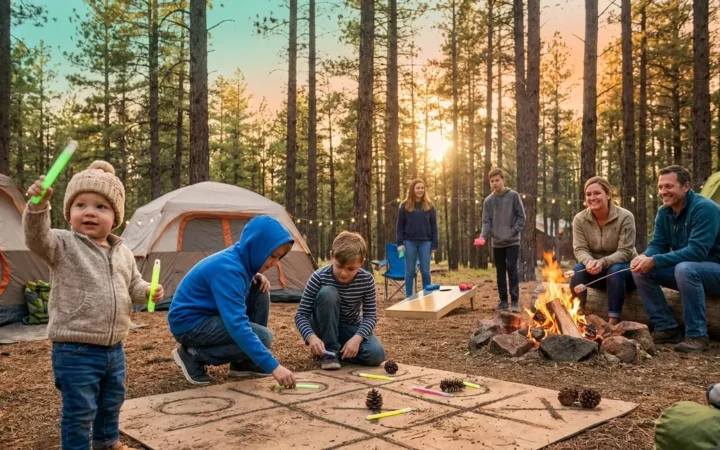
- Classic evening games like Flashlight Tag and Campfire Charades need zero equipment and work for all ages
- Active yard games like compact Bocce Ball and DIY Ladder Toss replace bulky cornhole sets
- Nature activities like Scavenger Hunts and Constellation ID turn the campsite into the game board
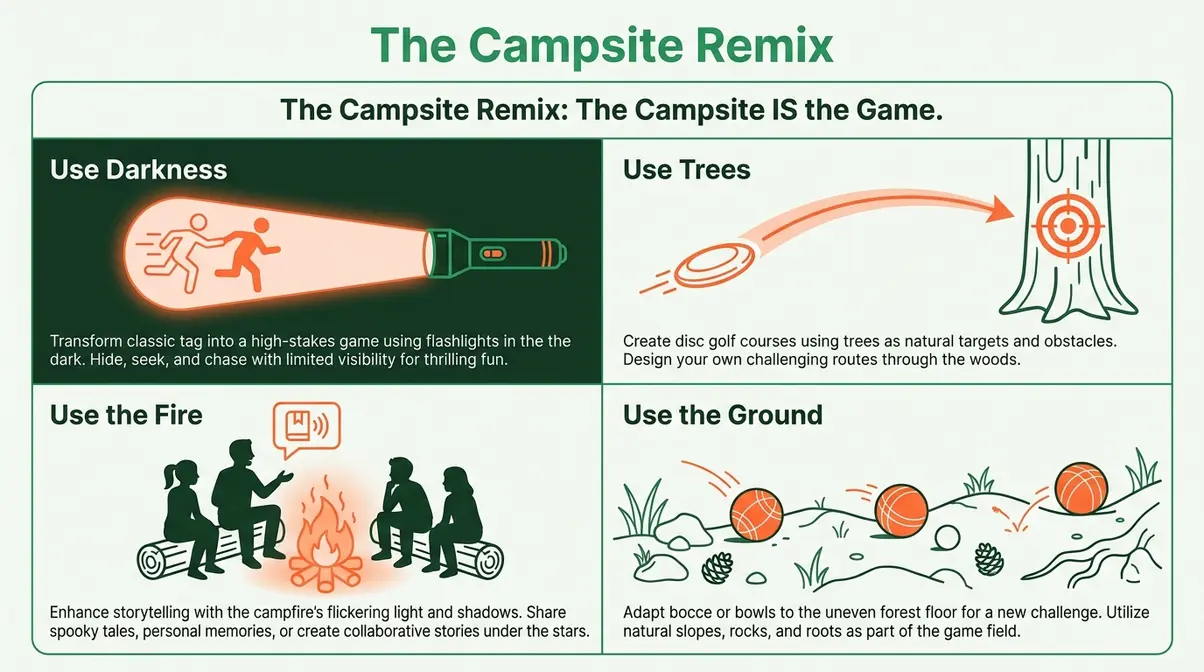
- The Campsite Remix principle: adapt any familiar game to fit your terrain, group size, and quiet hours — this is the core framework behind every suggestion in this guide
- Download free printables — Campfire Bingo, Nature Scavenger Hunt, and Charades cards included
Classic Campsite & Evening Games
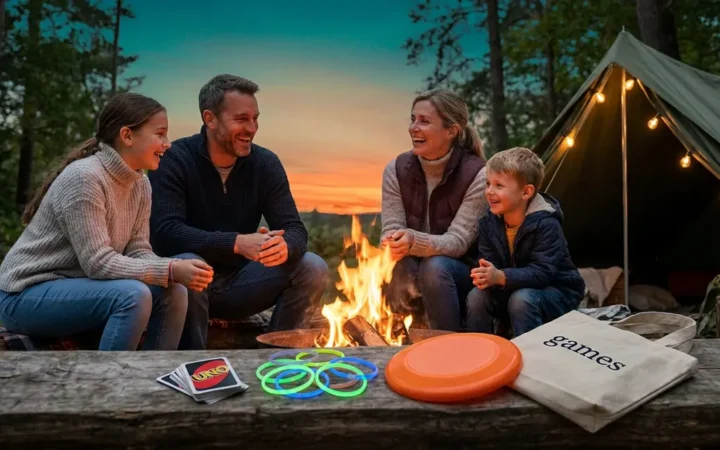
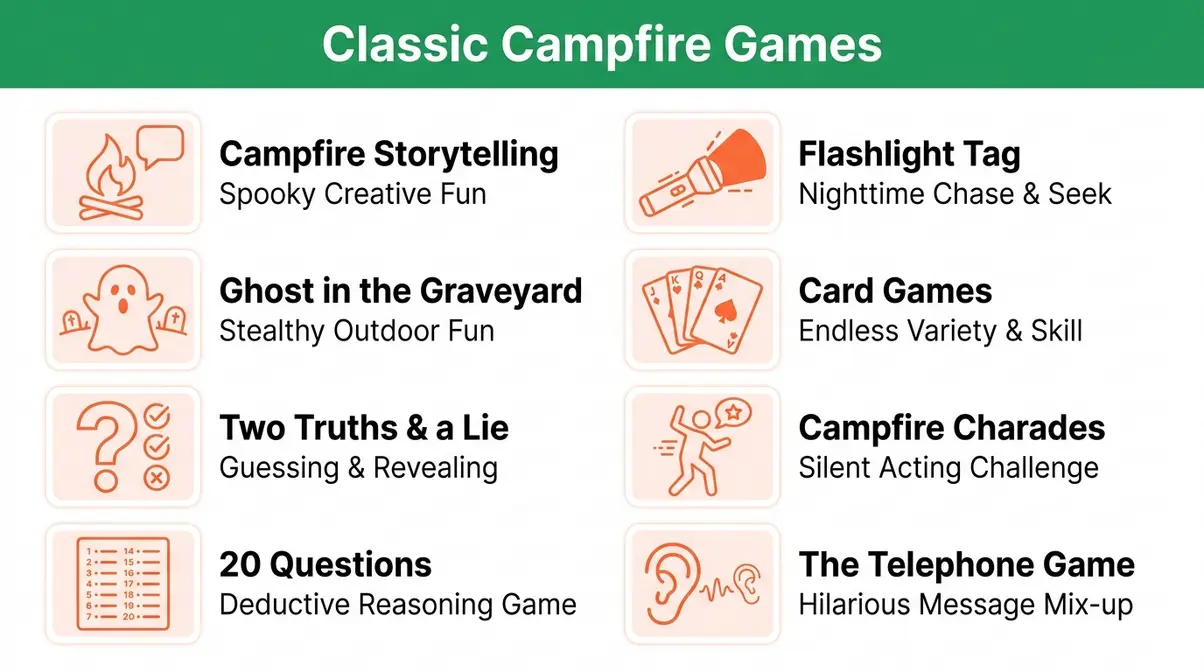
Classic evening games are the highest-return, lowest-effort camping activity you can pack — zero equipment needed, all ages welcome, and zero setup time. The Campsite Remix isn’t about replacing games you already know. It’s about adapting them to where you are — using darkness, fire glow, trees, and open space as game mechanics rather than obstacles. These 8 games work at any campsite, in any weather, with any group size.
What are some fun games to play while camping?
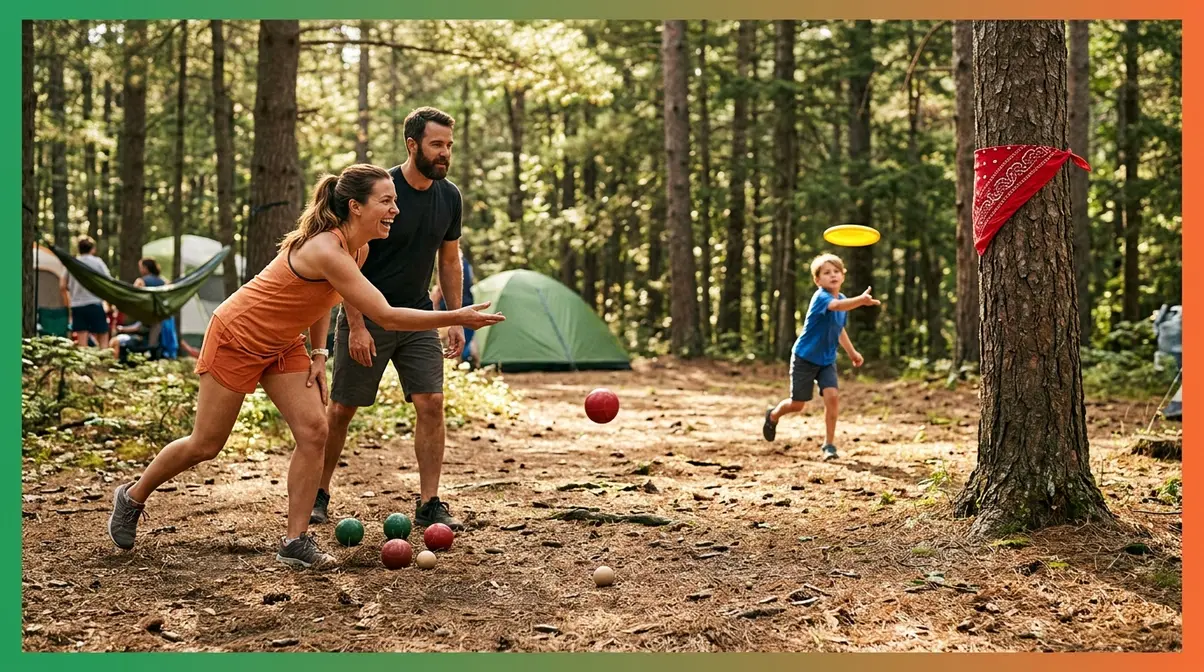
The most fun camping games are ones that use the campsite itself as a prop. Flashlight Tag, Ghost in the Graveyard, and Campfire Charades consistently top the list because they work after dark, require no equipment, and scale from 3 to 20 players. For daytime play, Frisbee Golf (using trees as targets), Bocce Ball, and Nature Scavenger Hunts are the highest-rated options across family camping communities. The key is matching the game to the time of day and energy level of your group.
Try Tonight: Start with Campfire Charades (no props needed, works for ages 6 and up) or Pass the Story (one person starts a sentence; the next continues it — no wrong answers). Both games are running in under 60 seconds.
Classic team-building games, long utilized by the Boy Scouts of America, develop physical fitness, leadership skills, and camaraderie around the campsite. Classic campfire games like storytelling and charades require zero equipment and consistently rank as the most-requested camping activities for families returning to the same campsite year after year. The American Academy of Pediatrics also notes that unstructured group play — exactly the kind these games provide — supports social-emotional development in children of all ages.
Campfire Storytelling (Pass the Story)
What You Need: Nothing. Optional: a “story starter” card from the free Charades PDF download.
- How to Play:
- One person starts with a single sentence — “There was a bear who lived inside the fire…”
- The next person adds one sentence, continuing the story.
- Keep going around the circle. No wrong answers. Sillier is better.
- End when someone delivers a natural (or hilariously abrupt) conclusion.
Campsite Twist: Use the fire as a storytelling prop. Each person must include one thing they can currently see, hear, or smell — the crackling wood, the distant owl, the smell of pine — to ground the story in the moment.
Why This Works at a Campsite: Everyone is already sitting in a circle. No one needs to move, and the fire provides natural atmosphere that makes every story feel more dramatic. Even toddlers can participate with a one-word contribution.
Flashlight Tag
What You Need: One flashlight per player (or one shared “it” flashlight).
- How to Play:
- One player is “It” and holds the flashlight.
- All other players scatter within a defined boundary (e.g., between two trees or within the campsite loop).
- “It” tags players by shining the flashlight beam directly on them — they must freeze.
- Last unfrozen player becomes the next “It.”
Campsite Twist: Set quiet-hours boundaries. If your campsite has neighbors, restrict the play zone and use a low-beam setting. Agree on a “freeze whistle” signal so the game can pause instantly without shouting.
Why This Works at a Campsite: Darkness is the whole game. The uneven terrain and natural cover — logs, trees, tents — create natural hiding spots that a flat playground can’t replicate.
Ghost in the Graveyard
What You Need: Nothing. Works best with 4+ players after dark.
- How to Play:
- Designate a “base” (a picnic table, a specific tree, or a camp chair).
- One player is the Ghost and hides while everyone else counts to a set number at base.
- Players search for the Ghost. Whoever finds them yells “Ghost in the Graveyard!”
- Everyone runs back to base. The Ghost tries to tag someone before they reach safety.
- Tagged player becomes the next Ghost.
Campsite Twist: Use glow sticks to mark the base so it’s visible in the dark. Set clear boundary markers before the game starts — this prevents anyone wandering beyond the campsite.
Why This Works at a Campsite: The natural darkness and tree cover make hiding genuinely tense. This game consistently gets the loudest reactions of any nighttime activity, according to families across camping community forums.
Classic Card Games with a Campsite Twist
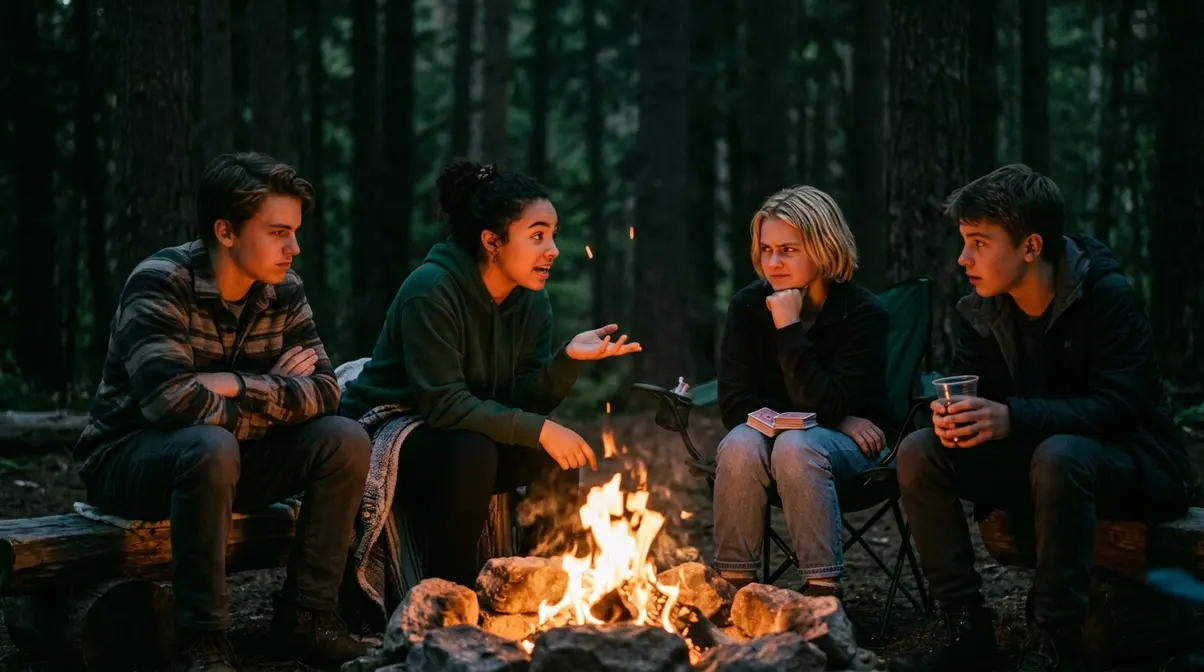
What You Need: One standard deck of cards. A flat surface (a sleeping pad or picnic table works).
- How to Play (Go Fish — Campsite Edition):
- Deal 5 cards to each player. Place the rest face-down as the draw pile.
- Players ask each other for matching cards. If the other player has it, they hand it over. If not, they say “Go Fish” and the asking player draws.
- Campsite Twist: Add a “campfire challenge” rule — if you draw a joker, everyone must name a camping-related item before you can continue. Slowest answer draws an extra card.
Why This Works at a Campsite: Card games are getting boring because the rules never change. Adding one campsite-specific rule layer — tying challenges to the environment — makes a familiar game feel new again.
Two Truths and a Lie
What You Need: Nothing. Works for ages 8 and up.
- How to Play:
- Each player states three things about themselves — two true, one false.
- The group discusses and votes on which statement is the lie.
- The player reveals the answer. Whoever guessed correctly gets a point.
Campsite Twist: Require at least one statement to be about a camping or outdoor experience. This naturally deepens the conversation and works especially well on a first camping trip as a family — you’ll learn things about each other you never expected.
Why This Works at a Campsite: No equipment, no movement required, and it scales perfectly from 3 to 20 players. Two Truths and a Lie, a social guessing game perfect for mixed-age groups, is especially effective around a fire where the relaxed atmosphere encourages honest sharing.
Campfire Charades
What You Need: Nothing (or download the free Campfire Charades PDF for 40 camping-themed prompts).
- How to Play:
- Split into two teams.
- One player draws a prompt (or thinks of one) and acts it out silently.
- Their team guesses within 60 seconds.
- Teams alternate. Most correct guesses wins.
Campsite Twist: Camping-themed categories only — “pitching a tent in the rain,” “finding a spider in your sleeping bag,” “trying to start a campfire with wet wood.” These prompts get louder laughs than generic charades because everyone at the campsite can relate.
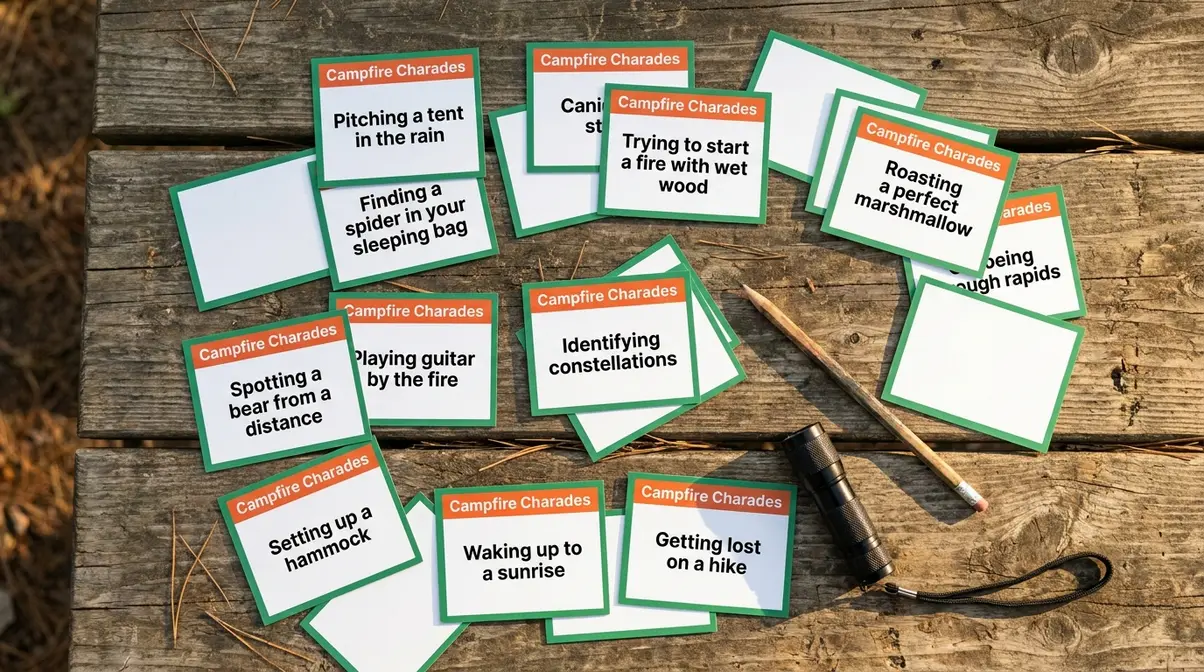
Download our free Campfire Charades PDF — 40 camping-themed prompts ready to print and pack.
20 Questions
What You Need: Nothing. Works for ages 5 and up.
- How to Play:
- One player thinks of a person, place, animal, or object.
- Other players take turns asking yes-or-no questions. Maximum 20 questions total.
- If someone guesses correctly before 20 questions, they become the next thinker. If no one guesses, the thinker wins that round.
Campsite Twist: Restrict the category to “things you can find at or near a campsite.” This shortens the guessing curve for younger kids while keeping it interesting for adults — and it teaches kids to observe their surroundings.
Why This Works at a Campsite: No light needed. Works perfectly in a dark tent during a rain shower. One of the best camping activities for kids without electronics because it requires only imagination.
The Telephone Game
What You Need: Nothing. Best with 5+ players.
- How to Play:
- Players sit in a line or circle.
- The first player whispers a sentence to the person next to them — once only, no repeating.
- Each player whispers what they heard to the next person.
- The last player says the message out loud. Compare it to the original.
Campsite Twist: Start with a long, ridiculous camping-specific sentence: “The raccoon stole the marshmallows and traded them to a squirrel for two pine cones and a granola bar wrapper.” The longer and stranger the original, the funnier the final version.
Why This Works at a Campsite: The crackling fire and ambient noise make mishearing genuinely easy — and hilarious. The Telephone Game is a perfect “first time as a family” activity because it requires zero skill and generates immediate laughter.
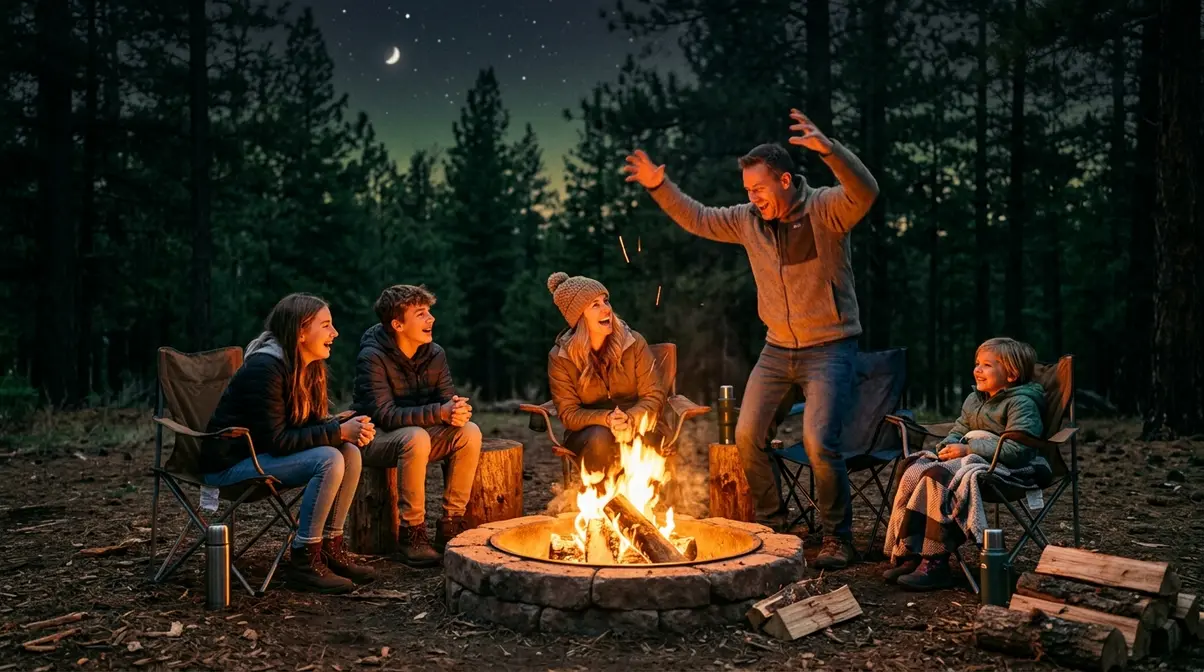
But we just want to sit around the fire. You absolutely can — and these games are designed to be played around the fire. Campfire Storytelling, 20 Questions, and Two Truths and a Lie all work perfectly with everyone seated in a circle, roasting marshmallows. Nobody needs to stand up.
Active Outdoor & Yard Games for Camping
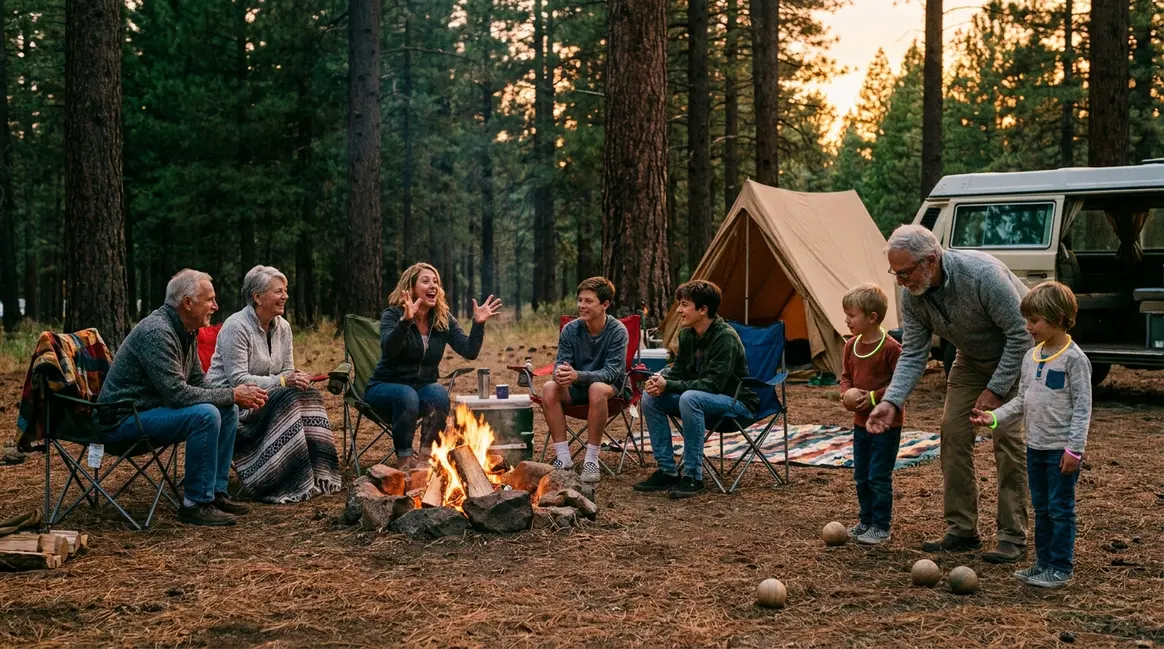
Active outdoor games give kids and adults a way to burn energy during daylight hours — and they solve the “we just got here and the kids are bouncing off the walls” problem that every family camper recognizes. According to Active for Life, outdoor physical play during camping trips significantly increases children’s daily activity levels compared to typical home days. The best active campsite games are compact enough to pack, easy enough to explain in 30 seconds, and flexible enough to work on uneven ground.
Get Moving: Bocce Ball (compact travel set, fits in a backpack) or Frisbee Golf (no basket needed — use trees as targets) are the highest-rated active games for campsite use based on packing efficiency and terrain flexibility.
Bocce Ball (Compact Travel Set)
What You Need: A compact bocce ball travel set (fits in a drawstring bag — don’t take up too much space in your pack).
- How to Play:
- Toss the small target ball (the “pallino”) to set the target.
- Teams take turns rolling their bocce balls as close to the pallino as possible.
- The team with the ball closest to the pallino scores points for each ball that’s closer than the opponent’s nearest ball.
- First to 12 points wins.
Campsite Twist: The uneven terrain is the game. Roots, pine needles, and slopes create natural obstacles that make every throw unpredictable. Embrace it — don’t try to find a flat surface.
Frisbee Golf (No Basket Needed)
What You Need: One Frisbee per player (or share one).
- How to Play:
- Designate 5–9 “holes” around the campsite using natural landmarks — a specific tree, a picnic table leg, a marked rock.
- Players toss from a starting point and count throws until they hit the target.
- Fewest throws across all holes wins.
Campsite Twist: Set each “hole” at a different distance to create a natural difficulty curve. Use a stick in the ground with a bandana as a flag to mark each target clearly.
Capture the Flag
What You Need: Two bandanas or colored flags. Works best with 6+ players.
- How to Play:
- Divide into two teams. Each team hides their flag in their territory.
- Players try to cross into enemy territory, grab the flag, and return without being tagged.
- Tagged players go to “jail” (a designated spot) until a teammate tags them free.
- First team to capture the other’s flag wins.
Campsite Twist: Use the natural campsite division — two sides of a trail, two clusters of trees — as the territory boundary. Glow stick armbands help identify teams after dark, turning this into an evening game.
DIY Ladder Toss (The Cornhole Fix)
What You Need: Three bolas per player (tennis balls connected by rope — make them yourself with 2 feet of paracord and two tennis balls). A stick ladder (build from two Y-shaped sticks and three crossbar sticks jammed into the ground).
- How to Play:
- Build the ladder: two vertical Y-sticks, three horizontal sticks across at different heights (bottom = 1 point, middle = 2 points, top = 3 points).
- Players stand back 5 paces and toss bolas, trying to wrap them around a rung.
- First to 21 points wins.
Campsite Twist: This is the cornhole fix you’ve been looking for. The DIY version weighs almost nothing and builds in under 5 minutes using sticks you find at the campsite. No flat surface required, no truck bed needed.
Nature Obstacle Course
What You Need: Nothing — use what’s already there.
- How to Play:
- Designate a start and finish line.
- Use natural features as obstacles: jump over a log, crawl under a low branch, balance on a flat rock, hop between two stones.
- Time each player. Kids can run the same course multiple times trying to beat their personal best.
Campsite Twist: Let kids design the course. Giving them creative control — “find three natural obstacles and add them to the route” — extends the game and builds outdoor observation skills.
Glow-in-the-Dark Tag
What You Need: Glow stick bracelets (pack a bag of 15–20; they’re cheap and lightweight).
- How to Play:
- Each player wears a glow bracelet.
- Play standard tag rules — “It” tags other players, who then become frozen or join the “It” team (choose your variant).
- The glow bracelets make players visible in the dark while still allowing hiding in shadows.
Campsite Twist: The glow bracelets also serve as safety markers. Parents can see exactly where kids are at all times, making this one of the safest after-dark games for families with young children.
Three-Legged Race
What You Need: Strips of fabric, bandanas, or bungee cords to tie legs together.
- How to Play:
- Pair up players and tie their adjacent legs together at the ankle.
- Set a start and finish line about 20–30 feet apart.
- Pairs race to the finish. First pair to cross wins.
Campsite Twist: The uneven ground makes this significantly harder — and funnier — than a flat track version. Run on grass or packed dirt. Avoid rocky terrain. This is one of the best “first time as a family” games because it forces cooperation and generates instant laughter regardless of outcome.
Horseshoes (Portable Rubber Set)
What You Need: A portable rubber horseshoe set (most fold flat and weigh under 2 lbs).
- How to Play:
- Set two stakes in the ground 40 feet apart (or closer for kids).
- Players take turns tossing horseshoes at the opposite stake.
- A “ringer” (horseshoe around the stake) = 3 points. Closest horseshoe to the stake scores 1 point.
- First to 21 points wins.
Campsite Twist: Rubber sets are quieter than metal, which matters near neighboring campsites. Adjust stake distance based on age — 15 feet for kids, 30 feet for adults, 40 feet for competitive play.
Kickball
What You Need: One inflatable kickball (deflates for packing). Four bandanas or sticks for bases.
- How to Play:
- Set up four bases in a diamond shape using natural markers or bandanas.
- The pitcher rolls the ball; the kicker kicks it and runs the bases.
- Standard baseball rules apply — three outs per inning, three strikes per at-bat.
Campsite Twist: Designate a “campsite rule” — any ball that rolls into the fire ring or under a tent is an automatic out. These environmental rules create spontaneous moments that become the stories everyone tells later.
Sack Race
What You Need: Pillowcases or large fabric bags — one per racer.
- How to Play:
- Each player steps both feet into a pillowcase and holds the top.
- On “go,” players hop to the finish line.
- First to cross wins.
Campsite Twist: Pillowcases are already in your camping kit. You need zero additional gear. Run the race on grass rather than gravel or rocky ground to prevent falls. Works beautifully for mixed ages — toddlers and adults find it equally challenging.
A note on terrain: Uneven ground is a feature, not a bug. Families consistently report that campsite versions of classic games feel more memorable than backyard versions precisely because the terrain creates unexpected moments. Embrace the bumps.
Creative & Nature-Based Activities
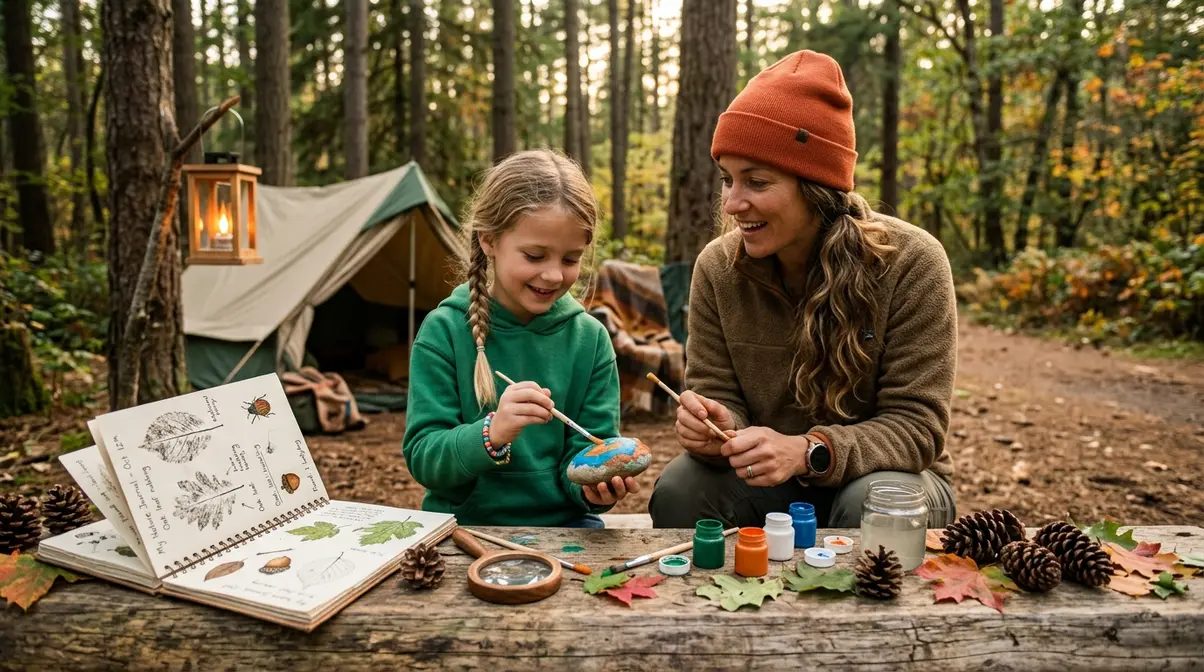
Creative and nature-based activities turn the campsite itself into the game board — and they’re the strongest answer to entertaining kids without electronics. The National Park Service actively encourages nature-based engagement during camping trips, noting that observation-based activities build environmental awareness and curiosity in children. Nature activities require nothing from your pack — they use everything the campsite already provides.
This is where The Campsite Remix concept shines brightest. A forest floor becomes a scavenger hunt map. A campfire becomes a shadow puppet theater. The night sky becomes a classroom. Every one of these 8 activities is free, leave-no-trace compliant, and works across a wide age range.
Start Here: The Nature Scavenger Hunt (printable PDF included) works for ages 3 through adult and runs itself once you hand out the list. Campfire Bingo is the perfect follow-up for after dark.
Nature Scavenger Hunt
What You Need: The free printable PDF (or a handwritten list). A pencil per player.
- How to Play:
- Give each player or team the scavenger hunt list — items like “a pinecone,” “something soft,” “a rock with a stripe,” “an insect,” “something that makes a sound.”
- Players search the campsite area and check off items as they find them.
- First to complete the list wins. Or play cooperatively — everyone works together.
Campsite Twist: Add a “Leave No Trace” rule — items must be observed and checked off, not collected. This follows Leave No Trace (the ethical outdoor code that guides responsible camping) principles and teaches kids environmental respect without a lecture.
Rock Painting & Nature Art
What You Need: Smooth rocks, washable paint or permanent markers (pack in a small zip-lock bag).
- How to Play:
- Each person finds 2–3 smooth rocks at the campsite.
- Paint or draw on them — animals, patterns, messages, whatever feels right.
- Optional: Leave finished rocks at a visible spot on the campsite as a gift for the next campers.
Campsite Twist: Challenge everyone to paint something they observed that day — a bird they saw, the shape of a cloud, the color of the sunset. This turns a craft activity into a nature observation exercise.
Stick Building Competition
What You Need: Fallen sticks and natural materials from the campsite floor. No cutting of living branches.
- How to Play:
- Set a timer for 10 minutes.
- Each player or team collects fallen sticks and natural materials.
- The challenge: build the tallest freestanding tower, the strongest bridge, or a miniature “campsite” — choose your category.
- Judge on height, creativity, or structural integrity.
Campsite Twist: Use only materials that are already on the ground. This enforces Leave No Trace principles naturally and limits the build to what the campsite genuinely offers — which makes the engineering challenge more interesting, not less.
Leaf & Bark Rubbings
What You Need: Plain paper, crayons or soft pencils.
- How to Play:
- Place paper over a leaf, bark, or textured rock.
- Rub the side of a crayon or pencil over the paper to reveal the texture pattern.
- Collect multiple rubbings and compare — guess which tree or plant made each pattern.
Campsite Twist: The US Forest Service recommends bark rubbings as an educational tool for identifying tree species. Challenge older kids to look up what they’ve captured using a field guide (a small one weighs nothing and adds significant educational value to the activity).
Campfire Bingo
What You Need: The free printable Campfire Bingo cards (one per player) and small stones or acorns as markers.
- How to Play:
- Each bingo card has a 5×5 grid filled with camping-related items: “someone drops food,” “a firefly appears,” “someone says ‘I’m cold,'” “a log pops loudly.”
- Players mark their cards when they observe or hear each item during the evening.
- First to complete a row calls “Bingo!” and wins the round.
Campsite Twist: The game plays itself passively — players keep cards nearby and mark them as the evening unfolds naturally. No one needs to “run” the game. This makes it perfect for low-energy evenings when everyone just wants to sit.
Shadow Puppets
What You Need: A flashlight and a flat surface (the side of a tent works perfectly).
- How to Play:
- Shine the flashlight at a flat surface — a tent wall, a large rock, or a hanging tarp.
- Players take turns making hand shapes between the light and the surface to cast shadow animals.
- Challenge: tell a short story using only shadow puppets. Other players guess what each shadow represents.
Campsite Twist: The tent wall is the perfect natural screen. No electricity needed. This works exceptionally well for toddlers and young children as a wind-down activity before bed — the soft light and storytelling element naturally transition toward sleep.
Bug Watching & Nature Journaling
What You Need: A small notebook and pen. Optional: a magnifying glass (lightweight, inexpensive).
- How to Play:
- Each person gets a page in the journal.
- The challenge: find and sketch 5 different insects or creatures before dinner.
- Write one observation about each — what it was doing, where it was, what it looked like.
- Share findings around the fire.
Campsite Twist: Turn it competitive by assigning points: common ant = 1 point, beetle = 2 points, spider = 3 points, firefly = 5 points. Rarest observed creature wins. This builds curiosity about the natural world rather than fear of it — a meaningful shift for kids who aren’t used to being outdoors.
Constellation Identification
What You Need: A free star map printed before the trip (or a laminated one from a camping supply store). No phone required.
- How to Play:
- After dark, lay the star map flat and orient it toward the north.
- Challenge: identify three constellations as a group before the fire dies down.
- Take turns pointing out stars and connecting the dots — literally.
Campsite Twist: Make it a storytelling game — once you identify a constellation, someone has to make up a story about it. The Big Dipper becomes a villain. Orion becomes a character. This bridges the gap between nature observation and creative play.
The Campsite Remix in action: Every one of these activities uses the campsite’s natural features — trees, firelight, the night sky, the forest floor — as the actual game equipment. No packing required. This is exactly what the Campsite Remix principle means: the campsite is the game.
Games for Every Situation
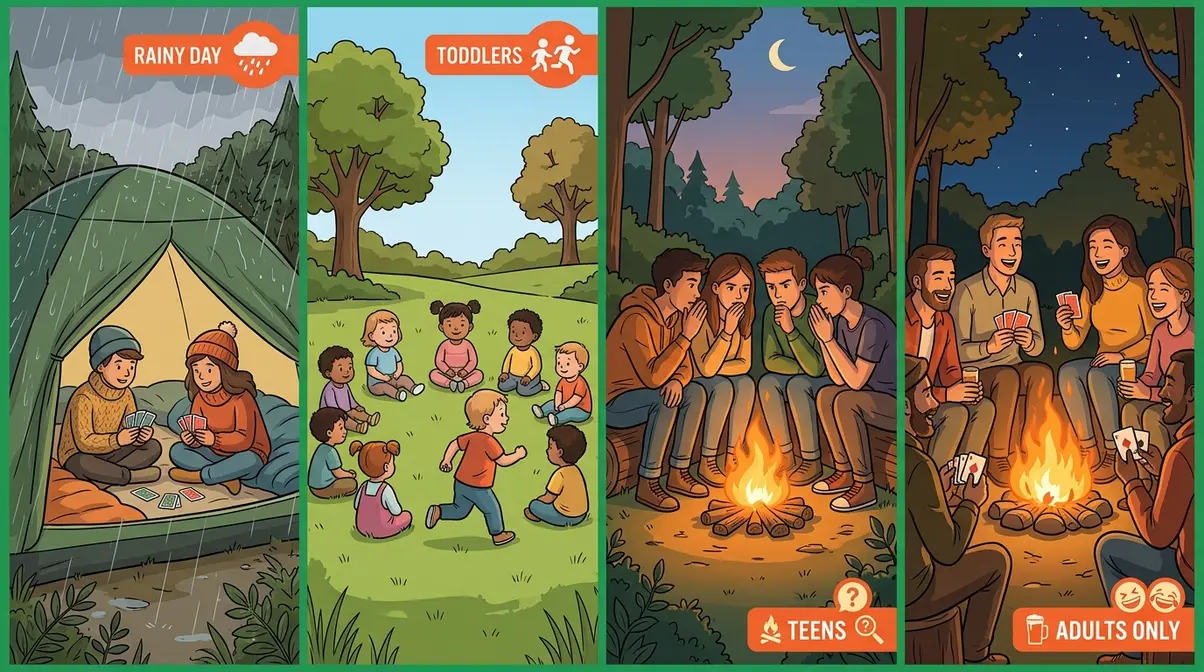
The best screen-free camping games for a sunny afternoon are different from the best games for a rainy tent day, a 3-year-old’s attention span, or a group of teenagers who think everything is “boring.” This section solves the situational problem — matching the right game to the right moment. According to camping experts at Harry’s Campsites, the biggest mistake campers make is planning only for good weather — having a rainy-day game kit ready before you leave home makes the difference between a miserable afternoon and a memorable one.
Situation Match: Rainy day → tent games below. Toddlers → ages 2–5 section. Teens checking out → teen-specific games section. Adults-only evening → see the adult games summary.
For a full deep dive on adult-only campsite games including Mafia, storytelling tournaments, and campfire trivia, see our complete guide to campsite games for adults.
Rainy Day Tent Games
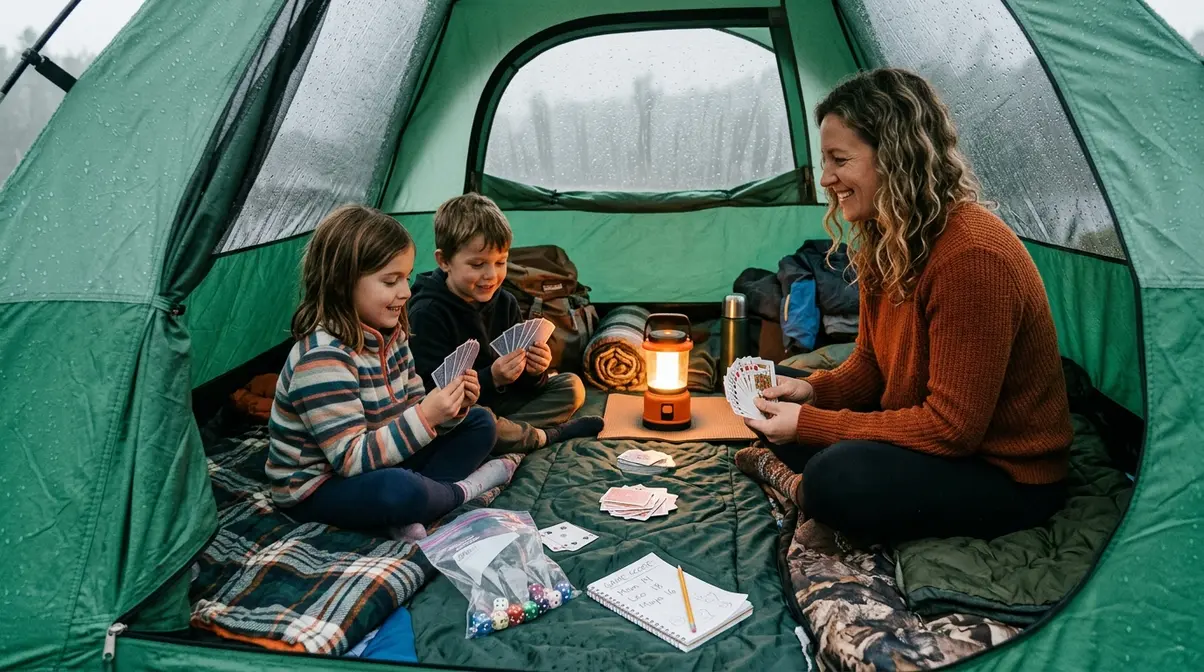
Rain doesn’t end a camping trip — it just changes the venue. These games work inside a tent, under a canopy, or in a covered picnic shelter. Our team evaluated these specifically for confined-space suitability: they require minimal movement, no outdoor light, and no equipment beyond what fits in a small bag.
Best Rainy Day Tent Games:
- 1. Storytelling Dice (DIY)
- What You Need: 6 small cubes with drawn symbols (sun, moon, animal, person, place, object). Draw on blank dice or sticker cubes.
- How to Play: Roll all six dice and build a story using every symbol that lands face-up. Two-minute limit per storyteller.
- Why It Works in a Tent: Completely quiet, zero movement, endlessly replayable.
- 2. 20 Questions (Tent Edition)
- Restrict categories to “things inside this tent.” The limited category makes it faster and funnier in a confined space.
- 3. The Quiet Game
- What You Need: Nothing. A timer helps.
- How to Play: Everyone stays silent. First person to make any sound loses. Last silent person wins a small treat from the snack bag.
- Why It Works in a Tent: Particularly effective during a thunderstorm — the ambient sound makes it genuinely hard.
- 4. I Spy
- What You Need: Nothing.
- How to Play: “I spy with my little eye, something that is [color/shape].” Other players guess the object within the tent.
- Why It Works: Toddler-accessible, no movement required, works in any light level.
- 5. Heads Up, Seven Up (Tent Version)
- Reduce to 4–6 players. Everyone closes their eyes and puts a thumb up. Two “it” players tap one thumb each. Players guess who tapped them.
- 6. Card Games
- Snap, War, Go Fish, Crazy Eights, and Old Maid all work on a sleeping bag as a flat surface. A standard deck handles all of them.
Campsite Twist for Rainy Days: Pack a dedicated “rain bag” — a small zip-lock with a deck of cards, the storytelling dice, a small notepad, and two pencils. Keep it accessible without unpacking your main gear. Families who prepare a rain bag consistently report that rainy camping days become their kids’ favorite memories.
Compact Games for Small Packing Space
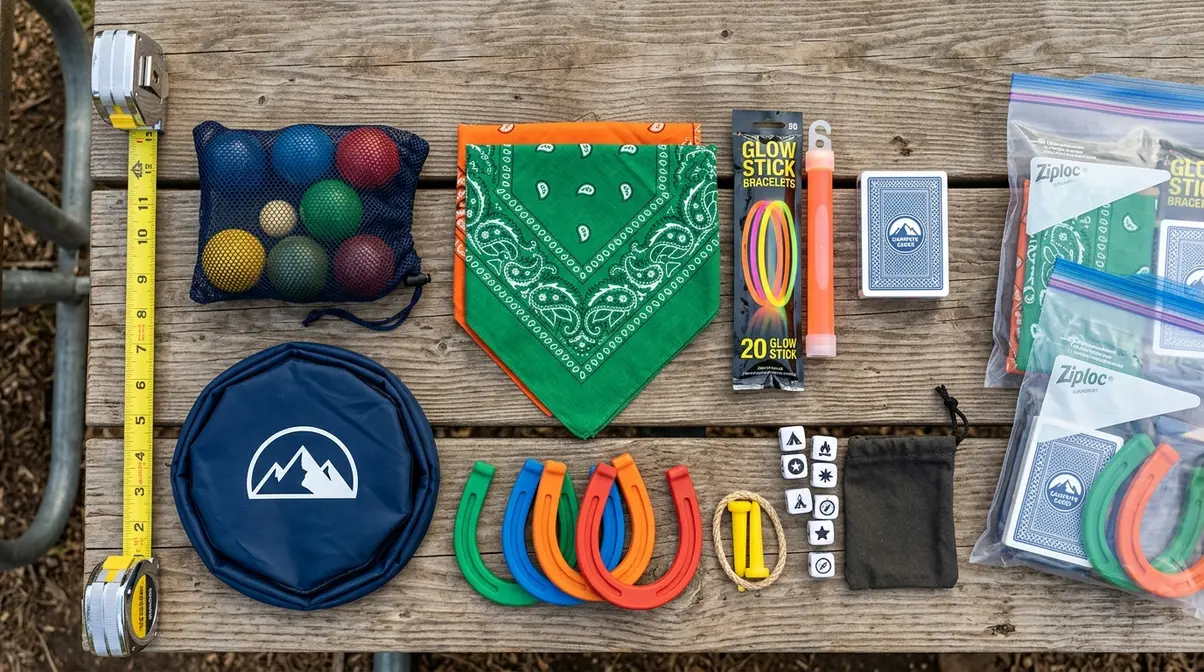
These games pack small, weigh almost nothing, and punch far above their size. All fit in a gallon zip-lock bag or smaller.
| Game | Pack Size | Weight | Ages | Players |
|---|---|---|---|---|
| Standard card deck | 3 oz | 4+ | 2–8 | |
| Compact bocce set | Drawstring bag | 1.5 lbs | 5+ | 2–4 |
| Portable horseshoe set (rubber) | Flat bag | 1.8 lbs | 6+ | 2–4 |
| Glow stick bracelets (20-pack) | Sandwich bag | 4 oz | All | Any |
| Frisbee (foldable) | Flat | 4 oz | 5+ | 2+ |
| Storytelling dice (set of 6) | Zip-lock bag | 1 oz | 4+ | 2–6 |
| Bandana set (4-pack) | 2 oz | All | Any |
The Rule of the Gallon Bag: If your game kit doesn’t fit in two gallon zip-lock bags, you’ve overpacked. Everything on this list fits in one. The bandanas alone replace cornhole (DIY bases), three-legged race ties, team markers for Capture the Flag, and horseshoe stake markers.
Games for Toddlers (Ages 2–5)
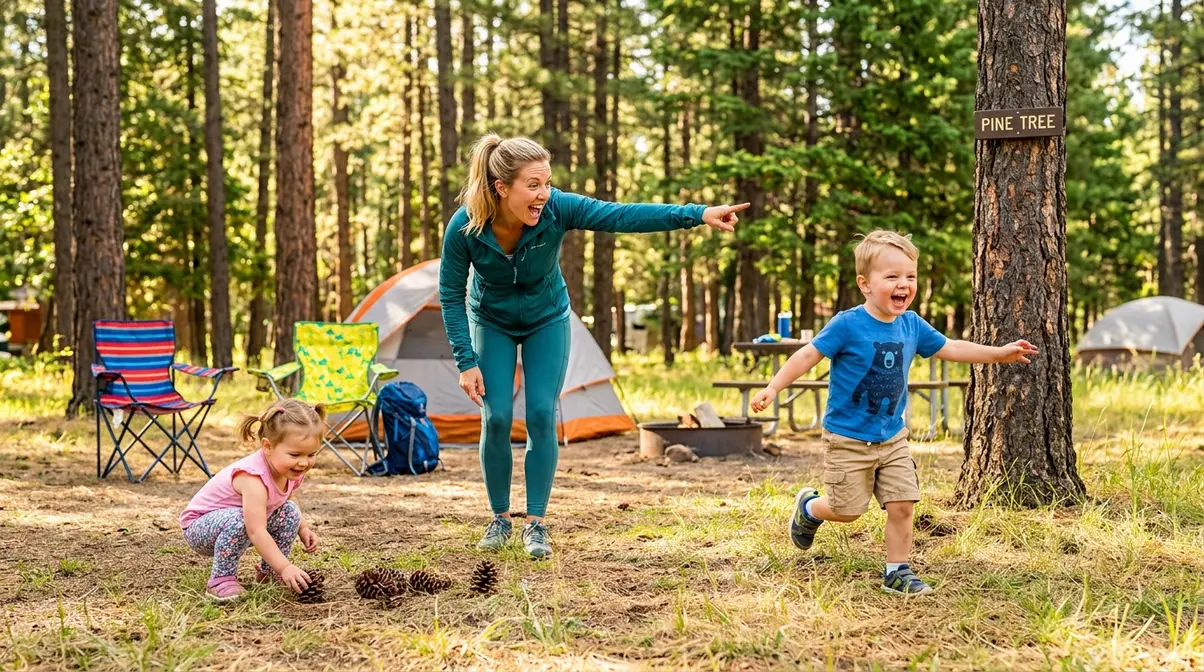
Toddlers at a campsite need games that are short, physical, repetitive, and impossible to lose. Attention spans run 3–8 minutes at this age. Structure every activity with a clear start, a clear end, and an immediate reward (a clap, a cheer, a treat).
Best Toddler Camping Games:
- 1. Duck Duck Goose
- Seat everyone in a circle on the grass. The “goose” chases the tapper around the circle. Toddlers can play this 15 times in a row without getting bored.
- 2. Simon Says (Campsite Edition)
- Use campsite-specific commands: “Simon says touch a tree,” “Simon says find a pinecone,” “Simon says hop like a frog.” Connects the game to the environment.
- 3. Freeze Dance (Humming Version)
- No speaker needed. A parent hums a song; everyone dances. When the humming stops, everyone freezes. Works anywhere with open space.
- 4. Follow the Leader
- One adult leads a trail walk with funny movements — tiptoe around a tree, jump over a stick, crawl under a branch. Toddlers follow and mirror. Doubles as light exercise for everyone.
- 5. Color Hunt
- Call out a color. Toddlers run to touch something that color in the campsite. First one to touch it wins a high-five.
Campsite Tip: All toddler games should end before the child is done with them — stop one round early while they’re still excited. This preserves enthusiasm for the next session and prevents meltdowns.
Games for Teens
Teens disengage from “family games” fast — especially if they feel condescending or childish. The fix: give them ownership, competition, and creative control. Across camping community reports, the consistent finding is that teens engage most with games that have genuine stakes, allow strategic thinking, or involve storytelling with mature themes.
Best Teen Camping Games:
- 1. Mafia (Werewolf)
- What You Need: A deck of cards to assign roles. 6–15 players.
- How to Play: Assign roles secretly — Mafia members, a Detective, a Doctor, and Villagers. Each “night” (eyes closed), Mafia eliminates a player. Each “day,” the group debates and votes to eliminate a suspect. Mafia wins if they outnumber Villagers; Villagers win by eliminating all Mafia.
- Why Teens Love It: It’s social deduction, bluffing, and strategy — not luck.
- 2. Two Truths and a Lie (Advanced)
- Use the same rules as the family version but allow more complex, personal statements. Teens consistently engage more when the game rewards genuine vulnerability and cleverness over simple facts.
- 3. The Story Spine
- Each person contributes one sentence following a template: “Once upon a time…”, “Every day…”, “Until one day…”, “Because of that…”, “Until finally…”, “And ever since then…” The constraint forces creative thinking and produces genuinely funny results.
- 4. Campfire Trivia (Self-Hosted)
- One person prepares 10 trivia questions on their phone before the trip (then puts the phone away). Categories: nature, camping survival, geography, pop culture. Read questions aloud. No phones during the game.
- 5. Night Hike Challenge
- Set a safe, defined trail. Teens navigate it using only flashlights and a paper map. First team back wins. This works best at established campgrounds with marked trails.
Screen-Free Camping Games for Adults
Adult groups need games with more social depth, more strategic complexity, and a higher tolerance for competitive edge. The games above — Mafia, Two Truths and a Lie, and Campfire Storytelling — all work for adult-only groups. But the full adult camping game toolkit goes much further.
For evenings around the fire without kids, the strongest options include Mafia/Werewolf (social deduction, 6–15 players), Campfire Trivia (self-hosted, bring pre-written questions), The Story Spine (creative constraint storytelling), Wink Assassin (silent social deduction), and Campfire Debate (two players argue opposite sides of an absurd topic for 90 seconds — group votes on the winner).
These games build the kind of connection that camping trips are actually for: real conversation, genuine laughter, and shared experience that doesn’t require a screen to feel rewarding.
For the complete adult camping games guide — including Campfire Mafia tournament rules, advanced storytelling formats, and drinking game alternatives for campfire evenings — read our full breakdown on campsite games for adults.
Common Mistakes & When These Games Don’t Work
Even the best campsite game can fail if the conditions are wrong. Our team evaluated these games across forested, open-field, and rainy-day conditions — and identified the patterns that cause games to fall flat.
How do you make camping not boring?
Camping feels boring when there’s no plan for the first 30 minutes after arrival. The fix is simple: have one game ready to start before the tent is even pitched. Assign the Nature Scavenger Hunt to kids the moment you park — it keeps them occupied while adults set up camp. Once the site is ready, transition to an active game (Frisbee Golf or Bocce Ball) before dinner, and close the evening with a campfire game (Campfire Charades or Pass the Story). A loose three-part structure — explore, play, gather — gives the day shape without over-scheduling it.
Common Pitfalls
1. Starting a game when someone is hungry or tired.
The single biggest game-killer at a campsite isn’t the game — it’s timing. Schedule active games before dinner, not after. Evening games work best after everyone has eaten and the fire is going.
2. Choosing a game that requires too many players when your group is small.
Capture the Flag needs 6+ players minimum. Ghost in the Graveyard needs 4+. With a family of 3, stick to Two Truths and a Lie, 20 Questions, and Pass the Story. Always know your player count before choosing.
3. Ignoring quiet hours.
Most campgrounds enforce quiet hours between 10 PM and 6 AM. Flashlight Tag and Glow-in-the-Dark Tag generate shouting. Switch to silent or seated games after 9:30 PM. Campfire Bingo, 20 Questions, and Shadow Puppets are all quiet-hours compliant.
4. Packing games that require flat surfaces.
Bocce Ball and Horseshoes actually benefit from uneven terrain. But card games need a flat surface — bring a small cutting board or use a sleeping pad as a table. Skipping this step leads to abandoned card games within 10 minutes.
When to Choose Alternatives
If it’s raining hard and everyone is in the tent: Skip active games entirely. The Quiet Game, Storytelling Dice, and card games on a sleeping pad are your best options.
If you have mixed ages from toddler to teen: Don’t force a single game. Run two parallel activities — toddlers do Duck Duck Goose with one adult while teens play Mafia. Trying to find one game that works for ages 2–15 simultaneously usually results in nobody having fun.
If the group is genuinely exhausted: Pass the Story around the fire for 10 minutes and call it a night. Not every evening needs a structured game. Sometimes the campsite itself — the fire, the sounds, the stars — is enough.
When to Seek Expert Help
If you’re camping with children with specific sensory or developmental needs, consult resources from the Child Mind Institute or your child’s occupational therapist for adapted game suggestions. Some sensory-sensitive children find nighttime games overstimulating — having a calm, low-light alternative ready (Leaf Rubbings, Nature Journaling) prevents difficult evenings.
Frequently Asked Questions
What is the 3-3-3 rule for camping?
The 3-3-3 rule for camping is a beginner-friendly planning guideline: drive no more than 3 hours to your campsite, arrive by 3 PM, and stay for at least 3 nights. The rule helps first-time campers avoid the most common mistakes — arriving exhausted after a long drive, arriving after dark with no setup time, and leaving before the trip finds its rhythm. It’s a heuristic, not a law — experienced campers adjust it based on their specific trip. For families with young children, arriving by 3 PM is especially important because it allows setup time before dinner and bedtime.
What is the 200 rule for camping?
The 200-foot rule (also called the 200 rule) is a Leave No Trace guideline that says you should camp, cook, and dispose of waste at least 200 feet (roughly 70 adult steps) from any water source — lakes, rivers, streams, and springs. This protects water quality and aquatic ecosystems from contamination. For game purposes, it’s worth knowing because it defines where you can set up active games near water. Keep Bocce Ball, Frisbee Golf, and Obstacle Courses within the 200-foot buffer zone to stay compliant.
What is the 4-4-4 rule for camping?
The 4-4-4 rule is a variation of the 3-3-3 rule used by some camping communities: drive no more than 4 hours, arrive by 4 PM, and stay for at least 4 nights. It follows the same logic — limiting drive time, ensuring daylight arrival, and committing to a longer stay to get full value from the trip. Some families prefer the 4-4-4 version because the extra night gives everyone a full “second day” to settle into campsite routines, which is when the best spontaneous games and activities tend to happen.
What does FF mean in camping?
FF stands for “Full Hookup” in most North American campground listings — meaning the campsite includes water, electricity, and sewer connections. However, in some camping communities and reservation systems, FF refers to “First-Come, First-Served” sites that cannot be reserved in advance. When you see FF on a campground map or listing, check the context: if it’s listed alongside site amenities, it means Full Hookup. If it’s a site availability designation, it means First-Come, First-Served. Always confirm with the campground directly if the meaning is unclear.
What are the best free camping apps?
For screen-free camping, the best “app” is a printed resource — which is why this guide includes three free printable PDFs (Nature Scavenger Hunt, Campfire Bingo, Campfire Charades). That said, useful free apps for trip planning (used before you leave, not at the campsite) include iOverlander for finding sites, the NPS App for National Park information, and AllTrails for trail maps you can download offline. Download everything before you leave — most campgrounds have no cell service, which is the point.
The Campsite Remix Works Wherever You Are
The 40+ screen-free camping games in this guide share one thing: they use where you are as part of the game. Darkness becomes a mechanic. Trees become targets. The campfire becomes a stage. That’s The Campsite Remix — the art of adapting familiar games to fit the unique conditions of a campsite, rather than trying to recreate a backyard experience in the woods.
Research consistently supports what campers already know: unstructured outdoor play builds connection, creativity, and resilience in ways that structured screen time simply cannot replicate. The American Academy of Pediatrics recommends regular nature-based play as a core component of healthy child development — and a camping trip is one of the most concentrated opportunities to deliver it.
You don’t need to play every game on this list. Pick two or three that fit your group. Download the free printables before you leave. Pack the gallon bag game kit. And the next time someone reaches for a phone at 8 PM around the fire, you’ll have a better answer ready.
Download the free Campfire Charades PDF, Nature Scavenger Hunt, and Campfire Bingo cards — print them before you leave, and your next camping trip has a game plan before you’ve pitched a single tent.

David King
Field gear tester at Tent Explorer.