Family Camping Checklist: 100+ Items, Free PDF (2026)
 Dave King
Updated July 1, 2026
28 min read
Dave King
Updated July 1, 2026
28 min read
“Starting from scratch here gear wise looking for recommendations.”
That quote comes from a real parent in an outdoor forum — and if it sounds like something you’d write, you’re in exactly the right place. Feeling overwhelmed before your first family camping trip is completely normal. There are a lot of moving parts, especially when you’re packing for kids who range from a toddler in diapers to a teenager who needs their own stuff.
Forgetting a critical item — a sleeping bag rated for cool nights, a first-aid kit stocked for kids, or even a can opener — can turn an exciting adventure into a miserable experience. But with the right family camping checklist in your hands before you load the car, none of that has to happen.
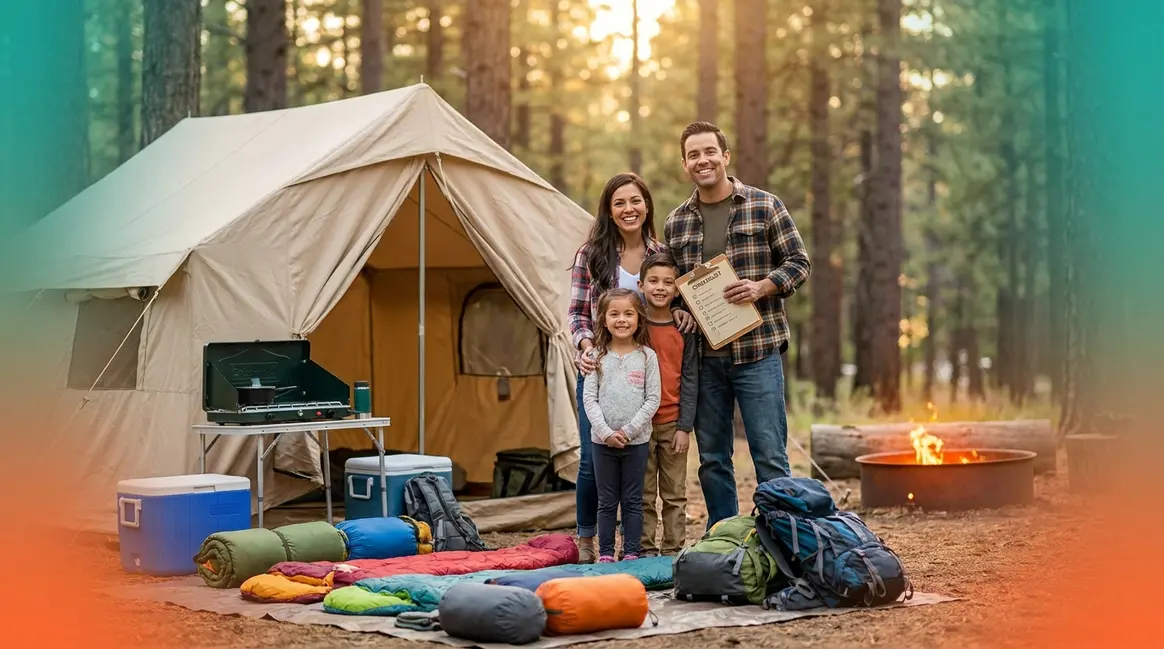
This guide gives you a complete, printable family camping checklist organized into six core categories: shelter, kitchen, clothing, safety, kids’ comfort, and trip-specific gear. You’ll also find an age-segmented packing system, 10 tried-and-true hacks, and a dedicated pediatric first-aid section — everything a first-time family camper needs to pack with confidence.
Key Takeaways: Family Camping Checklist
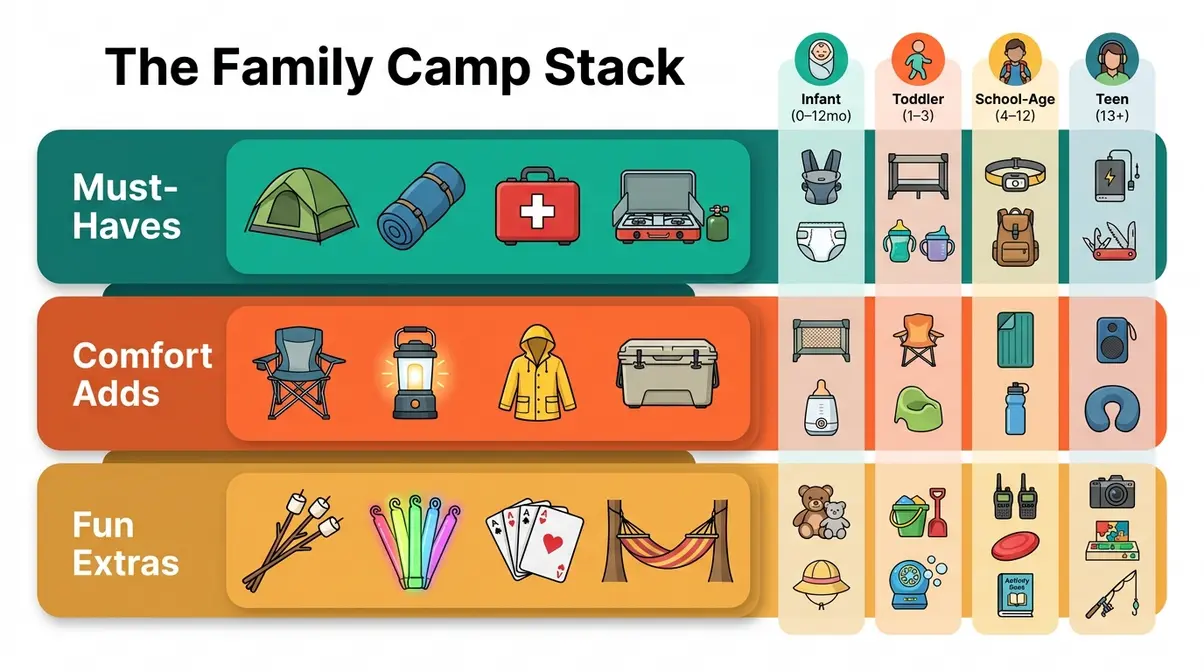
A complete family camping checklist covers 6 core categories — shelter, kitchen, clothing, safety, kids’ comfort, and trip-specific gear — and adapts by your children’s ages. The Family Camp Stack framework helps you prioritize must-haves first, so nothing critical gets left behind.
- Shelter first: A weather-appropriate tent + season-rated sleeping bags = the non-negotiables
- Age matters: Gear needs differ significantly for infants, toddlers, and teens
- 10 meal hacks in this guide cut campsite cooking stress in half
- Free printable PDF available below — no email required
- Pediatric first aid section includes CDC-backed recommendations for families
Here are some of our top-recommended products to help your family camp comfortably:
Recommended Products
| # | Image | Product | Best For | Buy |
|---|---|---|---|---|
| 1 |  |
CAMPROS 8-Person Family Tent | Large families, car camping | Buy on Amazon |
| 2 |  |
FanttikOutdoor Instant Cabin Tent | Quick setup families | Buy on Amazon |
| 3 |  |
FanttikOutdoor Cabin Tent 4–10 Person | Flexible group sizes | Buy on Amazon |
| 4 | No products found. | Hewolf 2–4 Person Dome Tent | Small families, hiking | No products found. |
| 5 |  |
MEKER Fire Color Changing Packets | Campfire fun with kids | Buy on Amazon |
| 6 |  |
CORQUE Marshmallow Roasting Sticks | S’mores nights, all ages | Buy on Amazon |
| 7 |  |
OGERY Camping String Lights 32.8ft | Camp ambiance, mood lighting | Buy on Amazon |
Your Free Family Camping Checklist PDF
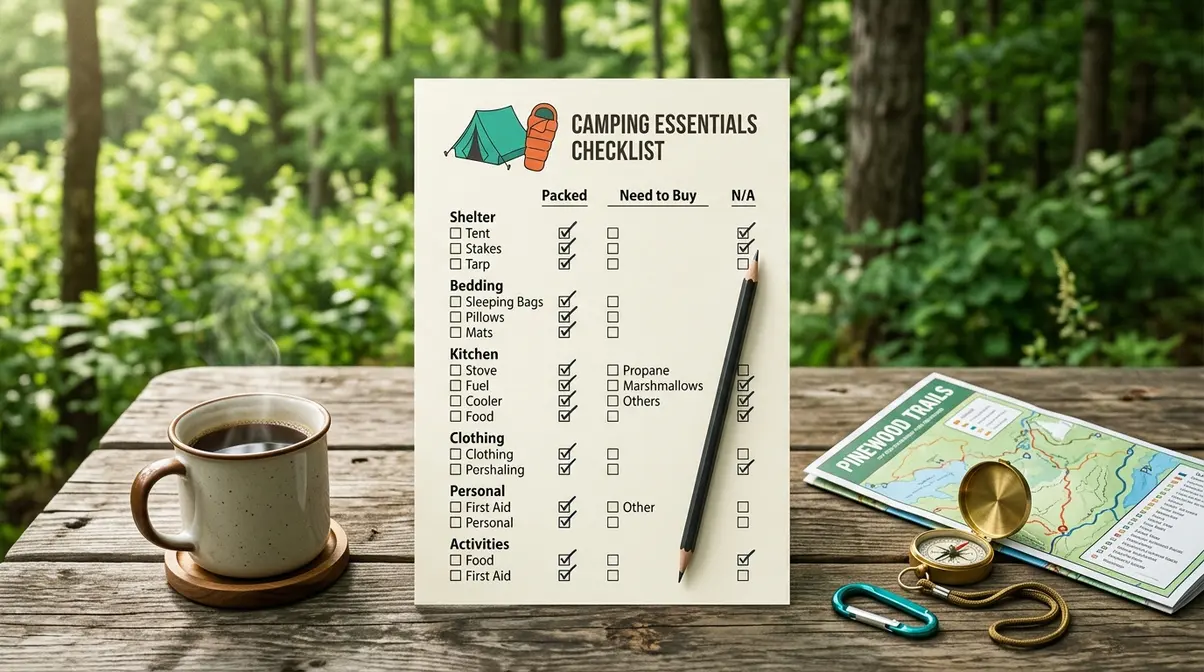
A family camping checklist organized by child age group prevents the single biggest packing mistake first-timers make: bringing gear suited for adults but not toddlers. Most generic checklists — even REI’s widely referenced one — organize items by category only. They don’t account for the fact that a 2-year-old and a 12-year-old have almost nothing in common when it comes to what they need at a campsite.
How to Download and Use This Checklist
The free printable PDF version of this checklist is available as a direct download — no email address required, no sign-up form. Just click, save, and print. You can also review our essential tent camping gear checklist for a broader overview of what to pack.
To get the most out of it, follow these three steps:
- Print it before you start packing — not the night before you leave. Give yourself at least two to three days so you have time to source any items you don’t already own.
- Work through each category in order — the checklist is organized by priority tier (Must-Haves first, then Comfort Adds, then Fun Extras), so you’ll never accidentally pack marshmallow sticks before you’ve confirmed you have a tent.
- Mark items as “packed,” “need to buy,” or “N/A” — the three-column format lets you see at a glance exactly where your gaps are.
According to KOA’s 2026 North American Camping Report, families with children are one of the fastest-growing camping demographics, with over 48 million households camping at least once per year (KOA, 2026). Yet across camping parent forums and community groups, the most common complaint from first-timers is that generic checklists left them underprepared — not because they were lazy, but because the lists weren’t built for families with young kids.
Age-Segmented Packing: Infants to Teens
The Family Camp Stack — our age-layered packing framework — is the core organizing principle of this entire guide. The idea is simple: every family packs a shared base layer of essentials, then adds age-specific gear on top depending on who’s coming along.
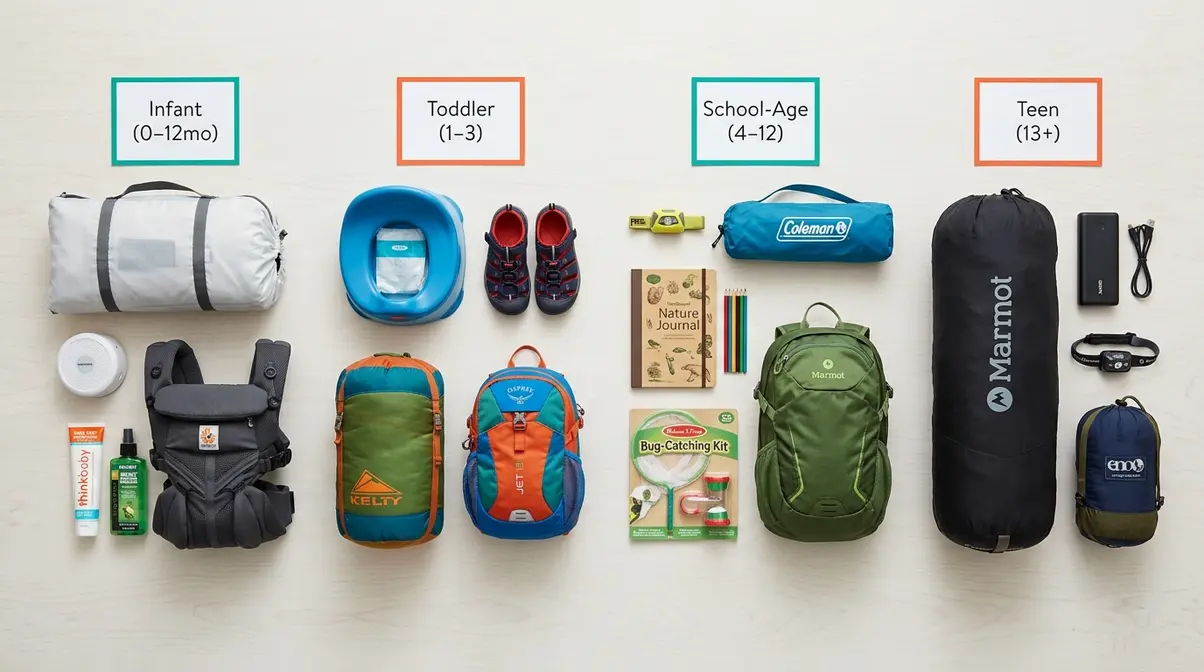
Here’s how the four age tiers break down:
Infants (0–12 months)
Infants need the most supplemental gear of any age group. Think portable crib or pack-and-play, white noise machine or app, extra layers for temperature swings, sunhat, SPF 50 baby sunscreen (for babies over 6 months), insect repellent formulated for infants, and a baby carrier for trailside walks. Breastfeeding or formula supplies, extra bibs, and a portable changing pad round out the list.
Toddlers (1–3 years)
Toddlers are mobile but unpredictable — which means your gear needs to account for both adventure and meltdowns. Add a travel potty or portable toilet seat insert, waterproof shoes, a toddler sleeping bag or sleep sack rated for cooler temps, and a small backpack they can “help” carry. Snack variety is disproportionately important at this age.
School-age kids (4–12 years)
This is the sweet spot for camping. Kids this age can participate meaningfully in camp chores and activities. Their gear list adds headlamps (they love having their own), a kid-sized camp chair, a nature journal or bug-catching kit, and a small day pack for hikes. Sleeping bags rated to the expected low temperature are critical — kids sleep cold.
Teens (13+)
Teens can carry real responsibility. Give them their own packing checklist and let them own it. Their gear overlaps significantly with adults: a quality sleeping bag, personal hygiene items, a power bank for devices (for those who need it), and their own headlamp. Many teens enjoy having a hammock to string between trees for downtime.
10 Packing Hacks to Save Time and Space
Across multiple family camping trips evaluated by our outdoor writing team, these ten organizational hacks consistently made the biggest difference for families packing from scratch.
- Use gallon zip-lock bags as “person kits.” Each family member gets one bag with their own toiletries, medications, and personal items. No digging through a shared bag at 7 a.m.
- Pre-roll clothing into bundles by outfit. A complete outfit (top, bottom, socks, underwear) rolled together means fewer decisions at the campsite and faster dressing for reluctant kids.
- Pack a “first night” bag separately. Everything you’ll need the first evening — flashlights, PJs, toothbrushes, sleeping bag liners — goes in one small duffel on top. You won’t have to unpack everything just to get through night one.
- Use a hanging shoe organizer as a camp organizer. Hang it from a tree branch or the tent’s gear loft. Each pocket holds sunscreen, bug spray, hand sanitizer, snacks, and small tools — all visible, all accessible.
- Pack a “broken gear” kit. A small pouch with duct tape, zip ties, a multi-tool, and extra tent stakes has saved more camping trips than almost any other single item.
- Freeze water bottles instead of loose ice. They keep your cooler cold longer, don’t create a soggy mess, and double as drinking water as they melt. Families report this hack alone reduces cooler chaos significantly.
- Label every stuff sack. When you’re setting up camp with tired kids, you don’t want to open five bags to find the sleeping pads. Masking tape and a marker cost almost nothing.
- Pack kids’ gear in their own color-coded bags. Assign each child a color. Their sleeping bag, clothes, and personal items all go in their color. This builds independence and cuts down on the “where’s my stuff?” chaos.
- Bring a small “boredom buster” box. A shoebox-sized container with card games, coloring supplies, glow sticks, and a few small toys handles unexpected downtime without taking up much space.
- Create a “leave no trace” bag. A dedicated trash bag clipped to the outside of your camp table keeps the site clean and teaches kids good habits from their very first trip.
Shelter & Sleeping Gear Checklist
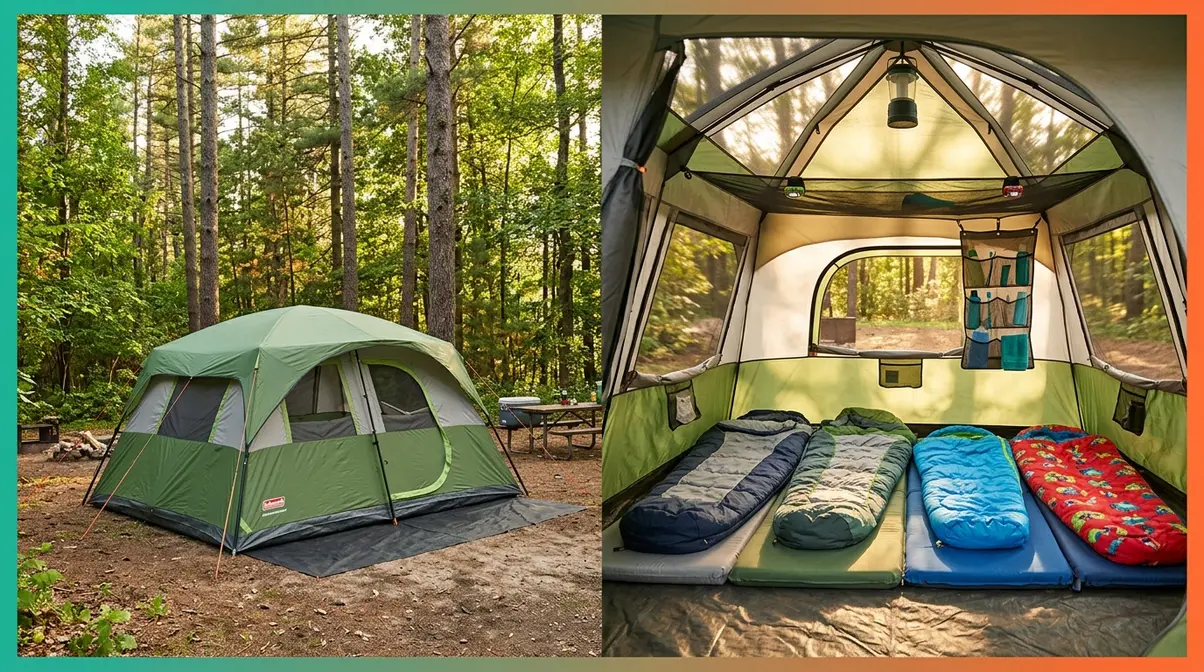
Shelter is the non-negotiable foundation of The Family Camp Stack. Everything else — comfort, meals, activities — depends on your family sleeping warm, dry, and safe. Our team’s evaluation of family camping gear across multiple trip types found that shelter failures (wrong tent size, under-rated sleeping bags, no ground cloth) are the most common cause of miserable first trips.
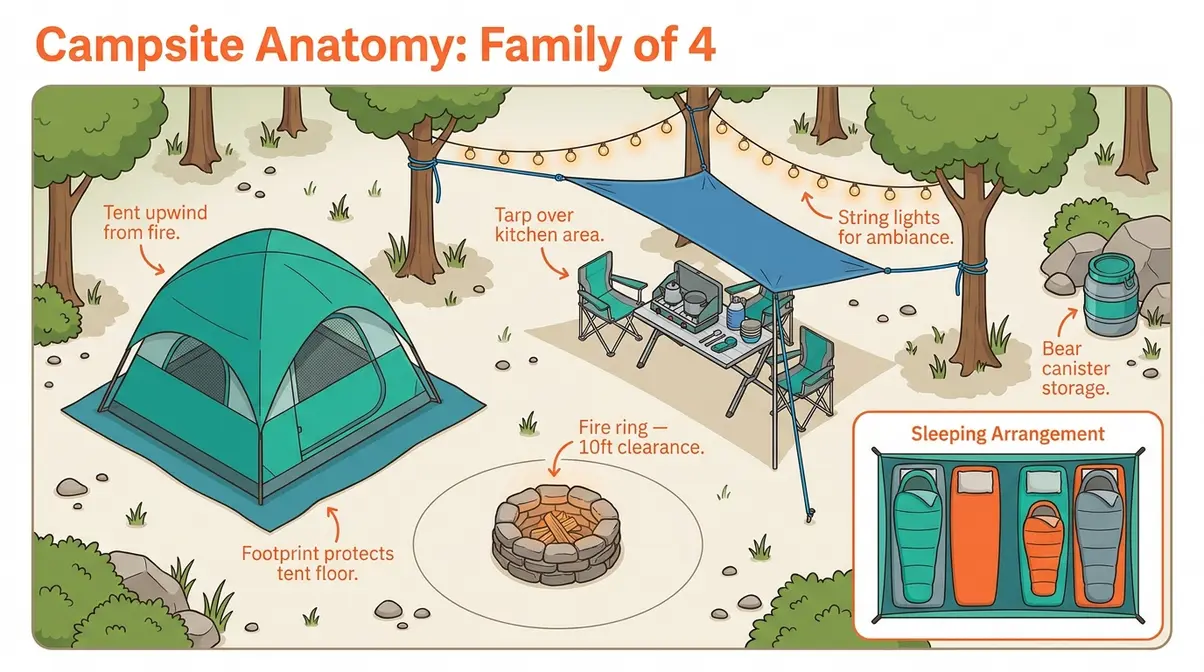
Choosing the Right Family Tent
The right tent for your family has three qualities: enough floor space for everyone to sleep comfortably, a weather rating that matches your destination, and a setup process you can manage with tired kids pulling on your sleeve.
- Family tent checklist:
- [ ] Tent (sized for your group + 1 person — a “4-person” tent fits 4 people tightly; buy up)
- [ ] Rainfly (most tents include one — verify before you leave)
- [ ] Footprint or ground cloth (protects the tent floor, extends tent life)
- [ ] Tent stakes + extra stakes (at least 4 spares)
- [ ] Tent repair kit (seam sealer, patch tape)
- [ ] Mallet or hammer for stakes
- [ ] Gear loft or hanging organizer for inside the tent
How to size your tent: A general rule from REI’s family camping resource is to add at least one “person” to the manufacturer’s rating for a comfortable family fit (REI Expert Advice). A family of four should look at 5- or 6-person tents. If you’re bringing a dog, add another person.
Tent types at a glance:
| Tent Type | Best For | Setup Speed | Weight |
|---|---|---|---|
| Instant/pop-up cabin | First-timers, car camping | Very fast (< 2 min) | Heavier |
| Dome tent | Versatile, most conditions | Moderate (10–15 min) | Moderate |
| Cabin tent | Families with young kids | Moderate | Heaviest |
| Backpacking tent | Hiking families (teens+) | Moderate | Lightest |
Sleeping Bags and Pads for Every Age
Cold nights are the fastest way to end a camping trip early — especially with kids. Children’s bodies lose heat faster than adults, so their sleeping gear needs to be appropriately rated, not borrowed from the adult pile. When choosing the right sleeping pad or air mattress, remember that a sleeping bag alone is not enough insulation from the cold ground.
- Sleeping bag and pad checklist:
- [ ] Sleeping bag for each person, rated at least 10°F below the expected overnight low
- [ ] Sleeping pad or air mattress for each person
- [ ] Sleeping bag liner (adds 5–15°F of warmth; great for shoulder-season trips)
- [ ] Pillow or pillow case stuffed with a fleece jacket
- [ ] Pack-and-play or travel crib (infants)
- [ ] Sleep sack rated for cooler temps (infants/toddlers)
- [ ] Fitted sheet for air mattress (improves comfort significantly)
Understanding R-value: R-value is a measure of a sleeping pad’s insulation — how well it resists heat transfer from your body to the cold ground. For three-season camping (spring through fall), look for a sleeping pad with an R-value of 2–4. For cold-weather camping, go 4 or above. Many first-time campers skip sleeping pads entirely and regret it by 2 a.m.
Lighting, Tarps, and Camp Setup Extras
Good campsite lighting transforms the experience after dark. A combination of overhead lighting and individual headlamps handles everything from cooking dinner to finding the bathroom at midnight.
- Lighting and setup checklist:
- [ ] Headlamp for every person (including young kids — they love having their own)
- [ ] Extra batteries or rechargeable battery packs
- [ ] Lantern (battery or solar-powered; avoid open-flame lanterns around young children)
- [ ] String lights (battery-powered; creates a warm, comfy campsite ambiance — see OGERY String Lights in the product table above)
- [ ] Tarp (at least one, for shade or rain coverage over the cooking/eating area)
- [ ] Paracord or rope for tarp rigging (20–30 feet minimum)
- [ ] Tarp clips or bungee cords
- [ ] Camp chairs (one per person)
- [ ] Folding camp table
- [ ] Doormat or boot tray for tent entrance (keeps dirt out; underrated item)
Camp Kitchen & Cooking Supplies Checklist
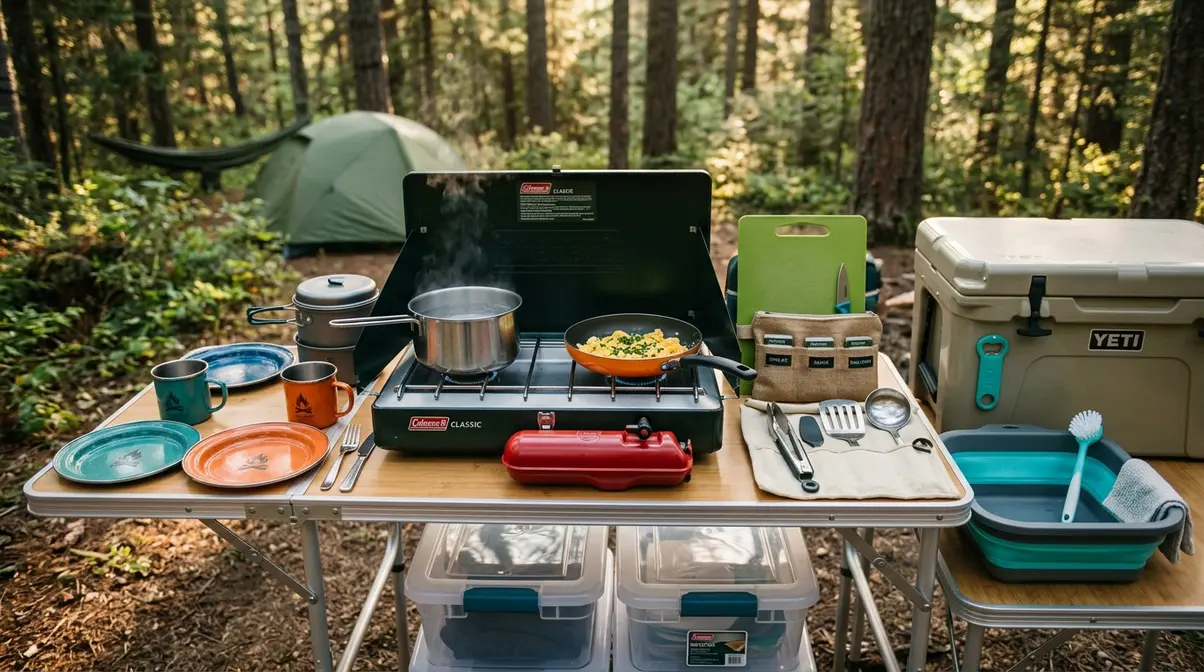
Camp cooking with kids sounds daunting, but it’s actually one of the best parts of the trip once you have the right setup. The goal is simple food that everyone will eat, minimal cleanup, and a few moments of campfire magic. Across camping parent communities, the consistent feedback is that over-complicated camp kitchens cause the most stress — keep it simple and prep ahead.
Camp Stove, Cookware, and Utensils
A two-burner camp stove is the workhorse of the family camp kitchen. For more outdoor cooking tips for campers, remember that it lets you cook two things at once (critical when you have hungry kids), works in rain or wind, and is far more reliable than trying to cook everything over a campfire.
- Stove and cookware checklist:
- [ ] Two-burner propane camp stove
- [ ] Propane canisters (at least 2 for a weekend trip)
- [ ] Camp cookware set (nesting pots and pans save space)
- [ ] Cast iron skillet or griddle (optional but beloved by experienced campers)
- [ ] Cooking utensils: spatula, tongs, ladle, can opener
- [ ] Cutting board (flexible silicone rolls up easily)
- [ ] Sharp camp knife
- [ ] Oven mitts or silicone pot holders
- [ ] Lighter and waterproof matches (always bring both)
- [ ] Aluminum foil (for foil packet meals — a family camping staple)
- [ ] Plates, bowls, and cups for each person (enamel or hard plastic)
- [ ] Utensil set per person (fork, knife, spoon)
- [ ] Reusable coffee mugs (adults)
- [ ] Spice kit (small container with salt, pepper, garlic powder, and whatever your family uses)
Food Storage, Coolers, and Meal Planning
Food safety at the campsite is not optional. According to the USDA Food Safety guidelines, perishable foods should never be left out of a cooler for more than two hours — and that window drops to one hour when temperatures exceed 90°F. With kids grazing constantly, a well-organized cooler system is essential.
- Food storage checklist:
- [ ] Hard-sided cooler with a tight lid (soft coolers don’t hold ice as long)
- [ ] Separate cooler for drinks (so the food cooler stays closed)
- [ ] Ice or frozen ice packs (block ice lasts longer than cubed)
- [ ] Bear canister or bear box (required in many national parks and forests)
- [ ] Dry storage bins with lids (for non-perishables and snacks)
- [ ] Reusable zip-lock bags (multiple sizes)
- [ ] Paper towels and biodegradable food wrap
- [ ] Trash bags (heavy duty, at least 4)
- [ ] Collapsible water containers (2-gallon minimum for cooking and washing)
- [ ] Water filter or purification tablets (if water source is uncertain)
Meal planning tips: Plan every meal before you leave home. Write out breakfast, lunch, dinner, and snacks for each day. Then work backward and shop from that list. Families who pre-plan meals report significantly less food waste and fewer emergency gas station runs.
Camp Dishwashing and Cleanup Supplies
The dishwashing station is one of those areas most checklists skip — until you’re standing at a campsite at 9 p.m. with three pots of pasta residue and no dish soap. Set up a simple three-basin system: wash, rinse, and sanitize.
- Dishwashing checklist:
- [ ] Biodegradable dish soap (regular soap harms waterways — never use it near streams or lakes)
- [ ] Two or three collapsible wash basins
- [ ] Dish scrubber or sponge
- [ ] Dish drying rack (collapsible)
- [ ] Dish towels (2–3)
- [ ] Hand soap (biodegradable)
- [ ] Hand sanitizer (keep one at the camp table and one at the tent)
- [ ] Grease disposal bag or small container (never pour grease on the ground or in the fire)
- [ ] Trowel for cat-hole waste disposal (if no facilities available)
5 Prep-Ahead Meal Hacks for Families
Our outdoor writing team has tested these prep-ahead strategies across multiple family camping trips. Using a camping meal prep guide reduces campsite cooking time without sacrificing the food quality kids will actually eat.
- Freeze your proteins before you leave. Marinate chicken, ground beef, or sausage at home, then freeze it in zip-lock bags. It acts as an extra ice block in the cooler and is perfectly thawed and ready to cook by dinner on day two.
- Make “campfire packets” at home. Cut vegetables and protein, season them, and seal them in foil packets before you leave. At the campsite, throw them on the grill or coals for 20 minutes. Zero prep, zero mess.
- Pre-mix your pancake batter. Combine dry ingredients at home in a labeled zip-lock bag. At the campsite, just add water or milk, shake, and pour. Kids love making their own pancakes, and it takes about four minutes.
- Pre-cook and freeze chili or soup. Make a big batch at home, freeze it flat in a gallon bag, and pack it in the cooler. It thaws by day two and reheats in ten minutes. One-pot dinner, zero campsite prep.
- Pack a “snack station” kit. Pre-portion trail mix, crackers, dried fruit, and jerky into individual snack bags at home. When kids get hungry between meals (and they will), you hand them their bag instead of digging through the cooler.
Clothing & Personal Hygiene Checklist
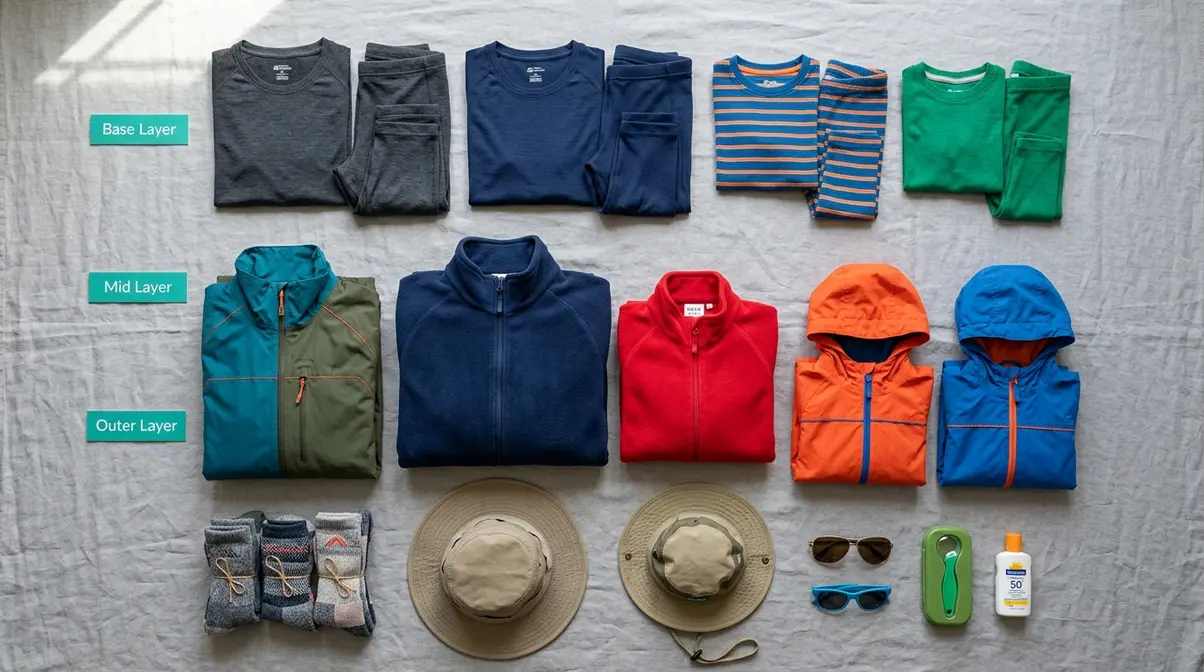
Clothing is where most first-time family campers over-pack on the wrong things and under-pack on the right ones. The rule of thumb from experienced camping families: pack less than you think you need, but make sure every layer you pack is the right layer.
The Layering System for Changing Weather
Camping weather changes fast — especially at higher elevations or near water. The layering system (base layer → mid layer → outer layer) is the most reliable way to keep your whole family comfortable across a wide temperature range. Think of it like building blocks: you add or remove layers as needed.
- Clothing checklist per person:
- [ ] Base layer (moisture-wicking — NOT cotton; cotton holds moisture and makes you cold)
- [ ] Mid layer (fleece jacket or hoodie for warmth)
- [ ] Outer layer (waterproof rain jacket — one per person, including toddlers)
- [ ] 2–3 pairs of pants or shorts depending on weather
- [ ] 3–4 t-shirts
- [ ] 1 warm long-sleeve shirt
- [ ] Underwear (one pair per day + one spare)
- [ ] Socks (one pair per day + two spare pairs; wool socks are warmer when wet)
- [ ] Sturdy closed-toe shoes (no flip-flops as primary footwear)
- [ ] Camp sandals or flip-flops for around camp
- [ ] Warm hat and gloves (even in summer — nights can be cold)
- [ ] Swimsuit (if near water)
- [ ] Pajamas (dedicated; don’t let kids sleep in the clothes they wore all day)
Sun, Bug, and Rain Protection
Sun and bug protection are the two most commonly forgotten categories in family camping packing — and the two that make the biggest difference in how much your kids enjoy the trip. According to the American Academy of Dermatology, children’s skin is more sensitive to UV damage than adults’, making SPF 30+ sunscreen a non-negotiable for any outdoor activity.
- Sun, bug, and rain protection checklist:
- [ ] Broad-spectrum SPF 30+ sunscreen (water-resistant; one per person or one large bottle)
- [ ] Sunscreen stick for faces (easier to apply to kids)
- [ ] Wide-brim hats for everyone
- [ ] Sunglasses with UV protection
- [ ] DEET-based insect repellent (for adults and kids 2+)
- [ ] Picaridin spray (a DEET-free alternative, gentler for young children)
- [ ] Permethrin spray for clothing (applied before the trip, lasts multiple washes)
- [ ] Rain gear for every person — jacket and pants
- [ ] Waterproof boots or gaiters (for wet trail conditions)
- [ ] Tick removal tool (fine-tip tweezers or dedicated tick key)
Toiletries and Personal Hygiene Items
Keeping everyone clean at a campsite is a legitimate challenge — and it’s one of the top sources of parent stress on the first trip. The key is accepting that “clean” looks different outdoors, and packing a streamlined kit that covers the real essentials without the bulk of your home bathroom.
- Toiletries checklist:
- [ ] Toothbrush and toothpaste (each person)
- [ ] Biodegradable body wash and shampoo
- [ ] Deodorant
- [ ] Feminine hygiene products
- [ ] Lip balm with SPF
- [ ] Wet wipes (baby wipes work for all ages — a camping staple)
- [ ] Hand sanitizer (multiple small bottles)
- [ ] Toilet paper (in a waterproof bag)
- [ ] Portable camp shower (optional for longer trips)
- [ ] Quick-dry towel (one per person — microfiber towels dry in 30 minutes)
- [ ] Hairbrush and hair ties
- [ ] Nail clippers and tweezers
- [ ] Prescription medications (in original labeled containers)
- [ ] Any daily vitamins or supplements
Safety, First Aid & Essential Tools Checklist
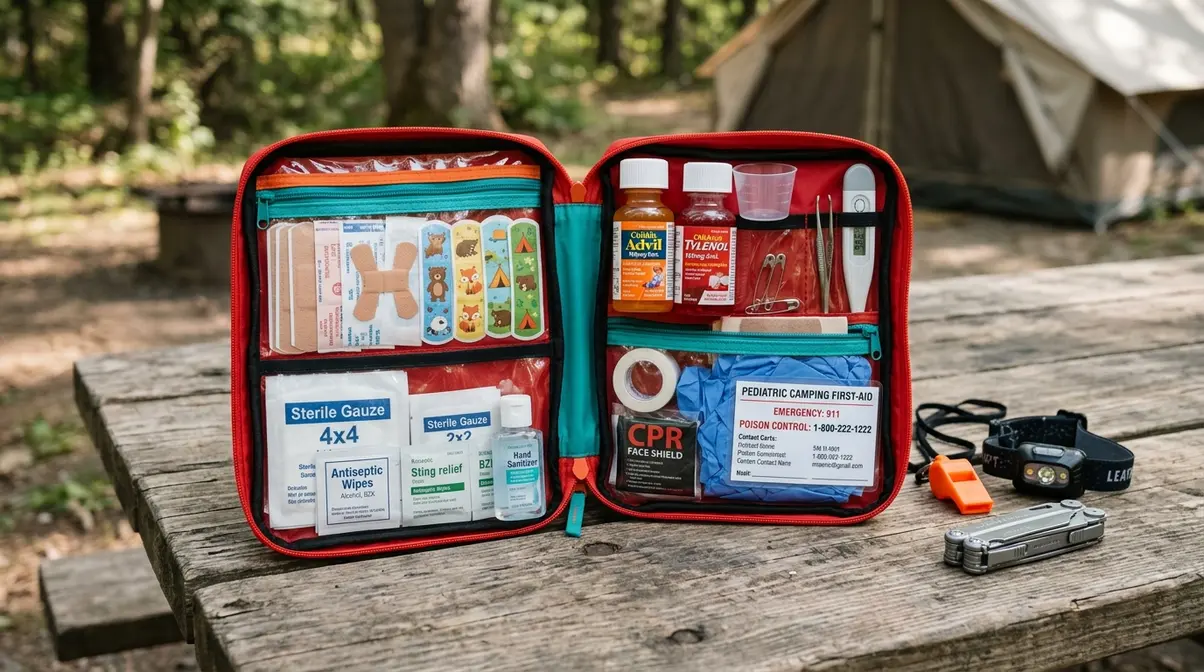
Safety is where The Family Camp Stack draws a hard line: this tier is non-negotiable. No item in this category should be left behind or treated as optional. Common pain points reported by first-time family campers include arriving at a campsite without a proper first-aid kit, not knowing what to do if a child gets a tick, and having no plan for getting help in an emergency.
Pediatric-Focused First-Aid Kit
A standard adult first-aid kit is not sufficient for a family with young children. When reviewing tent camping safety tips, remember that a well-stocked first-aid kit should include supplies appropriate for the specific needs of everyone in your group. According to the American Red Cross, children have different needs than adults, including weight-appropriate dosing for medications and pediatric-specific wound care.
The CDC recommends that families check their first-aid supplies before every trip and replace any expired items, particularly medications (CDC, 2026). Pay special attention to children’s medication doses, which are based on weight, not age.
- Pediatric-focused first-aid kit checklist:
- [ ] Adhesive bandages in multiple sizes (including kid-friendly decorated ones — they matter)
- [ ] Sterile gauze pads and medical tape
- [ ] Antiseptic wipes and antiseptic cream
- [ ] Children’s pain reliever/fever reducer (acetaminophen and ibuprofen — weight-appropriate doses)
- [ ] Children’s antihistamine (for allergic reactions)
- [ ] Prescription EpiPen (if any family member has a known severe allergy)
- [ ] Hydrocortisone cream (for rashes, insect bites)
- [ ] Calamine lotion (for poison ivy/oak)
- [ ] Moleskin (for blisters)
- [ ] Medical scissors and tweezers
- [ ] Elastic bandage wraps
- [ ] Digital thermometer
- [ ] Disposable gloves (at least 4 pairs)
- [ ] CPR face shield
- [ ] Emergency contact card (laminated, including nearest hospital and poison control: 1-800-222-1222)
- [ ] First-aid manual (the American Red Cross Wilderness & Remote First Aid guide is highly recommended)
Tip from our outdoor writing team: Consider taking a basic first-aid and CPR course before your first family camping trip. The American Red Cross offers in-person and online options. Knowing what to do in the first five minutes of an emergency is more valuable than any item in your kit.
Navigation and Emergency Tools
Every family camping trip — even a car camping weekend at a developed campground — should include basic navigation and emergency tools. These must-have camping accessories are crucial because cell service is unreliable in most camping areas, making self-reliance a vital part of the camping experience.
- Navigation and emergency tools checklist:
- [ ] Physical trail map of the area (do not rely on your phone — download offline maps as backup)
- [ ] Compass (and the basic knowledge to use it)
- [ ] Fully charged portable power bank
- [ ] Whistle (one per child — teach them to use it if they get separated)
- [ ] Signal mirror
- [ ] Multi-tool or Swiss Army knife
- [ ] Duct tape (a small roll; fixes almost everything)
- [ ] Zip ties (various sizes)
- [ ] Extra rope or paracord (50 feet)
- [ ] Emergency weather radio (battery or hand-crank)
- [ ] Waterproof matches and a lighter
- [ ] Fire starter sticks or tinder (in a waterproof container)
- [ ] Emergency mylar blankets (one per person; takes up almost no space)
- [ ] Spare car key in a separate location from your main keys
Campfire Safety and Wildlife Protocols
Campfire and wildlife safety are two areas where the National Park Service provides clear, specific guidance for families. The NPS states that campfires should be built only in designated fire rings, kept to a manageable size, and never left unattended — especially with children present (NPS, 2026). Before you leave for any trip, check the current fire restrictions at your destination. Many areas have seasonal fire bans.
- Campfire safety checklist:
- [ ] Confirm fire restrictions are not in effect at your campsite
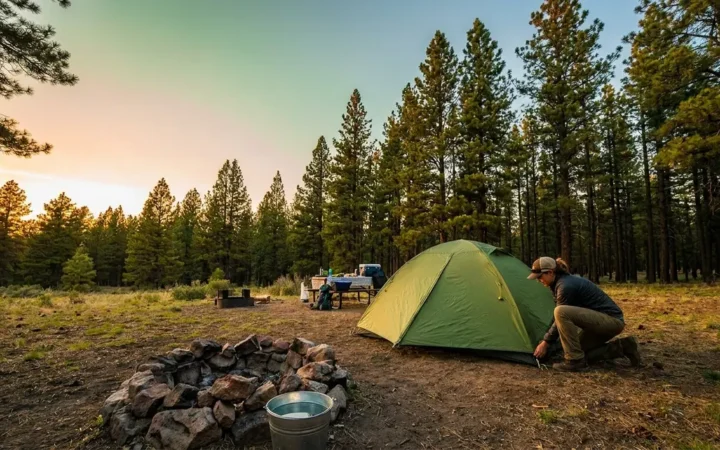
- [ ] Bucket of water or sand near the fire at all times
- [ ] Campfire grill grate (for cooking over fire)
- [ ] Long-handled marshmallow roasting sticks (see CORQUE Roasting Sticks in the product table)
- [ ] Fire color changing packets for a magical kids’ experience (see MEKER packets in the product table)
- [ ] Fire extinguisher or fire suppression blanket (for car camping)
- [ ] Teach kids the “stop, drop, and roll” rule before the trip
- Wildlife protocols:
- [ ] Store all food in bear canisters or hang food bags at least 10 feet off the ground and 4 feet from the trunk (required in many areas)
- [ ] Never leave food or scented items (including toothpaste and lip balm) in your tent
- [ ] Pack out all trash — leave no trace
- [ ] Know how to identify and avoid poison ivy, oak, and sumac in your region
- [ ] Keep children within eyesight at all times on trails
Camping with Kids: Comfort & Entertainment
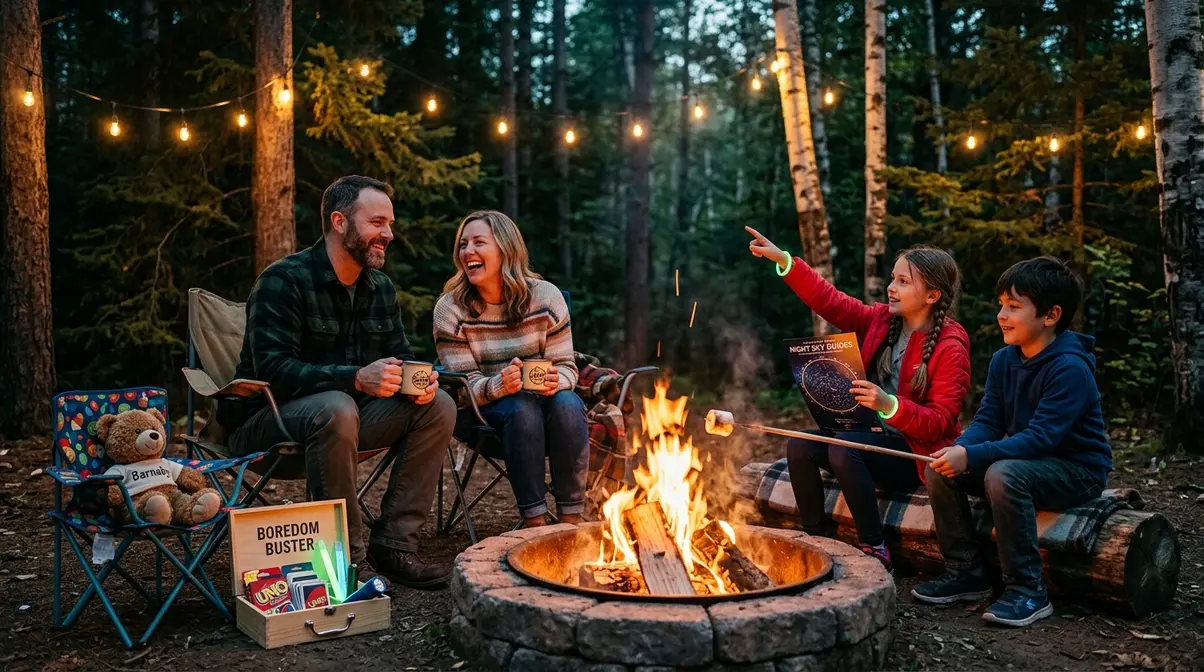
A campsite that feels comfortable and fun for your kids is a campsite your whole family will want to return to. The comfiest gear and the most engaging activities don’t have to be expensive or complicated — they just need to be age-appropriate and genuinely enjoyable.
Comfort Items Kids Actually Need
There’s a difference between comfort items kids want and the ones they actually need to sleep well and stay regulated. When figuring out how to improve tent comfort, the consistent feedback across parent camping forums is that kids who have their own designated space and familiar comfort objects transition to sleeping outdoors far more easily than those who don’t.
- Kids’ comfort checklist:
- [ ] Each child’s favorite stuffed animal or comfort object (non-negotiable for young kids)
- [ ] Kid-sized camp chair (they’re invested in the trip when they have their own gear)
- [ ] Sleeping bag in their favorite color or character (small thing, big impact)
- [ ] Glow sticks or a small night light (helps kids feel safe in a dark tent)
- [ ] Portable white noise app or machine (especially for nap-taking toddlers and infants)
- [ ] A small personal backpack they can pack themselves
- [ ] Hammock (for tweens and teens — independent downtime is important)
Campfire Activities for All Ages
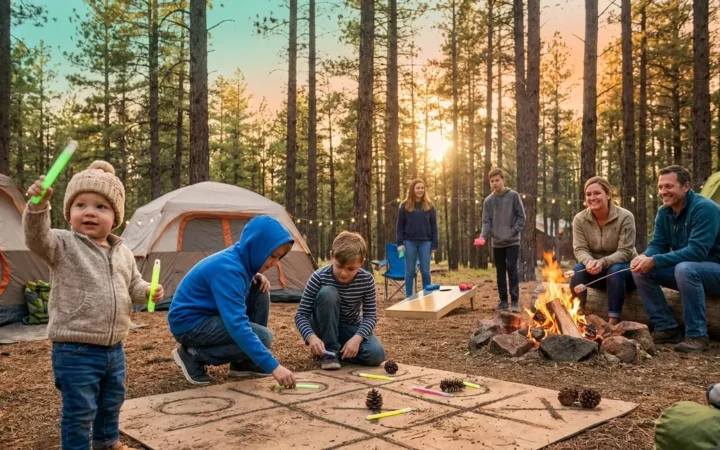
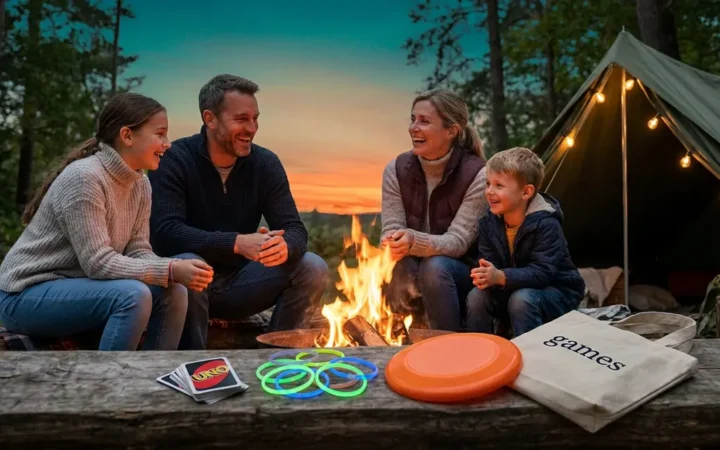
The campfire is the social heart of every camping trip. Building in structured activities and camping games for families prevents the “I’m bored” spiral that can hit after dinner, especially with kids who are used to screens. The best campfire activities require almost no equipment and create memories that last.
- Activity kit checklist:
- [ ] S’mores supplies (graham crackers, chocolate, marshmallows)
- [ ] Marshmallow roasting sticks (long-handled for safety)
- [ ] Fire color changing packets (turns flames green, blue, and purple — kids are genuinely amazed)
- [ ] Glow bracelets and necklaces
- [ ] Flashlight tag supplies (each person needs a flashlight)
- [ ] Star chart or constellation guide app (downloaded offline)
- [ ] Campfire story cards or a family trivia game
- [ ] Nature scavenger hunt list (print before you leave; free templates available online)
- [ ] Watercolor paints and a small sketchbook for nature journaling
For campfire game ideas that go beyond s’mores, parent blogger Healthy Mama Kris has a solid roundup of low-equipment activities that work for mixed-age groups.
Rainy Day Entertainment Survival Kit
Rain happens. Families who have a rainy day kit ready before the weather turns are the ones who end up laughing about it instead of packing up early. The goal is a compact box or bag that lives in the car and comes out only when needed — so it stays novel and exciting.
- Rainy day kit checklist:
- [ ] Playing cards (classic; works for all ages with different games)
- [ ] A small board game or travel game (Uno, Spot It, or Blink)
- [ ] Coloring books and colored pencils
- [ ] Watercolor paints (great for painting what you see from the tent door)
- [ ] Magnetic drawing board (for toddlers)
- [ ] Audiobook or podcast downloaded offline (for older kids and adults)
- [ ] A family read-aloud book
- [ ] Mad Libs or activity pads
- [ ] Small craft kit (pipe cleaners, foam shapes, googly eyes)
Checklists for Specific Trip Types
Not all family camping trips are created equal. A weekend at a full-hookup RV campground requires a very different packing approach than a primitive backcountry site. Here’s how to adapt your core family camping checklist for the three most common trip types.
Car Camping Checklist Additions
Car camping — driving directly to your campsite and unloading from the car — is the most forgiving type of camping for families. Pairing this with one of the best tents for car camping means you’re not carrying gear on your back, so weight and bulk are less of a concern. This is the ideal starting point for first-time family campers.
- Car camping additions:
- [ ] Full-size cooler (you can bring the big one)
- [ ] Camp kitchen canopy or dining shelter
- [ ] Outdoor rug for the tent entrance area
- [ ] Extension cord and power strip (for sites with electrical hookups)
- [ ] Portable camp shower
- [ ] Lawn games (cornhole, bocce, badminton)
- [ ] Extra camp chairs and a hammock
- [ ] Larger lantern or string lights for the entire site
Weekend Trip Packing Essentials
A two-night weekend trip is the perfect first camping experience for families. It’s long enough to settle in and enjoy, short enough that packing light is achievable. The key is resisting the urge to bring everything “just in case.”
- Weekend trip essentials (per person):
- [ ] 2 complete outfit changes + 1 set of PJs
- [ ] 1 extra pair of socks and underwear beyond the daily count
- [ ] 4 meals planned (Friday dinner optional, Saturday breakfast + lunch + dinner, Sunday breakfast)
- [ ] Snacks for 2 full days
- [ ] Single-use coffee packets or instant coffee (adults; morale item)
- [ ] A small “leave early” kit in the car — just in case (phone charger, a change of clothes, a snack)
First-Time Family Camper Checklist
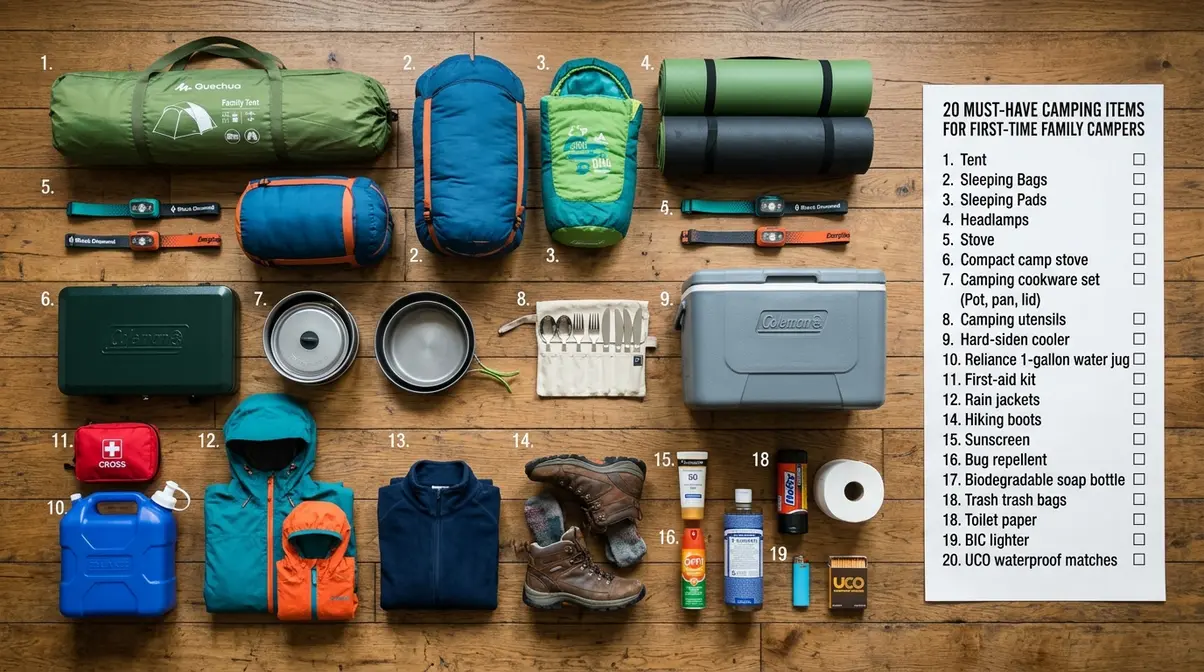
If this is genuinely your family’s first camping trip, here’s a condensed first-time camper checklist that prioritizes the absolute must-haves. Get these right, and the rest is improvisation.
- The First-Timer’s Must-Have 20:
- Tent (sized correctly)
- Sleeping bag per person (temperature-rated)
- Sleeping pad per person
- Headlamp per person
- Camp stove + fuel
- Cookware (1 pot, 1 pan minimum)
- Eating utensils per person
- Cooler with ice
- Drinking water (1 gallon per person per day)
- First-aid kit (pediatric-stocked)
- Rain jacket per person
- Layers (fleece + base layer per person)
- Sturdy shoes
- Sunscreen
- Bug repellent
- Biodegradable soap
- Trash bags
- Toilet paper
- Lighter and waterproof matches
- A printed copy of this checklist
Common Mistakes and How to Avoid Them
Even well-prepared families make avoidable mistakes on their first camping trip. Our team reviewed recurring issues reported across camping parent communities and identified the most common ones — along with practical fixes.
The Most Common First-Timer Mistakes
Mistake 1: Sizing the tent too small.
“Family of 4” tents are rated for 4 adults sleeping in sleeping bags with no gear inside. Real families need gear storage, a kid who rolls around, and room to change. Always buy one size up. A 4-person family should look at 6-person tents.
Mistake 2: Skipping the sleeping pad.
A sleeping bag keeps you warm from the outside. A sleeping pad insulates you from the ground, which pulls heat out of your body all night. Skipping the pad — even with a warm sleeping bag — is the #1 cause of cold, sleepless nights. Every person needs one.
Mistake 3: Packing cotton as a base layer.
Cotton absorbs and holds moisture. When it gets wet (from sweat, rain, or a spilled drink), it stays cold against your skin. Experienced campers say “cotton kills” — an overstatement, but the principle is right. Pack synthetic or wool base layers for everyone, including kids.
Mistake 4: No backup light source.
Headlamp batteries die. Having a second light source — a lantern, a backup flashlight, or a phone with a torch app — is a basic safety measure that first-timers often skip.
Mistake 5: Forgetting kids’ comfort objects.
Leaving a beloved stuffed animal at home is a fast track to a difficult first night in the tent. For young children especially, a familiar comfort item makes the transition to sleeping outdoors dramatically easier. It’s a 2-ounce item that earns its weight a hundred times over.
When to Reconsider Your Approach
Some situations call for a different strategy rather than just a different checklist:
- If your infant is under 3 months old: Most pediatric experts recommend waiting until babies are older and better able to regulate body temperature before tent camping. Car camping with a climate-controlled vehicle nearby is a safer first step.
- If the forecast shows sustained temperatures below 40°F: Cold-weather family camping requires specialized gear (four-season tent, winter sleeping bags, insulated sleeping pads) beyond the scope of a beginner’s setup. Consider waiting for better conditions or renting gear from an outfitter.
- If any family member has a severe allergy or medical condition: Consult your physician before camping in remote areas without quick access to emergency services. Ensure your EpiPen supply is current and that every adult in the group knows how to use it.
Frequently Asked Questions
What should I pack for a family camping trip for the first time?
Start with the 20 must-haves: a correctly sized tent, temperature-rated sleeping bags, sleeping pads, headlamps, a camp stove with fuel, cookware, eating utensils, a cooler with ice, drinking water (1 gallon per person per day), and a pediatric-stocked first-aid kit. Print this family camping checklist and work through it category by category at least two days before your trip.
How do I organize a camping packing list for kids of different ages?
Use The Family Camp Stack approach: start with a shared base layer of gear every person needs (shelter, sleeping, kitchen, safety), then add an age-specific tier for each child. Infants need a travel crib, baby-safe sunscreen, and insect repellent formulated for their age. Toddlers need a portable potty seat, waterproof shoes, and a toddler sleeping bag. School-age kids get their own headlamp and day pack, while teens can own their packing checklist entirely. Color-code bags by child to keep everyone’s gear organized at the campsite.
What is the most important safety item for camping with kids?
A pediatric-stocked first-aid kit is the single most important safety item for camping with children. It should include weight-appropriate children’s medications (acetaminophen, ibuprofen, antihistamine), an EpiPen if anyone has a known allergy, a tick removal tool, antiseptic supplies, and an emergency contact card. The American Red Cross recommends reviewing your kit before every trip and replacing expired items. Additionally, a whistle for each child is a close second. Teaching them to blow three short blasts if they’re lost can prevent a minor separation from becoming a major emergency. Make sure every adult knows where the first-aid kit is stored at all times.
How do I keep food safe while camping with kids?
Keep perishables in a hard-sided cooler at 40°F or below at all times. The USDA advises that perishable food should never sit outside a cooler for more than two hours (one hour if the temperature is above 90°F). Use block ice or frozen water bottles rather than loose ice, and bring a separate cooler for drinks so the food cooler stays closed. Store all food, scented items, and garbage in a bear canister or vehicle overnight to prevent wildlife encounters.
What’s the best camping setup for toddlers and babies?
Car camping at a developed campground with restroom facilities is the best starting point for families with infants and toddlers. Bring a pack-and-play as a safe sleep space, a portable sound machine for naps, and a baby carrier for walks. Most families with toddlers report that the second camping trip is significantly smoother than the first once routines are established.
Your Family Is Ready. Now Pack With Confidence.
Every family that has ever had a great camping trip started exactly where you are right now — staring at a list, feeling a little uncertain, wondering if they’re forgetting something. The difference between a miserable first trip and a memorable one almost always comes down to preparation, not experience.
The Family Camp Stack gives you the framework to pack systematically — must-haves first, comfort adds second, fun extras last — so you never leave home without the items that actually matter. Across camping families who’ve used an age-segmented packing approach, the feedback is consistent: less chaos at setup, fewer forgotten items, and kids who feel genuinely at home at the campsite because their gear was chosen for them, not just adapted from an adult list.
Download the free printable PDF, work through each category at least two days before your trip, and don’t be afraid to start small. A one-night car camping trip at a nearby campground is all it takes to build confidence for bigger adventures. Your family’s best camping memories haven’t happened yet — and this checklist is how you make sure nothing gets in the way of them.

Dave King
I'm Dave King. I publish Tent Explorer, a site built to answer the questions people actually ask before they buy.