
This blog post may contain affiliate links. As an Amazon Associate I earn from qualifying purchases.
Over 80 percent of american campers discover that tent capacity ratings rarely match real comfort. Many expect a “4-person tent” to fit four people and their gear with ease, only to find cramped quarters and little storage space. Understanding how manufacturers define capacity helps avoid crowded nights and frustration. This guide clears up common myths and shares expert-backed tips so you can choose the right tent size for your american adventure.
Key Takeaways
| Point | Details |
|---|---|
| Tent capacity ratings can be misleading | Typical ratings do not account for comfort, gear storage, and movement, often leading to cramped experiences. |
| Understanding personal space is essential | Consider individual comfort, gear needs, and size of campers to select the right tent size. |
| Real occupancy often differs from rated capacity | Rated capacity does not reflect factors like gear storage and sleeping arrangements, impacting usability. |
| Choose based on specific requirements | Evaluate camper numbers, gear volume, and camping style for an optimal tent choice. |
Defining Tent Capacity and Common Misconceptions
When shopping for camping gear, understanding tent capacity can be surprisingly tricky. According to thetechedvocate, tent capacity ratings frequently do not account for critical factors like personal comfort and gear storage, which can lead to unexpectedly cramped camping experiences.
Tent capacity is typically defined as the number of people who can theoretically sleep on the tent floor. But here’s the catch: this basic measurement doesn’t tell the whole story. As research from d54-h reveals, manufacturers often calculate capacity by how many sleeping bags can be squeezed onto the floor space, without considering individual comfort, gear placement, or personal space needs.
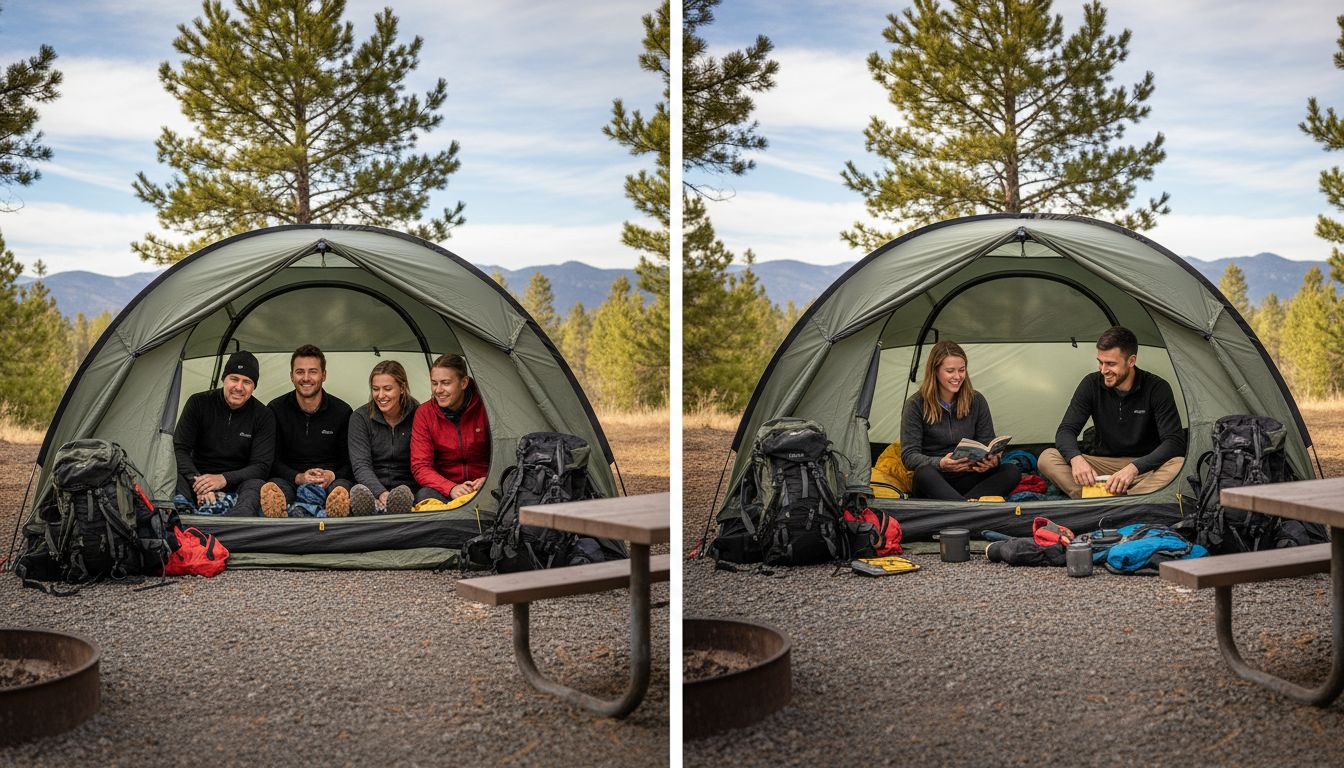
Common misconceptions about tent capacity can significantly impact your camping experience. Many campers mistakenly believe that a “4-person tent” will comfortably accommodate four adults with their gear. In reality, these ratings are often optimistic mathematical calculations that don’t reflect real-world camping scenarios. You’ll want to consider:
- Personal space requirements
- Size of individual campers
- Amount of camping gear you plan to store inside
- Need for moving around inside the tent
For a comprehensive understanding of selecting the right tent size, check out our tent capacity ratings guide that breaks down exactly what you need to know before your next outdoor adventure.
Tent Capacity Ratings and Industry Standards
Navigating tent capacity ratings requires understanding the industry standards that manufacturers use to determine sleeping space. According to research from josephashmore, performance standards recommend a covered living space of 3.5 square meters per person, which translates to approximately 21 square meters for a family of six to ensure safe and appropriate occupancy.
International shelter programming guidelines provide additional insights into space requirements. efom recommends a minimum of 3.5 square meters per person in hot and temperate climates. This standard ensures not just sleeping space, but adequate room for movement, personal belongings, and basic comfort during camping trips.
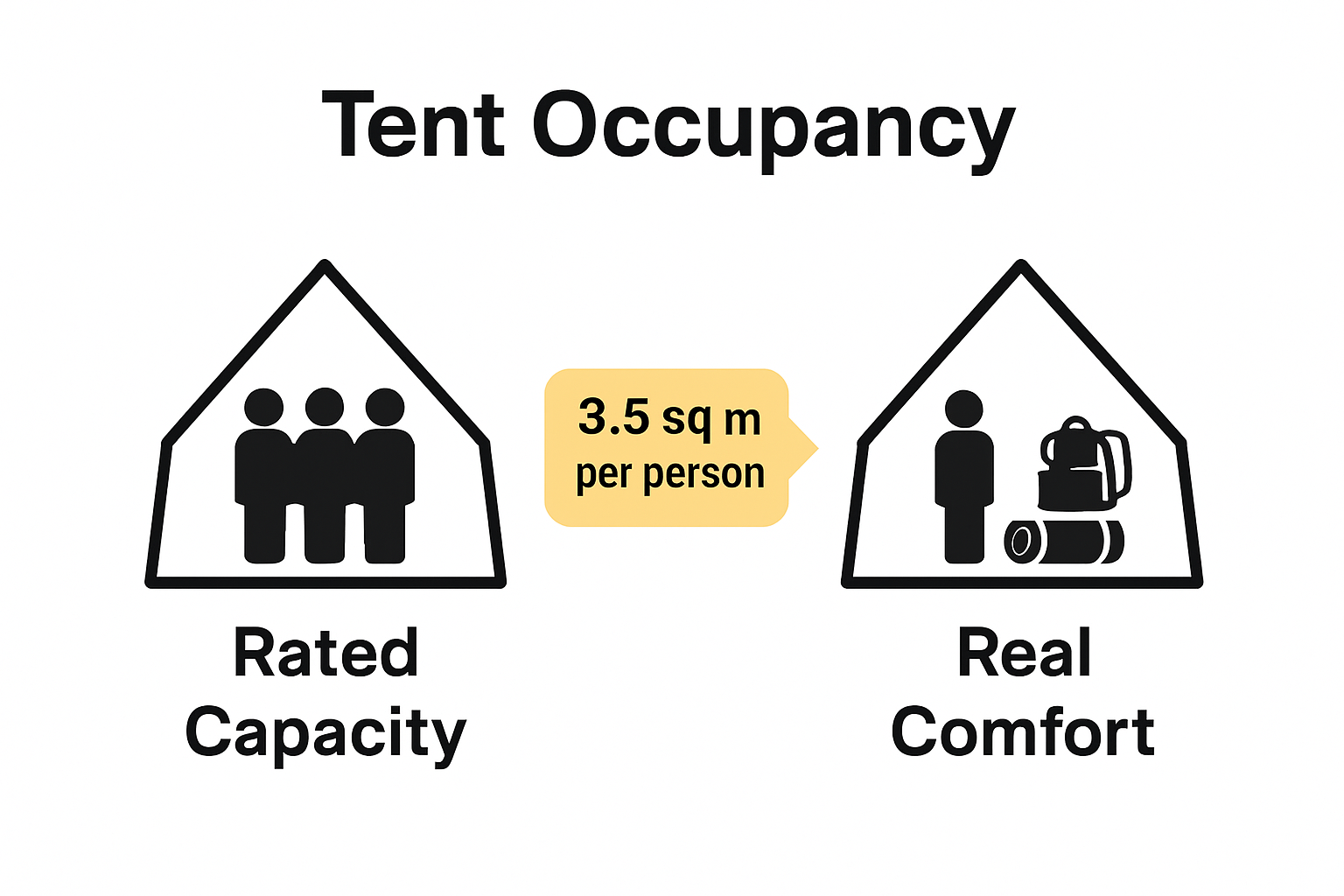
Manufacturers typically calculate tent capacity through mathematical floor space measurements, which can be misleading for real-world camping scenarios. These ratings often assume:
- Minimal personal space
- Compact sleeping arrangements
- Limited gear storage
- Tight proximity between campers
To make an informed decision about tent sizing, consider your specific camping needs. Choosing the right tent for your camping adventure involves more than just counting heads. Think about individual comfort, gear requirements, and the type of camping experience you want to create.
Factors Affecting Real Tent Occupancy
Understanding real tent occupancy goes far beyond simple manufacturer ratings. According to thetechedvocate, multiple factors such as gear storage, personal comfort, and the need for additional space can significantly reduce the actual usable capacity compared to the tent’s rated specifications.
Research from d54-h highlights that the standard ‘person’ rating of a tent does not account for critical aspects like gear storage, which can lead to potential overcrowding if not carefully considered when selecting tent size. This means a tent marketed as a “4-person tent” might realistically and comfortably accommodate only 2-3 people with their equipment.
Key factors that impact real tent occupancy include:
- Physical body size of campers
- Amount and type of camping gear
- Need for personal space and movement
- Sleeping arrangement preferences
- Climate and ventilation requirements
- Additional activities inside the tent
To make the most informed decision about your tent’s actual capacity, check out our tent buying guide that breaks down how to evaluate real-world tent space beyond manufacturer marketing claims.
How to Choose the Right Tent Size
Choosing the right tent size is a critical decision that can make or break your camping experience. According to rmef, selecting an appropriate tent involves carefully considering multiple factors beyond just the number of occupants, including gear storage needs and potential indoor activities like cooking.
Creativityni research emphasizes that tent size selection is about more than raw numbers. It’s about creating a comfortable camping environment that meets your specific needs. The goal is finding a balance between enough space for sleeping, storing gear, and moving around without feeling cramped or overwhelmed.
When determining the right tent size, consider these key evaluation criteria:
- Number of campers
- Individual camper body sizes
- Total gear volume
- Camping style (backpacking vs. car camping)
- Expected indoor activities
- Seasonal temperature variations
- Desired comfort level
To simplify your tent sizing process, use our tent size calculator to get personalized recommendations based on your specific camping requirements and group dynamics.
Find the Perfect Tent Size for Your Next Camping Trip
Choosing the right tent size is more than just counting heads. As highlighted in the article, the challenge lies in understanding how tent capacity ratings often overlook personal space, gear storage, and comfort. These hidden pain points can turn a fun outdoor adventure into a cramped and frustrating experience. Whether you want room to move, store your gear safely, or simply enjoy your camping trip without being packed in like sardines, the right tent makes all the difference.
Discover expert tips and tools designed to help you plan effectively. From evaluating real tent occupancy to learning the industry standards behind tent capacity, our resources at Tent Explorer guide you every step of the way.

Start your journey by exploring how to choose the ideal tent size tailored to your needs in our tent size calculator. Then, dive deeper into practical advice with our guide to choosing the right tent for your camping adventure. Don’t risk discomfort and cramped nights. Visit Tent Explorer now and camp with confidence knowing you picked the perfect tent for your outdoor lifestyle.
Frequently Asked Questions
What does tent capacity mean?
Tent capacity refers to the number of people that can theoretically sleep within the tent based on its floor space, but it often does not take into account comfort, gear storage, or personal space.
How is tent capacity typically determined by manufacturers?
Manufacturers usually calculate tent capacity by using mathematical floor space measurements, often assuming minimal personal space and compact sleeping arrangements, which can be misleading for actual camping scenarios.
What factors should I consider when determining the right tent size for my camping trip?
Consider factors such as the number of campers, individual body sizes, amount and type of camping gear, intended activities inside the tent, and overall comfort needs when selecting the right tent size.
Why might a tent labeled for four people only accommodate three comfortably?
A tent labeled as a “4-person tent” often assumes tight sleeping arrangements without gear or personal space, which means that realistically, it might only accommodate 2-3 people comfortably when considering their gear and movement needs.