Why Choose a Four Season Tent: The 3-Condition Rule
 David King
Updated March 22, 2026
12 min read
David King
Updated March 22, 2026
12 min read
A four-season tent isn’t for everyone — but in three specific conditions, it becomes the only shelter that can keep you safe. If you’re debating whether the $500–$1,000 price tag is justified, the answer to why choose a four season tent depends almost entirely on where and when you camp. A three-season tent handles light rain reliably, but it was never engineered for heavy snow, sustained storm winds, or exposed terrain. In those conditions, its weight savings and lower price stop mattering fast.
By the end of this guide, you’ll have a clear framework — The 3-Condition Rule — to decide whether a four-season tent is genuinely necessary for your adventures. We’ll cover the structural differences that matter, what “warm” actually means, the cost breakdown, and top model recommendations.
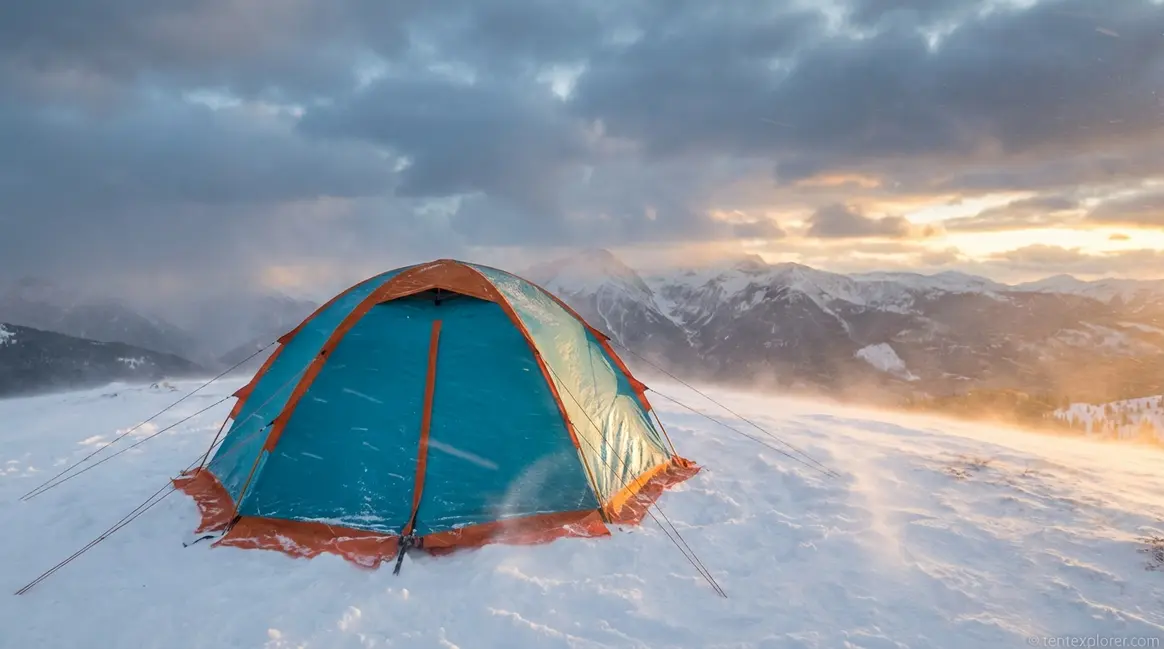
The main reason why choose a four season tent is for safety when heavy snow, high winds, or above-treeline exposure are part of your plans—what we call The 3-Condition Rule.
- Structural strength: 4-season tents use geodesic pole systems engineered to resist sustained winds of 30 m/s (108 km/h)—a threshold standard three-season frames aren’t rated to meet (DAC Wind Lab).
- Warmth via wind-blocking: Interior temperatures run approximately 10–16°F warmer than outside—not from insulation, but from eliminating the drafts that carry heat away.
- Higher cost justified: Premium materials like DAC poles and high-denier fabrics meet engineering standards like ISO 5912 that 3-season tents don’t require.
- Not always necessary: Car campers, sheltered forest conditions, and below-treeline winter camping often don’t warrant the expense.
3-Season vs. 4-Season: Key Differences
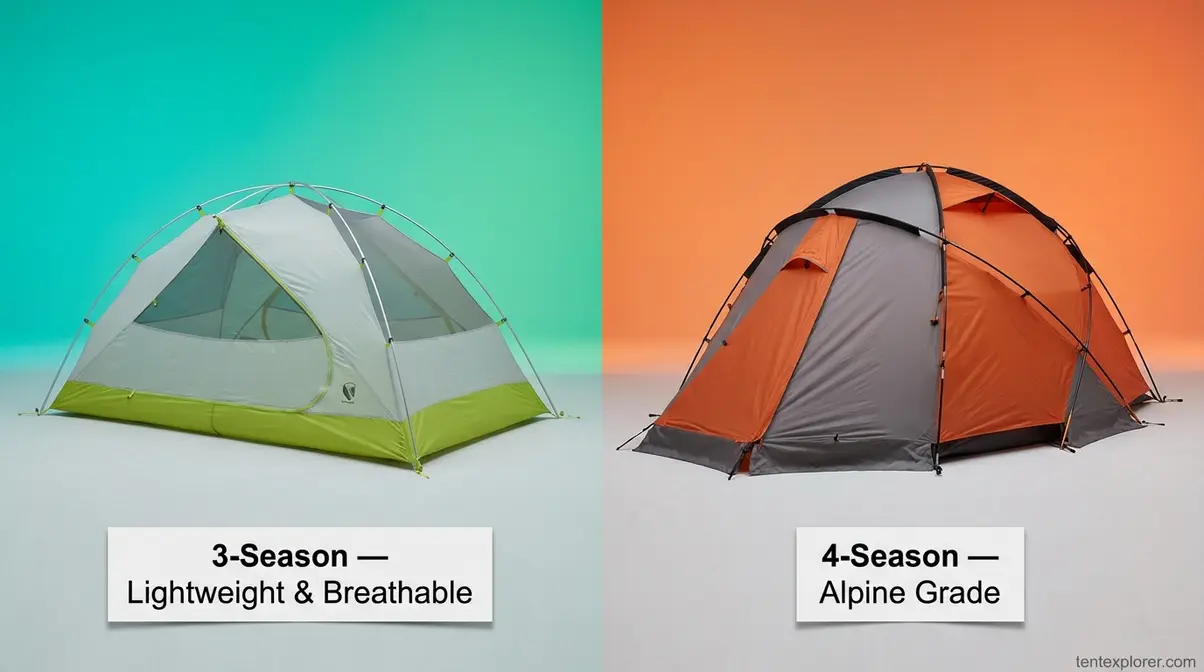
A three-season tent is designed for spring, summer, and fall camping in milder conditions — built lightweight, with large mesh panels for airflow and minimal pole structure to save weight. A four-season tent, by contrast, is an alpine-grade shelter built specifically for snow, wind, and sub-zero temperatures. A four-season tent uses a geodesic pole structure and solid fabric walls to withstand conditions that would collapse or compromise a standard three-season shelter.
The core trade-off is straightforward: three-season tents are lighter, more breathable, and significantly cheaper. Four-season tents are heavier, more structurally robust, and cost two to four times as much — because they’re built to a fundamentally different performance standard.
It’s worth noting that convertible, or “3.5-season,” tents occupy a gray zone between these two categories. They add reinforced poles and reduced mesh over a three-season base — a reasonable middle ground for shoulder-season trips that occasionally encounter early snowfall.
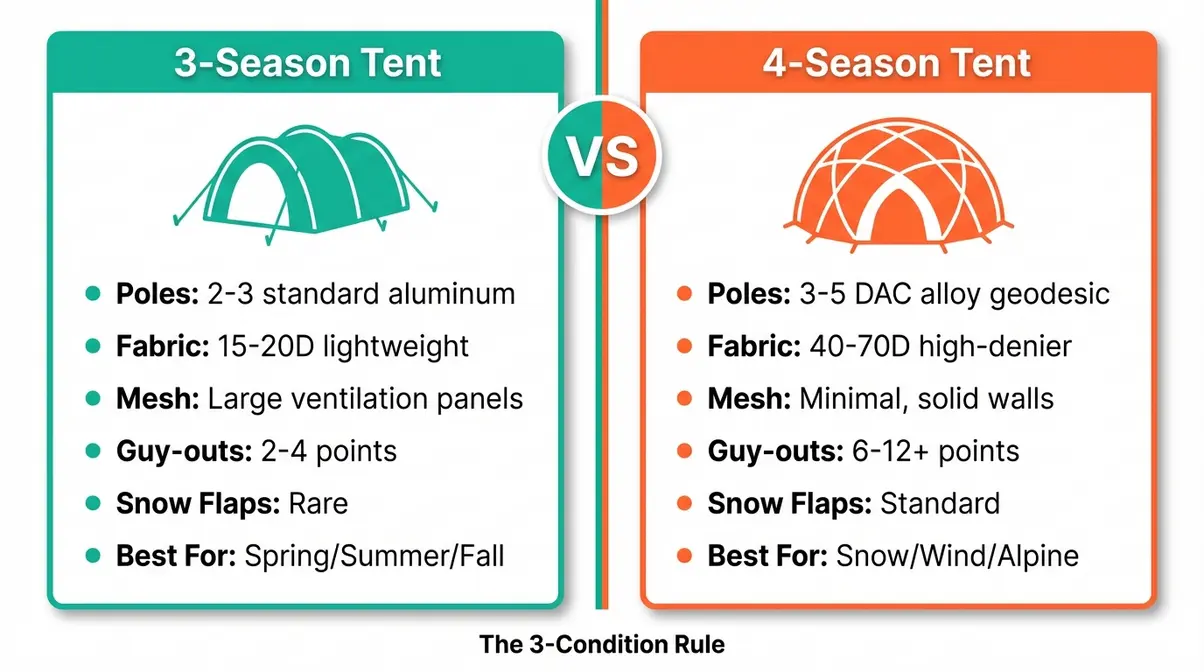
Caption: Three-season tents prioritize breathability and low weight; four season tent designs prioritize structural load distribution and full weather sealing.
When Is a 4-Season Tent Actually Necessary?
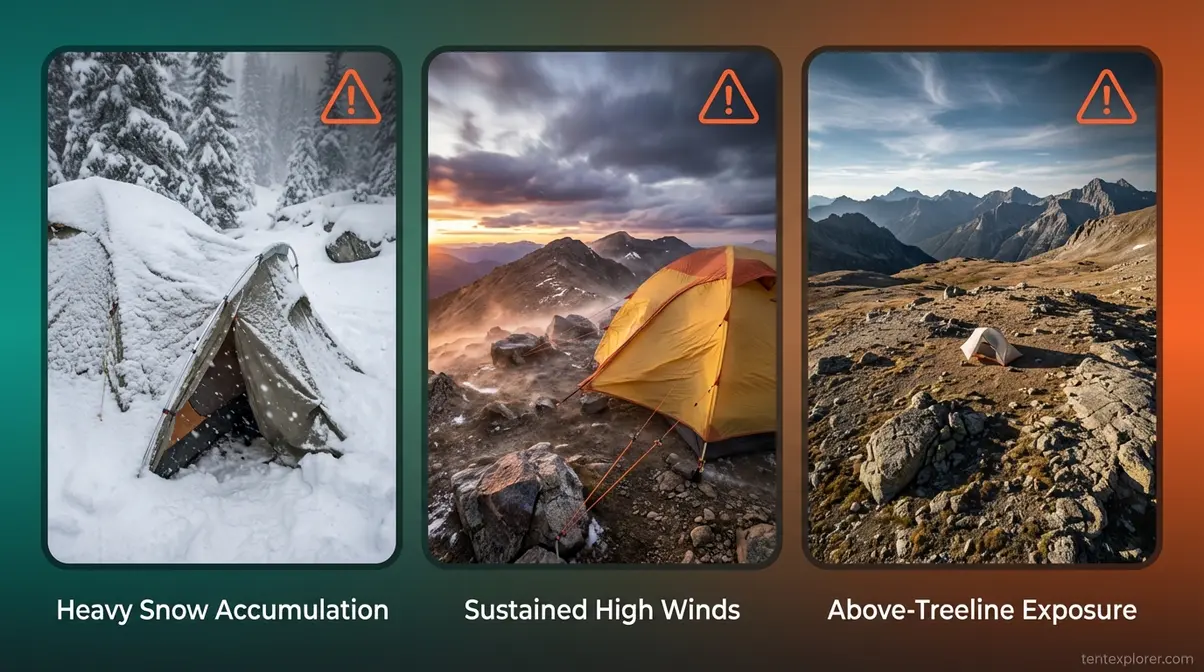
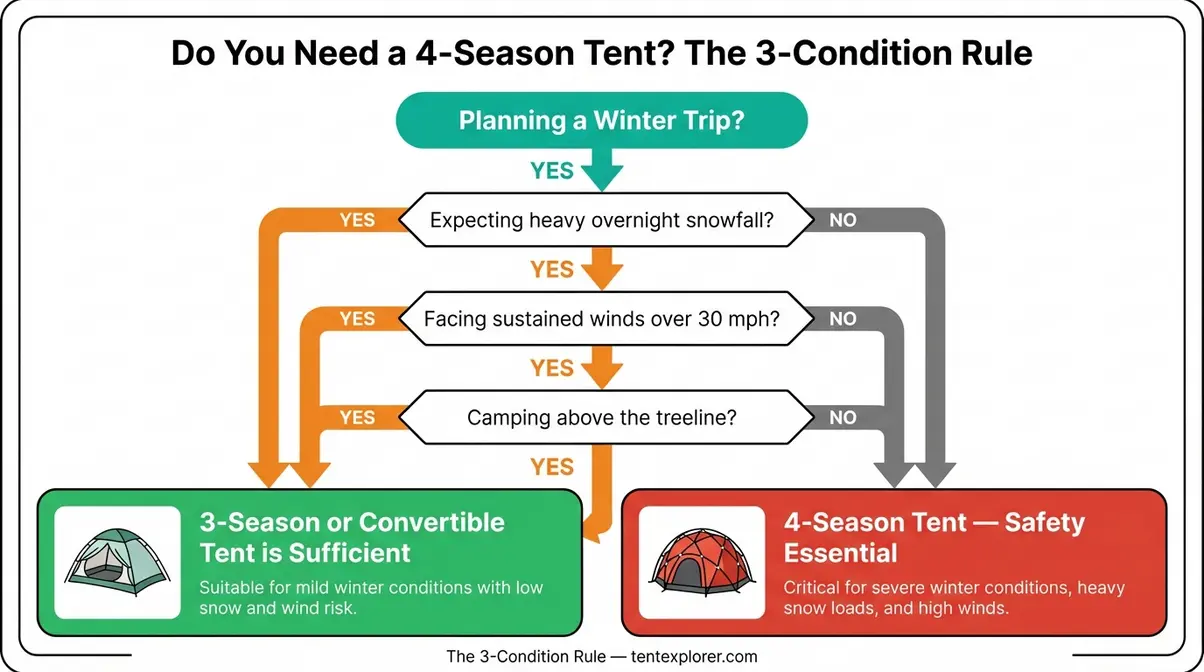
The answer to “Do I really need a four-season tent?” depends on three specific conditions—not on how cold it gets. A four-season tent becomes essential safety equipment when heavy snow, storm-force winds, or above-treeline exposure are part of your itinerary. If your trip meets two or more of these conditions, you need one. If it meets none, you probably don’t. This framework is the simplest way to determine why choose a four season tent.
The 3 Conditions That Make It Non-Negotiable
The 3-Condition Rule defines the three environmental conditions that make a four-season tent a safety necessity.
- Heavy Snow Accumulation: You expect overnight snowfall or are on a multi-day trip where snow can pile up. An untreated three-season tent under 8+ inches of wet snow faces pole failure. This is for trips like a January basecamp in the White Mountains or a high-Sierra trip in early March.
- Sustained High Winds (>30 mph): You’ll be on ridgelines or open plateaus with sustained storm winds, not just brief gusts. A three-season tent isn’t engineered for hours of 30–50 mph wind; a four-season tent’s geodesic geometry is.
- Above-Treeline or Exposed Terrain: With no natural windbreak, your tent must be its own defense. Princeton University Outdoor Action guidance reinforces why exposed sites demand sturdier shelter, as even building snow walls assumes a structure capable of anchoring them.
If your trip meets two or more conditions, a four-season tent is the right call. One condition may be manageable, but the risks compound quickly when they overlap.
“In addition to being warmer a 4 season tent is typically a lot sturdier than 3 season and most convertibles (not all).” — Reddit winter camping community
If you’re still weighing the fundamentals, understand the key differences in a four-season tent before reading on.
When a 4-Season Tent Is Overkill
A four-season tent is unnecessary in these scenarios:
- Car camping in winter: A sheltered site with a vehicle nearby makes a quality three-season tent and a good sleeping bag adequate. The extra weight adds no benefit.
- Below-treeline camping: In established campgrounds, natural wind protection from trees changes the structural math entirely.
- Mild winter conditions: With temperatures above 25°F and no precipitation, a quality three-season tent is sufficient.
For these situations, a good three-season or convertible tent is the smarter, more budget-friendly choice. For a complete look at options, see our roundup exploring the best tents for winter camping.
Built to Survive: Structural Strength Explained
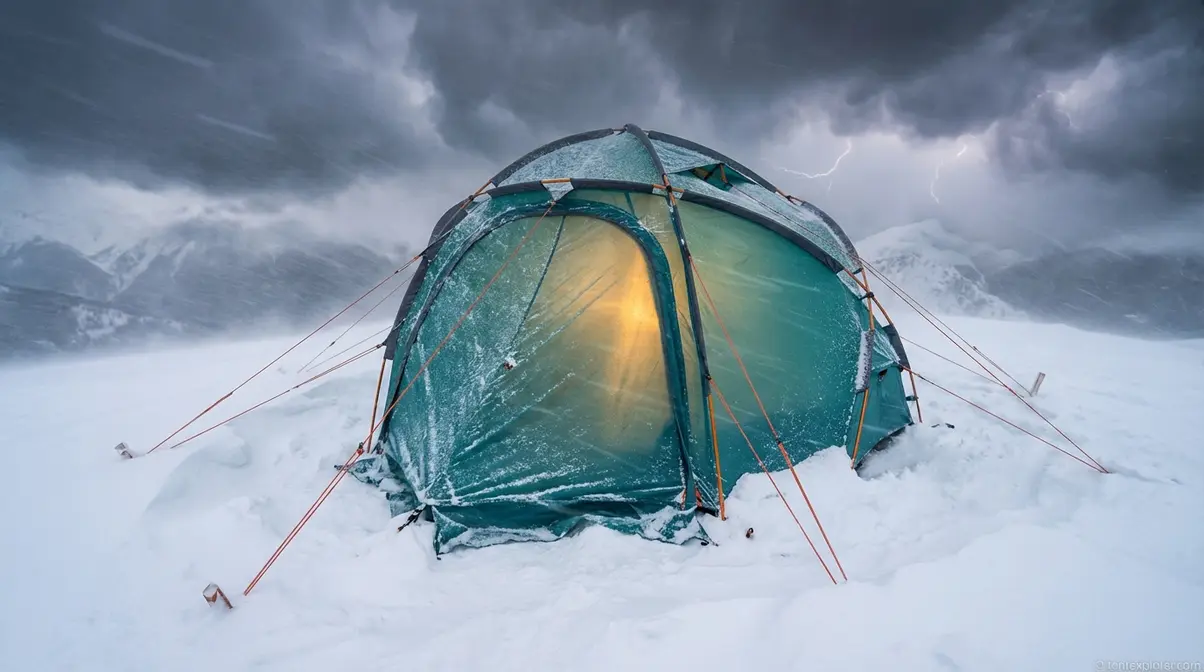
Four-season tents are sturdier because they are engineered to a fundamentally different performance standard. According to the DAC Wind Lab, a proper expedition dome tent must withstand sustained winds of 30 m/s (108 km/h or 67.5 mph)—a threshold standard three-season frames are not designed to meet. This difference comes down to three key areas: poles, fabric, and anchoring.
Poles, Geodesic Design, and Wind Engineering
The structural response to storm winds starts with the pole system. Most premium four-season tents use DAC Featherlite poles, an aircraft-grade aluminum alloy that is measurably stiffer and stronger under load than standard poles. The geometry matters as much as the material. A geodesic dome structure uses multiple intersecting poles to create a self-supporting frame, distributing force from any direction like the arches in a bridge. Four-season tents use three to five poles versus two to three in three-season designs, improving load distribution under both wind and snow.
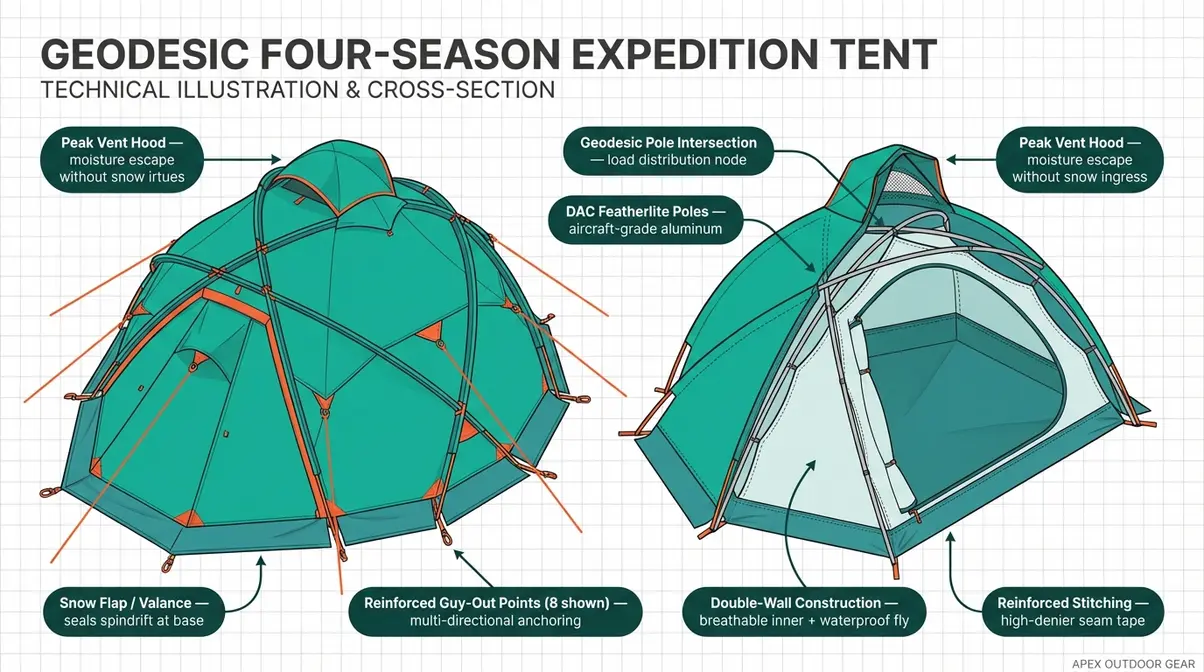
Caption: Geodesic pole intersections distribute lateral wind force across the entire frame — the core engineering difference between a four season tent and a standard three-season design.
For specific models built to these standards, see our picks for tents designed for high wind and rain.
Fabric, Snow Load, and Anchoring
Heavy snow is a fabric and anchoring problem. Four-season tents use high-denier fabrics (40–70D) that are thicker and more tear-resistant in cold, brittle conditions than the 15–20D fabrics in ultralight tents. They also feature snow flaps (valances), which are fabric skirts at the base that can be packed with snow to seal out spindrift—fine, wind-driven snow. The Australian Antarctic Program notes that this design helps tents withstand 100 km/h winds.
Finally, reinforced guy-out points (6–12+ versus 2–4 on three-season tents) allow for multi-directional anchoring. For most users, a double-wall tent (a breathable inner tent plus a waterproof fly) is better for managing condensation than a single-wall design. For more details, see our guide on choosing the best tent materials for durability.
Warmth and Winter Livability Inside Your Tent
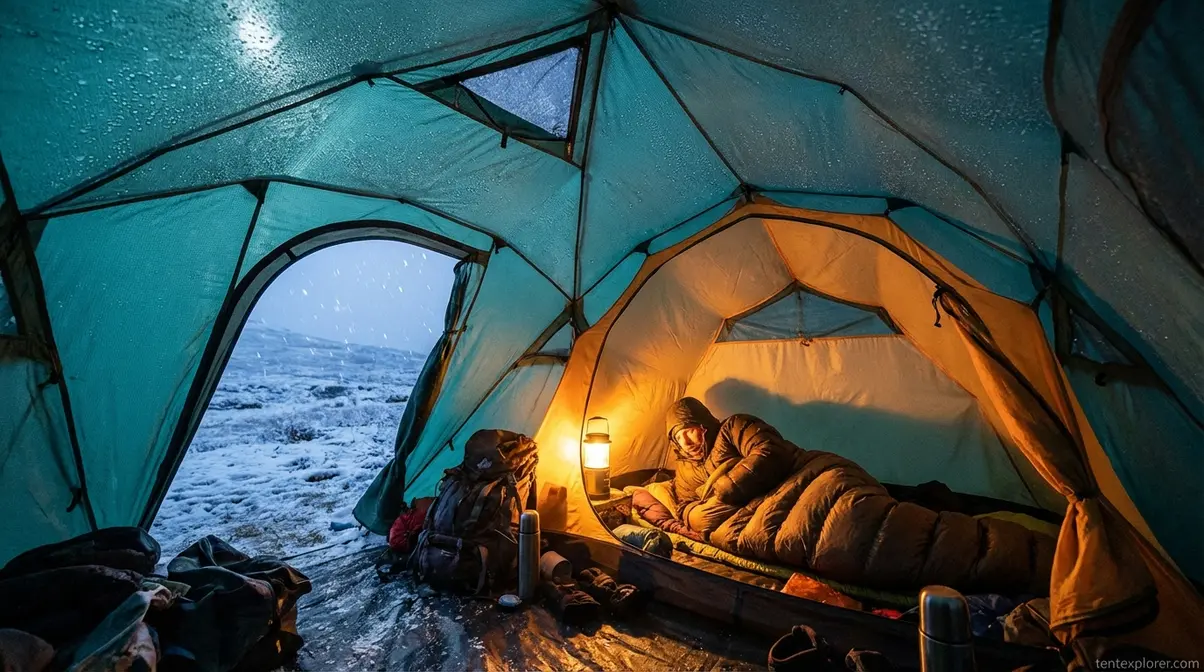
Most campers assume a four-season tent is warmer because it’s insulated. It isn’t. A four-season tent creates a warmer interior by eliminating the drafts that strip body heat away. Solid fabric walls replace the large mesh panels found in three-season tents, trapping the warmth you generate. The tent doesn’t heat the space; it stops the cold from draining it.
How 4-Season Tents Actually Trap Heat
A four-season tent’s solid fabric walls trap body heat, creating an interior that is approximately 10–16°F warmer than the outside air. This effect is not due to insulation but to the elimination of convective heat loss that mesh panels allow. Field data from resources like Backpacking Light forums consistently shows this differential. Combined with a properly rated sleeping bag and layering system, this makes winter camping viable in conditions where a three-season tent would leave you shivering. This warmth buffer is critical when the 3-Condition Rule triggers, as high winds and snow strip heat the fastest. For more information, check out these tips for keeping warm in your tent.
Ventilation, Condensation & Gear
The sealed design that traps warmth also traps moisture from your breath, which can condense and freeze inside the tent. According to The Mountaineers, managing this moisture is critical. Most four-season designs use strategic venting—hooded vents near the peak that let humid air escape without admitting snow. A vestibule—a covered area outside the door—is essential for storing wet gear and bulky winter equipment, keeping your sleeping area dry and organized. A complete guide to tent ventilation can offer more detailed strategies.
Is a 4-Season Tent Worth the Cost?
The answer is yes—but only when The 3-Condition Rule applies. The $300–$700 price difference between a quality three-season and four-season tent is significant, and it’s justified by engineering, not marketing.
Why the Price Tag Is So High
Four-season tents are expensive because they are optimized for wind resistance, snow load, and cold-temperature performance simultaneously. This requires premium materials and construction that meet official standards.
| Cost Driver | 3-Season | 4-Season |
|---|---|---|
| Pole material | Standard aluminum | DAC TH72M alloy or equivalent |
| Fabric weight (denier) | 15–20D | 40–70D |
| Guy-out points | 2–4 | 6–12+ |
| Snow flaps | Rare | Standard |
| Certification standard | None required | ISO 5912 / ASTM F2899 equivalent |
As of 2026, reputable four-season tents start around $450 and can exceed $1,400 (GearJunkie, 2026). For frequent winter campers, the investment often pays off, with a per-use cost dropping below $15 per night over the tent’s lifespan. These are key essential tips for buying a new tent.
Hot Tent & 5-Season Alternatives
Two other shelter types are worth considering.
- Hot tents are canvas shelters with a port for a wood-burning stove. They actively heat the interior, making them much warmer for basecamps, but they are very heavy and not suitable for backpacking.
- 5-season tents is a marketing term for extreme expedition shelters that exceed typical four-season specs. For most winter campers, a well-built four-season tent is more than sufficient.
Consider comparing with budget tent recommendations if your needs are less extreme.
Top Brands and Models Worth Knowing
Our team evaluated the four-season tent market, assessing certifications, specifications, and feedback from winter camping communities. Across these sources, a consistent list of trusted brands emerged.
Best for Alpine Climbing and Mountaineering
For high-altitude use where all three conditions of The 3-Condition Rule apply, these models lead the field:
- The North Face Mountain 25 (~$690): The benchmark for expedition base camps, this is a double-wall geodesic anchor designed to survive multi-day storms.
- MSR Access 2 (~$800): Lighter weight for ski mountaineering, it maintains true four-season performance with a DAC pole system.
For more details, consider exploring top models from The North Face.
Best for Winter Backpacking and Base Camp
For those who need to carry their shelter, the weight-to-performance balance is key:
- Black Diamond Fitzroy (~$970–$1,370): Earns strong reviews for its livability, with a large vestibule for storing a full pack and wet layers.
- Hilleberg Nallo/Jannu Series (~$900–$1,200+): The gold standard for serious winter backpackers who value build quality and are willing to manage the condensation inherent in single-wall designs.
When evaluating these options, see our picks for the best tents with a vestibule, as vestibule space is critical for winter livability.
Limitations and When to Consider Alternatives
A four-season tent is specialized gear with limitations. Understanding them is key to making a smart purchase.
Common Mistakes First-Time Buyers Make
- Buying for conditions they’ll never camp in. Most people doing below-treeline winter camping don’t need a full expedition tent. If your plans don’t meet the 3-Condition Rule, a convertible tent works at half the price.
- Ignoring condensation management. First-time users often wake to soaked gear because they didn’t open the roof vents overnight. Always ensure airflow.
- Underestimating weight. At 6–10 lbs, a four-season tent is twice the weight of a three-season model, and its complex pole system takes longer to pitch in the cold.
A four-season tent supports—but does not replace—proper winter mountaineering training. For high-altitude or technical objectives, seek professional instruction.
Knowing When a 4-Season Tent Isn’t Right for You
- If you camp below treeline in established campgrounds: A reinforced three-season tent like the REI Co-op Arete ASL 2 (~$450, as of 2026) is sufficient.
- If you run a vehicle-accessible base camp: A hot tent with a wood stove offers superior warmth and livability.
- If weight is your primary concern: A high-quality 3.5-season tent may be adequate for sheltered, below-treeline trips.
Frequently Asked Questions
Do you really need a four-season tent?
You need a four-season tent if your trip involves at least two of these three conditions: heavy snow accumulation, sustained winds over 30 mph, or camping above the treeline. This is The 3-Condition Rule. For sheltered, below-treeline winter camping, a quality three-season tent is often sufficient and more cost-effective.
What are the benefits of a 4-season tent?
The main benefit is structural survival capacity under heavy snow and high winds. Secondary benefits include a warmer interior (about 10–16°F warmer), protection from fine, wind-driven snow (spindrift), and more durable fabrics. The psychological comfort of knowing your shelter won’t fail in a storm is also a significant advantage.
How warm are 4-season tents?
A four-season tent is typically 10–16°F (5–9°C) warmer inside than the outside air. This warmth comes from trapping your body heat and blocking wind, not from insulation. In sub-zero temperatures, this difference can be critical, but it must be paired with a properly rated sleeping bag and layering system for true thermal comfort.
Why are 4-season tents so expensive?
They cost more due to the premium materials and engineering required to meet higher performance standards. This includes stronger, more expensive DAC poles, thicker 40–70D fabrics, and additional reinforcements like extra guy-out points and snow flaps. These features are necessary to withstand severe weather, justifying the higher price tag.
Why Your Decision Comes Down to Three Conditions
For value-conscious winter adventurers, the question of why choose a four season tent is answered by applying The 3-Condition Rule: heavy snow, high winds, and exposed terrain. If you meet two or more of these, the engineering differences in a four-season tent are a matter of safety. The data on wind resistance and the 10–16°F warmth differential are real and meaningful in sub-zero conditions.
The 3-Condition Rule cuts through marketing and confirms that these tents are not for everyone. For sheltered, below-treeline camping, a quality three-season tent serves well at half the cost. This framework gives you an honest, budget-conscious answer.
Start by mapping your next winter trip against the three conditions. If two or more apply, a four-season tent is a wise investment. If only one applies, consider a convertible or reinforced three-season design first—you’ll likely be just as safe and comfortable, and your wallet will thank you.

David King
Field gear tester at Tent Explorer.