Beginner Camping Checklist: Complete Guide + Free PDF
 David King
Updated July 2, 2026
23 min read
David King
Updated July 2, 2026
23 min read
Every year, thousands of first-time campers arrive at their campsite and realize they forgot something obvious — a can opener, a lighter, or even a tent stake. It’s not a lack of effort. It’s a lack of a system.
Without the right gear, a single forgotten item can turn your first camping trip from exciting to miserable before the sun sets. The good news? This is completely preventable. This beginner camping checklist covers everything you need — from shelter and sleep to cooking, safety, and the camping rules no one tells you about — so you can pack once and camp with confidence. You’ll also find a free downloadable PDF checklist at the end, plus specialized lists for tent camping, car camping, RV trips, and bringing kids along.
Key Takeaways: Beginner Camping Checklist
A beginner camping checklist should cover 7 core categories — shelter, sleep, kitchen, clothing, lighting, hygiene, and safety — with the 10 Essentials as your non-negotiable foundation (NPS, 2026).
- Shelter + sleep system are your highest priority: tent, sleeping bag, and sleeping pad
- The most forgotten items are small but critical: can opener, lighter, tent stakes, extra batteries
- The First-Night Rule: Your first trip should be ≤1 hour from home at an established campground
- Download the free PDF checklist at the end of this guide to print and pack with
- Camping rules matter: The 3-3-3 rule and 200-foot bear safety rule are explained in full below
Beginner Camping Checklist: Essential Gear
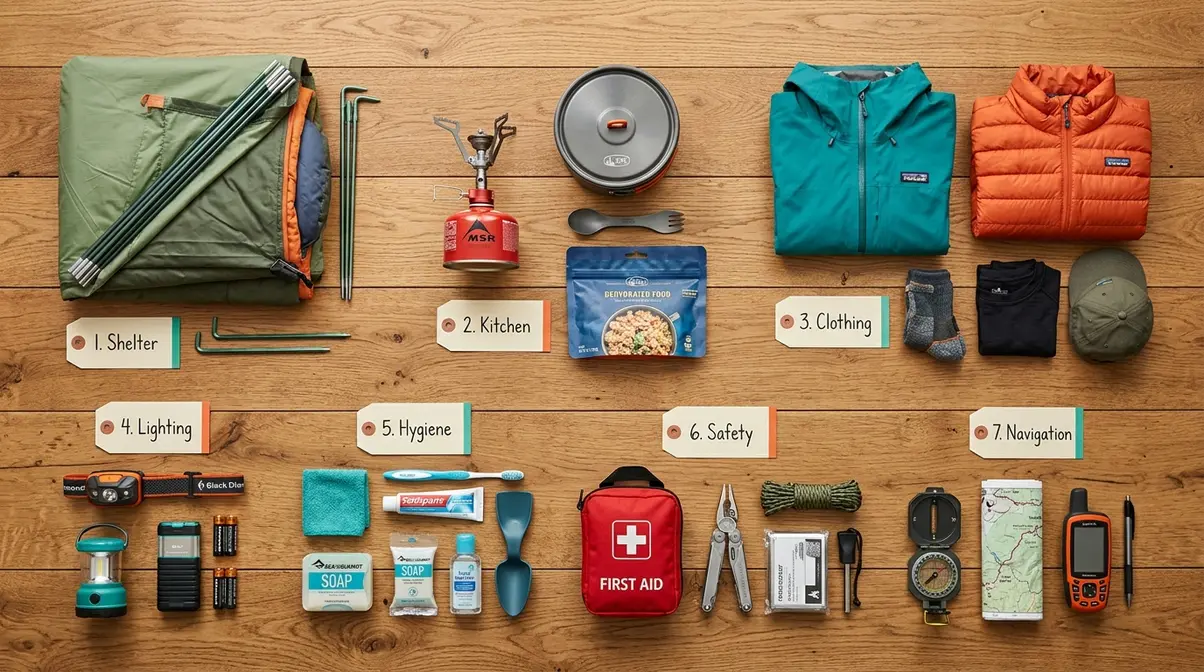
A complete beginner camping checklist covers 7 essential categories: shelter, sleep, kitchen, clothing, lighting and tools, health and hygiene, and safety. The National Park Service’s 10 Essentials framework — originally developed by The Mountaineers and adopted by outdoor organizations worldwide — forms the non-negotiable foundation of any camping packing list. Organizing your packing by category prevents the most common beginner mistake: forgetting an entire gear group rather than a single item.
“First-time campers… must have gear?” — r/CampingGear community thread
That question gets asked constantly on camping forums, and it reflects something real: starting from scratch is genuinely overwhelming. The framework below cuts through the noise. Each category is listed with must-haves first, followed by a quick note on why each item matters — because knowing the “why” makes it harder to leave things behind.
Shelter and Sleeping Gear
Your shelter and sleep system are the most important items on your camping gear checklist. Get these wrong and no amount of good food or beautiful scenery will save the trip.
Tent: For beginners, a freestanding dome tent (one that stands on its own without needing to be staked into the ground) is the easiest option. A 2-person tent works well even for solo campers — the extra space holds gear and prevents that claustrophobic feeling. Avoid cabin-style tents for your first trip; they take longer to set up.
Sleeping bag: Look for a temperature rating of 15–30°F — this is called a 3-season bag, meaning it handles spring, summer, and fall conditions. A 3-season bag rated 15°F or lower costs a little more but gives you flexibility across changing weather. The rating on the bag tells you the lowest temperature at which it keeps an average sleeper warm.
Sleeping pad: A sleeping pad is an insulated mat placed under your sleeping bag to insulate you from the cold ground — not just for comfort, but for warmth. This is the single most-skipped item by first-timers, and it’s responsible for more miserable first nights than almost anything else. Ground temperature can be 20–30°F colder than air temperature, even in summer.
- Shelter and Sleep Checklist:
- [ ] Tent (freestanding dome, 2-person or larger)
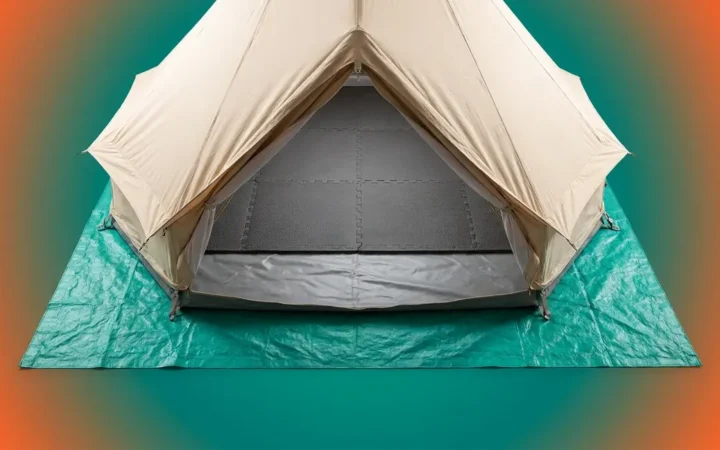
- [ ] Tent footprint or ground cloth (protects the tent floor)
- [ ] Sleeping bag (3-season, 15–30°F rated)
- [ ] Sleeping pad or self-inflating air mattress
- [ ] Tent stakes — bring extras (frequently forgotten)
- [ ] Mallet or rubber hammer for stakes
- [ ] Tent repair tape (a small strip fixes most rips)
Pro tip: Set up your tent in your backyard before the trip. You do not want to figure out unfamiliar poles in the dark at a campsite. Experienced campers consistently report that a single practice setup prevents the majority of first-night tent disasters.
Leave No Trace planning principles identify “Plan Ahead and Prepare” as the foundational first principle of responsible outdoor recreation, which includes researching campsite terrain before arrival (Leave No Trace, 2026).
Once your shelter is sorted, your next priority is what goes inside the tent — and what happens outside it at mealtime.
Camp Kitchen & Food Essentials
The camp kitchen is where the most forgotten items live. The can opener. The lighter. The salt. Experienced campers report that kitchen items account for the majority of “I can’t believe I forgot that” moments on first trips — because they’re small, feel obvious, and get packed last.
Camp stove: Two types work well for beginners. A canister stove (compact, screws onto a small fuel canister, ignites in seconds) is ideal for 1–2 people on a first trip. A propane two-burner stove gives you more cooking power and is better for families. Start with a canister stove — it’s simpler and lighter. Always check that your stove and fuel canister are compatible before you leave home.
Cookware and utensils: A basic camp pot and pan set, a camp mug, and a utensil set cover almost every meal. The can opener deserves its own bullet point — it is the single most forgotten kitchen item in the camping community.
According to the CDC camping health and safety guidelines, fuel-burning equipment — including camp stoves, lanterns, and charcoal grills — must never be used inside a tent or enclosed shelter due to carbon monoxide poisoning risk (CDC, 2026). This is a non-negotiable safety rule.
- Camp Kitchen Checklist:
- [ ] Camp stove + compatible fuel canister
- [ ] Lightweight pot and pan set
- [ ] Camp mug and utensil set (fork, spoon, knife)
- [ ] Can opener ← most forgotten kitchen item
- [ ] Lighter or waterproof matches (bring two)
- [ ] Cooler + ice packs
- [ ] Biodegradable camp soap + scrub pad
- [ ] Trash bags (two minimum — pack out everything)
- [ ] Condiments in small containers (salt, pepper, oil)
- [ ] Zip-lock bags for food prep and leftovers
Pro tip: Pre-measure spices and dry ingredients at home and pack them in small zip-lock bags. This saves space, prevents the “no salt” problem on night one, and keeps your pack light.
With your kitchen sorted, the next category beginners most often underpack is clothing — especially for temperature swings between day and night.
Clothing and Personal Items
Temperature at a campsite can swing 30°F or more between afternoon and midnight. Your camping trip checklist isn’t complete without a layering system that handles both extremes.
- The 3-layer system is the most important clothing concept for first-time campers:
- Base layer (against your skin): moisture-wicking material like merino wool or synthetic polyester. Pulls sweat away from your body.
- Mid layer (insulating): a fleece jacket or down vest. Traps body heat.
- Outer layer (protective): a waterproof shell or rain jacket. Blocks wind and rain.
Footwear matters more than most beginners expect. Waterproof hiking boots with ankle support prevent twisted ankles on uneven terrain. Break them in at home before the trip — new boots cause blisters, and blisters on day one ruin the whole trip. Bring camp sandals or flip-flops for around the campsite.
- Clothing Checklist:
- [ ] Moisture-wicking base layer (top + bottom)
- [ ] Fleece or insulating mid layer
- [ ] Waterproof outer shell / rain jacket
- [ ] Hiking boots or trail shoes (already broken in)
- [ ] Camp sandals or flip-flops
- [ ] Wool or synthetic socks (3 pairs minimum)
- [ ] Wide-brim hat + sunglasses
- [ ] Warm hat + gloves (even in summer — nights get cold)
Pro tip: Cotton kills — it holds moisture and loses all insulating ability when wet. Choose wool or synthetic fabrics for your base and mid layers, especially if rain is possible.
Clothing keeps you comfortable. The next category — lighting, tools, and camp furniture — keeps your campsite functional after dark and during setup.
Lighting, Tools, and Camp Furniture
This entire category is missing or underdeveloped in most beginner lists, including the NPS’s standard what-to-bring page. It’s also the category that separates a functional campsite from a frustrating one.
Lighting: A headlamp is more useful than a handheld flashlight because it keeps your hands free — critical when you’re cooking, setting up a tent, or navigating to the bathroom at 2 a.m. Bring one per person, plus extra batteries. A battery-powered or solar lantern adds ambient light to the campsite table area.
Tools: A multi-tool or pocketknife appears on the 10 Essentials list for a reason — it handles dozens of small tasks from cutting rope to tightening tent pole connectors. A small hatchet or folding saw is useful if your campground allows fires and you’re processing firewood. Duct tape is the camping community’s universal fix-it solution: it repairs torn tent seams, broken straps, and cracked gear handles.
Camp furniture: A folding camp chair per person costs under $30 and transforms your campsite from a standing-around situation into an actual comfortable base. A lightweight folding table is optional but highly recommended for families — it keeps food prep off the ground and makes mealtime significantly easier.
- Lighting, Tools, and Furniture Checklist:
- [ ] Headlamp + extra batteries (one per person)
- [ ] Camp lantern (battery or solar)
- [ ] Multi-tool or pocketknife
- [ ] Small hatchet or folding saw (if fires are permitted)
- [ ] Duct tape (small roll)
- [ ] Folding camp chair (one per person)
- [ ] Lightweight camp table (optional but recommended)
- [ ] Paracord — 15 ft (for tarps, clotheslines, emergencies)
Essential tent camping gear covers lighting and tools in detail for beginners who want to go deeper on this category.
Health, Hygiene, and First Aid
Safety gear is non-negotiable. A well-stocked first aid kit and solid hygiene habits keep a minor inconvenience from becoming a medical emergency — especially when you’re miles from the nearest pharmacy.
First aid kit essentials: Bandages in multiple sizes, antiseptic wipes, antibiotic ointment, moleskin for blisters, pain relievers (ibuprofen and acetaminophen), antihistamines for allergic reactions, a digital thermometer, and any personal prescription medications. Buy a pre-assembled camping first aid kit and then add your personal medications — it’s faster and more reliable than building one from scratch.
Water and hydration: The FEMA emergency preparedness guidelines recommend a minimum of 1 gallon of water per person per day for drinking and sanitation (FEMA, 2026). For camping, plan for at least 2 liters of drinking water per person per day of activity, plus water for cooking and cleanup. Bring a water filter or purification tablets as a backup if your campground does not have potable water on tap.
Hygiene: Use biodegradable soap for all washing — standard soap harms waterways and is prohibited in many campgrounds. A small trowel is needed if you’re camping without toilet facilities (dig a cathole 6–8 inches deep and at least 200 feet from water sources). Hand sanitizer is essential after any bathroom visit.
- Health and Hygiene Checklist:
- [ ] First aid kit (pre-assembled + personal meds)
- [ ] Water (2 liters per person per day minimum)
- [ ] Water filter or purification tablets (backup)
- [ ] Biodegradable soap
- [ ] Hand sanitizer
- [ ] Toilet paper + small trowel (if no facilities)
- [ ] Sunscreen (SPF 30+)
- [ ] Insect repellent (DEET or picaridin-based)
- [ ] Personal prescription medications (7-day supply)
- [ ] Emergency whistle
The NPS camping preparation guidelines outline safety and health items as part of their core what-to-bring framework for all campsite visitors (NPS, 2026).
What are the 10 camping essentials?
The 10 Essentials is a framework originally developed by The Mountaineers — an outdoor recreation organization founded in 1906 — and later adopted by the National Park Service as the baseline standard for outdoor preparedness. Every item on your camping checklist for beginners should map back to at least one of these ten categories.
| # | Essential | What It Covers |
|---|---|---|
| 1 | Navigation | Map, compass, or GPS device |
| 2 | Sun protection | Sunscreen, sunglasses, hat |
| 3 | Insulation | Extra layers, emergency blanket |
| 4 | Illumination | Headlamp + extra batteries |
| 5 | First aid | Kit + personal medications |
| 6 | Fire | Lighter, waterproof matches, fire starter |
| 7 | Repair tools | Multi-tool, knife, duct tape |
| 8 | Nutrition | Extra food for one extra day |
| 9 | Hydration | Water + filter or purification tablets |
| 10 | Emergency shelter | Tent, tarp, or emergency bivy |
The REI expert camping checklist expands on the 10 Essentials for family and group camping situations and is worth bookmarking as a secondary reference (REI, 2026).
Want all of this in a printable format? Jump to the free beginner camping checklist PDF at the end of this guide.
Tent, Car, and RV Camping Checklists
Not all camping is the same. A first-time camper sleeping in a tent 5 miles from the trailhead has different needs than someone pulling into a campground in an SUV loaded with gear. The core categories above apply to everyone — but your setup type changes what you add on top.
Tent Camping Checklist
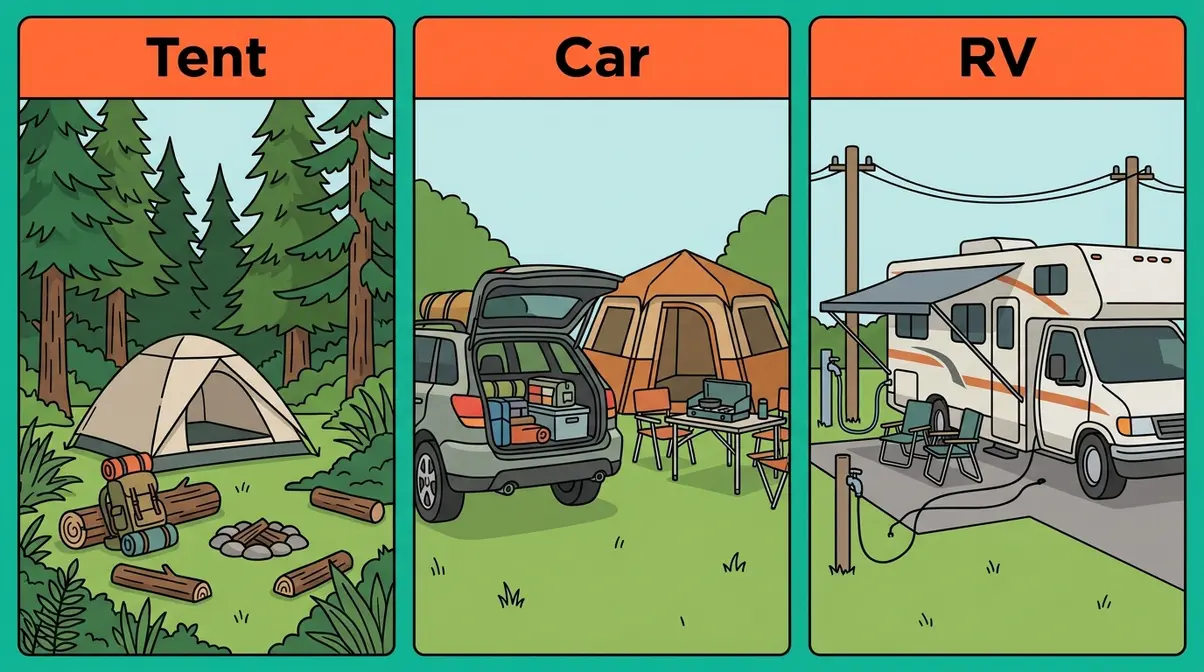
Tent camping means you carry everything in and rely on nothing outside your pack or car. Before heading out, review our essential camping rules and jargon to familiarize yourself with backcountry etiquette. Beyond the core list, tent campers specifically need:
- [ ] Tent repair kit (patches, extra poles, seam sealer)
- [ ] Ground tarp or footprint (extends tent floor life significantly)
- [ ] Compression sack for sleeping bag (saves pack space)
- [ ] Trekking poles (double as tarp poles in rain)
- [ ] Pack rain cover (if hiking to your site)
- [ ] Bear canister or hang bag (required in many backcountry zones)
The tent camping-specific rule: Always stake your tent even if the weather looks calm. Wind comes up fast overnight, and an unstaked tent becomes a problem at 3 a.m.
Car Camping Checklist
Car camping — driving directly to your campsite — removes most weight and volume restrictions. This is the ideal first camping setup. Your vehicle becomes a gear locker, a windbreak, and an emergency shelter if things go wrong. To maximize your comfort, consider upgrading to one of the best tents for car camping which offer standing room and extra storage.
Extra items that make car camping comfortable and practical:
- [ ] Portable power station or battery pack (charges phones, lights)
- [ ] Camp kitchen organizer or plastic bin (keeps food prep tidy)
- [ ] Roof rack or cargo carrier (if bringing bikes, kayaks, or extra gear)
- [ ] Portable camp shower (a solar bag works well for 2-night trips)
- [ ] Full-size cooler (you have the space — use it)
- [ ] Outdoor rug or mat for tent entrance (keeps mud outside)
- [ ] Folding table (strongly recommended — you have room)
The car camping checklist guide at Outdoorithm covers vehicle-based setups in useful detail for beginners planning their first car camping trip (Outdoorithm, 2026).
Beginner RV Camping Checklist
RV camping adds an entirely different layer of logistics. No top competitor covers this for beginners, which makes it a genuine information gap. Beyond standard camping gear, RV beginners need:
- [ ] RV-specific toilet paper (dissolves in holding tanks — standard TP does not)
- [ ] Sewer hose + gloves (for waste station hookups)
- [ ] Water pressure regulator (protects RV plumbing from high-pressure campground hookups)
- [ ] Surge protector for electrical hookup
- [ ] Leveling blocks (most campsite pads are not perfectly flat)
- [ ] Wheel chocks (prevent rolling when parked)
- [ ] Freshwater hose (white only — separate from sewer hose)
- [ ] Slide-out awning de-bugger spray
RV beginner rule: Arrive at your campground at least 2 hours before dark on your first trip. Hooking up utilities, leveling the rig, and setting up in daylight takes far longer than it looks on YouTube.
Family Camping Checklist: Kids & Safety
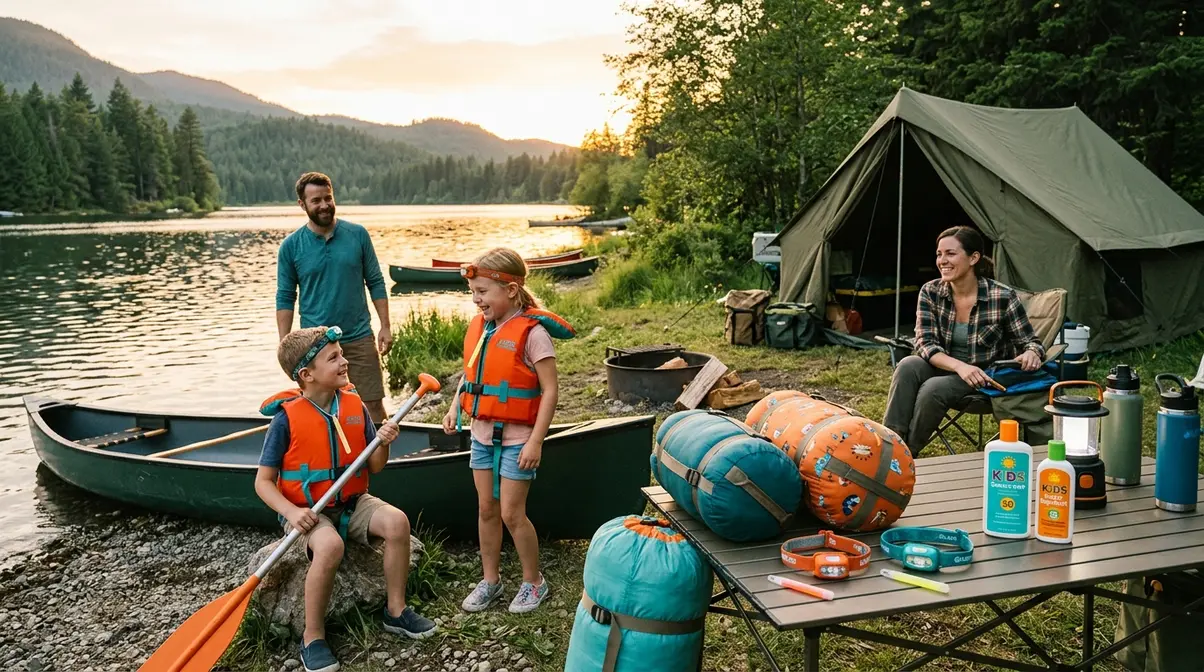
Camping with children is one of the best things you can do as a family — and one of the most under-planned. The core adult checklist still applies, but kids introduce specific safety needs, food requirements, and sanity-preserving entertainment items that most generic lists miss entirely.
Kid-Specific Safety & Comfort Gear
Children are more vulnerable to sun, cold, dehydration, and insect-borne illness than adults. Their gear needs extra attention. If you are bringing a big group, the best tents for large families provide essential room dividers and multiple doors.
- Safety items specific to kids:
- [ ] Child-sized life jackets (required near water — not optional)
- [ ] Child insect repellent (picaridin-based, safer for young skin than DEET)
- [ ] Child sunscreen (SPF 50+, reef-safe)
- [ ] Glow sticks or clip-on lights for kids (so you can see them after dark)
- [ ] Whistle for each child (teach the “three blasts = I need help” signal)
- [ ] Kid-sized sleeping bag rated for the expected low temperature
- [ ] Comfort item from home (stuffed animal, blanket — reduces nighttime anxiety)
- [ ] Baby wipes (the most versatile item in any family camping kit)
According to the KOA family camping guide, comfort items and familiar routines are among the top factors that determine whether children have a positive first camping experience (KOA, 2026). Across camping communities like r/CampingGear, parents consistently report that children who bring one comfort item from home sleep significantly better on the first night.
Camp Food Ideas for Kids
Kids eat differently outdoors. They burn more energy, they get hungry faster, and they will absolutely refuse to eat the dehydrated lentil soup you thought was a great idea.
- Kid-friendly camp food essentials:
- [ ] Pre-made sandwiches or wraps for day one (no cooking required on arrival night)
- [ ] Hot dogs and skewers (universal kid favorite, minimal prep)
- [ ] Instant oatmeal packets (fast breakfast, just add boiling water)
- [ ] Trail mix, granola bars, and dried fruit (constant snacking prevents meltdowns)
- [ ] S’mores supplies (graham crackers, marshmallows, chocolate — non-negotiable)
- [ ] Juice boxes or electrolyte drinks (kids dehydrate faster than adults)
- [ ] Individual snack bags (pre-portioned to prevent the “I’m hungry again” loop)
Entertainment & Activities for Kids
Boredom is the enemy of a happy family camping trip. The outdoors provide most of the entertainment — but a few structured items help during downtime, bad weather, or the hour before dinner. While the kids play, you can also plan fun camping activities for families that keep everyone engaged.
- [ ] Field guide to local birds, trees, or insects (turns the campsite into a classroom)
- [ ] Glow-in-the-dark frisbee or ball (evening entertainment)
- [ ] Watercolor set or nature journal (quiet activity for downtime)
- [ ] Card games and a small board game (for rainy afternoons in the tent)
- [ ] Headlamps for kids (their own — they will use them constantly)
- [ ] Scavenger hunt list (print one before you leave; many campgrounds have their own)
Camping Rules Every Beginner Should Know
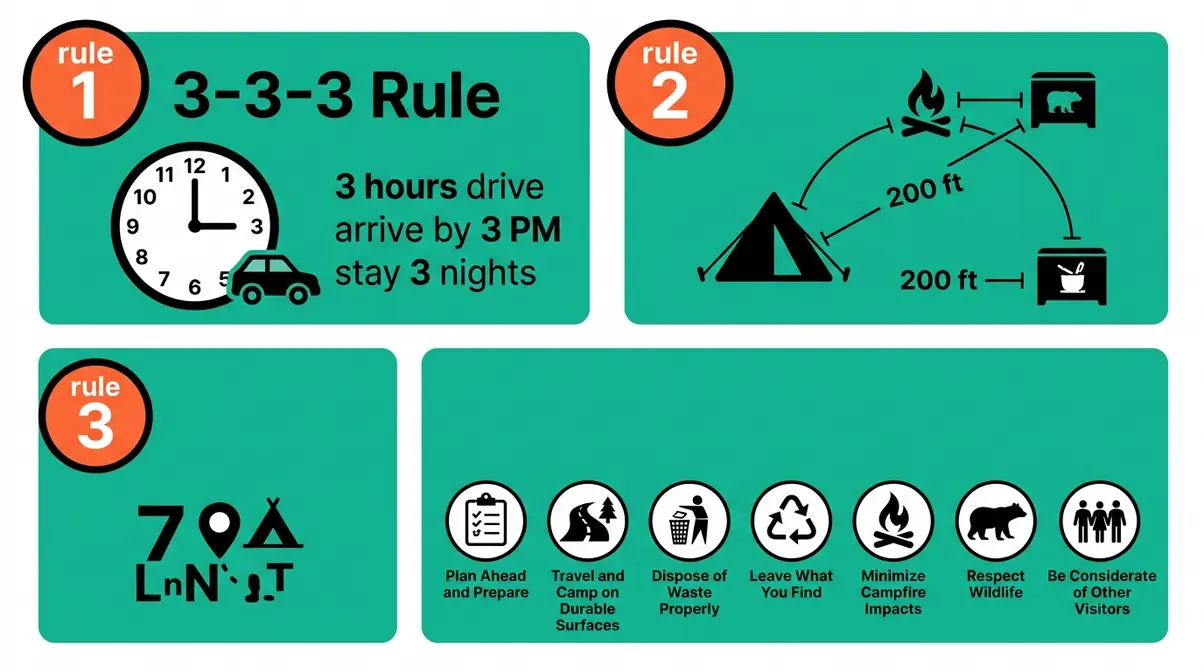
Most camping guides hand you a gear list and call it done. What they skip are the rules — the frameworks that make your trip safe, legal, and respectful of the environment and other campers. This is the section no competitor covers properly, and it directly addresses the anxiety that sends first-timers to forums asking “what am I missing?”
What is the 3-3-3 rule for camping?
The 3-3-3 rule is a practical framework used by experienced campers to structure every trip: drive no more than 3 hours to your campsite, arrive by 3 p.m., and stay for at least 3 nights. The rule is not a legal requirement — it’s a hard-won rule of thumb from the camping community designed to prevent the most common beginner problems.
- Why each “3” matters:
- 3-hour drive maximum: Arriving exhausted after a long drive means you’re setting up camp in a bad mental state. Fatigue causes setup errors and forgotten tasks.
- Arrive by 3 p.m.: This gives you 3–4 hours of daylight to set up your tent, locate water and bathroom facilities, and get your bearings before dark. Setting up a tent in the dark on your first trip is a genuine nightmare.
- Stay 3 nights minimum: One night is rarely enough to feel comfortable. The first night is always the roughest — unfamiliar sounds, uncomfortable sleep, and setup stress. Night two is where camping actually becomes enjoyable.
This rule pairs directly with The First-Night Rule introduced earlier: your first trip should be no more than 1 hour from home, at an established campground with facilities, and packed for 2 nights even if you’re only staying 1. The 3-3-3 rule is the experienced camper’s version of the same principle — keep it simple, arrive prepared, give yourself time.
What is the 200 rule for camping?
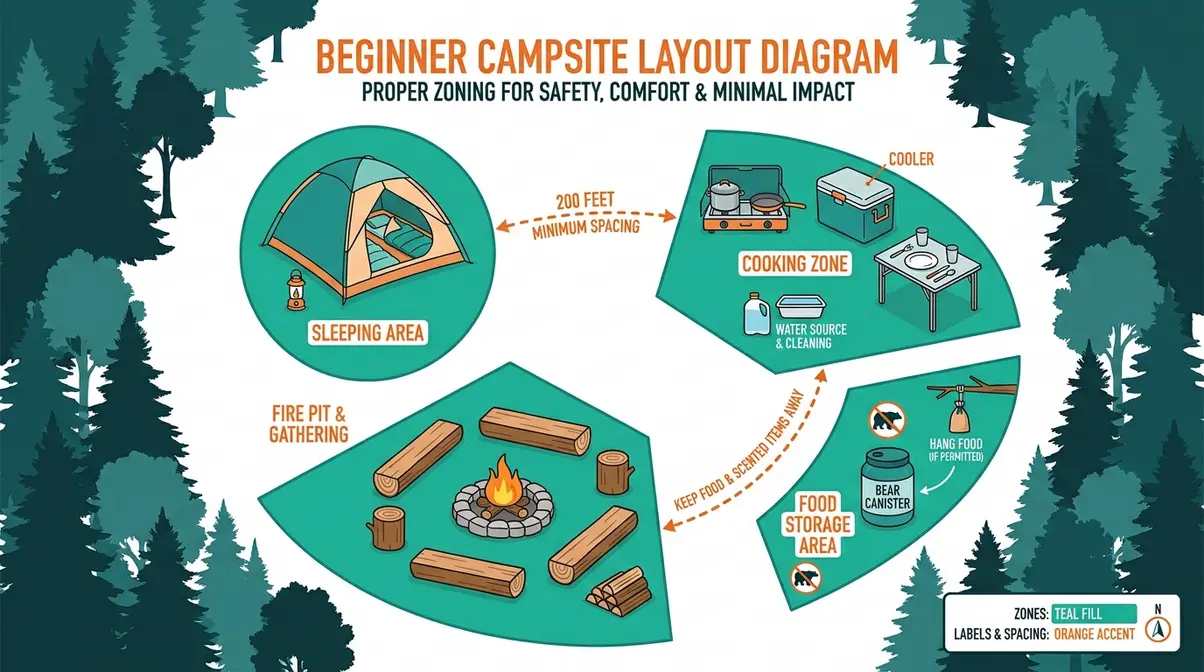
The 200-foot rule — sometimes called the 200-yard rule in backcountry contexts — is a core Leave No Trace principle with specific safety applications. It states that all food storage, cooking areas, and waste disposal should be located at least 200 feet (approximately 70 adult paces) from your sleeping area and from any water source.
Two reasons this rule exists:
- Bear safety: Food smells attract bears and other wildlife. Storing food in your tent or cooking directly next to where you sleep is the most common mistake that leads to dangerous wildlife encounters. The NPS recommends using a bear canister or hanging your food bag at least 10 feet off the ground and 4 feet from the nearest tree trunk when bear canisters are not available (NPS camping safety guidelines, 2026).
- Water source protection: Washing dishes, disposing of food scraps, or using soap within 200 feet of a stream or lake introduces contaminants that harm aquatic ecosystems and can contaminate drinking water sources downstream.
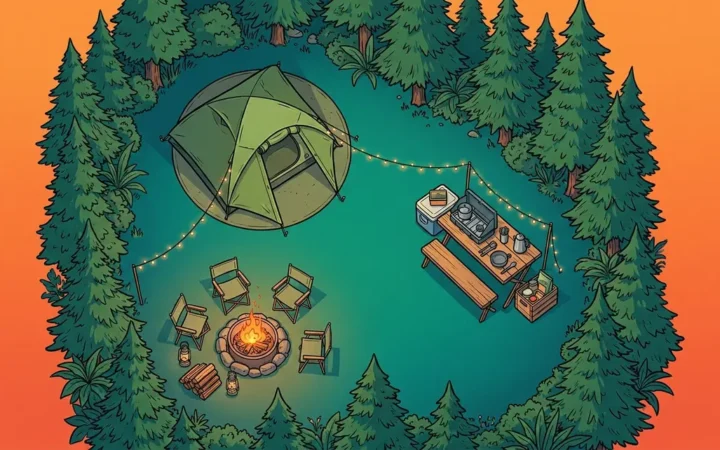
200-foot rule in practice: When you arrive at a campsite, walk 70 paces from your tent and mark that as your kitchen/food storage zone. Keep all food, cooking gear, and scented items (toothpaste, sunscreen, lip balm) in that zone when not in use.
What are the 7 C’s of camping?
The 7 C’s of camping is a memory framework used by outdoor educators to help beginners recall the core gear categories without a written list. Each “C” represents a critical category:
| C | Category | What It Includes |
|---|---|---|
| Cutting | Tools | Knife, multi-tool, hatchet |
| Combustion | Fire-starting | Lighter, matches, fire starter |
| Cover | Shelter | Tent, tarp, emergency bivy |
| Container | Water storage | Water bottles, filtration system |
| Cordage | Rope/binding | Paracord, guy lines, zip ties |
| Cotton | Clothing | Layering system (note: avoid cotton — use synthetics/wool) |
| Compass | Navigation | Map, compass, GPS |
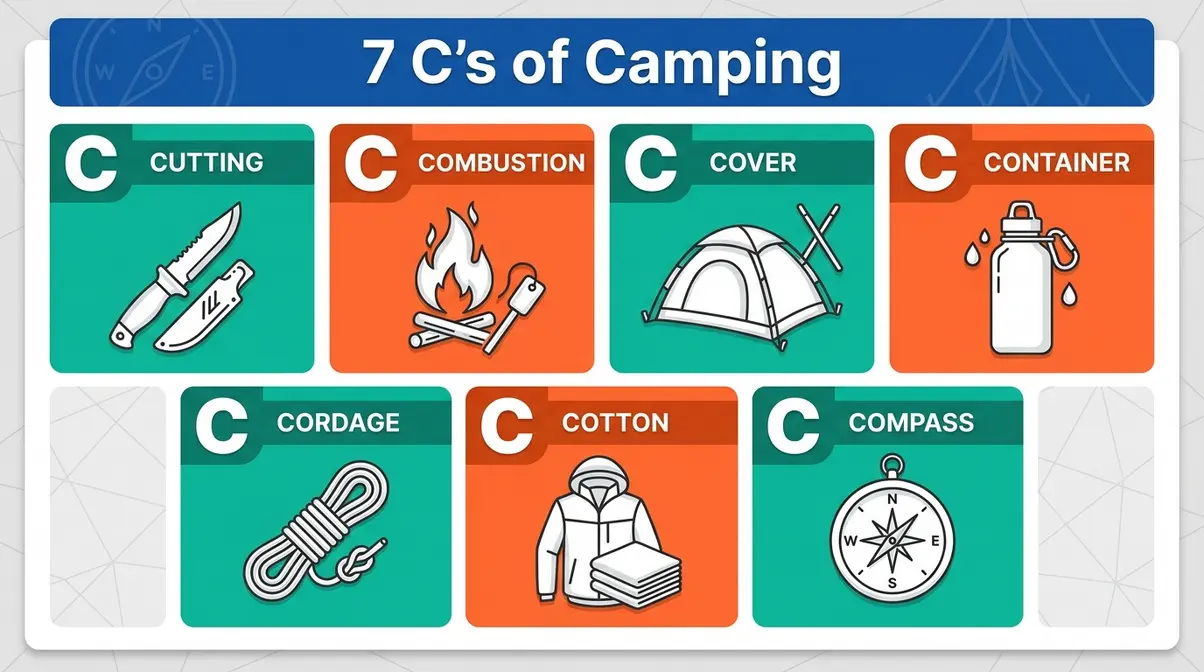
The 7 C’s work as a final mental sweep before you zip up the car. Run through each category in your head: do you have something for cutting, something for fire, cover for shelter, a container for water, cordage, appropriate clothing, and a compass or navigation tool? If you can say yes to all seven, your core camping gear checklist is covered.
Leave No Trace: Unwritten Rules
Leave No Trace (LNT) is a nonprofit organization — the Leave No Trace Center for Outdoor Ethics — that sets the ethical standard for outdoor recreation in the United States and internationally. Their 7 principles are the foundation of responsible camping behavior.
- The 7 LNT principles, simplified for beginners:
- Plan ahead and prepare — Research your campsite before you arrive
- Travel and camp on durable surfaces — Stick to established trails and campsites
- Dispose of waste properly — Pack out everything you pack in
- Leave what you find — Don’t pick flowers, carve trees, or move rocks
- Minimize campfire impacts — Use established fire rings; keep fires small
- Respect wildlife — Observe from a distance; never feed animals
- Be considerate of others — Keep noise down, especially after 10 p.m.
Most established campgrounds have rules that mirror LNT principles. Breaking them can result in fines, campsite loss, or — in serious cases — harm to the environment that affects future campers. The Leave No Trace planning principles are freely available and worth reading before your first trip (LNT, 2026).
Download Your Free Camping Checklist {#download}
A digital guide is useful for planning. A printed checklist is what you actually use when you’re loading the car at 6 a.m.
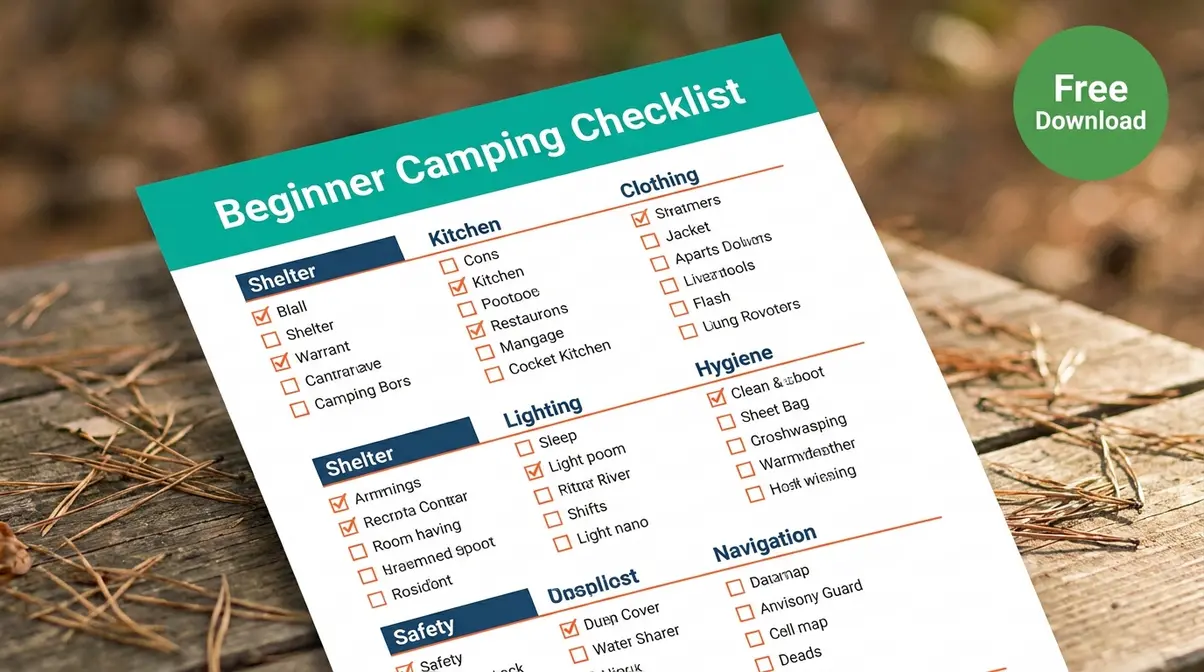
- The free PDF checklist includes:
- All 7 gear category checklists from this guide (shelter, kitchen, clothing, lighting/tools, hygiene, safety, and navigation)
- Specialized add-on lists for tent camping, car camping, RV camping, and family camping with kids
- The 10 Essentials quick-reference card
- A campsite setup reminder card featuring the 200-foot rule diagram
- A blank “personal items” section for medications, comfort items, and trip-specific gear
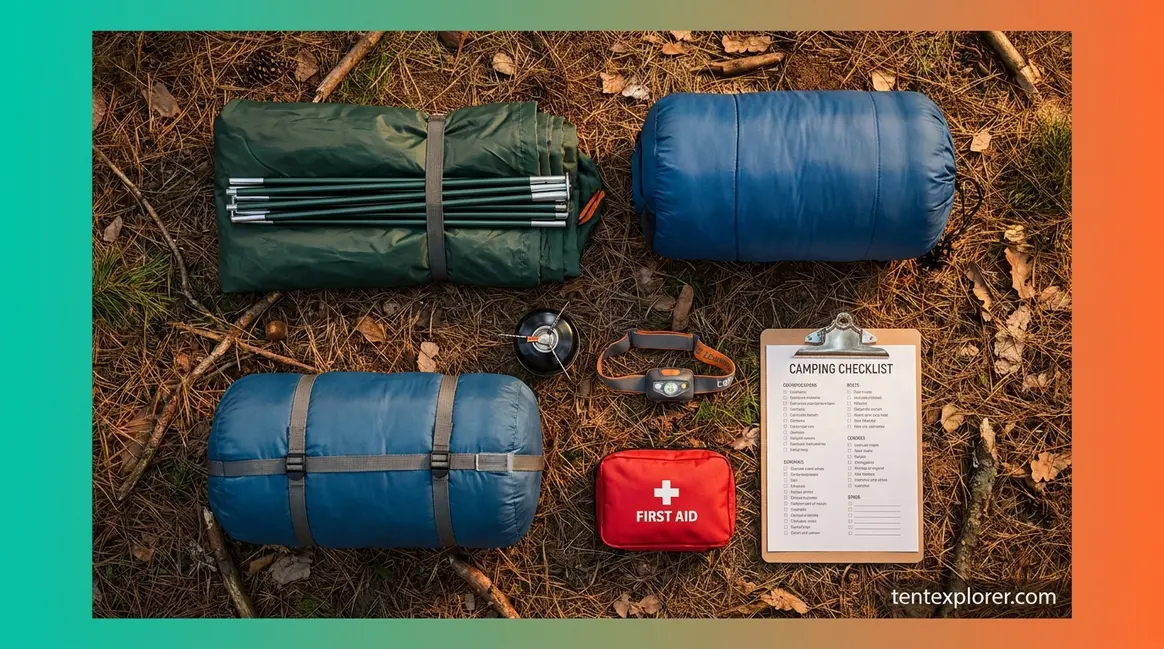
How to use it: Print the PDF the night before your trip. Work through each category as you pack — check items off physically. Don’t rely on memory for a first camping trip. Experienced campers use checklists every time, not because they forget things, but because checklists free up mental energy for the parts of camping that actually matter.
The first-time campers camping checklist at TentExplorer also offers a detailed downloadable resource for beginners who want additional category breakdowns (TentExplorer, 2026).
What First-Time Campers Often Get Wrong
Common Mistakes New Campers Make
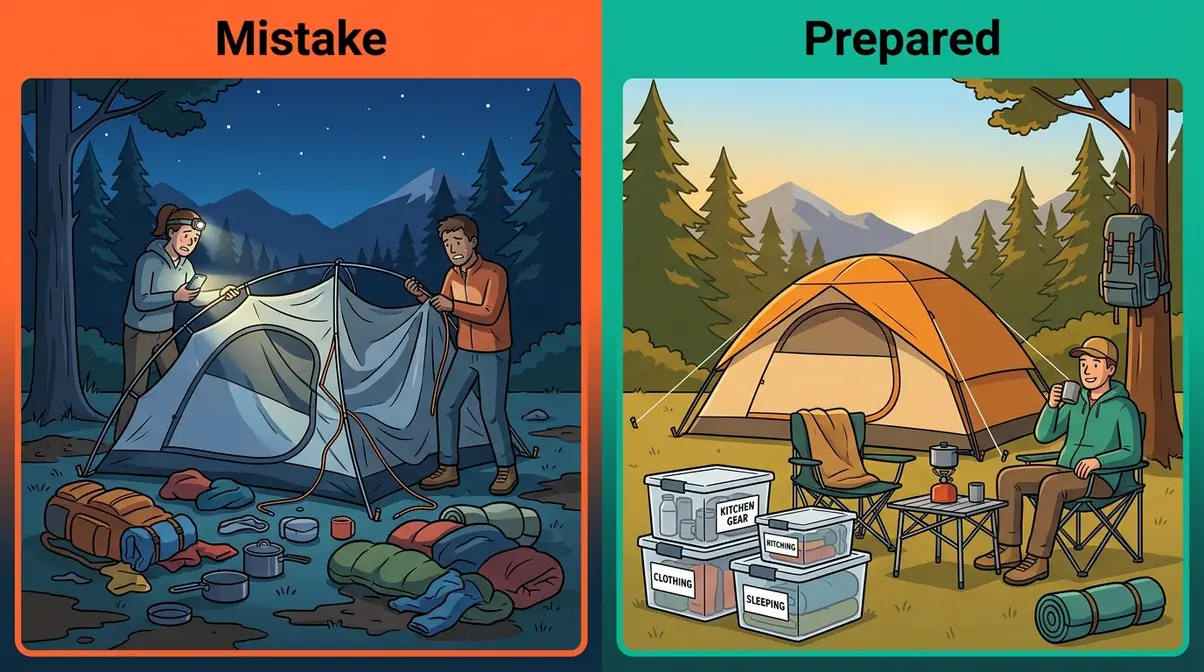
Our team evaluated the most frequently reported first-trip problems across camping communities including r/CampingGear and r/camping, plus feedback from first-time campers over multiple seasons. The same mistakes appear repeatedly — and almost all of them are preventable. Always brush up on important camping safety tips to ensure you are prepared for unexpected weather or emergencies.
Mistake 1: Overpacking clothing, underpacking sleep gear. First-timers often bring five outfit changes and a single thin blanket. Flip that ratio. One extra base layer matters more than three extra t-shirts. Your sleep system is your most important comfort investment.
Mistake 2: Skipping the practice setup. Setting up a tent for the first time in the dark, on unfamiliar ground, after a long drive, is genuinely stressful. Set up your tent at home at least once before the trip. This single step prevents more first-night problems than any other preparation.
Mistake 3: Arriving too late. Common pain points reported by first-time campers include arriving at the campsite after dark and realizing they can’t find the bathroom, locate the water source, or read their campsite map. The 3-3-3 rule exists precisely to prevent this.
Mistake 4: Not testing gear before the trip. A stove that won’t ignite, a sleeping bag with a broken zipper, or a headlamp with dead batteries are all avoidable problems. Test every piece of gear at home the week before you leave.
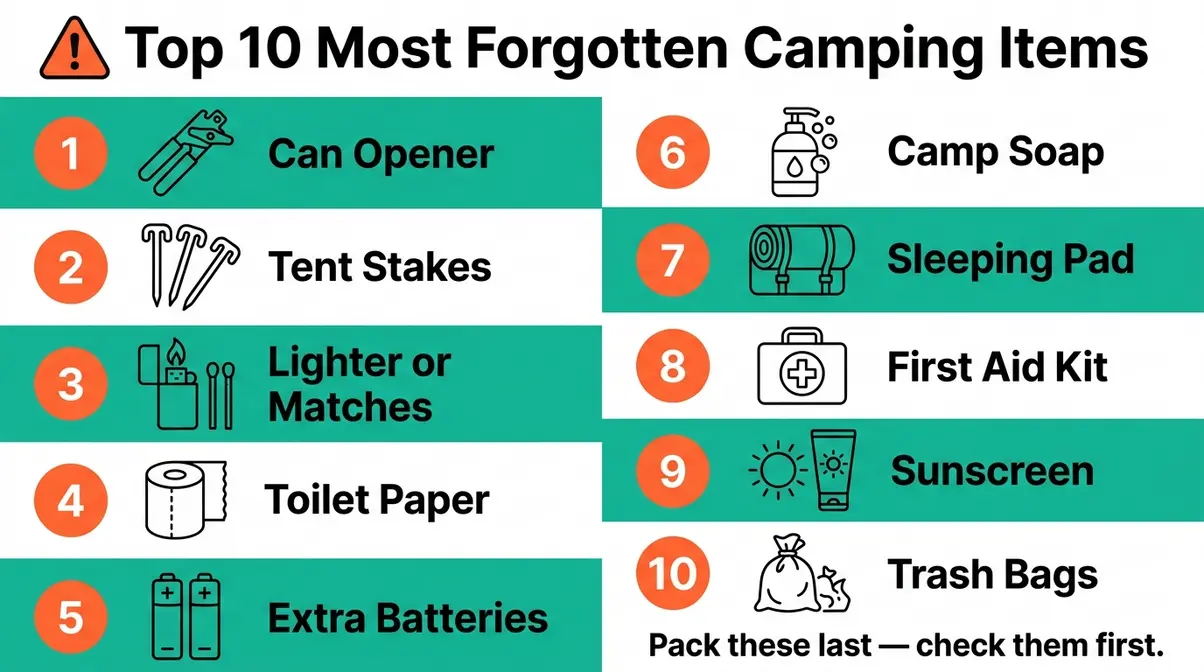
Mistake 5: Forgetting the small stuff. The most forgotten items — can opener, lighter, tent stakes, toilet paper, extra batteries — are small and cheap. They’re also the items that cause the most frustration when missing. Keep a dedicated “small items” bag and check it last.
When Standard Camping Isn’t Right Yet
The First-Night Rule is a gentle but honest check: if your planned first trip involves any of the following, consider scaling back before you go.
- Backcountry or dispersed camping (no facilities, no cell service, miles from help): This is not a first-trip scenario. Start with a developed campground that has bathrooms, running water, and ranger staff.
- Multi-day trips over 3 nights before you’ve completed one overnight: Build confidence in increments. One night at a campground 45 minutes from home tells you more about your gear gaps than any checklist.
- Extreme weather conditions (forecast temperatures below 20°F, high winds, or storm systems): Beginner gear and beginner skills are not matched to severe conditions. Check the forecast obsessively and be willing to reschedule.
- Remote locations without a reliable emergency contact plan: Tell someone where you’re going, when you’re coming back, and what to do if they don’t hear from you. This is not optional.
The goal isn’t to scare you away from camping — it’s the opposite. A modest, well-planned first trip almost always leads to a second one. An over-ambitious first trip often doesn’t.
Frequently Asked Questions
What does FF mean in camping?
FF in camping stands for “Flat Foam” — a type of sleeping pad construction that uses a solid foam layer (as opposed to self-inflating or air-only designs). Flat foam pads are the most affordable and most durable sleeping pad option, though they offer less cushioning than air mattresses or self-inflating pads. The term appears frequently in gear reviews and camping forums when comparing insulation values (R-values) between pad types. For first-time campers, any sleeping pad — foam, self-inflating, or air — is vastly better than sleeping directly on the ground.
What is the 4-4-4 rule for camping?
The 4-4-4 rule for camping is a variation of the 3-3-3 rule used by some RV and family camping communities: drive no more than 4 hours per day, arrive at camp by 4 p.m., and stay for at least 4 nights. It’s particularly popular among families with young children, where longer drives cause more fatigue and more setup time is needed. Like the 3-3-3 rule, it’s a practical guideline rather than a formal regulation — the goal is to arrive rested, set up in daylight, and give the trip enough time to find its rhythm.
What is the most forgotten item when camping?
The most forgotten camping item is the can opener, according to consistent reports across camping communities including r/CampingGear and r/camping. Close behind it are tent stakes, a lighter or matches, toilet paper, and extra batteries for headlamps. These items share a common trait: they’re small, feel obvious, and get packed last — or not at all. The fix is simple: keep a dedicated “small items” bag with these items permanently packed and ready to grab before every trip. Checking it becomes muscle memory after your first few outings.
Pack Smart, Camp Confidently
A complete beginner camping checklist is more than a gear dump — it’s a system. The 7-category framework in this guide (shelter, sleep, kitchen, clothing, lighting/tools, hygiene, and safety), grounded in the 10 Essentials and the 200-foot rule, gives you a structured way to pack that prevents entire category oversights. Across every camping community and every gear review, the conclusion is the same: preparation is what separates a miserable first trip from a memorable one.
The First-Night Rule is the simplest version of that preparation: stay close to home, choose an established campground, and give yourself the margin to make small mistakes without consequences. Your first trip doesn’t need to be epic. It needs to be enjoyable enough to make you want a second one.
Start with the free PDF checklist at the end of this guide. Print it, pack against it, and check off every category before you close the trunk. Then drive somewhere beautiful, set up your tent while the sun is still up, and make something hot to eat. The rest takes care of itself.

David King
Field gear tester at Tent Explorer.