Camping Hygiene Tips: Complete Beginner’s Guide (2025)
 David King
Updated June 30, 2026
19 min read
David King
Updated June 30, 2026
19 min read
First-time camping trips are exciting — and a little nerve-wracking. One of the most common worries? Staying clean without a shower. These camping hygiene tips will show you that with a simple system and the right gear, you can feel fresh, healthy, and confident for every day on trail.
You don’t need a bathroom. You don’t need running water. What you need is a plan.
This guide introduces The 3-Zone Clean Camp System — a beginner-friendly framework that organizes every hygiene task into three zones: Body, Kitchen, and Wilderness Bathroom. Nothing feels overwhelming when you know exactly which zone you’re in and what to do next.
“Any tips tricks or must haves to take with me are appreciated. I have limited experience camping and all I have for now is take lots of wipes lol For women …”
— r/CampingandHiking
You’re not alone. Every experienced camper started exactly where you are right now. Let’s fix that.
Good camping hygiene tips don’t require a shower — they require a system. The 3-Zone Clean Camp System breaks every hygiene task into Body, Kitchen, and Wilderness Bathroom zones so nothing feels overwhelming.
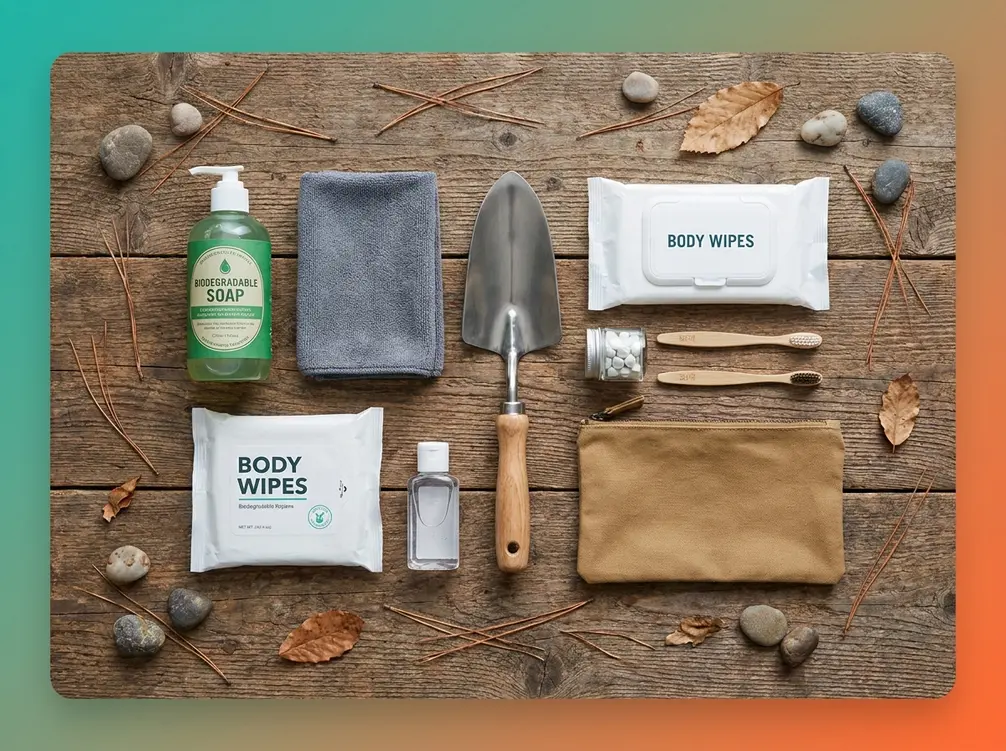
- Pack smart: Biodegradable soap, body wipes, a trowel, and hand sanitizer cover 90% of hygiene needs.
- Follow the 200-foot rule: Keep all washing, waste, and soap at least 200 feet (about 70 steps) from water sources (Leave No Trace Center for Outdoor Ethics).
- Stay consistent: A 10-minute daily hygiene routine prevents grime buildup and keeps you comfortable all trip.
| # | Image | Product | Best For | Buy |
|---|---|---|---|---|
| 1 |  |
Surviveware Biodegradable Wet Wipes | Full-body wipe-downs between washes | Buy on Amazon |
| 2 |  |
Combat Wipes GAIA Biodegradable Wipes | Women’s hygiene, sensitive skin, bear country use | Buy on Amazon |
| 3 |  |
Sea to Summit Pocket Trowel | Digging catholes, LNT-compliant waste disposal | Buy on Amazon |
| 4 |  |
Sea to Summit Wilderness Wash | Hair, body, and dish washing — biodegradable | Buy on Amazon |
| 5 |  |
CNOC Outdoors Featherweight Wash Basin | 3-bin camp kitchen dishwashing system | Buy on Amazon |
Why Camping Hygiene Matters
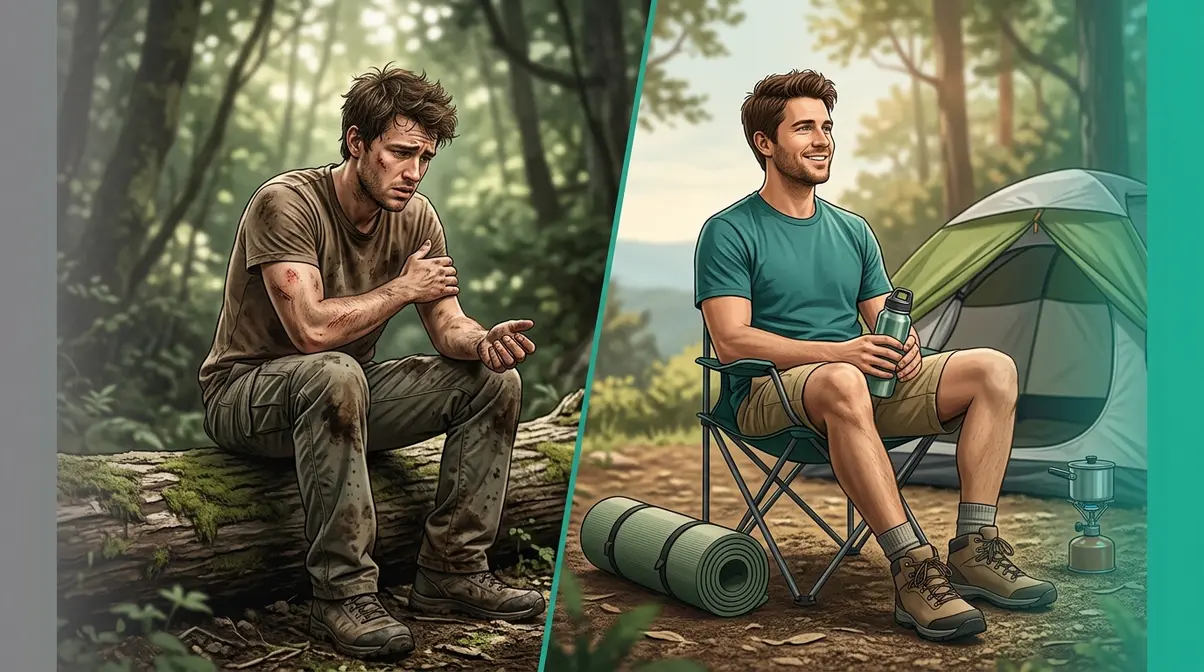
Staying clean outdoors isn’t just about comfort — it’s about health and safety. Poor hygiene while camping can lead to gastrointestinal illness, skin infections, and contaminated water sources that affect every hiker downstream. The good news: a consistent hygiene routine takes less than 10 minutes a day and requires gear that fits in a quart-sized bag.
Before You Start: What to Pack for Hygiene
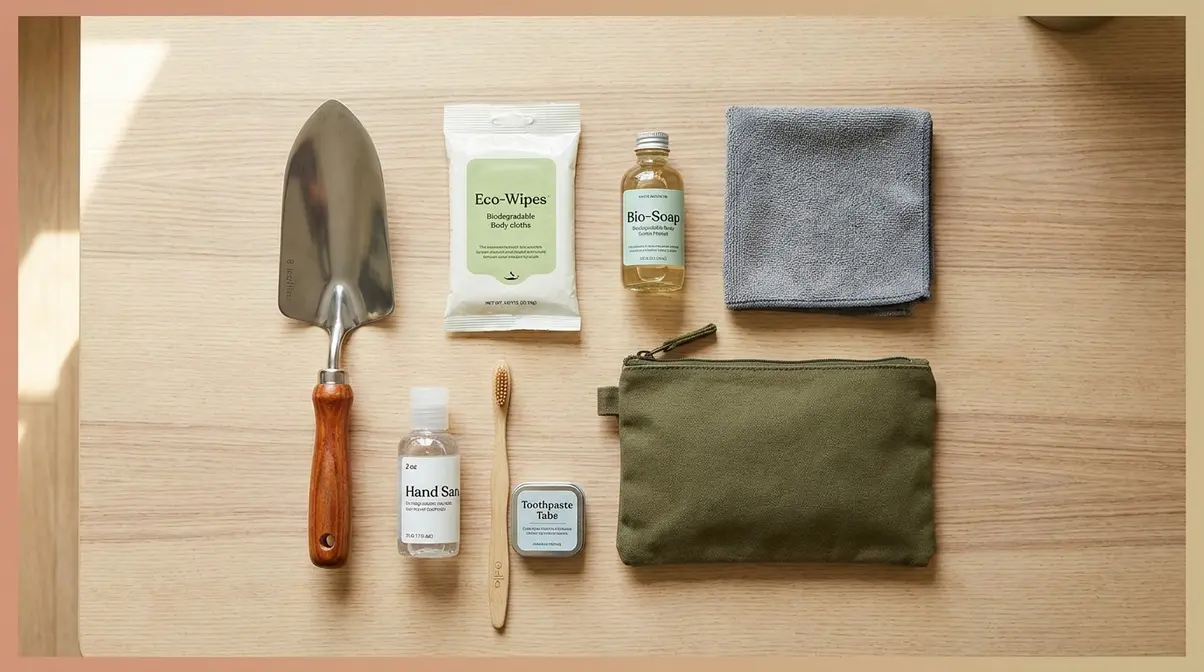
Before your first night under the stars, gather these essentials. Experienced campers and gear testers consistently recommend keeping your hygiene kit in a single dedicated bag — so you never dig through your whole pack to find it. Consulting a beginner camping checklist ensures you don’t forget these crucial items.
Your Core Hygiene Kit:
| Item | Why You Need It |
|---|---|
| Biodegradable soap (unscented) | Safe for ecosystems; works for body, hair, and dishes |
| Body wipes (biodegradable) | Quick full-body refresh without water |
| Hand sanitizer (60%+ alcohol) | Kills germs between handwashing opportunities |
| Trowel (6-inch blade) | Digging catholes for human waste disposal |
| Microfiber towel | Dries fast; packs small |
| Dental hygiene kit | Travel toothbrush, floss, toothpaste tabs |
| Menstrual products + waste bags | For women; essential in bear country |
| Toilet paper (unscented) + waste bags | Pack it in, pack it out in many areas |
| Lip balm + sunscreen (unscented) | Skin protection on trail |
Why unscented matters: Scented products attract wildlife, including bears. Always choose unscented versions of soap, wipes, and deodorant for backcountry camping.
Your Daily Camp Hygiene Routine
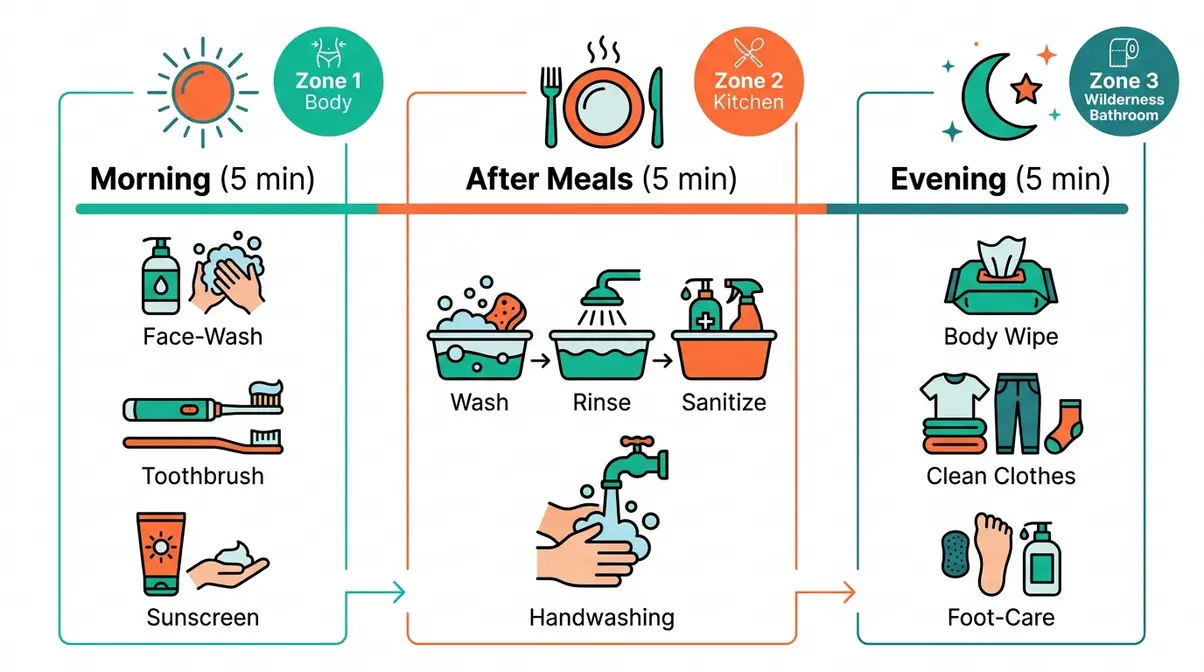
The 3-Zone Clean Camp System makes daily hygiene simple. Think of your campsite as three distinct zones, each with its own set of tasks. When you know which zone you’re working in, you always know what to do.
Zone 1 — Body: Morning face wash, evening wipe-down, foot care, dental hygiene.
Zone 2 — Kitchen: Wash, rinse, and sanitize dishes after every meal; food waste disposal.
Zone 3 — Wilderness Bathroom: Cathole digging, hand washing, waste pack-out.
A realistic daily routine looks like this:
Estimated time: 15 minutes total per day
Tools needed: Biodegradable soap, water, sunscreen, toothbrush, biodegradable wipes
Step 1: Morning Routine (5 min)
Wash your face with a splash of water and a drop of biodegradable soap. Brush your teeth and apply unscented sunscreen.
Step 2: After Meals (5 min)
Run the 3-bin dish system (see Kitchen section below). Wash your hands thoroughly for 20 seconds.
Step 3: Evening Routine (5 min)
Perform a full-body wipe-down with biodegradable wipes. Change into clean camp clothes and air out your feet.
That’s it. Fifteen minutes covers your entire day. Community consensus from r/CampingandHiking confirms that this type of simple, repeatable routine is what separates campers who feel miserable by day two from those who genuinely enjoy the experience.
Handwashing in the Backcountry
Handwashing is the single most effective hygiene habit you can practice outdoors. The CDC recommends washing hands for at least 20 seconds with soap and water — especially before handling food, after using the bathroom, and after touching shared surfaces (Centers for Disease Control and Prevention).
Without a sink, here’s how to do it properly:
Estimated time: 1 minute
Tools needed: Water bottle or camp sink, biodegradable soap, microfiber towel
Step 1: Wet Your Hands
Wet your hands with a small amount of water from your bottle or a camp sink bag.
Step 2: Apply Soap
Apply a pea-sized drop of biodegradable, unscented soap.
Step 3: Scrub Thoroughly
Scrub all surfaces — palms, backs of hands, between fingers, under nails — for 20 full seconds (hum “Happy Birthday” twice).
Step 4: Rinse
Rinse thoroughly, using as little water as possible to conserve your supply.
Step 5: Dry
Dry your hands with your microfiber towel or simply let them air dry.
Step 6: Use Sanitizer (If Waterless)
If no water is available, apply hand sanitizer with at least 60% alcohol and rub until completely dry.
Why this matters: Norovirus — the most common cause of stomach illness at campsites — spreads primarily through contaminated hands (CDC). Twenty seconds of scrubbing is not optional; it’s the difference between a great trip and a miserable one.
The National Park Service recommends carrying both soap and hand sanitizer, since sanitizer alone doesn’t remove dirt, grease, or certain pathogens effectively.
Your Essential Camping Hygiene Kit
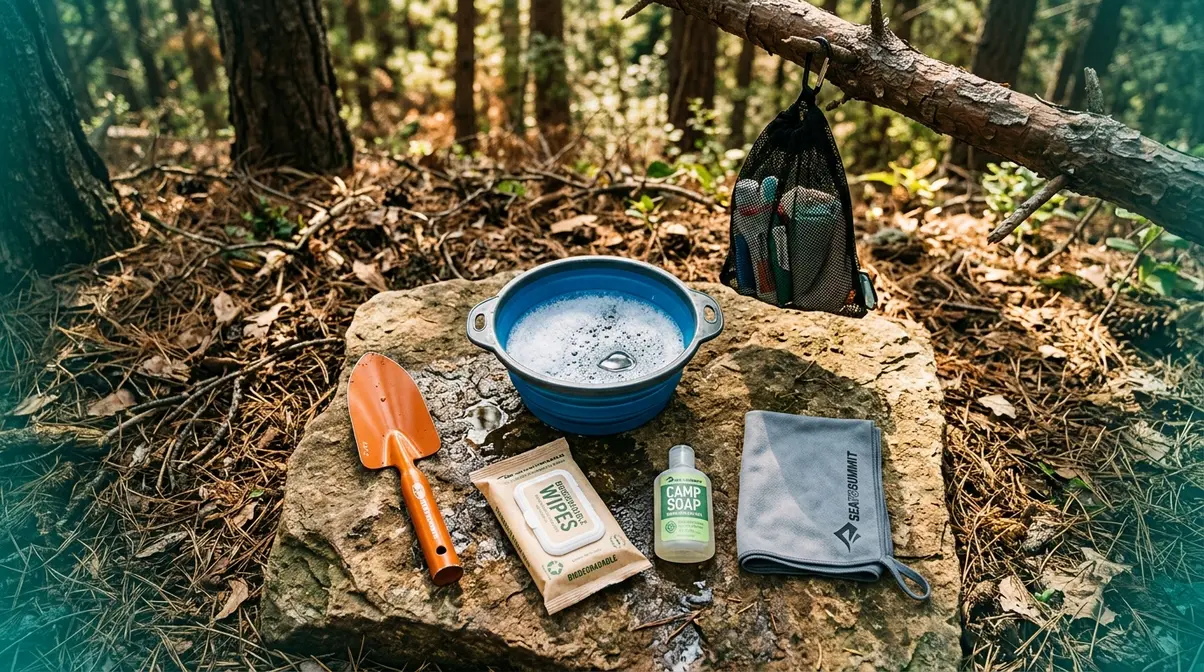
The right gear makes every hygiene task faster, lighter, and more effective. Our evaluation of gear across dozens of community recommendations and experienced camper reviews identified three categories that matter most: cleaning agents, tools, and convenience items.
The Essential Camping Hygiene Checklist
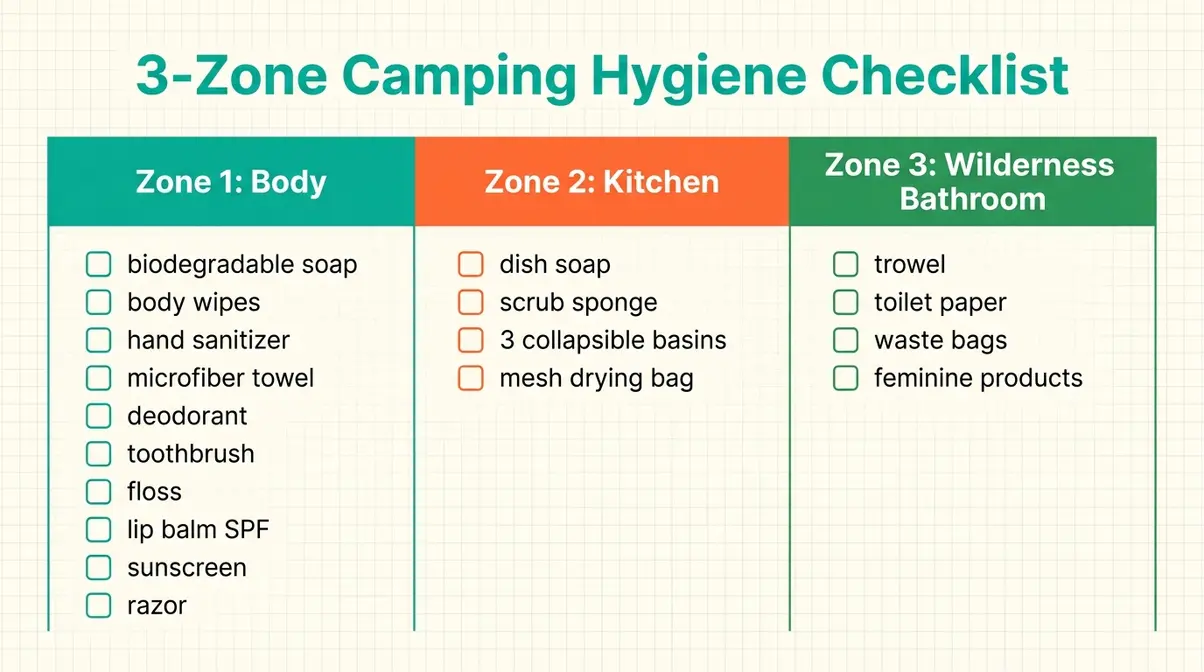
Print this before your first trip. Check off each item as you pack it. Cross-reference this with your essential tent camping gear checklist to ensure nothing is left behind.
- Body Zone:
- [ ] Biodegradable, unscented soap
- [ ] Biodegradable body wipes (1 pack per 2–3 days)
- [ ] Hand sanitizer (60%+ alcohol, 2 oz travel size)
- [ ] Microfiber towel (quick-dry, compact)
- [ ] Deodorant (unscented, travel size)
- [ ] Toothbrush + toothpaste tabs or travel paste
- [ ] Dental floss
- [ ] Lip balm with SPF (unscented)
- [ ] Sunscreen (unscented)
- [ ] Razor (optional, travel size)
- Kitchen Zone:
- [ ] Biodegradable dish soap
- [ ] Small scrub sponge or camp scraper
- [ ] 3 collapsible wash basins (or 3 dry bags)
- [ ] Mesh dish drying bag
- Wilderness Bathroom Zone:
- [ ] Trowel with 6-inch blade
- [ ] Toilet paper (unscented, white — or WAG bags where required)
- [ ] Waste pack-out bags (for toilet paper in pack-out zones)
- [ ] Feminine hygiene products + odor-proof disposal bags
Body Wipes vs. Biodegradable Soap vs. Hand Sanitizer
These three products do different jobs. Knowing when to use each one saves weight and prevents hygiene mistakes.
| Product | Best Use | Limitation |
|---|---|---|
| Biodegradable body wipes | Quick full-body refresh, no water needed | Can’t remove heavy grease or sanitize |
| Biodegradable soap | Washing hands, hair, dishes with water | Requires water; must be used 200 ft from water sources |
| Hand sanitizer (60%+ alcohol) | When no water is available | Doesn’t remove dirt or food residue |
Body wipes are the beginner’s best friend. They require no water, pack flat, and handle most of the “stinky or damp” moments between proper washes. Surviveware and Combat Wipes GAIA are both fully biodegradable and safe for sensitive skin.
Biodegradable soap is essential for hands-before-food situations and dish washing. Sea to Summit Wilderness Wash is concentrated — a few drops go a long way — and works as a combined body wash, shampoo, and dish soap. Voyageur Tripper notes that one 3 oz bottle easily covers a week-long trip for one person.
Hand sanitizer fills the gaps. Keep a small bottle clipped to your pack strap so it’s always within reach after using a trail privy or handling food packaging.
The Most Forgotten Hygiene Item When Camping
The most commonly forgotten camping hygiene item — according to experienced campers and gear lists across r/CampingandHiking — is a dedicated waste disposal bag for toilet paper and feminine products. Most beginners assume they can bury toilet paper with their waste. In many ecosystems and designated wilderness areas, this is actually prohibited (Leave No Trace Center for Outdoor Ethics, 2026). Toilet paper does not break down quickly in dry, cold, or high-use environments.
Pack at least one odor-proof, sealable waste bag per person per day. They weigh almost nothing and prevent a Leave No Trace violation that can earn you a fine in national parks and wilderness areas.
Runner-up most-forgotten items: a trowel (many beginners try to dig catholes with sticks — it doesn’t work), and a second microfiber towel designated specifically for dishes.
Practical Camping Hygiene Techniques: Step-by-Step
This is the hands-on section. The 3-Zone Clean Camp System comes to life here. Mastering these methods is one of the top 10 tent camping tips for any newcomer. Each technique below has a numbered process so you know exactly what to do, even on your first trip.
How to Wash Dishes While Camping: The 3-Bin System
The 3-bin dishwashing system (Wash → Rinse → Sanitize) is the gold standard for camp kitchen hygiene and is completely missing from most beginner guides. Done correctly, it eliminates food residue that attracts wildlife and prevents foodborne illness. After evaluating camp kitchen setups across dozens of trip reports and gear forums, this method consistently outperforms every shortcut.
Estimated time: 5 minutes
Tools needed: 3 collapsible basins (or dry bags), biodegradable dish soap, camp scraper or sponge, mesh drying bag, unscented bleach or sanitizing tablets, water
Step 1: Scrape Food Debris
Scrape all food debris from plates and pots into a waste bag before washing. Never dump food scraps near your campsite.
Step 2: Wash in Basin 1
Fill Basin 1 (Wash) with warm water and a few drops of biodegradable, unscented dish soap. Wash all dishes with your sponge or scraper.
Step 3: Rinse in Basin 2
Fill Basin 2 (Rinse) with clean, cold water. Rinse all soap residue completely from the dishes.
Step 4: Sanitize in Basin 3
Fill Basin 3 (Sanitize) with cold water and a capful of unscented bleach (or use a sanitizing tablet). Dip each item for 30 seconds.
Step 5: Air Dry
Air dry dishes in a mesh bag hung from a tree branch. Never dry with a cloth towel, which spreads bacteria.
Step 6: Dispose of Gray Water
Dispose of gray water (used wash and rinse water) at least 200 feet from your campsite, water sources, and trails. Strain out food particles first and pack them out.
Why the 200-foot rule matters: Gray water containing soap and food residue can contaminate drinking water sources and harm aquatic ecosystems. The Leave No Trace Center for Outdoor Ethics defines 200 feet as approximately 70 adult steps — pace it out before your trip so you know instinctively how far to walk (Leave No Trace Center for Outdoor Ethics).
How to Dig a Cathole and Handle Waste Properly
A cathole is a small hole you dig to bury human waste in the backcountry. It’s the Leave No Trace-recommended method for human waste disposal when no toilet facilities are available (Leave No Trace Center for Outdoor Ethics). Done correctly, it causes zero environmental harm.
Estimated time: 5–7 minutes
Tools needed: Trowel with 6-inch blade, unscented toilet paper, waste pack-out bags, hand sanitizer
Step 1: Choose Your Location
Walk at least 200 feet (70 steps) from any water source, campsite, trail, or campfire ring. Select a spot with rich, dark topsoil — microorganisms in healthy soil break down waste quickly.
Step 2: Dig the Hole
Use your trowel to dig a hole 6–8 inches deep and 4–6 inches wide. This depth keeps waste in the active decomposition layer of soil (National Park Service).
Step 3: Use the Cathole
Squat over the hole. Take your time — this is not a situation to rush.
Step 4: Handle Toilet Paper
In most wilderness areas, toilet paper must be packed out, not buried. Place used TP in a sealed waste bag. In some ecosystems (check local regulations), white, unscented TP can be buried in the cathole.
Step 5: Cover and Disguise
Fill the hole with the removed soil, tamp it down gently with your trowel, and scatter natural debris (leaves, sticks) over the surface.
Step 6: Wash Hands Immediately
Use the 6-step handwashing method from the Body Zone section, or apply hand sanitizer if no water is available.
Never dig a cathole near a water source. The NPS and LNT both emphasize that even “biodegradable” waste contains pathogens that can survive in soil and reach waterways through rain runoff (National Park Service).
Foot Care, Body Hygiene, and Clothing on the Trail
Your feet carry you all day. Neglecting them leads to blisters, athlete’s foot, and trench foot — all preventable with a 3-minute evening routine. Experienced hikers consistently rank foot care as the most overlooked element of camp hygiene for beginners.
Estimated time: 3–5 minutes
Tools needed: Biodegradable body wipes, moleskin, foot powder, clean camp socks
Step 1: Remove Boots and Socks
Remove footwear as soon as you reach camp. Let your feet air out for at least 20 minutes.
Step 2: Inspect Your Feet
Inspect both feet for hot spots, blisters, or cracked skin. Address any hot spots immediately with moleskin before they become blisters.
Step 3: Wipe Down
Wipe each foot with a biodegradable body wipe, paying close attention to the spaces between your toes.
Step 4: Powder and Change
Apply foot powder or let feet air dry completely before putting on dry, dedicated camp socks.
Body hygiene without a shower: A full-body wipe-down with biodegradable wipes handles the grime of a long hiking day effectively. Work from cleanest to dirtiest — face and neck first, then armpits, torso, legs, and feet last. Change into dedicated camp clothes (clothes you only wear at camp, not on trail) each evening. This keeps your sleeping bag cleaner and dramatically improves sleep comfort.
Clothing hygiene: The Washington Trails Association recommends merino wool and synthetic fabrics over cotton for backcountry use because they resist odor and dry quickly. On trips longer than 3 days, hand wash a single layer item each afternoon using a small amount of biodegradable soap and a flat rock as a scrub surface. Rinse thoroughly and hang to dry on your tent’s guylines.
Can I pee outside while camping?
Yes — urinating outside is generally acceptable while camping, with a few guidelines. Urinate at least 200 feet from water sources, trails, and campsites to prevent contamination and odor near high-traffic areas. In some ecosystems, animals are attracted to the salt in urine and may damage vegetation; in these areas (alpine meadows, granite rock), urinating on durable surfaces (rock, gravel) or using a pee rag is preferred. Always check local regulations — some heavily used wilderness areas have additional restrictions.
Camping Hygiene Tips for Women
Women face a few additional hygiene considerations in the backcountry — primarily around menstrual management and urinary hygiene. These topics rarely appear in mainstream camping guides, which is exactly why they cause so much anxiety for first-time female campers. This section addresses both directly.
Managing Your Period in the Backcountry
Managing your period while camping is completely doable with the right products and a clear disposal plan. The key considerations are: avoiding scented products (which attract wildlife), packing out all waste, and following bear-aware protocols in areas with active bear populations.
- What to pack:
- Menstrual cup or menstrual disc (reusable, generates no waste — ideal for multi-day trips)
- Unscented tampons or pads as backup
- Odor-proof, resealable waste bags (double-bag used products)
- Combat Wipes GAIA (formulated for sensitive skin; pH-balanced for women’s hygiene)
- Unscented hand sanitizer
Bear country protocol: The National Park Service confirms there is no evidence that menstruation increases bear encounters, provided used products are stored properly (National Park Service). Treat used menstrual products exactly like food waste — store them in a bear canister or hang them in a bear bag at least 200 feet from your sleeping area. Never bury them.
Estimated time: 3–5 minutes
Tools needed: Menstrual products, odor-proof bags, toilet paper, hand sanitizer
Step 1: Change Products Away from Camp
Change products at least 200 feet from your campsite and water sources.
Step 2: Wrap and Seal
Wrap used products in toilet paper, then seal them tightly in an odor-proof waste bag.
Step 3: Store Securely
Double-bag the waste and store it in your bear canister or bear hang with all other scented items.
Step 4: Sanitize Hands
Wash your hands immediately with soap and water or hand sanitizer.
Showering, Skin Care, and Staying Fresh
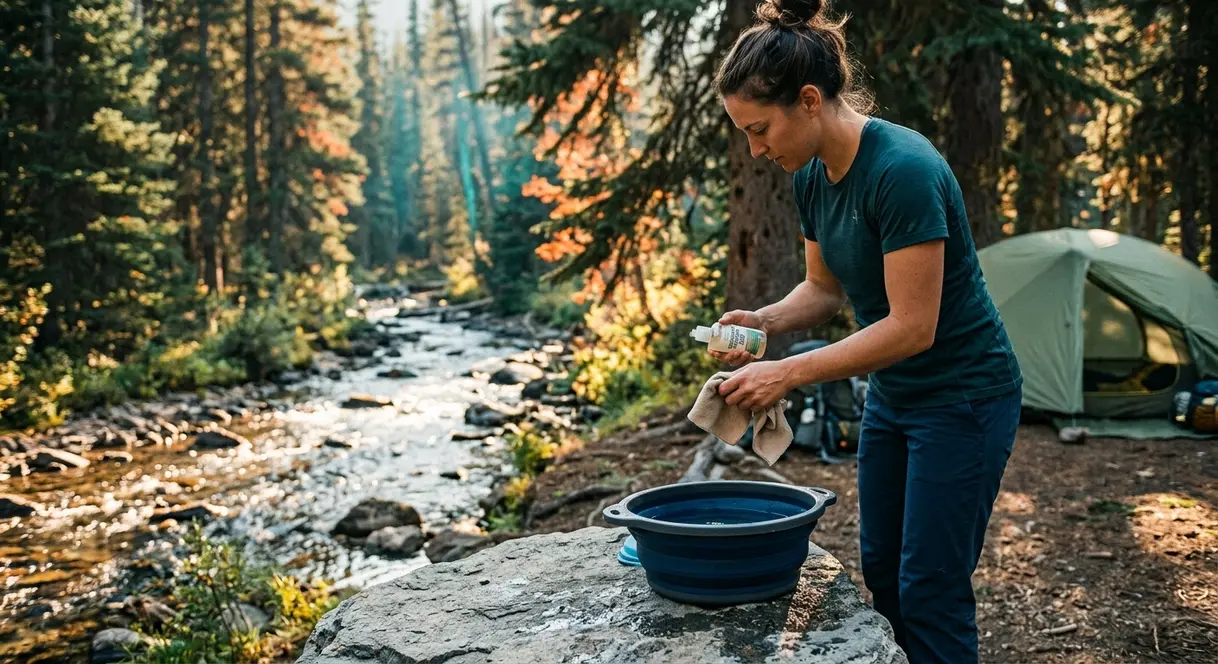
A full shower isn’t possible in most backcountry settings — but a bucket bath (a wipe-down or rinse using a small amount of water in a basin) achieves most of the same results. Here’s how to do it without contaminating water sources:
Estimated time: 10 minutes
Tools needed: Collapsible basin, water, biodegradable soap, small cloth or body wipes
Step 1: Collect Water
Collect 1–2 liters of water in a collapsible basin or pot. Carry it at least 200 feet from any water source.
Step 2: Add Soap
Add a few drops of biodegradable, unscented soap to the water.
Step 3: Wash Top to Bottom
Use a small cloth or body wipe to wash from face to feet, changing the cloth frequently.
Step 4: Rinse Off
Rinse your body with clean water from your water bottle.
Step 5: Dispose of Gray Water
Dispose of the gray water by scattering it widely over the ground — never dump it in one concentrated spot near your tent or water source.
Skin care on trail: Sun, wind, and sweat deplete skin moisture faster than normal. Apply unscented SPF lip balm and sunscreen every morning. For multi-day trips, a small tube of unscented moisturizer prevents cracked hands and chapped lips. Avoid scented lotions — they attract insects and wildlife.
How often should girls shower when camping?
There’s no requirement to shower while camping — and in backcountry settings, traditional showers are rarely possible. A daily wipe-down with biodegradable body wipes effectively removes sweat, grime, and bacteria. For trips of 3 days or fewer, most experienced female campers skip hair washing entirely. For longer trips, a bucket bath (a basin rinse with biodegradable soap, 200 feet from water) every 2–3 days keeps skin healthy and comfortable. The key is consistency, not frequency.
Common Camping Hygiene Mistakes
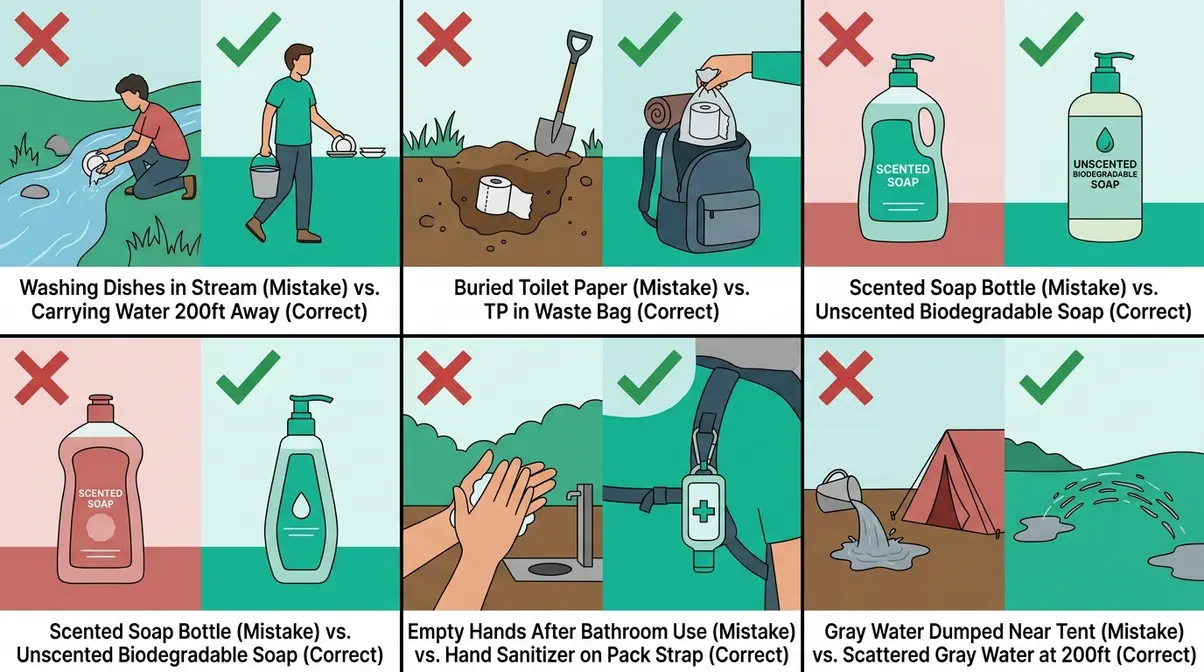
Even well-prepared campers make hygiene mistakes on their first few trips. Avoiding these errors is as important as following basic tent camping safety tips. These are the most common ones — and exactly how to avoid them.
Common Pitfalls
Mistake 1: Washing dishes directly in a stream or lake.
This contaminates water sources with soap residue and food particles, harming aquatic life and other campers downstream. Fix: Always carry water at least 200 feet from the source before washing anything.
Mistake 2: Burying toilet paper.
In most environments, TP does not break down quickly. It resurfaces after rain, creating an unsanitary and unpleasant mess. Fix: Pack out all toilet paper in a sealed waste bag. Check local regulations before your trip — some areas are exceptions.
Mistake 3: Using scented products.
Scented soap, deodorant, lotion, and even toothpaste attract wildlife. Fix: Audit your hygiene kit before every trip. Replace anything scented with an unscented alternative.
Mistake 4: Skipping hand sanitizer after using the bathroom.
Biodegradable soap requires water to work. If you’re rushing or water is scarce, it’s easy to skip a proper wash. Fix: Keep hand sanitizer clipped to your pack strap so it’s always accessible — no excuses needed.
Mistake 5: Dumping gray water near camp.
Used dishwater contains food particles that attract wildlife to your sleeping area. Fix: Strain gray water through a bandana or mesh bag, pack out the solids, and scatter the water widely at least 200 feet from camp.
When to Choose Alternatives
The cathole method works for most backcountry situations — but not all. In high-use areas (popular national parks, alpine zones above tree line, desert rock), human waste must be packed out entirely using a WAG bag (Waste Alleviation and Gelling bag). Check the regulations for your specific destination before you go. The NPS and U.S. Forest Service publish current requirements for each managed area.
For trips where water is extremely scarce — desert camping, for example — rely primarily on body wipes and hand sanitizer rather than water-based washing. Shift your hygiene strategy to Zone 1 (Body Wipes) almost exclusively, and reserve water for drinking and cooking.
When to Seek Expert Help
If you’re planning a first trip to a regulated wilderness area, a designated bear management zone, or an international park, contact the land management agency directly before you go. Regulations vary significantly — what’s acceptable in one forest may carry a fine in another. A 5-minute phone call to the ranger station prevents costly mistakes.
Frequently Asked Questions About Camping Hygiene
What are the 7 C’s of camping?
The 7 C’s of camping are a popular beginner framework: Cutting tool, Combustion device, Cover, Container, Cordage, Cotton (or clothing), and Compass. They represent the seven essential categories of survival and preparedness gear. While not a formal regulatory standard, the 7 C’s are widely referenced across camping and bushcraft communities as a useful packing mental model — especially for beginners building their first kit.
What is the 200-foot rule for camping?
The 200-foot rule requires campers to keep all waste, washing, and soap use at least 200 feet (approximately 70 adult paces) away from water sources, campsites, and trails. This distance prevents soap, gray water, and human waste from contaminating drinking water sources and sensitive ecosystems. It applies to dishwashing, cathole digging, bathing, and gray water disposal (Leave No Trace Center for Outdoor Ethics). Pace out 70 steps from the nearest water source before you set up camp.
What is the 3-3-3 rule for camping?
The 3-3-3 rule is an RV and car camping guideline suggesting campers move every 3 days, arrive by 3 p.m., and stay no more than 3 nights per site. It originated as an informal courtesy standard to prevent site monopolization at popular campgrounds. It is not a federal or LNT regulation. For backcountry campers, Leave No Trace principles — including the 200-foot rule and cathole guidelines — are the more relevant framework.
What is the 7-7-7 rule for survival?
The 7-7-7 rule is a survival memory aid: you can survive 7 minutes without shelter in extreme cold, 7 hours without warmth in milder conditions, and 7 days without water (the exact numbers vary by source and are approximations). It’s primarily a wilderness survival framework for prioritizing actions in an emergency. For camping hygiene specifically, the more relevant survival priority is clean hands — the CDC confirms handwashing prevents the most common camp illness, gastrointestinal disease.
Your First Trip Starts Here
Good camping hygiene doesn’t require a bathroom, a shower, or any special skills. It requires a system — and now you have one.
The 3-Zone Clean Camp System gives every hygiene task a home: Body Zone for your daily wipe-down and foot care, Kitchen Zone for the 3-bin dishwashing routine, and Wilderness Bathroom Zone for catholes and hand washing. When you know which zone you’re in, nothing feels overwhelming. According to the Leave No Trace Center for Outdoor Ethics, most environmental damage at campsites comes from a handful of avoidable mistakes — all of which this system directly prevents.
Pack your hygiene kit using the checklist in this guide. Pace out 200 feet from your campsite’s nearest water source before you unpack. Run the 3-bin system after every meal. These three habits alone put you ahead of most first-time campers.
Your first trip will have a learning curve — that’s normal and expected. But grimy, uncomfortable, and unprepared? That’s optional. Ready to get started? Review your gear, pack your hygiene kit, and head out on your first adventure with confidence. Grab your trowel, pack your wipes, and go.

David King
Field gear tester at Tent Explorer.