
This blog post may contain affiliate links. As an Amazon Associate I earn from qualifying purchases.
Most American campers are surprised to learn that aluminum poles make up nearly 80 percent of tent frameworks worldwide. The choice between aluminum, fiberglass, and carbon fiber poles shapes every camping experience, from weight in your backpack to how well your shelter stands against wind. For anyone moving beyond the basics, understanding these materials unlocks smarter gear decisions and smoother campsite setup no matter where you camp.
Key Takeaways
| Point | Details |
|---|---|
| Tent Pole Materials Matter | The choice of tent pole material significantly impacts weight, durability, and performance, with Aluminum, Carbon Fiber, and Fiberglass offering different advantages for various camping scenarios. |
| Compatibility is Critical | Always verify the compatibility of pole materials with environmental conditions like temperature and terrain to avoid structural failures. |
| Maintenance Extends Lifespan | Regular inspection and maintenance of tent poles can prevent unexpected failures and enhance their longevity, particularly for Aluminum and Carbon Fiber poles. |
| Be Aware of Common Pitfalls | Avoid choosing tent poles based solely on weight or cost—consider structural requirements and environmental factors for optimal performance. |

- 【Stronger Material】Tent poles for tarp are 0.65’ in diameter. This set of poles weighs 3LBS, which is equivalent to only 1.5LB-1PCS, and has a reinforced L-shaped internal snap to ensure that they do not wobble when in use.
- 【Flexible Adjustment&Easy to Carry 】The camping tent tarp poles can be adjusted flexibly between 31-76 inches. You can install as many sections as you need to meet the needs of different scenarios; each section is only 15”, which can be put into a customized carrying bag when not in use, making it more convenient to carry.
- 【MORE HUMANIZED DESIGN】 The steel stakes on the top of the tarp poles can be inserted into the tarp holes, so that the tarp and tent poles can realize a tighter connection.
- 【Non-slip】 The feet of the camping poles are designed with non-slip, so that you can stay firmly in place whether you are on the green stone or grass.
- 【100% Satisfied】 If you’re not satisfied for any reason, please n0tify us immediately and we will give you a reply within 24 hours.

- 2024 LATEST VERSION OF TELESOPIC TARP POLES: the diameter of the tarpaulin pole is increased to 1.26in/32mm, the height is increased to 8.7ft/2.65m, the minimum storage size is 2.9ft/88cm, each pole can bear a load of up to 60LBS,The entire pole is made of aviation aluminum, waterproof and rust-proof
- DOUBLE ANTI-COLLAPSE DESIGN: Based on the first layer of locks, we upgraded and added a layer of locks, which can better prevent the tent pole from falling vertically during use, and can withstand level 8 winds
- EXQUISITE ACCESSORIES: AVOFOREST aluminum tent poles specially designed a unique lightning protection cap for the waterproof pole series, Lightning protection cap is 1.97 inches in diameter and 2.75 inches in height, It is large enough and stable, The red color with black pole is not only beautiful, but also prevents lightning strikes outdoors.
- EASY TO CARRY: The set contains a total of 2 telescoping poles, The packaging length is only 36 inch, It also comes with a woven bag with a logo, which is convenient for carrying when going out to play.
- AVOFOREST’S COMMITMENT: When you purchase our tarp poles, we provide a lifetime service. As long as you have any questions, you are welcome to n0tices us at any time.

- Comprehensive Package: include a comprehensive set of 1 set of tent replacement poles (8 poles included); This reliable and durable set offers robust support to your tent, ensuring an easy and simple installation and a sturdy setup
- Pre Assembled for Convenience: these replacement tent poles fiberglass take convenience to a whole new level with its pre assembled feature, not only simplifies the process, but also saves you time and effort, making the setup process easier and convenient
- Material and Flexible Design: offering a reliable support for your tent, this tent pole replacement is made from sturdy fiberglass with a high elastic rope; Lightweight yet robust, can withstand various weather conditions during your camping time
- Dimension Details: our fiberglass tent poles are about 8.5 ft after assembled, 0.31 inch/ 0.8 cm in external diameter, adequately to fit and support a variety of tents, promoting stability and strength for your outdoor adventure, to improve the wind resistance and firmness of the tent
- Wide Application: these tent replacement parts boast a wide range of application; They’re suitable for different types of camping tents, proper for camping, hiking, and travel, foldable and flexible, can reduce the burden of camping

- IMPROVED GREEN ELEPHANT TELESCOPING TARP POLES – Support temporary tarps, awnings, and tents with THE ORIGINAL longest and shortest camping poles for tarp, 4-section design. Our adjustable tarp pole shrinks to 2ft. 9.5 in., extends to 8ft. 2.8 in. and weighs only 1.1 lbs. This durable telescoping tent poles for tarp support up to 50 lbs each
- TEAR AND SLIP-FREE TARP TENT POLES – Uniquely designed stainless steel tips plus the ORIGINAL (patent) silicon tip cover eliminate punctures when used to support tarp centers. Plus, our collapsible tent pole replacement fits ALL grommets
- COLLAPSE-PROOF DESIGN – Our improved, twist and lock mechanism interlocks reliably, removing the threat of vertical collapse
- BEST QUALITY DESIGN AND CONSTRUCTION – Discover why outdoor enthusiasts prefer Green Elephant adjustable tent poles for tarp: They’re durable, waterproof, rust-proof, lightweight, and easy to carry in the premium carrying case
- GREEN ELEPHANT’S PROMISE – Our original beach tent replacement poles are backed by our 2-year guarantee, so you’re sure to get the best adjustable tarp poles set of 2 around

- HIGH QUALITY-Both the tube and spring hook are made of premium steel, lightweight yet durable and rust resistant.
- FREE HEIGHT AND CARRY – The adjustable tarp poles extend 32 to 95 inches,allowing you to get the height to pitch your tent or tarp.It’s a great ideal for camping backpacking hiking picnic and more.
- ANTI TEAR AND NON SLIP – it is designed with srubber caps, you will never have a torn tent again! Featuring a non-slip bottom for maximum support and strength.
- MOST RELIABLE COMPANION – Suitable for all types of tarps, tents, and awnings. And as the awning poles can be used for canopy tarp shelter camping backpacking tent cover shade hammocks rain fly awnings beach tent sunshade.
- MOST RELIABLE COMPANION – Suitable for all types of tarps, tents, and awnings. And as the awning poles can be used for canopy tarp shelter camping backpacking tent cover shade hammocks rain fly awnings beach tent sunshade.
Last update on 2026-03-09 / Affiliate links / Images from Amazon Product Advertising API
Defining Tent Pole Material and Usage
Tent poles are the critical structural backbone that transforms fabric into a reliable shelter, determining your camping setup’s stability, weight, and performance. These engineered components come in several core materials, each offering distinct advantages for outdoor enthusiasts seeking the right balance between durability, flexibility, and portability.
Traditionally, tent pole materials have evolved from wooden and metal constructions to more advanced lightweight synthetic options. Aluminum remains the most common contemporary tent pole material, prized for its exceptional strength-to-weight ratio. Aluminum poles are typically crafted through precision manufacturing processes, creating seamless tubular structures that can withstand structural loads while remaining relatively lightweight. Modern aluminum poles are often treated with anodization, which enhances corrosion resistance and provides additional structural integrity.
Carbon fiber represents the cutting-edge alternative to aluminum, offering even lighter weight and superior strength characteristics. These advanced composite poles utilize intricate layering techniques that distribute stress across multiple material planes, resulting in remarkable resilience. While more expensive, carbon fiber poles appeal to ultralight backpackers and mountaineering enthusiasts who prioritize minimal pack weight without compromising structural reliability.
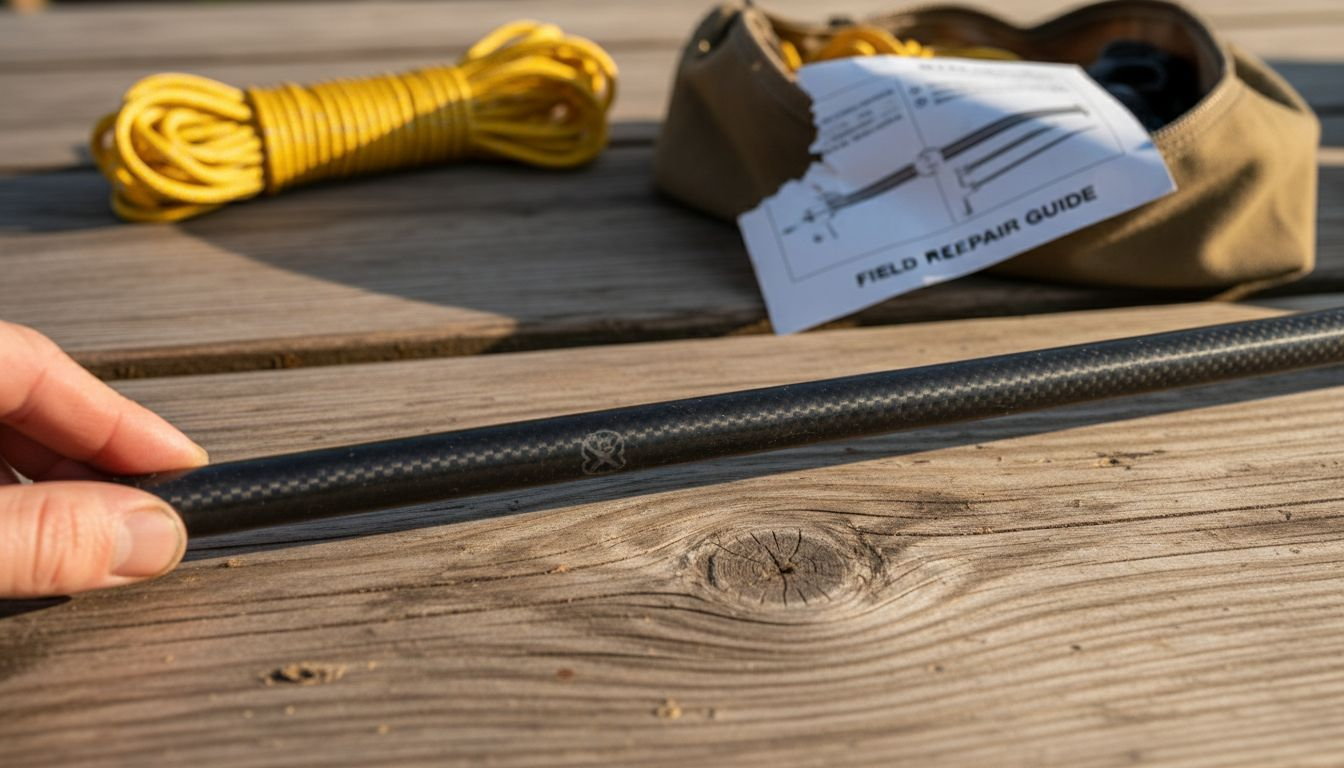
Pro tip: When selecting tent poles, always verify the compatibility between pole material and intended camping environment, considering factors like temperature range, expected wind conditions, and terrain type.
Comparing Aluminum, Fiberglass, and Carbon
Campers and outdoor enthusiasts face a critical decision when selecting tent pole materials, with each option presenting unique strengths and limitations. Understanding the characteristics of aluminum, fiberglass, and carbon poles enables more informed gear selection tailored to specific camping environments and performance requirements.
Aluminum poles have long been the industry standard, offering an excellent balance between durability, weight, and cost. These lightweight structural components demonstrate remarkable resilience across various environmental conditions. They typically feature superior strength-to-weight ratios, resist corrosion through anodization treatments, and provide predictable performance. Aluminum’s primary advantages include affordability, widespread availability, and consistent mechanical properties that make them suitable for most camping scenarios.
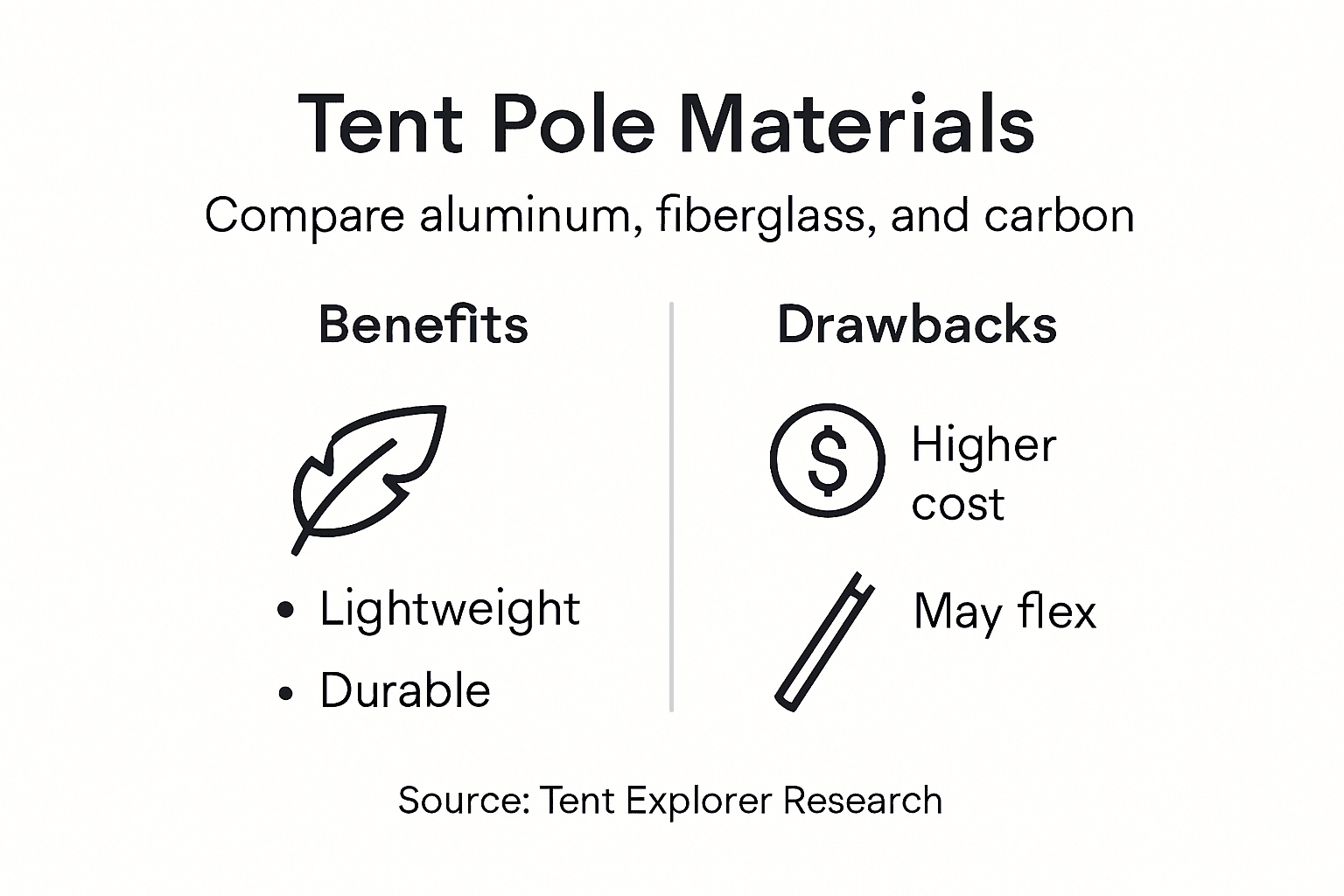
Fiberglass poles represent a more economical alternative, characterized by their flexibility and lower manufacturing costs. While heavier than aluminum or carbon fiber, fiberglass offers excellent vibration dampening and can withstand significant bending without catastrophic failure. These poles are particularly useful in recreational camping settings where extreme weight savings are not paramount. Carbon fiber, by contrast, represents the pinnacle of pole technology. Advanced composite engineering enables carbon fiber poles to deliver unprecedented strength with minimal weight penalty. Mountaineering and ultralight backpacking enthusiasts particularly appreciate carbon fiber’s exceptional performance characteristics, though the premium pricing can be a significant deterrent for casual campers.
Pro tip: Always inspect your tent poles before each camping trip, checking for any structural weakness, bends, or microfractures that could compromise their reliability in critical outdoor conditions.
Here is a practical comparison of key tent pole materials and their ideal uses:
| Material | Best For | Not Ideal For |
|---|---|---|
| Aluminum | All-purpose, variable climates | Extreme ultralight packs |
| Carbon Fiber | Ultralight, alpine adventures | Rocky, high-abuse terrain |
| Fiberglass | Budget car camping, festival setups | Harsh or windy conditions |
Durability, Weight, and Performance Factors
Tent pole performance is a complex interplay of material science, environmental resistance, and engineering precision. Campers must carefully evaluate multiple factors beyond simple weight and strength, considering how different materials respond to varying outdoor conditions and long-term usage challenges.
Material durability stands as a critical consideration in tent pole selection. Long-term performance characteristics demonstrate that environmental exposure significantly impacts pole integrity. Moisture absorption, temperature fluctuations, and UV radiation can progressively degrade material properties, potentially compromising structural reliability. Carbon fiber and advanced composites typically demonstrate superior resistance to environmental degradation compared to traditional materials, with specialized resin matrices helping maintain mechanical properties over extended periods.
Weight considerations remain paramount for backpackers and minimalist campers. Carbon fiber poles represent the pinnacle of lightweight engineering, offering exceptional strength-to-weight ratios that dramatically reduce pack weight without sacrificing structural integrity. Aluminum poles provide a balanced alternative, delivering robust performance at a more affordable price point. Fiberglass remains the heaviest option but offers unique flexibility that can be advantageous in certain camping scenarios, particularly where extreme bend resistance matters more than minimal weight.
Pro tip: Store your tent poles in a cool, dry environment and periodically inspect them for microscopic damage to extend their functional lifespan and prevent unexpected failures during critical outdoor adventures.
Cost, Maintenance, and Practical Impacts
Budget-conscious campers must carefully evaluate the total cost of ownership for tent poles, considering not just initial purchase price but long-term maintenance expenses and potential replacement requirements. Each material presents a unique economic profile that extends far beyond its initial sticker price.
Cost estimation strategies reveal that carbon fiber poles represent the most significant upfront investment, typically ranging 3-5 times more expensive than aluminum alternatives. However, their superior durability can offset initial expenses through reduced replacement frequency. Aluminum poles strike an optimal balance between affordability and performance, making them the most popular choice for recreational campers. Fiberglass remains the most economical option, though its lower initial cost is often counterbalanced by more frequent replacements and potential performance limitations.
Maintenance requirements vary dramatically across different pole materials. Aluminum poles demand periodic inspection for oxidation and potential structural fatigue, while carbon fiber requires more nuanced care to prevent microscopic matrix degradation. Inspection and maintenance protocols emphasize the importance of regular visual checks, paying close attention to connection points, potential stress fractures, and environmental wear. Proper storage, careful handling, and proactive maintenance can significantly extend the functional lifespan of any tent pole material, ultimately providing better long-term value for outdoor enthusiasts.
Pro tip: Create a simple maintenance log for your tent poles, tracking each use, storage condition, and any visible wear to anticipate potential replacement needs before critical failures occur.
Below is a summary of critical maintenance requirements for each tent pole material:
| Material | Key Checkpoints | Typical Issues to Monitor |
|---|---|---|
| Aluminum | Joints, for corrosion | Oxidation, fatigue cracks |
| Carbon Fiber | Matrix, for surface flaws | Microfractures, resin breakdown |
| Fiberglass | Ends, for splintering | Fraying, excessive bending |
Mistakes Campers Make Choosing Poles
Campers often underestimate the complexity of selecting the right tent poles, making critical errors that can compromise their outdoor experience. Understanding these common pitfalls is essential for making informed gear choices that ensure comfort, safety, and reliability during camping adventures.
One of the most prevalent mistakes is neglecting environmental compatibility considerations. Campers frequently select poles without thoroughly evaluating their intended camping environment, which can lead to catastrophic failures. Terrain specificity matters dramatically – poles that perform excellently in moderate mountain conditions might catastrophically fail in extreme alpine environments or desert heat. Lightweight carbon fiber poles might be perfect for ultralight backpacking but could prove disastrously fragile in rocky, high-impact terrain where aluminum’s durability becomes paramount.
Another significant error involves misunderstanding load distribution and structural requirements. Many campers choose poles based solely on weight or cost, overlooking critical factors like wind resistance, bend radius, and connection point strength. Different camping scenarios demand different pole characteristics: four-season mountaineering tents require substantially more robust pole construction compared to summer festival or car camping setups. Ultralight backpackers might prioritize minimal weight, while family campers need poles that can withstand repeated setup and significant structural stress.
Pro tip: Always test-fit your tent poles before a major trip, checking for smooth assembly, proper tension, and any signs of potential structural weakness that could compromise your shelter’s integrity.
Choose the Right Tent Poles for Your Next Adventure
Selecting the perfect tent pole material is essential to ensure your camping shelter withstands the elements while matching your personal camping style. This article highlights key challenges such as balancing durability with lightweight performance and understanding the specific strengths of aluminum, carbon fiber, and fiberglass poles. Whether you are worried about corrosion, weight, or environmental compatibility these factors can impact your outdoor experience and safety.
At Tent Explorer we provide practical advice tailored to help you make confident decisions. Explore our Tent Accessories section to find gear that complements different pole materials and setups. If you want to extend the life of your poles and avoid unexpected failures check out expert tips in our Tent Troubleshooting And Maintenance category. Ready to find your ideal shelter? Start with a clear buying strategy at Buying A Tent for guidance on matching poles with tent designs.
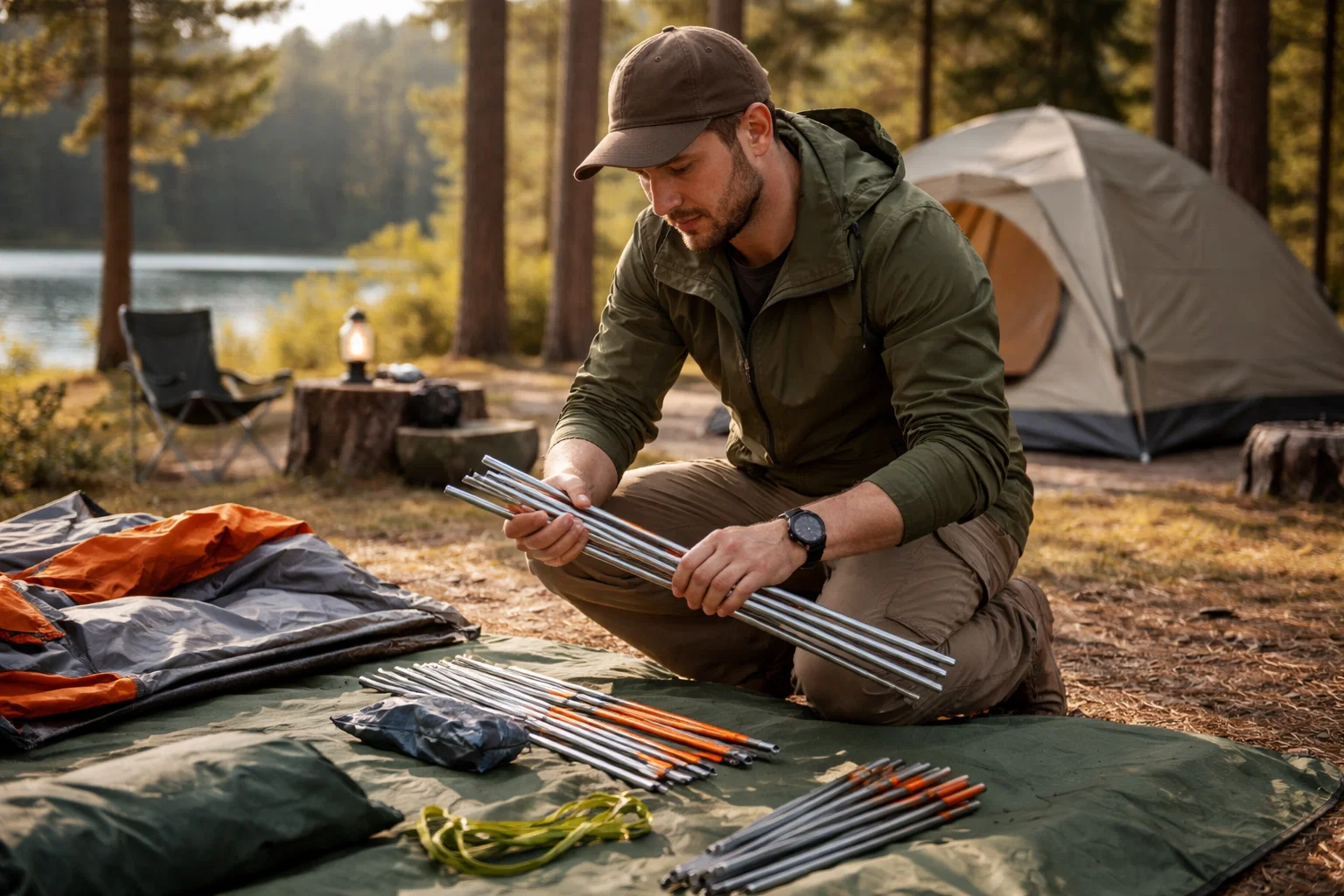
Don’t let improper tent poles ruin your outdoor adventures act now to explore comprehensive insights and product recommendations at Tent Explorer Equip yourself with the right knowledge and gear today for safer and more enjoyable camping trips.
Frequently Asked Questions
What materials are commonly used for tent poles?
Tent poles are primarily made from aluminum, fiberglass, and carbon fiber, each offering unique advantages in terms of weight, durability, and cost.
How do aluminum tent poles compare to fiberglass and carbon fiber poles?
Aluminum poles are known for their strength, durability, and cost-effectiveness, making them suitable for various camping scenarios. Fiberglass poles are heavier but more flexible, ideal for recreational camping. Carbon fiber poles offer the lightest option with exceptional strength, suitable for ultralight backpacking and mountaineering.
What are the key factors to consider when choosing tent pole materials?
When selecting tent pole materials, consider durability under environmental conditions, weight for portability, and cost. Terrain type and expected weather impacts, including wind and temperature, should also influence your choice.
How can I maintain my tent poles for longevity?
To maintain tent poles, periodically inspect them for damage, store them in a cool and dry place, and be vigilant about any signs of corrosion or structural weaknesses. Keeping a maintenance log can help track usage and condition over time.