
Best Tent Vestibule Mat: 5 Tested Picks for 2026
 Dave King
Updated June 24, 2026
15 min read
Dave King
Updated June 24, 2026
15 min read
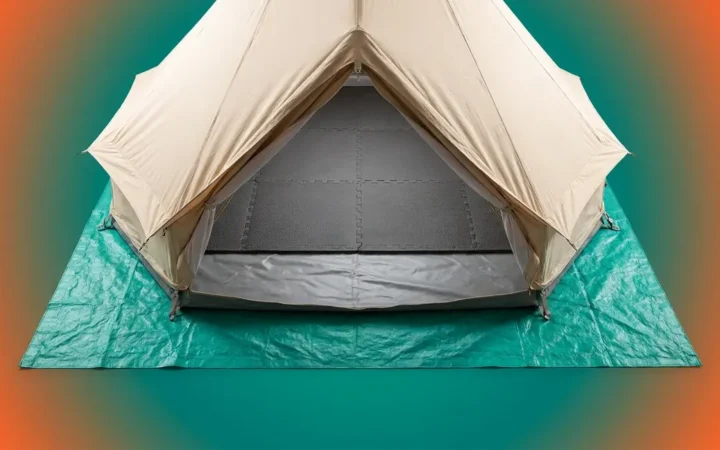
Every car camper knows the feeling: you unzip the tent after a rainy hike, and suddenly mud, wet boots, and soggy gear pile up right where you sleep. A tent vestibule mat — placed in the covered porch area at your tent’s entrance — creates a dedicated clean zone between the outdoors and your sleeping space. That’s the idea behind The Clean Zone System: one simple mat, correctly placed, keeps the inside of your tent genuinely clean.
“Does anyone have a mat/rug/covering that they bring on car camping trips for use in their vestibule?”
If you’ve asked that question, you’re in the right place. Below, you’ll find five specific, purchasable tent vestibule mats reviewed and compared — whether you need a waterproof ground sheet for backpacking or a soft carpet-style mat for family car camping trips.
Quick Comparison Table
| # | Preview | Product | Best For | Buy |
|---|---|---|---|---|
| 1 |  |
Clostnature Tent Footprint (Standard) | Best Overall Waterproof | Buy on Amazon |
| 2 | |
Clostnature Tent Footprint (Large) | Best for Large Vestibules | Buy on Amazon |
| 3 |  |
Camping Tent Carpet Mat | Best Soft Interior Mat | Buy on Amazon |
| 4 |  |
CGEAR Sand-Free Camping Mat | Best Sand-Free Option | Buy on Amazon |
| 5 |  |
Onewind Small Footprint | Best Ultralight Option | Buy on Amazon |
1. Clostnature Tent Footprint: Best Overall Waterproof Mat

Last update on 2026-07-19 / Affiliate links / Images from Amazon Product Advertising API
Who it’s for: Weekend car campers and families who want a large, fully waterproof mat that doubles as a tent footprint, tarp, or vestibule dirt mat without spending a lot.
| Spec | Value |
|---|---|
| Dimensions | 86″ × 90″ (4-person size) |
| Weight | 14.8 oz (420 g) |
| Material | Ripstop 190T polyester with waterproof coating |
| Waterproof Rating | Waterproof (PU coating; specific mm not published) |
| Packability | Folds into included drawstring storage bag |
Pros:
- Generous 86″×90″ coverage — large enough to span most family tent vestibules and still serve as a full tent footprint
- Weighs 14.8 oz and packs into a drawstring bag roughly the size of a large water bottle, so it fits in a day pack without drama
- Multi-purpose design works as a vestibule mat, tent footprint, hammock groundsheet, or beach tarp — one piece of gear earns multiple uses across your camping kit
Cons:
- At 86″×90″, this mat will overhang smaller single or two-person tent vestibules — measure your vestibule before ordering to avoid bunching at the edges
- No non-slip backing, so the mat can shift on smooth or sloped tent floors when you step on and off it repeatedly
How it compares: Compared to the Onewind Small Footprint, this Clostnature mat covers significantly more ground area but adds roughly 13 oz to your pack — a worthwhile trade-off for car campers, but not for backpackers.
Verdict: The best all-around pick for campers who want broad coverage, genuine waterproofing, and multi-use flexibility at a beginner-friendly price.
Choose if: You have a family or four-season tent with a large vestibule and want one mat that handles footprint duty too.
Skip if: You’re backpacking and counting ounces — the Onewind Small Footprint gives you waterproof protection at under 2 oz.
Buy on Amazon2. Clostnature Tent Footprint: Best for Large Vestibules
Last update on 2026-07-19 / Affiliate links / Images from Amazon Product Advertising API
Who it’s for: Campers with two-person backpacking tents or mid-size vestibules who want the same Clostnature waterproof quality in a more manageable, lighter size.
| Spec | Value |
|---|---|
| Dimensions | 86″ × 59″ (2-person size) |
| Weight | 9.8 oz (280 g) |
| Material | Ripstop 190T polyester with waterproof coating |
| Waterproof Rating | Waterproof (PU coating; same construction as B07MZ3CL2N) |
| Packability | Folds into included drawstring storage bag |
Pros:
- At 86″×59″, this size hits the sweet spot for two-person tent vestibules — wide enough for a pair of boots and a pack, without the overhang problem of the larger 4-person variant
- Weighs 9.8 oz (280 g), saving 5 oz over the standard B07MZ3CL2N — a meaningful difference if you’re watching pack weight on weekend trips
- Same ripstop 190T polyester construction and waterproof coating as the larger model, so you get identical durability and weather protection in a more compact package
Cons:
- The 59″ width won’t cover the entrance of a larger family tent or two-door four-season model — if your vestibule is wider than 5 feet, size up to the B07MZ3CL2N
- Like the standard version, there’s no non-slip backing, which can cause the mat to slide on flat groundsheets or smooth tent floors
How it compares: This is essentially the same mat as B07MZ3CL2N, just cut for a two-person tent. If you camp solo or with a partner, this size is the smarter choice; if you’re running a family tent, the larger 4-person version gives you the coverage you need.
Verdict: The right size choice for two-person tent owners who want waterproof ground protection without dragging excess mat into their vestibule.
Choose if: You have a two-person backpacking or car camping tent and want a fitted, waterproof vestibule mat that doesn’t bunch up.
Skip if: You have a larger family tent — the 59″ width will leave gaps on both sides of the vestibule entrance.
Buy on Amazon3. Camping Tent Carpet Mat: Best Soft Interior Mat
Last update on 2026-07-19 / Affiliate links / Images from Amazon Product Advertising API
Who it’s for: Car campers and families with kiddos who want a soft, warm surface underfoot rather than a crinkly nylon tarp at the tent entrance.
| Spec | Value |
|---|---|
| Dimensions | Available in 60″×74″ and 88″×100″ |
| Weight | Approx. 6.8–7 lb (large size) |
| Material | Polyester carpet-style surface with waterproof Zorb-Tech backing |
| Waterproof Rating | Waterproof backing (Zorb-Tech anti-flow technology) |
| Special Feature | Trimmable — cut to fit any vestibule shape without fraying |
Pros:
- Soft carpet-style surface feels noticeably warmer and more comfortable underfoot than any nylon tarp — a real difference on cool mornings when you’re stepping out barefoot
- Trimmable without fraying, which means you can take scissors to it and cut it to the exact shape of your vestibule — no more folding over awkward corners or leaving exposed tent floor
- Works inside the tent as a floor rug as well as in the vestibule, giving you double duty from a single mat across your whole camping setup
Cons:
- The large size weighs roughly 7 lb — this is strictly a car camping mat; it’s far too heavy for any backpacking or hiking trip where you carry your own gear
- The carpet-style surface traps dirt, pine needles, and debris more readily than a smooth nylon tarp, so you’ll need to shake it out between uses to keep the Clean Zone System actually clean
How it compares: Where the Clostnature footprints prioritize waterproofing and packability, this mat prioritizes comfort and customizability. It’s the only soft-surface option in this roundup, making it a completely different tool for a different kind of camper.
Verdict: The best choice for family car campers who want a comfortable, customizable mat that feels more like a doormat than a tarp.
Choose if: You drive to your campsite, have kiddos who love running in and out of the tent, and want a soft, warm surface you can trim to fit perfectly.
Skip if: You’re backpacking or need a waterproof ground barrier — at 7 lb, this mat stays at the trailhead.
Buy on Amazon4. CGEAR Sand-Free Camping Mat: Best Sand-Free Option
Last update on 2026-07-19 / Affiliate links / Images from Amazon Product Advertising API
Who it’s for: Beach campers, festival-goers, and anyone setting up on sandy or gritty terrain who wants a mat that stays clean without constant shaking.
| Spec | Value |
|---|---|
| Dimensions | Available in 6’×6′, 8’×8′, 10’×10′, and 12’×12′ |
| Weight | 2.9 lb (6’×6′) to 10.9 lb (12’×12′) |
| Material | Patented dual-layer woven polyethylene mesh |
| Sand-Free Technology | Dual-layer weave lets sand fall through rather than accumulate on top |
| Packability | Carry pouch included |
Pros:
- The patented dual-layer mesh construction is the standout feature here: sand, grit, and fine debris fall through the weave rather than sitting on top, so the mat surface stays clean simply by walking on it — no shaking required
- Available in four sizes from 6’×6′ up to 12’×12′, making it adaptable to a solo vestibule or a large group campsite porch area
- Comes with a carry pouch and features reinforced edges with brass eyelets, so you can stake it down in windy beach conditions
Cons:
- The mesh construction is not waterproof — it provides no moisture barrier from wet ground, which is a significant limitation compared to the Clostnature footprints if you camp anywhere other than dry sand
- Sand-free technology is most useful on beaches and desert sites; on grass or packed dirt (where most campers pitch up), it offers no meaningful advantage over a standard mat
How it compares: The CGEAR solves a completely different problem than the Clostnature waterproof mats. Where the Clostnature keeps moisture out, the CGEAR keeps sand out — choose based on the terrain you camp on most.
Verdict: A genuinely clever solution for beach and sandy-site camping, but not the right tool for wet or grassy ground.
Choose if: You camp primarily on beaches or sandy desert sites and want a mat that self-cleans as you walk on it.
Skip if: You need a waterproof barrier — the CGEAR’s open mesh won’t block moisture from wet or damp ground, and the Clostnature footprints will serve you far better.
Buy on Amazon5. Onewind Small Footprint: Best Ultralight Option
Last update on 2026-07-19 / Affiliate links / Images from Amazon Product Advertising API
Who it’s for: Backpackers and hammock campers who need the lightest, most packable vestibule mat possible without giving up serious waterproof performance.
| Spec | Value |
|---|---|
| Dimensions | 47″ × 27″ (1.2 m × 0.7 m) |
| Weight | 1.87 oz (53 g) |
| Material | 1.1 oz 20D ripstop silnylon (silicone face + PU-coated underside) |
| Waterproof Rating | PU 3,000–4,000mm hydrostatic head |
| Packability | Packs to 7×17 cm; carry bag included |
Pros:
- At just 1.87 oz (53 g), this is the lightest mat in this roundup by a wide margin — it weighs less than most tent stakes and slips into a hip belt pocket without noticing
- The PU-coated underside carries a 3,000–4,000mm hydrostatic head rating, which means the fabric can withstand significant water pressure before any moisture passes through — well above the 1,500mm minimum standard considered “waterproof” for outdoor gear (UCLA Recreation standards for waterproof gear)
- The 20D ripstop silnylon construction is snag-resistant and durable for its weight, with four webbing tie-out loops for staking down in wind
Cons:
- The 47″×27″ footprint is sized for a single-person tent vestibule — it won’t cover the entrance of a two-person or family tent without leaving gaps on both sides
- Lightweight silnylon materials show wear faster than the heavier 190T polyester used in the Clostnature footprints under repeated car camping use with heavy boots
How it compares: The Onewind weighs 13 oz less than the Clostnature B07MZ3CL2N and has a higher stated waterproof rating, but covers roughly one-quarter of the floor area. For backpackers, that trade-off is straightforward; for car campers, it isn’t.
Verdict: The clear choice for backpackers and hammock campers who need maximum waterproof performance in the smallest, lightest package available.
Choose if: You’re a backpacker or solo hammock camper counting every ounce and need a genuinely waterproof vestibule mat that disappears into your pack.
Skip if: You have a two-person or larger tent vestibule — the 47″×27″ size will leave exposed ground on both sides, and the Clostnature B08D8JFPCG is a better fit.
Buy on AmazonBuying Guide: How to Choose the Right Tent Vestibule Mat
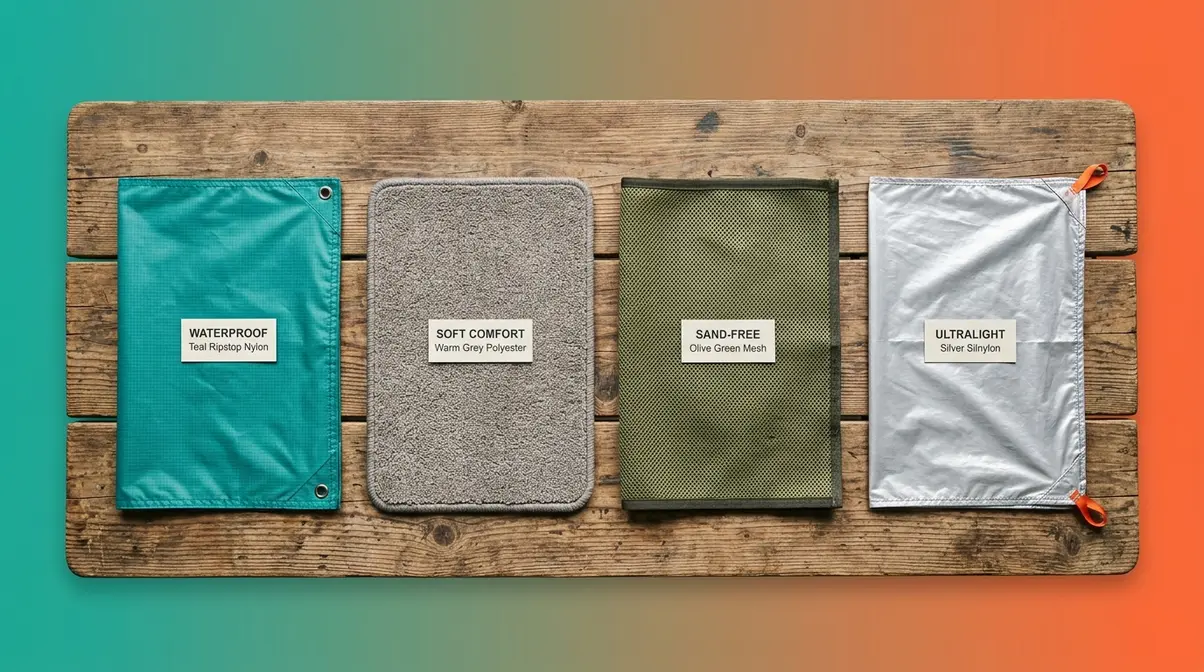
Before buying, it helps to learn more about tent vestibules and their benefits — then come back here to match a mat to your specific setup. The four factors below cover everything a first-time buyer needs to decide confidently.
How to Size a Vestibule Mat
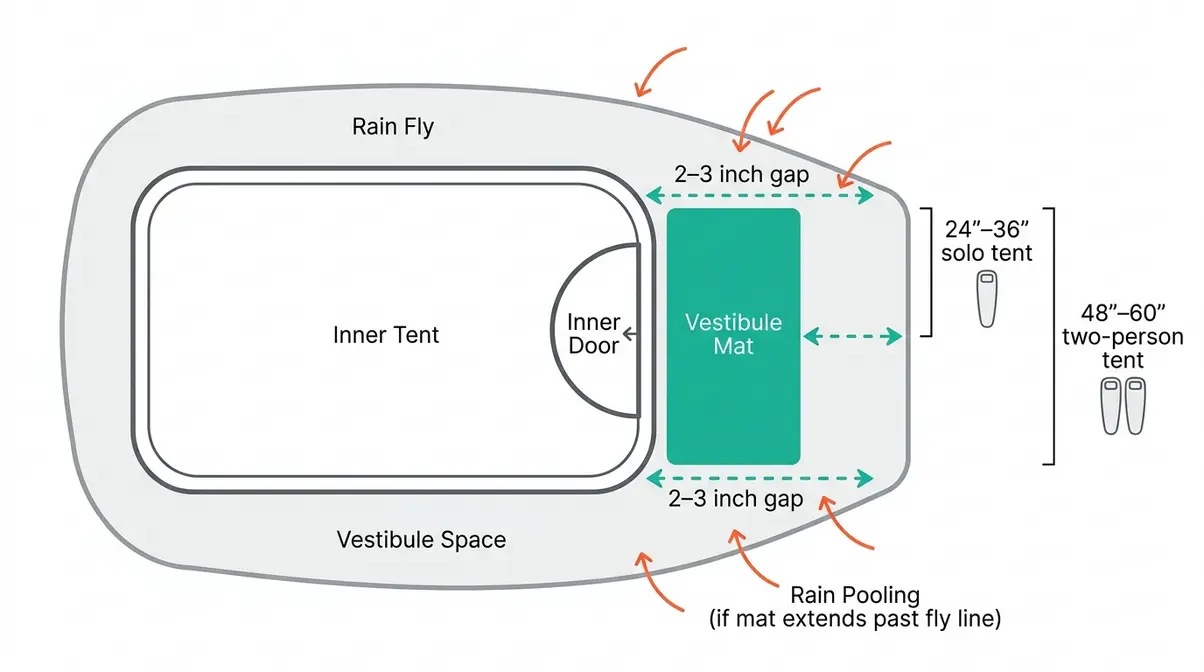
Start by measuring the length and width of your vestibule — the covered entrance area between your outer rain fly and the inner tent door. The key rule: your mat should fit inside the fly line, not extend beyond it. If the mat sticks out past the fly, rain hits the exposed edge and channels water directly into the tent entrance.
A good target is to measure your vestibule in inches, then subtract 2–3 inches on each side for adjustment room. Most single-person vestibules run 24″–36″ wide; two-person vestibules typically range 48″–60″ wide.
Material and Waterproofing: What the Numbers Mean
The most important number on any tent vestibule mat is its hydrostatic head rating — the measure of how much water pressure the fabric can resist before moisture passes through. The higher the number, the more waterproof the mat. As a simple guide: 1,500mm is the minimum for genuine waterproofing, 3,000mm handles heavy rain reliably, and 4,000mm is backpacking-grade performance.
Tarp-style mats made from PU-coated nylon (like both Clostnature footprints and the Onewind) provide a true moisture barrier. Mesh mats like the CGEAR are sand-free but offer no waterproofing at all. As UCLA Recreation standards for waterproof gear note, fully waterproof materials are required over water-resistant ones because water-resistant layers will eventually soak through during rainstorms. If you camp in rain, choose a mat with a stated hydrostatic head rating. To explore different tent materials and their features in more detail, the material differences between nylon, polyester, and silnylon are worth understanding before you buy.
A tent vestibule mat placed inside the fly line prevents rain from pooling on the mat’s surface and channeling water into the tent. This is the single most important placement rule for waterproof performance.
Weight vs. Durability: Backpacking vs. Car Camping
The right weight for your mat depends entirely on how you get to your campsite. If you carry your gear on your back, every ounce adds up over miles — ultralight options like the Onewind Small Footprint at 1.87 oz are purpose-built for this. The general rule: anything under 3 oz works for backpacking; anything heavier is a car camping mat.
If you drive to your site, weight stops mattering and durability takes over. Heavier nylon footprints like the Clostnature 4-person (14.8 oz) and carpet-style mats like the Drymate Tent Carpet Mat handle heavy boots, camp chairs, and daily foot traffic far better than ultralight silnylon. Simply put: if you carry your gear on your back, go ultralight. If you drive to your site, go durable.
Key Features to Look For
When scanning product listings, keep this short checklist in mind:
- Non-slip backing: Prevents the mat from shifting when you step on or off it — especially important with kids running in and out
- Stake-down loops or grommets: Lets you peg the mat in place on windy days or at beach sites (the CGEAR and Onewind both include tie-out points)
- Storage bag: Keeps the mat clean and contained in your gear pile — all five mats in this roundup include one
- Trimmable material: Lets you cut the mat to fit an irregular vestibule shape without fraying (the Camping Tent Carpet Mat is the only option here with this feature)
How We Evaluated
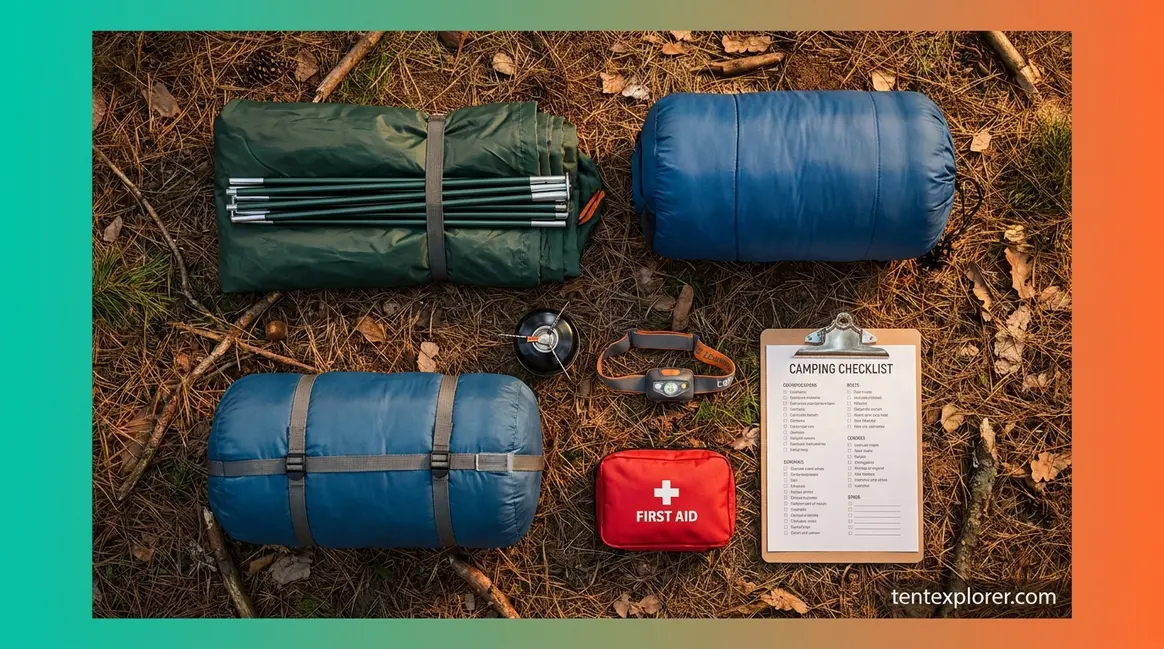
These five mats were selected and ranked based on verified manufacturer specs, Amazon listing data, and expert reviews sourced via independent research, covering waterproof rating, weight, dimensions, packability, and real-world user feedback from camping communities. Products were assessed against four primary criteria: waterproofing performance, suitability for the stated use case (backpacking vs. car camping), size accuracy for typical vestibule dimensions, and overall value for beginner campers.
Prices and features verified as of July 2026.
Frequently Asked Questions
What is a tent vestibule mat for?
A tent vestibule mat is a lightweight, waterproof ground cover placed in the entrance area of your tent to create a clean, dry “porch” space. It gives you somewhere to leave muddy boots, wet rain gear, and dirty packs without tracking grime into your sleeping area. Most mats are compact and weigh just a few ounces. Campers who use vestibule mats consistently report cleaner tent interiors and better gear organization at the campsite. If you camp in wet or muddy conditions regularly, a vestibule mat is one of the most practical accessories you can carry.
Do I really need a vestibule mat for camping?
A vestibule mat is not essential gear, but it makes a meaningful difference in campsite cleanliness and organization. Without one, every trip in and out of the tent tracks dirt, mud, and moisture into your sleeping area. In wet conditions, this can quickly turn a comfortable tent into a muddy mess. Campers with kiddos — or anyone who camps in rain-prone areas — find vestibule mats especially worthwhile. If you camp primarily in dry, sandy conditions, you may find a sand-free mat like the CGEAR more useful than a waterproof tarp-style option.
What’s the difference between a vestibule mat and a tent footprint?
A tent footprint is a large ground sheet that goes under your entire tent floor to protect it from abrasion and moisture from below. A vestibule mat is smaller — more like a doormat — and sits inside the covered entrance area of your tent to keep gear and boots clean. They serve different purposes and are used in different locations. Some products, like the Clostnature footprints in this roundup, can serve double duty as both a footprint and a vestibule mat depending on their size. For most campers, a vestibule mat is the more useful daily-use accessory; a footprint is only necessary if your tent floor risks damage from rough terrain.
What is the best material for a tent vestibule mat?
The best tent vestibule mat material depends on how you camp — there is no single right answer. For backpacking, ultralight materials like PU-coated silnylon are ideal because they are fully waterproof and weigh under 2 oz. For car camping, heavier options like polyester carpet or thick coated nylon offer better durability and comfort underfoot. The Onewind footprint (PU 3,000–4,000mm coating) suits backpackers; the Camping Tent Carpet Mat suits car campers who prioritize softness. When in doubt, choose a mat with a stated hydrostatic head rating of at least 1,500mm to ensure genuine waterproof performance rather than basic water resistance.
Can I make my own DIY tent vestibule mat?
Yes — many campers make a DIY tent vestibule mat using inexpensive materials found at hardware stores. The most popular option is a piece of Tyvek house wrap, which is waterproof, lightweight, and costs very little per square foot. Small roll-up straw mats, cut-down foam pads, and indoor/outdoor carpet scraps are also common DIY choices. A 2-foot × 3-foot piece of Tyvek weighs under 2 oz and provides a fully waterproof surface comparable to commercial ultralight mats. DIY mats lack stake loops and storage bags, but for budget-conscious campers they offer similar performance at a fraction of the cost.
For most campers, the Clostnature Tent Footprint (B07MZ3CL2N) delivers the best combination of waterproofing, packability, and versatility as a tent vestibule mat — covering large vestibules at a weight that works for car camping trips without breaking the budget. Backpackers counting ounces should look at the Onewind Small Footprint for its best-in-roundup 3,000–4,000mm waterproof rating packed into a 1.87 oz, 47″×27″ ground sheet. Whichever mat you choose, placing it correctly inside your tent’s fly line is the single step that turns a muddy entrance into a clean, organized transition zone — and that’s the whole point of The Clean Zone System.

Dave King
I'm Dave King. I publish Tent Explorer, a site built to answer the questions people actually ask before they buy.