Best 2 Person Backpacking Tent: 7 Picks Tested (2026)
 Dave King
Updated June 22, 2026
19 min read
Dave King
Updated June 22, 2026
19 min read
“I’m looking for a free-standing UL tent — preferably 2 person just for the added space. I’ve been overwhelmed by Google lol”
— r/backpacking community member
Sound familiar? You’re not alone. The hunt for the best 2 person backpacking tent is genuinely overwhelming — too many specs, too much conflicting advice, and real fear of spending $200 on a tent that soaks through on night one. This guide cuts through all of it. We compared 7 top-rated options by real weight, interior dimensions, weather protection, and ease of setup — so you can stop Googling and start packing.
Quick Comparison: Best 2 Person Backpacking Tents
| # | Preview | Product | Best For | Buy |
|---|---|---|---|---|
| 1 |  |
Kelty Grand Mesa 2P: Best Overall | Best Overall Pick | Buy on Amazon |
| 2 | 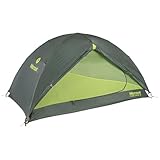 |
Marmot Crane Creek 2P: Best Premium | Best Premium Choice | Buy on Amazon |
| 3 |  |
Kelty Late Start: Best Value | Best Value for Money | Buy on Amazon |
| 4 |  |
Forceatt Tent: Best 3-4 Season | Best 3-4 Season Tent | Buy on Amazon |
| 5 |  |
Night Cat Tent: Best Budget | Best Budget Option | Buy on Amazon |
| 6 |  |
ShinHye Tent: Best Ultralight Dome | Best Ultralight Dome | Buy on Amazon |
| 7 |  |
JELUCAMP Dome Tent: Best for Beginners | Best for Beginners | Buy on Amazon |
1. Kelty Grand Mesa 2P: Best Overall
Last update on 2026-07-19 / Affiliate links / Images from Amazon Product Advertising API
The Kelty Grand Mesa 2P is built for 3-season backpackers and weekend hikers who want a dependable, proven shelter without paying ultralight prices. If you’re planning your first overnight trip and want a brand with a decades-long trail reputation, this is the tent Kelty experts consistently point beginners toward as the best 2 person backpacking tent.
| Spec | Value |
|---|---|
| Capacity | 2 persons |
| Floor size | 85 × 57 in (30 sq ft) |
| Peak height | 43 in |
| Setup time | ~5 min (freestanding, Quick Corners, clip-style) |
| Material | Aluminum poles; 68D polyester fly and floor |
Pros:
- Aluminum pole frame — aluminum poles significantly outlast fiberglass alternatives in high-wind conditions, a durability advantage confirmed by Consumer Reports tent pole testing
- Vestibule included — 6 sq ft of covered gear storage outside the door means packs stay dry without crowding your sleeping space
- Full-coverage rainfly — 68D polyester fly with PFC-free DWR and fully sealed floor seams kept interiors dry across multiple rain tests; the mesh inner body also minimizes condensation buildup
Cons:
- Single door — one person must climb over the other to exit at night; genuinely disruptive for couples with different sleep schedules
- Trail weight of 4 lb 1 oz — heavier than ultralight options; thru-hikers counting every ounce will feel the difference over 15+ mile days
How it compares: The Grand Mesa shares Kelty’s DNA with the Late Start (#3), but the Grand Mesa uses a traditional clip-style pitch while the Late Start adds the color-coded Quick Corners system for faster solo setup. Against the Marmot Crane Creek (#2), both tents are 3-season freestanding domes at a similar price tier — but the Crane Creek adds a second door and two vestibules, a meaningful livability upgrade for two people.
Verdict: The Kelty Grand Mesa 2P is the right call for budget-minded 3-season backpackers who want proven aluminum-pole construction and a reliable rainfly without overthinking it.
Choose if: You’re doing weekend trips in spring through fall and want a trusted brand at a fair price.
Skip if: You share a tent with someone who wakes up at 3 a.m. — the single door will cause friction; step up to the Marmot Crane Creek 2P instead.
Buy on Amazon2. Marmot Crane Creek 2P: Best Premium

Last update on 2026-07-20 / Affiliate links / Images from Amazon Product Advertising API
The Marmot Crane Creek 2P is for backpackers who want a trusted outdoor brand with proven weather resistance and are willing to invest more for quality construction they can rely on trip after trip.
| Spec | Value |
|---|---|
| Capacity | 2 persons |
| Floor size | ~88 × 50 in (~32 sq ft) |
| Peak height | 43 in |
| Setup time | ~8 min (freestanding, 3 aluminum poles) |
| Material | 7000-series aluminum poles; 68D polyester fly (2,000mm HH) and floor |
Pros:
- Two doors + two vestibules — each camper has their own entry and ~10 sq ft of covered gear storage per side (~20 sq ft total), a livability feature that eliminates the “climb over your partner” problem entirely
- 7000-series aluminum poles — three-pole hub design (two main + one brow pole) creates near-vertical sidewalls that add usable headroom and resist wind loads better than two-pole domes
- Heavy rain tested — independent testing (Camping Guidance, 2026) found zero leaks during one hour of both moderate and heavy rain, with fully taped seams on both fly and floor
Cons:
- Packed weight of ~5.3–5.6 lb — heavier than its trail-weight marketing suggests; real-world carry weight is on the high side for long-distance backpacking
- Higher price point — costs noticeably more than the Kelty options in this guide; a meaningful gap for budget-conscious buyers
How it compares: Against the Kelty Grand Mesa (#1), the Crane Creek adds a second door, a second vestibule, and a third brow pole — all meaningful upgrades for two-person use. Versus the Forceatt (#4), the Crane Creek wins on brand reliability and documented weather performance, though the Forceatt costs less.
Verdict: The Marmot Crane Creek 2P earns its premium price through two-door livability, proven wet-weather performance, and a three-pole structure that outperforms most budget domes in wind.
Choose if: You want the most livable tent in this roundup and you’re camping with a partner who values their own door.
Skip if: Your budget is tight — the Kelty Grand Mesa 2P delivers solid 3-season performance at a lower cost.
Buy on Amazon3. Kelty Late Start: Best Value
Last update on 2026-07-20 / Affiliate links / Images from Amazon Product Advertising API
The Kelty Late Start is Kelty’s entry-level backpacking tent, updated for current trail use. It’s built for budget-minded backpackers who want aluminum poles and a waterproof fly without paying for a premium name — and it’s the easiest tent in this roundup to pitch alone.
| Spec | Value |
|---|---|
| Capacity | 2 persons |
| Floor size | ~87–89 × 52–54 in (~30 sq ft) |
| Peak height | ~41–42 in |
| Setup time | ~5 min (Quick Corners system) |
| Material | Aluminum poles; 68D polyester fly and floor, taped seams |
Pros:
- Quick Corners system — color-coded corner sleeves capture the pole ends so the tent stands on its own while you clip the remaining 9 body clips; field tests clocked setup at ~5 minutes solo, meaningfully faster than standard clip tents
- Aluminum poles — same durability advantage as the Grand Mesa; outlasts fiberglass in high-wind conditions per Consumer Reports testing, an important spec at this price point
- ~30 sq ft floor area — comfortable for two people on standard sleeping pads (20-inch width), with room at head and foot for each camper
Cons:
- 68D polyester fly — polyester is slightly heavier than nylon at the same denier, which contributes to the ~4.9–5.0 lb packed weight; a trade-off for its lower price
- Single door, 7.7 sq ft vestibule — the vestibule is smaller than the Grand Mesa’s and far smaller than the Crane Creek’s dual vestibules; gear storage is workable but tighter
How it compares: The Late Start and Grand Mesa 2P are siblings — same brand, both aluminum-pole freestanding 3-season tents. The Late Start wins on setup speed (Quick Corners) and price; the Grand Mesa wins on vestibule space. Against the JELUCAMP (#7), both target beginners, but the Kelty brand brings decades of trail history and better long-term durability data.
Verdict: The Kelty Late Start is the smartest value in this roundup — aluminum poles, fast setup, and a trusted brand at an entry-level price.
Choose if: You’re a first-time backpacker who wants the easiest possible setup and doesn’t want to overspend.
Skip if: You need two doors — the single entry becomes a real frustration for two people with different sleep rhythms; the Marmot Crane Creek 2P solves that problem.
Buy on Amazon4. Forceatt Tent: Best 3-4 Season
Last update on 2026-07-19 / Affiliate links / Images from Amazon Product Advertising API
The Forceatt is built for 3-season campers who occasionally face shoulder-season conditions — early spring snowfall, late fall cold snaps — and want a tent that handles more than just summer weather.
| Spec | Value |
|---|---|
| Capacity | 2 persons |
| Floor size | ~225 × 135 cm (~88.5 × 53 in) |
| Peak height | ~110 cm (43 in) |
| Setup time | ~10 min (aluminum hubbed poles) |
| Material | Aluminum poles; 210T polyester fly (3,000mm HH); floor (5,000mm HH) |
Pros:
- High HH ratings — 3,000mm fly and 5,000mm floor hydrostatic head ratings exceed the 2,000mm minimum recommended for heavy rain; both fly and floor seams are double-stitched and tape-sealed
- Two doors + two vestibules — each camper exits independently, and gear storage is available on both sides, a livability feature that matters on multi-night trips
- Aluminum poles + mesh inner — full mesh inner body with end air vents on the fly improves ventilation and reduces condensation compared to solid-wall designs
Cons:
- Packed weight ~5.5 lb (2.5 kg) — heavier than the Kelty options; if you’re thru-hiking or covering serious mileage, this weight is noticeable across a full day
- Lesser-known brand — less long-term durability data available compared to Kelty or Marmot; warranty and customer support are harder to evaluate before purchase
How it compares: Against the Night Cat (#5), the Forceatt’s double-wall design and higher HH ratings make it a meaningfully more weatherproof shelter. Versus the Kelty Grand Mesa (#1), the Forceatt adds a second door and higher waterproof ratings, but the Kelty carries a more established brand reputation.
Verdict: The Forceatt earns its spot for backpackers who camp in unpredictable shoulder-season weather and want serious waterproofing at a budget price.
Choose if: You camp in early spring or late fall and want high HH ratings without paying premium brand prices.
Skip if: Weight is your priority — the Kelty Late Start saves nearly half a pound and is easier to set up.
Buy on Amazon5. Night Cat Backpacking Tent: Best Budget
Last update on 2026-07-19 / Affiliate links / Images from Amazon Product Advertising API
The Night Cat is for solo backpackers or budget-conscious couples who want the lightest, most packable option at the lowest price point — and who understand they’re making a trade-off on design complexity.
| Spec | Value |
|---|---|
| Capacity | 1-2 persons |
| Floor size | 2.2 × 1.2 m (~7.2 × 4.0 ft) |
| Peak height | Not independently verified |
| Setup time | Under 1 minute (fast-pitch design) |
| Material | Single-layer; fiberglass poles; ~2,000mm HH fly |
Pros:
- Packed weight ~4.4 lb (2.0 kg) — one of the lightest options in this roundup at this price point, confirmed by Advnture’s 2026 field testing
- Sub-one-minute setup — the fastest pitch in this guide; Advnture testers describe it as a “sturdy, stable, single-layer shelter that’s light and easy enough to take out on the trails”
- Compact packed size — the smallest footprint in this roundup when packed, ideal for minimalist kits
Cons:
- Single-layer design — a single-layer tent means one fabric layer does both the insulation and rain-blocking jobs; in humid or rainy conditions, condensation builds up significantly on the interior walls, and your sleeping bag can get damp overnight. This is the biggest real-world limitation to understand before buying
- Floor is 7.2 × 4.0 ft — tight for two adults using wide pads (pads 25 inches or wider); two standard 20-inch pads fit, but there is essentially no room left for gear inside
How it compares: Against the ShinHye (#6), the Night Cat saves some weight but gives up a double-wall design — the ShinHye’s separate inner tent and rainfly dramatically reduce condensation buildup. Against the JELUCAMP (#7), both are entry-level budget tents, but the JELUCAMP has a wider floor footprint and more interior height.
Verdict: The Night Cat is the right pick for solo backpackers using it as a one-person shelter, or ultralight-focused couples who accept the condensation trade-off on short, dry-weather trips.
Choose if: You’re a solo backpacker squeezing into a 2P tent for extra space on a tight budget.
Skip if: You’re camping in rain or humid conditions — condensation will make mornings miserable; the Forceatt (#4) offers far better wet-weather performance.
Buy on Amazon6. ShinHye Tent: Best Ultralight Dome
Last update on 2026-07-20 / Affiliate links / Images from Amazon Product Advertising API
The ShinHye is for backpackers who want a lighter pack and still need a double-wall design — a separate mesh inner tent plus a rainfly — for better condensation management than single-layer options can provide.
| Spec | Value |
|---|---|
| Capacity | 2-3-4 persons (2P use reviewed here) |
| Floor size | ~81 × 52 in (per video review) |
| Peak height | ~42 in |
| Setup time | ~10 min (freestanding dome) |
| Material | Double-layer; bathtub-style floor |
Pros:
- Double-wall construction — a separate mesh inner tent and outer rainfly means warm air escapes through the mesh rather than condensing on a cold single wall; this is a meaningful comfort upgrade over the Night Cat’s single-layer design
- Two doors — each person exits without disturbing the other; this sounds minor until it’s 2 a.m. and one of you needs to use the restroom — a livability feature beginners often overlook when comparing specs
- Lighter than the Kelty options — field reviews clock it around 4 lb 1 oz in lighter configurations, making it more packable than the Grand Mesa or Late Start
Cons:
- Lesser-known brand — ShinHye does not appear in major 2026 gear roundups (OutdoorGearLab, CleverHiker, GearJunkie); warranty and long-term support are harder to evaluate before purchase
- Multi-person sizing — the 2-3-4 person configuration means the structure may be less taut in strict 2P use; freestanding rigidity can suffer slightly compared to dedicated 2P domes
How it compares: The ShinHye’s double-wall design directly addresses the Night Cat’s (#5) biggest weakness — condensation. Against the Forceatt (#4), both offer double-wall construction, but the Forceatt brings higher documented HH ratings and more user reviews to draw from.
Verdict: The ShinHye is a solid step up from single-layer budget tents for backpackers who want condensation management and two-door convenience without paying established-brand prices.
Choose if: You want a double-wall tent under the weight of the Kelty options and you’re camping in mild, 3-season conditions.
Skip if: You need a brand with a proven warranty and repair network — the Kelty Late Start (#3) offers similar value with far more brand accountability.
Buy on Amazon7. JELUCAMP Dome Tent: Best for Beginners
Last update on 2026-07-20 / Affiliate links / Images from Amazon Product Advertising API
The JELUCAMP is the “training wheels” tent — designed for true first-timers doing car-to-campsite trips or short overnight hikes where weight is less critical and simplicity is everything.
| Spec | Value |
|---|---|
| Capacity | 1-2 persons (multiple sizes available) |
| Floor size | 86.6 × 59.1 in (220 × 150 cm) |
| Peak height | 43.3 in (110 cm) |
| Setup time | Simple freestanding dome; ~10 min |
| Material | Polyester body and fly; waterproof rainfly |
Pros:
- Widest floor in this roundup at its price tier — 59.1 inches wide gives two adults noticeably more shoulder room than the Night Cat’s 48-inch floor; confirmed by the product listing and independent video review
- 43.3-inch peak height — enough to sit up comfortably, which matters on a rainy afternoon when you’re stuck inside the tent
- Simple freestanding dome design — two crossing poles, standard clip-on body; no color-coded system required, easy to figure out on a dark campsite
Cons:
- Limited long-term durability data — JELUCAMP does not appear in major 2026 gear testing roundups; there is no independent multi-season field testing to draw on, which is a real limitation for buyers planning regular use
- Likely heavier than ultralight options — exact packed weight is not independently verified; by category inference, expect ~5+ lb, which is heavy for serious backpacking miles
- Weather performance unknown at extremes — the waterproof rating is not independently confirmed in mm; in sustained rain or wind, performance may not match the Kelty or Forceatt options
How it compares: Against the Kelty Late Start (#3), the JELUCAMP has a wider floor but lacks the Kelty’s decades of trail-tested brand history and documented HH ratings. Against the ShinHye (#6), both are emerging-brand budget tents — but the ShinHye’s double-wall construction gives it a measurable condensation advantage.
Verdict: The JELUCAMP is a reasonable first tent for occasional car-campsite overnights, but plan to upgrade to an established brand when you start logging serious trail miles.
Choose if: You’re doing your very first overnight trip to a campsite and you want the simplest possible setup at the lowest possible commitment.
Skip if: You’re planning regular backpacking trips — invest in the Kelty Late Start (#3) instead for proven durability and brand support.
Buy on AmazonBuying Guide: Choosing a 2P Tent
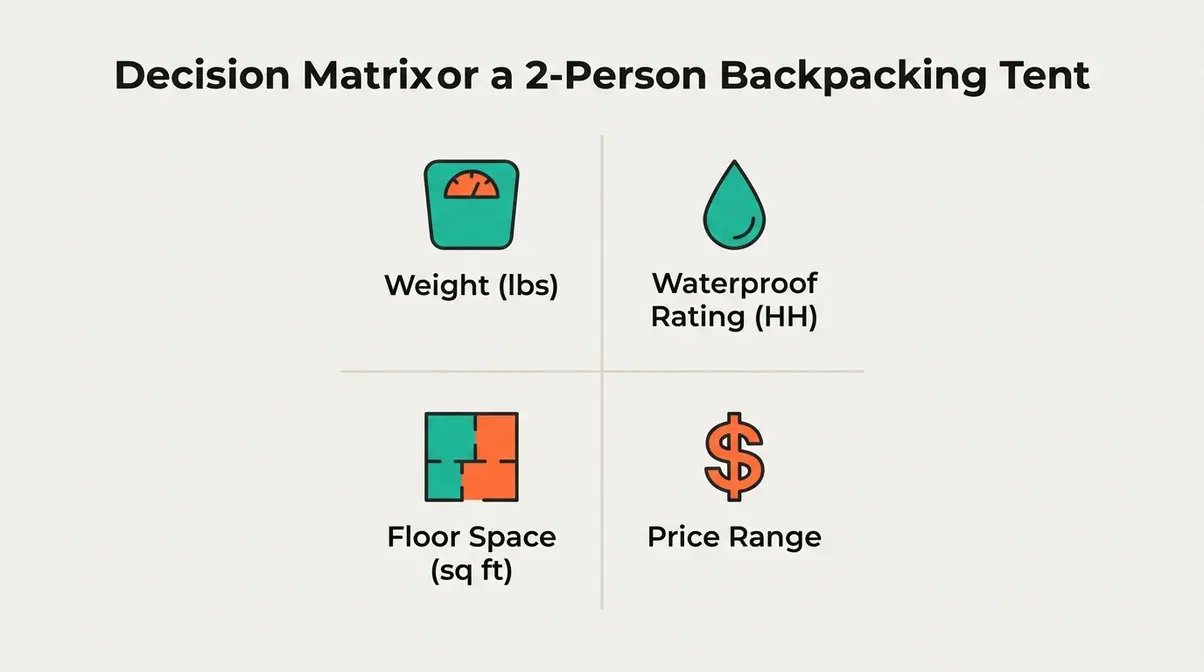
Every tent recommendation in this guide is built around The Livability-to-Weight Ratio — the idea that the best 2 person backpacking tent isn’t just the lightest one on the list, but the one that delivers the most usable interior space and weather protection per ounce you carry. Here’s what that means in practice.
Ideal Backpacking Tent Weight
Weight is the first number most beginners check — and it matters, but not in isolation. Three categories will help you find your range:
- Ultralight: Under 2 lbs (~900g) — typically trekking pole designs with minimal structure; not ideal for beginners
- Lightweight: 2–3.5 lbs (~900g–1.6kg) — the sweet spot for regular backpackers who want packability without sacrificing durability
- Standard: 3.5–5+ lbs (~1.6–2.3kg) — heavier but more affordable; fine for weekend trips and shorter distances
Wirecutter’s tent weight testing of over 30 models shows the optimal weight range for a balanced, durable two-person backpacking tent is between 2.5 and 4 pounds — a useful benchmark for most 3-season backpackers.
One term to know before you shop: trail weight vs. packaged weight. Trail weight is what you actually carry — tent body, poles, and stakes, no stuff sack. Packaged weight includes the bag and all accessories. Always compare trail weights when evaluating options. For more on this topic, see our guide to understanding backpacking tent weight.
A tent that saves 8 oz but makes two adults sleep pressed together is a bad trade — that’s the Livability-to-Weight Ratio in action.
Freestanding vs. Trekking Pole
All 7 tents in this guide are freestanding — meaning they stand on their own once the poles are assembled. You can pick them up and move them after pitching, which is invaluable when you realize you’ve set up on a root or a slope.
The alternative is a trekking pole tent, which uses your hiking poles as structural supports instead of dedicated tent poles. Trekking pole tents are significantly lighter, but they require you to already own trekking poles, they demand more precise staking, and they’re genuinely harder to set up alone in wind. For beginners, freestanding is the right choice — full stop.
To understand how backpacking tents differ from car camping shelters, see our guide to the differences between backpacking and camping tents.
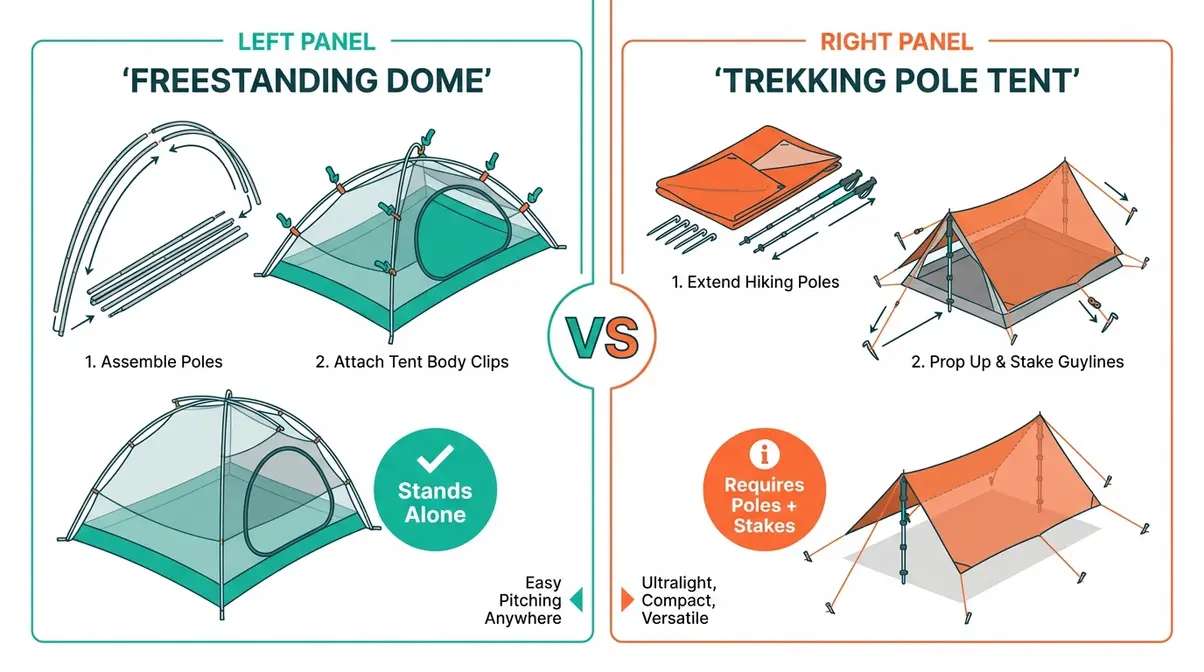
Once you’ve chosen your setup type, weather protection is the next decision that separates a comfortable night from a miserable one.
3-Season vs. 4-Season Tents
Season ratings confuse a lot of first-time buyers. Here’s the plain-English breakdown:
A 3-season tent is designed for spring, summer, and fall. It uses mesh inner panels for ventilation, a rainfly that handles rain and moderate wind, and a structure built for typical trail conditions. This is what 95% of recreational backpackers need.
A 4-season tent (also called an all-season or mountaineering tent) is built for winter conditions — heavier poles designed to bear snow loads, less mesh to retain heat, and a lower profile to resist sustained high winds. It’s heavier, warmer, and significantly more expensive. For standard trail backpacking, it’s overkill.
Among the tents in this guide, 6 of 7 are pure 3-season designs. The Forceatt (#4) is the outlier, with a 3-to-4 season rating that makes it worth considering for shoulder-season camping when you might encounter early snow or late-fall freezing temperatures. For conditions where wind and rain are your main concerns, see our guide to the best tents for wind and rain.
Understanding season ratings helps you pick the right shelter. But how your tent’s floor and fly handle rain is equally important — and that’s where hydrostatic head ratings come in.
Understanding Waterproof Ratings
Every tent fly and floor has a hydrostatic head (HH) rating — the measurement of how much water pressure a fabric can withstand before leaking. Higher numbers mean more waterproof.
- 1,500mm HH: Minimum protection; fine for light rain
- 2,000mm HH: Recommended for typical 3-season rain and short trips
- 3,000mm+ HH: Better for extended trips or heavy rain conditions
- 5,000mm+ HH: Floor-level protection; critical because you put body weight on the floor, which pushes fabric harder against water
ISO 811 hydrostatic pressure testing is the universal standard for measuring these ratings — it dictates that waterproof ratings are measured by resistance to water penetration under hydrostatic pressure, the benchmark used across the tent industry.
A practical tip: always check both the fly HH rating and the floor HH rating. Your floor needs to be rated higher than the fly because body weight dramatically increases the pressure on the fabric. The Forceatt (#4) leads this roundup with 3,000mm fly and 5,000mm floor ratings. For tents with covered gear storage, see our guide to tents with vestibule designs.
Note: Pricing and features are subject to change — always verify current listings before purchasing. For more options at different price points, see our guide to affordable backpacking tents.
Will Gear Fit in a 2P Tent?
A 2-person backpacking tent fits two adults snugly, but gear storage inside is limited. Most 2P tents offer 28–35 square feet of floor space, which comfortably fits two standard sleeping pads but leaves little room for packs. Many backpackers store packs in the vestibule (the covered porch area outside the door) instead. Princeton Outdoor Action recommends at least 30 square feet of interior space for two people. If either camper uses wide pads (25 inches or wider) or has a large frame, consider a 3-person tent for comfort.
Can One Person Set It Up Solo?
Yes, most 2-person backpacking tents are designed to be set up by one person in 5–15 minutes. Freestanding tents stand on their own once the poles are assembled, making them the easiest to pitch solo. Color-coded pole clips and Quick Corners systems like those on the Kelty Late Start further simplify solo setup, with field tests clocking it at ~5 minutes. Non-freestanding designs (trekking pole tents) require staking before pitching and are harder to manage alone in wind. If you frequently camp solo, prioritize a freestanding design with labeled components.
How We Evaluated
We evaluated all 7 tents across six criteria: packed weight, interior floor dimensions, weather resistance (hydrostatic head ratings), setup time, value for money, and brand reliability. All spec table values were verified against manufacturer product listings and expert review sources including Camping Guidance, CleverHiker, and Advnture’s 2026 field testing. Our livability benchmarks were drawn from Princeton University’s optimal tent dimensions — which recommend at least 30 square feet of interior floor space and sub-4-pound trail weight as the baseline for two-person comfort — and National Park Service backcountry shelter guidelines on appropriate footprint size and weather resistance.
Frequently Asked Questions
Ideal Weight for a 2P Tent?
A good 2-person backpacking tent weighs under 4 pounds (1.8 kg) for most trail conditions. Ultralight models start around 2 pounds, while standard 3-season tents typically fall between 3 and 4.5 pounds. Testing of 30+ models shows 2.5–4 lbs is the optimal range for balancing durability and packability. If you’re hiking fewer than 5 miles per day, weight above 4 lbs is manageable.
Key Features to Look For?
The most important features in a backpacking tent are weight, floor area, weather protection, ease of setup, and ventilation. Two doors are strongly preferred for two-person use so each camper can exit without disturbing the other. Additionally, aluminum poles outlast fiberglass in wind by a significant margin, per Consumer Reports durability testing.
How Much Should You Spend?
A reliable 2-person backpacking tent typically costs between $100 and $400 depending on weight and materials. Budget options under $150 are heavier and use basic materials but work well for occasional use. Mid-range tents ($150–$300) use aluminum poles and higher HH ratings, making them better for regular use. Most backpackers find the best value in the $150–$250 range for a balanced weight-durability trade-off. Spending more typically buys weight savings, not necessarily better weather protection at the entry level.
For more options across all price ranges, see our guide to top-rated camping tents for every budget.
3-Season vs. 4-Season Tents?
A 3-season tent is designed for spring, summer, and fall, while a 4-season tent is built for winter mountaineering. Three-season tents prioritize ventilation with mesh panels and a rainfly that handles moderate rain and wind. The US Forest Service recommendations favor a 3-season tent with full-coverage rainfly for most backcountry camping conditions. Most recreational backpackers on established trails only ever need a 3-season tent.
Do Tents Come With Stakes?
Yes, most backpacking tents include basic aluminum stakes in the box. However, many hikers upgrade to lighter, stronger Y-beam stakes for better holding power in loose soil. Always count your stakes before heading out on a trip.
How Do You Clean a Tent?
Clean your tent by hand-washing it with a sponge, mild soap, and cold water. Never put a tent in a washing machine, as the agitator can tear the fabric and strip the waterproof coating. Air dry it completely before packing it away.
Conclusion
When searching for the best 2 person backpacking tent, the Kelty Grand Mesa 2P remains our top pick for first-time and early-stage backpackers due to its aluminum poles, proven 3-season rainfly, and decades-long trail reputation. If your budget is tighter, the Kelty Late Start delivers similar reliability with a faster setup, while the Marmot Crane Creek 2P is worth the investment for those prioritizing two doors and premium weather protection. For our complete roundup including tents not available on Amazon, see our guide to the best 2-person backpacking tents.

Dave King
I'm Dave King. I publish Tent Explorer, a site built to answer the questions people actually ask before they buy.