How to Choose the Right Tent: 5 Expert Steps (2026)
 Dave King
Updated March 29, 2026
21 min read
Dave King
Updated March 29, 2026
21 min read
You’ve opened six browser tabs comparing tents and closed them all without buying anything. The options are endless, the specs feel like a foreign language, and every “definitive guide” just adds more confusion. That paralysis is real — and it’s costing you the trip you’ve been planning.
Get this decision wrong and the consequences are memorable for all the wrong reasons: waking up soaked in a 3-season tent during a November storm, or breaking your back carrying a 7-pound cabin tent up a mountain trail. The confident buyer doesn’t know more brands — they follow a cleaner process.
“Never look at the price. Find the money after you decide. Each tent has its place. But just start with the one that pulls on the heart strings.”
By the end of this guide, you’ll know exactly how to choose the right tent for camping — using a simple three-part framework that cuts through the jargon and gets you to the right decision fast. The five steps ahead cover activity type, sizing, seasonality, trail weight, and campsite setup — in that order, every time.
Key Takeaways: How to Choose the Right Tent
Choosing the right camping tent comes down to three decisions: your activity (car camping vs. backpacking), your group size (always size up by one person — the Rule of Plus One), and your weather conditions (3-season vs. 4-season). AI-driven search interest for tent-buying advice has surged +567% year-over-year, reflecting how genuinely complex this decision has become.
- Start with activity: Car camping allows cabin-style tents; backpacking demands sub-2-lb ultralight models
- Apply the Rule of Plus One: A “4-person” tent comfortably sleeps 3 adults with gear
- Match your season: 3-season tents handle spring through fall; 4-season tents are for winter and alpine conditions
- The 3-S Framework: Size → Seasonality → Style — in that order, every time
Step 1: Choose Your Activity
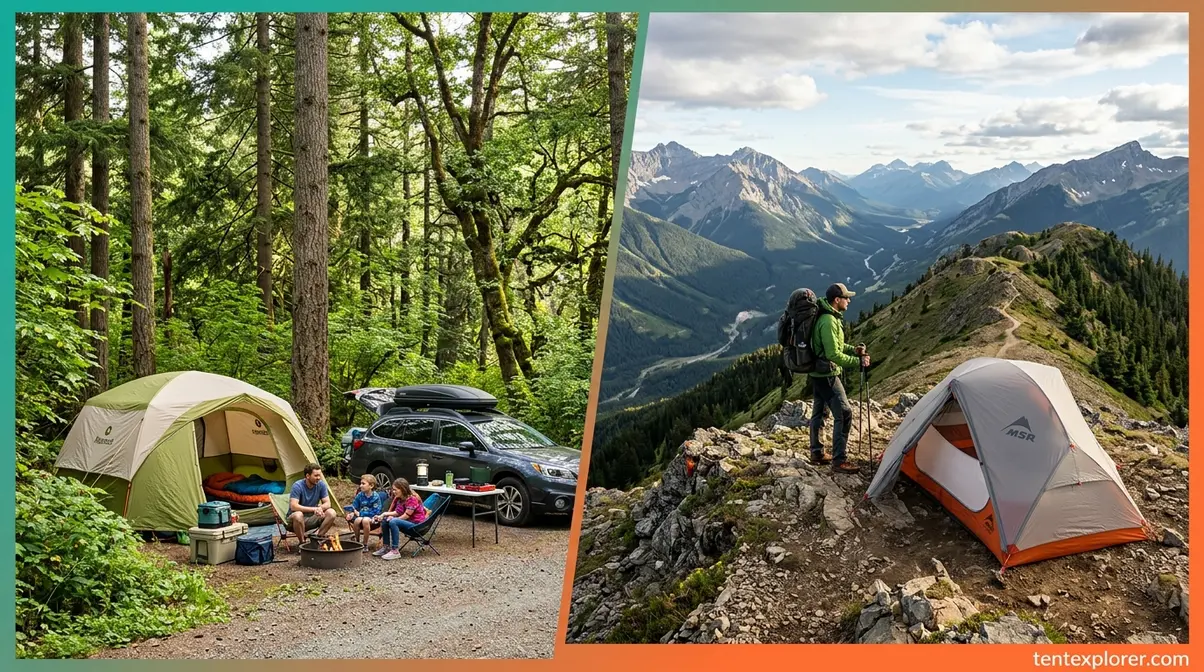
Knowing how to choose the right tent starts with a single question: what are you actually doing out there? The 3-S Framework — Size, Seasonality, Style — is the structured decision process this guide builds around, and activity is always Step 1. Skip this step and you risk the most expensive beginner mistake in camping: buying the wrong category of tent entirely. A backpacker who grabs a 7-pound cabin tent learns this lesson the hard way, usually somewhere around mile 4.
Your activity determines every specification that follows — weight limit, pole structure, floor area, and weather rating. According to REI Co-op expert advice, evaluating intended use — car camping or backpacking — is the first criterion when selecting a tent (2026).
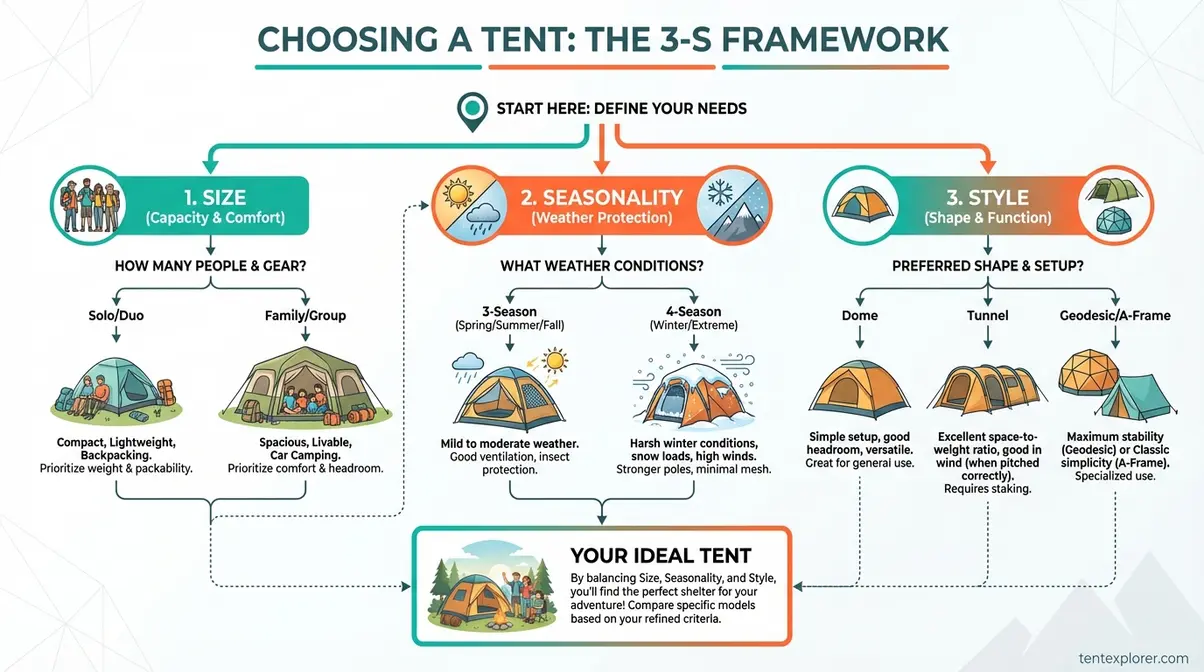
Caption: The 3-S Framework gives beginner campers a repeatable, three-step process for choosing the right tent — starting with activity type.
Car Camping vs. Backpacking
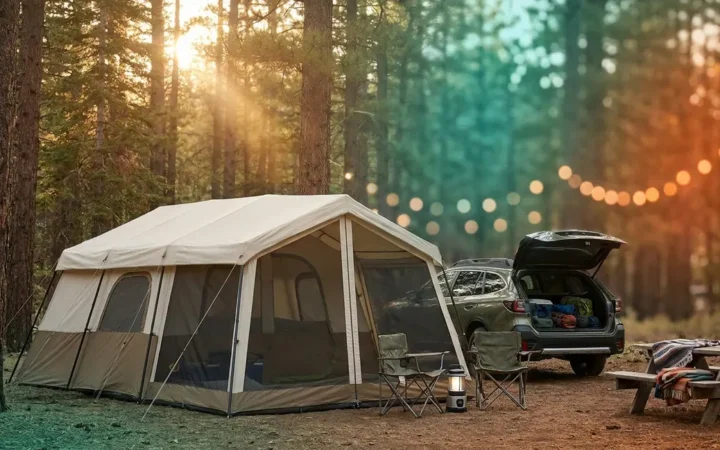
How to choose the right camping tent begins with understanding that these two activities have almost nothing in common from a gear perspective. Car camping means your tent travels in a trunk, not on your back — so weight is irrelevant. Prioritize space, livability, and ease of setup. Cabin-style tents with 6–8 person ratings are perfectly viable. Heavier aluminum pole structures are fine. A family of four driving to a state park campsite can comfortably use a Coleman Skydome 4-person cabin tent without a second thought.
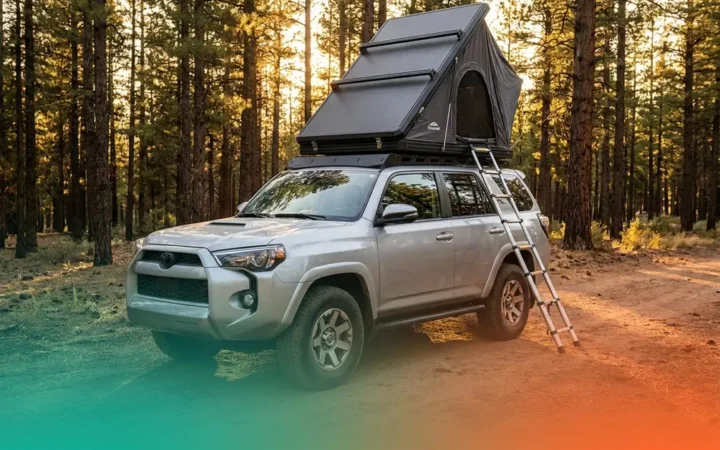
Backpacking flips every priority. Every ounce matters. The target is under 2 pounds per person — exceeding this threshold significantly impacts trail fatigue over multi-day trips (Mountain Safety Research, 2026). Freestanding dome or tunnel tents are preferred. A solo hiker on a multi-day trail needs something like the Big Agnes Copper Spur UL2 — trail weight approximately 2 lbs 10 oz — not a family cabin tent.
The middle ground is hike-in camping: you walk 1–2 miles to a site with a loaded pack. Here, a 3-season dome tent in the 3–4 lb range hits the sweet spot between livability and carry-ability.
Knowing your activity narrows the field from hundreds of tents to a manageable shortlist. The next cut comes from understanding tent shapes — and why shape affects both setup speed and storm performance.
Tent Shapes That Matter
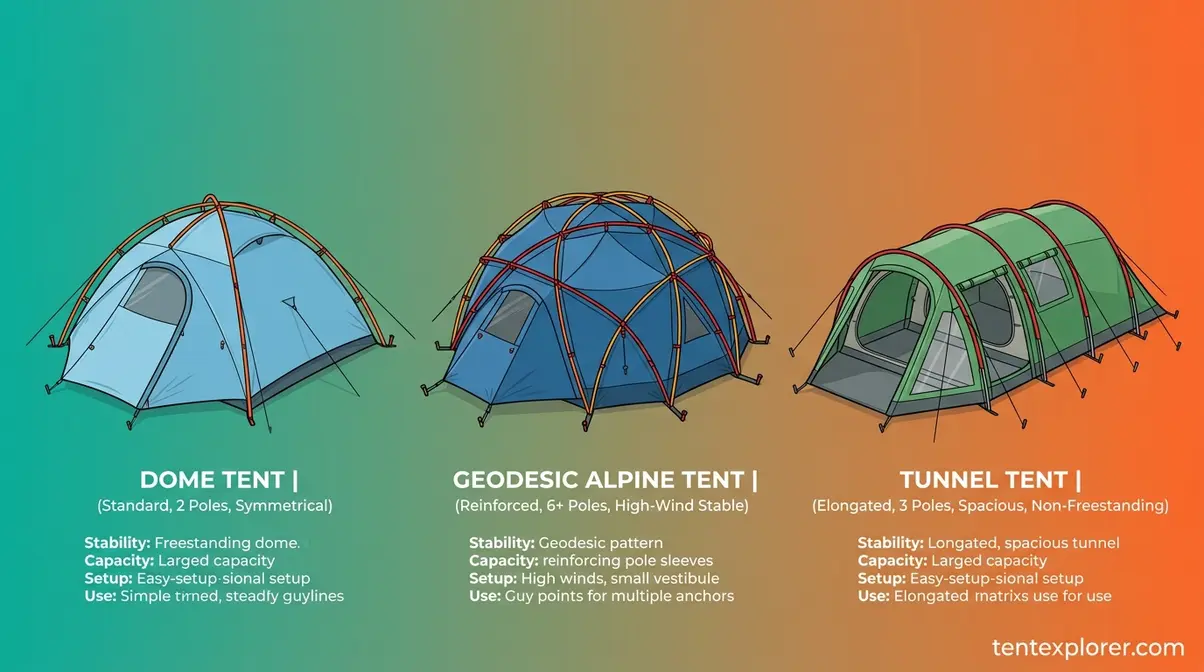
Shape is not aesthetic — it determines structural performance in wind, setup difficulty, and interior livability. Three shapes cover nearly every camping scenario:
| Tent Shape | Best For | Freestanding? | Wind/Snow Rating |
|---|---|---|---|
| Dome | Car camping, 3-season backpacking | Yes | Moderate |
| Geodesic | Alpine, 4-season, extreme weather | Yes | High |
| Tunnel | Long-distance backpacking | No (needs stakes) | Moderate–High |
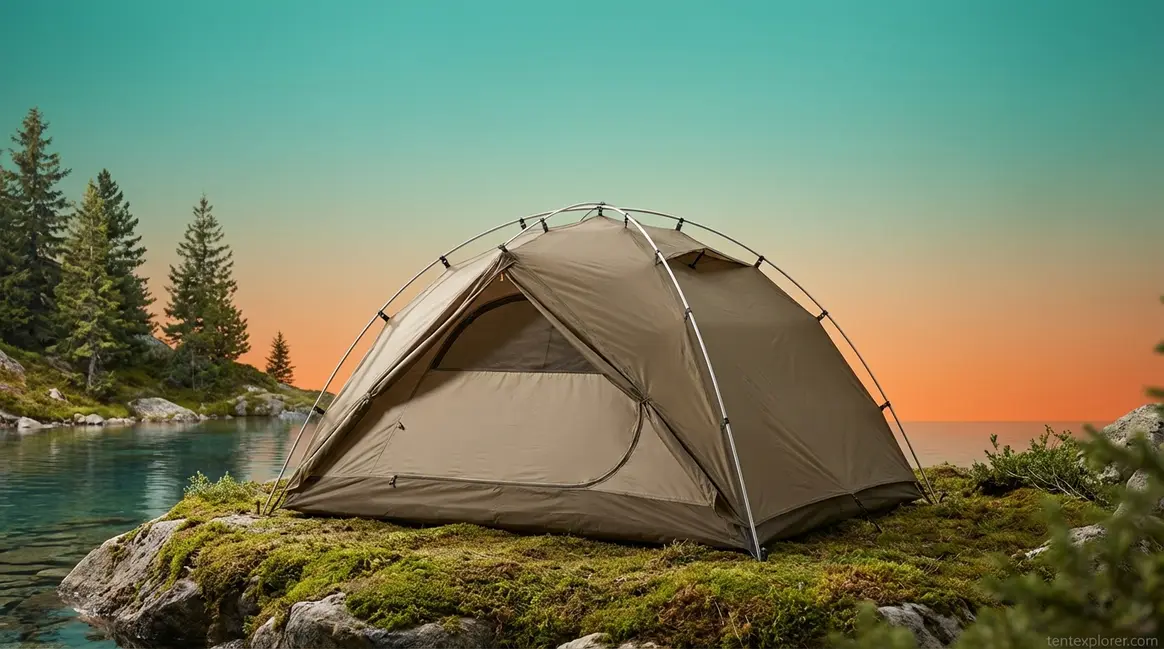
Dome tents are the most common shape. Easy freestanding setup, good headroom, and moderate wind resistance make them the right call for casual car camping and 3-season backpacking. The REI Co-op Half Dome series is the benchmark here.
Geodesic tents use an interconnected pole system that creates structural rigidity capable of handling extreme wind and snow loads. They’re heavier and pricier — but for alpine and 4-season use, nothing else compares. The Hilleberg Soulo is the gold standard.
Tunnel tents maximize interior space for their weight by using a curved, elongated design. The trade-off: they require stakes to stand (not freestanding), which demands more setup skill. Best for long-distance backpacking where livability matters over multiple nights. The MSR Hubba Hubba NX is the classic example.
One more distinction worth knowing: freestanding vs. trekking-pole tents. Freestanding tents stand without stakes — easier for beginners. Trekking-pole tents use your hiking poles instead of dedicated tent poles, saving significant weight, but require more setup experience. Beginners should start freestanding.
Shape tells you how the tent performs in the field. Brand tells you whether it will hold up over years of use. Here’s how to read the market without getting burned.
Reliable Tent Brands to Trust
Across professional camping communities and gear review sites like Switchback Travel, these brands consistently earn top marks — organized by use case rather than prestige:
- Ultralight/Backpacking Tier:
- Big Agnes — a Colorado-based ultralight tent brand. The Copper Spur UL series (~$550, trail weight 2 lbs 10 oz) is the benchmark for ultralight performance
- MSR (Mountain Safety Research) — known for durable engineering and precise weight specs; the Hubba Hubba LT 2 (~$550) balances livability with a 3 lb trail weight
- 4-Season/Expedition Tier:
- Hilleberg — a Swedish manufacturer renowned for 4-season expedition tents. The Nallo 2 (~$1,030–$1,155) is used by polar expeditions and serious alpine climbers
- The North Face Mountain 25 — the go-to for serious mountaineering in North America
- Value/Family Car Camping Tier:
- REI Co-op — the Half Dome 2 Plus (~$359) offers the best balance of quality and price for families and new campers
- Coleman — a budget-friendly tent brand popular for car camping; excellent for first-time buyers who prioritize cost over technical specs
- Ozark Trail — pure budget car camping where weight and weather resistance are secondary concerns
Note: prices vary — check current pricing at manufacturer websites before buying (as of March 2026).
Once you know your activity and have a brand shortlist, the next question trips up nearly every first-time buyer: how big does your tent actually need to be?
Explore essential tent buying tips and fundamentals for curated gear guidance by camping style.
Step 2: Size Up Right
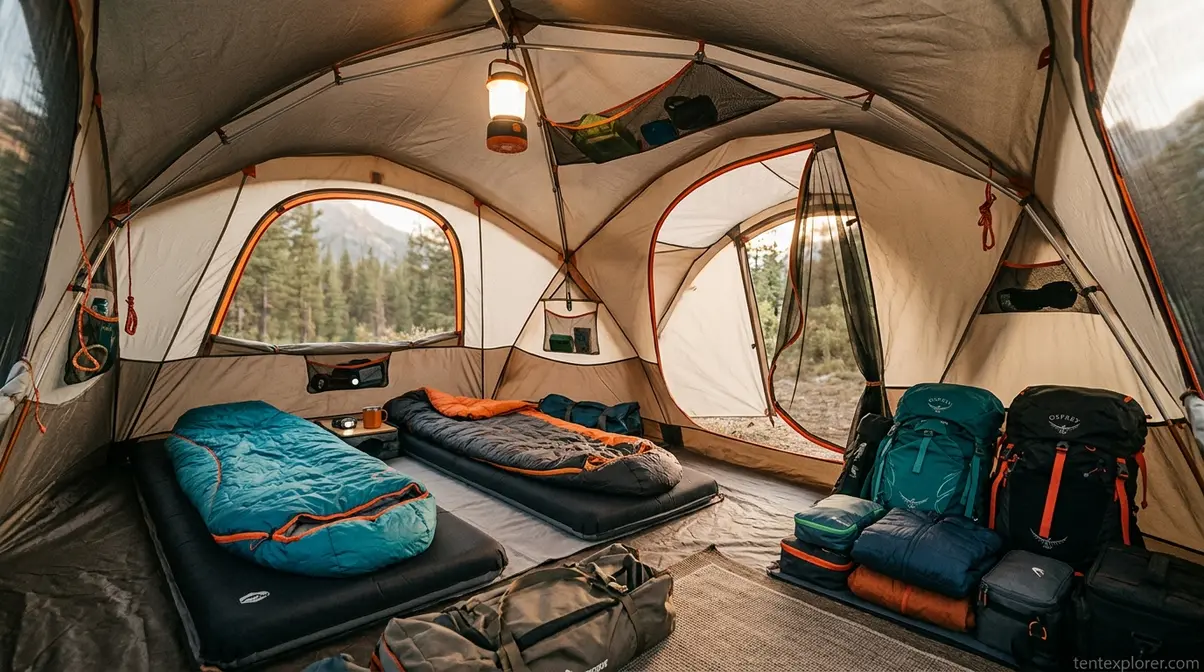
Always buy a tent rated for one more person than your actual group size. This is the Rule of Plus One, and it exists because manufacturer capacity ratings are optimistic at best and misleading at worst. Tent ratings assume bodies lying head-to-foot in sleeping bags only — no gear, no pads, no wet boots at the door. Real camping requires space for all of that, plus breathing room. A “4-person” tent, in practice, comfortably sleeps 3 adults who want to actually enjoy the experience.
According to the KOA Camping Blog, a standard rule of thumb is to allocate at least 20 square feet of floor space per person for basic sleeping comfort (2026). That single benchmark changes how you read every product listing.
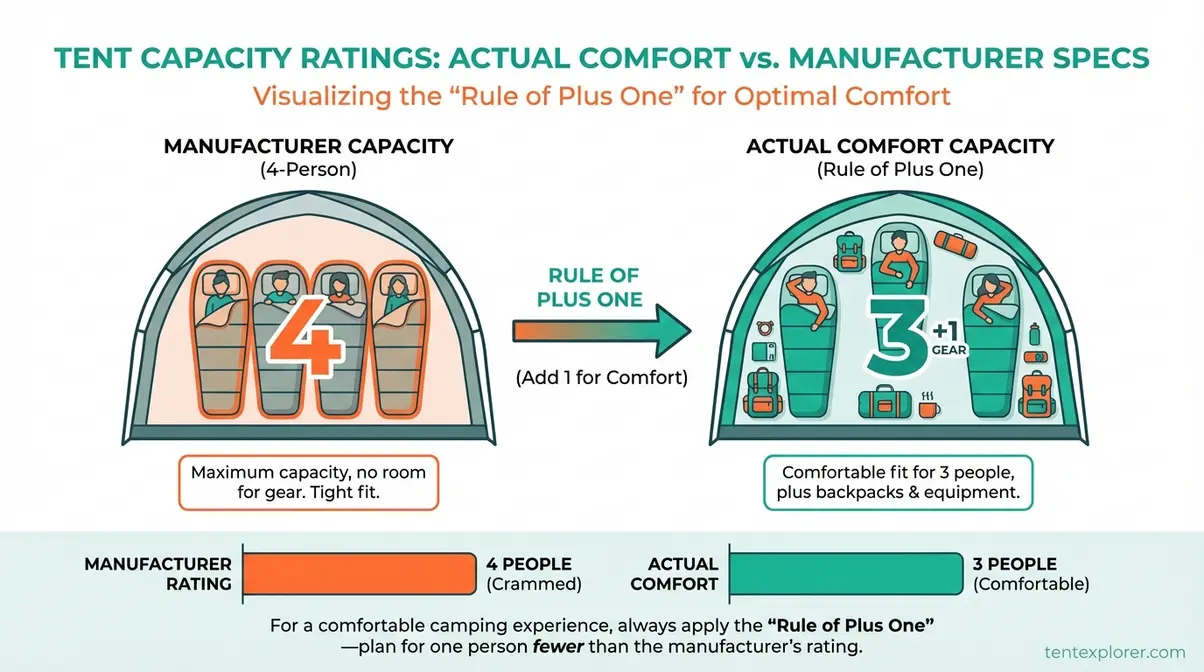
Caption: The Rule of Plus One corrects for manufacturer capacity ratings — always size up by one person to account for gear and real comfort.
This is the S for Size in the 3-S Framework. Get it right here and the rest of the buying process becomes straightforward.
Why Capacity Ratings Mislead
Manufacturers test tent capacity with people lying side-by-side in sleeping bags only. No gear. No sleeping pads. No boots piled at the entrance. The floor area figures in product listings reflect this stripped-down scenario, not real camping.
The math exposes the gap quickly. A 2-person tent averages 28–35 sq ft of floor area. At 20 sq ft per person — the minimum recommended by the KOA Camping Blog (2026) — that’s barely enough for 1.5 people with gear. A 2-person tent rated at 29 sq ft gives each person just 14.5 sq ft: less than half the size of a queen mattress.
This is the “berth vs. reality” gap. “Berth” is the manufacturer’s stated capacity; “reality” is how many people can actually sleep comfortably with their gear present. The Rule of Plus One corrects for this shortcut — it’s not a suggestion, it’s the fix.
Now that you understand why the number on the box lies, let’s look at the two metrics that actually tell you whether a tent will feel comfortable: floor area and peak height.
Floor Area and the 20 Sq Ft Rule
Three measurements determine whether a tent will actually feel livable:
- Floor area: Minimum 20 sq ft per person (KOA benchmark). Find it in any product listing under “floor dimensions” — multiply length × width, then divide by your group size. If you’re under 20 sq ft per person, size up.
- Peak height — the maximum interior height at the tallest point of the tent. Under 3.5 ft means a crawl-in backpacking tent. 4–5 ft gives seated comfort (most 3-season tents). 5.5 ft or more means standing room, found in cabin tents and large family shelters.
- Vestibule space: The covered porch outside the sleeping area is where boots, wet gear, and packs actually live. A vestibule of 10–15 sq ft effectively doubles your usable living space. Never overlook it.
If you’re 6 feet tall, look for a tent with at least a 6 ft interior length and a peak height above 4 ft — otherwise you’ll be folding yourself in half every morning.
Learn how tent capacity ratings are measured before your next product comparison.
Use the chart below as your go-to reference before clicking “Add to Cart” on any tent.
Quick Reference: Tent Size Guide
The table below applies the 20 sq ft per person benchmark to standard tent ratings. Always verify the specific floor dimensions in the product listing — these are general guidelines:
| Tent Rating | Actual Comfortable Capacity | Floor Area (typical) | Best For |
|---|---|---|---|
| 2-person | 1 adult + gear | ~28–35 sq ft | Solo backpacker who wants space |
| 3-person | 2 adults comfortably | ~40–50 sq ft | Couples camping |
| 4-person | 3 adults OR 2 adults + 2 kids | ~55–65 sq ft | Small families |
| 6-person | 4 adults comfortably | ~80–100 sq ft | Family car camping |
| 8-person | 5–6 adults OR 4 adults + kids | ~100–120 sq ft | Large family / group car camping |
Based on the 20 sq ft per person benchmark (KOA Camping Blog, 2026)
You’ve nailed activity and size — the first two S’s of the 3-S Framework. The third and most technically complex decision is seasonality: matching your tent’s weather capabilities to the conditions you’ll actually face.
Step 3: Match Tent to Weather
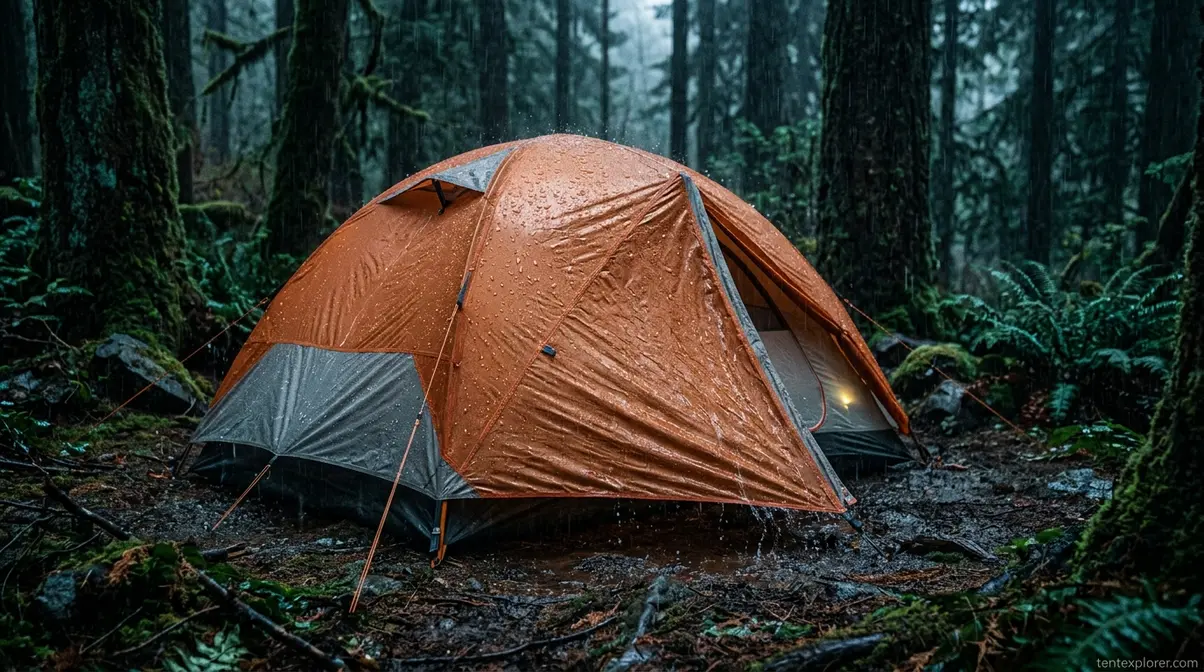
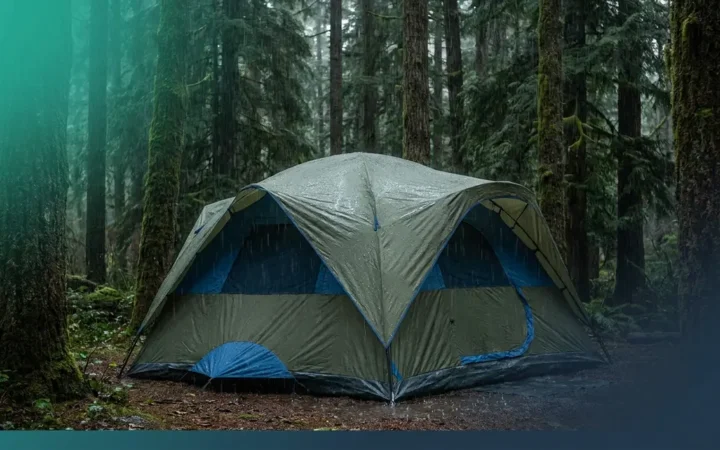
Choosing between a 3-season and 4-season tent is the decision most likely to determine whether you stay dry and warm — or spend the night in what feels like a rainforest. 3-season tents handle spring, summer, and fall conditions; 4-season (mountaineering) tents are engineered for winter and sustained snow loads. For 90% or more of campers, a quality 3-season tent with a full-coverage rainfly is the correct choice. This is the S for Seasonality — the third step in the 3-S Framework, and for most campers, the most consequential decision. As Mountain Safety Research defines it: “A 4-season tent is specifically engineered to withstand extreme winter weather, including fierce winds and heavy snow loads — unlike standard 3-season models” (2026). Making the right choice here ensures you won’t overspend on unnecessary technical features while still guaranteeing protection against unexpected downpours.
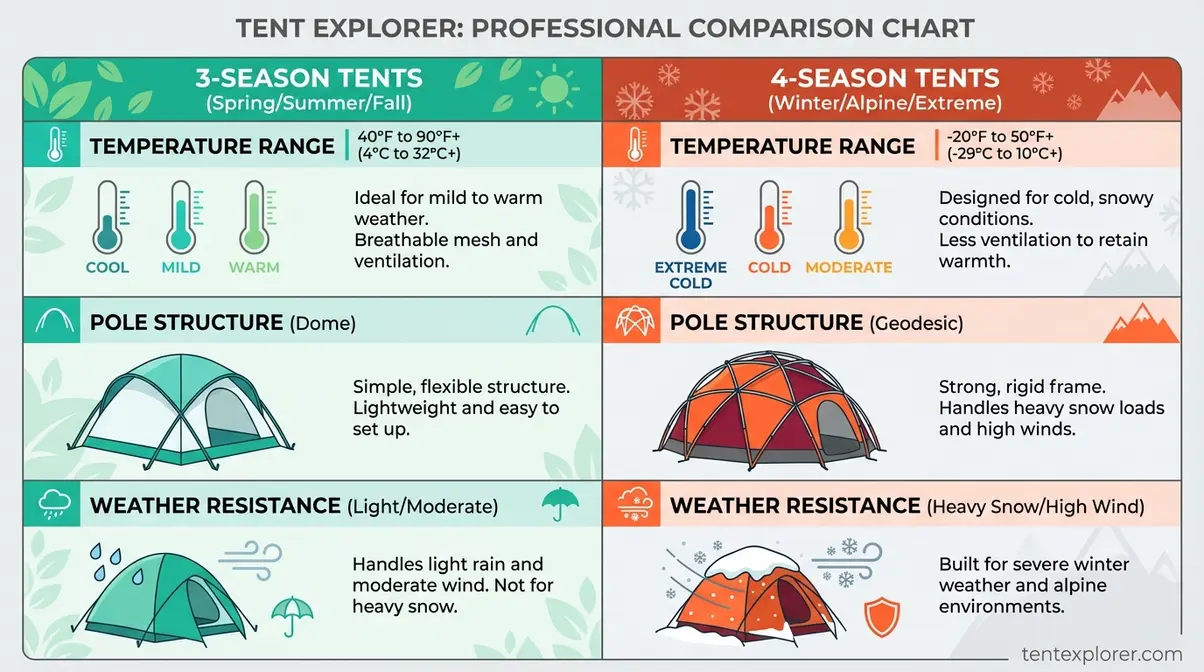
Caption: Understanding the structural differences between 3-season and 4-season tents prevents the most expensive over-buying mistake in camping gear.
3-Season Tents for Most Campers
3-season tents are designed for spring through fall camping — typically rated for conditions ranging from roughly 20°F to 85°F. They handle rain, wind, and light snow with confidence. What they are not designed for: sustained snowpack, above-treeline winter conditions, or sub-zero temperatures.
A quality 3-season tent has three defining features. First, a full-coverage rainfly that extends close to the ground, blocking wind-driven rain from sneaking underneath. Second, double-wall construction — a separate rainfly plus an inner mesh body. The mesh promotes airflow and actively reduces condensation, which is the “waking up in a rainforest” phenomenon that plagues single-wall designs. Third, a bathtub floor (defined in the next section).
Weight is another key advantage: 3-season tents typically run 2–5 lbs, compared to 6–10 lbs for 4-season models. That difference matters enormously on the trail.
Two reliable benchmarks: the REI Co-op Half Dome 2 Plus (~$359, trail weight 5 lbs, full rainfly, 35.8 sq ft floor) for car camping and short-range backpacking; the Big Agnes Copper Spur UL2 (~$550, trail weight 2 lbs 10 oz) for serious backpacking. Mountain Safety Research confirms 3-season tents as the standard for spring-to-fall camping, with weight and ventilation as primary design priorities (2026).
For most camping trips, a 3-season tent is your answer. But if you’re heading into the mountains in winter or planning an alpine expedition, you need to understand what a 4-season tent actually offers — and why it’s a specialized tool, not simply a better tent.
When You Need a 4-Season Tent
4-season tents are not an upgrade from 3-season tents — they are a different tool for a different job. The engineering differences are significant. A geodesic pole structure (more poles, more crossing points) creates structural rigidity that can handle serious snow loads. Fewer mesh panels mean solid fabric retains heat in extreme cold. Reinforced seams and snow-load ratings complete the package.
When do you actually need one? Sustained snowfall. Above-treeline camping in winter. True mountaineering. Sub-zero temperatures. Not for car camping in November rain, and not for a rainy weekend at a state park.
The trade-offs are real: heavier (6–10 lbs vs. 2–5 lbs for 3-season), significantly more expensive ($945–$1,500+), and hotter in warm weather because reduced mesh ventilation traps body heat. Buying a 4-season tent for car camping or standard backpacking is like buying a snowplow for a sedan — impressive engineering, but not what the tool is designed for.
The Hilleberg Nallo 2 (~$1,030, 4 lbs 7 oz) is the benchmark for 4-season reliability. The North Face Mountain 25 is the go-to for serious mountaineering. For everyone else, a quality 3-season tent with a full rainfly is the smarter buy. Explore the differences between 3-season and 4-season tents before making this call.
Mountain Safety Research details how geodesic pole structures and reinforced materials are specifically engineered for extreme winter and alpine conditions — conditions most campers will never encounter (2026).
Whether you choose a 3-season or 4-season tent, the specific weatherproofing features inside that tent determine whether it actually keeps you dry. Here’s what to look for.
Essential Weatherproofing
The difference between a tent that performs and one that fails often comes down to four specific features:
- Bathtub floor — a waterproof tent floor design that extends several inches up the side walls before connecting to the inner tent canopy. This prevents ground moisture from seeping in when you’re camped on wet soil or in standing water. According to SectionHiker, a bathtub floor extends waterproof material several inches up the tent walls, preventing groundwater seepage in wet conditions (2026). Look for floors with a hydrostatic head rating — a measure of waterproofing — of 1,500mm or higher.
- Full-coverage rainfly — the rainfly should extend close to the ground, not sit as a partial “half fly” that leaves the lower tent walls exposed to wind-driven rain. Double-wall design creates an air gap between the rainfly and the inner tent body that significantly reduces condensation — the mechanism behind that “waking up in a rainforest” feeling.
- Ventilation — counterintuitively, a tent that breathes well stays drier inside. Mesh inner panels allow moisture from breath and body heat to escape before it condenses on the rainfly and drips back down. Adjustable vents at the top of the rainfly are the most effective design.
- Fabric denier — denier (D) is a measure of fabric thread thickness. 150D or higher means durable fabric suited for car camping and heavy use. 30–70D is ultralight territory — suitable for backpacking on established trails, but handles with care. Higher denier equals heavier and more puncture-resistant.
You’ve now covered the three S’s: Size, Seasonality, and Style. The next two decisions — weight and campsite selection — are equally important but already covered in depth in dedicated guides. Here’s what you need to know at a glance.
Step 4: Trail vs. Packaged Weight
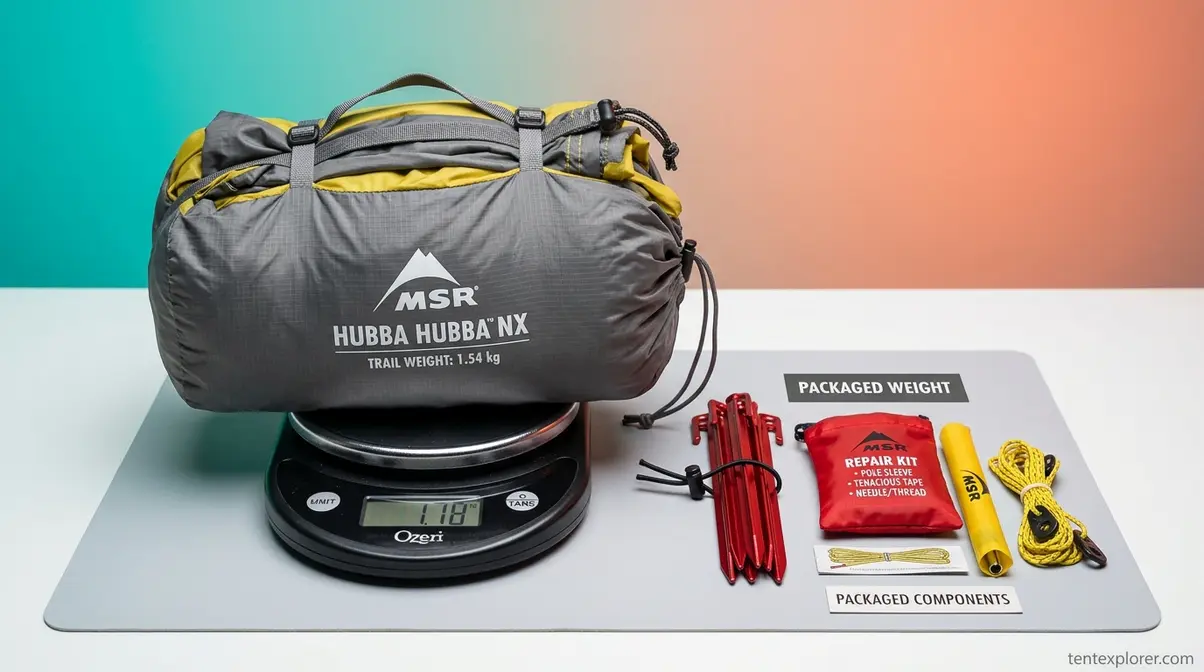
When it comes to backpacking, weight is the specification that matters most. Yet the numbers on product pages are often misread — because there are two different weight figures, and they mean very different things. Trail weight (also called minimum weight) is the functional weight of your tent in the field: body, rainfly, and poles only. Packaged weight is everything in the box — stuff sacks, stakes, repair kits, and instructions. Mountain Safety Research (MSR) defines packaged weight as the total weight including all accessories, while trail weight covers only the tent body, rainfly, and poles (2026). Always compare trail weights when evaluating backpacking tents — packaged weight can be 20–40% heavier. Understanding this distinction prevents you from carrying unnecessary bulk on the trail.
The practical target for backpacking: under 2 lbs per person. The MSR FreeLite 2, for example, hits a 2 lb minimum weight for two people — one of the few true ultralight two-person designs on the market (Cascade Designs, 2026). Exceeding the 2 lb per person threshold significantly increases trail fatigue over multi-day trips.
What Are the Big 3 of Camping?
The Big 3 of camping refers to your three core sleep and shelter items: your tent, your sleeping bag, and your sleeping pad. For backpackers, these three items typically account for the largest share of total pack weight, making them the highest-priority targets for weight optimization. Reducing weight in even one of the Big 3 can meaningfully improve comfort on multi-day trips. A common target for serious backpackers is keeping the combined Big 3 weight under 10 pounds total, according to industry experts. For car campers, weight is less critical — prioritize comfort and durability over pack weight in each category.
One important trade-off: lower denier fabrics (20–30D) reduce weight but sacrifice puncture resistance. Ultralight fabrics are suitable for experienced backpackers on established trails — not recommended for bushwhacking or rocky terrain where abrasion is a constant risk.
For a complete breakdown of backpacking tent specifications, weight targets, and top picks by weight class, see our guide on comparing lightweight backpacking tents to standard camping tents.
Step 5: Picking Your Campsite
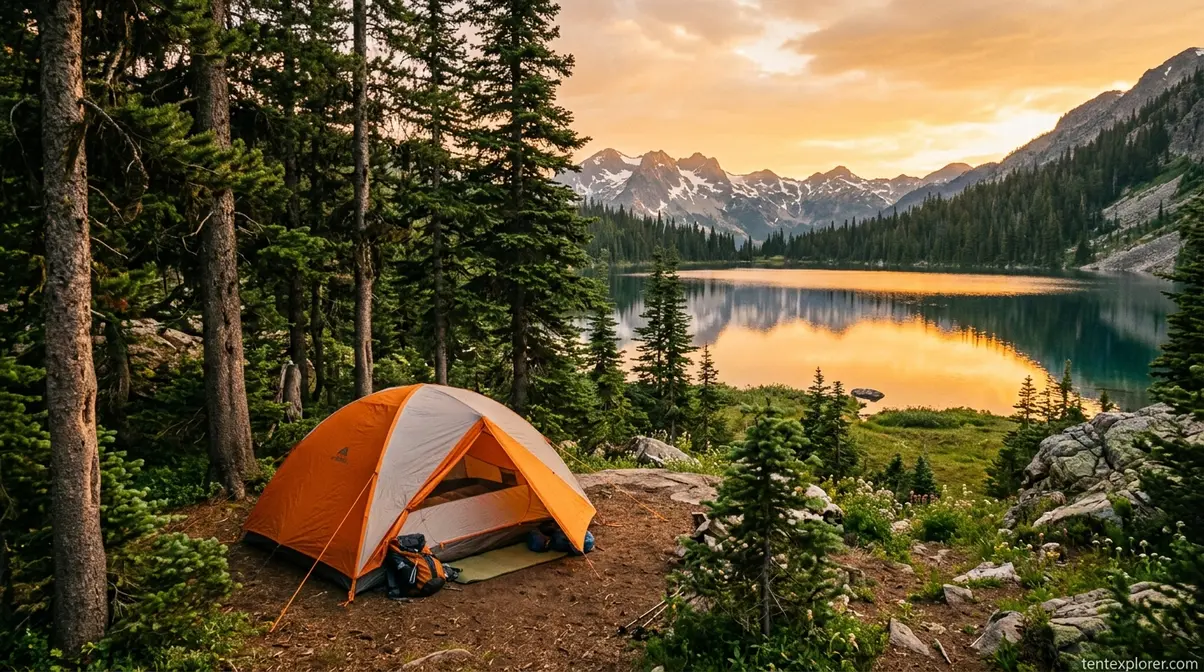
Even the best tent performs poorly in a badly chosen spot. Campsite selection is the final piece of the tent-buying puzzle — and it’s governed by a set of widely recognized rules that experienced campers treat as non-negotiable. Knowing exactly how to choose the right site for your tent ensures you maximize the weatherproofing and comfort features you just paid for. The 3-3-3 Rule, popularized by the RV and camping community, advises: drive no more than 300 miles in a day, arrive at your campsite by 3:00 PM, and stay for at least 3 nights. KOA’s 3-3-3 Rule guide explains that covering no more than 300 miles per day, arriving by 3 PM, and staying at least 3 nights significantly reduces travel fatigue — and gives you daylight for proper setup and site evaluation (2026).
What Is the 200 Rule for Camping?
The 200 rule for camping states that you should set up your tent, cook, wash, and handle waste at least 200 feet away from water sources, trails, and other campsites. This distance — roughly 70 large adult steps — protects local water quality, preserves wildlife habitats, and maintains backcountry privacy for other campers. The rule applies to lakes, rivers, streams, and any natural water source. A practical way to pace it out: count 70 deliberate steps away from the water’s edge before dropping your pack. This rule is a core principle of Leave No Trace ethics and is enforced in most U.S. National Parks and wilderness areas.
The 7 C’s of camping — Cover, Cooking, Comfort, Clothing, Cleanliness, Care, and Communication — provide a pre-trip planning checklist. Cover is your tent (addressed in this guide). The remaining six ensure you’ve addressed nutrition, sleep, layering, hygiene, first aid, and emergency communication before leaving home. The FAQ section below covers the 7 C’s in full.
Physical site requirements matter as much as the rules: choose level ground (avoid depressions where water pools), check overhead for “widowmakers” (dead branches), look for natural windbreaks, and camp on durable surfaces — established sites, rock, or sand — rather than fragile vegetation. National Park Service guidelines for campsite safety also advise maintaining safe distances between cooking areas and sleeping spaces to prevent wildlife encounters (2026).
For a complete checklist of campsite evaluation criteria — including terrain, drainage, sun orientation, and wind direction — our full guide walks you through every step: how to choose the right site and set up your tent area.
Common Tent-Buying Mistakes
Most tent-buying regret is preventable. The mistakes below aren’t about brand loyalty or budget — they’re about category errors and skipped specifications that experienced campers consistently flag across gear forums and professional camping communities.
Mistakes That Cost You Comfort
These five pitfalls account for the majority of first-time buyer regret:
- Buying by capacity rating alone — The tent feels cramped on night one. Fix: Apply the Rule of Plus One. A “4-person” tent is a 3-adult tent in real life.
- Ignoring rainfly coverage — You wake up wet in a tent marketed as “waterproof.” Fix: Check that the rainfly extends close to the ground on all sides. A partial fly leaves the lower walls exposed to wind-driven rain.
- Choosing a 4-season tent for mild camping — You overheat in summer and overspend by $400–$600. Fix: A 3-season tent with a full rainfly handles 90%+ of camping scenarios. Reserve 4-season for genuine winter mountaineering.
- Forgetting vestibule space — You end up sleeping with your boots because there’s nowhere else to put them. Fix: Always check vestibule size. Aim for 10 sq ft or more per door.
- Buying the cheapest option without checking the hydrostatic head rating — The floor leaks in the first rainstorm. Fix: Look for a floor hydrostatic head rating of 1,500mm or higher. This is the minimum threshold for real waterproofing, per outdoor gear industry standards.
The Leave No Trace Seven Principles, as referenced by the NPS, emphasize planning ahead as the foundation of a successful outdoor experience — mistakes in preparation are among the most common sources of outdoor discomfort (2026).
When to Choose a Different Tent
The 3-S Framework applies to the vast majority of camping scenarios — but not all of them. Knowing when a tool isn’t right for you is just as valuable as knowing when it is.
If you’re RV camping: You don’t need a sleeping tent at all. A screen shelter or awning canopy solves the outdoor living space problem without the complexity of a full tent system.
If you’re a festival-goer: Prioritize ease of setup and budget over weather resistance. A basic pop-up tent is the right tool — spending $400 on a technical 3-season tent for a music festival is genuine overkill.
If you’re winter mountaineering: The 3-S Framework still applies, but all three decisions shift dramatically toward technical extremes. Consult a specialist mountaineering guide and, ideally, an experienced alpinist before buying.
Frequently Asked Questions
How do I know what tent to buy?
To know what tent to buy, apply the 3-S Framework: start with Size, then Seasonality, then Style. First, determine your activity — car camping allows heavier, spacious tents, while backpacking requires lightweight models under 2 pounds per person. Always size up by one person using the Rule of Plus One for gear storage, and match your tent’s season rating to your actual climate conditions.
What are the 7 C’s of camping?
The 7 C’s of camping are Cover, Cooking, Comfort, Clothing, Cleanliness, Care, and Communication — a framework for planning a safe and enjoyable outdoor adventure. Cover refers to your shelter, Cooking covers nutrition, Comfort addresses sleep systems, and Clothing means proper layering. Cleanliness, Care, and Communication round out safety, first aid, and emergency preparedness. Think of them as a pre-trip checklist to ensure you’ve addressed every basic need before leaving home.
What is the 3-3-3 rule for camping?
The 3-3-3 rule for camping is a travel guideline advising campers and RV travelers to drive no more than 300 miles per day, arrive at their campsite by 3:00 PM, and stay for a minimum of three nights. According to KOA, the 300-mile limit reduces driving fatigue, while arriving by 3 PM provides daylight for setup and site evaluation. Staying three nights allows you to actually rest rather than spend every day breaking camp and moving. This rule is especially popular among families with children, for whom rushed travel significantly reduces enjoyment.
How do I choose the right size grow tent?
A grow tent is an indoor gardening enclosure for cultivating plants hydroponically — it’s an entirely different product from a camping tent. Common grow tent sizes are 2×2 ft (1–4 small plants), 4×4 ft (4–9 medium plants), and 4×8 ft (larger yields), which you should choose based on your plant count and available floor space. If you’re looking for an outdoor camping tent instead, start at Step 1 of this guide to determine your activity type.
For anyone learning how to choose the right tent for camping, the 3-S Framework — Size, Seasonality, Style — provides a reliable, repeatable decision process. Start by sizing up one person beyond your group (the Rule of Plus One), match your tent’s season rating to your actual conditions, and let the tent that pulls on the heart strings guide your style choice. AI-driven tent research has surged +567% year-over-year — proof that this decision deserves more than a five-minute scroll (tentexplorer.com keyword data, 2026).
The 3-S Framework exists precisely because overwhelm is the enemy of good decisions. The next time you open a browser tab comparing tents, you’ll know exactly which question to answer first — and in what order. Size before seasonality. Activity before everything.
Ready to put the framework to work? If you’re car camping, start with our essential tent buying tips and fundamentals guide for curated recommendations by family size. If you’re backpacking, our guide on comparing lightweight backpacking tents to standard camping tents covers ultralight specs and top picks for every budget.

Dave King
I'm Dave King. I publish Tent Explorer, a site built to answer the questions people actually ask before they buy.