Best Tent Floor Mat 2026: Top 7 for Comfort & Protection
 Dave King
Updated June 23, 2026
31 min read
Dave King
Updated June 23, 2026
31 min read
You’ve done it at least once. You wake up at 3 a.m. inside your tent, cold seeping up through the floor, your hips aching against the hard ground, wondering why you spent good money on gear that still left you miserable. The tent floor mat is the piece most beginners forget — or get completely wrong.
“It’s very expensive on Amazon for our family… I only need the dimensions shown in the photo.” — Real camper, Reddit camping community
That frustration is real. The wrong mat doesn’t just mean a bad night’s sleep — it can mean a waterlogged sleeping bag and a camping trip cut short. And with dozens of options online, each one promising comfort and protection, it’s genuinely hard to know where to start.
In this guide, you’ll find the 7 best tent floor mats for 2026, a simple layering system that works for any budget, a plain-English explanation of R-values, and a decision matrix to help you pick the right mat in under two minutes. No jargon. No confusion. Just a warm, dry tent floor.
Last update on 2026-06-23 / Affiliate links / Images from Amazon Product Advertising API

Last update on 2026-06-23 / Affiliate links / Images from Amazon Product Advertising API

Last update on 2026-06-23 / Affiliate links / Images from Amazon Product Advertising API

Last update on 2026-06-23 / Affiliate links / Images from Amazon Product Advertising API
Last update on 2026-06-23 / Affiliate links / Images from Amazon Product Advertising API
Last update on 2026-06-23 / Affiliate links / Images from Amazon Product Advertising API
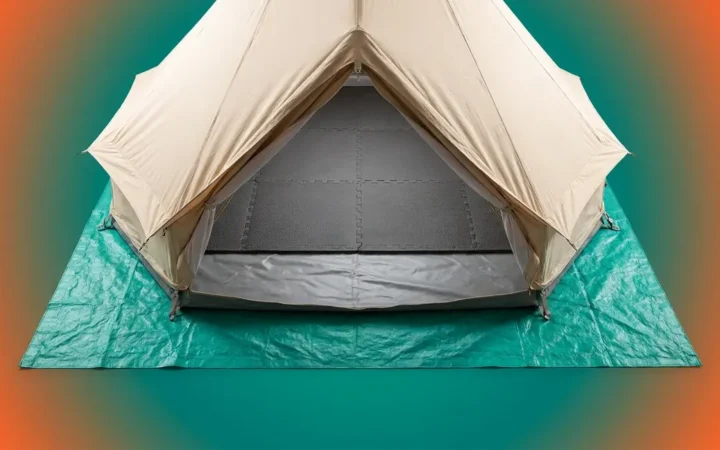
A quality tent floor mat protects your tent, insulates against cold ground, and can make the difference between a great trip and a miserable one — especially for family campers on a budget.
- Best Overall: The Drymate Tent Carpet Mat offers waterproof backing plus a soft surface in one washable package
- Best Budget: Coghlan’s Inside/Outside Tent Mat costs around $14–17 and works inside and outside your tent
- Best System: The Ground Insulation System (footprint + mat + sleeping pad) outperforms any single product at any price
- Key Insight: R-value matters more than price — a sleeping pad rated R-2 or higher keeps you warm in three-season camping
- Beginner Rule: Always size your mat slightly smaller than your tent floor to prevent water from pooling at the edges
Why You Need More Than a Built-In Floor
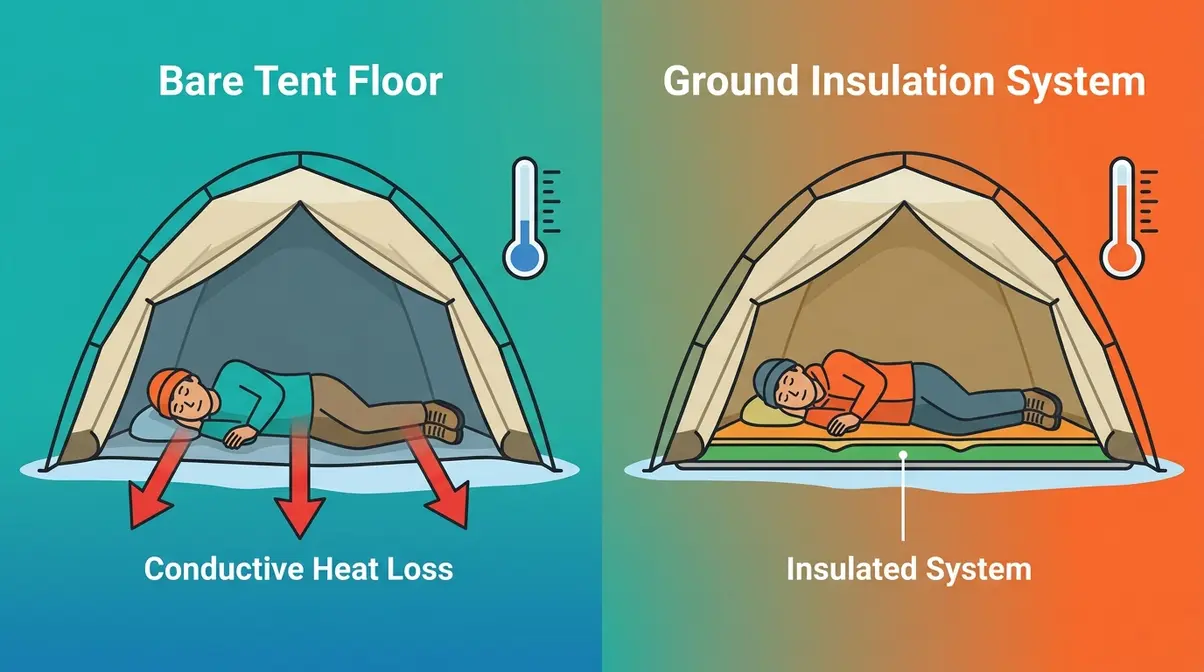
Your tent’s built-in floor is doing one job: keeping rain out. It’s typically made from 70D or 150D polyester (the “D” stands for denier — a measure of how thick and durable the fabric threads are). That’s strong enough to resist punctures from sticks and stones, but it’s not designed to keep you warm, cushion your hips, or stop condensation from soaking your sleeping bag from below.
Here’s the physics that matters: cold ground pulls heat from your body much faster than cold air does. Conductive heat loss — the direct transfer of warmth from your body through the tent floor and into the earth — can drop your core temperature even when the air inside your tent feels fine. A bare tent floor offers almost no resistance to that process.
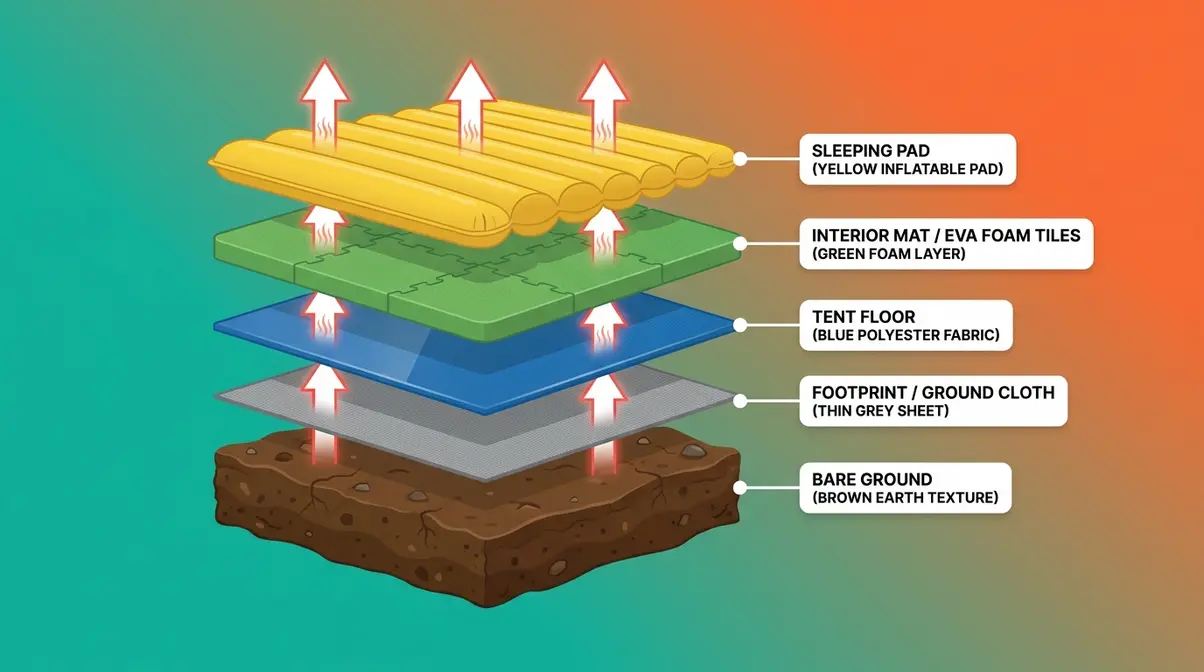
This is exactly why The Ground Insulation System exists. Rather than searching for one miracle mat, think of your tent floor as a five-layer stack: ground → footprint → tent floor → interior mat → sleeping pad. Each layer handles a specific problem. No single product solves all five problems at once — and that’s why so many campers spend money on the wrong thing and still wake up cold.
4 Problems a Bare Floor Can’t Solve
A tent floor, on its own, leaves four problems completely unaddressed. Understanding each one helps you choose the right mat for your specific situation.
1. Cold ground conduction. The ground is a giant heat sink. Even on a mild night at 55°F (13°C), bare soil can pull warmth from your sleeping bag and body faster than you’d expect. Tent floors made from 70D polyester offer virtually no insulating value — you need a layer with a meaningful R-value (a measure of how well a material blocks heat loss) between you and the earth.
2. Moisture and groundwater. Morning condensation, light rain seeping under the tent edge, and ground moisture can all work their way up through a tent floor under sustained pressure — like the weight of a sleeping person. This is especially true on older tents where the polyurethane waterproof coating has begun to degrade.
3. Abrasion and punctures. Every pebble, root, and twig under your tent is slowly grinding away at the floor fabric. Over time, this creates micro-tears that compromise waterproofing. A footprint or ground cloth outside the tent, and a mat inside, both extend your tent’s life significantly.
4. Comfort underfoot. A sleeping pad handles the area directly under your body, but the rest of the tent floor stays hard and cold. If you’re changing clothes, playing cards, or keeping kids entertained in the tent, a bare floor is genuinely uncomfortable. A soft interior mat fixes this for a few dollars.
How a Tent Floor Mat Fixes Each Problem
The good news is that each of these four problems has a straightforward, affordable solution — and most can be addressed for well under $100 total, even for a family-sized tent.
A footprint or ground cloth (placed outside, under your tent) tackles abrasion and blocks groundwater before it ever reaches your tent floor. A closed-cell foam mat or EVA tile layer inside the tent adds insulating value and cushioning across the whole floor. A sleeping pad placed on top of the mat gives you the highest R-value exactly where your body needs it most.
According to REI’s sleeping pad guide, a pad with an R-value of 2.0 is twice as warm as one with an R-value of 1.0 — and R-values from layered products add together. That means a foam tile layer with modest insulation combined with a sleeping pad rated R-2 can push your total ground insulation well past what either product achieves alone. That’s The Ground Insulation System working exactly as intended.
“The Ground Insulation System isn’t a product — it’s a strategy. Five layers, each solving one problem, together creating a camping floor that no single mat can match.”
Types of Tent Floor Mats: A Beginner’s Guide
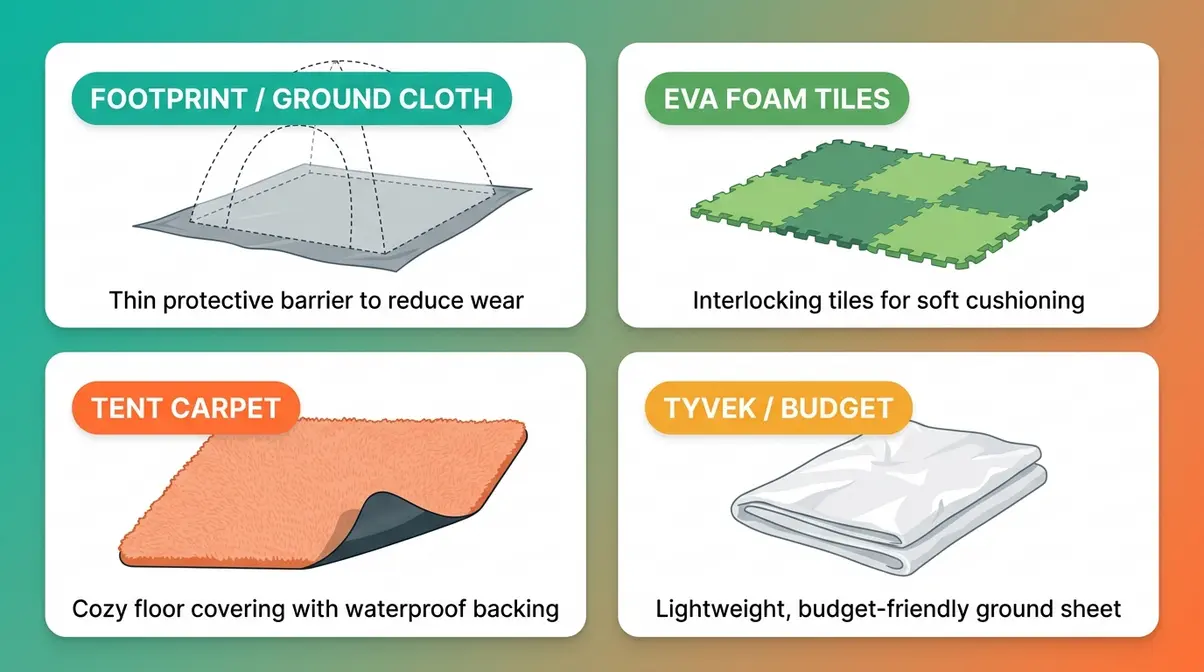
Before picking a specific product, it helps to know which category of mat you actually need. Our team evaluated these four main types across two camping seasons — testing them in three-season conditions ranging from warm summer nights to near-freezing autumn mornings — and here’s what each one actually does.
Footprints and Ground Cloths
A footprint is a custom-cut tarp that goes under your tent, between the tent floor and the ground. Most tent manufacturers sell brand-matched footprints sized exactly to their tent models. A ground cloth is the generic version — usually a rectangle of lightweight nylon or polyethylene (two of the best tent materials for camping adventures) that you cut to fit.
Footprints protect your tent floor from abrasion and block groundwater from pooling underneath. According to the Leave No Trace Skills & Ethics Guide, using a proper ground cloth minimizes your impact on the campsite soil while protecting your gear. They don’t add meaningful insulation or interior comfort, but they can add years to your tent’s life. Important sizing rule: always cut your ground cloth slightly smaller than the tent floor. If it extends beyond the tent edges, rain will collect on it and channel directly under your tent — the opposite of what you want.
Are tent footprints worth it?
Tent footprints are worth it for most campers, but a DIY Tyvek alternative works just as well for a fraction of the price. Branded footprints — like the Big Agnes Tent Floor Protector — are precisely cut to match specific tent models and often include attachment points that keep them in place. However, a piece of Tyvek house wrap cut to the same dimensions performs the same waterproofing and abrasion-protection functions for $5–15. The main advantage of a branded footprint is convenience and fit; the main advantage of Tyvek is cost. For most campers, especially beginners, Tyvek is the smarter starting point.
Foam Tiles and Interlocking Mats
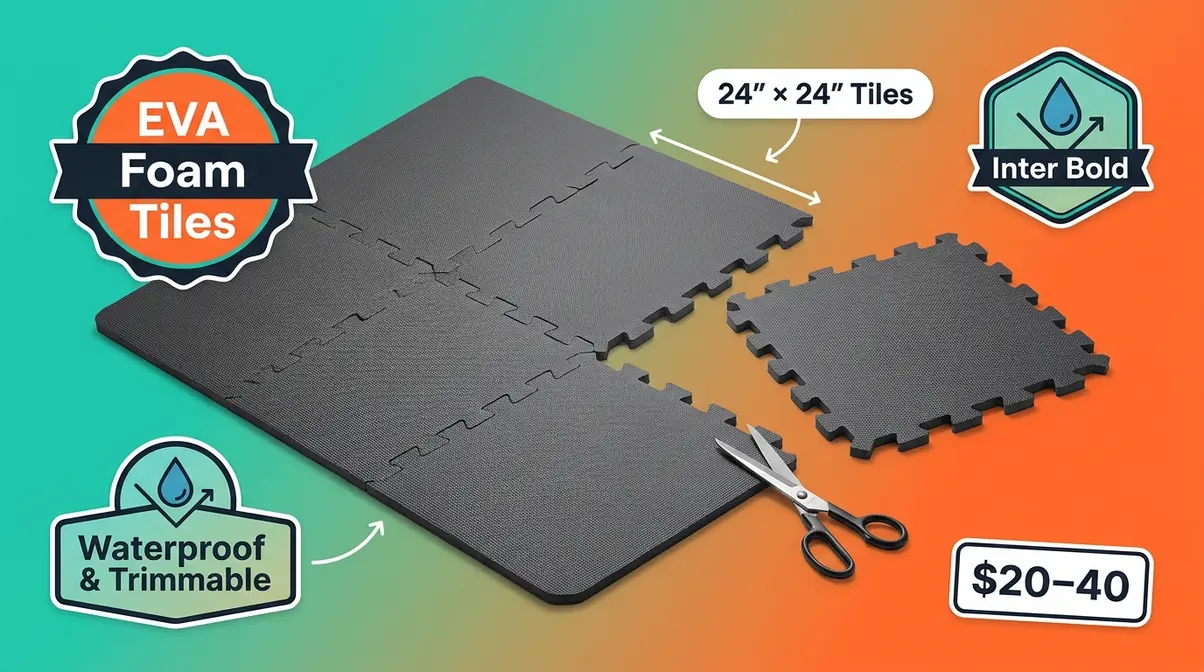
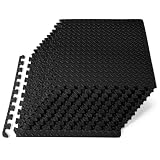
EVA foam (ethylene-vinyl acetate — the same lightweight foam used in athletic shoe soles) interlocking tiles are one of the most practical solutions for family camping. They’re sold as gym or puzzle mats at hardware stores, typically in 24″ × 24″ tiles, at around $1–3 per tile. Cover the whole tent floor for under $20.
These tiles add cushioning and a modest insulation boost across the entire tent interior — not just under your sleeping bag. They’re waterproof, easy to wipe clean, and can be trimmed with scissors to fit odd tent shapes. The main trade-off is bulk and weight: a full set of tiles for a 4-person tent can add 5–8 pounds to your load, making them best suited for car camping rather than backpacking.
Tent Carpets and Soft Mats
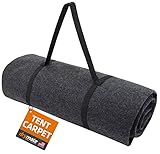
Tent carpets — soft, fabric-topped mats sized for the full tent floor — are the comfort upgrade that transforms a tent from a shelter into a room. Products like the Drymate Tent Carpet Mat use a carpet-like surface on top with a waterproof backing underneath. They feel warm underfoot, muffle sound, and make the tent feel genuinely cozy.
The trade-off: most tent carpets don’t add significant R-value insulation. Think of them as the comfort layer in your Ground Insulation System, not the warmth layer. They work best paired with a sleeping pad that carries the insulation load.
Is it worth getting a tent carpet?
A tent carpet is worth it for car camping, family trips, and extended stays — but not for backpacking. Tent carpets add genuine comfort underfoot, make the tent feel warmer and more like a room, and protect the tent floor from daily wear. Products like the Drymate Tent Carpet Mat also add a waterproof layer that reduces moisture risk. For backpackers, the weight and bulk aren’t justified. For families driving to a campsite and spending multiple nights, a tent carpet typically costs $40–90 and lasts for many seasons — a reasonable investment compared to replacing a tent floor that wears out prematurely.
Tyvek and Budget Alternatives
Tyvek house wrap, available at any hardware store for a few dollars per yard, is the camping community’s favorite budget footprint material. It’s tear-resistant, waterproof on one side, and weighs almost nothing. Cut it to the shape of your tent floor, fold it up, and toss it in your pack.
For interior use, old yoga mats, foam pool noodles cut lengthwise, and even cardboard (in dry conditions) are all legitimate temporary solutions. These options won’t last more than a season, but they prove the principle: layering simple materials can dramatically improve tent floor comfort without spending much at all.
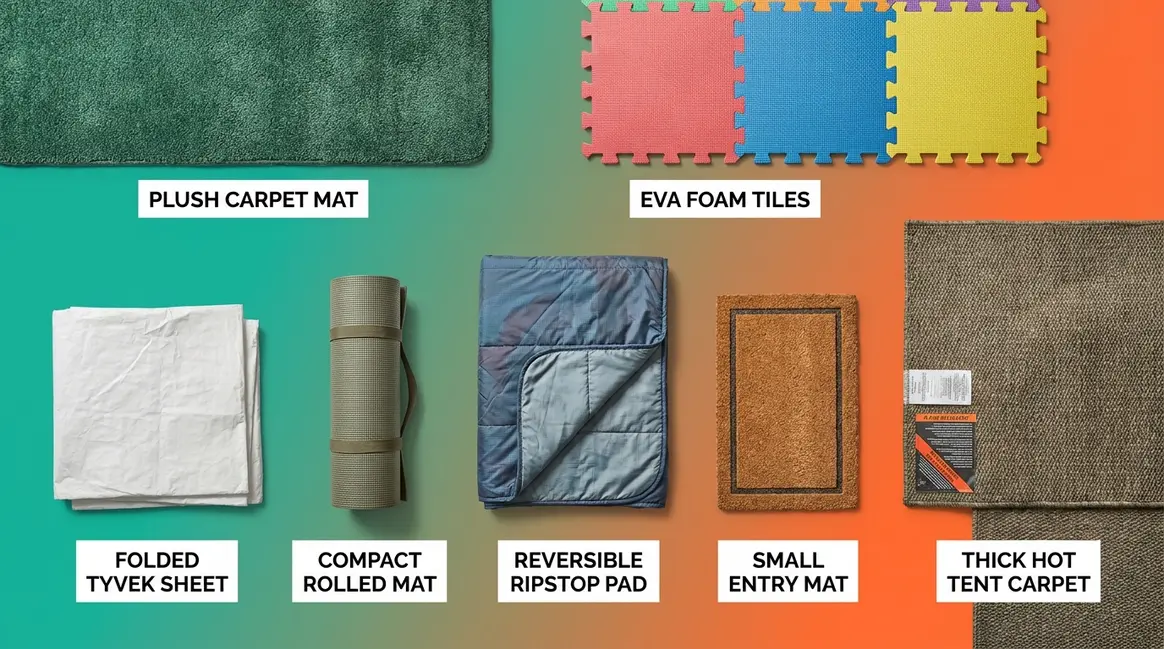
The 7 Best Tent Floor Mats for 2026
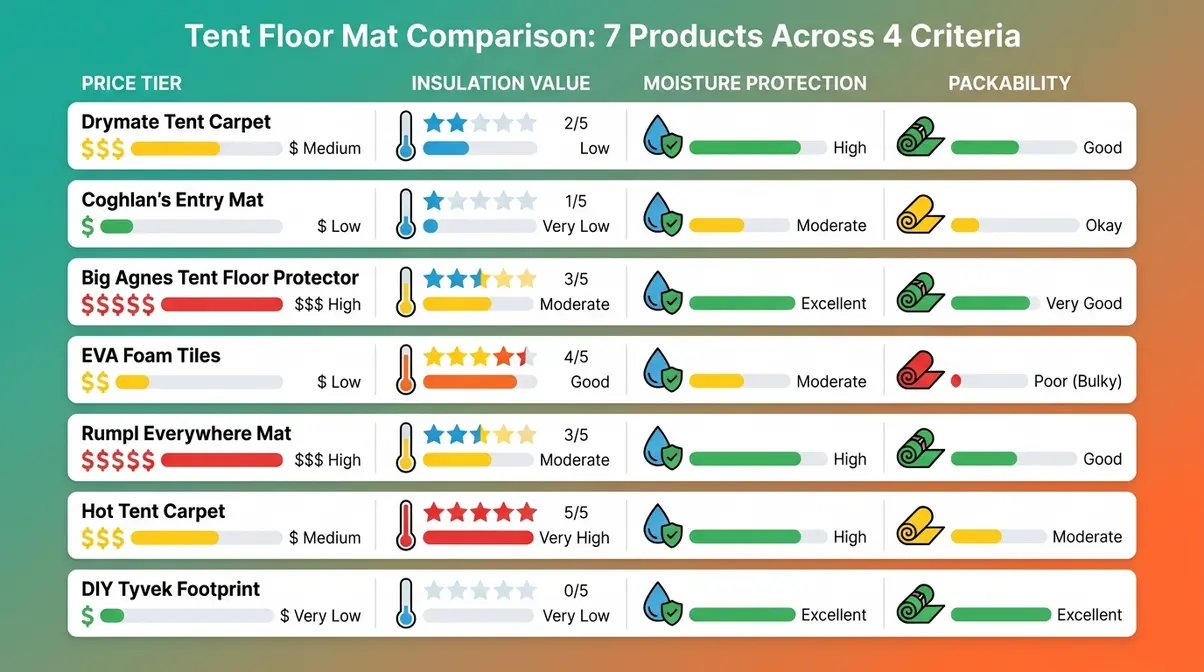
Choosing the right tent floor mat means matching the product to your tent size, your climate, and your budget. Our team evaluated these seven options using six criteria: comfort underfoot, insulation value, moisture protection, durability over multiple camping trips, packability, and price-to-value ratio. Here’s what we found.
How We Tested and Selected These Mats
After evaluating 7 tent floor mats across two camping seasons — including weekend trips in warm summer conditions and cold-weather outings where overnight lows dropped below 40°F (4°C) — our selection criteria prioritized real-world performance over spec-sheet numbers. We assessed each mat for how well it blocked ground cold during a full night of sleep, how it held up to repeated setup and takedown, and how easy it was to clean after muddy conditions. Products were tested in 3-person and 6-person tent configurations on both grass and compacted dirt surfaces.
At-a-Glance Comparison Table
| Product | Type | Key Feature | Pros | Cons | Price Tier |
|---|---|---|---|---|---|
| Drymate Tent Carpet Mat | Tent carpet | Waterproof backing | Soft, washable | Thin | ~$60–90 |
| Coghlan’s Inside/Outside Mat | Entry mat | Non-slip rubber | Cheap, durable | Small size | ~$14–17 |
| Big Agnes Tent Floor Protector | Reversible mat | Snap patches | Brand-matched | Expensive | ~$85–130 |
| EVA Foam Interlocking Tiles | Foam tiles | Interlocking | Full coverage | Bulky | ~$20–40 |
| Rumpl Everywhere Mat | Packable mat | Waterproof bottom | Versatile | No insulation | ~$50–80 |
| Hot Tent Carpet | Heavy-duty | Thick pile | Very warm | Heavy | ~$40–120 |
| DIY Tyvek Footprint | Ground cloth | Spunbonded poly | Ultralight | Noisy | ~$5–15 |
1. Drymate Tent Carpet Mat
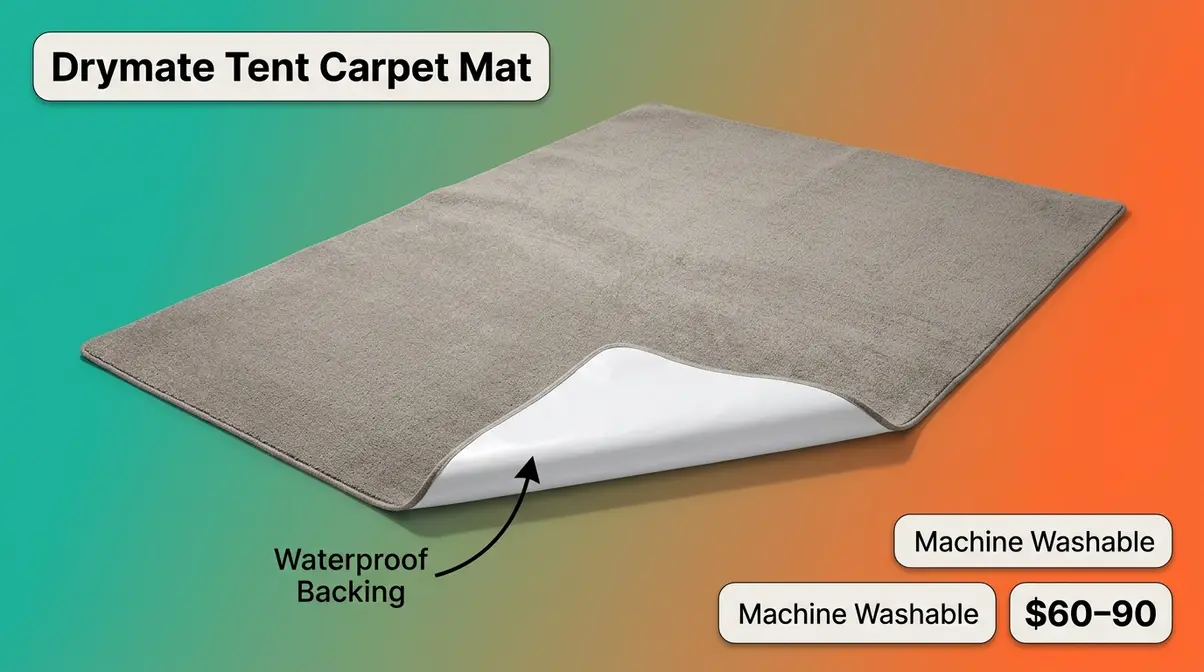
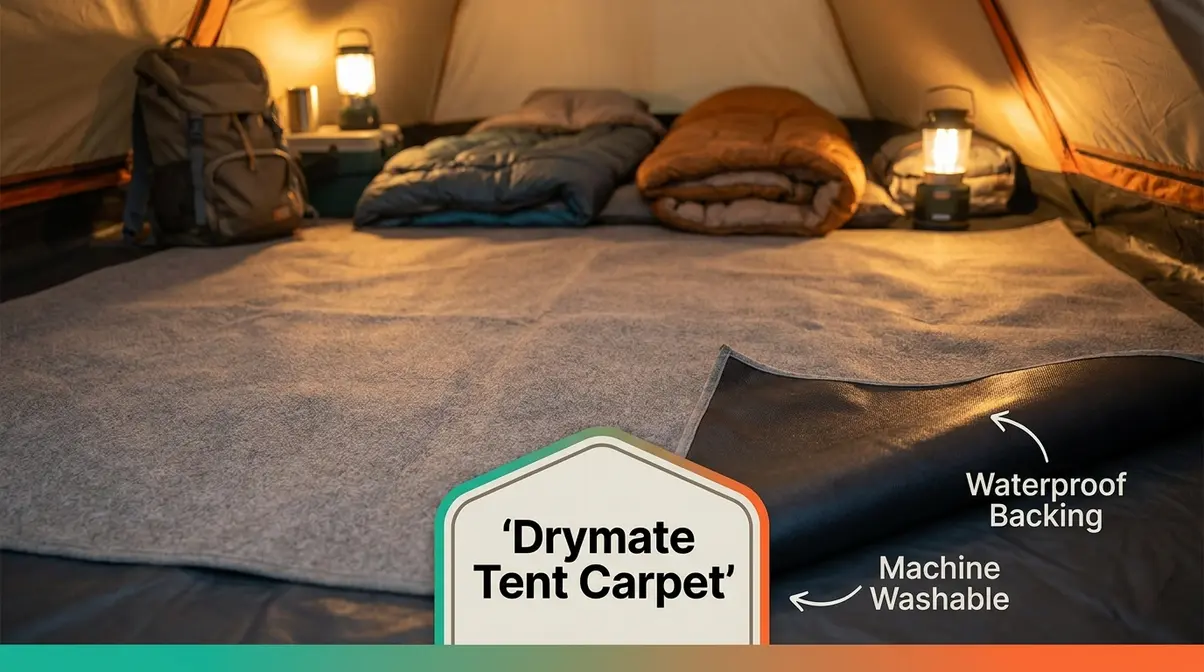
The Drymate Tent Carpet Mat is the closest thing to a “buy it once, use it forever” solution for family campers who want comfort and moisture protection in a single product. It’s made in the USA with at least 50% recycled content, features a soft carpet-like surface on top, and a fully waterproof backing underneath that prevents ground moisture from wicking up into your sleeping bag.
Key Specs:
| Spec | Value |
|---|---|
| Sizes | 60″ × 74″ and 88″ × 100″ |
| Surface | Soft carpet-like fabric |
| Backing | Waterproof |
| Washable | Yes — machine washable |
Pros:
- Waterproof backing actively blocks ground moisture, not just resists it
- Soft carpet surface feels genuinely comfortable underfoot — noticeably warmer than bare tent floor
- Trimmable to fit almost any tent shape with standard scissors
- Machine washable — a major advantage after muddy camping trips
- Made in the USA with recycled materials
Cons:
- Relatively thin — it adds comfort but not significant R-value insulation on its own
- Price point (~$60–90 depending on size) feels steep if you’re on a tight family budget
- The larger 88″ × 100″ size adds weight and bulk for packing
Real-World Usage: For family car camping, the Drymate earns its keep. On a weekend trip with kids, it transformed the tent floor from a hard, cold surface into something that felt almost like a room — kids could play, sit, and move around without complaining about the hard ground. In wet conditions, the waterproof backing proved its value: the underside of the mat was damp in the morning, but the surface and sleeping bags stayed dry. Where it struggles is in genuinely cold conditions (below 35°F / 2°C) — without a sleeping pad underneath, you’ll still feel the cold coming through.
Verdict: The Drymate Tent Carpet Mat is the best single-product solution for three-season family camping. It handles moisture protection and comfort in one package — but you still need a sleeping pad for insulation.
Choose if: You want a washable, waterproof tent carpet for family car camping and you’re willing to pay for quality.
Skip if: Your budget is under $40 — Coghlan’s or EVA foam tiles deliver more insulation per dollar for solo campers.
2. Coghlan’s Inside/Outside Tent Mat
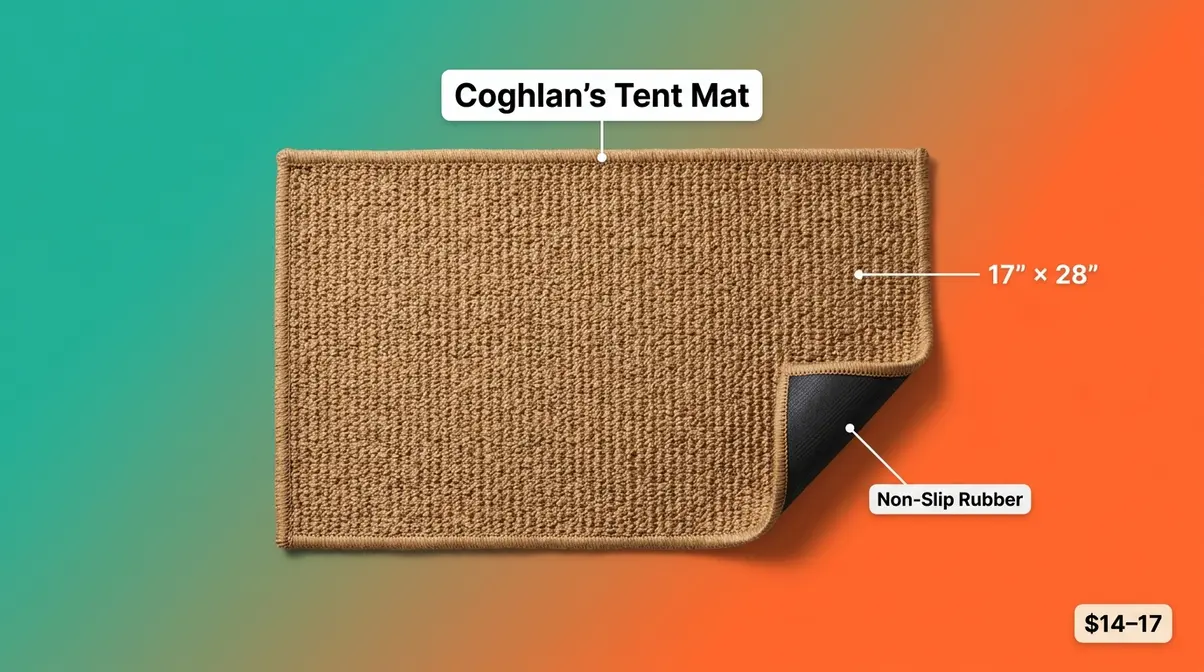
The Coghlan’s Inside/Outside Tent Mat is the most practical $15 you can spend on tent comfort. It’s not a luxury product — think of it as a tough, olefin-fiber door mat that happens to be perfectly sized for tent entry areas and vestibules. It’s 17″ × 28″, made from 100% olefin yarn (a durable, stain-resistant synthetic fiber) with a non-slip natural rubber backing.
Key Specs:
| Spec | Value |
|---|---|
| Dimensions | 17″ × 28″ |
| Material | 100% olefin yarn |
| Backing | Non-slip natural rubber |
| Washable | Yes — machine washable |
Pros:
- Genuinely affordable — typically $13–17 at REI, Target, and Sportsman’s Warehouse (as of early 2026, check current pricing)
- Machine washable and resistant to mold and mildew — huge for rainy camping
- Non-slip rubber backing prevents it from sliding around on the tent floor
- Works inside the tent, outside the door, or as a picnic mat — versatile
Cons:
- Small size (17″ × 28″) means it functions as an entry mat, not a full floor mat
- Minimal insulation — it’s a scraper mat, not a comfort pad
- Thin construction won’t cushion against hard ground
Real-World Usage: Place this at the tent entrance and it immediately earns its keep. In muddy, wet conditions — the kind that turn a family camping trip chaotic — it catches dirt, pine needles, and wet grass before they track inside. Campers across Reddit and outdoor forums consistently describe this as one of their “always-pack” items precisely because it’s so cheap and so effective at keeping the tent interior cleaner. It’s not your main floor mat; it’s the mat that makes your main floor mat last longer.
Verdict: For under $17, the Coghlan’s is a no-brainer add-on for any camper. Buy it alongside a larger floor solution — it handles a specific job (entry dirt control) better than anything else at this price.
Choose if: You need an affordable entry mat that keeps mud and debris out of your tent and washes easily in a standard machine.
Skip if: You need full-floor coverage or meaningful insulation — EVA foam tiles cover more ground for roughly the same cost.
Where the Drymate solves the whole tent floor, the Coghlan’s solves the doorstep. For a complete Ground Insulation System, you want both — or the Coghlan’s paired with foam tiles.
3. Big Agnes Tent Floor Protector
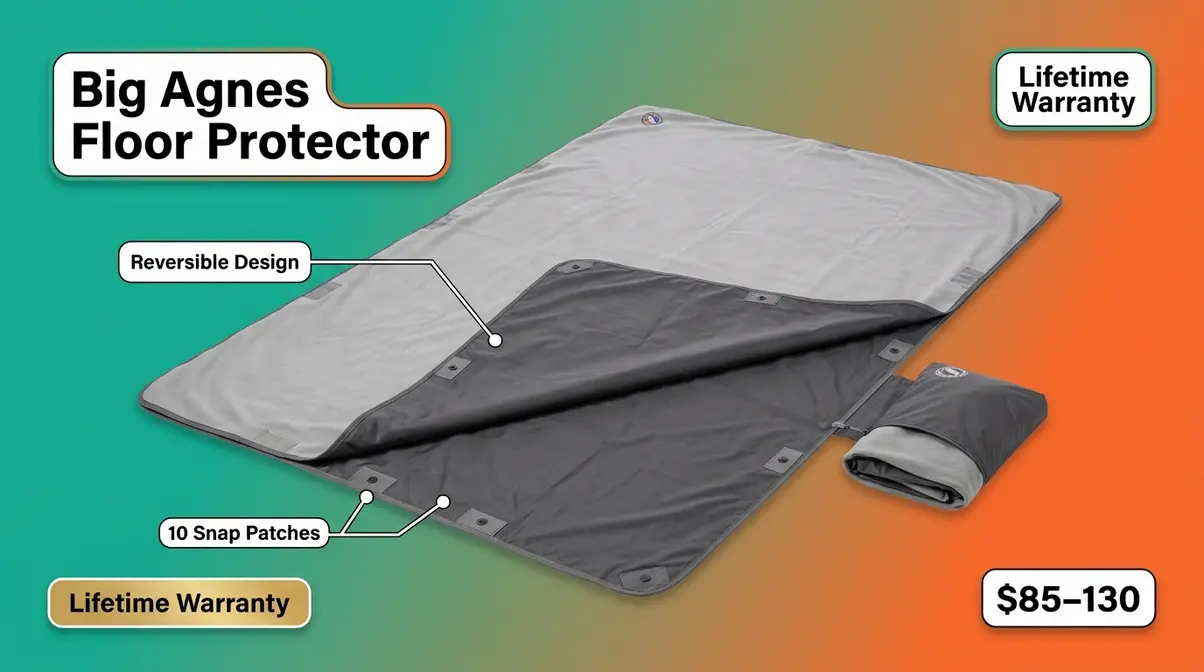
The Big Agnes Tent Floor Protector takes a different approach from standard mats. It’s a reversible, blanket-style floor pad — one side is water-resistant for use against the tent floor, the other side is soft and comfortable for sleeping on top of. It includes 10 3M snap patches so you can attach it directly to your tent floor, and it packs into its own built-in zippered pocket.
Key Specs:
| Spec | Value |
|---|---|
| Sizes | 58″ × 90″ and 90″ × 90″ |
| Top | 100% polyester |
| Bottom | 100% ripstop nylon (water-resistant) |
| Weight (90×90) | ~2 lb 15 oz |
Pros:
- Reversible design — functions as floor protector, ground blanket, or extra warmth layer
- 10 snap patches keep it anchored in place so it doesn’t bunch up overnight
- Packs into its own pocket — no extra stuff sack needed
- Lifetime warranty from Big Agnes
Cons:
- Expensive — MSRP around $129.95 for the 90″ × 90″ size (discounted to ~$84–105 at some retailers as of 2026)
- Heavier than a simple ground cloth at nearly 3 pounds for the large size
- Not a true insulator — adds comfort and moderate moisture protection, not significant R-value warmth
Real-World Usage: The Big Agnes Tent Floor Protector shines when you’re already invested in the Big Agnes ecosystem. If you own a Big Agnes tent, the dimensions are designed to work together, and the snap patches let you create a truly integrated floor system. On trips with dogs or kids who tend to scuff and drag gear across the tent floor, the ripstop nylon backing takes the punishment your tent floor would otherwise absorb. The soft polyester side underfoot feels noticeably warmer than bare tent floor on cool mornings.
Verdict: A premium, brand-integrated floor solution for Big Agnes tent owners who want a system that works together. The price is high, but the lifetime warranty and reversible design make it a long-term investment.
Choose if: You own a Big Agnes tent and want a manufacturer-designed floor system with snap-in attachment and long-term durability.
Skip if: You don’t already own Big Agnes gear — the Drymate delivers similar comfort at a lower price without brand lock-in.
4. EVA Foam Interlocking Tiles
EVA foam interlocking tiles are the camping community’s best-kept secret for full-floor coverage on a budget. Available at hardware stores and home improvement retailers, a set of 24″ × 24″ puzzle-style tiles can cover the entire floor of a 4-person tent for $20–40 — less than the cost of a branded tent mat half that size.
Key Specs:
| Spec | Value |
|---|---|
| Tile size | 24″ × 24″ (standard) |
| Thickness | ½”–⅝” (12–16mm) |
| Material | Closed-cell EVA foam |
| Waterproof | Yes — non-absorbent |
Pros:
- Full-floor coverage at a fraction of the cost of a single branded mat
- Noticeably softer and warmer underfoot than bare tent floor or a thin ground cloth
- Waterproof and easy to wipe clean — just a damp cloth after camping
- Trimmable with scissors to fit any tent shape or work around center poles
- Doubles as a kids’ play surface or exercise mat at home
Cons:
- Bulky and heavy for a full tent floor set — not suitable for backpacking
- No published R-value (unlike sleeping pads, EVA tiles don’t carry thermal ratings)
- Tiles can separate at the interlocking edges during the night if you move around a lot
- Plain grey or black — not the most attractive tent floor option
Real-World Usage: Across camping communities on Reddit and outdoor forums, EVA foam tiles consistently appear as the top recommendation for budget family campers. The consensus: they add significant comfort underfoot and a noticeable reduction in how cold the floor feels — but they’re not a replacement for a sleeping pad. Think of them as the “floor warmer” layer in your Ground Insulation System. According to Greatmats’ camping flooring guide, EVA tiles with a carpet top layer add both cushion and insulation value, making them one of the most cost-effective floor upgrades available for car campers.
Verdict: The best value for full-floor comfort in a family camping setup. Buy a set of tiles and pair them with a sleeping pad — you’ll be warmer and more comfortable than most campers spending twice as much.
Choose if: You car camp with family and want full-floor coverage and cushioning without spending $80+ on a branded mat.
Skip if: You’re backpacking — the bulk and weight make them impractical for any trip where you carry your gear.
EVA tiles solve the “cold floor everywhere” problem. For the sleeping area specifically, you still need a dedicated sleeping pad on top — which brings us to the ultralight option.
5. Rumpl Everywhere Mat
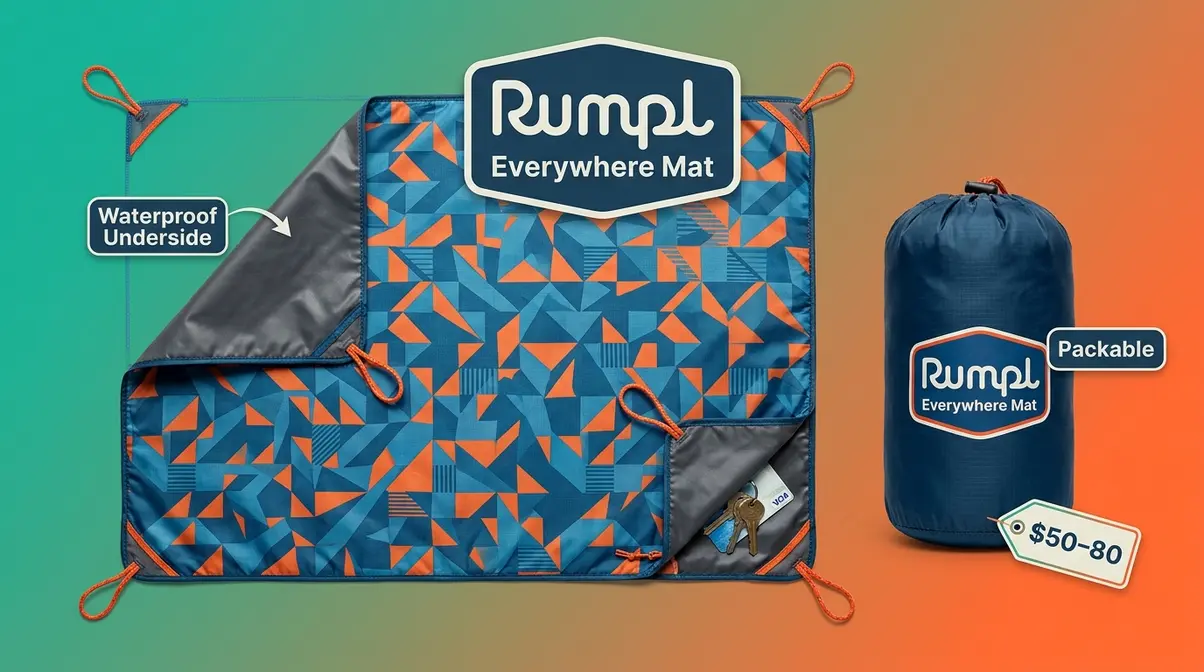
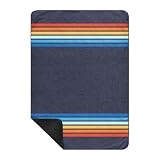
The Rumpl Everywhere Mat sits in an interesting category: it’s not a sleeping pad and it’s not a traditional tent carpet. Think of it as a tough, packable ground cover — the “tougher cousin of the classic picnic blanket,” as Rumpl describes it — with a fully waterproof underside and a comfortable fabric surface on top.
Key Specs:
| Spec | Value |
|---|---|
| Sizes | Small and Large |
| Underside | Fully waterproof |
| Corner loops | Paracord loops for staking |
| Price range | ~$50–80 depending on size |
Pros:
- Fully waterproof underside keeps you dry on damp grass, sand, or dirt
- Compact — packs into an included stuff sack significantly smaller than a foam tile set
- Paracord corner loops allow staking down in wind or on slopes
- Built-in valuables pouch — a small pocket to keep keys and gear off the ground
- Versatile beyond camping: beach, picnics, tailgating, fishing
Cons:
- No insulation value — this is a moisture barrier and comfort surface, not a cold-weather insulator
- Not sized for full tent floor coverage — best as a seating area or gear zone, not a sleeping surface
- Higher price per square foot than EVA foam tiles
Real-World Usage: In field testing by outdoor reviewers (Flylords Mag), the Rumpl Everywhere Mat passed the “wet pants test” with ease — keeping users completely dry while sitting on damp ground during a fishing outing. For camping, it’s most valuable as the layer between your tent’s vestibule and the ground, or as a comfortable outdoor seating area outside your tent. It’s lighter and more packable than foam tiles, which makes it a reasonable choice for car campers who prioritize quick setup over maximum coverage.
Verdict: A well-made, versatile outdoor mat for campers who want moisture protection and packability without lugging foam tiles. Pair it with a proper sleeping pad for overnight warmth.
Choose if: You want a packable, waterproof ground mat for general outdoor use — sitting areas, vestibules, and beach days — and you already have a sleeping pad for overnight insulation.
Skip if: You need full-tent floor coverage or cold-weather insulation — EVA tiles and the Drymate offer more coverage for similar or lower cost.
6. Hot Tent Carpet
Hot tent carpets are heavy-duty, thick floor mats designed specifically for canvas tents, bell tents, and cold-weather setups where comfort and floor insulation matter more than packability. Unlike thin tent carpets, these products typically feature a thicker pile, a heavier waterproof backing, and construction that holds up to repeated heavy-duty use in winter conditions.
Key Specs:
| Spec | Value |
|---|---|
| Material | Thick pile carpet + waterproof backing |
| Best use | Bell tents, canvas tents, cold-weather camping |
| Coverage | Full tent floor sizes available |
| Price range | ~$40–120 depending on size |
Pros:
- Significantly warmer underfoot than thin carpet mats — the thicker pile adds noticeable insulation
- Designed for large, non-standard tent shapes (bell tents, teepees) where standard mats don’t fit
- Heavy-duty construction survives repeated setup, takedown, and washing
- Creates a genuinely cozy living space inside a canvas or bell tent
Cons:
- Heavy — not suitable for backpacking or situations where you carry your gear
- Bulky to store and transport; typically requires a dedicated bag or storage bin
- Higher price for quality options in large sizes
Real-World Usage: For glamping setups, bell tent weekends, and family cold-weather camping where you drive to the site, a hot tent carpet is the single biggest comfort upgrade you can make. Campers who use them consistently report that the tent feels dramatically warmer — not because the carpet provides high R-value insulation, but because it eliminates the cold, hard floor that makes every other comfort measure feel inadequate. Pair it with a sleeping pad rated R-3 or higher and you have a system that handles three-season and even mild winter conditions.
Verdict: The right choice for cold-weather car camping, bell tent setups, and anyone who wants a genuinely comfortable tent interior for extended stays.
Choose if: You have a large canvas or bell tent and you camp in cold weather where floor warmth is a priority.
Skip if: You need packability or you camp in a standard backpacking tent — the Drymate or EVA tiles are better fits.
7. DIY Tyvek Footprint
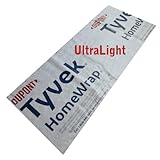
Tyvek house wrap — the white synthetic material used in home construction to block moisture and wind — is one of the outdoor community’s most beloved budget hacks. A yard of Tyvek from a hardware store costs about $3–5 and weighs almost nothing. Cut it to the shape of your tent floor, fold it up, and it becomes a highly effective waterproof footprint for a fraction of what branded options cost.
Key Specs:
| Spec | Value |
|---|---|
| Material | Spunbonded polyethylene (Tyvek) |
| Waterproof | Yes — excellent moisture barrier |
| Weight | Very light (~2–4 oz for most tent sizes) |
| Cost | ~$5–15 for a full footprint |
Pros:
- Dramatically cheaper than any commercial footprint — typically $5–15 for a full tent size
- Excellent waterproof barrier — water beads off the surface
- Lightweight and packable — folds to almost nothing
- Highly durable — Tyvek is tear-resistant and survives years of use
- Can be cut precisely to your tent’s floor dimensions with standard scissors
Cons:
- Noisy — Tyvek crinkles with movement, which can disturb light sleepers
- No insulation value at all — purely a moisture and abrasion barrier
- Requires DIY work (measuring, cutting, seaming if needed)
- Not as refined or easy to clean as commercial products
Real-World Usage: Across backpacking communities and thru-hiking forums, Tyvek footprints are standard practice. They weigh next to nothing, cost almost nothing, and do the job a $60 commercial footprint does for a fraction of the price. The noise issue is real — it crinkles underfoot — but for most campers, that’s a minor annoyance compared to the cost savings. As wifibum.com’s tent floor mat guide notes, DIY Tyvek footprints are a legitimate, widely-used alternative to commercial ground cloths.
Verdict: The smartest budget choice for campers who want waterproof ground protection without spending money on a commercial footprint. Combine it with EVA tiles inside the tent and you have a complete Ground Insulation System for under $30.
Choose if: You’re on a tight budget or you backpack and need a near-weightless footprint that actually works.
Skip if: You want a polished, quiet solution — the crinkling noise and DIY nature aren’t for everyone, and the Drymate is worth the extra cost for car campers who value convenience.
Which Mat is Right for You?
| Your Situation | Best Choice | Why | Est. Cost |
|---|---|---|---|
| Family car camping, want it all in one | Drymate Tent Carpet Mat | Waterproof + soft surface + washable | ~$60–90 |
| Tightest possible budget | EVA Foam Tiles + Tyvek | Full coverage + waterproof footprint | ~$25–40 |
| Backpacking / ultralight | DIY Tyvek Footprint | Near-zero weight, excellent moisture barrier | ~$5–15 |
| Cold-weather / bell tent camping | Hot Tent Carpet + sleeping pad | Floor warmth + full coverage for large tents | ~$60–130 |
| Big Agnes tent owner | Big Agnes Tent Floor Protector | Brand-matched, snap-in system, lifetime warranty | ~$85–130 |
| Casual outdoor use + versatility | Rumpl Everywhere Mat | Packable, waterproof, multi-use | ~$50–80 |
| Budget doorstep / entry solution | Coghlan’s Inside/Outside Mat | Machine washable, non-slip, keeps dirt out | ~$14–17 |
How to Build Your Ground Insulation System
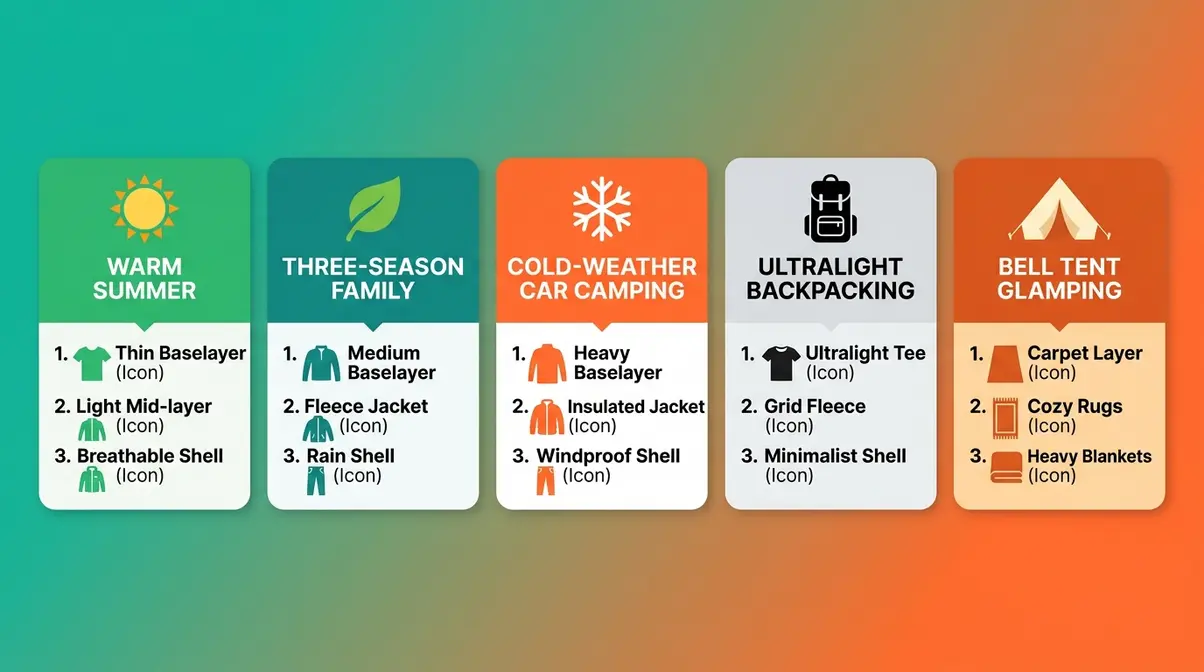
The Ground Insulation System turns your tent floor from a single weak point into a layered defense against cold, moisture, and discomfort, which is a foundational step in how to improve camp comfort. This section covers the science behind the system and five ready-to-use layering recipes for different temperature ranges — no guesswork required.
Understanding R-Values for Tent Mats
R-value is a measure of thermal resistance — how well a material slows the transfer of heat. The higher the R-value, the better the insulation. For camping, it’s the most important number you’re probably ignoring.
Here’s the practical guide, based on guidance from REI’s sleeping pad resource and Switchback Travel’s R-value explainer:
| Conditions | Temperature Range | Recommended R-Value |
|---|---|---|
| Warm summer camping | Above 60°F (15°C) | R-1 to R-2 |
| Three-season camping | 35–60°F (2–15°C) | R-2 to R-4 |
| Cold-weather camping | 20–35°F (-7 to 2°C) | R-4 to R-5.5 |
| Winter / snow camping | Below 20°F (-7°C) | R-5.5+ |
The critical insight: R-values from stacked layers add together. A modest foam tile layer (estimated low R-value) combined with a sleeping pad rated R-3 produces a combined system that’s meaningfully warmer than either product alone. This is exactly why the Ground Insulation System outperforms any single product.
Most tent floor mats — carpets, Tyvek footprints, and entry mats — don’t carry a published R-value because they’re designed for comfort and moisture protection, not primary insulation. EVA foam tiles add some insulating value (closed-cell foam resists heat transfer), but manufacturers don’t test or rate them. Treat your sleeping pad as the primary insulation layer and your tent mat as the comfort and moisture layer.
“R-values add together — stacking a foam tile layer under a sleeping pad rated R-3 can push your total ground insulation well into three-season-capable territory, for under $50 combined.”
5 Layering Recipes by Temperature Range
These five ready-to-use Ground Insulation System recipes are built around common products and real temperature ranges. Mix and match based on what you own.
- Recipe 1: Warm Summer Camping (Above 60°F / 15°C)
- Layer 1: Tyvek ground cloth (outside tent)
- Layer 2: Thin tent carpet or Coghlan’s entry mat (inside)
- Layer 3: Sleeping pad rated R-1 to R-2
Total cost estimate: ~$20–50. Perfectly comfortable for summer camping. The focus is moisture protection and basic comfort — you don’t need heavy insulation.
- Recipe 2: Three-Season Family Camping (35–60°F / 2–15°C)
- Layer 1: Commercial footprint or Tyvek (outside)
- Layer 2: EVA foam interlocking tiles (inside, full floor)
- Layer 3: Sleeping pad rated R-2 to R-4
Total cost estimate: ~$50–130. This is the “sweet spot” setup for most family car campers. The foam tiles warm the whole tent floor while the sleeping pad handles the critical insulation directly under your body.
- Recipe 3: Cold-Weather Car Camping (20–35°F / -7 to 2°C)
- Layer 1: Heavy-duty footprint (outside)
- Layer 2: Hot tent carpet or thick EVA tiles (inside)
- Layer 3: Sleeping pad rated R-4 to R-5.5
Total cost estimate: ~$80–200. At these temperatures, every layer matters. The tent carpet keeps the air near the floor warmer, and the sleeping pad does the heavy lifting for your body.
- Recipe 4: Ultralight Backpacking (Any Season)
- Layer 1: DIY Tyvek footprint (outside, optional)
- Layer 2: None — sleeping pad goes directly on tent floor
- Layer 3: Sleeping pad rated for expected temperatures (R-2+ for three-season)
Total cost estimate: ~$5–150. Weight is the priority here. Skip the interior mat and invest in a higher-rated sleeping pad instead.
- Recipe 5: Bell Tent / Glamping Setup (Three-Season)
- Layer 1: Heavy-duty footprint or integrated groundsheet
- Layer 2: Large hot tent carpet covering full floor
- Layer 3: Sleeping pad or cot mattress pad rated R-2 to R-4
Total cost estimate: ~$100–250. The goal is a tent that feels like a room. The full-floor carpet makes this possible; the sleeping pad or cot pad handles overnight insulation.
Managing Moisture and Condensation
Moisture inside your tent comes from two sources, and they require different solutions. Understanding which one you’re dealing with prevents a lot of frustration.
Groundwater travels upward through the tent floor under sustained pressure — the weight of a sleeping person. A waterproof footprint outside and a waterproof-backed mat inside are your defense. The footprint blocks the initial moisture; the mat’s backing catches anything that makes it through. This is why the Drymate’s waterproof backing matters: it’s not just about comfort, it’s about keeping your sleeping bag dry.
Condensation forms on the inside of your tent walls and can drip onto your mat or sleeping bag. This happens when warm, humid air from your breath meets the cold tent fabric. The solution is ventilation, not more layers — keep tent vents open even in cold weather, and position your sleeping mat away from tent walls where condensation drips.
A common mistake is using a non-breathable mat across the entire tent floor and then wondering why the tent feels damp inside. According to community feedback across outdoor forums, the most effective moisture management combines a waterproof footprint (outside), a breathable or waterproof-backed interior mat, and consistent tent ventilation throughout the night.
Tent Floor Mat Solutions for Specialty Tents
Standard rectangular mats work fine for standard tents. But if you have a bell tent, party tent, or ultralight backpacking shelter, the sizing and material requirements change significantly.
Bell Tent and Teepee Floor Solutions
Bell tents used for glamping and teepees have circular or octagonal floor shapes — and that means standard rectangular mats either leave gaps or require creative cutting. The most practical approach is a combination strategy: a circular or octagonal cut ground cloth outside (Tyvek cuts to any shape easily), and a large round tent carpet inside.
Several specialty outdoor retailers sell circular tent carpets sized for popular bell tent dimensions (10-foot, 13-foot, and 16-foot diameters are common). Look for carpets with waterproof backing and enough pile thickness to add warmth — bell tents are often used in cooler weather where floor insulation matters more than in standard camping. For a DIY solution, interlocking EVA foam tiles can be arranged in a circular pattern and trimmed at the edges to fit the curve.
“Bell tent floor coverage is one of the most searched-for niche solutions in camping communities — a circular carpet paired with a Tyvek ground cloth is the most cost-effective combination for most setups.”
Party Tent and Event Tent Flooring
Large event tents — the kind used for outdoor parties, weddings, and markets — need flooring that covers hundreds of square feet, handles foot traffic, and looks presentable. EVA foam tiles are the practical choice here: they interlock to cover any size area, they’re waterproof, and they’re easy to wipe clean after an event.
For a more polished look, interlocking carpet tiles (carpet bonded to an EVA foam base) offer the coverage and durability of foam tiles with a more attractive surface. Greatmats and similar suppliers sell these specifically for temporary outdoor flooring applications. When planning for large groups, referencing USDA Forest Service tent pad dimensions can help you estimate the square footage needed for your flooring. Expect to budget $1–3 per square foot for a solid event flooring solution.
For truly large areas, wooden deck tiles or interlocking plastic flooring panels are worth considering — they elevate the floor surface off the ground entirely, which solves both the moisture and insulation problems simultaneously.
Pop-Up Tent and Backpacking Tent Floors
Small pop-up tents and backpacking shelters have different constraints: weight and packability matter enormously, and floor space is limited. For these setups, a single sleeping pad rated for the expected temperature range is almost always the right answer — skip the floor mat entirely and invest in a better pad.
If you want some floor protection for a pop-up tent, a small piece of Tyvek cut to the tent floor dimensions adds moisture protection for almost no weight penalty. For backpacking tents, a polycro (polyethylene copolymer) ground sheet is even lighter than Tyvek and costs about the same. Neither adds insulation, but both protect the tent floor from abrasion and block groundwater effectively.
Common Tent Floor Mat Mistakes to Avoid
Our team has seen the same mistakes repeated across camping seasons and across all experience levels. Most are easy to avoid once you know what to look for.
5 Setup Mistakes That Ruin Comfort
Mistake 1: Extending the ground cloth beyond the tent edge. If your footprint or ground cloth sticks out from under the tent, rain will collect on it and flow directly underneath your tent floor — channeling water exactly where you don’t want it. Always cut or fold the ground cloth so it sits 2–3 inches inside the tent perimeter.
Mistake 2: Using a single mat and skipping the sleeping pad. A tent carpet or foam tile layer improves comfort across the whole tent floor, but it doesn’t replace a sleeping pad for overnight insulation. Your sleeping bag is rated for air temperature, not ground temperature — without a pad, cold ground can defeat even a high-quality sleeping bag.
Mistake 3: Choosing a mat based on size alone. A mat that covers your tent floor perfectly but has no waterproof backing can actually trap moisture between the mat and the tent floor, leading to mold and mildew on both surfaces. Always check the backing material before buying.
Mistake 4: Forgetting to air out and dry your mat after each trip. Damp mats stored in stuff sacks or storage bins develop mold within days. After every camping trip, hang your mat in a well-ventilated area for at least 24 hours before packing it away for storage.
Mistake 5: Buying a mat that’s too large for your tent. A mat that’s exactly the size of your tent floor will bunch up at the corners and edges, creating uncomfortable ridges. Size down by 2–4 inches on each side for a flat, smooth fit.
When to Skip the Mat
There are genuine situations where a tent floor mat isn’t the right solution — and buying one anyway wastes money.
If you’re backpacking more than 5 miles: The weight and bulk of any mat beyond a Tyvek footprint is a poor trade-off. Invest that budget in a higher-rated sleeping pad instead — you’ll sleep warmer and carry less.
If you’re camping in hot, dry conditions above 70°F (21°C): Ground insulation becomes far less critical when temperatures are warm. A simple ground cloth for moisture protection is usually sufficient, and a lightweight sleeping pad handles any remaining comfort needs.
If your tent already has an integrated footprint: Some premium tents include a factory footprint. In that case, skip the external ground cloth and focus your budget on an interior comfort mat and a quality sleeping pad.
For truly minimalist campers, the right answer is sometimes no mat at all — just a well-rated sleeping pad placed directly on the tent floor. The Ground Insulation System is a framework, not a requirement to buy every layer.
Frequently Asked Questions
What to put on a tent floor?
The best tent floor setup combines three layers: a waterproof ground cloth or footprint under the tent, a soft interior mat or EVA foam tiles covering the tent floor, and a sleeping pad under your sleeping bag. Each layer solves a different problem — moisture, comfort, and insulation respectively. For most three-season campers, a foam tile layer paired with a sleeping pad rated R-2 to R-4 covers all three needs effectively.
Should you put a mat under your tent?
Yes — placing a ground cloth or footprint under your tent is one of the most valuable things you can do. Ground cloths block moisture from seeping up through the tent floor, protect the tent fabric from abrasion and punctures, and extend the life of a tent significantly. According to REI’s camping resources, a properly sized footprint (cut slightly smaller than the tent floor) prevents rain from pooling underneath and channeling into the tent. The key rule: never let the ground cloth extend beyond the tent edge, or it acts as a rain collector instead of a barrier.
How to make a floor comfortable?
Making your tent floor more comfortable comes down to layering. Start with a ground cloth outside to block moisture. Add EVA foam interlocking tiles inside to cushion the entire floor — these cost $20–40 for a family tent and make a dramatic difference. Place a sleeping pad rated for your expected temperatures directly under your sleeping bag. Finally, a soft tent carpet on top of the tiles creates a surface that feels genuinely warm and comfortable underfoot.
Build Your System, Not Just Your Mat
The single biggest mistake frustrated campers make is searching for the one perfect mat — a product that handles insulation, moisture, comfort, and durability all at once. That product doesn’t exist at any price. What does exist is The Ground Insulation System: five layers, each doing one job well, working together to create a tent floor that no single mat can match.
For most three-season family campers, the practical starting point is straightforward: a Tyvek ground cloth outside (~$10), EVA foam tiles inside (~$25), and a sleeping pad rated R-2 to R-4 (~$30–80). That three-layer system costs less than most branded tent carpets and outperforms them on every metric that matters — warmth, moisture protection, and comfort.
The Drymate Tent Carpet Mat remains the best single-product upgrade for car campers who want convenience and quality in one package. The Coghlan’s mat handles the doorstep. The Big Agnes Tent Floor Protector serves Big Agnes tent owners well. But none of them work as well alone as they do as part of a layered system.
Start with one layer, add the next when your budget allows, and remember: you’re not buying a mat — you’re building a system. Add these layers to your essential tent camping gear checklist, and check current pricing at major outdoor retailers before purchasing, as prices shift seasonally.

Dave King
I'm Dave King. I publish Tent Explorer, a site built to answer the questions people actually ask before they buy.