Best 3 Person Backpacking Tent: Top 10 Picks for 2026
 Dave King
Updated June 4, 2026
22 min read
Dave King
Updated June 4, 2026
22 min read
Finding the best 3 person backpacking tent is harder than it looks. Most tents labeled “3-person” were designed by engineers with tape measures — not by three actual hikers trying to sleep comfortably after a 12-mile day. You need a tent that fits three sleeping pads without a fight, splits weight fairly among the group, and handles the condensation that comes from three people breathing all night. This guide cuts through the confusion with 10 options ranked on exactly those criteria — so you can stop researching and start hiking.
| # | Preview | Product | Best For | Buy |
|---|---|---|---|---|
| 1 | 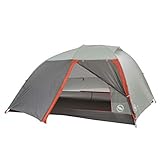 |
Big Agnes Copper Spur HV UL | Best ultralight pick | Buy on Amazon |
| 2 |  |
Big Agnes Blacktail Hotel | Best livability | Buy on Amazon |
| 3 |  |
The North Face Stormbreak 3 | Best budget pick | Buy on Amazon |
| 4 |  |
Marmot Crane Creek 2P and 3P | Best for couples + 1 | Buy on Amazon |
| 5 |  |
Kelty Grand Mesa | Best thru-hike value | Buy on Amazon |
| 6 |  |
Kelty Far Out Plus Footprint | Best starter kit | Buy on Amazon |
| 7 |  |
Big Agnes Salt Creek | Best minimalist design | Buy on Amazon |
| 8 |  |
CORE Dome with Gear Loft | Best gear storage | Buy on Amazon |
| 9 |  |
Forceatt 2 to 3 Person Tent | Best 3–4 season value | Buy on Amazon |
| 10 |  |
Hyke and Byke Zion | Best solo ultralight | Buy on Amazon |
1. Big Agnes Copper Spur HV UL
Last update on 2026-07-19 / Affiliate links / Images from Amazon Product Advertising API
Who it’s for: Serious backpackers who want maximum interior space at minimum trail weight. Two doors, two vestibules, and a high-volume geometry mean three adults can actually move around — not just exist — inside this tent.
| Spec | Value |
|---|---|
| Capacity | 3 persons |
| Floor area | ~43.5 sq ft |
| Peak height | ~43 in |
| Trail weight | ~3 lbs 14 oz |
| Material | 20D Ripstop nylon body, DAC aluminum poles |
| Seasons | 3-season |
| Doors/Vestibules | 2 doors / 2 vestibules |
Pros:
- Dual-door access — each hiker reaches their own door without crawling over anyone; a practical advantage that matters at 5 a.m. on cold mornings.
- DAC Featherlight aluminum poles — a premium pole alloy used by expedition teams that weighs 15–20% less than standard aluminum.
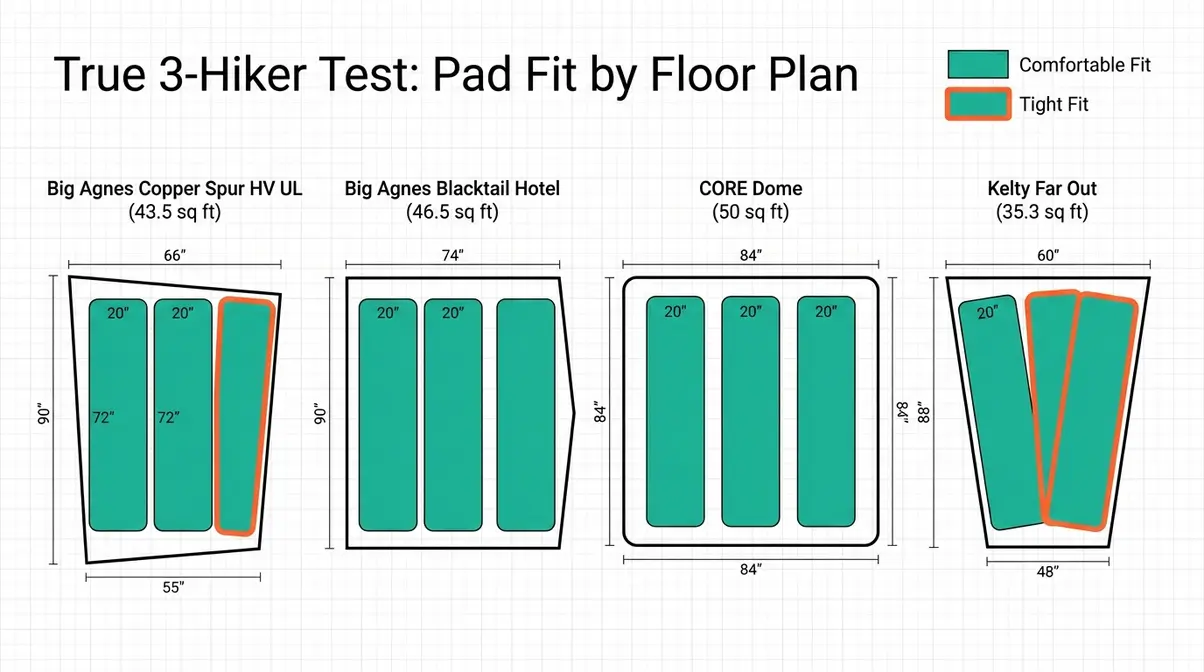
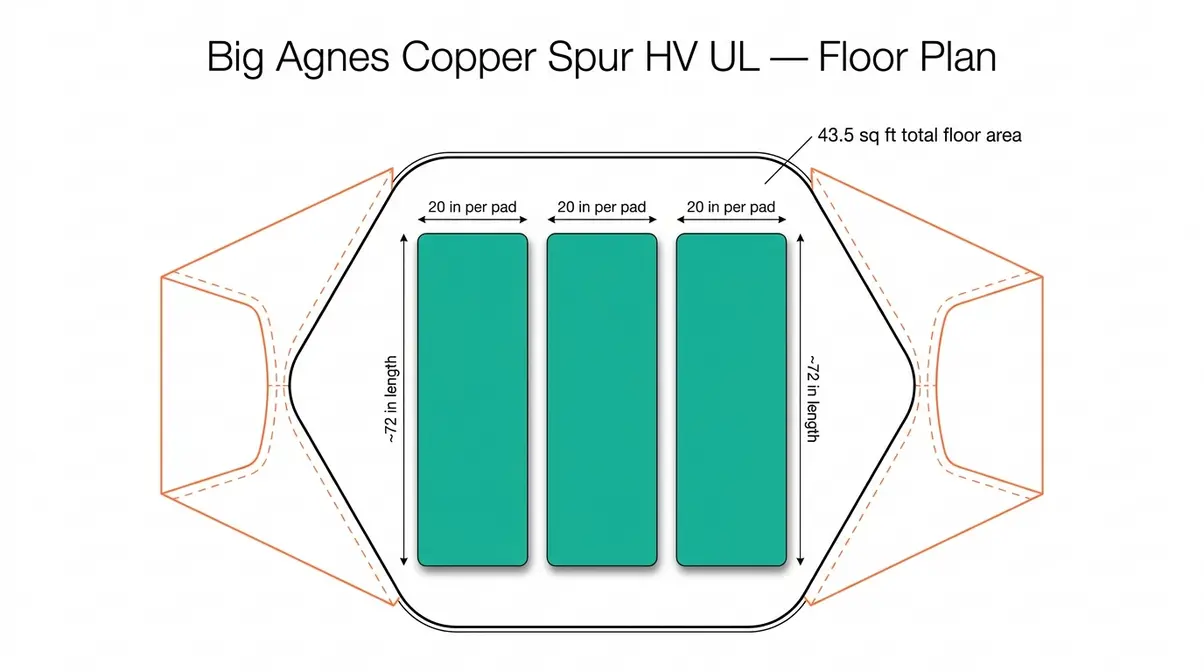
- 43.5 sq ft floor with HV geometry — the high-volume design pushes the walls outward, so three 20-inch sleeping pads fit side by side.
- Two vestibules — covered storage for three hikers’ worth of boots, trekking poles, and daypacks.
Cons:
- Premium price — costs significantly more than budget options; not wallet-friendly for first-time buyers testing the waters.
- 20D ripstop nylon body — the ultralight fabric is more puncture-prone than heavier-denier competitors.
Real-World Usage:
In everyday field conditions, this tent excels on long-distance trails where weight is paramount. The dual vestibules easily swallow three sets of muddy boots and packs, keeping the interior pristine. During multi-day use, the high-volume architecture prevents the typical shoulder-rubbing common in standard three-person domes.
How it compares: Where the North Face Stormbreak 3 prioritizes affordability and durability, the Copper Spur HV UL goes the opposite direction — lighter materials, higher cost, and more refined interior geometry.
Verdict: The Copper Spur HV UL passes the True 3-Hiker Test with flying colors — three pads fit, the weight splits cleanly at roughly 1 lb 4 oz per person, and the dual-door design reduces condensation buildup.
Choose if: Your group is logging 10+ miles per day and needs every gram saved.
Skip if: You’re a first-time backpacker on a tight budget.
2. Big Agnes Blacktail Hotel
Last update on 2026-07-19 / Affiliate links / Images from Amazon Product Advertising API
Who it’s for: Groups who want genuine livability — a 50-inch peak height means taller hikers (6-foot-plus) can sit up straight to change clothes, check maps, or wait out a rainstorm without hunching.
| Spec | Value |
|---|---|
| Capacity | 3 persons |
| Floor area | ~46.5 sq ft |
| Peak height | ~50 in |
| Trail weight | ~5 lbs 10 oz |
| Material | Ripstop nylon, aluminum poles |
| Seasons | 3-season |
| Doors/Vestibules | 2 doors / 2 vestibules |
Pros:
- 50-inch peak height — the tallest in this roundup alongside the North Face Stormbreak 3; sitting up inside feels spacious rather than claustrophobic.
- 46.5 sq ft floor area — the largest floor in this guide; three 20-inch sleeping pads fit with room to spare on either side.
- Big Agnes build quality — the same seam sealing, zipper quality, and factory standards as the Copper Spur line.
Cons:
- Heavier than the Copper Spur HV UL — at approximately 5 lbs 10 oz trail weight, that difference adds up on long climbs.
- Newer model — the Blacktail Hotel line is relatively recent, meaning less long-term field data compared to established lines.
Real-World Usage:
When waiting out a rainstorm, the 50-inch peak height transforms this tent from a cramped shelter into a genuinely livable space. Taller hikers can comfortably change clothes or study maps without hunching over. It performs exceptionally well for basecamp scenarios where you aren’t moving camp every single day.
How it compares: It’s a step down in weight savings from the Copper Spur but a massive step up in interior comfort and headroom.
Verdict: A compelling mid-range choice for groups where at least one member is tall, frequently rain-pinned, or simply values the ability to sit up comfortably.
Choose if: Your group includes taller hikers (6’+) who need genuine sit-up headroom.
Skip if: Pure weight savings is your priority.
Buy on Amazon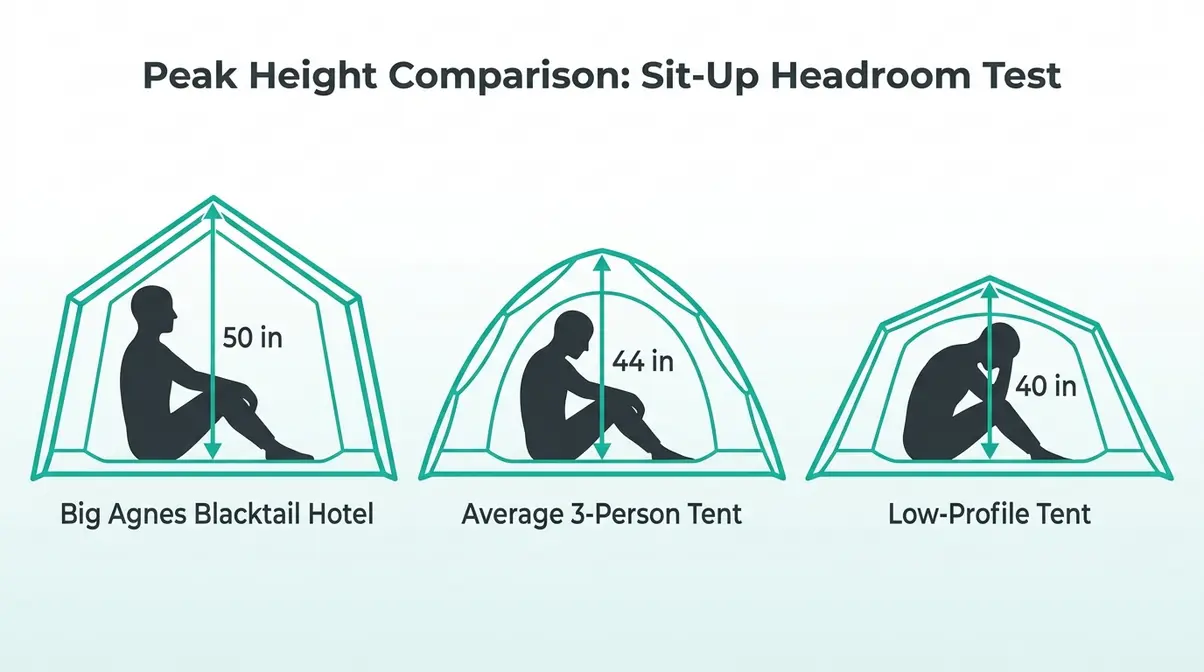
3. The North Face Stormbreak 3

Last update on 2026-07-19 / Affiliate links / Images from Amazon Product Advertising API
Who it’s for: Beginner groups who want a trusted brand name and smart weather protection without the premium price tag.
| Spec | Value |
|---|---|
| Capacity | 3 persons |
| Floor area | ~39.7 sq ft |
| Peak height | ~46 in |
| Trail weight | ~5 lbs 15 oz |
| Material | 68D polyester floor, aluminum poles |
| Seasons | 3-season |
| Ventilation | High-low vent openings |
Pros:
- High-low ventilation system — warm, moist air from three sleeping bodies rises and exits through upper vents while cooler air enters from lower openings.
- Generous headroom — three adults can sit up comfortably, reducing the claustrophobic feeling that causes beginners to abandon backpacking.
- The North Face brand support — widely available customer service, warranty coverage, and repair resources.
Cons:
- 1,200mm HH rainfly rating — adequate for light-to-moderate rain but below the 1,500mm+ threshold recommended for heavy downpours.
- Heavier build — the 68D polyester floor is highly durable, but pushes the trail weight near 6 lbs.
Real-World Usage:
On humid summer nights, the high-low ventilation system proves its worth by significantly reducing interior condensation. While it packs slightly bulkier than ultralight alternatives, it withstands rough handling from beginners learning to pitch. It serves as a reliable workhorse for weekend warriors hitting state parks.
How it compares: Where the Copper Spur HV UL wins on weight, the Stormbreak 3 wins on price and brand accessibility.
Verdict: The most accessible entry point for three-person backpacking — solid weather protection, smart ventilation, and a brand name that beginners trust. For a deeper look at the full lineup, see our guide to North Face 3-person tents.
Choose if: You’re new to backpacking, budget is your primary constraint, and you want a brand with strong customer support.
Skip if: You’re planning trips longer than 3–4 days where pack weight becomes a serious factor.
Buy on Amazon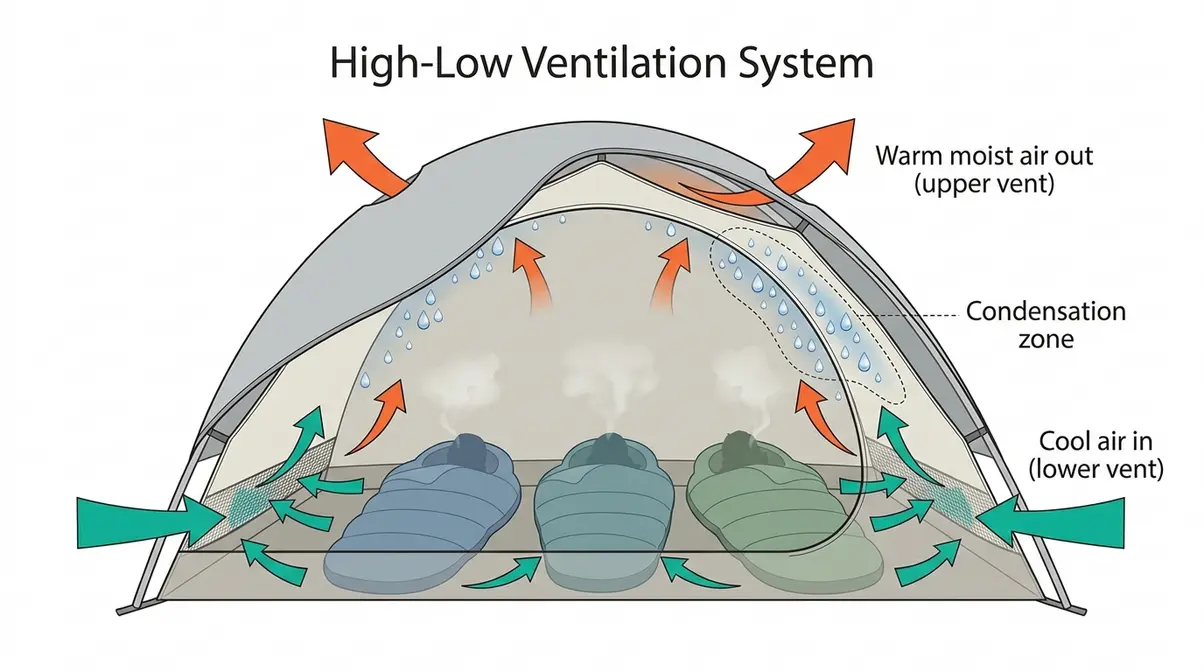
4. Marmot Crane Creek 2P and 3P
Last update on 2026-07-19 / Affiliate links / Images from Amazon Product Advertising API
Who it’s for: A couple who sometimes brings a third person, or a trio of experienced minimalists comfortable sleeping close. It delivers Marmot’s above-average build quality with a footprint already in the box.
| Spec | Value |
|---|---|
| Capacity | 2–3 persons |
| Floor area | ~40.4 sq ft |
| Peak height | ~44 in |
| Trail weight | ~5 lbs 5 oz |
| Material | Marmot ripstop fabric, aluminum poles |
| Seasons | 3-season |
| Footprint included | Yes |
Pros:
- Footprint included — floor protection from rocky and root-covered ground at no extra cost; this extends the tent’s lifespan significantly.
- Marmot seam sealing and pole quality — consistently earns high marks for waterproof coating durability, meeting the recommended threshold for heavy rain.
- Aluminum pole construction — standard aluminum poles provide reliable cold-weather performance without the shattering risk of fiberglass.
Cons:
- 40.4 sq ft floor — three 20-inch sleeping pads will fit, but barely; broader-shouldered adults will feel the true meaning of “tight squeeze.”
- 44-inch peak height — sitting up fully requires a slight forward lean for anyone over 5’8″.
Real-World Usage:
This tent shines for couples who want extra sprawling room or space for a large dog. When three adults use it, organization becomes critical due to the cozier footprint. The included footprint adds immediate value, protecting the floor perfectly on abrasive granite or root-heavy forest ground.
How it compares: It sits in a similar price and weight range as the Kelty Grand Mesa, but Marmot’s build quality and included footprint give it a slight durability edge.
Verdict: A solid choice for couples who occasionally add a third person, or experienced minimalists who know what cozy sleeping arrangements feel like.
Choose if: You want a footprint included and trust Marmot’s build quality for multi-season use.
Skip if: Three full-sized adults need genuine comfort — look at the Copper Spur HV UL instead.
Buy on Amazon5. Kelty Grand Mesa
Last update on 2026-07-19 / Affiliate links / Images from Amazon Product Advertising API
Who it’s for: Thru-hikers and budget backpackers who need a lightweight, packable shelter from a trusted American outdoor brand.
| Spec | Value |
|---|---|
| Capacity | 4P variant (best for 3 persons) |
| Floor area | ~41 sq ft |
| Peak height | ~44 in |
| Trail weight | ~5 lbs 8 oz |
| Material | Aluminum pole frame, 68D polyester |
| Seasons | 3-season |
| Doors/Vestibules | Single door + single vestibule |
Pros:
- Aluminum pole frame — a meaningful step above the fiberglass poles found on cheaper tents; aluminum flexes under load rather than snapping.
- Kelty thru-hiker pedigree — a staple recommendation on long-distance hiking forums for its packability and consistent performance.
- 41 sq ft floor area — just above the 40 sq ft minimum recommended for genuine 3-person comfort.
Cons:
- Single door, single vestibule — the middle and far-side sleepers must climb over the nearest person to exit.
- Single vestibule — three hikers’ worth of boots, poles, and wet gear compete for one covered storage space.
Real-World Usage:
A staple on the Appalachian Trail, this shelter packs down surprisingly small for its price point. The single-door design requires some coordinated logistics when nature calls at 2 a.m., but the aluminum poles hold up admirably in stiff winds. It’s a rugged, no-nonsense option for budget-conscious hikers.
How it compares: It’s a step up from the Far Out in terms of thru-hiking optimization, but the single-door design puts it behind the Copper Spur HV UL for three-person livability.
Verdict: A dependable, wallet-friendly option for budget-conscious thru-hikers who use the tent primarily solo or in pairs and bring a third person occasionally.
Choose if: You’re on a strict budget and primarily use the tent for solo or two-person trips.
Skip if: Three people will use this tent regularly — the single door will frustrate everyone quickly.
Buy on Amazon6. Kelty Far Out Plus Footprint
Last update on 2026-07-19 / Affiliate links / Images from Amazon Product Advertising API
Who it’s for: First-time backpackers who want everything they need in one package. There’s no second-guessing which footprint fits or improvising with a tarp.
| Spec | Value |
|---|---|
| Capacity | 3 persons |
| Floor area | ~35.3 sq ft |
| Peak height | ~43 in |
| Trail weight | ~4 lbs 6 oz |
| Material | Aluminum poles, polyester body |
| Seasons | 3-season |
| Included accessories | Footprint + stuff sack |
Pros:
- Complete starter kit — tent, matching footprint, and stuff sack included; removes a common barrier to actually leaving the house.
- Kelty brand reliability — quality control means the Far Out will survive the learning curve of a first-time backpacker making setup mistakes.
- 4 lbs 6 oz trail weight — lighter than the Marmot Crane Creek; three hikers splitting the weight will each carry well under 2 lbs.
Cons:
- 35.3 sq ft floor area — the smallest dedicated backpacking tent floor in this roundup; three adults will experience a genuine tight squeeze.
- Single door design — same exit-over-your-neighbor problem as the Grand Mesa.
Real-World Usage:
For those transitioning from car camping to the backcountry, this all-in-one kit removes the guesswork. It pitches intuitively in under ten minutes, even for first-timers. Though snug for three full-sized adults, it provides a highly reliable, weather-tight environment for shorter weekend excursions.
How it compares: The Far Out package is the most beginner-accessible option in this list, including more out-of-the-box accessories than the Grand Mesa.
Verdict: The best first tent for someone stepping up from car camping to backpacking. Just know that the floor area is cozy for three adults.
Choose if: You’re buying your first backpacking tent and don’t want to figure out which accessories to add.
Skip if: You already own a footprint and want to prioritize space over convenience bundling.
Buy on Amazon7. Big Agnes Salt Creek
Last update on 2026-07-19 / Affiliate links / Images from Amazon Product Advertising API
Who it’s for: Minimalist backpackers who want Big Agnes quality in a stripped-down, lighter package — ideal for experienced hikers who value simplicity.
| Spec | Value |
|---|---|
| Capacity | 3 persons |
| Floor area | ~40.5 sq ft |
| Peak height | ~44 in |
| Trail weight | ~4 lbs 10 oz |
| Material | Ripstop nylon, aluminum poles |
| Seasons | 3-season |
| Doors/Vestibules | 2 doors / 2 vestibules |
Pros:
- Big Agnes quality at a lower price — the same factory seam sealing, zipper quality, and pole fitment standards as the premium lines.
- 4 lbs 10 oz trail weight — lighter than the Blacktail Hotel; the weight splits to roughly 1 lb 9 oz per person.
- 40.5 sq ft floor area — just above the 40 sq ft threshold for three-person comfort; three 20-inch sleeping pads fit side by side.
Cons:
- 44-inch peak height — sitting fully upright requires a slight hunch for taller hikers.
- Steeper wall angles — the reduced interior volume shows up most clearly when three people are changing clothes simultaneously.
Real-World Usage:
This minimalist shelter strips away luxury features in favor of trail efficiency. The steeper wall angles require careful pad placement, but the weight savings are immediately noticeable on steep ascents. It’s best deployed by experienced groups who have their sleep systems dialed in.
How it compares: It occupies a niche between the premium Copper Spur HV UL and the budget Kelty options, offering Big Agnes build quality at a lower price.
Verdict: A strong mid-range pick for experienced backpackers who want Big Agnes reliability without paying Copper Spur prices.
Choose if: You’re an experienced hiker who knows exactly what specs you need and wants Big Agnes quality at a mid-range price.
Skip if: You’re a beginner — the Kelty Far Out starter kit is more forgiving.
Buy on Amazon8. CORE Dome with Gear Loft
Last update on 2026-07-19 / Affiliate links / Images from Amazon Product Advertising API
Who it’s for: Campers who split time between car camping and light backpacking and want a tent with smart interior organization.
| Spec | Value |
|---|---|
| Capacity | 3 persons |
| Floor area | ~50 sq ft |
| Peak height | ~55 in |
| Trail weight | ~6 lbs 8 oz |
| Material | Polyester body, fiberglass/aluminum poles |
| Seasons | 3-season |
| Included accessories | Gear loft |
Pros:
- Included gear loft — a mesh overhead shelf that keeps small items organized and accessible; having a dedicated storage tier makes a real difference.
- 50 sq ft floor area — the largest floor in this roundup by a meaningful margin; three 25-inch sleeping pads fit side by side with room to spare.
- 55-inch peak height — the tallest tent in this guide; most adults can sit up fully upright without any adjustment.
Cons:
- ~6 lbs 8 oz trail weight — the heaviest tent in this roundup; manageable for short trips but becomes a burden on routes over 5 miles per day.
- “Family camping” positioning — the packed size and weight place it firmly in the car-camping-to-short-backpacking crossover category.
Real-World Usage:
Perfect for short hike-in campsites, the massive interior volume makes group organization effortless. The overhead gear loft keeps fragile items like glasses and headlamps safe from shifting sleeping pads. While too heavy for serious mileage, it offers unmatched comfort for relaxed overnight trips.
How it compares: Where the Kelty Far Out prioritizes packability, the CORE Dome prioritizes interior organization and comfort.
Verdict: Best for groups who prioritize interior space and organization over trail weight — short overnight trips or base camping.
Choose if: Your trips are 1–2 nights with moderate mileage and you want a well-organized interior.
Skip if: You’re planning trips over 5 miles per day — the weight will become a burden.
Buy on Amazon9. Forceatt 2 to 3 Person Tent
Last update on 2026-07-19 / Affiliate links / Images from Amazon Product Advertising API
Who it’s for: Budget-minded hikers who occasionally camp in shoulder-season conditions (early spring or late fall) and want a tent that claims 3-to-4-season capability.
| Spec | Value |
|---|---|
| Capacity | 2–3 persons |
| Floor area | ~35.3 sq ft |
| Peak height | ~43 in |
| Trail weight | ~5 lbs 8 oz |
| Material | 68D polyester, aluminum poles |
| Seasons | 3–4 season |
| Setup | Quick setup design |
Pros:
- 3,000mm hydrostatic head (HH) rating — this is the waterproof threshold considered “excellent” for rainfly performance; it exceeds the 1,500mm minimum recommended for heavy rain.
- Aluminum poles at a budget price — aluminum bends under stress rather than shattering like fiberglass poles in cold weather.
- Quick setup design — verified as genuinely fast; tired hikers arriving at camp after dark will appreciate a tent that goes up in under 10 minutes.
Cons:
- 35.3 sq ft floor area — three adults will find this a tight squeeze; three 25-inch sleeping pads will not fit side by side.
- Forceatt brand track record — a lesser-known brand with limited long-term durability data compared to Big Agnes or Marmot.
Real-World Usage:
During brisk autumn trips, the robust rainfly and aluminum poles provide reassuring stability against unexpected gusts. The setup mechanism is genuinely rapid, a huge relief when racing a setting sun. It handles light snow loads better than typical summer domes, extending your camping season.
How it compares: It offers broader seasonal claims than the North Face Stormbreak 3 at a similar price, but the Stormbreak 3’s brand reputation gives it an edge for peace of mind.
Verdict: A viable budget option for shoulder-season camping, but verify the waterproof specs before trusting it in heavy rain or snow.
Choose if: You need occasional shoulder-season capability on a tight budget.
Skip if: You expect serious winter conditions — invest in a verified 4-season tent instead.
Buy on Amazon10. Hyke and Byke Zion
Last update on 2026-07-19 / Affiliate links / Images from Amazon Product Advertising API
Who it’s for: Solo ultralight backpackers who want a lightweight, packable shelter. Important clarification: this is a 1-person tent, included here for groups of three who prefer individual shelters over a shared tent.
| Spec | Value |
|---|---|
| Capacity | 1 person |
| Floor area | ~20 sq ft |
| Peak height | ~40 in |
| Trail weight | ~2 lbs 3 oz |
| Material | Ripstop nylon, aluminum poles |
| Seasons | 3-season |
| Included accessories | Rain fly + footprint |
Pros:
- Rain fly AND footprint included — comparable out-of-the-box value to the Kelty Far Out package but in a solo ultralight form factor.
- ~2 lbs 3 oz trail weight per tent — distributes the weight equally across all three hikers rather than concentrating a heavy tent on one person.
- Hyke & Byke community reputation — consistently praised on ultralight backpacking forums for delivering genuine ultralight performance.
Cons:
- 1-person capacity only — three separate tents require three separate setups, three separate campsites, and three separate morning pack routines.
- Combined weight math — three Zions weigh more than the Big Agnes Copper Spur HV UL alone.
Real-World Usage:
When a group decides to split up their sleeping arrangements, this solo shelter offers an excellent balance of weight and weather protection. It pitches quickly on small, uneven patches of ground where a large three-person tent would never fit. The included footprint ensures long-term durability on rugged terrain.
How it compares: Three Hyke & Byke Zions weigh roughly the same as one premium 3-person tent but require three separate setups — a legitimate strategy for ultra-minimalist groups.
Verdict: Best for experienced solo ultralight hikers who happen to be traveling together but prefer individual sleeping spaces.
Choose if: Each member of your group prefers their own space and is willing to carry their own solo tent.
Skip if: You want a single shared shelter — any of the options ranked 1–9 above are better choices.
Buy on AmazonBuying Guide: 3-Person Tents
Choosing the right tent comes down to four factors that matter more than anything else on the spec sheet. Here’s what each one means in plain English — and why it matters for your group.
“I would recommend the Tarptent Cloudburst 3! Pretty light with lots of room with two vestibules and two doors.”
— Backpacking community member
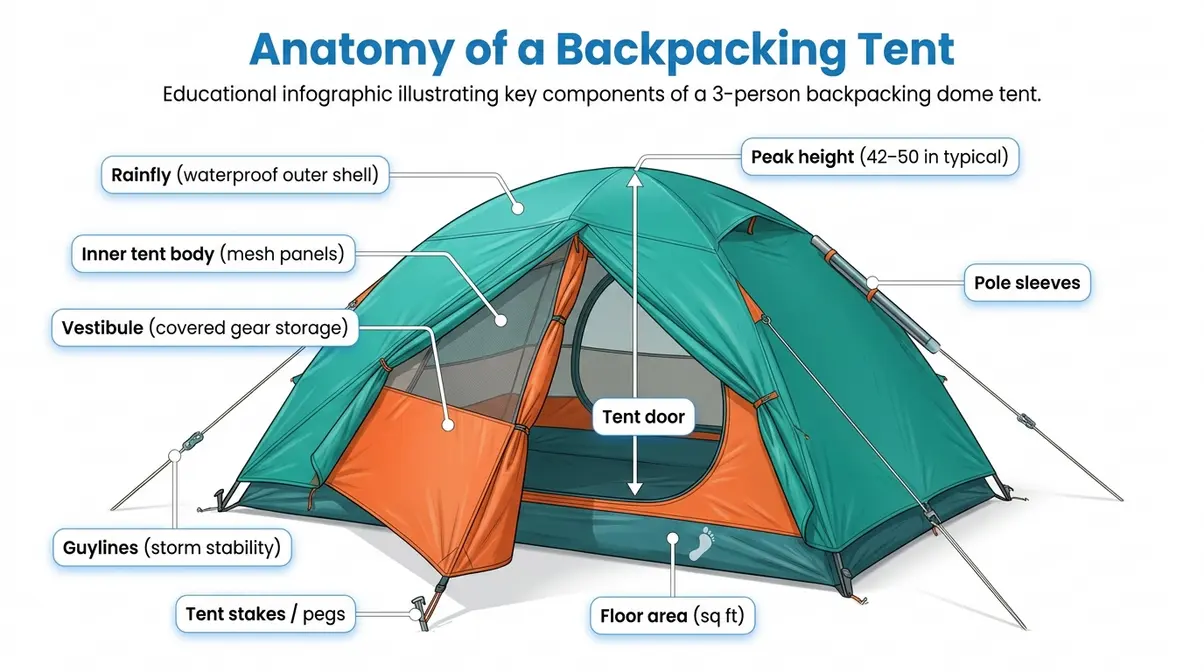
That quote captures exactly what experienced 3-person tent users value most: real interior room, dual vestibules (covered storage areas attached to the tent exterior — think of them as covered porches for your boots and gear), and dual doors so no one crawls over a sleeping neighbor. Keep those priorities in mind as you work through the factors below.
Trail vs. Packed Weight
Trail weight is the weight of just the tent body, rainfly (the waterproof outer shell), and poles — what you actually carry while hiking. Think of it as the weight of your tent when it’s stripped down to the essentials. Packed weight includes stakes, stuff sacks, and all accessories, and it’s typically 10–20% heavier. Understanding tent weight classes helps you compare tents fairly across brands. For a 3-person backpacking tent, a trail weight of 3.5 to 5.5 lbs is the practical sweet spot — light enough to split among the group without any one person carrying a disproportionate load, according to REI’s definition of trail weight.
Freestanding Tents
A freestanding tent stands on its own using its pole structure — you can pitch it, pick it up, and shake out leaves and dirt without the whole thing collapsing. A non-freestanding tent relies on trekking poles and ground stakes to create its shape; it’s typically lighter but requires more skill and experience to pitch on rocky or uneven ground. For beginner groups, freestanding is almost always the right call. See our full breakdown of freestanding vs. semi-freestanding tents for a deeper comparison. All 10 tents in this guide are freestanding or semi-freestanding.
Floor Area & Peak Height
Most tents rated for “3 persons” are, in the words of experienced backpackers, a “tight squeeze” for three full-sized adults. Wirecutter’s field testing found that a true 3-person tent needs at least 40 square feet of floor space to avoid cramped conditions for three average-sized adults (Wirecutter’s spatial recommendations for 3-person tents, 2026). Peak height — how tall the tent is at its highest point — matters just as much. If you can’t sit up to pull on a base layer, every morning becomes a yoga session. Look for at least 42–48 inches of peak height for comfortable 3-person use. Review our essential tent buying tips for more spatial guidance.
Waterproofing Numbers
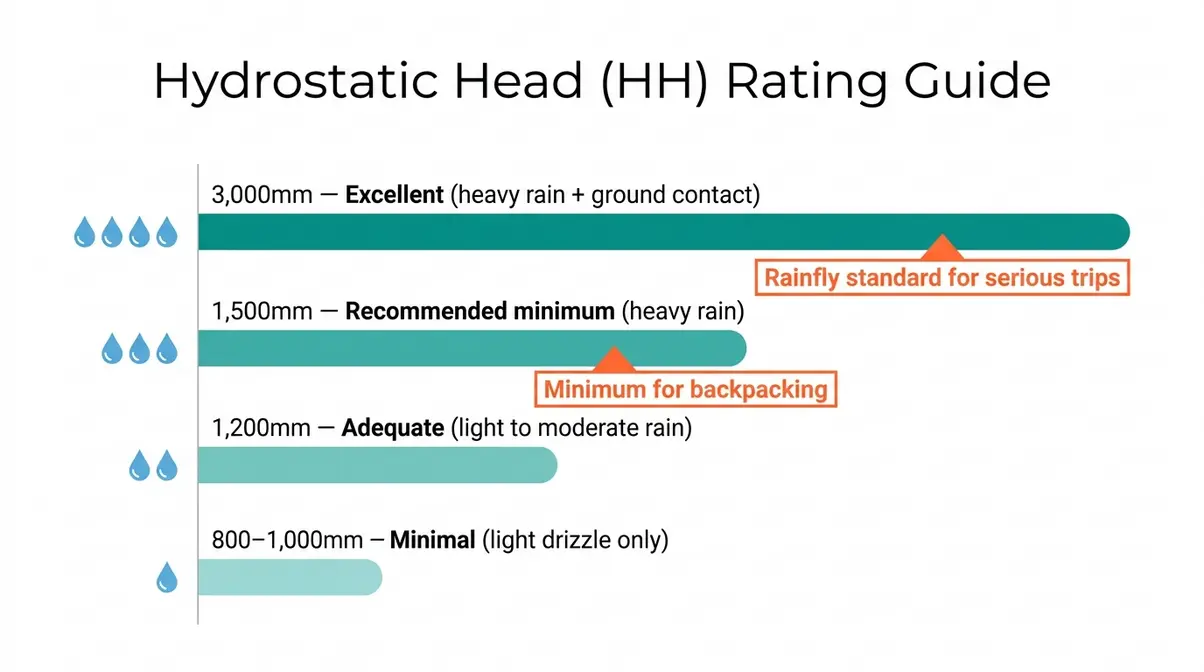
Waterproofing is measured in hydrostatic head (HH) — a number in millimeters that tells you how much water pressure a fabric can resist before it leaks. Think of it as how deep a column of water the fabric can hold without letting a drop through. A 1,200mm HH is adequate for light rain; 1,500mm is the recommended minimum for heavy rain; 3,000mm is excellent. The ISO 5912 camping tent standards establish the international benchmark for waterproof performance and structural integrity — any tent claiming “waterproof” should meet or exceed 1,500mm HH on the rainfly and 3,000mm on the floor. When choosing between 3-season and 4-season coverage, see our guide to choosing between 3-season and 4-season tents and our roundup of best tents for winter camping.
Is it big enough for 3?
Most 3-person tents are a tight squeeze for three full-sized adults — experienced backpackers often call them “2.75-person” tents. Standard 3-person floor plans are designed to fit three narrow sleeping pads side by side, but adults with broader shoulders or wider sleeping bags will feel the constraint by morning. For genuine three-person comfort, look for a floor area of at least 40 square feet and two doors so no one has to crawl over a sleeping neighbor. The CORE Dome (50 sq ft) and Blacktail Hotel (46.5 sq ft) offer the most honest 3-person floor space in this guide. Individual body size and comfort tolerance will heavily dictate your experience.
How We Evaluated
The 10 tents in this guide were selected and ranked using three criteria applied equally to every option: verified manufacturer specifications (trail weight, floor area, peak height, hydrostatic head rating, and pole material) cross-referenced against OutdoorGearLab’s testing methodology and current manufacturer listings; community consensus from backpacking forums and gear review sites; and the True 3-Hiker Test — an evaluation framework that asks three concrete questions: Do three 20-inch sleeping pads actually fit the floor plan? How do the poles, fly, and tent body split among two or three hikers? And how does the ventilation design manage condensation from three breathing bodies overnight? Princeton University Outdoor Action gear recommendations suggest allocating approximately 2.5 to 3 pounds of tent weight per person — a benchmark we applied to every weight-splitting calculation in this guide.
Frequently Asked Questions
What is a good trail weight?
A good trail weight for a 3-person backpacking tent is between 3.5 and 5.5 lbs. Ultralight models like the Big Agnes Copper Spur HV UL come in at approximately 4 lbs 2 oz — impressively competitive for a 3-person shelter with dual doors and vestibules. More spacious or budget-friendly options typically weigh 5–6 lbs, which remains manageable when split among three hikers at roughly 1.5–2 lbs per person. Your group’s daily mileage and fitness level should guide how aggressively you optimize for trail weight.
Freestanding differences?
A freestanding tent uses a pole structure to stand on its own without needing ground stakes, making it far easier to set up on hard or rocky terrain. Non-freestanding tents rely on trekking poles and staked guylines for their shape — they weigh less but require real experience to pitch correctly, especially on uneven ground in the dark. For beginner backpackers, freestanding tents are strongly recommended because you can pitch, reposition, and shake them out without the whole structure collapsing.
How much should I spend?
A reliable 3-person backpacking tent costs between $150 and $600 depending on weight, materials, and brand. Budget options like the North Face Stormbreak 3 and Kelty Grand Mesa deliver solid 3-season performance at accessible prices — strong starting points for beginner groups exploring affordable backpacking tents. Premium ultralight models like the Big Agnes Copper Spur HV UL cost significantly more but deliver real savings in trail weight — a factor that compounds over long-distance trips. For most beginner groups, spending in the $150–$300 range provides the best balance of durability, space, and value. Browse our tents for every budget guide to see how options stack up across price tiers.
Most important features?
The five features that matter most in a backpacking tent are trail weight, interior floor area, peak height, waterproof rating (HH), and the number of doors and vestibules. Trail weight determines how much the tent adds to your pack on every mile. Floor area and peak height determine whether three people can sleep and sit comfortably without feeling like they’re sharing a submarine bunk. Waterproof rating determines how well the tent performs when the rain starts and doesn’t stop. Prioritize based on your specific trip conditions and how often all three spots will actually be occupied.
Conclusion
For most three-person backpacking groups, the Big Agnes Copper Spur HV UL is the top pick — it passes the True 3-Hiker Test with a 43.5 sq ft floor plan, dual doors and vestibules for clean group access, and a trail weight that splits to roughly 1 lb 4 oz per person. Budget-conscious beginners will find genuine value in the North Face Stormbreak 3, which delivers brand reliability and smart high-low ventilation at a fraction of the premium price.
The True 3-Hiker Test framework — pad fit, weight split, condensation management — cuts through the marketing noise and gives you three concrete questions to ask about any tent you’re considering, whether from this list or elsewhere. Apply it and you’ll avoid the most common buying mistake: choosing a tent rated for three people that was never actually designed for three people to use comfortably.
Start with the Big Agnes Copper Spur HV UL if weight is your priority, or the North Face Stormbreak 3 if budget comes first. Either way, your group will sleep better knowing the choice was made on real criteria — not just a number on a label. For a full comparison of top options, see our guide to best 3-person backpacking tents. *Prices and features verified as of early 2026 — check current listings for the most up-to-date specifications.

Dave King
I'm Dave King. I publish Tent Explorer, a site built to answer the questions people actually ask before they buy.